Firm Yet Courteous, Tactful Yet Unambiguous

بسم الله الرحمن الرحيم
Al-Allamah Abdur Rahman Bin Yahyah Al-Mu’allimee, may Allah have mercy upon him, said:
Allah, The Most High, said:
الْحَمْدُ لِلَّهِ الَّذِي أَنْزَلَ عَلَىٰ عَبْدِهِ الْكِتَابَ وَلَمْ يَجْعَل لَّهُ عِوَجًا
قَيِّمًا لِّيُنذِرَ بَأْسًا شَدِيدًا مِّن لَّدُنْهُ وَيُبَشِّرَ الْمُؤْمِنِينَ
All praise and thanks be to Allah, Who has sent down the Book (the Qur’an) to His slave (Muhammad), and has placed no crookedness therein. (He has made it) Straight, to give warning (to the disbelievers) of a severe punishment from Him, and to give glad tidings to the believers…
He (Allah) revealed to him (Muhammad) in His Book (the Qur’an):
قُلْ إِنَّنِي هَدَانِي رَبِّي إِلَىٰ صِرَاطٍ مُّسْتَقِيمٍ دِينًا قِيَمًا مِّلَّةَ إِبْرَاهِيمَ حَنِيفًا وَمَا كَانَ مِنَ الْمُشْرِكِينَ
قُلْ إِنَّ صَلَاتِي وَنُسُكِي وَمَحْيَايَ وَمَمَاتِي لِلَّهِ رَبِّ الْعَالَمِينَ
لَا شَرِيكَ لَهُ وَبِذَٰلِكَ أُمِرْتُ وَأَنَا أَوَّلُ الْمُسْلِمِينَ
Say (O Muhammad): “Truly, my Lord has guided me to a Straight Path, a right religion, the religion of Ibrahim (Abraham), Hanifa [i.e. the true Islamic Monotheism – to believe in One God (Allah), i.e. to worship none but Allah, Alone], and he was not of Al-Mushrikun. Say (O Muhammad): “Verily, my Salat (prayer), my sacrifice, my living, and my dying are for Allah, the Lord of the ‘Alamin (mankind, jinns and all that exists). He has no partner. And of this I have been commanded, and I am the first of the Muslims.”
And I bear witness that none has the right to be worshipped except Allah Alone, without a partner.
إِنَّ رَبَّكُمُ اللَّهُ الَّذِي خَلَقَ السَّمَاوَاتِ وَالْأَرْضَ فِي سِتَّةِ أَيَّامٍ ثُمَّ اسْتَوَىٰ عَلَى الْعَرْشِ يُغْشِي اللَّيْلَ النَّهَارَ يَطْلُبُهُ حَثِيثًا وَالشَّمْسَ وَالْقَمَرَ وَالنُّجُومَ مُسَخَّرَاتٍ بِأَمْرِهِ أَلَا لَهُ الْخَلْقُ وَالْأَمْرُ تَبَارَكَ اللَّهُ رَبُّ الْعَالَمِينَ
Indeed, your Lord is Allāh, Who created the heavens and the earth in six days and then ascended above the Throne. He covers the (light of) day with the (darkness of) night, which pursues it swiftly. And (He created) the sun, the moon, and the stars, all being subjected to His command. His is the creation and the command. Blessed be Allāh, the Lord of the worlds.
And I bear witness that Muhammad is His slave and Messenger.
لَقَدْ مَنَّ اللَّهُ عَلَى الْمُؤْمِنِينَ إِذْ بَعَثَ فِيهِمْ رَسُولًا مِّنْ أَنْفُسِهِمْ يَتْلُو عَلَيْهِمْ آيَاتِهِ وَيُزَكِّيهِمْ وَيُعَلِّمُهُمُ الْكِتَابَ وَالْحِكْمَةَ وَإِن كَانُوا مِن قَبْلُ لَفِي ضَلَالٍ مُّبِينٍ
Indeed, Allah conferred a great favour upon the believers when He sent among them a Messenger (Muhammad) from among themselves, reciting unto them His Verses (the Qur’an), purifying them (from sins through their following him), and teaching them the Book (the Qur’an) and Al-Hikmah [the wisdom and the Sunnah of the Prophet SAW (i.e. his legal ways, statements, acts of worship, etc.)], while before that they had indeed been in manifest error.
O Allah, send Your blessings upon Muhammad, his wives and his offspring, just as You sent Your blessings upon the family of Ibrahim. And bestow Your blessings upon Muhammad, his wives and his offspring, just as You bestowed Your blessings upon the family of Ibrahim. Indeed, You are Hameed (The One Who is deservedly praised. The One Who is praised and completely deserves to be praised for His Self, His Perfect Names and Attributes, and for His Perfect Actions), Majeed (The Responsive. The One Who responds to the supplications of those who call upon Him, wherever they are and whatever situation they are in, no matter how many they are in number. And Who responds in particular to those who submit to Him and those in dire need). And grant him (the Prophet) abundant peace.”
To proceed:
Indeed, some of the brothers brought to my attention a treatise titled The Three Issues Presented to the Ustaadh, Shaikh Ahmad Muhammad Surkati, in Surabaya. They asked me to assess the standing and credibility of its author, because many of those who are regarded as people of knowledge consider him ignorant and declare him an innovator (mubtadiʿ). They asked me to express my views on the criticisms in his speech, since he has given permission for that.
So, I spoke about those issues in accordance with what I believe to be my religious duty in the sight of Allah, The Most High, to the best of my ability. After reading the treatise, I answered the first question as follows:
Despite its brevity, this treatise reflects its author’s standing in terms of sound knowledge, true virtue, firmly rooted religious commitment, and sound understanding of the Qur’an and Sunnah. He is among those described in the statement of Allah, The Most High:
فَلَوْلَا كَانَ مِنَ الْقُرُونِ مِن قَبْلِكُمْ أُولُو بَقِيَّةٍ
“If only there had been among the generations before you, persons having wisdom (people of discernment, people of obedience, people of goodness)…”
And the group mentioned in his, peace and blessings be upon him, statement “there will not cease to be a group among my Ummah manifest upon the truth”.
No one who understands his speech would deny this, except one who views matters through the veil of (vain) desires and blind following.
As for the second question, I have not found anything in that treatise that requires comment, apart from his statement on page 43, following his mention of the hadiths concerning the prohibition of sitting at graves. He said:
“The sitting that is prohibited, as it would appear, is sitting on graves for the purpose of seeking blessings, seeking intercession, or engaging in worship and supplication. As for sitting on a grave without recitation, without the intention of seeking blessings or engaging in worship, but merely for the purpose of resting while awaiting the burial of the deceased, until some need is attended to, or in order to admonish those present, there is no harm in doing so…” etc.
This implies (according to this statement), that the apparent meaning of those hadiths is that sitting within graves is prohibited. However, this interpretation is open to questions. Rather, their apparent meaning is the prohibition of sitting upon the grave itself, since this is the literal meaning, and there is nothing to divert the wording from that meaning.
Furthermore, is the hadith of Abū Hurayrah, “For one of you to sit upon a burning ember…” etc., is virtually explicit textual evidence for this. The hadith states: “It is better for one of you to sit on live coals that would burn his clothing and reach his skin than to sit on a grave.” (Muslim, 971)
The treatise mentions the hadith reported by Muslim, on the authority of Jābir, who said: “The Messenger of Allah, peace and blessings be upon him, prohibited plastering graves, building upon them, and sitting upon them”.
The intended meaning is clarified by the wording of the narration reported by al-Tirmidhī: “He prohibited plastering graves, writing upon them, and trampling upon them.”
In al-Musnad, it is reported on the authority of ʿAmr ibn Ḥazm that he said: “The Prophet, peace and blessings be upon him, saw me leaning against a grave and said: ‘Do not harm the occupant of this grave,’ or, ‘Do not cause him harm.’”
As for the hadith of al-Barāʾ, what is meant is that he sat beside the grave, since it is well known that an excavated grave cannot be sat upon.
The same applies to the hadith reported by al-Bukhārī, on the authority of Anas, who said: “We witnessed the burial of the daughter of the Messenger of Allah, peace and blessings be upon him, while the Messenger of Allah, was sitting by the grave…” — the rest of the hadith.
What is unquestionably meant here is that he was sitting beside the grave, as previously explained.
Mālik restricted the prohibited sitting to sitting for the purpose of relieving oneself. However, this restriction requires evidence, and the apparent meanings of the hadiths contradict it.
The correct position is that of the majority: namely, that the underlying reason for the prohibition is the avoidance of violating the sanctity of the grave. Among the evidence supporting this is the hadith reported by al-Nasāʾī and others, in which the Prophet, peace and blessings be upon him, commanded the man wearing the two Sibtiyyah sandals not to walk in them through the graveyard. (a) There are many other reports to this effect.
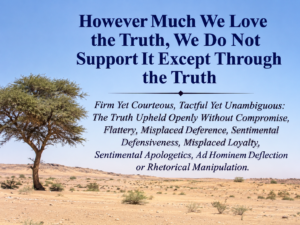
We agree with Ustaadh in warning people against seeking blessings from graves and other practices whose prohibition has been established, whether this takes place while sitting beside the graves, merely being present there, or even in their absence. However, this does not prevent us from disagreeing with him regarding our understanding of the evidence, which differs from his understanding. However much we love the truth, we do not support it except through the truth.
He (Allah) – The Most High – said:
وَلَا يَجْرِمَنَّكُمْ شَنَـَٔانُ قَوْمٍ عَلَىٰٓ أَلَّا تَعْدِلُوا۟ ٱعْدِلُوا۟ هُوَ أَقْرَبُ لِلتَّقْوَىٰ
And let not the enmity and hatred of others make you avoid justice. Be just: that is nearer to piety..(Al-Ma’idah 8)
And I excused myself to the questioner for not addressing the third matter, which is speech regarding those issues, due time constraints and the absence of my books. When he would not accept my excuse, I sought the help of Allah, Glorified be He, free from all imperfections, the Most High, and began writing whatever I was able, postponing the fuller discussion until another time, Allah willing. [1]
—————————————–
(a) Imam Abdul Aziz Bin Baz, may Allah have mercy upon him, said: The scholars used this as evidence that walking within graves while wearing shoes is disliked, except in cases of necessity. For example, if there are thorns in the graveyard, or the sun is hot, then there is no harm in doing so. However, without a necessity, walking within the graves wearing shoes is disliked…
https://binbaz.org.sa/fatwas/9868/%D8%A7%D9%84%D9%86%D9%87%D9%8A-%D8%B9%D9%86-%D9%84%D8%A8%D8%B3-%D8%A7%D9%84%D9%86%D8%B9%D8%A7%D9%84-%D9%81%D9%8A-%D8%A7%D9%84%D9%85%D9%82%D8%A7%D8%A8%D8%B1
(1) Aathaar Ash-Shaikh Al-Allamah Abdur Rahman Bin Yahyah Al-Mu’allimee. 4/3-6. Dar Alam Al-Fawaa-id. Section: Tahqeeq Al-Kalaam Fil Masaa’il Ath-Thalaath- Al-Ijtihad Wat-Taqlid, As-Sunnah Wal Bid’ah, Al-Aqidah.

Donate
Related Posts
Follow Us
Share
Related Posts
Donate to the Dawah in Manchester

Join the Umrah Trip