Year: 2025

The different levels of the scholars of Ijtihad

In The Name of Allah, The Most Merciful, The Bestower of Mercy.

The Different Levels of the Scholars of Ijtihad
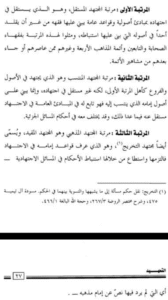
اجتهد العلماء – رحمهم الله – في تصنيف المجتهدين إلى مراتب أو طبقات متعددة، أوصلها كثير من العلماء إلى خمس مراتب :

المرتبة الأولى: مرتبة المجتهد المستقل، وهو الذي يستقل في اجتهاده بمبادئ أصولية وقواعد عامة ببني عليها فقهه من غير أن يقلد أحداً في أصوله التي بني عليها استنباطه، ومثلوا لهذه المرتبة بفقهاء الصحابة والتابعين وأئمة المذاهب الأربعة وغيرهم ممن عاصرهم أو حاء بعدهم من مشاهير الأئمة.

المرتبة الثانية: مرتبة المجتهد المنتسب وهو الذي يجتهد في الأصول والفروع كأهل المرتبة الأولى، لكنه غير مستقل في اجتهاده، وإنما بيني على أصول إمامه الذي ينتسب إليه فهو تابع له في المبادئ العامة في الاجتهاد مستقل عنه فيما عدا ذلك، وقد يختلف معه في أحكام المسائل الجزئية.

المرتبة الثالثة: مرتبة المجتهد المذهبي وهو المجتهد المقيد، ويسمى أيضاً مجتهد التخريج، وهو الذي عرف قواعد إمامه في الاجتهاد فالتزمها واستطاع من خلالها استباط الأحكام في المسائل الاجتهادية
أي التي لم يرد فيها نص عن إمام مذهبه.

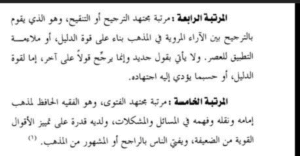
المرتبة الرابعة : مرتبة مجتهد الترجيح أو التنقيح، وهو الذي يقوم بالترجيح بين الآراء المروية في المذهب بناء على قوة الدليل، أو ملائعة التطبيق للعصر. ولا يأتي بقول جديد وإنما يرجح قولاً على آخر، إما لقوة الدليل، أو حسبما يؤدي إليه اجتهاده.

المرتبة الخامسة: مرتبة مجتهد الفتوى وهو الفقيه الحافظ المذهب إمامه ونقله وفهمه في المسائل والمشكلات ولديه قدرة على تمييز الأقوال القوية من الضعيفة، ويفتي الناس بالراجح أو المشهور من المذهب

Source: An-Nahj Al-Aqwaa Fee Arkaan Al-Fatwa pages 26-27. Itroduction by Al-Allamah Abdul Aziz Aala Ash-Shaikh and Al-Allamah Salih Al-Fawzan (may Allah preserve them and other scholars of Ahlus Sunnah).

The Proof Is Given Precedence From The Statements of The Scholars

Imam Ash-Shawkaani, may Allah have mercy upon him, said:

فاعلم أنه إذا وقع الخلاف بين المسلمين في أن هذا الشيء بدعة او غير بدعة ، أو مكروه او غير مكروه ، او محرم او غير محرم ، او غير ذلك ، فقد اتفق المسلمون : سلفهم وخلفهم ، من عصر الصحابة الى عصرنا هذا – وهو القرن الثالث عشر منذ البعثة المحمدية – أن الواجب الاختلاف في أي أمر من أمور الدين بين الأئمة المجتهدين : هو الرد الى كتاب الله سبحانه ، وسنة رسوله الناطق بذلك
الكتاب العزيز ( ٤ : ٥٩ فإن تنازعتم في شيء فردوه إلى الله والرسول ( ومعنى الرد الى الله سبحانه : الرد الى كتابه
ومعنى الرد إلى رسوله ال : الرد الى سنته بعد وفاته وهذا مما لا خلاف فيه بين جميع المسلمين . فإذا قال مجتهد من المجتهدين
هذا حلال . وقال الآخر : هذا حرام : فليس
أحدهما أولى بالحق من الآخر وإن كان اكثر منه علماً ، أو اكبر منه سنا ، او اقدم منه عصراً لأن كل واحد منهما فرد من أفراد عباد الله ، ومتعبد بما في الشريعة المطهرة، مما في كتاب الله وسنة رسوله ، ومطلوب منه ما طلب الله من غيره من العباد . وكثرة علمه وبلوغه درجة الاجتهاد او مجاوزته لها لا يسقط عنه شيئاً من الشرائع التي شرعها الله لعباده ، ولا يخرجه من جملة المكلفين من العباد

Sharh As-Sudoor Bi-Tahreem Raf Al-Quboor pages 1-2

The Student of Knowledge Who Has Reached The Level to Understand Proofs Strives to Follow Proofs to The Best of His Ability

Imam Abdul Aziz Bin Baz, may Allah have mercy upon him, who said:

If a person is a student of knowledge and adheres to the Hanafi Madhab in certain matters that are clear to him to be correct and his Madhab is stronger than other than it; then follows Ash-Shafi’i, Maliki’s, or Ahmad’s in other matters where it appears that their Madhab in those matters is correct based on the proofs, there is no harm in this because a believer wherever Allāh gives him knowledge, he follows the proof and looks to the proof.

So, what is established with proof, it is obligatory to adhere to it, regardless of whether it aligns with the Madhab of Shafi’i, Abu Hanifa, Maliki, Ahmad, or any other scholars. The important thing is that it must agree with the proof – substantiated by a verse or a noble sound hadith from the Messenger of Allah, peace and blessings of Allāh be upon him.

However, as for following whims or personal desires, then no. Playing about – sometimes this and other times that (arbitrarily between opinions), this is not permissible. But it is incumbent upon him to seek to know the proof and asking the people of knowledge regarding what is difficult for him. If he knows the proof, acquainted with the proof that this madhab in this issue is more valid while another is more valid in a different matter, there is no harm in this; otherwise, he should consult the scholars, seek their verdicts guidance, and act according to what they guide him to based on knowledge.

https://binbaz.org.sa/fatwas/8426/%D8%AD%D9%83%D9%85-%D8%A7%D9%84%D8%AA%D9%86%D9%82%D9%84-%D8%A8%D9%8A%D9%86-%D8%A7%D9%84%D9%85%D8%B0%D8%A7%D9%87%D8%A8-%D8%A7%D9%84%D9%81%D9%82%D9%87%D9%8A%D8%A9

[34] The Ascent and Decline of the Ottoman Empire

In The Name of Allah, The Most Merciful, The Bestower of Mercy.

Sultan Abdul Hamid I

Continued..

Firstly, his visit to Europe with his uncle Sultan Abdul Aziz:

Sultan Abdul Aziz traveled to Europe accompanied by a high-ranking Ottoman delegation, which included Prince Abdul Hamid. He presented himself to the Europeans in simple attire, reflecting his virtuous character. He had prepared for this journey through extensive readings, demonstrating a keen insight and judgment regarding the things he observed in the West. The Ottoman delegation met with prominent political figures of that era in Europe, such as Napoleon III in France, Queen Victoria in England, Leopold II in Belgium, Wilhelm I in Germany, and Franz Joseph in Austria. This journey followed his earlier visit with Sultan Abdul Aziz to Egypt, where he became aware of the deceptive allure of European glamour and the adoption of European formalities, which led Egypt into debt due to the extravagant spending of Khedive Ismail Pasha, who sought to transform Egypt into a part of Europe.

His trip to Europe lasted from June 21 to August 7, 1867. The Ottoman delegation visited France, England, Belgium, and the Austro-Hungarian Empire. During this European trip, Abdul Hamid’s perspective broadened significantly, influencing his entire reign thereafter. The key aspects that impacted him included:

1: European life with its peculiar lifestyles, diverse ethics, and formalities.

2: Industrial and military advancements, particularly in the French and German ground forces, as well as the British naval forces.

3: The intricacies of global politics.

The influence of European powers on the policies of the Ottoman Empire, particularly the impact of Napoleon III on his uncle, Sultan Abdul Aziz, and the pressure exerted by Napoleon for him to support Minister Ali Pasha, despite Sultan Abdulaziz’s insistence that he was not under the influence of any foreign power.

During this journey, he came to the realisation that France is a nation of leisure, England is characterised by wealth, agriculture, and industry, while Germany represents order, military strength, and administration. His admiration for Germany was profound, leading him to entrust the training of the Ottoman army to them once he ascended to the throne. This journey significantly influenced Abdul Hamid, prompting him to focus on incorporating modern inventions into his state across various sectors, including education, industry, communication, and military affairs. Notable examples of this include his purchase of submarines, a new military technology at the time, his personal investment in bringing the telegraph to his country, the establishment of modern schools that included contemporary sciences, the introduction of the first automobile and bicycle, and the adoption of the metric system. However, he firmly opposed the spread of Western thought within his nation.

His journey to Europe also influenced his policy of independence towards Europe; he was not known to be swayed by any European ruler, regardless of their friendship or the closeness between their country and the Ottoman Empire. During this trip, he was particularly struck by the discussions that Grand Vizier Fuad Pasha was having with various European leaders.

During this journey, Fuad Pasha was asked, “What is the price for the island of Crete?” He replied, “It is the same price at which we acquired it”. This indicated that the Ottomans fought for 27 years to retain control over Crete. Fuad Pasha was also asked, “Which is the strongest nation in the world today?” He responded, “The strongest nation at present is the Ottoman Empire, as you are undermining it from the outside while we are doing so from within. Neither of us has succeeded in its destruction”. He learned from this the lesson of the ability to silence the forces that sought to destroy the Ottoman Empire, and he also acquired the skill of political dialogue, in which he later excelled. At the time of this journey, he was 25 years old.

An Excerpt from ‘Ad-Dawlah Al-Uthmaaniyyah Awaamil An-Nuhood Wa Asbaab As-Suqoot. 6/442-444

Abdullah Ibn Mas’ud

In The Name of Allah, The Most Merciful The Bestower of Mercy.

One day, he, may Allah be pleased with him, came out and the people followed him, so he said to them, “Do you have a need?” They said, “No, but we want to walk together with you”. He said, “Go back, for indeed it is humiliation for the one following and a trial for the one followed”. (1)

He said to his companions:

”You observe fasting, perform prayer and Jihaad more than the companions of Muhammad, peace and blessings of Allah be upon him, yet they were better than you”. They said, “Why is that the case?” He said, “They practiced more abstinence from the worldly life and were more desirous of the hereafter”. (2)

Abu Khaythama narrated to us, (saying): Mu-aawiyyah Ibn Amr related to us that Zaa’idah related from Al-A’mash from Tameem Ibn Salamah from Abu Ubaydah from Abdullah (Ibn Mas”ud) who said: ”O people, learn; and whoever learns, then let him act.” (3)

Abu khaythama narrated to us, saying: Muhammad Ibn Khaazim related to us, saying: Al-Amash reported to us from Shaqeeq from Abdullaah (Ibn Mas’ood), who stated:”I swear by Allaah the one who gives a verdict to the people in everything they ask him is insane indeed.” Al-A’mash said: Al-Hakam said to me:”If I heard this hadeeth from you prior to this day, I would not have given a verdict in many of the affairs I issued a verdict.” (4)

Uthmaan Ibn Hadir Al-Azdee said: I entered upon Ibn Mas’ud, may Allah be pleased with him, and said to him: ”Advise me.” He said: ”Be upon steadfastness; follow and do not innovate. Follow the first tradition (i.e. the way of the salaf) and do not innovate.” (5)

He said: Whoever has knowledge, then let him speak with it. And whoever does not have knowledge, then let him say, “Allah knows best”, for indeed Allah said to His Prophet:

قُلْ مَا أَسْأَلُكُمْ عَلَيْهِ مِنْ أَجْرٍ وَمَا أَنَا مِنَ الْمُتَكَلِّفِينَ

Say (O Muhammad): “No wage do I ask of you for this (the Qur’an), nor am I one of the Mutakallifun (those who pretend and fabricate things which do not exist). [Surah Saad. 86] (6)


(1) Az-Zuhd 195 by Imaam Ahmad

(2) Jaami-ul Uloom Wal-Hikam: page: 318

(3) Kitaab Al- Ilm by Abu Khaythama with the checking of Imam Albaanee page:7, narration number 4

(4) Kitaab Al-Ilm by Abu Khaythama with the checking of Imaam Al-Albaanee (rahimahullaah): page: 8. Narration Number: 10

(5) Quoted by Shaikh Jamaal Al-Fareehaan Al-Haarithee in Durar Al-Manthoor page 20, and the Shaikh referenced this statement of Ibn Mas’ood to As-Sunnah No:29 and Dhammul Kalaam Wa-Ahli, No:334]

(6) I’laam Al-Muwaqqi’een 2/185

The leader is a shield

In The Name of Allah, The Most Merciful, The Bestower of Mercy.

Abu Hurairah, may Allah be pleased with him, said, “The Prophet, peace and blessings of Allah be upon him, said, “Verily, the leader is a shield behind whom they fight and he protects them. If he commands (people to) fear Allah, The Exalted, and justice, then he will have a reward. If he commands something else, then it will be against him'”. [S‌ah‌ih Muslim 1841]

“The leader is a shield”.  Imam An-Nawawi, may Allah have mercy upon him, said, he is like a shelter because he prevents the enemy from harming the Muslims, preventing the people from (harming) one another, protecting the Muslim nation and the people fearing his authority. “Behind whom they fight”, meaning, alongside him they fight against the disbelievers (i.e. those at war with his country), the rebels, the kharijites and all the perpetrators of corruption and oppression. (1)

Abdus Samad Bin Yazid Al-Baghdadi, may Allah have mercy upon him, said: I heard Al-Fudayl Bin Iyaadh, may Allah have mercy upon him, saying, “If I had a supplication that would be accepted, I would not make it except for the leader”. It was said to him, “O father of Ali! Why is that?” He said, “When I make it for myself, it would be only for me, but if I make it for the leader, the rectification of the leader would consequently result in the rectification of the people and the country”. It was said to him, “O father of Ali! How is that? Explain this to us”. He said, “As for the wellbeing of the land, if the people are safe from the ruler’s tyranny, they will develop abandoned areas and settle in the land. With regards to the rectification of the people, one observes the affair of a people among the ignoramuses and says, they have been distracted by the pursuit of livelihood instead of seeking what will benefit them, such as learning the Qur’an and other things. Thus, he gathers them together in a house – fifty in number, less or more, and says to a man, ‘You have what will make your affair upright and teach these people their religion’. Then you’ll see what Allah, The Mighty and Majestic, brings forth among them that would make the land righteous and that would return to them (i.e. they’ll receive its benefits). This would be the rectification of the people and the country”. Imam Ibn Al-Mubarak, may Allah have mercy upon him, kissed Imam Fudayl’s forehead and said, “O teacher of goodness! Who else would be able to (say or do) this better than you?!” (2)

May Allah protect and strengthen the rulers of Pakistan, and its citizens, as well as the Muslim rulers and citizens of all other Muslim countries Aameen.


(1) Sharh Sahih Muslim 12/193. Publisher, Daar Al-Kutub al-Ilmiyyah. 1st Edition 1421AH (2000)

(2) Hilyah Al-Awliya 8/91

The Greatest Pleasure in Both the Afterlife and the Worldly Life

In The Name of Allah, The Most Merciful, The Bestower of Mercy.

Shaikh Al-Islam Ibn Taymiyyah, may Allah have mercy upon him, said:

The greatest pleasure in the afterlife is the pleasure of seeing Allah, Glorified be He and free is He from all imperfections, as it has been reported in the authentic hadith: “They [the people of paradise] will not be granted anything that is more beloved to them than seeing Him [Allah]”. This is the fruitful outcome of knowing Him and worshipping Him in this worldly life. The best thing in this worldly life is to possess knowledge and awareness of Him and the best thing in the afterlife is to see Him. [Majmu Al-Fataawa. 14/163]

The Impact of Worship In The Life of a Muslim
https://salafidawahmanchester.com/wp-content/uploads/2024/06/Impact_of_Worship_In_The_Life_of_a_Muslim.pdf

Reflections from some statements of Al-Allamah Rabee Bin Hadi Al-Mad’khali [81]

In The Name of Allah, The Most Merciful, The Bestower of Mercy.

Shaikh Al-Islam Ibn Taymiyyah [may Allah have mercy upon him] said that the outcome for those who engage in theological rhetoric is a state of uncertainty and perplexity, while the outcome for the followers of the Sofee paths is characterised by erratic and irrational behaviour along with false claims. The innovators in religious matters among the proponents of theological rhetoric have something of a resemblance to the Jews and those who innovate acts of worship in religious matters have something of a resemblance to the Christians [i.e. those Jews and Christians who deviated after the departure of their Prophets]. This is because the (proponents of theological rhetoric) deny the truth and are led to doubt, and those (who innovate acts of worship) believe in falsehood and are led to irrational behaviour. These are like the darkness in a vast deep sea, overwhelmed by a great wave topped by another great wave, topped by dark clouds, darkness, one above another; and those are like a mirage in a desert, the thirsty one thinking it’s water until he comes up to it and discovers it’s nothing. [1]

Shaikh Al-Islam Ibn Taymiyyah [may Allah have mercy upon him] said that the people in their pursuit of knowledge and religion have two innovated paths and a path legislated in the Shari’ah. The path of Islamic legislation involves examining the teachings of the Messenger, utilising them as evidence, and implementing the necessary actions. Therefore, it is imperative to possess knowledge based on the teachings of the Messenger and to act upon them, and merely possessing one of these two is insufficient. As for the two innovated paths, one of them is the path of people who engage in innovated theological discourse and this path is fraught with falsehood. Many of its adherents neglect the obligations prescribed by Allah and His Messenger, leading them to remain in a state of corruption in knowledge and action. Consequently, these individuals deviate towards false Judaism. The second path is taken by people who adopt methods to enhance their spiritual well-being, namely the followers of the Sufi paths, who introduce new forms of worship. These individuals tend to deviate towards false Christianity as they claim that by purifying one’s soul according to their prescribed methods, one will effortlessly acquire extensive knowledge of religious sciences without learning. The worship practices of many of these people are innovated, rather, they contradict the teachings of the Messenger. As a result, they continue to engage in corrupt actions and corruption due to their lack of understanding of the Messenger’s teachings because they do not know what the Messenger conveyed. Neither Allah’s Messenger nor his companions followed the path of those who introduced innovations in religion, such as the proponents of theological rhetoric, nor the path of the proponents of innovated worship and Sufiyyah. Instead, he adhered to what Allah had sent him with, which is based on the Qur’an and Sunnah. [2]

The Shaikh was asked: May Allah reward you with good. This is also a question from the brothers who are present, saying: Assalaamu Alaykum Warahmatullaahi Wabarakaatuhu. Virtuous Shaikh, is it permissible for me to learn (or study) theological rhetoric? Benefit me [i.e. with a response] and may Allah [The Exalted] reward you with good.

Answer: The knowledge of theological rhetoric is a corrupt knowledge and the pious predecessors – by way of consensus- declared that it is forbidden to study it due to the misguidance and evil consequences in it. Shaikh Al-Islam Ibn Taymiyyah said, “Neither does a dull-witted person benefit from it nor is an intelligent person in need of it”. An intelligent person does not need it because he is sensible in himself, in natural disposition and intellect; and a dull-witted person does not benefit from it. Even if he studied all the books of theological rhetoric, he would not benefit from it. Shaikh Al-Albani used to debate the scholars of theological rhetoric and they used to be like children in his presence, yet he never studied theological rhetoric, rather Allah granted him (sound) speech and knowledge, and there is no proof stronger than the proofs of the Kitaab [i.e. the Qur’an] and the Sunnah. The people of theological rhetoric are always defeated. By Allah, regardless of how much they (utilise) theological rhetoric and how strong they are in theological rhetoric, they are defeated in the presence of the methodology of the pious predecessors (which) is founded on the Book and the Sunnah. [3]


[1] An Excerpt from “Al-Mukhtaaraat Al-Bahiyyah Min Kutub Shaikhil Islaam Ibn Taymiyyah”. Page 281.

[2] Al-Mukhtaaraat Al-Bahiyyah Min Kutub Shaikhil Islaam Ibn Taymiyyah. 290-291

[3] An Excerpt from Marhaban Yaa Taalibal Ilm page 347

Seeking out the most elderly and senior scholars

In The Name of Allah, The Most Merciful, The Bestower of Mercy.

The question: This questioner, Ahmad Kashuqah from Amman, Jordan, says: O revered Shaikh, when the statements of the scholars differ regarding the ruling on a particular issue—some saying it is Makruh (disliked), some say it is Haraam (unlawful) and some say Laa Yajuz (it is not allowed), is the verdict Haraam the best of these statements and is this always the case? And if they differ regarding a matter being allowed, recommended and that there is no harm regarding it, is the verdict recommended the best statement, and is this always the case?

Response: There is a detail clarification regarding this matter. It is incumbent upon the one seeking a verdict to examine the matter [ويتحرى من هو أقرب إلى الخير والعلم والفضل وأقرب إلى إصابة الحق – and carefully seek for the one closest to goodness, knowledge and virtue, and closer to reaching the truth] in order to follow their fatwa. If one exercises caution, while the matter is a situation where this one says “haraam”, that one says “It is not Haraam”, he exercises caution and leaves it. This would be better. The Prophet, peace and blessings of Allah be upon him, said: “Leave that which makes you doubt for that which does not make you doubt.” [a] “So whoever took caution regarding the ambiguous matters has absolved himself regarding his religion and his honour”.[b]

However, if he is able, he carefully seeks until he knows [من هو أكثر علمًا، ومن هو أكثر ورعًا، ومن هو أقرب إلى الصواب – who has more knowledge, has more of that fear of Allah that makes a person abandon doubtful matters out of fear of falling into Haram, and the one who is closer to reaching what is correct] in order to follow his statement and so that his heart is at ease, similar to what the Prophet, peace and blessings of Allah be upon him, said: “Consult your heart”. [c] Righteousness is that about which the soul feels tranquil and the heart feels tranquil. If faced with differing fatwas, if the Fatwa differs, a believer examines and contemplates, and he is not hasty; [يتحرى من هو أقرب إلى الناس للإصابة من أهل العلم والبصيرة والورع والذي يرجح في قلبه أنه أقرب إلى الخير وأقرب إلى إصابة الحق – he seeks among the people of knowledge the one closest to reaching the truth, the possessors of clear-sightedness and that fear of Allah that makes a person avoid doubtful matters out of fear of falling into what is forbidden – the one his heart considers to be closer to good and closer to reaching the truth].

Similarly, in matters of recommendation, if there is disagreement regarding whether something is recommended or permissible, one should carefully consider the opinions. If his heart holds an overwhelming inclination -based on what is apparent – towards the statement of the one who says that the matter is recommended, he should act on the recommendation. If your heart is at ease that the matter is permissible only, it should be treated as permissible. The goal (intent) regarding all of this is that the one who seeks fatwa or the listener should examine and contemplate without haste, he examines the situation and circumstances of the Muftis, and he examines what is closer to good in terms of them having that fear of Allah that makes a person avoid doubtful matters out of fear of falling into Haram, their careful pursuit of the truth, and their good reputation, among other things. [end of quote]

———————————————————————————-

Footnotes:

[a] https://www.nawawis40hadith.com/nw/hadith/11/leaving-doubt
[b] https://www.nawawis40hadith.com/nw/hadith/6/the-doubtful-matters
[c] https://www.nawawis40hadith.com/nw/hadith/27/righteousness-and-sin
[d] https://www.alfawzan.af.org.sa/ar/node/15726


السؤال: هذا السائل أحمد كشوقة من الأردن عمان يقول: سماحة الشيخ: إذا اختلفت أقوال العلماء في حكم مسألة ما، فمنهم من قال: مكروه، ومنهم من قال: حرام، ومنهم من قال: لا يجوز، فهل أحسن القول في هذه الأحكام هو الحرام؟ وهل هذا دائمًا؟ وإذا اختلفوا على مسألة بأنها جائزة مستحبة لا بأس بها فهل الأحسن القول هو الاستحباب؟ وهل هذا دائمًا، وجهونا بهذا مأجورين؟

الجواب: هذا فيه تفصيل على المستفتي أن ينظر في الأمر، ويتحرى من هو أقرب إلى الخير والعلم والفضل وأقرب إلى إصابة الحق حتى يأخذ بفتواه، وإذا احتاط والمسألة: هذا يقول: حرام، وهذا يقول: ليس بحرام، واحتاط وترك ذلك فهذا حسن؛ لقول النبي ﷺ: دع ما يريبك إلى ما لا يريبك من اتقى الشبهات فقد استبرأ لدينه وعرضه ولكن إذا تيسر له أن يتحرى حتى يعرف من هو أكثر علمًا، ومن هو أكثر ورعًا، ومن هو أقرب إلى الصواب حتى يأخذ بقوله، حتى يطمئن قلبه، مثلما قال ﷺ: استفت قلبك البر ما اطمأنت إليه النفس واطمأن إليه القلب، إذا اختلفت عليه الفتاوى، إذا اختلفت الفتوى فالمؤمن ينظر ويتأمل ولا يعجل، يتحرى من هو أقرب إلى الناس للإصابة من أهل العلم والبصيرة والورع والذي يرجح في قلبه أنه أقرب إلى الخير وأقرب إلى إصابة الحق، وهكذا في الاستحباب إذا اختلفوا هذا سنة أو مباح يتحرى، فإذا غلب على قلبه واطمأن قلبه إلى قول من قال: إنه مستحب، عمل عمل المستحب، وإذا اطمأن قلبك إلى أنه مباح فقط عامله معاملة المباح.
والمقصود من هذا كله أن المستفتي أو السامع ينظر ويتأمل ولا يعجل، وينظر حال المفتين وأحوالهم، وينظر ما هو أقرب إلى الخير من جهة ورعهم ومن جهة تحريهم الحق، ومن جهة سمعتهم الحسنة، إلى غير ذلك

https://binbaz.org.sa/fatwas/8821/%D9%85%D9%88%D9%82%D9%81-%D8%A7%D9%84%D9%85%D8%B3%D8%AA%D9%81%D8%AA%D9%8A-%D8%A7%D8%B0%D8%A7-%D8%A7%D8%AE%D8%AA%D9%84%D9%81%D8%AA-%D8%A7%D9%82%D9%88%D8%A7%D9%84-%D8%A7%D9%84%D9%85%D9%81%D8%AA%D9%8A%D9%86