Robust, Credible, Detailed and Unambiguous Inherited Clarifications On Al-Jarh Wat-Tadeel

بسم الله الرحمن الرحيم
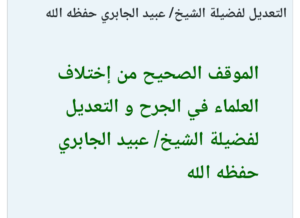
Question: If I hear the speech of a scholar in a cassette recording, or read in one of his books about a person that indeed he is a Mubtadi, and I do not see proof from him regarding that, am I obliged to be cautious of this person and satisfied (or convinced) that indeed he is a Mubtadi, [أم أتريّث or should I wait, employ careful deliberation, etc.] until I find the proof for that?
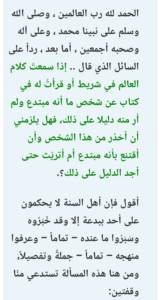
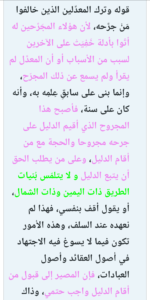
Response: I say: Indeed, Ahlus Sunnah do not pass the judgement of Bid’ah on anyone except when they have definitely examined him thoroughly, scrutinised thoroughly what he holds, and know his methodology completely, both in general and in detail. From this perspective, this Mas’alah calls for two points of consideration from us:
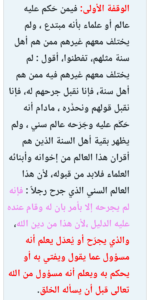
The first point: Regarding the one whom a scholar or a group of scholars have passed the judgement that indeed he is a Mubtadi, and others (i.e. scholars) from Ahlus Sunnah like them have not disagreed (or are not in opposition to this judgement). Be discerning regarding this. I say: If none from among those who are Ahlus Sunnah disagree with them regarding him, then indeed we accept their Jarh of him. We indeed accept their speech and warn against him, so long as a Sunni scholar has passed judgement on him and disparaged him, and the rest of Ahlus Sunnah—who are the peers of that scholar, among his brothers and sons from the scholars—have not made apparent their opposition to this judgement. Then they must accept it, because indeed this Sunni scholar who disparaged a man did not do so except on the basis of a matter that has become clear to him and for which proof has been established. Because indeed this is from the religion ordained by Allah. The one who disparages or commends knows that he is accountable for what he says, issues as a fatwa, or passes judgement based upon it, while knowing that he will be questioned by Allah, the Most High, before he is questioned by the creation (the people).
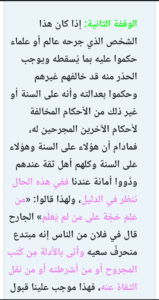
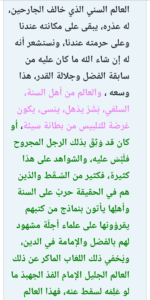
The second point: If the person who has been disparaged by a scholar or scholars—who have passed judgement against him with that which damages his reputation, credibility, and trustworthiness, and necessitates caution about him, but others oppose them and pass judgement that he is trustworthy- that he is one who adheres to the Sunnah and other than that pertaining to rulings that are in opposition to the rulings of those who disparaged him; then, as long as both groups are upon the Sunnah, and all of them are trustworthy people and people of Amanah in our view, then in this situation we look at the proof. Due to this, they (the scholars) said: [من عَلِمَ حُجَّة على من لم يَعْلَم – The one who knows is a proof against the one who does not know].
The disparager said about so-and-so that he is a Mubtadi, deviated in his efforts (actions), and he produces proof from the writings of the disparaged person, his cassette recordings, or from reliable reports transmitted by trustworthy people about him, then this obligates upon us to accept his speech and abandon the speech of those who give him commendation, who opposed those who disparaged him. This is because the disparagers brought proof that was hidden from the others due to a reason among reasons, or because the one who gives him commendation has not read or heard about the matters for which he was disparaged, but rather based his judgement on his prior knowledge regarding him and that he is upon the Sunnah.
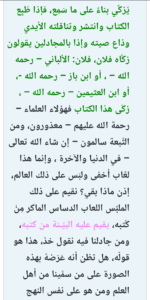
Thus, this disparaged person—against whom proof is established—becomes (justifiably) disparaged, and the proof is with the one who established the proof. It is incumbent upon the one who seeks the truth that he follows the proof and does not turn aside to the right and left, nor say, “I will remain neutral and suspend judgement.” This is not something we have known from the Salaf. In these matters, there is no justified Ijtihad in the foundations of creed and the foundations of worship. For indeed, what finally prevails with regard to accepting from the one who has established the proof is an unavoidable obligation. And that Sunni scholar who opposed the disparagers has his excuse and remains—in our view—upon his station and state wherein he is honoured, and we recognise, In Shaa Allah, what he possesses of virtues and lofty status. This is his achievement based on his genuine effort to reach the truth.
A scholar from Ahlus Sunnah- a Salafi- is human: he may become distracted, forgets, be deceived (or be given a false impression) by evil associates, or he may once have trusted that disparaged person, and thus that person deceived him (or gave him a false impression). The testimonies to this are many, for many of those who have fallen (i.e., deviated)—those who are in reality at war with the Sunnah and its people—bring selected samples from their books and read them to eminent scholars who are well known for their virtue and leadership in religion. That deceptive and cunning person conceals from the noble scholar—an Imam, outstanding and possessor of exceptional discernment and expertise—matters which, had he known them, would have made him degrade this person (or declare this person untrustworthy). So this scholar praises him based on what he has heard. Then, when the book is published, circulated, passed from hand to hand, and its fame becomes widespread, the disputants say: “So-and-so commended it,” or, “So-and-so, Al-Albani, may Allah have mercy upon him, or Ibn Baz, may Allah have mercy upon him, or Ibn Uthaymin, may Allah have mercy upon him, commended this book.” These scholars, may Allah have mercy on them, are excused and, In Shaa Allah, free of any blame in this worldly life and the Hereafter. Rather, this scheming trickster concealed matters and deceived these scholars (or gave them a false impression).
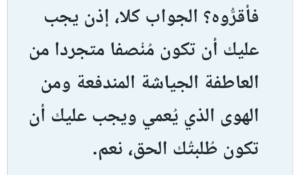
Therefore, what remains to be done? We establish the case against that deceptive person—the sneak (infiltrator), the schemer—from his own books. We establish the proof against him from his books. And whoever argues with us regarding him, we say: “Take this; here is his speech. Do you think he presented it in this form to the ones we have mentioned among the people of knowledge, and to those who follow the same methodology, so that they approved it?” The answer is certainly not. Therefore, it is incumbent upon you to be fair, free from overwhelming emotions and desires that blind you. And it is incumbent that your pursuit should be the truth. [Paraphrased]
Your feedback is welcomed to improve this translations and point out mistakes. Jazaakumullahu Khayran.
To be continued…InShaAllah

Donate
Related Posts
Follow Us
Share
Related Posts
Donate to the Dawah in Manchester

Join the Umrah Trip