Principles Ignored, Evaded, or Sidetracked by Some Following the Death of Some Senior Scholars

بسم الله الرحمن الرحيم
If (or when) a Jarh Mubham (a vague or unexplained) criticism (disparagement) conflicts with a Taʿdīl (commendation or appraisal), then the preponderant view is that this vague (or unexplained) criticism must be explained. Being well known to be upon (upright) religious adherence, the Sunnah, Salafiyyah, and calling to it is stronger evidence than a (mere) commendation from one or two scholars.
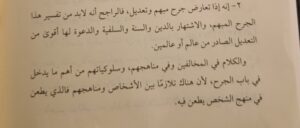
And speech regarding the Mukhalifeen, their methodologies and conducts are among the most important matters that enters into the subject of criticism (disparagement), because indeed there is an association between individuals and their methodologies. Therefore, whoever speaks ill of a person’s methodology has (in effect) spoken against him.
Due to this, you find the Salaf clarifying – with evidence – Ahlul Bidah’s misguidance and the corruption of their methodologies. They have works (authorships) in this regard that cannot be enumerated, and some of them will be mentioned. And I see that indeed it is inevitable to mention the statements of the people of knowledge regarding the stipulation of explaining an vague (or unexplained) criticism and the rejection of some (types) of criticism. So I say:
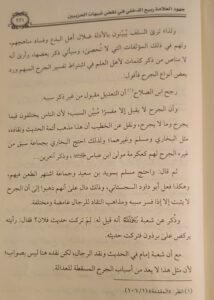
Ibn al-Ṣalāḥ declared it preponderant (or a stronger proof) that indeed a recommendation (or appraisal) is accepted without its reason being mentioned and that criticism is not accepted unless explained – its reason clarified, because people differ regarding what they (consider as a justification) for criticism and what they do not (consider a reason) for criticism. He transmitted from al-Khaṭeeb that this is the Mad’hab of the Imams of hadith and those (proficient in the science of distinguishing authentic and unauthentic narrations), such the likes of Muhammad ibn Isma’eel al-Bukhari, Muslim and others. Due to this reason, al-Bukhari used a group of narrators as proof whom others had previously criticised, such as Ikrimah the protégée of Ibn Abbas, and he mentioned others…
Then he said: Muslim used as evidence Suwayd ibn Sa’eed and a group of people who were well known to have been criticised (by scholars). Similarly Abu Dawud As-Sijistani did the same and this demonstrates that they indeed held the view that a criticism is not established unless the reason is explained, because the Madhabs of the criticisers of narrators are obscure and varied.
It has been mentioned (or reported) about Shuʿbah, may Allah have mercy upon him, that it was said to him: Why did you abandon the hadith of so-and-so?’ He replied: “I saw him riding on a Barzun, so I abandoned his hadith”. [See footnote a] Despite the fact that Shu’bah ibn al-Hajjaj was an Imam in hadith and in science of criticising narrators, however, this criticism of his is not correct, because the likes of this is not considered a reason for criticism that drops (or cancels) trustworthiness.
He mentioned a story about Muslim ibn Ibraheem that he criticised (or disparaged) Salih al-Marri for something that is not considered among the (valid) reasons for criticism, even though indeed al-Marri had been declared weak for other than this reason (mentioned by Muslim Ibn Ibraheem).
Among the criticisms (directed) at Ikrimah was the claim that he was upon the Mad’hab of the Sufriyya Khawarij. Some of the Imams criticised him on that basis, but al-Bukhari did not accept their criticism because of the weakness of their evidence.
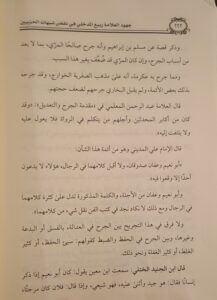
Al-Allamah Abdur Rahman al-Muallimee said in the introduction to al-Jarḥ wa at-Taʿdeel: “There were among the senior scholars of hadith and the most eminent of them who spoke about narrators, yet their statements were neither relied upon and nor given consideration”.
Imam Ali al-Madini, who was one of the Imams in this field, said: “Abu Nu’aym and Affan are truthful, (but) I do not accept their speech regarding men (i.e. the narrators). These people do not leave anyone alone without speaking against them”.
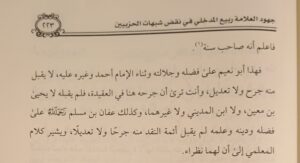
Abu Nu‘aym and Affan were among the notables and the above statement demonstrates their plentiful speech against the narrators. Despite this, we hardly find any of their statements quoted in the books of this subject matter.
And there is no difference in this criticism with regards to criticism of narrator’s trustworthiness when accused of sinfulness, Bidah or other than it and criticism concerning their memory and precision in memorisation and narration, such their (i.e. the scholars of hadith) statement: “Poor in memorisation”, or “Makes numerous mistakes”, or “Is given to much heedlessness” and what is similar to this.
Ibn al-Junayd al-Khatlee said: I heard Ibn Ma’een saying: “When Abū Nu’aym mentioned a person and said: ‘He is good’ and praised him, then he was a Shi‘ite. But when he said: ‘So-and-so was a Murji’, then know that he was a person of the Sunnah'”. [al-Meezaan 3/350]
So, here we have Abu Nu’aym who despite his virtuousness, notability, the praise of Ahmad ibn Hanbal and others for him, neither criticism nor commendation was accepted from him. You can see that his criticism here was concerning matters of creed, so it was neither accepted by Yaḥya ibn Maʿeen nor Ali ibn al-Madini, nor other than them. Similarly, Affan ibn Muslim al-Ṣaffar, may Allah have mercy upon him, despite virtuousness, adherence to the religion and knowledge, the Imams Naqd (i.e. the Imams well known for declaring narrators and narrations authentic or unauthentic) neither accepted criticism nor commendation from him. The speech of Abdur Raḥman al-Muʿallimee al-Yamanee demonstrates that there were others similar to them.
Source: An Excerpt from Juhud Al-Allamah Rabee Al-Mad’khali Fee Naqd Shubuhat Al-Hizbiyyeen 220-223. Paraphrased.
Your feedback is welcomed to improve this translation. Jazaakumullah Khayran.
To be continued InShaAllah
Footnote a: Imam Al-Albani, may Allah have mercy upon him, said: This Barzun is a horse that is between an Arabian horse and a mule. When it walks, it moves in a manner and you see the rider sitting on it strutting proudly just like a horse. So one of the scholars of Jarḥ wa at-Tadeel criticised a person, and it was said to him: “Why?” He said: “Because indeed he used to ride a Barzun” as if he was accusing him of being arrogant.
The student: Pride, vanity.
The Shaikh: But he is not doing this himself. This is not from his doing; rather, this is the result of the movement of what? The Barzun. https://www.alathar.net/home/esound/index.php?op=codevi&coid=249330

Donate
Related Posts
Follow Us
Share
Related Posts
Donate to the Dawah in Manchester

Join the Umrah Trip