[1] Still Waiting! Where’s The Clear Unambiguous Knowledge-Based Shariah Proof for the Tabdee?

بسم الله الرحمن الرحيم
In The Name of Allāh, The Most Merciful, The Bestower of Mercy.
As some youth are asking some elders in our Masjid in particular, we therefore say: We are still waiting as well! Where’s the clear, unambiguous knowledge-based Shariah proof for the Tabdee based on the methodology of Ahlus Sunnah Wal Jama’ah? This is a question we’ve always asked for the past 30 years on many serious issues, and today – amidst all the rhetoric, the frantic attempts to win arguments and the propaganda on twitter – we are posing the same question again to the Obfuscators, Deflectors, Gish gallopers, and the Whataboutists: “Where is the clear proof for the Tabdee against Shaikh Abu Iyaad, may Allah protect him!
We are not going to allow anyone sitting behind a screen or at a podcast to escape this question if they initiate the topic, and we’ll carry on asking this question. Provide evidence that is based on certainty and true reality. We don’t need complicated jargon that leads to confusion, ignorance, delusion, or uncertainty, especially in this dangerous matter. Provide clear proof, for this is what we know from the start, thirty years ago. These principles have not changed in an instant, nor can any amount of propaganda sway us from them InShaAllah. I hope we are not going to be labelled disrespectful and peddlers of Fitna for asking a genuine question related to this blessed and priceless Salafi Manhaj!
The Danger of Tabdee Without Proof
Imam Abdul Aziz Bin Baz, may Allah have mercy upon him, said:
وما أحسن ما قاله العلامة: ابن القيم رحمه الله في قصيدته الكافية الشافية:
إن البدار برد شيء لم تحط… علما به سبب إلى الحرمان
وأعظم من ذلك وأخطر، الإقدام على التكفير أو التفسيق بغير حجة يعتمد عليها، من كتاب الله أو سنة رسوله ﷺ، ولا شك أن هذا من الجرأة على الله وعلى دينه، ومن القول عليه بغير علم، وهو خلاف طريقة أهل العلم والإيمان من السلف الصالح رضي الله عنهم وجعلنا من أتباعهم بإحسان، وقد صح عن رسول الله ﷺ أنه قال: من قال لأخيه: يا كافر، فقد باء بها أحدهما وقال ﷺ: من دعا رجلا بالكفر، أو قال: يا عدو الله، وليس كذلك إلا حار عليه أي: رجع عليه ما قال وهذا وعيد شديد يوجب الحذر من التكفير والتفسيق، إلا عن علم وبصيرة، كما أن ذلك وما ورد في معناه يوجب الحذر من ورطات اللسان، والحرص على حفظه إلا من الخير.
And how excellent is what Al-Allamah Ibn al-Qayyim, may Allah have mercy on him, stated in his poem Al-Kāfiyah ash-Shāfiyah: “Indeed, hastening to reject something about which you do not have knowledge of is a cause of deprivation”.
And more serious and dangerous than this is is to embark upon Takfeer (declaring someone a disbeliever) or Tafseeq (declaring someone sinful) without a proof to rely upon from the Book of Allah or the Sunnah of His Messenger, peace and blessings of Allāh be upon him. There is no doubt that indeed this is a form of boldness toward Allah and His religion, and speaking about Him without knowledge.
It is in opposition to the path of the people of knowledge and Iman among the pious predecessors, may Allah be pleased with them. May Allāh make us among those who follow them exactly in faith. It has been authentically reported from Allāh’s Messenger, peace and blessings of Allāh be upon him, that he said: “Whoever says to his brother, ‘O disbeliever,’ then it returns upon one of them”. He, peace and blessings of Allāh be upon him, said: “Whoever calls a man a disbeliever, or says, ‘O enemy of Allah,’ while he is not so, it returns back upon him”.
This is a severe warning that obligates caution in declaring others disbelievers or sinners except based on knowledge and clear-sightedness. Also this and (others) with similar meanings makes it incumbent upon one to be cautious of the predicaments of the tongue and to strive to guard it, except in uttering good. [paraphrased] [1]
Imam Muhammad Ibn Salih Al-Uthaymin, may Allah have mercy upon him, was asked:
السائل : جزاك الله خيرا يقول السائل : لا يحكم على معين بكفر أو فسق إلا بعد إقامة الحجة والسؤال : هل التبديع مثل التكفير والتفسيق أي يحتاج لإقامة الحجة ؟
الشيخ : نعم نعم كل عيب يوصف به الإنسان فإنه يحتاج إلى ثبوت ما يقتضيه هذا العيب يعني ما يوجب هذا العيب أما أن نصف كل واحد بأنه مبتدع كل واحد بأنه ضال بدون دليل هذا لا يجوز عم
Questioner: May Allah reward you with good. The questioner asks: “The judgement of Kufr (disbelief) is not issued against a specific individual, nor Fisq (declaring someone sinful), except after establishing proof. Is Tabdīʿ (declaring someone an innovator in the religion) like Takfīr and Tafsīq, in that it also requires establishing the proof?”
The Shaikh: Yes, yes. Every fault (blameworthy trait) with which a person is described requires verification of what justifies attributing that fault to him—meaning what necessitates that fault. As for describing (labeling) everyone an innovator in the religion, (or) misguided, without evidence, this is not permissible. (Paraphrased) [2]
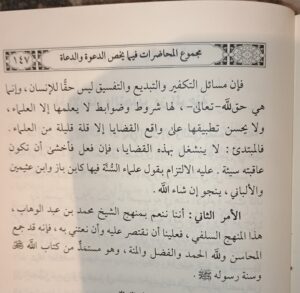
In a rebuke against those who seek to compare Shaikh al-Islam Ibn Taymiyyah and Sayyid Qutb, Shaikh al-Islam Ibn Taymiyyah and al-Mawdudi, or Shaikh al-Islam Ibn Taymiyyah and Hasan al-Bannah, Shaikh Abdus Salam Burjess, may Allah have mercy upon him, said:
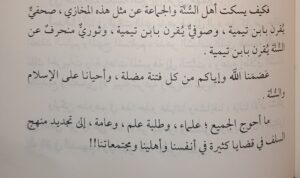
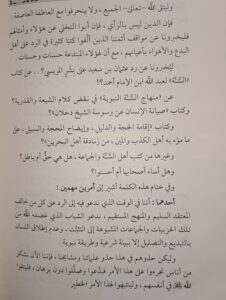
Thus, how can Ahlus Sunnah Wa Jama’ah remain silent about the likes of such disgraceful (things)? A journalist being compared to Ibn Taymiyyah, a Sufi compared to Ibn Taymiyyah, and a deviant revolutionary who deviated from the Sunnah being compared to Ibn Taymiyyah! May Allah protect us and you from every misleading trial, and grant us life upon Islam and the Sunnah. How much in need is everyone – scholars, students of knowledge, and the common people – of reviving the methodology of the (pious) predecessors in many matters within ourselves, our families, and our societies!
And let everyone fear Allah -The Most High – and not be deviated along with volatile emotions, fior indeed, the religion is not based on opinion. If they refuse to disassociate themselves from these people and their ilk, then let them inform us about the stances of our scholars who authored many books in refutation – by name – against the people of Bidah and (vain) desires, even though those Mubtadi’ah had many good deeds.
Let them inform us about the refutations by Uthman Ibn Sa‘id against Bishr al-Mareesee; about “Kitab As-Sunnah” by Abdullah Ibn Imam, “Minhaj as-Sunnah an-Nabawiyyah Fee Naqd Kalam ash-Shi‘ah Wal-Qadariyyah”, and the book “Siyanat al-Insan an Waswasat ash-Shaykh Dahlan, and the book “Iqamah al-Hujjah Wa ad-Dalil, wa Idah al-Mahajjah wa as-Sabil ala Ma Mawwaha Bihi Ahl al-Kadhib Wal-Mayn, min Zanadiqah Ahl al-Bahrayn, and other books of Ahlus Sunnah Wal-Jama‘ah — are they truth or falsehood? Did their authors do wrong, or did they do well?
And in concluding this statement, I point to two important matters:
The first is that indeed we are within a time wherein we call to refutation against everyone who opposes the sound creed and the upright methodology. We call upon the youth whom Allah has safeguarded from those illegal partisanships and dubious groups to establish verification, and not to unleash their tongues by declaring people Mubtad’ah and misguided, except based on the clear Shariah proofs and the prophetic path. Let their footsteps in this matter be based on the footsteps of our scholars and our Mashayikh, for indeed, at present, we complain regarding a people who have become bold enough to engage in this matter, thus, declaring others Mubtadi’ah and misguided without proof. Therefore, let them fear Allah in their souls and be mindful of this dangerous matter. For indeed, the Msaa’il of Takfeer, (declaring others disbelievers), Tabdee (declaring others Mubtadi’ah) and Tafseeq (declaring others sinners) are not the right of a person, rather, they are the right of Allah – The Most High. It has Shurut and Dawabit that none truly knows except the scholars, and none is proficient in applying it on the real situations (circumstances) except a few among the scholars. The beginner does not preoccupy himself with these issues; if he does, it is feared that its outcome will be evil. It is incumbent upon him to adhere to the statements of the scholars of Sunnah in this regard, such as Ibn Baz, Ibn ‘Uthaymin, and al-Albani, and InShaAllah, they will be safe.
The second matter: Indeed, we are blessed with the methodology of Shaikh Muhammad ibn ‘Abd al-Wahhab – this Salafi methodology. Therefore, it is incumbent upon us to limit ourselves to it and give it close attention, for indeed, it – all praise, grace and blessings belong to Allah – gathers virtues derived from Allah’s Book and the Sunnah of His Messenger. [3]
Al-Allamah Rabee Bin Hadi Al-Mad’khali, may Allah have mercy upon him, said: “The Salafiyyoon do not accept statements, except when they are based on evidence and proof”. [4]
The Shaikh, may Allah have mercy upon him, said:
When you speak about a Muslim, whether an individual who is a Mubtadi or a Sunni, firstly, examine yourself. What do you want through this speech? “Whoever believes in Allah and the last day should either speak good or remain silent”. If in this speech of yours there is good for the Muslims by warning them about this man, and your intention is to seek Allah’s Face, you intend to sincerely advice the ummah, then speak while being cautious of entering into personal desires and personal goals for revenge against this or that person. If the speech stem from an intention for revenge, this would be detrimental to the person (i.e the speaker) and would exceed the permissible allowance in this matter, whose initial basis is fundamentally prohibited. This is because Allah has forbidden backbiting and tale carrying, as these matters corrupt the lives of Muslims. A Muslim should resort to (such speech) only in cases of dire necessity. He does not unleash his tongue to speak freely. Instead, he only speaks out of necessity and when he knows completely that this matter is incumbent upon him and the people will benefit from it. May Allah bless you, be conscious (mindful) regarding this subject matter. [5]
The Shaikh, may Allah have mercy upon him, also said:
The seeker of truth is not diverted from the truth, fairness and justice due to admiration of the big personalities and being amazed by them, for indeed the truth is more worthy to be followed. It is not permissible to drop the proofs for the sake of this or that great man. The principle [rule] of the Muslim – the unbiased one, the seeker of truth – is always:
قُلْ هَاتُوا بُرْهَانَكُمْ إِن كُنتُمْ صَادِقِينَ
Say, bring forth your proofs if you are truthful. [An-Nahl. 64] [6]
Imam Ash-Shawkaanee, may Allah have mercy upon him, said:
“One of the reasons that leads to the abandonment of fairness and thus distances one from the truth -leads to concealment of truth and not clarifying that which Allah has obligated – is love of high status and wealth. Both these affairs are a greater enemy to a person than two hunting wolves just as Allah’s Messenger described, because indeed that was the reason that led the people of the scripture to distort Allah’s Books and concealed that which came to them of clear proofs and guidance, such as what happened to the Jewish Rabis, and indeed Allah informed us about this in His Mighty Book and the Messenger (also) informed us about it in the authentic narrations”. [7]
Exemplary Examples From The People of Knowledge When They Made Errors
A breathtaking clarification that followed a slip of the tongue- Al-Allamah Rabee
Painful Memories
Painful Memories About Some of Those Who Set Ablaze the Flames of Transgression and False Tabdi
[1] https://binbaz.org.sa/articles/29/الادلة-النقلية-والحسية-على-امكان-الصعود-الى-الكواكب
[2] الشيخ محمد بن صالح العثيمين-فتاوى الحرم النبوي-64b-7
https://alathar.net/home/esound/index.php?op=codevi&coid=117138
[3] Majmūʿ Muʾallafāt wa Taḥqīqāt Faḍīlat ash-Shaykh ad-Duktūr ʿAbd as-Salām Ibn Burjess. 3/145-147. Paraphrased
[4] Umdah Al-Abiy 417
[5] Fadl Al-Hajj Wat Talbiyah 43
[6] Al-Mulakh-khas Al-Jameel Fee Bayaan Manhaj Ash-Shaikh Rabee Fid-Da’wati Wal-Jarhi Wat-Ta’deel. Page 87
[7] An Excerpt from Adab a-Talab Wa Muntahaa al-Adab. pages 94-95. slightly paraphrased

Donate
Related Posts
Follow Us
Share
Related Posts
Donate to the Dawah in Manchester

Join the Umrah Trip