Author: Abdullah Jallow

Reflection on a Statement of Shaikh al-Islam Ibn Taymiyyah By Shaikh Abdur Razzaq Al-Badr

Imam As-Sadi, may Allah have mercy upon him, said that Shaikh Al-Islam Ibn Taymiyyah, may Allah have mercy upon him, said:

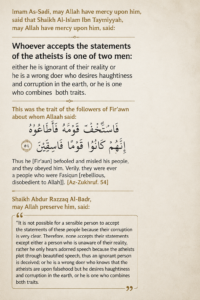
Whoever accepts the statements of the atheists is one of two men: either he is ignorant of their reality or he is a wrong doer who desires haughtiness and corruption in the earth, or he is one who combines  both traits. This was the trait of the followers of Fir’awn about whom Allaah said:

فاستخف قومه فأطاعوه إنهم كانوا قوما فاسقين

Thus he [Fir’aun] befooled and misled his people, and they obeyed him. Verily, they were ever a people who were Fasiqun [rebellious, disobedient to Allah]]. [Az-Zukhruf. 54]

Shaikh Abdur Razzaq Al-Badr, may Allah preserve him, said:

It is not possible for a sensible person to accept the statements of these people because their corruption is very clear. Therefore,  none accepts their statements except either a person who is unaware of their reality, rather he only hears adorned speech because the atheists plot through beautified speech, thus an ignorant person is deceived; or he is a wrong doer who knows that the atheists are upon falsehood but he desires haughtiness and corruption in the earth, or he is one who combines both traits.

Sharh Al-Adillah Al-Qawaati. Paraphrased. Listen here:

https://al-badr.net/download/esound/choroohat/al-adillah-alqowati/10.mp3

More Here:

AboutAtheism.Net | Evaluating Atheist Pretensions- By Shaikh Abu Iyaad, may Allah preserve him.

http://www.aboutatheism.net/

[32] Exalt Allah And His Shariah First and Foremost

Allah, The Most High, said:

أَيَحْسَبُ الْإِنسَانُ أَلَّن نَّجْمَعَ عِظَامَهُ
بَلَىٰ قَادِرِينَ عَلَىٰ أَن نُّسَوِّيَ بَنَانَهُ

Does (the disbelieving) man think that We will not assemble his bones (after death)? Yes (leave aside his bones), We are able to put together his (very) fingertips. (1)

After mentioning the resurrection, He informs us that despite this, some wilful persistent deniers reject the Day of Resurrection. He said:

أَيَحْسَبُ الْإِنسَانُ أَلَّن نَّجْمَعَ عِظَامَهُ

Does (the disbelieving) man think that We will not assemble his bones (after death)?

As He (Allah) said in another Ayah:

 قَالَ مَنْ يُحْيِي الْعِظَامَ وَهِيَ رَمِيمٌ

He (the disbeliever) says, “Who will give life to bones while they are disintegrated?”

Due to his ignorance and enmity, he considers it impossible (far-fetched) that Allah has the power to recreate his bones, which are the frame of the body.

Thus, He (Allah) responds to him by saying:

 بَلَى قَادِرِينَ عَلَى أَنْ نُسَوِّيَ بَنَانَهُ

Yes (leave aside his bones), We are able to put together his (very) fingertips.

Meaning: The tips of his fingers and their bones – necessitating the recreation of all the parts of the body, for indeed when the fingertips and fingers are recreated, the recreation of the entire body is completed.

His (mere) denial of Allāh’s power is not because of any deficiency in the proof that (Allah is unable do that), rather, it (his denial) occurs as a result of his intention and desire to deny the resurrection ahead of him, and Fujūr [intense immorality, which in this context implies] lying intentionally. (2)


(1)https://www.thenoblequran.com/q/#/verse/75/3
https://www.thenoblequran.com/q/#/verse/75/4

(2) An Excerpt from Tafseer As-Sadi

Subtleties in the Battle Against the Nafs

Battle With The Soul When Urged Towards Evil

Imam Ibn Al-Qayyim, may Allah have mercy upon him, stated:

A servant of Allah does not embark upon what he has been forbidden except through two ways: Firstly, (either) harbouring evil thoughts about his Lord that if he were to obey Allah and preferred Him, He (Glorified be He) will not grant him that which is better from the lawful (things), or his acknowledgement (i.e. that Allah will grant him something better than the forbidden thing he pursues) and that whoever leaves something for Allah’s sake, He (Glorified be He) will replace it with something better; but lusts overcomes his patience and desires his intellect. The first affair is due to weakness in knowledge and the second a weakness in intellect and insight”. [Al-Fawaa’id. Page 78]

Al-Allamah Abdur-Rahman Ibn Yahyah Al-Mu’allimee, may Allah have mercy upon him, stated:

The human being does not hate truth as a result of considering it to be falsehood, but he loves truth by way of his Fitra (natural inclination) and loves falsehood due to his desires and lusts. The shift towards success or loss defends on what he gives preference to. Allaah (The Blessed and Exalted) said:

فَأَمَّا مَن طَغَىٰ

وَءَاثَرَ ٱلۡحَيَوٰةَ ٱلدُّنۡيَا

فَإِنَّ ٱلۡجَحِيمَ هِىَ ٱلۡمَأۡوَىٰ

وَأَمَّا مَنۡ خَافَ مَقَامَ رَبِّهِۦ وَنَهَى ٱلنَّفۡسَ عَنِ ٱلۡهَوَىٰ

فَإِنَّ ٱلۡجَنَّةَ هِىَ ٱلۡمَأۡوَىٰ

Then, for him who Tagha (transgressed) and preferred the life of this world (by following his evil desires and lusts), Verily, his abode will be Hell-fire; But as for him who feared standing before his Lord, and restrained himself from impure evil desires, and lusts. Verily, Paradise will be his abode. [An-Naazi’aat. 37-41]

And you can say: Allah (The Blessed and Exalted) is on one side and (a person’s evil) desires are on another side (in opposition to what Allah has commanded and prohibited). Allaah (The Most High) said:

أَرَءَيۡتَ مَنِ ٱتَّخَذَ إِلَـٰهَهُ ۥ هَوَٮٰهُ أَفَأَنتَ تَكُونُ عَلَيۡهِ وَڪِيلاً

أَمۡ تَحۡسَبُ أَنَّ أَڪۡثَرَهُمۡ يَسۡمَعُونَ أَوۡ يَعۡقِلُونَ‌ۚ إِنۡ هُمۡ إِلَّا كَٱلۡأَنۡعَـٰمِ‌ۖ بَلۡ هُمۡ أَضَلُّ سَبِيلاً

Have you (O Muhammad) seen him who has taken as his ilah (god) his own desire? Would you then be a Wakil (a disposer of his affairs or a watcher) over him? Or do you think that most of them hear or understand? They are only like cattle; nay, they are even farther astray from the Path. (i.e. even worst than cattle).” [Al-Furqan. 43-44]

And Allah (The Most High) said:

أَفَرَءَيۡتَ مَنِ ٱتَّخَذَ إِلَـٰهَهُ ۥ هَوَٮٰهُ وَأَضَلَّهُ ٱللَّهُ عَلَىٰ عِلۡمٍ۬ وَخَتَمَ عَلَىٰ سَمۡعِهِۦ وَقَلۡبِهِۦ وَجَعَلَ عَلَىٰ بَصَرِهِۦ غِشَـٰوَةً۬ فَمَن يَہۡدِيهِ مِنۢ بَعۡدِ ٱللَّهِ‌ۚ أَفَلَا تَذَكَّرُونَ

Have you seen him who takes his own lust (vain desires) as his ilah (god), and Allah knowing (him as such), left him astray, and sealed his hearing and his heart, and put a cover on his sight. Who then will guide him after Allah? Will you not then remember?” [Al-Jaathiyah. Ayah 23] [at-Tankeel 2/179 with the checking of Imam Al-Albani, rahimahullah]


Subtle Desire For Position, Fame etc

Shaikh Al-Islam Ibn Taymiyyah, may Allah have mercy upon him, said:

There are many cases where the (desires) of the souls are mixed with Ash-Shahawaat Al-Khafiyyah [i.e. desires that are concealed, subtle etc] that corrupts its fulfilment of (perfect) love of Allah, servitude to Him and establishment of the religion sincerely for the sake of Allah, just as Shaddaad Ibn Aws [may Allah be pleased with him] said, “O Arabs! Indeed, the affair I fear for you the most is Riyaa and Shahwa Al-Khafiyyah”. It was said to Abu Daawud As-Sijistaani, “What is Ash-Shahwa Al-Khafiyyah?” He said, “Love of leadership”. [Majmoo Al-Fataawaa 10 /214-215]


Illegal Partisanship

Al-Allamah Abdur Rahman Bin Yahyah Al-Mu’allimee [may Allah have mercy upon him] said:

A person is nurtured upon a religion, creed, school of thought or views acquired from his nurturer and teacher, which he considers to be the truth and followed it for a long time; then when it becomes clear to him that (such religion, creed, view or school of thought) is false, it becomes difficult for him to acknowledge, just as when his forefathers, ancestors or the one he follows are upon a (particular) way and then its falsity is clarified for him. This is because he sees that their deficiencies necessitate his own deficiencies and acknowledgement of their misguidance or errors necessitates his own deficiencies. In this era of ours, you even see a woman who comes across an affair related to the religion – in which there is a difference of opinion between the mother of the believers Aa’isha and others amongst the companions [may Allaah be pleased with all of them], so she defends Aa’isha’s position solely due to the fact that she is a woman like her. So, when she presumes and then claims that Aa’Isha is correct and those men who oppose her position are mistaken, then in this is an affirmation of Aa’Isha’s virtue over those men, which then becomes a virtue for women unrestrictedly and she receives some of that. And through this appears – to you – the underlying reasons behind the illegal partisanship of an Arab to an Arab, a Persian to a Persian, a Turk to a Turk and other than that. [An Excerpt From Aathaar Ash-Shaikh Al-Allamah Abdur Rahman Bin Yahyah Al-Mu’allimee. Vol 11. Page 294]


Conversation between Abu Jahl and His Nephew Al-Musawwar Bin Makhzamah


Al-Musawwar Bin Makhzamah: ‘’O my uncle! Did you use to accuse Muhammad of lying before he started saying what he says now [i.e. his call to Tawheed]?

Abu Jahl: “By Allah, indeed Muhammad was a trustworthy young man amongst us and we have never experienced lying from him.

Al-Musawwar Bin Makhzamah: “O my uncle! So why is it that you do not follow him?”

Abu Jahl: “O son of my sister! We competed with Banu Hashim in nobility [i.e. which clan is more noble], so they used to feed [the pilgrims] and we used to feed the [pilgrims]; they used to provide water for [the pilgrims] and we used to provide water for [the pilgrims]; they used to give protection [to the destitute] and we used to give protection [to the destitute] until we were equal [i.e. in competing one another for nobility]. Then they said, “There is a Prophet from us”, so when are we going to get something similar to this!!

Conversation between Abu Jahl and Akhnas Bin Shuraiq

Akhnas Bin Shuraiq said to Abu Jahl on the day of Badr [i.e. the battle of Badr]: “O Abul Hakam! Inform me about Muhammad, as to whether he is a truthful person or a liar, for indeed there is no one here from Quraish who will hear our speech?

Abu Jahl replied to Akhnas: “Woe to you! By Allah, indeed Muhammad is a truthful person and Muhammad has never lied, but if Banu Qusay take the leadership, the position of gatekeepers of the Kabah, providers of water for the pilgrims and Prophet hood [i.e. the Prophet Muhammad is from their clan], then what will the rest of Quraish have?! [Hidaayatul Hayaaraa Fee Ajwibatil Yahood Wan-Nasaaraa’ pages 18-19]

Shaikh Al-Islam Ibn Taymiyyah [may Allah have mercy upon him] said:

إنّ الإنسانَ قد يَعرفُ أنّ الحقَّ مع غيره،ومع هذا يَجحدُ ذلك؛لحسدهِ إيّاه أو لطلبِ عُلُّوهِ عليه أو لهوى النّفسِ،ويَحملُه ذلك الهَوى على أنْ يعتديَ عليه ويَرُدَّ ما يقولُ بكلِّ طريقٍ،وهو في قلبهِ يَعلمُ أنّ الحقَّ معهُ”

(الإيمان)(ص١٥٢)

“Indeed, a person may know that the truth is with other than him, (but) despite this, he wilfully denies it due to his envy towards (the one with the truth) or due to seeking to be superior over him or due to desire; and this desire makes him transgress against him and rejects what he says in every way, whilst knowing – in his heart – that the truth is with him (i.e. the one he opposes).


A Subtle Affair Related to Inclinations

Al-Allamah Rabee Bin Hadi Al-Mad’khali, may Allah have mercy upon himalso stated:

فيجب على كل مسلم أن يفتش نفسه فقد يميل إنسان إلى صاحب الحق لهوى ، فقبل أن يتبين له الحق يتمنى أن يكون فلان هو المنتصر بالحجة أو غيرها فتميل نفسه لأنه فلان ، ولو كان على الحق لا يجوز أن يوجد هذا الميل، فيقول: إذا وجد هذا الميل ولو مع صاحب الحق يكون من حكم الجاهلية ، وهذا أمر لا يخطر بالبال عند كثير من الناس

فيجب على المسلم أن يراقب الله في القضايا المختلف فيها ، وأن يكون قصده فقط معرفة الحق سواء مع هذا أو مع ذاك .

ومن هنا يقول الشافعي : “إذا دخلت في مناظرة لا أبالي إذا كان الحق مع صاحبي أو معي” فلا يبالي ولا يتمنى أن يكون الحق معه بل يتمنى أن يكون مع صاحبه وأن تكون النصرة له ، هذا هو الخلق العالي وهذا هو الدين المستقيم

It is obligated to every Muslim to examine himself, for indeed a person might incline towards (another) person who is upon truth based on his desires; then even before the truth is clear to him, he wishes that such and such person should be the one aided with the proofs or something else, so, his soul inclines (towards that person) because he (i.e. that person) is such and such (personality). Therefore, even if that person is upon the truth, it is not permissible for this type of inclination to be present. If this type of inclination is present, even with the person upon truth, it is considered to be a trait of pre-Islamic ignorance. This is an affair that does not cross the minds of many people. Therefore, it is obligated on a Muslim – in relation to affairs wherein people differ- that he is attentive to the fact that Allaah knows, sees and hears everything, and his intention (goal or aim) should only be that he (wants) to know the truth whether it is with this or that person. And in relation to this, Imam Ash-Shafi’ee said, “When I enter into a discussion, I am not bothered whether the truth is with me or with the other person”. So, he is not bothered nor does he wish that the truth is with him; rather he wishes that it is either with the other person or with him. This is the lofty moral conduct and the upright religion. [http://www.rabee.net/ar/articles.php?cat=8&id=172. slightly paraphrased ]


A Subtle Affair Regarding Patience

Sa’eed Bin Jubayr [may Allah have mercy upon him] said, “Patience is the person’s acknowledgment that what has afflicted him is from Allah, seeking for reward from Allah and hoping for Allah’s good recompense. Indeed, a man maybe in a state of distress whilst he is being whipped, but you see nothing from him except patience”. [As-Sabr Wath-Thawaab Alayhi. By Ibn Abee Dunya page 113]

Regarding the statement “Patience is the person’s acknowledgement that what has afflicted him is from Allah”, Imam Ibn Al-Qayyim said, “It is as if this statement is an explanation of the statement “Innaa lil laah – to Allah we belong”. So, the person acknowledges that he belongs to Allah and his owner does whatever He wants with him.

Regarding the statement “Seeking for reward from Allah”, Imam Ibn Al-Qayyim Qayyim said, “It is as if this statement is an explanation of the statement “Wa Innaa Ilayhi Raaji’oon – and to Him (i.e. Allah) we shall return”, meaning we shall return to You, so that you reward us due to our patience and the reward for being patient during calamity will not be lost”.

Regarding the statement “Indeed, a man maybe in a state of distress whilst he is being whipped, but you do not see from him except patience”, Imam Ibn Al-Qayyim Qayyim said, “Patience is not that one bears the whip, rather it is to restrain the heart from getting angry with Allah’s decree and to restrain the tongue from complaining about Allah. Whoever is whipped and his heart is displeased with Allaah, then he is not one who is patient”. [Iddat As-Saabireen pages 183-184]

We ask Allah:

اللَّهُمَّ إِنِّي أَعُوذُ بِكَ مِنَ الْعَجْزِ وَالْكَسَلِ وَالْجُبْنِ وَالْبُخْلِ وَالْهَرَمِ وَعَذَابِ الْقَبْرِ اللَّهُمَّ آتِ نَفْسِي تَقْوَاهَا وَزَكِّهَا أَنْتَ خَيْرُ مَنْ زَكَّاهَا أَنْتَ وَلِيُّهَا وَمَوْلاَهَا اللَّهُمَّ إِنِّي أَعُوذُ بِكَ مِنْ عِلْمٍ لاَ يَنْفَعُ وَمِنْ قَلْبٍ لاَ يَخْشَعُ وَمِنْ نَفْسٍ لاَ تَشْبَعُ وَمِنْ دَعْوَةٍ لاَ يُسْتَجَابُ لَهَا

O Allah! I seek refuge in You from helplessles incapacity, from laziness, cowardice, miserliness and senility, and from punishment of the grave. O Allah! Grant to my soul righteousness and purify it, for You are the Best Purifier of it; You are its Protector and Guardian. O Allah! I seek refuge in You from the knowledge which does not benefit, a heart that does not fear (You), a the soul that does not become contented and a supplication that is not responded to. [Saheeh Muslim2722]

[1] Scholar Behind My View Is More Knowledgeable Than the Scholar Behind Yours

Imam Ash-Shawkaanee, may Allah have mercy on him, said:

فاعلم أنه إذا وقع الخلاف بين المسلمين في أن هذا الشيء بدعة او غير بدعة ، أو مكروه او غير مكروه ، او محرم او غير محرم ، او غير ذلك ، فقد اتفق المسلمون : سلفهم وخلفهم ، من عصر الصحابة الى عصرنا هذا – وهو القرن الثالث عشر منذ البعثة المحمدية – أن الواجب الاختلاف في أي أمر من أمور الدين بين الأئمة المجتهدين : هو الرد الى كتاب الله سبحانه ، وسنة رسوله الناطق بذلك
الكتاب العزيز ( ٤ : ٥٩ فإن تنازعتم في شيء فردوه إلى الله والرسول ( ومعنى الرد الى الله سبحانه : الرد الى كتابه
ومعنى الرد إلى رسوله ال : الرد الى سنته بعد وفاته وهذا مما لا خلاف فيه بين جميع المسلمين . فإذا قال مجتهد من المجتهدين
هذا حلال . وقال الآخر : هذا حرام : فليس
أحدهما أولى بالحق من الآخر وإن كان اكثر منه علماً ، أو اكبر منه سنا ، او اقدم منه عصراً لأن كل واحد منهما فرد من أفراد عباد الله ، ومتعبد بما في الشريعة المطهرة، مما في كتاب الله وسنة رسوله ، ومطلوب منه ما طلب الله من غيره من العباد . وكثرة علمه وبلوغه درجة الاجتهاد او مجاوزته لها لا يسقط عنه شيئاً من الشرائع التي شرعها الله لعباده ، ولا يخرجه من جملة المكلفين من العباد

Know that when differing arise among Muslims regarding whether this thing (matter) is a Bidah or not a Bidah, (something) disliked or not disliked, prohibited, or not prohibited, or other than that, there is a consensus among Muslims (i.e. their scholars) —both the early generations and those that followed, from the era of the Companions to the present day, which is the thirteenth century since the advent of the Prophethood—that the obligation in any differing – in any issue among the issues of the religion – between Imams of Ijtihad is to refer back to the Book of Allah, the Exalted, and the Sunnah of His Messenger, as stated in Allāh’s Book:

فَإِن تَنَٰزَعْتُمْ فِى شَىْءٍ فَرُدُّوهُ إِلَى ٱللَّهِ وَٱلرَّسُولِ

And if you disagree among yourselves over anything then refer it back to Allāh and the Messenger. [An-Nisa 59]

The meaning of referring back to Allah, the Exalted, is to refer to His Book, and the meaning of referring to His Messenger, peace and blessings of Allāh be upon him, is to refer to his Sunnah after his passing. This is a matter about which there is no differing among the Muslims.

If a Mujtahid among the Mujtahideen says that this (thing) is lawful while another says this (thing) is unlawful, neither is any of the two more entitled to the truth than the other, even if he possesses more knowledge, older, or closer to the (early era of Islam). This is because each of them is a servant of Allāh among the servants of Allāh, (required) to worship (Allāh) based on what is found in the pure Sharia- that which is found in Allāh’s Book and the Sunnah of His Messenger, and what is required of him is required of other than him among Allāh’s servants. His abundant knowledge, the attainment of the level of Ijtihad, or even surpassing it, does not exempt him from any of the religious laws legislated by Allah for His servants, nor do they exclude him from those who have reached the age in which one is held accountable for his actions among the servants (of Allāh).

Sharh As-Sudoor Bi-Tahreem Raf Al-Qubur pages 1-2

Comprehensive advice of a beloved father to a beloved son

Imam Ibn Muflih, may Allah have mercy upon him, said:

Abdullāh, the son of Imam Ahmad, once said to his father: “O my dear father! Give me some advice”. He replied: “O my dear son! Make an intention to do good, for indeed you will not cease to be upon good as long as you intend good”.

This is great advice- easy for the one who is asked, easy to understand and easy to put into practice by the questioner. The doer of it is rewarded constantly- continuous and ongoing because of its lasting and continuous nature. It applies to all inward acts of the heart that are required by the Shariah, whether related to (one’s dealing with) the Creator or the creation. A person is rewarded for such intentions, and I have not found any scholarly disagreement concerning the reward for them. Shaikh Taqi Ad-Deen, may Allah have mercy upon him, said in his book Kitāb al-Īmān: “Whatever good speech or good deed is intended, then indeed, it is written for a person as one good deed. When it becomes actual speech or action, ten good deeds are recorded for him, up to seven hundred times as much. This is based on the well-known hadith concerning intention”.

Acting upon this advice also necessitates abandoning the actions of the heart that are considered blameworthy by the Shariah, for whoever does them is no longer within Allah’s protection and safeguarding; rather, he may have fallen into something from which evil and punishment are feared. This text demonstrates that a person is held accountable for blameworthy actions of the heart. Similarly, is the statement of Imam Ahmad in the section that comes before the sections on learning the Qur’an and Hadith: “If you would like Allah to continue for you what you love, then persist in doing what He loves”. As for when one neither intends good nor evil, it is far-fetched that a rational person would be completely free of either intention. Then, among good intentions there are some that are obligatory and if abandoned, then without a doubt, one has committed something forbidden.

What a piece of advice this is! How great its impact, and how great its benefit! We ask Allah, The Most High, to grant us and our Muslim brethren the ability to act upon it, grant success in adhering to it, and in all that He loves and is pleased with. Amin. The likes of this (matter) are admonitions (advices) of the Imams of the Muslims—may Allah be pleased with them all. And Allah, Glorified be He, free from all imperfections, knows best.

Al-Aadab Ash-Shar’iyyah 1/159-160. Publisher: Risalah Publishers 1st Edition 1436 [2015]

Exercising caution before promoting people – By Al Allamah Zayd Bin Hadi Al-Mad’khali

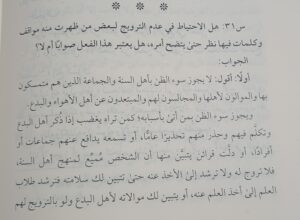
Question 31: Exercising caution by not promoting some of those from whom (certain questionable) stances or statements have manifested until his situation becomes clear: is this action considered to be correct or not?

The Shaikh, may Allah have mercy upon him, responded:

First, I say: it is not permissible to harbour an evil suspicion towards Ahlus Sunnah Wal Jama’ah — those who adhere to it (i.e. the path of Ahlus Sunnah), establish loyalty to its people, sit with them, and distance themselves from the people of (vain) desires and Bid‘ah.

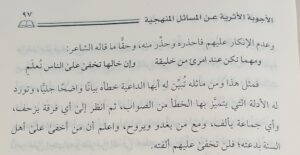
(On the other hand), it is permissible to harbour an evil suspicion towards the one who (manifests) its reasons (or signs that warrant harbouring an evil suspicion), such as the one you see getting angry when the people of Bid‘ah are mentioned- (when they are) spoken against and warned against in general; or you hear him defending them — whether groups or individuals; or there are indications from which manifests that indeed the individual is one who dilutes the methodology of Ahlus Sunnah. (In this case), neither promote him nor direct (people) to take knowledge from him until the safety of his situation is clear to you. Then, you may guide students of knowledge to take knowledge from him; or it becomes clear to you that he is allied with the people of Bid‘ah, even by promoting them or not denouncing them. [Footnote a] Then beware of him and warn against him. And (indeed) what the poet said is true: And whatever a person may possess of a trait, even if he thinks it is hidden from people, it will (eventually be known”.

Thus, O caller to the path of Allah! With regards to this person and the one like him, you should clarify his mistake to him in a clear and explicit manner, and present to him the proofs by which truth is distinguished from falsehood. Then observe to which group he inclines, which people he associates with, and with whom he comes and goes. And know that whoever conceals his Bid‘ah from Ahlus Sunnah, his companionship and affiliations will not be hidden from them. [end of quote] [Source: al-Ajwibah Al-Athariyyah an al-Masāʾil al-Manhajiyyah: Khamsūna Suʾālan wa Jawāban pages 96-97. Paraphrased]

We ask: Provide us with only one example where Shaikh Abu Iyaad, may Allah preserve him, became angry or defended any person of Bidah – individual or group – when they were mentioned and criticised! Provide us with one clear example, with clear, unambiguous evidence, where Shaikh Abu Iyaad dilutes the methodology of Ahlus Sunnah Wal Jama’ah! Provide us with one example where Shaikh Abu Iyaad promotes any man of Bidah or directs people to benefit from them! Provide us with one situation where Shaikh Abu Iyaad associates with Ahlul Bidah—whether individuals, groups, or anyone connected to them in any way! Therefore, we ask once more, “Where is the clear, unambiguous evidence for the Tabdee against Shaikh Abu Iyaad, claiming he is a plant?”

The False Tabdee Must Be Recanted Because Neither Shariah Nor Sound Intellect Acknowledges That Harm Can Remain

[1] Still Waiting! Where’s The Clear Unambiguous Knowledge-Based Shariah Proof for the Tabdee?

[2] Still Waiting! Where’s The Clear Unambiguous Knowledge-Based Shariah Proof for the Tabdee?

[3] Still Waiting! Where’s The Clear Unambiguous Knowledge-Based Shariah Proof for the Tabdee

[4] Still Waiting! Where’s The Clear Unambiguous Knowledge-Based Shariah Proof for the Tabdee

[5] Still Waiting! Where’s The Clear Unambiguous Knowledge-Based Shariah Proof for the Tabdee

[6] Still Waiting! Where’s The Clear Unambiguous Knowledge-Based Shariah Proof for the Tabdee

[7] Still Waiting! Where’s The Clear, Unambiguous, Knowledge-Based Shariah Proof for the Tabdee

[8] Still Waiting! Where’s The Clear, Unambiguous, Knowledge-Based Shariah Proof for the Tabdee

[9] Still Waiting! Where’s The Clear, Unambiguous, Knowledge-Based Shariah Proof for the Tabdee

[10] Still Waiting! Where’s The Clear, Unambiguous, Knowledge-Based Shariah Proof for the Tabdee

[11] Still Waiting! Where’s The Clear, Unambiguous, Knowledge-Based Shariah Proof for the Tabdee

[12] Still Waiting! Where’s The Clear, Unambiguous, Knowledge-Based Shariah Proof for the Tabdee

[13] Still Waiting! Where’s The Clear, Unambiguous, Knowledge-Based Shariah Proof for the Tabdee

Footnote a: https://salafidawahmanchester.com/2026/06/03/amicable-and-fruitful-discussions-with-mature-friends-on-enjoining-good-and-forbidding-evil/

War Strategy Is Not Synonymous With Treachery

War Strategy Is Not Synonymous With Treachery: Contemplation As We Witness The Callous  Deception, Brutality and Treachery of Some Demagogues and Ideologues In Our Era, Such As Netanyahu and his Ilk

Ka’b Bin Malik, may Allah be pleased with him, said: “When the Prophet, peace and blessings of Allah be upon him, intended to go on an expedition (against a people with whom there is no treaty and war was declared), he always pretended to be going somewhere else, and he would say, ‘War is stratagem'”. [1]

Imam at-Tabari, may Allah have mercy upon him, said: “To give a wrong impression – during war – through Mu’aaradah [i.e. making one’s statements or actions obscure (ambiguous) to mislead the opponent about one’s real plans] is allowed”. [2]

Ibn al-Arabi Al-Maliki, may Allah have mercy upon him, said, “Stratagem during war takes place through concealment and giving a wrong impression (to the opponent)”. [3]

The scholars unanimously agree that it is permissible to deceive the unbelievers (i.e. when a Muslim country declares war), but this is not permissible if it violates a covenant or an agreement that was made for a guarantee of safety. [4]

However, stratagem does not breaking covenants without conditions. Abu Al-l Fayd, may Allah have mercy upon him, narrated that Sulaym Ibn Amir, may Allah have mercy upon him, reported that there was a peace treaty between Mu’aawiyah, may Allah be pleased with him and his father, and the Byzantines. He was marching towards their country and when the covenant came to an end, he would attack them. A man came on a horse, saying, “Allah is the Most Great! Allah is the Most Great! Let there be fulfillment and not treachery!” Mu’aawiyah sent for him and questioned him about that. He said: “I heard Allah’s Messenger, peace and blessings of Allah be upon him, say, “When one has a covenant with people he must not strengthen or loosen it until its term comes to an end or he brings it to an end in agreement with them”. He said, “So Mu’aawiyah returned with the people”. [5]

Abdullah Ibn Umar, may Allah be pleased with him and his father, reported that Allah’s Messenger, peace and blessings of Allah be upon him, said: “When Allah gathers the earlier and later generations on the Day of Resurrection, He will raise a banner for every treacherous person and it will be announced that this is the treachery of this person, the son of this person”. [6]


[1] Sunan Abu Dawud. Hadeeth Number 2637

[2] Sharh Saheeh Muslim Vol 12. Page 40

[3] Fat-hul Baaree Sharh Saheeh Al-Bukhaaree. Vol 6. Pages 190-191

[4] An Excerpt from Awnul Ma’bood Sharh Sunan Abee Dawud Vol 7. Page 214

[5] Sunan At-Tirmidhee 1580

[6]Saheeh Muslim. Hadeeth Number 1735


[6] The danger of deliberately sheltering ahlul bidah, including the haddadiyyah

Imam Al-Awzaa’ee, may Allah have mercy upon him, said:

O Muslims! Fear Allah, accept the advice of the sincere advisers and the admonition of the admonishers. know that this knowledge is religion, so beware of what you do, from whom you take your religion, the one you follow and the one with whom your religion is safe, because indeed all the proponents of religious innovation are all falsifiers, liars and sinners. They are not cautious – neither do they pay attention nor do they fear, and together with that they are not to be trusted that they would not distort what you hear.

They say what they do not know with regards to what they disapprove and when proclaiming their lies; but Allaah (knows, hears and sees) what they do. Therefore, be cautious of them, trust them not, reject them and avoid them, because indeed this is what your earlier scholars did and commanded, and likewise the righteous ones who came thereafter.

Be careful of opposing Allaah and being the means to destroying the religion He has ordained – breaking its commands and prohibitions, nullifying and weaking it by respecting the innovators in religious affairs and those who initiate that which is not from the religion, because you know what has been transmitted (i.e. the prohibitions) about respecting or exalting them. And what can be greater respect and exaltation than acquiring your religion from them- following and believing them, drawing close to them and assisting them to entice the ones they entice and woo to their views, and the religion (i.e. Bidah) they follow. This is sufficient to be regarded as associates of theirs in what they do.

Tarikh Dimashq 6/361

Do You Find People Overcrowding To View The Beauty of The Sky?!

Imam Ibn Qudamah, may Allah have mercy upon him, stated:

There is no envy among (upright) scholars since their goal is to gain knowledge and awareness of Allah, Glorified be He and free from all imperfections, which is a vast matter. Their goal is to attain a high status in the Sight of Allah, and that which Allah has kept in the afterlife is unlimited because Allah’s loftiest blessing is the pleasure of meeting Him, which cannot be prevented or restricted, nor can some competitors make it restricted for others; instead harmony is enhanced as the competitors increase; but if wealth and status become the scholars’ goal, they will envy one another.

The difference between knowledge and wealth is that wealth does not remain in the hands of a single person, whereas knowledge settles in the heart of a scholar and the heart of the one taught by the scholar while remaining in the heart of the scholar. As a result, whoever contemplates the Greatness of Allah and His Mighty Dominion, it will become the greatest delight for him than any other blessing, because he cannot be prevented or restricted from doing so. He will not be envious of anyone because even if others were aware of what he is aware of, it would not diminish his pleasure in the affair. You do not find people overcrowding to view the beauty of the sky because it is vast and unrestricted.

An Excerpt from ‘Mukhtasar Minhaj Al Qasidin. page 199

The Heart’s Confusion Between Disease and Cure Due To Ignorance and Wrongdoing

Imam Ibn Muflih, may Allah have mercy upon him, said:

Know that hearts become weak and sick, and they may even perish (degenerate) due to heedlessness, sins, and abandoning (the purpose for which) they were created, such as the deeds of the hearts that are required in the Shariah. The greatest of this is associating partners with Allah. (On the other hand), they become alive, strengthened, sound through pure monotheism, vigilant and awake by fulfilling (the purpose for which) they were created, since an opposite is removed by its opposite, and a thing is affected by the reverse of what previously affected it. Abdullah ibn al-Mubarak said, may Allah have mercy upon him, said:
I have seen that sins bring death to hearts, and persistence in them may lead to humiliation. Abandoning sins is the life of hearts, and it is better for your soul to disobey them.

Allah, The Most High, said:

أَوَمَن كَانَ مَيْتًا فَأَحْيَيْنَٰهُ وَجَعَلْنَا لَهُۥ نُورًا يَمْشِى بِهِۦ فِى ٱلنَّاسِ كَمَن مَّثَلُهُۥ فِى ٱلظُّلُمَٰتِ لَيْسَ بِخَارِجٍ مِّنْهَا

Is he who was dead and We gave him life and set for him a light (of Belief) whereby he can walk amongst men, like him who is in the darkness from which he can never come out? [Al-An’am 122] [1]

Imam Ibn Al-Qayyim, may Allah have mercy upon him, said about this Ayah:

He (this person) is given both light and life, just as the one who turns away from the (Qur’an and Sunnah) receives both death (a misguided heart) and darkness (misguidance). Ibn Abbas, may Allah be pleased with him and his father, and all the Mufassirun said that such a person that he used to be an unbeliever, then Allah guided him. And regarding Allah’s statement:

وَجَعَلْنَا لَهُ نُورًا يَمْشِي بِهِ فِي النَّاسِ

And set for him a light whereby he can walk amongst men.

This includes a number of (things) and one of them is that he walks amongst the people with light, while the people are in darkness, thus, his example and theirs is like that of a people who got lost during nightfall and could not find their way, while he had light whereby he could walk in the road, and could see as well as see what he is to be cautious of. The second is that he walks amongst them with his light, so they borrow from it due to their need for it. The third is that he walks with his light on the day of judgement on the bridge of as-Siraat, while the people of Shirk and Nifaaq remain in the darkness of their Shirk and Nifaq. [2]

It is reported in Al-Bukhari and Muslim, or in Ṣaḥīḥ Muslim from Hudhayfah ibn al-Yaman, may Allah be pleased with him, [who said that Allāh’s Messenger – peace and blessings of Allah be upon him said]: “When a servant (of Allah) commits a sin, a black spot is marked upon his heart. Then, if he commits another sin, another black spot is marked upon his heart, until it becomes dark and covered over. At that point, it no longer recognises what is good nor rejects what is evil, except for whatever inclination of desire it has absorbed.[Sahih Muslim 144]

Thus, (vain) desire is one of the greatest diseases and opposing it is one of the greatest remedies. The human soul is prone and inclined towards ignorance and wrongdoing (if it is not guided), as Allah The Most High said:

إِنَّا عَرَضْنَا ٱلْأَمَانَةَ عَلَى ٱلسَّمَٰوَٰتِ وَٱلْأَرْضِ وَٱلْجِبَالِ فَأَبَيْنَ أَن يَحْمِلْنَهَا وَأَشْفَقْنَ مِنْهَا وَحَمَلَهَا ٱلْإِنسَٰنُ إِنَّهُۥ كَانَ ظَلُومًا جَهُولًا

Truly, We did offer Al-Amanah (the trust or moral responsibility or honesty and all the duties which Allah has ordained) to the heavens and the earth, and the mountains, but they declined to bear it and were afraid of it (i.e. afraid of Allah’s Torment). But man bore it. Verily, he was unjust (to himself) and ignorant (of its results). [Al-Ahzab 72]

As a result of its ignorance, it (the soul) thinks that its cure is found in following its (vain) desire, even though it is its greatest disease and the cause of its ruin. It (ignorantly and wrongfully) places the disease in the place of the remedy and the remedy in place of the disease, thus, various ailments and diseases arise from this. However, despite this, it declares itself innocent and blames its Lord, The Mighty and Majestic, through what his situation manifests and may even clearly utter this blame with the tongue and does not accept advice due to wrongdoing and ignorance.

Due to this, the hadith reported by Ibn Abbas – regarding the supplication for distress (a)– combines an affirmation of Allah’s perfect Lordship over all the creation, necessitates His oneness and that none deserves to be worshipped, feared or placing hope on anyone, except Him, Glorified be He, free from all imperfections, The Most High. In (this du’aa also is an affirmation) of His absolute Greatness, which necessitates an affirmation of every perfection. It contains the affirmation of His forbearance, which necessitates the perfection of His mercy and beneficence. Thus, the heart’s knowledge of this, necessitates its engagement in the acts of worship of the heart that are required by the Shariah, experiences a delight and joy that repels what has afflicted it, or at least diminishes it based on the strength or weakness of this knowledge- similar to a sick person who receives something that strengthens his natural physical condition. These Divine Attributes are profoundly suitable for relieving what afflicts the heart. The more a person pays closer attention to this, tastes and experiences it directly more than (others), the (effects) of it become more manifest to him than to others. [3]

—————————————————
[a] Ibn Abbas, may Allah be pleased with him, reported that Allah’s Messenger, peace and blessings of Allah be upon him, used to say during times of distress:

لا إلَهَ إلَّا اللهُ العَظيمُ الحَليمُ، لا إلَهَ إلَّا اللهُ رَبُّ العَرشِ العَظيمِ، لا إلَهَ إلَّا اللهُ رَبُّ السَّمَواتِ ورَبُّ الأرضِ، ورَبُّ العَرشِ الكَريمِ

There is no god worthy of worship except, the Magnificent, the Forbearing. There is no god worthy of worship except Allah, Lord of the Mighty Throne. There is no god worthy of worship except Allah, Lord of the heavens and Lord of the earth, and Lord of the Noble Throne. [Al-Bukhari 6346 and Muslim 2730]


[1] An Excerpt from Al-Aadab Ash-Shar’iyyah 1/205-205. Risalah Publishers. 1st Editiion 1436 [2010]
[2] An Excerpt from Al-Fawaa’id. pages 140-144
[3] An Excerpt fronm Al-Aadab Ash-Shar’iyyah 1/205