Author: Abdullah Jallow

Some Crackpot Ideas Held by Some of Netayahu’s Zionist Gang

Allah,  The Most High, said:

وَإِذَا قُلۡتُمۡ فَٱعۡدِلُواْ وَلَوۡ ڪَانَ ذَا قُرۡبَىٰ‌ۖ

And when you testify, be just, even if (it concerns) a near relative. [1]

Imam As-Sadi, may Allah preserve him, stated:

When you testify by way of a statement to judge between people, differentiate between them in a discourse, and speak regarding matters and circumstances, be just in your speech, adhere to truthfulness regarding those you love and those you hate, be fair and do not conceal what needs to be made clear because it is forbidden and tantamount to injustice to divert (from justice and fairness) when speaking against the one you hate. [2]

When Elon Musk visited the Zionists in Palestine, he expressed his thoughts about the blueprint for prosperity after the current conflict ends. He said, “And then the second thing is to change the education so that a new generation of murderers is not created”. [End of quote]

First, no rational person would support Hamas or any other group that attacks defenceless civilians and non-combatants under Netanyahu’s Zionist/Far-right government, if this comment was made in light of such transgression. Shaikh Abu Iyaad, may Allah preserve him, stated:

“We condemn everyone who opposes the Divine Legislation by killing innocent civilians, including non-combatant men, the elderly, women, children, priests, monks, and the likes, no matter who they are, Muslim or non-Muslim, whether ISIS, al-Qaeda, Hamas, Boko Haram or Benjamin Mileikowsky, the IDF, Settlers, and their likes. Our condemnation is on the basis that such actions are unjust and oppose Divine Legislation and not because of the race or ethnicity or religion of the perpetrators, and thus we are able to maintain moral consistency and integrity”.

https://abuiyaad.com/a/amalekite-genocide-doctrine-gaza

Second, no group needs more education than the Zionist supporters of Netanyahu’s Zionist/far-right regime, given their inclination towards continuous aggression under the guise of self-defence. One even witnesses the fact that blazing Zionist Netanyahu quoted the abrogated Hebrew Bible and the destruction of Amalak to try and justify the murder of defenceless women and children in Gaza. Read here:

https://abuiyaad.com/a/amalekite-genocide-doctrine-gaza

Netanyahu’s son, Yair Netanyahu, stated on Facebook in 2018: “There will not be peace in here until 1. All the Jews leave the land of Israel. 2. All the Muslims leave the land of Israel. I prefer the second”.

When rebuked for this vile arrogance, he increased in arrogance saying, “Why are people who have been calling for years to evacuate the settlers and establish a Palestinian state free of Jews shocked by this post?” When Facebook deleted his post, he shared a screenshot of the original post and rebuked them, saying: “thought police”. He was then blocked for 24 hours over his violation of Facebook’s community guidelines.


In 2006, the Zionist Prime Minister Ehud Olmert said, “Israeli lives are worth more than Palestinian ones”.

The Independent Newspaper


In 2012, the Zionist Interior Minister Eli Yishai said, “The goal of the operation is to send Gaza back to the Middle Ages. Only then will Israel be calm for 40 years”.


In 2021  the Zionist far-right Finance Minister Bezalel Smotrich said, “You are here by mistake because Ben Gurion didn’t finish the job and throw you out in 1948”.

The times of Israel


Female Zionist, Tally Gotliv – a Zionist lawyer, politician, and a member of the Knesset for the Likud party of Zionist Netanyahu- stated recently on X (twitter) regarding retaliation: “Jericho Missile! Jericho Missile! Strategic alert. Before considering the introduction of forces. Doomsday weapon! This is my opinion. May God preserve all our strength”.


Ben Gvir Itamar- a Zionist lawyer, far-right politician, the Minister of National Security since 2022, a member of the Knesset, and leader of Otzma Yehudit – stated on X (Twitter): “As long as Hamas does not release the hostages, the only thing that needs to enter Gaza are hundreds of tons of explosives from the airforce, not an ounce of humanitarian aid”

Indeed, whoever carries out research will neither forget nor become oblivious to the fact that the conflict since 1948 stems from the Zionist movement and the consequences of its paramilitary actions in Palestine. This situation was established in part because of Zionist terrorist groups like Lehi, Haganah, and Irgun. These terrorist groups were responsible for the Nakba, the migration of the Palestinian people from their homeland, as well as sabotage, and attacks on civilian infrastructure, railways, and airfields. Furthermore, these terrorist groups and their commanders assimilated into the Zionist state when it declared independence. In addition to the Palestinian people, the British Mandate in Palestine was the target of these terrorist attacks. As one of the first significant acts of terrorism in the Middle East’s modern history, the King David Hotel bombing in Jerusalem in 1946 was a prime example. Therefore, the priority must be to educate and deradicalise Zionists and their adherents because, before their rise to power, Jews and Muslims coexisteddespite the latter’s practice of a path that is considered abrogated in the Sight of Allah.

Not so long ago blazing Zionist Arieh King, deputy mayor of Jerusalem, stated in a deleted tweet regarding some Palestinian non-combatant males detained by the Zionist army for interrogation to determine their Hamas affiliation:

There is no need to comment on his statement that the arrested non-combatant Palestinians are subhuman because we know who is behaving like spotted hyenas on a rampage and slaying thousands to this day, including children. However, we will comment on both his statements referring to those non-combatants as ants and his statement “To protest the memory of Amalek, we will not forget.”

Indeed, even the ants during the time of Prophet Sulayman, peace be upon him and his father, knew that they would not be oppressed. Allah said:

وَحُشِرَ لِسُلَيۡمَـٰنَ جُنُودُهُ ۥ مِنَ ٱلۡجِنِّ وَٱلۡإِنسِ وَٱلطَّيۡرِ فَهُمۡ يُوزَعُونَ
حَتَّىٰٓ إِذَآ أَتَوۡاْ عَلَىٰ وَادِ ٱلنَّمۡلِ قَالَتۡ نَمۡلَةٌ۬ يَـٰٓأَيُّهَا ٱلنَّمۡلُ ٱدۡخُلُواْ مَسَـٰكِنَڪُمۡ لَا يَحۡطِمَنَّكُمۡ سُلَيۡمَـٰنُ وَجُنُودُهُ ۥ وَهُمۡ لَا يَشۡعُرُونَ
فَتَبَسَّمَ ضَاحِكً۬ا مِّن قَوۡلِهَا وَقَالَ رَبِّ أَوۡزِعۡنِىٓ أَنۡ أَشۡكُرَ نِعۡمَتَكَ ٱلَّتِىٓ أَنۡعَمۡتَ عَلَىَّ وَعَلَىٰ وَٲلِدَىَّ وَأَنۡ أَعۡمَلَ صَـٰلِحً۬ا تَرۡضَٮٰهُ وَأَدۡخِلۡنِى بِرَحۡمَتِكَ فِى عِبَادِكَ ٱلصَّـٰلِحِينَ

And there were gathered before Sulaiman (Solomon) his hosts of jinns and men, and birds, and they all were set in battle order (marching forwards). Till, when they came to the valley of the ants, one of the ants said: “O ants! Enter your dwellings, lest Sulaiman (Solomon) and his hosts crush you, while they perceive not.” So he [Sulaiman (Solomon)] smiled, amused at her speech, and said: “My Lord! Inspire and bestow upon me the power and ability that I may be grateful for Your Favours which You have bestowed on me and my parents, and that I may do righteous good deeds that will please You, and admit me by Your Mercy among Your righteous slaves.” [Surah An-Naml. Ayaat 17-19]

The ant sought an excuse for (Sulayman’s) army if they would have harmed its colony because they were unaware of their presence, and it blamed its colony if they failed to take safeguards by not entering their dwelling place. Sulaymaan [peace be upon him] smiled as a result of this because it is something that should amaze and make someone smile. [3] The ant knew Sulaymaan’s affair and that of his army, exalted Sulaymaan’s authority, and excused them if they crushed its colony because that would have occurred unintentionally. Sulaymaan heard the ant’s speech and understood it, so he smiled due to being amazed by the ant’s eloquence, advice, and fine expression. [4]

Indeed, this is only one of the Prophets’ and Messengers’ remarkable manners. They never intended to hurt anyone; rather, even those small animals (the ants) were assured that Prophet Sulayman [peace be upon him] and his subjects would not harm them intentionally- neither in speech nor deed. Compare this to the attitude of Zionists, who make a speech calling for mass murder and then launch a purposeful bombing campaign to kill thousands of noncombatant Palestinians, whilst certain that the innocent victims will include thousands of children. Compare how the ant advised its colony to enter their dwellings to avoid being unintentionally harmed by Prophet Sulaymaan’s army to how the Zionist army tells non-combatant Palestinians to relocate to this or that area for safety, then conflict begins in the same area they designated as a safe-haven. As a result, Elon Musk must remember that Zionists require more education and deradicalization than anyone else.

As for Mr. King’s statement “To protest the memory of Amalek, we will not forget”, this link contains its appropriate response.

https://abuiyaad.com/a/amalekite-genocide-doctrine-gaza


Read articles by Shaikh Abu Iyaad [may Allah preserve him]:

Professor of Jewish Studies David J Wasserstein: How Islam Saved the Jews

https://abuiyaad.com/a/how-islam-saved-jews

The Just and Kind Dealings of the Prophet (ﷺ) with the Jews
https://abuiyaad.com/a/prophet-dealings-jews


[1] Translator: Shaikh Abu Iyaad. NobleQur’an

[2] An Excerpt from Tafseer as-Sadi. Slightly paraphrased

[3] An Excerpt from ‘Badaa’i At-Tafseer Al-Jaami Limaa Fassarahu Al-Imaam Ibnul Qayyim Al-Jawziyyah’ 2/279-282)

[4] An Excerpt from Tafseer As-Sadi


[6] Admonitions Shared By Brothers and Sisters

A beloved Salafi brother, friend and former colleague living in Saudi at present, may Allah make him and his family Mubarak wherever they maybe, shared this statement of Imam Ibn Al-Qayyyim, rahimahullah, as follows:

 أهل الإسلام في الناس غرباء

 والمؤمنون في أهل الإسلام غرباء

 وأهل العلم في المؤمنين غرباء

 وأهل السنة الذين يُميزونها من

الأهواء والبدع هم غرباء

 والداعون إليها الصابرون على أذى المخالفين هم أشد هؤلاء غربةً

مدارج السالكين (٣/١٩٥)

The people of Islam are strangers amongst humankind. And the believers are strangers amongst the people of Islam.

The people of knowledge (i.e., upright scholars and students of knowledge) are strangers amongst the believers.

And the people of the Sunnah, who distinguish it (i.e., the Sunnah) from the (vain) desires and bidʿah, are (more profound) strangers.

And those who call to it (i.e., the Sunnah), patiently exercising patience in facing the harm of the Mukhalifeen, are even more intense in strangeness than all these people. (Paraphrased)

Madarij al-Salikin (3/195)

Using Eloquence, Concealment, or Half-Truths to Obtain Favourable Judgements from Scholars or Judges

Umm Salamah, may Allah be pleased with her, reported that Allah’s Messenger, peace and blessings of Allah be upon him, said, “Indeed, I am only a human being and you people come to me with your disputes. And it may be that one of you can present his case more eloquently than the other and I consider him truthful, and judge in his favour. So if I ever judge and give the right of a brother to his brother, then it is a piece of hellfire and let him not take it”.

Some Benefits Derived From This Hadith

The Ummah [i.e. the scholars and judges] have been commissioned to judge based on what is apparent, but the (mere) judgement of a judge cannot prohibit the lawful and allow the unlawful [i.e. because it cannot be taken if proven erroneous].

This Hadith contains a refutation against those who say that the Messengers possess knowledge of the unseen. This hadith also shows that speech can be seen to be true based on what is apparent, but it is truly falsehood with regards to what is hidden within it.

This hadith shows that the one who receives a judgement in his favour is more aware than every other person as to whether he is entitled to it or whether he is a falsifier. So, he takes it if he is entitled to it or leaves it if he is a falsifier because, in reality, a judgement cannot change an affair from what it was in origin [i.e. the original truth in the affair before its distortion or concealment].

This hadith shows the sinfulness of the one who argues based on falsehood until he receives what he wants publicly, whilst he is upon falsehood.

In this Hadith is proof that a scholar can make a mistake and it is a refutation against those who say that every Mujtahid is correct. This hadith shows us that the Mujtahid is forgiven (when he makes a mistake).


Sahih Al-Bukhari -Kitaab Al-Ahkam (Book of Judgements): Chapter 29: Hadeeth Number: 7181 with Fath Al-Bari

[6] What Conduct Is Truly Befitting Among The Carriers of Knowledge And Learners

Claiming What One Has Not Done—We Must Ask Allah to Protect Us From This Hidden Disease, Especially in Times of Fitna

Husayn Bin Abdir Rahman narrated: I was with Sa’eed Bin Jubair when he said, “Who amongst you saw a shooting star last night?” I said, “I did”. Then I said, “I was not in prayer, but was stung by a scorpion”. He said, “Then what did you do?” I said, “I performed Ruqyah…” [1]

Question: Why did Husayn Bin Abdir Rahman mention that he was not in prayer after informing Sa’eed Bin Jubayr that he saw the shooting star last night?!

Answer:

Imam Sa’di, may Allah have mercy upon him, said:

“This is because the pious predecessors were far removed from praising a person for something he does not possess”. [2]

Imam Muhammad Ibn Salih Al-Uthaymin, may Allah have mercy upon him, said:

He (Husayn) made this statement to prevent people from thinking that he was engaged in prayer, thus he is praised for what he did not do. This is the opposite of what some people do, as they rejoice when others think they were praying. This behaviour reflects a deficiency in one’s Tawhid. Husayn’s statement is not viewed as showing off, but rather as a virtuous deed. It is not comparable to someone who avoids acts of obedience due to the fear of showing off, as Shaytan manipulates them and convinces them to abandon good deeds due to fear of showing off. Instead, one should perform acts of obedience, but nothing should be in your heart that you desire to be seen by people. [3]

Al-Allamah Salih Aala Ash-Shaikh, may Allah preserve him, said:

He (Husayn) uttered these words due to his fear that those who were present may assume that he saw the shooting star during his prayer. Thus, he disclaimed any association with it. This highlights the virtue of pious predecessors, their eagerness for sincerity, distance from ostentation, and adorning oneself with something not possessed”. [4]


[1] Saheeh Muslim 220

[2] An Excerpt from “Al-Qawlus Sadeed Sharh Kitaab At-Tawheed”. page 77

[3] An Excerpt from “Al-Qawlul Mufeed Alaa Kitaab At-Tawheed”. 1/97

[4] An Excerpt from “Al-Qawl Al-Mufeed Alaa Kitaab At-Tawheed”. 1/162

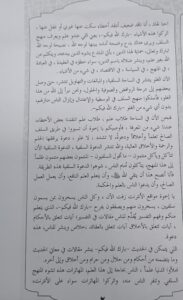
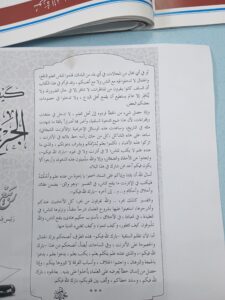
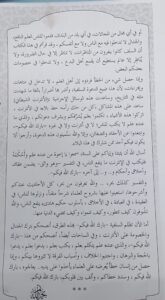
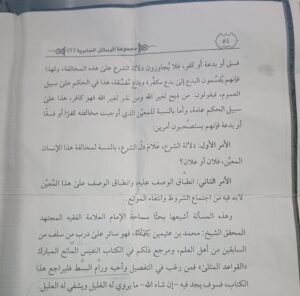
Robust, Credible, Detailed And Unambiguous Inherited Clarifications On Al-Jarh Wat-Tadeel

The Shaikh, may Allah have mercy upon him, said:

Justice is to place something in its (rightful) place and it is synonymous with wisdom. Its meaning is that a person is just in his rulings (judgments) towards both those who are close (in relationship) and those who are distant (in relationship).

And from this is that if a ruling (judgement) is sought from him between a Muslim and a Kafir, while the Kafir is correct in his claim, then indeed, he fulfils his right and does not deprive him of it. Indeed, this is because it is established among Muslims – as a general rule – meaning, the just people- and Ahlus Sunnah in particular – that injustice is forbidden, whether with regards to the right of a Muslim or a Kafir. The proof for this from Allah’s Book is His saying:

وَأَقْسِطُوٓا۟ إِنَّ ٱللَّهَ يُحِبُّ ٱلْمُقْسِطِينَ

And act justly (between them). Verily, Allāh loves those who are just. [Al-Hujurat 9]

Meaning: be just in passing a ruling (judgment) when you judge, for indeed, Allah loves those who are just in their rulings (judgements).

This verse is in the context of what is incumbent to do regarding a rebellious group, or two groups fighting each other and one of them commits aggression against the other. He [i.e. Allah – The Most High] said:

وَإِن طَآئِفَتَانِ مِنَ ٱلْمُؤْمِنِينَ ٱقْتَتَلُوا۟ فَأَصْلِحُوا۟ بَيْنَهُمَا فَإِنۢ بَغَتْ إِحْدَىٰهُمَا عَلَى ٱلْأُخْرَىٰ فَقَٰتِلُوا۟ ٱلَّتِى تَبْغِى حَتَّىٰ تَفِىٓءَ إِلَىٰٓ أَمْرِ ٱللَّهِ فَإِن فَآءَتْ

If two parties among the believers should fight (each other), then make settlement between them (through the Book of Allāh). But if one of them revolts against the other (and refuses compliance with the judgement of Allāh’s Book), then fight you (all) against the one that revolts until it complies with the command of Allāh. Then if it complies (by returning to truth)…” [a] Meaning: after transgression and fighting, it complies and submits to the judgment of Allah and the judgment of His Messenger, then:

فَأَصْلِحُوا۟ بَيْنَهُمَا بِٱلْعَدْلِ وَأَقْسِطُوٓا۟ إِنَّ ٱللَّهَ يُحِبُّ ٱلْمُقْسِطِينَ

Then make reconciliation between them (by making the transgressing party abide by) justice and act justly (between them). Verily, Allāh loves those who are just.

And what is similar to this is His – The Most High – statement:

إِنَّ ٱللَّهَ يَأْمُرُكُمْ أَن تُؤَدُّوا۟ ٱلْأَمَٰنَٰتِ إِلَىٰٓ أَهْلِهَا وَإِذَا حَكَمْتُم بَيْنَ ٱلنَّاسِ أَن تَحْكُمُوا۟ بِٱلْعَدْلِ

Indeed, Allah commands you to render trusts to whom they are due, and when you judge between people to judge with justice [An-Nisa 4:58]

So, the conclusion is that indeed Allah commanded (the establishment of) equity, which is justice in rulings (judgments), because He loves it and loves its people. Among that which Ahlus Sunnah is distinguished with is that they do not act impulsively in passing rulings of Tafseeq, Tabdee or Takfeer until the divine proof is established that necessitates the opposition (committed) by that person, so they first examine [دلالة الشرع – the sound divine textual proofs to see how it applies to the nature] of the opposition of the one in opposition: is it Fisq, bidah or kufr? They do not go beyond what the Shariah textual proof demonstrates concerning that opposition. Due to this reason, they classify Bidah into Mukaffirah and Mufassiqah. This is a general ruling, so they say: “Whoever sacrifices to other than Allah or vows to other than Allah is a disbeliever”. This is from the angle of a general ruling. As for with regards to a specific individual whose opposition appears to entail Kufr, Fisq or Bidah, then indeed, they take into account two matters:

The first matter: [دلالة الشرع – the sound divine textual proofs] – [علام دل الشرع – what the Shariah proofs demonstrates] with regards to the opposition committed by this specific person, so-and-so?

The second matter: the application of the description to him. [وانطباق الوصف على هذا المعين لا بد فيه من اجتماع الشروط وانتفاء الموانع – application of the description/ruling to this specific individual requires the fulfilment of the conditions and the factors that prevents the ruling must be justifiably absent].

Then the Shaikh, may Allah have mercy upon him, stated that this has been discussed thoroughly by Imam Muhammad Ibn Salih al-Uthaymeen, may Allah have mercy on him, in Al-Qawa’id Al-Muthla, and whoever desires its detail, he will find in it, InShaAllah, that which will suffice him.

[An Excerpt from Majmu Al-Rasa’il Al-Jaabiriyyah 2/82-84. paraphrased]

[a] https://www.thenoblequran.com/q/#/search/49_9

[5] What Conduct Is Truly Befitting Among The Carriers of Knowledge And Learners

Beware of the disease of the despots because pride [I], avarice, and envy were the first (sins through which) Allah was disobeyed. Raising yourself above your teacher is pride, [II] being arrogant towards the one who benefits you from amongst those who are below you is pride, [III] and falling short in acting upon knowledge is a sludge of pride and an indication of being deprived.

Imam Muhammad Bin Salih Al-Uthaymin, may Allah have mercy upon him, said:

[I]The Prophet said, “Pride is to reject the truth and mock the people”. This refers to Shaytan’s behaviour when he was commanded to prostrate to Adam, but pride prevented him from doing so. He refused and was haughty.

[II] Raising oneself can either be by way of the tongue and it can also be by way of sentiments (feelings, attitude, etc). He (the student) may be walking with his teacher, while swaggering and saying, “I did this, and I did this”.

[III] Similarly, being arrogant towards the one who is below you in knowledge is pride. This also occurs with some of the students, and if someone below him in knowledge informs him of something, you find him arrogant and does not accept. We ask Allah for well-being because this type of pride is a lack of acting upon the knowledge one knows.

An Excerpt from ‘Sharh Hilya Taib Al-Ilm. 38-40. (1st Edition Rabi ul Awwal 1443AH)

[1] Unambiguous principles about Tabdee

Question: Is there a difference between the ruling against a person that he is indeed from Ahlul Ahwa Wal Bid’ah and the ruling against him that indeed he is a Mubtadi? And does the ruling against a person that indeed he is not Salafi or that indeed he is a hizbi necessarily mean that he is a Mubtadi? Please I ask for clarification of the Mas’alah.

Response: Firstly, you should know that Ahlus-Sunnah are people of ورع (cautious piety), they  neither make takfīr, tafsīq, nor tabdīʿ except (against) the one who truly deserves that based on proof from the Qur’an and Sunnah, and the understanding of the (pious) predecessors of this Ummah.

Secondly, you should know that the people of desires and misguidance are (categorised into) those who are followed and followers. Those followed are the ones who formulate the various  principles of bidʿah and call people to their bidah and misguidance. They will carry the burden of their own sins as well as the sins of those whom they lead astray without knowledge, as is clearly stated in the Qur’an and the Sunnah.

As for the followers of the ones who are followed among the people of desires, they are two categories in most cases:

(a) Those who possess knowledge, but their intentions are evil, thus, they yield to Satan, vain desires and to the soul that commands evil; follow the people of misguidance and turn away from the callers to guidance, (who call to the the guidance) with which Allah sent His Messenger, Muhammad ﷺ.

(b) Those whose share of knowledge is small, so the people of desires ensnare them to be from their party, convince them that what they are calling them to is manifest truth and that what their opponents were upon is falsehood. And they unleash a spate of Shubuhaat upon them to confound truth with falsehood for them and immerse them into misguidance.

If this is understood, then as for those who are followed (the leaders)—the ones who formulate the principles of Bidah and call the people to their Bidah and misguidance, then, indeed, they are described based on the bidah they have innovated and to which they call people, and no honour is accorded to them in this regard.

And with regards to the followers of the people of desires, as I mentioned to you, they are – in most cases – two categories. Therefore, they are to be called to the Sunnah, to adhere to it  firmly and abandon the bidah through which they have been deceived by those who concocted (those principles). If they respond to the call of truth, in both knowledge and practice, and reject what the people of vain desires and bidah call them to, then that is what is sought after and the praiseworthy goal. If they reject the advice of sincere advisors, exchange guidance for misguidance, give precedence to Bidah over the Sunnah, then they deserve to be described as Mubtadiʿah and no honour is accorded to them (in this matter) after the truth has been established with its proofs and clarification (given) in opposition to the falsehood among the newly invented matters (i.e. beliefs, acts of worship, or methodology) about which the Prophet, peace and blessings of Allah be upon him, declared to be misguidance, and whose adherents he issued the threat about entry into fire, as he (the Messenger) – peace and blessings of Allāh be upon him, said:

“It is obligated to you to adhere to my Sunnah and the Sunnah of the Rightly Guided Caliphs after me. Cling to it firmly and bite onto it with your molar teeth. Beware of newly introduced matters (in the religion), for every newly introduced matter is a Bidah, every bidah is misguidance, and every misguidance is in the Fire.”

Source: Al-Ajwibah al-Athariyyah pages 17-18

Presented As An Adviser, While Persisting in the Dangerous Sin of False Tabdee etc

The Messenger, peace and blessings of Allah be upon him, said:

“A man will be brought on the Day of Resurrection and thrown in the (Hell) Fire, so that his intestines will come out, and he will go around like a donkey goes around a millstone. The people of (Hell) Fire will gather around him and say: “O so-and-so! What is wrong with you? Didn’t you use to order us to do good deeds and forbid us to do bad deeds?” He will reply: “Yes, I used to order you to do good deeds, but I did not do them myself, and I used to forbid you to do bad deeds, yet I used to do them myself.” [1]

Al-Qāḍī Abū Yaʿlā, may Allah have mercy upon him, said: “It is more befitting (or obligatory) that the one who enjoins good and forbids evil is from among those known for modesty, integrity, uprightness, and one accepted among the people; because when he is of such a description, the one being admonished will hold him in awe, and may respond to him and return to what he says… And because a person of this quality—his words have a stronger impact on the hearts and are closer to being accepted.” [2]

Imam Ibn Al-Qayyim, may Allah have mercy upon him, said:

There are two strengths within the soul: the strength of abstinence and the strength of courage. The reality of patience is that one makes the strength of courageousness a means of action in what benefits him and the strength of abstinence a means of action in refraining from what is harmful to him. Among the people, there is one whose patience in carrying out what benefits him and being firm upon it is stronger than his patience in refraining from what is harmful to him; so he exercises patience in facing difficulty whilst carrying out acts of obedience, but he does not exercise patience in refraining from urges towards what he is forbidden. And among them, there is one whose patience in refraining from things that are in opposition to the religion is stronger than his patience in carrying out acts of obedience, and among them there is one who does not exercise patience in both affairs. The best of people are those who fulfil both affairs. Many people patiently bear the hardship of praying Tahajjud during hot and cold nights, and the difficulty in fasting; but they do not exercise patience in refraining from looking at forbidden things. Many people exercise patience in refraining from looking at the forbidden things and inclination towards [forbidden] images, but they do not exercise patience in commanding good and forbidding evil. [3]

Umar Bin Abdil Azeez, may Allah have mercy upon him, said to Khalid Bin Safwan, may Allah have mercy upon him, “Admonish me”. Khalid said, “O leader of the believers! There are a people who have been deluded by Allah’s concealment of (their sins, flaws, etc.), and the good praise (received) has put them to trial; thus, do not allow the ignorance of others (about your reality) to override what you know about yourself. May Allah protect us and you from being misled by Allah’s concealment of (our sins, flaws, etc), and from being pleased with the praise (received), falling short and neglecting that which Allah has obligated to us, and inclining towards (vain) desires.” He (Umar) wept and stated, “May Allah protect us and you from following (vain) desires”. [4] [end of quotes]

Many of us who attended higher education encountered the role psychology plays in public discourse, accountability, self-preservation, and other matters. Sometimes, this occurs at the cost of violating rights, misleading the public, and fostering a victim mentality.  A truthful Muslim does not avoid responsibility out of fear for their status, credibility, reputation, or self-image. Their fear of Allah prevents cognitive dissonance, and they do not believe that remaining silent is less painful than admitting, “I was wrong.”

Being vague, evasive, or changing the subject is a tactic used by those who think that this will allow their supporters to interpret the situation in their favour. This is not politics or media, it is a serious matter related to rulings of the Shariah, which should not be compromised. We are well aware that there are people who know that the dynamics of attention cycles can distract those seeking justice, as well as the fact that, due to information overload, accountability is easily forgotten. They know that public attention shifts quickly, allowing them to wait for the next topic to take over discussions. We’ll not be distracted by those who employ the tactic of “running out the clock”, who think that silence will make their audience and sympathisers feel that their unsupported claims have no real consequences.

Therefore, we’ll continue to demand proof from those who falsely issued the false Tabdee against Shaikh Abu Iyaad, may Allah protect him. We will reiterate the unanswered question and avoid getting sidetracked. If the topic is avoided, we will bring it back, document the conversation, and keep a record of the claims and their lack of evidence. We will treat their silence—in this particular serious issue—as a non-response, without making excuses for the accuser, and we will remind the youth that the claim is still false, excessive, repugnant, and oppressive. This is because unchallenged claims can lead to more harm and perhaps desensitisation. Thus, the perpetrators of false Tabdee should never expect that evasion will solve their problem, for indeed, we’ll continue demanding proof. So, we ask again: Where is the clear, unambiguous proof for the Tabdee against Shaikh Abu Iyaad, may Allah protect him, and the claim that he is a plant?!

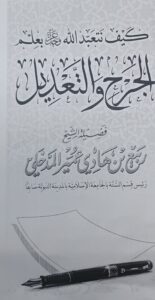
Reflections on some statements of Al-Allamah Rabee Bin Hadi Al-Mad’khali [77 of 80]

[1] Still Waiting! Where’s The Clear Unambiguous Knowledge-Based Shariah Proof for the Tabdee?

[2] Still Waiting! Where’s The Clear Unambiguous Knowledge-Based Shariah Proof for the Tabdee?

[3] Still Waiting! Where’s The Clear Unambiguous Knowledge-Based Shariah Proof for the Tabdee

[4] Still Waiting! Where’s The Clear Unambiguous Knowledge-Based Shariah Proof for the Tabdee

[5] Still Waiting! Where’s The Clear Unambiguous Knowledge-Based Shariah Proof for the Tabdee

[6] Still Waiting! Where’s The Clear Unambiguous Knowledge-Based Shariah Proof for the Tabdee

[7] Still Waiting! Where’s The Clear, Unambiguous, Knowledge-Based Shariah Proof for the Tabdee

[8] Still Waiting! Where’s The Clear, Unambiguous, Knowledge-Based Shariah Proof for the Tabdee

[9] Still Waiting! Where’s The Clear, Unambiguous, Knowledge-Based Shariah Proof for the Tabdee

[10] Still Waiting! Where’s The Clear, Unambiguous, Knowledge-Based Shariah Proof for the Tabdee

[11] Still Waiting! Where’s The Clear, Unambiguous, Knowledge-Based Shariah Proof for the Tabdee

[12] Still Waiting! Where’s The Clear, Unambiguous, Knowledge-Based Shariah Proof for the Tabdee

[13] Still Waiting! Where’s The Clear, Unambiguous, Knowledge-Based Shariah Proof for the Tabdee

The False Tabdee Must Be Recanted Because Neither Shariah Nor Sound Intellect Acknowledges That Harm Can Remain

Contemplating Some Reasons Behind Stubbornness After Being Guilty of False Tabdee or Erroneous in Other Matters

A Continued Call for Proof of the Tabdee, Respect for the Scholars, and an End to Anonymous Accounts


[1] Sahih al-Bukhari 3267

[2] Risālat al-Amr bil-Maʿrūf p.47

[3] An Excerpt from Uddah As-Sabirin page 37

[4] Tahdheeb Al-Hilyah 2/485

[4] What Conduct Is Truly Befitting Among The Carriers of Knowledge And Learners?

Narrated Anas Ibn Malik, may Allah be pleased with him, that the Prophet, peace and blessings of Allah be upon him, said: “Do you know what Al-Ad’hu is [i.e. calumny]?” They said, “Allah and His Messenger know best”. He said, “Transmitting speech from some people to another people to destroy their (mutual relationships)”.

Al-Allamah Zayd Bin Haadi Al-Madkhali, may Allah have mercy upon him, said:

The subject matter of this hadeeth is about the dangerous (consequences) of tale-carrying in this Dunyaa and the Aakhirah. Indeed, the Prophet, peace and blessings of Allah be upon him, called it Ad’hu, and the meaning of Ad’hu is to transmit speech from some people to other people to corrupt their relationships. And in the hadeeth of Ibn Mas’ud, may Allah be pleased with him, it is explained to mean tale-carrying, and that is to transmit the statement of one person to another person, or from a group of people to another group, or from one country to another one, to cause corruption.

This is one of the major sins due to its evil and the punishment (associated with it) in this life and the next. In this worldly life, it may lead to murder, chaos, and other similar affairs – events that are in opposition to rectification. Due to this, the scholars say that the tale carrier- the one who transmits speech from one person to another person, or from a group of people to another group, or from one country to another, to sow the seeds of corruption- causes more harm than a magician. This is because a magician might only harm one person, but as for the tale-carrier, he might harm many individuals and the trial is prolonged.

Therefore, it is forbidden for a Muslim to transmit speech to cause corruption between those upon brotherhood and those who aid one another upon piety. And even if nothing like this [i.e. fighting, chaos, killing, etc] occurs, it is still not permissible to corrupt the relationship between the people by way of lies- sowing the seeds of enmity and hatred between them. The Messenger of Allah went past two graves and then said, “Both of them (i.e. the two people in these graves) are being punished, and they are not being punished due to (committing the greatest of the major sins), but indeed they are great sins. One of them used not to protect himself from being soiled with his urine, and the other one used to go about with tale-carrying”.

Therefore, what the opposite of this hadeeth (necessitates is that) it is obligatory to bring about reconciliation between the people due to the statement of Allah:

لَّا خَيۡرَ فِى ڪَثِيرٍ۬ مِّن نَّجۡوَٮٰهُمۡ إِلَّا مَنۡ أَمَرَ بِصَدَقَةٍ أَوۡ مَعۡرُوفٍ أَوۡ إِصۡلَـٰحِۭ بَيۡنَ ٱلنَّاسِ‌ۚ

There is no good in most of their secret talks save (in) him who orders Sadaqah (charity in Allah’s Cause), or Ma’ruf (Islamic Monotheism and all the good and righteous deeds which Allah has ordained), or conciliation between mankind. [An-Nisaa. Ayah 114]

However, there is an exception in this affair when it is carried out to give some sincere advice whose benefit cannot be reached nor can harm be repelled except by way of such speech. For example, you hear a person saying that he is lying in wait against your Muslim brother and wishes to kill him, take his wealth or violate his honour, or the like thereof; you make known (its evil to him), but he refuses to accept your advice, therefore, you go to the person who is unaware and inform him about it, so that he can take precautions. Therefore, speech based on this type of intention and goal is considered to be sincere advice and it is not tantamount to causing corruption, for indeed you are either going to repel harm or bring about a benefit which one cannot do without (except by way of this transmission). And Allah knows best. [1]

Atā ibn al-Sā’ib, may Allah have mercy upon him, said: I travelled from Makkah, so ash-Shaʿbi, may Allah have mercy upon him, met me and said: “O Abu Zayd! Present to us from that which you have heard in Makkah”. I said: “I have heard Abd al-Rahman ibn Sābiṭin saying: ‘Neither one who sheds blood resides in Makkah nor one who consumes Riba, nor one who carries tales” . I was boggled when he mentioned tale-carrying alongside bloodshed and usury. So, ash-Shabi said: “What boggles you regarding this? Is it not the case that bloodshed and heinous crimes are committed except due to tale-carrying”. [2]

Yahyah Ibn Abi kathir, may Allah have mercy upon him, said: “Sulayman Ibn Dawud, peace be upon him and his father, said to his son: ‘O my son! Beware of tale-carrying, for indeed it is more severe (in causing harm) than a sword”. [3]

One of the companions of Ja’far ibn Muhammad al-Sadiq, may Allah have mercy upon him, said: “I entered the presence of Ja’far and Musa was in his presence, while he was advising him. And from that which I committed to memory was his statement: ‘O my son! Accept my advice and memorise my speech: beware of tale-carrying because it sows enmity in the hearts of men, and beware of seeking after the faults of the people, because seeking after the faults of the people is tantamount to making oneself a target'”. [4]

Yahyah Ibn Abi Kathir, may Allah have mercy upon him, said: “Indeed, the tale-carrier corrupts the relationships of the people in a single day more than what a magician cannot do in a month”. [5]

Tahir ibn Al-Husayn, may Allah have mercy upon him, wrote a letter to his son Abdullah after he was appointed by Al-Ma’mun Ibn Harun Al-Rashid as the governor of Raqqa, Egypt, and the lands between them: “Restrain your tongue from lies and false speech, and hate its perpetrators; cut off the tale-carriers, for indeed the first corruption of your affairs, both at the beginning and the end, would be due to closeness to a compulsive liar and boldness in uttering lies. This is because lying is the main source of all sins, and false speech and tale-carrying are its final outcomes, for indeed neither can a tale-carrier find safety nor can the utterer find a genuine friend, nor will the affairs of the one who pursues it remain upright. [6]

Imam Muhammad Ibn Salih Al-Uthaymin, may Allah have mercy upon him, said:

The greatest (type) of tale-carrying is when a person spreads tales between scholars- the scholars of the Shariah- by transmitting speech from this scholar to that scholar to ruin their relationship. Especially if it is lies, it is a combination of both tale-carrying and lies. He goes to a scholar and says: “So and so among the people of knowledge says this and that about you”. This is one of the major sins, therein is great corruption and sows enmity between the scholars, thus leads to disassociation within the society as a result of disassociation among the scholars. [7]

The Imam, may Allah have mercy upon him, said: You find these two men who are friends, then when this man, the tale-carrier – and Allah’s refuge is sought – comes along, he – whether truthful or lying – says: “This man reviles you, how can you be his companion while he says this and that about you”. After this (previous) affection (between the two men), enmity occurs between them. This causes a split, similar to sorcery- a type of sorcery, a type of magic. In what way does it resemble sorcery? The student said: “Through causing disassociation”. The Shaikh said: “Through splitting (between people).

فَيَتَعَلَّمُونَ مِنْهُمَا مَا يُفَرِّقُونَ بِهِۦ بَيْنَ ٱلْمَرْءِ وَزَوْجِهِۦ

They learned that by which they cause separation between man and his wife. [2:102]

Tale-carrying resembles sorcery with regards to splitting the people. [8]

Al-Allamah Salih Al-Fawzan, may Allah preserve him, stated:

‏Namīmah: it is to transmit speech among the people in way to cause corruption between them. Allah, Glorified be He, free from all imperfections, the Most High, said:

‏وَلا تُطِعْ كُلَّ حَلافٍ مَّهِينٍ، هَمَّازٍ مَّشَّاءٍ بِنَمِيمٍ‏

And obey not everyone who swears much, and is considered worthless, a slanderer, going about with calumnies. [Al-Qalam 10-11]

The most severe regarding all of this is the one who spreads (tales) among the students of knowledge and the callers to the path of Allah in order to corrupt (their relationships), split the Jama’ah of the Muslims, and in order that some harbour enmity towards others. The one who does this is a tale-carrier and indeed Allah has forbidden believing or obeying such a person, even if he makes an oath, as He (Allah) said:

‏وَلا تُطِعْ كُلَّ حَلاّفٍ مَّهِينٍ، هَمَّازٍ مَّشَّاءٍ بِنَمِيمٍ‏

And obey not everyone who swears much, and is considered worthless, a slanderer, going about with calumnies. [Al-Qalam 10-11] [9]

Imam Abdul Azeez Bin Baz, may Allah have mercy upon him, said: This is a threat against the tale carrier. If he is a person upon Tawheed, it is hoped that he will enter paradise, but it is feared that this sin will prevent him from entry into paradise for some time and enter him into the hell fire for some time, just as it is case with all other sinners. The sinners [i.e. those who die whilst committing sins lesser than shirk] are under the will of Allah- if Allah wishes, He will either punish them or forgive them straight away, or He enters them into hell for some time and paradise thereafter, just as Allah says:

إِنَّ ٱللَّهَ لَا يَغۡفِرُ أَن يُشۡرَكَ بِهِۦ وَيَغۡفِرُ مَا دُونَ ذَٲلِكَ لِمَن يَشَآءُ‌ۚ

Verily, Allah forgives not that partners should be set up with him in worship, but He forgives except that (anything else) to whom He pleases]. [An-Nisaa. 48] [10]

NB: Al-Allamah Zaid Bin Hadi, may Allah have mercy upon him, said: “However, there is an exception in this affair when it is carried out to give some sincere advice whose benefit cannot be reached nor can harm be repelled except by way of such speech. For example, you hear a person saying that he is lying in wait against your Muslim brother and wishes to kill him, take his wealth or violate his honour, or the like thereof; you make known (its evil to him), but he refuses to accept your advice, therefore, you go to the person who is unaware and inform him about it, so that he can take precautions. Therefore, speech based on this type of intention and goal is considered to be sincere advice and it is not tantamount to causing corruption, for indeed you are either going to repel harm or bring about a benefit which one cannot do without (except by way of this transmission). And Allah knows best”. [end of quote]

Some people intentionally plot in secret to harm or tarnish the reputation of others. When their malicious actions are reported to prevent further harm, they say: “You have violated the Amanah of private meetings.” Those who were secretly passing unjust, repugnant, oppressive and false judgments of Tabdee against Shaikh Abu Iyaad, may Allah protect him, deserved be reported because this deed of theirs is tantamount to violating the honour of an innocent Muslim; rather, Tabdee is a serious matter that carries various rulings and ramifications for the person it is issued against when justified by the Qur’an and Sunnah as understood and implementated by the pious predecessors. However, there is no virtue in such judgments when they are carried out through vain desires, an instiable desire for wrongdoing, misrepresenting statements, and quickly spreading false information to gain an advantage in the name of enjoining good and forbidding evil. Wallaahul Musta’an! And Allah knows best.


[1] at-Taleeqaat Al-Maleehah Alaa Silsilatil Ahaadeeth As-Saheehah’ 1/27-28

[2] Az-Zuhd’ (446) by Al-Wakee

[3] Az-Zuhd 467 by Imam Ahmad

[4] Hilyah al-Awliya 3/195

[5] Shu’ab al-Iman 13/448 by Imam Al-Bayhaqi

[6] Tārīkh ar-Rusul wa al-Mulūk 8/585 by Imam at-Tasbari

[7] https://alathar.net/home/esound/index.php?op=codevi&coid=56024 paraphrased

[8] https://alathar.net/home/esound/index.php?op=codevi&coid=126760 paraphrased

[9] An Excerpt from: “Wujūb at-tathabbuti min al-akhbār wa iḥtirām al-‘ulamā’ wa bayān makānatihim fī al-ummah”. page 21-22

[10]: https://www.binbaz.org.sa/noor/2527