[17] Notification to Ahlul Bidah and The Mumayyi’ah: These Clarifications Are Coming Back!

In The Name of Allah, The Most Merciful, The Bestower of Mercy.

Al-Marwadhee, may Allah have mercy upon him, said, I said to Abu Abdillah (i.e. Imam Ahmad- may Allah have mercy upon him), “What do you think- a man preoccupies himself with fasting, prayers (i.e. optional fasting and prayers) and refrains from speaking against Ahlul Bidah?” He frowned and said: “If he fasts, prays and secludes himself from the people (i.e. he performs optional fasts, prayers and stays away from the people, except when he has to mix with them), he only benefits himself; but if he speaks (i.e. against ahlul bidah), he (benefits) himself and others, and that is better.[1]

Imam Ibn Al-Qayyim, may Allah have mercy upon him, stated in As-Sawaa’iq Al-Mursalah:

Exposing the faults of these ones (i.e. the misguided beliefs and actions of Ahlul Bidah), clarifying their disgraceful acts and their principles is from the best of Jihad in the path of Allah. Indeed, the Prophet, peace and blessings of Allah be upon him, said to Hassan Ibn Thabit, may Allah be pleased with him, “The Ruh Al-Qudus (i.e. Jibreel) will continue to support you, so long as you are defending Allah and His Messenger”. He, peace and blessings of Allah be upon him, (also said to Hasan): “Lampoon them (i.e. Quraish) and Jibril (Gabriel) is with you”. “O Allah! Aid him (i.e. Hasan) with the Ruh Al-Qudus as long as he is defending Your Messenger”. He stated about Hasan’s rebuke against Quraish: “By Allah! It will hurt them more than arrows”.

Thus, how can this not be from Jihad in the path of Allah when it is the case that many of these interpretations (i.e. those uttered by the deviants) are in opposition to the path of the pious predecessors – the Sahabah, the Taab’ieen, Ahlul Hadith and the Imams of Islam – whom Allah granted honour and are mentioned with good praise by the Ummah- and are tantamount to jesting with the texts and harbouring evil suspicion towards them (i.e. the texts), which is a type of the evil speech that was uttred by those who slandered the Messenger and his religion. This is because these false interpretations contain false claims and what is apparent from the speech of its utterer is slander; something that is impossible to ascertain, disbelief, misguidance, Tashbeeh, Tamtheel or deception; then he (i.e. the deviant utterer of such statements) changes them into meanings whose intended aim behind such words is known to be a type of intentional usage of words to cause ingenuity in ascertaining their sound meanings and to cause beguilement, which does not occur from one who intends to give sincere advice and sound clarification. Therefore, defending the speech of Allah and that of His Messenger is from the best of deeds, the most beloved to Allah and the most beneficial for the servant. [2]

Shaikh Al-Islam clarified the misguidance and bidah of some of the extreme Soofees, saying:

It harmful (effects) on the Muslims is greater than the harm of poison they eat, while being unaware of it. The harmful effects of their bidah and misguidance on the Muslims is greater than the harm (perpetrated by the) thieves and deceivers whom they are not aware of being thieves and deceivers. This is because the severest the harm of the thieves and deceivers can be is that it causes the death of a person or loss of his wealth, which is a worldly affliction and may be a means of receiving Allah’s mercy in the afterlife. As for these ones (i.e. the extreme Soofiyyah), they inculcate the (beliefs and acts) of disbelief and hearsay through the sound path of Prophets and the friends of Allah (i.e. they make the people believe that their beliefs, acts of disbelief and hearsay are based on the path of the Prophets and the close friends of Allah). They portray themselves as strivers in the path of Allah, but inwardly they are from those who wage war against Allah and His Messenger. They manifest the statements of the disbelievers and the hypocrites through the statements of the true friends of Allah (by way of forgery and manipulation), thus, a man joins them, while thinking that he will be from the believers and the friends of Allah, but ends up being a hypocrite and an enemy of Allah. [3]


[1] Tabaqaat Al-Hanaabilah 2/216

[2] As-Sawaa’iq Al-Mursalah 1/301-302

[3] Majmu 2/360

[16] Notification to Ahlul Bidah and The Mumayyi’ah: These Clarifications Are Coming Back!

In The Name of Allah, The Most Merciful, The Bestower of Mercy.
Shaikh Al-Islam Ibn Taymiyyah, may Allah have mercy upon him, said:
If a man commits evil openly, it is obligatory to denounce him openly, and this is not tantamount to backbiting him. It is obligatory to chastise him openly with what would prevent him from (the evil), such as boycotting and other than that. [1]
Imam Abdul Azeez Bin Baaz, may Allah have mercy upon him, was asked: “When should advice be given in private or openly?”
Response: The one giving advice does what is best. If he sees that it is more beneficial in secret, he advises secretly; if he sees that it is more beneficial to do so openly, he does so; but if the sin is committed in secret, the advice can only be given in secret. If he knows about his brother that he sins in secret, he advises him in secret and does not expose him. But if the sin is committed openly, – seen by the people, for example, a person starts drinking alcohol in a gathering, then one must denounce it openly; or if a person started calling (others) to drink alcohol or to fornicate, whilst one is present, he should say, “O my brother! This is not permissible”. [2]
It was said to Imam Al-Albani, may Allah have mercy upon him, “The statement of some people or the stipulation of some of them is that it is more correct that advice must be given before refutations are printed- a copy must be sent to the one refuted so that it can be looked into. They say this is from the methodology of the pious predecessors”.
Response: This is not a condition, but if it is possible and it is hoped that affinity will be attained from this approach – in order not to announce the affair amongst the people, then this is undoubtedly a good thing; but as for making it a condition first and foremost, and secondly, making it a general condition, there is no wisdom in this at all. People, as you all know, are like mines of gold and silver [a], so whoever you know – about him – that he is with us on the path- upon the (sound) methodology and that he accepts advice, then you write to him without making his mistake known, and at least in your view this is good. But this is not a condition, and it would have been impossible (to implement fully) even if it were a condition. How would get his address and how would you be able to correspond with him? Also, will he send you a response or not? These are completely speculative affairs. This condition is very difficult to fulfil, and therefore the issue is not taken as a condition. [3]
Al-Allamah Rabee Bin Haadi Al-Mad’khali, may Allah have mercy upon him, was asked: “Our Shaikh, one of the affairs that have become circulated and have aroused an intense feeling among the Salafis, is that there are people who claim that advice is obligatory before warning. Is there a statement you can give in this matter?”
Response: I answered this question before – may Allah bless you. We have been put to trial with these types of affairs, so you find a person spreading falsehoods, lies, and slander against others- both about individuals and in general; and if you give him advice or (respond with) criticism or something, he says, “Why did they not warn me, why did they not advise me, and why did they not explain to me”. (These statements of this person are) corrupt excuses. We seek from these people to repent to Allah and return to the truth with complete good manners and humility, and to leave such excuses. Assume that this one made a mistake and did not speak, and did not advise you, then (still) return to the truth and reprimand him thereafter. As for spreading (trouble) amongst the people and persisting in your falsehood and your mistakes, and saying, “They did not do and they did”, this is empty talk. It is obligated to a believer to return to Allah (in obedience, repentance, etc). You publish your mistakes in books, tapes, etc. If you hid your mistakes and committed them in the darkness of your house – (known only to) you and Allah, then this person discovers you, he would advise you – between you and him (only). As for disseminating your statements and (publicising) deeds in the world, then someone comes and publishes- meaning, replies to you (or rebuts you), there is nothing wrong with this -May Allah bless you. Leave these excuses (arise) from many of the people of falsehood who are rebellious in falsehood and stubbornness. [4]
[1] Majmoo Al-Fataawaa 28/217
[2] Majallah Al-Islaah. (Number 17/241). Date: 23/6/1993
[a] Abu Hurairah, may Allah be pleased with him, narrated that Allah’s Messenger, peace and blessings of Allah be upon him, said, “People are like mines of gold and silver; those who were excellent in Jahiliya (during the days of ignorance) are excellent In Islam, when they have an understanding (in the religion), and the souls are troops collected together and those who had a mutual familiarity amongst themselves would have affinity amongst them, and those who opposed one of them, would be at variance with one another”. [Saheeh Muslim 2638]
[3] Silsilah Al-Hudaa Wan-Noor. Number 63

[1] O Mumayyi’ah! Dr. Ibrahim Ar-Ruhayli’s Ambiguities Are Not a Safe Haven

In The Name of Allah, The Most Merciful, The Bestower of Mercy.

Dr Ibraaheem Ar-Ruhayli stated that it is obligatory to know that Ahlus Sunnah are the people (who) comply with Islam completely in creed and (good) manners, and that from lack of understanding is to think that indeed a Sunni or Salafi is the one who actualises (establishes) the creed of Ahlus Sunnah without (having) concern for (good) Islamic manners and etiquettes, and not fulfilling the rights of others etc.

Then Dr Ar-Ruhayli quoted a statement of Shaikh Al-Islam Ibn Taymiyyah, may Allah have mercy upon him, in Al-Aqeedah Al-Waasitiyyah concerning matters that Ahlus Sunnah call to such as enjoining good and forbidding evil, performance of the Hajj, Jihad, the Juma’ah (prayer) and the Eid prayer alongside the rulers whether they (i.e. the rulers) are righteous or sinful.

Also that Ahlus Sunnah preserve the congregational (prayers), give sincere advice to the Muslim Ummah and believe in the statement of the [Prophet, peace and blessings of Allah be upon him]: “A believer is like a structure (or building) for another believer, some parts of which support the other parts.” Then the Prophet clasped his fingers together to explain] and the statement of the [Prophet, peace and blessings of Allah be upon him]: “The mutual love, mercy and affection between the believers are like one body; if one limb is hurt the whole body becomes restless with fever”.

And that Ahlus Sunnah advice (people) to exercise patience during times of calamity and to be grateful in times of ease, and being pleased with what has been pre-decreed. They call to noble manners and good deeds, and they believe in the meaning of the statement: “The most perfect believer is the one with the best manners”.

They (Ahlus Sunnah) urge (people) to keep ties with the one who cuts you off and give to the one who denies you (something). They command (people and themselves) to treat parents with kindness and respect, to keep the ties of kinship and treat neighbours with kindness. They forbid boasting and conceit; transgression and attacking others – whether due to right (i.e. in seeking after a right of theirs) or without right. They command (people and themselves) with noble manners and forbid lowly manners. All they say and do in this regard is carried out whilst adhering to the Book and the Sunnah etc.

Response:

Concerning Dr Ibraaheem Ar-Ruhayli’s statement that from lack of understanding is to think that indeed a Sunni or Salafi is the one who actualises (establishes) the creed of Ahlus Sunnah without (having) concern for (good) Islamic manners and etiquettes etc, Al-Allamah Rabee Bin Hadi Al-Mad’khali, may Allah have mercy upon him, replied to him, saying that the one who establishes (fulfils) the creed of Ahlus Sunnah and follows their methodology – (and establishes correct) alliance and disassociation (based on this methodology), but falls short in his manners, he does not exit the fold of Ahlus Sunnah and enter into the fold of Bidah. We do not know from Ahlus Sunnah (i.e. their Imams, Scholars and notables – the Salaf and khalaf) that they declared a person an innovator due to his shortcomings related to good manners. Even if a follower of the Sunnah fell into some sins, he does not exit the fold of the Sunnah.

And besides this, Ahlus Sunnah of this era are like their predecessors, for they believe in the sound issues of creed and follow the great paths of the Islamic legislation. They establish these great deeds (i.e. they strive in establishing those affairs mentioned by Shaikh Al-Islam Ibn Taymiyyah) and noble manners, which the sects of Fitan and misguidance cannot catch up with them in that regard. However, the people of Fitan and slander hurl accusations at them- out of oppression and transgression- that they do not possess good manners or that they are deprived of good manners. This criminal act carried out to oppose Ahlus Sunnah is not something that has occurred in this era, rather it is a repetition of the fabrications of the people of falsehood-the Mutazilah and other than them- and foremost among them were An-Nidham and Al-Jahiz. These fabricators (i.e. Al-Jaahiz and An-Nadh-dhaam) of lies against Ahlus Sunnah of old and Ahlus Sunnah of the present era are the vilest people with regards to their manners through lies, deceptions and slanders in their statements and actions. These evil manners are possessed by Ahlus Sunnah’s adversaries in this era, but they are merely inheritors (i.e. they inherited these evil manners from the old adversaries of Ahlus Sunnah), especially those who wear a false gown of Salafiyyah in this era- those we have referred to in this research (i.e. Al-Maribi, Al-Halabi, and their ilk). [1]

On page 26: Al-Allamah Rabee Bin Hadi Al-Mad’khali, may Allah have mercy upon him, said:

Unfortunately there are a people who conceal refutations (directed at) the people of falsehood and error.  They are excited to ally with them and defend them, while they are harsh and disapproving towards those who refute falsehood and error.  They betray them (i.e. those who refute error) with a severe betrayal and make people think that this (deed of theirs is) softness and wisdom, while it is from the severest types of calamity and trials-the (very) affair that emboldens the people of falsehood to persist in their falsehood and spread their trials and tribulations worldwide. If only this type of (people) realised the dangerous end results of their stances, (so) we ask Allah to (grant) them guidance and clear-sightedness and to realise their obligation with regards to aiding the Dawah of Muhammad, peace and blessings of Allah be upon him, and not fearing the blame of the blamers. [2]

Al-Allamah Rabee Bin Hadi Al-Madkhali, may Allah have mercy upon him, discussed something regarding refutation and who is worthy of carrying it out against a person who opposes the truth, because Dr Ibraaheem Ar-Ruhayli laid down conditions whose fulfilment would be impossible in many Muslim lands. Dr Ar-Ruhayli stated that refutation is to be carried out by a scholar who is firmly grounded in knowledge- the scholar who knows the subject matter of the refutation in detail, its legislated evidences, the statements of the scholars regarding it, the extent of a disputant’s opposition against the truth, the origin (or basis) of the disputant’s doubts, the refutations of the scholars against the doubt and benefiting from the statements of the scholars in that regard. Also, it is obligatory that the refuter clearly distinguishes (or makes the affair distinct) through strong proofs in order to establish the truth in order to remove the doubt – utilising precise expressions so that nothing appears to the refuter or he understands something which the disputant does not intend. If this is not the case (i.e. if these conditions are not fulfilled according to Dr Ibraaheem Ar-Ruhayli), then great harm will occur through the one who embarks upon refuting, but did not fulfil these conditions.

Then Al-Allamah Rabee Bin Hadi, may Allah have mercy upon him, responded to Dr Ibraaheem as follows:

Well done to Dr Ibraaheem Ar-Ruhayli for stating that refutation should be carried out by a scholar who is firmly grounded in knowledge, but the fulfilment of all those characteristics is neither found in every refuter nor in every refutation; therefore, if we were to make it a condition for every refuter and every refutation, corruption will appear and all the Ummah will be overcome except an odd number of people”.

Then, the Shaikh, may Allah have mercy upon him, said:

“It is ascertained that the fulfilment of these conditions cannot be achieved (i.e. in every refuter and refutation) because you cannot find Salafi scholars who are firmly grounded in knowledge in the majority of the Muslim lands, but there are students of knowledge. However, despite this, Allah has benefitted (the people and the lands) through these students with regards to the spread of Tawhid, refutations against the Shirkiyyaat, bidah and superstitions”.

Then, the Shaikh, may Allah have mercy upon him, said:

“And I ask Dr Ibrahim, if there is a land or lands where there is widespread bidah and evil deeds, the bidah of at-Ta’teel (negation of Allah’s Attributes), the Bidah of the Qadariyyah, the bidah of Irjaa, the bidah of Shirk related to the graves (i.e. seeking intercession from the dead in the graves or calling upon them), consumption of alcohol and violating women’s honour, however, there is no Salafi scholar or scholars (in those lands) who are firmly grounded in knowledge and do not fulfil those conditions (i.e. the conditions stated by Dr Ibraaheem), but there are students of knowledge who have read Usool Ath-Thalatha, Kashf Shubuhaat and Kitaab At-Tawheed of Imam Muhammad Bin Abdil-Wahhab, Al-Aqeedah Al-Waasitiyyah and Al-Hamawiyyah of Shaikh Al- Islam Ibn Taymiyyah, Umdah Al-Ahkaam of Imam Abdul-Ghaniy Al-Maqdisiy or Bulugh Al-Maram of Al-Hafidh Ibn Hajr, then would it not be obligatory that they reject these evils in accordance with the knowledge they possess, or is it obligated to them to keep quiet due to the fact that they are not firmly grounded in knowledge etc…..? I believe that indeed Dr Ibraaheem will answer that it is obligated to them to reject these evils and put a stop to them in accordance with the knowledge and ability they possess, in fulfilment of Allah’s (command):

وَلْتَكُن مِّنكُمْ أُمَّةٌ يَدْعُونَ إِلَى الْخَيْرِ وَيَأْمُرُونَ بِالْمَعْرُوفِ وَيَنْهَوْنَ عَنِ الْمُنكَرِ ۚ وَأُولَٰئِكَ هُمُ الْمُفْلِحُونَ

Let there arise out of you a group of people inviting to all that is good (Islam), enjoining Al-Ma’ruf (i.e. Islamic Monotheism and all that Islam orders one to do) and forbidding Al-Munkar (polytheism and disbelief and all that Islam has forbidden). And it is they who are the successful ones. [Aal Imraan. 104]

And in fulfilment of the Messenger’s (command), “Whosoever of you sees an evil deed, then let him (stop) it with his hand. If he is unable to do so, then let him (stop it) with his tongue. If he is unable to do so, then with his heart (i.e. hate it, consider it to be wrong and keep away from it) and this is the weakest of Iman”.

Therefore, whoever among them (i.e. those students of knowledge) has Sultan (i.e. authority, knowledge or allowed within the law of the land ), it is obligated to him to stop these evils with his hand and tongue. The one who does not have Sultan, it is obligated to him to stop these evils with his tongue, his pen (i.e. through writing) or his stature (amongst the people). I do not think that either a scholar or a student of knowledge would be in opposition to this. I believe that if those students of knowledge whom I have described (i.e. the ones who find themselves in those lands in which such evils are present) remain silent about stopping those evils, they would be included in the statement of Allah:

لُعِنَ الَّذِينَ كَفَرُوا مِن بَنِي إِسْرَائِيلَ عَلَىٰ لِسَانِ دَاوُودَ وَعِيسَى ابْنِ مَرْيَمَ ۚ ذَٰلِكَ بِمَا عَصَوا وَّكَانُوا يَعْتَدُونَ
كَانُوا لَا يَتَنَاهَوْنَ عَن مُّنكَرٍ فَعَلُوهُ ۚ لَبِئْسَ مَا كَانُوا يَفْعَلُونَ

Those among the Children of Israel who disbelieved were cursed by the tongue of Dawud (David) and ‘Iesa (Jesus), son of Maryam (Mary). That was because they disobeyed (Allah and the Messengers) and were ever transgressing beyond bounds. They used not to forbid one another from the Munkar (wrong, evil-doing, sins, polytheism, disbelief, etc.) which they committed. Vile indeed was what they used to do. [Al-Maa’idah. 78-79] [3]

Dr Ibraaheem Ar-Ruhayli carried on with his discussion and this time he addressed the subject matter of refutation, the refuter and the one refuted from another angle- stating that in a refutation, consideration has to be given to the differences between those in opposition to the truth, such as the level of the error, and the religious and worldly status of the Mukhaalif (i.e. the one who is upon an error that is in opposition to the truth).

Dr Ibraaheem also stated that consideration should be given to what triggered (or caused) the Mukhaalafah (i.e. the mistake or error that is in opposition to the truth), as to whether it was due to ignorance, or due to desires and innovation, or due to incorrect use of words (expressions etc), or due to a slip of the tongue, or due to being influenced by a Shaikh or the people of the country, or due to at-Taweel (erroneous or false interpretation of the texts), or other than these many reasons that are in opposition to the Islamic legislation. Then Dr Ibraaheem stated that the one who does not make a note of these different affairs and take them into consideration whilst engaged in refutation, he may either fall into some negligence or exaggeration-making his speech either not beneficial to others or end up having little benefit.

Response:

Al-Allamah Rabee Bin Hadi Al-Mad’khali, may Allah have mercy upon him, responded to the above statement of Dr Ibraaheem Ar-Ruhayli, saying that this entire statement is based on [Ijmaalaat –generalities], thus, we hope that Dr Ibraaheem will explain these generalities, give examples and establish proofs for them; but if not, many of the readers will fall into confusion. The one who approves these statements (i.e. those restrictions whose necessary explanations, examples and proofs have not been provided by Dr Ibraaheem) will refrain from giving sincere advise due to the presence of those (unwarranted) restrictions (stated by Dr Ibraaheem in the subject matter of refutations).

Then Shaikh Rabee stated: Is it that if a scholar or a student of knowledge sees a people making [Istighaatha- beseeching for help from other than Allah (in that which only Allah can do) and offering sacrifice to those beseeched besides Allah], and so on; is it then obligated to him (i.e. that scholar or student of knowledge) to know the differences between those people who are committing that deed and what led them to that deed? (i.e. does this scholar or student firstly have to know their different statuses in the religion and their worldly status, and what led them to that evil before rejecting the deed and explaining that what they are doing is wrong etc ?!) Does the book of Allah and the Sunnah of the Messenger demonstrate this? Allah, The Most High, said:

فَإِن تَنَازَعْتُمْ فِي شَيْءٍ فَرُدُّوهُ إِلَى اللَّهِ وَالرَّسُولِ إِن كُنتُمْ تُؤْمِنُونَ بِاللَّهِ وَالْيَوْمِ الْآخِرِ ۚ ذَٰلِكَ خَيْرٌ وَأَحْسَنُ تَأْوِيلًا

(And) if you differ in anything amongst yourselves, refer it to Allah and His Messenger, if you believe in Allah and in the Last Day. That is better and more suitable for final determination. [4:59]

The Messenger, peace and blessings of Allah be upon him, said: “Whosoever of you sees an evil deed, then let him (stop) it with his hand. If he is unable to do so, then let him (stop it) with his tongue. If he is unable to do so, then with his heart (i.e. hate it, consider it to be wrong and keep away from it) and this is the weakest of Iman”.

The Messenger did not bring any of those restrictions that have been mentioned by Dr Ibraaheem. And despite the numerous books of the Salaf and the numerous statements in them about refuting bidah and evil affairs, we do not find intense restrictions in them.

Yes, it is incumbent that the refutation carried by a scholar is based on evidences from the Qur’an and the Sunnah, together with an appropriate manner fit for the purpose, which may either require leniency and gentleness (sometimes) or force against the one who is haughty and obstinate (at other times). Both these approaches do not negate wisdom, for indeed wisdom is to place something in its rightful place. However, this does not make it obligated on the refuter to know what led to the bidah or the act of disobedience because that is only known to Allaah. The Messenger, peace and blessings of Allah be upon him, said:

”I have not been ordered (by Allah) to search the hearts of the people or cut open their bellies (i.e. to seek after what is hidden, when it is the fact that those things are only known to Allah)”[Al-Bukhaari 4351]

Amir Al-Mumineen Umar Ibn Al-Khattab, may Allah be pleased with him, said:

“People were (sometimes) judged by the revealing of a Divine Inspiration during the lifetime of Allah’s Apostle but now there is no longer any more (new revelation). Now we judge you by the deeds you practice publicly, so we will trust and favour the one who does good deeds in front of us, and we will not call him to account about what he is really doing in secret, for Allah will judge him for that; but we will not trust or believe the one who presents to us with an evil deed even if he claims that his intentions were good.”

Therefore, it is incumbent to make matters easy for the callers to Allah and those who defend Allah’s religion (i.e. do not place unwarranted restrictions in front of them when they refute the opposers of truth). The Messenger said:  ”Make things easy for the people, and do not make things difficult for them and give them glad tidings and do not repel them.” [Al-Bukhari’ 69]

Just as the callers to Allah should facilitate ease [i.e. within the boundaries of the Islamic legislation], likewise ease should be facilitated for them [i.e. within the boundaries of the Islamic legislation] when they disapprove of evil. They are not to be accused of Tashaddud [i.e. that they are over-stringent, when it is the case that the one who accuses them has provided no evidence to justify his accusation] and Ghluww [i.e. that they are extreme- going beyond the boundaries of the Islamic legislation, when it is the case that the one who hurls this accusation at them has provided no evidence to justify his accusation], which they are being accused of at present by this accuser [i.e. Al-Halabi, Al-Maribi etc] in order to oppose and revile Ahlus Sunnah. It is not permissible to place obstacles in front of Ahlus Sunnah, which will weaken their resolve in spreading the truth and defending it. The Messenger, peace and blessings of Allah be upon him, said: “‘You have indeed been sent to make things easy, and you have not been sent to make things difficult.” [Abu Dawud Number 380]

Placing numerous heavy restrictions in front of those who refute the people of desires and misguidance is from the severest types of making affairs difficult and the furthest from facilitating ease. [4]

Dr Ibraaheem also argued that one of the mistakes that are rife is that when a scholar refutes a Mukhaalif, or issues a Fatwa as a warning against a mistake, many of the students of knowledge who ascribe to the Sunnah would seek from (other) students and the scholars to clarify their stance towards that refutation or fatwa, rather the affair has reached a state in which even the small students of knowledge and the common people are asked to determine their stance towards the refuter and the one refuted, then based on this, they would determine loyalty, disassociation and boycotting, until maybe some of the students boycott their Shuyukh whom they have benefitted from in knowledge and sound creed for many years; and maybe the trial reaches the houses, so you find a brother boycotting his brother and a son disrespecting his parents; and maybe a wife is divorced and the little children are separated due to this (trial).

As for when you look at the society, you find that they are divided into two parties or more- every party pursues the other with rebuke and making it binding to boycott the other group. All this (fitnah) between those who ascribe to the Sunnah- those amongst whom one group was unable to rebuke the Aqeedah of the other and the soundness of its Manhaj before the occurrence of this differing. The basis of this (problem) is either due to ignorance in exceeding the boundaries of the Sunnah and the principles regarding the manner in Ahlus Sunnah should show disapproval (against a mistake) or due to desires.

Al-Allamah Rabee Bin Haadi Al-Mad’khali, may Allah have mercy upon him, responded to Ibraaheem as follows:

It was obligated to Dr Ibraaheem, those scholars who remained silent and other than them – (i.e. those knew about the fitnah) – to confront this trial or trials and strike at the place it was rooted. The painful situation (which Dr Ibraaheem) describes should make him and others ready to stand up and fulfil this (communal obligation-Fard kifaa’iy- by refuting the initiator of the fitnah). It is plausible that the cause of this great Fitna and what has come about by way of it resulted from the silence of those who refused to fulfil this communal obligation, whose goal has not been fulfilled through the refutation issued by one person….

Then Al-Allamah Rabee stated that Dr Ibraheem should contemplate on the Fiqh of those Ahlus Sunnah who have preceded and their togetherness in fulfilling this great obligation! Imam Ibnul Qayyim, may Allah have mercy upon him, stated while disapproving of Ahlul Bidah in Madaarij As-Saalikeen, “And due to this, the Salaf’s and Imams’ disapproval of Bidah was severe and they spoke out (loudly) against its people from the various regions of the earth. They warned against their fitnah with a more severe warning and did so to an extent that was not the same as their disapproval against lewd acts, oppression and aggression, because the harm of bidah, its destructive (effects) and negation (of the religion) is more severe.

Then Al-Allamah Rabee asked Dr Ibraaheem about this Fard Kifaayah in relation to Jihad [Footnote A]-that for example Jihad is from the Furood al-Kifaayaat (Communal obligations), thus, if one person goes for Jihad in order to repel a threat faced by Islam and the Muslims, will the legislated Islamic goal of this Jihad be fulfilled by one person; or if hundreds of people went but neither the legislated Islamic goal is fulfilled nor is the threat repelled, then would it be permissible for the scholars to remain silent in such circumstances; or is it obligatory that they exhort the people to go for Jihad in order to fulfil this communal obligation, because there has to be sufficient numbers of people to fulfil this (Communal) obligation in order to put a stop to the threat face by the rest of the Muslims? And if this sufficient numbers that are required to carry out this obligation is not reached, then indeed all the Muslims are regarded to be sinful in such a case and held responsible for the harm that comes to Islam and the Muslims.

Likewise, this (i.e. the availability of sufficient numbers to fulfil this communal obligation) is the same thing stated with regards to enjoining good and forbidding evil, because there has to be sufficient numbers to prevent the Fitnah, if one, ten or twenty are unable to do so. Therefore, it becomes clear (from the above example) that many of the students- those who ascribe themselves to the sunnah- who seek from the Scholars to clarify their stances have sought after something appropriate and correct if there is a sound reason for seeking after it. It is not to be regarded a mistake (as Dr Ibraaheem claims) and the mistaken one is the one who declares those students to be mistaken. The silence of the scholars at the time of a need or necessity to clarify the truth is tantamount to concealment of the truth and it is from those grave mistakes that will result in corruption, trials, splitting of the people into two groups, two parties, boycotting one another and so on…..

Then Al-Allaamah Rabee finally stated that it was obligated to Dr Ibraaheem to clarify the affair of the oppressive obstinate one who initiated this dreadful fitnah, which has reached this grave state described by (Dr Ibraaheem), so that the people- especially the common people- would be upon clear-sightedness in their religion, and so that they adhere to the truth and reject falsehood, and so that their loyalty and disassociation is established upon clear-sightedness. [5]

Dr Ibraaheem Ar-Ruhayli, may Allah grant him the Tawfiq to rectify his ambiguities, stated:

It is obligatory to preserve the status and acknowledge the position of those scholars of Ahlus Sunnah who are known for their sound creed and Ijtihaad in aiding the Sunnah. It is not permissible to diminish their worth; declaring them innovators; accusing them of (following) desires or bigoted partisanship merely due to their mistakes in Ijtihad.

Al-Allamah Rabee Bin Hadi Al-Mad’khali, may Allah preserve him, responded once again by pointing out to Dr Ruhayli that this statement of his is indisputable (in the view) of Ahlus Sunnah regarding those who are known for their sound creed and ijtihad in aiding the Sunnah- even though errors may occur from them in the intricate issues of the religion and those matters whose reality or evidence is not apparent to some people; however their status is preserved and their positions acknowledged. No one speaks ill of them except a person of desires just as is the case with the people of desires.

However, if the deviation is related to the manifestly clear issues, such as when this claimant to the Sunnah:

Defends the people of bidah and misguidance- those who propagate the falsehood of Wahdatul Wujood, the negation of Allah’s Attributes, revilement of the companions of the Messenger, the eternity of the souls and other than these clear issues of misguidance;

or he defends- by way of lies and treachery- those who hold the view regarding Wahdatul Adyaan etc and other manifest matters of misguidance, which are even rejected by (other) people of bidah and misguidance;

and in addition to this, he wages war against Ahlus Sunnah-seeking to devalue their scholars, considers them to be extremists and that they are from those who utilise odd speech when confronting the people of misguidance and when refuting their innovations;

innovates false principles in order to contradict the Usul of Ahlus Sunnah- [such as the false principle “we rectify mistakes but we do not refute.” And some of them say: “we rectify mistakes but we do not destroy.” And the false principle: ‘I am not obliged (or obligated)]- by way of which they seek to reject truth that is clear as the sun;

and he also applies the term ‘Ahlus Sunnah Wal -Ittibaa’ to the people of bidah and the misguided paths that include Shirk, Bidah and Wahdatul Wujood;

describes Ahlus Sunnah with the words scum, vile, extremists, blind followers, bigots and other wicked speech against Ahlus Sunnah; and in addition, he describes the Sahaabah with the word ‘Ghuthaa- scum’ and does not consider this description to be revilement if it is uttered by the likes of himself…..

(Then), with regards to this category of people whose state of affairs is as such, it is not permissible for a sane person- who is acquainted with the Sunnah and honours the Sunnah- that he considers such people to be from Ahlus Sunnah; or asking the people to preserve their status and acknowledge their ranks; or forbids the people from declaring them innovators; or forbids the people from accusing them of following desires and bigotry, despite the fact that their evil desires, misguidances trials and illegal partisanship to the senior people of misguidance are all manifest, while on the other hand their war against Ahlus Sunnah is clear and manifest, for indeed Ahlus Sunnah and their Imams declare (a person) an innovator due to (matters) that are far lesser than these calamities.

And we find Imam Ahmad, may Allah have mercy upon him, saying about the one who reviles Ahlul Hadeeth: “(He is a) heretic, a heretic!’’  Ahlus Sunnah stated about this ruling of Imam Ahmad -and from them Shaikh Al-Islam ibn Taymiyyah, may Allah have mercy upon him, who stated with emphasis: “This is because he (Ahmad) knew its significance”. Imam Abu Zur’ah, may Allah have mercy upon him, said: “Whoever diminishes the worth of a single one among the companions of Muhammad, peace and blessings of Allah be upon him, is a heretic”. Ahlus Sunnah transmitted this statement and no one opposed it. And here are the books of Creed and the books of Jarh Wat-Tadeel in the presence of the people.

Allah, The Most High, said:

يَا أَيُّهَا الَّذِينَ آمَنُوا اتَّقُوا اللَّهَ وَقُولُوا قَوْلًا سَدِيدًا
يُصْلِحْ لَكُمْ أَعْمَالَكُمْ وَيَغْفِرْ لَكُمْ ذُنُوبَكُمْ ۗ وَمَن يُطِعِ اللَّهَ وَرَسُولَهُ فَقَدْ فَازَ فَوْزًا عَظِيمًا

O you who believe! Keep your duty to Allah and fear Him, and speak (always) the truth. He will direct you to do righteous good deeds and will forgive you your sins. And whosoever obeys Allah and His Messenger he has indeed achieved a great achievement (i.e. he will be saved from the Hell-fire and made to enter Paradise). [Al-Ahzaab. 70-71] [6]

To be continued InShaAllah

[Footnote A] Salafi Shaikh Fawzaan on Jihad in our times and the guidelines of Jihad according to Islam: https://abukhadeejah.com/salafi-shaikh-fawzaan-on-jihaad-in-our-times-and-the-guidelines-of-jihaad-according-to-islam/


All quotes paraphrased

[1] Bayaan Maa Fee Naseehati Ibraaheem Ar-Ruhayli Minal Khalal Wal-Ikhlaal’ pages 20-21.

[2] Bayaan Maa Fee Naseehah Ibraaheem Ar-Ruhaylee Min Al-Khalal Wal-Ikhlaal. page 26

[3] An Excerpt from “Bayan Maa Fee Nasihati Ibrahim Ar-Ruhayli Minal Khalal Al-Ikhlaal’ pages 48-50

[4] Bayaan Maa Fee Naseehati Ibraaheem Ar-Ruhayli Minal Khalal Wal-Ikhlaal’ pages 50-53

[5] Bayaan Maa Fee Naseehati Ibraaheem ar’Ruhayli Minal Khalal Wal-Ikhlaal’ pages 62-63

[6] Bayaan Maa Fee Naseehati Ibraaheem Ar-Ruhayli Minal Khalal Wal-Ikhlaal. Pages 63-64

A Solemn Warning to the Children of My Household: On Conduct, Speech, Truthful Testimony and Judgment in Times of Dispute

In The Name of Allah, The Most Merciful, The Bestower of Mercy.

Stand For What Is Right and Never Hide Truthful Testimony

Allah, The Most High, said:

يَـٰٓأَيُّہَا ٱلَّذِينَ ءَامَنُواْ كُونُواْ قَوَّٲمِينَ بِٱلۡقِسۡطِ شُہَدَآءَ لِلَّهِ وَلَوۡ عَلَىٰٓ أَنفُسِكُمۡ أَوِ ٱلۡوَٲلِدَيۡنِ وَٱلۡأَقۡرَبِينَ‌ۚ إِن يَكُنۡ غَنِيًّا أَوۡ فَقِيرً۬ا فَٱللَّهُ أَوۡلَىٰ بِہِمَا‌ۖ فَلَا تَتَّبِعُواْ ٱلۡهَوَىٰٓ أَن تَعۡدِلُواْ‌ۚ وَإِن تَلۡوُ ۥۤاْ أَوۡ تُعۡرِضُواْ فَإِنَّ ٱللَّهَ كَانَ بِمَا تَعۡمَلُونَ خَبِيرً۬ا

O you who believe! Stand out firmly for justice, as witnesses to Allah; even though it be against yourselves, or your parents, or your kin, be he rich or poor, Allah is a Better Protector to both (than you). So follow not the lusts (of your hearts), lest you may avoid justice, and if you distort your witness or refuse to give it, verily, Allah is Ever Well-Acquainted with what you do. [An-Nisaa. 135]

Imam Ibn Al-Qayyim, may Allah have mercy upon him, said:

Allah, Glorified be He and free is He from all imperfections, commanded His servants to stand out firmly for justice on behalf of everyone – be it an enemy or an ally, and the matter that is most worthy of being established with justice are the statements and methodology related to the commands of Allah as well as everything that Allah has (revealed in the Qur’an and the authentic Sunnah). Therefore, to establish these affairs based on desires and disobedience is contrary to Allah’s command and a negation (i.e. either intentionally or unintentionally) of that which Allah’s Messenger, peace and blessings of Allah be upon him, was sent with. The establishment of justice is the responsibility of those entrusted with the task of conveying Islam after the death of the Messenger, and this task cannot become a reality unless one establishes it based on pure justice and sincerity to Allah- (sincerity) based on Allah’s Book, to Allah’s Messenger (by adhering to his guidance), and sincere dealings and advice when dealing with Allah’s servants. These people are the true inheritors (i.e. inheritors of the knowledge left behind by the Prophets), but not that one who merely makes his companions, sect, and path the determinant of truth and the distinction between (truth and falsehood) by showing enmity to the one who opposes him and allies with the one who agrees with him, merely based on being opposed or agreed with [i.e. without sound proofs based on the Book and the authentic Sunnah], because where is that command to stand out firmly for justice on behalf of everyone, even though standing out firmly for justice is the greatest command and obligation!

Then Allah [The Exalted] says: [شُہَدَآءَ لِلَّهِ – As witnesses to Allah]:

A witness presents information about something; so if he presents credible information, he is a just witness and his (statement) is accepted; but if he gives false information, he is a false witness. Allah, The Most High, commands us to stand out firmly as just witnesses for His sake, therefore it has to be carried out for the Sake of Allah and not for other than Allah. In [Surah Al-Ma’idah Ayah 8, Allah said]:

[كُونُواْ قَوَّٲمِينَ لِلَّهِ شُہَدَآءَ بِٱلۡقِسۡطِ‌ۖ – Stand out firmly for Allah and be just witnesses].

This Ayah establishes four affairs: stand out firmly for justice and do so for the sake of Allah; witness to justice and do so for the Sake of Allah.

Then Allah said:

وَلَوۡ عَلَىٰٓ أَنفُسِكُمۡ أَوِ ٱلۡوَٲلِدَيۡنِ وَٱلۡأَقۡرَبِينَ‌ۚ

Even though it be against yourselves, or your parents, or your kin.

Allah, Glorified be He and free is He from all imperfections, commands us to stand out firmly for justice and testify, even if it were someone who is the most beloved person to us. A person should stand out firmly for justice (for or against) himself, his two parents, his close relatives, and his best friend among the people. If a person’s love for himself, his parents, and his relatives prevents him from standing out firmly for the truth against them, especially if the truth is with someone he hates and regards as an enemy due to them, then none would stand out firmly for justice in such circumstances except one whose love for Allah and His Messenger is more than their love for everyone else. Also, a person has to establish justice when dealing with his enemies and that one who deprives him of his rights because it is not permissible that hatred for his enemies leads him to be unjust towards them, just as it is not permissible that love of himself, his parents and relatives makes him abandon standing firmly for justice against them. Therefore, hatred harboured against someone should not lead him to falsehood, and love (of himself, parents, and relatives) should not make him fall short in establishing truth, just as one of the pious predecessors said, “The just person is that one who when angry, his anger does not lead him to falsehood, and when he is pleased it does not remove him from the truth”. The two Ayaat of the Qur’an [i.e. Surah An-Nisaa 135 and Surah Al-Maa’idah 8] convey two rulings and they are: standing out firmly for justice and making a truthful testimony on behalf of one’s allies and enemies.

Then Allah said:

إِن يَكُنۡ غَنِيًّا أَوۡ فَقِيرً۬ا فَٱللَّهُ أَوۡلَىٰ بِہِمَا‌ۖ

Be he rich or poor, Allah is a Better Protector to both (than you).

Meaning, Allah is the Lord of both of them and their Protector, and they are both His servants. It may be that you become fearful of standing firmly for justice by testifying against a rich person or a poor person – either fearing that the rich person might lose his wealth or because the poor person has nothing, so your heart becomes lackadaisical about standing out firmly for the truth. Therefore, it should be said to them, “Allah is a better Protector of both the rich and poor person. Allah knows the affair of the rich person more than you and He is more Merciful to the poor than you, therefore, do not refrain from standing out firmly for the truth and from giving testimony (for or against) the rich or the poor.

Then Allah said:

فَلَا تَتَّبِعُواْ ٱلۡهَوَىٰٓ أَن تَعۡدِلُواْ‌ۚ

So follow not the lusts (of your hearts), lest you may avoid justice.

Meaning, Allah forbids (His slaves) from following desires, which will lead them to abandon justice.

Then Allah said:

وَإِن تَلۡوُ ۥۤاْ أَوۡ تُعۡرِضُواْ فَإِنَّ ٱللَّهَ كَانَ بِمَا تَعۡمَلُونَ خَبِيرً۬ا

And if you distort your witness or refuse to give it, verily, Allah is Ever Well-Acquainted with what you do.

Meaning, Allah, Glorified be He and free is He from all imperfections, mentions two reasons that will inevitably lead to concealment of truth then He warned against them and issued a threat: the first of them is distortion and the second is to turn away from giving truthful witness. That is because when a proof that supports the truth is manifested and the one who wants to repel it finds no way of doing so, he refrains from mentioning it and thus becomes a silent devil, and sometimes he distorts it. Distortion is of two types -distorting words and meanings. Distorting words occur when one utters a word in a context in which it does not establish the truth – either adding to the word, omitting something from it, or substituting it with something else to the extent that the listener is made to believe something, whilst something else is intended, just as the Yahood [i.e. those Yahood who disbelieved in the Prophet and hated him in Madeenah] used to distort words when giving Salaam to the Prophet [i.e. saying As-Saamu Alayka (death be upon you), instead of saying Assalaamu alaykum)]. This is one type of distortion. The second type of distortion is related to meanings – distorting the wording, giving it an interpretation that is not intended by the one who uttered it and pretending not to know its unintended meaning; or dropping other meanings intended by it.

When it is the case that a witness is required to bear witness based on what the matter should be [i.e. the complete truth], therefore neither should he hide nor change it. Turning away from the testimony is tantamount to concealment and distortion is tantamount to alteration and substitution. Therefore, contemplate this Ayah and the treasures of knowledge it contains. The faith of a person cannot be complete, except through accepting the texts of the Shariah and calling the people to them – neither turning away from them at times nor distorting them at other times. [1]


Be Warned Against Oppression

Tawus al-Yamani, may Allah have mercy upon him, entered the presence of Hisham ibn Abd al-Malik, addressing him with a grave warning: “Beware of the Day of the Call”. Hisham, said: “What is the Day of the Call?” Tawus replied, the statement of Allah:

فَأَذَّنَ مُؤَذِّنٌ بَيْنَهُمْ أَنْ لَعْنةُ اللَّهِ عَلَى الظَّالِمِينَ

And a caller will call out among them, ‘The curse of Allah is upon the wrongdoers” [Al-A’raf: 44]

At this, Hisham collapsed due to shock! Tawus then said: “This is the humiliation of mere description; how will it be when faced with reality?” [2]

Mubarak Abu Hamad, may Allah have mercy upon him, said: “I heard Sufyan Al-Thawri, may Allah have mercy upon him, saying to Ali ibn Al-Hasan Al-Sulami, may Allah have mercy upon him: ‘My brother, do not harbour any feeling of covetousness towards the people of vain desires due to their indulgences, nor the blessings they enjoy; for ahead of them lies a day when feet will slip, bodies will tremble, skin complexions will change, standing will be prolonged, reckoning will intensify, and hearts will flutter until they reach the throats. Oh, what regret they will feel for the pleasures they pursued! And beware of oppression, an ally to the oppressor, accompanying him, sharing a meal with him, smiling in his face, or receiving anything from him; for you would then be his supporter, and support is partnership. Do not oppose the people of piety, nor befriend the sinful, nor associate with the disobedient, and steer clear of all that is forbidden, and be wary of those who engage in it'”. [3]

Sa’id ibn Abd al-Aziz, may Allah have mercy upon him, said: “Whoever does good should expect a reward, and whoever does wrong should not be surprised by the consequences. Whoever seeks honour through unjust means will receive humiliation in truth, and whoever accumulates wealth through oppression will be left in poverty without injustice. [4]

Muawiya ibn Abee Sufyan, may Allah be pleased with him and his father, said: “I feel ashamed of oppressing someone who has no supporter against me except Allah.” [5]

Umar ibn Abdul Aziz, may Allah have mercy upon him, once wrote to some of his governors: “If your power over the people tempts you to oppress them, remember the might of Allah over you, the fleeting nature of what you bring to them, and the permanence of what they bring to you”. [6]

O the children of my household, my nephews and nieces! These narrations unveil the darkened shadows that oppression and injustice cast upon the earth; and clear it is, to every heart that heeds. Let’s raise our hands in a trembling plea, beseeching Allah to shield us from such ruinous wickedness, and bow our hearts in humility, seeking pardon from those we have wronged. And never drape yourselves in the garments of the oppressed while your own hands strike with deceit and evasion. Never resort to twisting, neither cover yourselves with a veil of false victimhood nor demand beyond your due, nor weave ingratitude, manipulation and selfishness into nets that ensnare sympathy.

Avoid False Analogies And Lying During Disputes

Allah said:

إِن يَسْرِقْ فَقَدْ سَرَقَ أَخٌ لَّهُۥ مِن قَبْلُ

If he steals, there was a brother of his [Yusuf (Joseph)] who did steal before (him)]. [Yusuf. 77]

Imam Ibn Al-Qayyim, may Allah have mercy upon him, stated:

Allah informs us about Yusuf’s brothers [Footnote I] that when they found the bowl in their brother’s (Bin Yamin) bag, they said: “If he steals, there was a brother of his (Yusuf) who did steal before (him)”. Thus, they did not draw a (sound) comparison between the basis of the matter and its shared characteristics based on a (sound) reason nor its evidence; but rather they attached one to the other without comprehensive evidence other than the mere similarity between Bin Yamin and Yusuf (as blood brothers); so, they said, “This is analogy regarding the similarity between him and his brother in many ways, and that this one (Bin Yamin) has committed theft just as that one (Yusuf) committed theft (in the past)”. This (analogy of theirs) is a void comparison between similarities and an analogy based on a mere comparison between (two) images that is devoid of a shared cause (or reason) that would necessitate that the two are the same. It is a corrupt analogy. The similarity due to being blood brothers is not a shared cause (or reason) for being similar with regards to committing theft. There is no evidence of similarity in this, so the comparison is one devoid of a (sound or real) shared reason (or cause) and its evidence. [7]

Avoid Burdensome Speech In Seeking to Win An Argument

The Messenger, peace and blessing of Allah be upon him, said: “Indeed, Allah hates the eloquent one among men who moves his tongue round (within his teeth), as cattle do”. Al-Allamah Abdul Muhsin Al-Abbad [may Allah preserve him] said: “The person intended in this Hadith is the one who speaks eloquently while using obscure or ambiguous language, immersing himself in speech and burdens himself. He burdens himself in speech and thus utters something blameworthy. However, if this [eloquence] is not done by way of burdening oneself in speech, such as the one whom Allah has granted eloquence and he utilises it in his speech to clarify the truth, then this is not blameworthy. Allah hates the person who speaks eloquently and utters that which is blameworthy due to deliberately utilising obscure, ambiguous, and burdensome speech. This person is likened to a cow that moves its tongue round [among its teeth] when eating. It is said that a cow is not like other animals because other animals use their teeth but a cow uses its tongue. This hadith forbids the likes of this action [i.e. eloquent burdensome speech] and the one who does so is hated by Allah. [8]

Do Not Be Quarrelsome

The Prophet, peace and blessings of Allah be upon him, said, “The most hated of men in the sight of Allah is the one who is most quarrelsome”.

Al-Allamah Zayd Bin Haadi al-Mad’khali, may Allah have mercy upon him, said:

“A warning against (blameworthy) argumentation, falling into wicked behaviour and its evil, especially if the argumentation is based on falsehood. As for when it is based on truth, there is nothing wrong with that for the one who has a right to do so; but he should be just in his argument so that he does not enter into oppression or error, and Allah knows best. The hadith is related to a warning against lying during argumentation, falsehood, and adorned speech within it until one changes falsehood into truth and truth into falsehood; not bothered about making an oath, lying, or giving false witness. All this occurs from an extremely quarrelsome person, who goes into excess in the affair and does not feel shy in the presence of Allah- neither fears punishment in this life nor the next life. When it is the case that the extremely quarrelsome person is blameworthy, then indeed the person who has good conduct – if entitled to something – during an argument and other affairs will not utter except truth, and will not seek after anything except the truth- neither lies nor deceives the Shariah judge. This is one of the characteristics of the people of Imaan – those whom Allah praised in the Qur’an and the Prophet, peace and blessings of Allah be upon him, praised them in the pure Sunnah. [9]

Be Warned Against This Severe Threat

Umm Salamah, may Allah be pleased with her, reported that Allah’s Messenger, peace and blessings of Allah be upon him, said, “Indeed, I am only a human being and you people come to me with your disputes. And it may be that one of you can present his case more eloquently than the other and I consider him truthful, and judge in his favour. So if I ever judge and give the right of a brother to his brother, then it is a piece of hellfire and let him not take it”.

Some Benefits Derived From This Hadith

The Ummah [i.e. the scholars and judges] have been commissioned to judge based on what is apparent, but the (mere) judgement of a judge cannot prohibit the lawful and allow the unlawful [i.e. because it cannot be taken if proven erroneous].

This Hadith contains a refutation against those who say that the Messengers possess knowledge of the unseen. This hadith also shows that speech can be seen to be true based on what is apparent, but it is truly falsehood with regards to what is hidden within it.

This hadith shows that the one who receives a judgement in his favour is more aware than every other person as to whether he is entitled to it or whether he is a falsifier. So, he takes it if he is entitled to it or leaves it if he is a falsifier because, in reality, a judgement cannot change an affair from what it was in origin [i.e. the original truth in the affair before its distortion or concealment].

This hadith shows the sinfulness of the one who argues based on falsehood until he receives what he wants publicly, whilst he is upon falsehood.

In this Hadith is proof that a scholar can make a mistake and it is a refutation against those who say that every Mujtahid is correct. This hadith shows us that the Mujtahid is forgiven (when he makes a mistake).[10]

Be Warned! The Status of No One Nor Your Closeness to Anyone Should Divert You From The Truth, Truthful Testimony, Fair play and Honesty

Imam Ash-Shawkani, may Allah have mercy upon him, said:

We often see a man who holds a belief that aligns with truth and correctness. However, when he speaks to someone who disagrees with him- one who is inclined towards something of the innovated matters in the religion, and especially if that person holds a position of leadership or worldly wealth, not to mention a king, he agrees with him, strengthens, supports and aids him against others.

The least in such circumstances is that he would hide what he believes is the truth and show contempt – in the presence of a person from whom it is neither possible to receive harm nor benefit – towards what has become clear to him is the right thing, so, what about someone from whom harm and benefit are possible? This behavior is essentially prioritising worldly things and the life of this world over the religion and the afterlife. If he observed and reflected upon what has happened to him, he would have realised that his inclination toward the (vain) desires of a man, two men, three or more individuals – among those he compliments within that gathering, conceals the truth to be in agreement with them and to gain affection, acquire their possessions, and avoid being isolated by them -is a deficiency in upholding the truth and tantamount to exalting falsehood. If it were not for the fact that these individuals hold a higher position in his eyes than the Lord, he would not have been inclined to their (vain) desires and abandoned what he knows to be what Allah wants and demands from His servants. [11]

False Representation

Imam Ibn al-Qayyim, may Allah have mercy upon him, said:

Beware of kadhib [lying], for indeed it corrupts one’s ability to illustrate information based on what it should be in reality. It corrupts one’s ability to illustrate information and his ability to teach the people. The liar portrays what is non-existent as something present and what is present as something non-existent. He portrays truth as something false and falsehood as something true; he portrays good as evil and evil as good, so this corrupts his conception and knowledge, which then becomes a punishment upon him. Then he portrays what is not true to the one deceived by him – the one who is inclined towards him- so he corrupts his conception and knowledge. The soul of the liar turns away from the existing reality -inclined towards what is non-existent and gives preference to falsehood.

And when his conception and knowledge is corrupted, which is the basis of every wilful chosen deed, his deeds become corrupt and marked by lies, so those deeds would emanate from him just as lies emanate from the tongue- he neither benefits from his tongue nor his deeds. This is why lying is the basis [or foundation] of immorality, just as the Prophet, peace and blessings of Allah be upon him, said, “Indeed lies lead to immorality [or wickedness] and indeed immorality [or wickedness] leads to the fire. [Al-Bukhari 2606/2607]

Firstly lies emerges from the heart and then on the tongue, so it corrupts it; then it transfers to the limbs and corrupts its actions, just as it corrupts the statements of the tongue. Therefore, lying prevails over his statements, deeds and state of affairs; corruption becomes deeply rooted in him and its disease leads to destruction if Allah does not grant him cure him with the medication of truthfulness, which uproots its (i.e. lying) from its original source.

This is why the basis [or foundation] of all the deeds of the hearts is based on truthfulness; and the basis of their opposites – such as showing off, self-amazement, pride, being glad [with ungratefulness to Allaah’s Favours], conceitedness, boastfulness, insolence, weakness, laziness, cowardice, disgrace and other than them- is lies. The origin of every righteous deed- whether carried out in private or public- is based on truthfulness. And the origin of every corrupt deed – whether carried out in private or public- is lies.

Allah punishes the liar by preventing him from those affairs that will bring him well-being and benefit, and He rewards the truthful one by granting him the ability to attain the beneficial affairs related to the worldly life and afterlife. There is nothing similar to truthfulness with regards to the manner in which it brings about wellbeing in this life and the next, and there is nothing similar to lying with regards to the manner in which it corrupts and harms one’s worldly affairs and the afterlife. [Allah (The Most High) said]:

يَا أَيُّهَا الَّذِينَ آمَنُوا اتَّقُوا اللَّهَ وَكُونُوا مَعَ الصَّادِقِينَ

O you who believe! Be afraid of Allah, and be with those who are true (in words and deeds) [9:119]

هَٰذَا يَوْمُ يَنْفَعُ الصَّادِقِينَ صِدْقُهُمْ ۚ

This is a Day on which the truthful will profit from their truth. [5:119]

فَإِذَا عَزَمَ الْأَمْرُ فَلَوْ صَدَقُوا اللَّهَ لَكَانَ خَيْرًا لَهُمْ

And when the matter (preparation for Jihad) is resolved on, then if they had been true to Allah, it would have been better for them. [47:21]

وَجَاءَ الْمُعَذِّرُونَ مِنَ الْأَعْرَابِ لِيُؤْذَنَ لَهُمْ وَقَعَدَ الَّذِينَ كَذَبُوا اللَّهَ وَرَسُولَهُ
سَيُصِيبُ الَّذِينَ كَفَرُوا مِنْهُمْ عَذَابٌ أَلِيمٌ

And those who made excuses from the Bedouins came (to you, O Prophet) asking your permission to exempt them (from the battle), and those who had lied to Allah and His Messenger sat at home (without asking the permission for it); a painful torment will seize those of them who disbelieve. [9:90] [12]

Be warned Against Fujur Fil Khusumah

Imam Muhammad Ibn Salih Al-Uthaymeen, may Allah have mercy upon him, said:

“Fujur Fil Khusumah (Iniquity, wicked or evil behaviour when disputing) is of types: rejecting what is obligated to you and claiming what one is not entitled to”. [13]

——————————————-

Footnote I: May Allah raise the rank of the brothers of Yusuf, peace and blessings of Allah be upon him, because they expressed regret and repented.

We ask Allah:

اللهم كما حَسَّنْت خَلْقِي فَحَسِّنْ خُلُقِي

O Allah! Just as You made my external form beautiful, make my character beautiful as well]. [14]


[1] An Excerpt from ‘Badaa’i At-Tafseer Al-Jaami Limaa Fassarahu Al-Imaam Ibn Al-Qayyim. 1/300-303

[2] Az-Zawājir ʿan Iqtirāf al-Kabāʾir 2/124

[3] Ḥilyat al-Awliyāʾ 7/24

[4] Siyar Aʿlām al-Nubalāʾ 8/36

[5] al-ʿIqd al-Farīd 1/30

[6] Siyar Aʿlām al-Nubalāʾ 5/131

[7] I’laam Al-Muwaqqi’een 1/198. paraphrased:
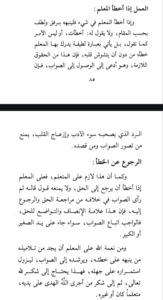
قوله تعالى : إِن يَسْرِقُ فَقَدْ سَرَفَ أَخٌ لَهُ مِن قَبْلُ
[يوسف: ٧٧]

أخبر عن إخوة يوسف أنهم قالوا لما وجدوا الصواع في رحل أخيهم : إن يَسْرِقُ فَقَدْ سَرَفَ أَخٌ لَهُ مِن قَبْلُ . فلم يجمعوا بين الأصل والفرع بعلة ولا دليلها، وإنما ألحقوا أحدهما بالآخر من غير دليل جامع سوى مجرد الشبه الجامع بينه وبين يوسف، فقالوا : هذا مقيس على أخيه، بينهما شبه من وجوه عديدة، وذاك قد سرق فكذلك هذا ، وهذا هو الجمع بالشبه الفارغ، والقياس بالصورة المجردة عن العلة المقتضية للتساوي، وهو قياس فاسد والتساوي في قرابة الأخوة ليس
بعلة للتساوي في السرقة، ولو كانت حقاً، ولا دليل على التساوي فيها، فيكون الجمع لنوع شبه خال عن العلة ودليلها.
إعلام الموقعين (۱۹۸/۱)

[8] Explanation of Sunan Abu Dawud. Audio number 569

[9] An Excerpt from ‘at-Taleeqaatul Maleehah Alaa Silsilah Al-Ahadith As-Sahihah. 1/26

[10] Saheeh Al-Bukhari -Kitaab Al-Ahkaam (Book of Judgements): Chapter 29: Hadeeth Number: 7181 with Fat’hul Baari]

[11] An Excerpt from Adab At-Talab Wa Muntahaa Al-Adab. Pages 93-95. Slightly paraphrased]

[12] Al-Fawa’id. pages 202-203

[13] https://youtu.be/FGtZtOBbif4

[14]https://salafidawahmanchester.com/2021/07/31/o-allah-just-as-you-made-my-external-form-beautiful-make-my-character-beautiful-as-well/

[2] Uncomfortable Truths and Realities Delivered by Al-Allamah Rabee to Some of Those Who Spoke Without Restraint

In The Name of Allah, The Most Merciful, The Bestower of Mercy.

Allah, The Most High, said:

يَـٰٓأَيُّہَا ٱلَّذِينَ ءَامَنُواْ كُونُواْ قَوَّٲمِينَ بِٱلۡقِسۡطِ شُہَدَآءَ لِلَّهِ وَلَوۡ عَلَىٰٓ أَنفُسِكُمۡ أَوِ ٱلۡوَٲلِدَيۡنِ وَٱلۡأَقۡرَبِينَ‌ۚ إِن يَكُنۡ غَنِيًّا أَوۡ فَقِيرً۬ا فَٱللَّهُ أَوۡلَىٰ بِہِمَا‌ۖ فَلَا تَتَّبِعُواْ ٱلۡهَوَىٰٓ أَن تَعۡدِلُواْ‌ۚ وَإِن تَلۡوُ ۥۤاْ أَوۡ تُعۡرِضُواْ فَإِنَّ ٱللَّهَ كَانَ بِمَا تَعۡمَلُونَ خَبِيرً۬ا

O you who believe! Stand out firmly for justice, as witnesses to Allah; even though it be against yourselves, or your parents, or your kin, be he rich or poor, Allah is a Better Protector to both (than you). So follow not the lusts (of your hearts), lest you may avoid justice, and if you distort your witness or refuse to give it, verily, Allah is Ever Well-Acquainted with what you do. [An-Nisaa. 135]

Imam Ibn Al-Qayyim, may Allah have mercy upon him] said:

Allah, Glorified be He and free is He from all imperfections, commanded His servants to stand out firmly for justice on behalf of everyone – be it an enemy or an ally, and the affair that is most worthy of being established with justice are the statements and methodology related to the commands of Allah as well as everything that Allah has (revealed in the Qur’an and the authentic Sunnah). Therefore, to establish these affairs based on desires and disobedience is contrary to Allah’s command and a negation (i.e. either intentionally or unintentionally) of that which Allah’s Messenger [peace and blessings of Allah be upon him] was sent with. The establishment of justice is the responsibility of those entrusted with the task of conveying Islam after the death of the Messenger, and this task cannot become a reality unless one establishes it based on pure justice and sincerity to Allah- (sincerity) based on Allah’s Book, to Allah’s Messenger (by adhering to his guidance), and sincere dealings and advice when dealing with Allah’s servants. These people are the true inheritors (i.e. inheritors of the knowledge left behind by the Prophets), but not that one who merely makes his companions, sect, and path the determinant of truth and the distinction between (truth and falsehood) by showing enmity to the one who opposes him and allies with the one who agrees with him, merely based on being opposed or agreed with, because where is that command to stand out firmly for justice on behalf of everyone, even though standing out firmly for justice is the greatest command and obligation! [1]

Al-Allamah Rabee Bin Hadi, Al-Mad’khali, may Allah preserve him, stated:

The seeker of truth is not swayed by admiration or reverence for prominent figures when it comes to following truth, fairness and justice; for indeed, the truth is most deserving to be followed, and it is not permissible to drop the proofs for this or that great  man. The principle of a just person, the seeker of truth, is always:

قُلْ هَاتُوا بُرْهَانَكُمْ إِن كُنتُمْ صَادِقِينَ

Say, “Bring forth your proof, if you are indeed truthful.” [Al-Baqarah 111] [Majmu 8/81]


Falih Al-Harbi, may Allah rectify him

Al-Allaamah Rabee Bin Hadi Al-Mad’khali, may have mercy upon him, stated:

When affairs escalated, and during this escalation that led to the splitting, I received some papers from a book that had been transcribed from his tapes titled ‘Al-Musaara’ah’. I read those papers and came across – in them – terrible insults, ignorance, destructive judgments and a corrupt premise. I discussed some of what is in those papers with the utmost kindness and care, asked him to return to the truth in the hope that Allah might benefit him through it, so that the Salafi youth would be relieved of the causes of disunity and splitting. I sent the first advice to him in private, but he did not respond to this gentle request aimed at stopping the trial and uniting the Salafi youth.

Then, after about a month and a half, I sent him and some of his friends the second advice- in private and not openly, despite the fact that he and those who supported him rebuked those who exercised patience and gave advice, and considered that (patience and advice) to be tantamount to negligence and an act of weakening the (sound principles, stances).

He and his clandestine group entered the dark tunnels, presented their arguments in a particular way, weakening the (sound principles), defending (themselves) with lies, obscuring (matters) and insulting – through gestures and open declaration – at everyone who spoke the truth; rather the insult by some of them extended to belittling Imams of Jarh Wat-Tadeel and their fundamental principles. Therefore, now it is necessary to clarify some of what I discussed in the two advices, which I had previously overlooked.

Falih had been rushing into (unjustified) elimination and declaring people Mubtadi’ah, thus, some youth asked him for proofs, but the proofs sought from him were not found with him. Then he resorted to the invention of a principle by removing Tabdee (the ruling related to declaring a person a Mubtadi) from the principles of the Imams of Al-Jarh Wat- Tadeel (the carriers of the science of criticism and commendation), and differentiated (in the science of criticism) between the narrators of hadith and (when) declaring a person a Mubtadi; so, he held that it is right to ask about the reasons for criticising the narrators, (but) as for those about whom he holds that that they are innovators in the religion, it is not right to ask about the reasons behind disparaging them and declaring them innovators hop, even if they are from the best of the Salafis; rather the one who asks regarding the reasons why they are declared innovators is declared an innovator (as well). This premise led him to say that the scholars must be blindly followed and not asked for proof. Who did he ask to blindly follow the scholars? Indeed, they are the intelligent students of knowledge – the teachers, and among them are some who have reached the level of doctorate, and are not common people; and that the one who does not blindly follow the scholars has indeed undermined the message of the Messengers and the books, or has belied the Qur’an, the Sunnah and Islam.

He and his followers thought that he was the only Imam, and protector of the religion. He pushed (incited) them and they pushed (incited) him, thus he inflicted the heads of Ahlus Sunnah – the strong and the weak amongst them – with false Tabdee and unjust rulings. Whoever does not blindly follow him, even if he holds a doctorate degree in Islamic Shariah, is considered a denier of the Qur’an, the Sunnah and Islam. The one who does not blindly follow him in his false opinion, even if he was a teacher, is judged to be one of the callers at the gates of Hell, and that he has destroyed the messages of the Messengers and the books that were revealed to them. This – in addition to insulting, attacks and warning – are matters that are neither approved by Shariah nor (sound) reasoning. These – despite the fact that my advice to him was accompanied with kindness and contained only some of his mistakes – are matters that should motivate a sane and just person to return to the truth. We did not see anything from Falih except false denunciations, false interpretations, war, mobilisation, and seeking help through supporters amongst those whose identities were unknown – those hiding behind the curtains. At first, he found nothing from the scholars except advice, then denunciation of these matters. [2]


Fawzi Al-Bahrayni, may Allah rectify his affair

Al-Allamah Rabee Bin Haadi Al-Mad’khali, may Allah preserve him, said:

Indeed, the scholars of Ahlus Sunnah – such as Abdullah Ibn Ahmad, Al-Khallaal, Al-Aajuree, Al-Laalikaa’ee, Ibn Battah and other than them – have clarified the methodology of Ahlus Sunnah regarding Iman with a profound clarification. And that according to Ahlus Sunnah, it (i.e.

Imaan) is “Speech, action and belief- increases with obedience to Allah and decreases with disobedience”.

We worship Allah with what they say (i.e. this definition), we say it, believed in it from our early age (in pursuit) of knowledge, affirmed in our authorships, lessons and gatherings, and establish loyalty and disavowal based on that.

Then the sinful liars, the spiteful ones and plotters against Ahlus Sunnah came to fight on behalf of the people of desires, and they attacked us with various immoral attacks. One of those attacks is that they (falsely) accuse us of being Murji’ah, and they laid down false and unjust principles for that, with which they fight us. Whenever we destroyed them, they repeated them without shame or shyness.

Their statement: “Iman is speech and action, increases and decreases, and it decreases until nothing remains of it”, in their view is that whoever does not mention the addition “until nothing remains of it” is a Murji. They made it incumbent upon the people, wage war against Ahlus Sunnah and declare them innovators due to it, while these Aghmaar (inexperienced ones, ignoramuses, devoid of sound judgement etc) do not know that this Tabdee would apply to the righteous predecessors who did not constantly mention this addition, even if some of them did so. They declared me a Mubtadi, passed the judgement of Irjaa against me and hurled it against me a lot in a number of their statements, especially in the statements of Fawzi Al-Bahraini, even though I have mentioned this (additional) statement and repeated it before the birth of the old and new Haddadi, but I do not always adhere to its mention, because the Sahabah and the Taabi’een did not say it, and because there is no evidence to obligate that it should be said. The majority of the (pious) predecessors did not say it, neither did those who say it always said it, nor made it incumbent upon others, despite the fact that I do say it sometimes. The following are my statements regarding that….Then the Shaik,  may Allah have mercy upon him,  gave references from pages 61-63 regarding where he has stated this addition in his authorships and lessons.

The Shaikh quoted a hadith explained in 1406AH under the title “Striving Against Those Who Deviate From The Right Path”

Abdullah Ibn Mas’ud, may Allah be pleased with him, said that the Prophet said, “Never a Prophet had been sent before me by Allah to his nation, except that he had – among his people – disciples and companions who followed his ways and obeyed his command. Then there came after them their successors who said whatever they did not practice, and practiced whatever they were not commanded to do. He who strove against them with his hand was a believer, he who strove against them with his tongue was a believer, and he who strove against them with his heart was a believer and beyond that there is no faith even to the extent of a mustard seed”. [Sahih Muslim 50]

Then the Shaikh said, “I explained this hadith and stated in page 44 [i.e. in Mudhakkirah Al-Hadith An-Nabawiyyah]: And there remained – in every nation – sincere scholars who fulfilled the requirements of their religion, striving and defending the teachings of their Prophets, everyone according to his strength and level of Iman. The one who strove by way of the tongue (i.e. speech), the one who strove by way of his hand, and the one who strove by way of his heart and that is the weakest of Imaan. And there is nothing from Iman besides that”. [3]

The Shaikh, may Allah have mercy upon him, also said:

It is important to note that some overexcited youth may study the books of the predecessors, but not proficient in applying what is sound from the narrations, thus, they apply them in other than their appropriate place. Therefore, it is essential to consult scholars on how to implement them because if one embarks upon applying some things incorrectly, he may harm himself, harm Islam and the Muslims.

This issue occurred in the past, as some overexcited youth among the new and old Haddadiyyah focused on narrations (of the predecessors), while not memorising (and understanding) the Quran. They focused on the narrations of the predecessors, while among the narrations of predecessors, there are those that are authentic and those that are unauthentic.

When they (predecessors) hold a consensus on a matter, it is obligatory to accept it; however, in cases of disagreement, their statements must be referred back to the Quran and the Sunnah of the Prophet. If a particular statement is not reliably attributed to so and so, it should not be accepted, and if it is reliably attributed to him, (but) contradicts (what is sound), it should be rejected. This is how these matters should be. They require Fiqh (sound understanding). The Haddadiyyah used to memorise the narrations of the predecessors, and Ahlus Sunnah were the first people they wage a war against, attacking them through their hysterical reading (of those narrations), turned against the scholars and sought to topple them one after the other until targeting (Shaikh Al-Islam) Ibn Taymiyyah. This trend has resurfaced through attacks against scholars and attempting to topple them while clinging to various narrations, some of which are authentic and others not, without grasping their intended meanings (or goals). [3.1]

We ask Allah:

اللَّهُمَّ بِعِلْمِكَ الْغَيْبَ وَقُدْرَتِكَ عَلَى الْخَلْقِ أَحْيِنِي مَا عَلِمْتَ الْحَيَاةَ خَيْراً لِي وَتَوَفَّنِي إِذَا عَلِمْتَ الْوَفَاةَ خَيْراً لِي، اللَّهُمَّ إِنِّي أَسْأَلُكَ خَشْيَتَكَ فِي الْغَيْبِ وَالشَّهَادَةِ، وَأَسْأَلُكَ كَلِمَةَ الْحَقِّ فِي الرِّضَا وَالْغَضَبِ، وَأَسْأَلُكَ الْقَصْدَ فِي الْغِنَى وَالْفَقْرِ، وَأَسْأَلُكَ نَعِيماً لَا يَنْفَذُ، وَأَسْأَلُكَ قُرَّةَ عَيْنٍ لَا تَنْقَطِعُ، وَأَسْأَلُكَ الرِّضِا بَعْدَ الْقَضَاءِ، وَأَسْأَلُكَ بَرْدَ الْعَيْشِ بَعْدَ الْمَوْتِ، وَأَسْأَلُكَ لَذَّةَ النَّظَرِ إِلَى وَجْهِكَ وَالشَّوْقَ إِلَى لِقَائِكَ فِي غَيْرِ ضَرَّاءَ مُضِرَّةٍ وَلَا فِتْنَةٍ مُضِلَّةٍ، اللَّهُمَّ زَيِّنَّا بِزِينَةِ الْإِيمَانِ
وَاجْعَلْنَا هُدَاةً مُهْتَدِينَ

O Allah! By Your Knowledge of the unseen and by Your Power over creation, let me live if life is good for me, and let me die if death is good for me; O Allah! I ask You to grant me (the blessing of having) fear of You in private and public, and I ask You (to make me utter) a statement of truth in times of contentment and anger, and I ask You for moderation when in a state of wealth and poverty, and I ask you for blessings that never ceases, and I ask You for the coolness of my eye that never ends, and I ask You (to make me pleased) after (Your) decree; and I ask You for a life of (ease, comfort, tranquillity, etc) after death; I ask You for the delight of looking at Your Face (i.e. in the Hereafter) and yearning to meet You without any harm and misleading trials (coming upon me). O Allah! Adorn us with the adornment of Iman, and make us (from those who are) guided and guiding (others). [4]

اللَّهُمَّ أَصْلِحْ لِي دِينِي الَّذِي هُوَ عِصْمَةُ أَمْرِي
وَأَصْلِحْ لِي دُنْيَايَ الَّتِي فِيهَا مَعَاشِي
وَأَصْلِحْ لِي آخِرَتِي الَّتِي فِيهَا مَعَادِي
وَاجْعَلِ الْحَيَاةَ زِيَادَةً لِي فِي كُلِّ خَيْرٍ
وَاجْعَلِ الْمَوْتَ رَاحَةً لِي مِنْ كُلِّ شَرٍّ

O Allah! Rectify my religion for me, which is the safeguard of my affairs; rectify my worldly [affairs], wherein is my livelihood; and rectify my Afterlife to which is my return; and make life for me [as a means of] increase in every good and make death for me as a rest from every evil. [Saheeh Muslim Number: 2720] [5]


We ask Allah:

اللهُمَّ إِنِّي أَعُوذُ بِكَ مِنْ عِلْمٍ لَا يَنْفَعُ، وَمِنْ قَلْبٍ لَا يَخْشَعُ، وَمِنْ نَفْسٍ لَا تَشْبَعُ، وَمِنْ دَعْوَةٍ لَا يُسْتَجَابُ لَهَا

O Allah! I seek refuge in Your from knowledge that does not benefit, from the heart that is not fearful, from the soul that is not contented and the supplication that is not answered. [6]


[1] An Excerpt from ‘Badaa’i At-Tafseer Al-Jaami Limaa Fassarahu Al-Imaam Ibn Al-Qayyim. 1/300-303

[2]An Excerpt from Al-Majmu Al-Wadih Fee Radd Manhaj Wa Usul Falih. page 123-125

[3] An Excerpt from Kashf Akaadheeb Wa Tahreefaat Wa Khayaanaat Fawzi Al-Bahrayni. pages 59-60

[3.1] Marhaban Yaa Talib Al-Ilm 459-460

[4]https://salafidawahmanchester.com/2021/01/01/o-allaah-let-me-live-if-life-is-good-for-me-and-let-me-die-if-death-is-good-for-me/

[5]https://salafidawahmanchester.com/2020/12/29/o-allaah-rectify-my-religion-for-me-which-the-safeguard-of-my-affairs-a-tremendous-supplication/

[6] Sahih Abi Dawud 1548

[15] Notification to Ahlul Bidah and The Mumayyi’ah: These Clarifications Are Coming Back!

In The Name of Allah, The Most Merciful, The Bestower of Mercy.

The Messenger, peace and blessings of Allah be upon him, said:

Verily he lives long among you will see a lot of differing, so you must keep to my Sunnah and to the Sunnah of the Khulafaa ar-Rashideen [the rightly guided caliphs]. Adhere to it with your molar teeth (i.e. adhere to it firmly). And beware of newly invented matters [in the religion], for every newly invented matter [in the religion] is a bidah [innovation in the religion], and every bidah is misguidance. [1]

The Messenger, peace and blessings of Allah be upon him, said:

The Jews divided into seventy-one sects, the Christians divided into seventy-two sects and this Ummah will divide into 73 sect. All of them are in the fire except one. [Footnote a] So he was asked, “Who are they [i.e. the saved sect] O Messenger of Allaah?” He said, “Those upon that which I and my companions are upon”. [2]

Hafs Bin Humaid, may Allah have mercy upon him, said: I said to Abdullah Ibn Al-Mubarak, may Allah have mercy upon him: “How many sects have this Ummah spilt into?’ He said, “The foundation of the sects are four: the Shia, the Harooriyyah (i.e. khawarij), the Qadariyyah, and the Murji’ah. The Shia split into twenty-two sects, Harooriyyah split into twenty-one sects, the Qadariyyah split into sixteen sects, and the Murji’ah split into thirteen sects”. [3]

Imam Barbahaaree [329AH], may Allah have mercy upon him said:

It is not permitted for a man to say, “So and so is a person of the sunnah” until he knows that he combines the characteristics of the Sunnah, so it is not said of him, “a person of the Sunnah” until he combines all the Sunnah.

Al-Allamah Salih Al-Fawzan, may Allah preserve him, commented on the above statement as follows:

Do not give recommended to a person and a praise of him, except based on knowledge, lest the people become deceived by your praise of him, while he is not what (you have stated about him).  So, when his real affair and path is clear to you, his knowledge and steadfastness, you can give him recommendation. As for giving out praise and recommendation whilst not knowing of anything about him, this is a dangerous recommendation through which the people will be deceived by this person. Had only those who give commendations to the people stopped at that (i.e. put it in its proper place), they would not give recommendation, except for one who fulfils the conditions of (receiving) recommendation because recommendation is a witness, thus, if the recommendation is not correct it will be a false witness. And regarding the statement of Imam Al-Barbahaaree: “until he knows that he combines the characteristics of the Sunnah”. The characteristics of the Sunnah are to be in creed, knowledge and adherence to the (path) of the pious predecessors. But if there is not in him except a single characteristic of the (sunnah), he is not judged to be from Ahlus Sunnah on the basis of a single characteristic or one thing, then what about the one who does not have anything from that? [4]

Al-Al-Allaamah Rabee Bin Hadi Al-Madkhali, may Allah have mercy upon him, was asked:

The questioner says: We request a comment from you on this statement: “Indeed both Sunnah and Bidah may be gathered in a man, thus, if the Sunnah is predominant in him, he is a Sunni Salafi. And if bidah is predominant in him, he is an innovator, a misguided one”. Benefit us (i.e. with a comment) and may Allah reward you”.

Response: This (statement) is from the [مغالطات-i.e. those misleading statements or affairs that are brought forth for the purpose of deception or sophistry]. There is no doubt that the one in whom Bidah is predominant is an innovator in religious matters, but it is not a condition, for example, that he has thirty (matters) of bidah with him and twenty (matters) of Sunnah, because he may have one bidah with him and thus declared an innovator in religious matters. Rather the verdict of disbelief may be passed against him. [Footnote c] Because if he adheres to all the Sunnah, but then he says, “Indeed the Qur’an is created”, do we say that the Sunnah is predominant in this (person)? The Salaf (pious predecessors) declared (people) disbelievers due this because the Qur’an is the Speech of Allah and not created. The Salaf held a consensus regarding this. If he says, “I am a Sunni and the Qur’an is created”, we say: ”You are an innovator in religion, a misguided one, rather this innovation of yours is tantamount to disbelief.  Either you recant or else you are a disbeliever.”  We clarify the truth for him and unless he recants, otherwise he is a disbeliever. He rejects the Ruyah (i.e. he rejects the fact that the believers will see Allah on the day of judgement) and says: “I am a Sunni in everything except in this, for I do not believe that Allah will be seen in the Afterlife.” This one (i.e. the person who says this) has belied the Qur’an and the Sunnah.

This principle (i.e. that a person is a Sunni Salafi or an innovator depending whether the Sunnah or Bidah is predominant in him) is false; and how many with a single bidah – among the major bidah- were declared innovators by the Salaf?! Jad Ibn Dirham had two innovations- negation of the attributes of Allah and the statement (i.e. the belief) that the Qur’an is created, whilst he used to pray, observe fasting and worshipped Allah. And how many of Ahlul bidah and the Ubbaad (those dedicated to worship) have numerous (practices) of Sunnah, but alongside this he is an innovator!

Therefore, it is obligated to the Sunni to be solely dedicated to the truth and that his religion (Creed, Methodology and acts of worship) are pure and not stained by anything from the (matters) of bidah. However, if he falls into a Bidah khafiyyah (i.e. an innovation that is obscure or hard to detect), whilst he is desirous of the truth and seeking after it, then if the people were to inform him about it he would recant. So we do not pass the judgement of Tabdee against this person. If he had passed away we ask Allaah to forgive him and we do not pass the verdict of Tabdee against him. If he is alive, we advice him, and unless he accepts (the truth), we pass the verdict of Tabdee against him. [5]

Shaikh Abu Khadeejah, may Allah preserve him, quotes Al-Allamah Rabee Bin Hadi Al-Mad’khali, may Allah have mercy upon him, who said:

As for the one who falls into an innovation, then he is of categories. he first category: Ahlul-Bid’ah such as the Rawāfid, the Khawārij, the Jahmiyyah, the Qadariyyah, the Mu’tazilah, the Grave-worshipping Sūfīs, the Murji’ah, and whoever is connected to them [in our times] such as al-Ikhwān, at-Tablīgh and those similar to them. For these innovations the Salaf did not make it a condition that the proof be established due to the fact that the ruling upon them is [in accordance to] the innovation. So regarding the Rāfidī, it is said about him, “Innovator (mubtadi’)”. As for the Khārijī, it is said about him, “Innovator”, and so on, regardless of whether the proof is established upon him or not. [6]

————————————————-

Footnote a: Imam Abdul Aziz Bin Baz, may Allah have mercy upon him, was asked: “What is the intent behind the statement of the Messenger, peace and blessings of Allah be upon him, statement when he spoke about the Ummah in the hadith: “All of them (the sects) are in the fire except one” and what is that one?. Also, will all the other 72 (deviant) sects be in the fire for eternity? Benefit us”.

Response: The prophet, peace and blessings of Allah be upon him, said, “The Jews split into 71 sects, meaning all of them are astray and their affair ruined, except one. The Christians split into 72 sects, meaning all of them are astray and their affair ruined, except one. And this Ummah will split into 73 sects- all of them in the fire, except one. This one group is Ahlus Sunnah Wal Jamaa’ah [those who firmly adhere to the authentic Prophetic Sunnah and are united upon that] – the companions of the Prophet and those who follow them exactly in faith, the adherents to pure Islamic monotheism and sound faith.
As for the other 72 sects that have been threatened with the fire, among them is one who is a disbeliever (b), among them is one who is a sinner and among them is one about whom it is established with clear evidence that he is an innovator in religious affairs. So, the one – among them – that dies in a state of disbelief (c) will be in the fire for eternity, the one that dies in a state of adherence to religious innovation that is lesser than major disbelief (d) or sins is under the will of Allah, while still threatened with the fire. So, based on this it is known that not all of them are disbelievers, but rather among them is a disbeliever and other than him among the sinners and the innovators in religious affairs. [7]
[b and c]: NB: Takfeer – declaring that a Muslim left the fold of Islaam is a judgement that can only be given by the upright scholars and none else.  https://www.manhaj.com/manhaj/articles/obkwf-takfir-and-the-excuse-of-ignorance-shaykh-saalih-al-fawzaan.cfm
[d]: NB: All innovations in the religion are evil, but there are those that exit a person from the fold of Islam (Bida’atul Mukaffirah) and those that do not exit a person from the fold of Islam (Bida’atul Mufassiqah). Al-Allamah Rabee Bin Hadi Al-Mad’khalee [may Allah preserve him] was asked whether there is a difference between Bidah Al-Mukaffirah and Bidah Al-Mufassiqah; so he replied that there is Bidah Mukaffirah, such as rejecting the Ruyah (i.e. denying that the believers will see Allah in the afterlife); rejecting Allah’s Uluww [i.e. denying that Allaah is above his creation –Allah ascended over the Throne in a way that benefits his majesty)]; invoking other than Allaah; offering slaughtered sacrifice (i.e. animals) to other than Allah etc. These are affairs of Bidah Al-Mukaffirah (the bidah that is tantamount to disbelief). But we do not make Takfeer of the people who commit this type of Bidah until we establish the proofs against them. That is because some of them (i.e. the people who fall into these affairs) carry doubts and are far away from the era of Prophethood and its light (i.e. guidance). So they fall into the likes these innovations. Rejecting the Ruyah is disbelief; rejecting Allah’s Uluww is disbelief; the saying that the Qur’an is created is disbelief-major disbelief. But this person, -[who testifies that none has the right to be worshipped except Allah and that Muhammad is the messenger of Allah, and he prays, observes fasting, wants paradise and believes in that] -received the doubts of the people of falsehood, so he falls into the likes of these affairs (i.e. these innovations that are tantamount to disbelief). So we say to him: You have fallen into disbelief and the evidence is this and this, and we clarify for him. So if Allaah grants him Tawfeeq and he returns to the truth, then all praise is due to Allaah. But if not, we declare him a disbeliever after establishing the proofs against him. As for Bidah Al-Mufassiqah it is other than this (i.e. it is not at the level of that which is tantamount to disbelief)…[8]
——————————————————————
[1] Sunan Ibn Majah 43
[2] Sahih Abi Dawud 4607

[3] Al-Ibaanah by Imam Ibn Battah 1/379-380

[4] It’haf Al-Qaaree Bitta’liqaat Alaa Sharhis Sunnah Lil Imaam Barbahaaree. 2/275-276]

[5] Source:   بهجة القاري بفوائد منهجية ودروس تربوية من كتاب الإعتصام بالكتاب والسنة من صحيح البخاريPages 92-93 Question number 13.

[5] https://abukhadeejah.com/shaikh-rabee-establishment-of-proof-in-declaring-a-person-to-be-an-innovator/

[7] Paraphrased. see link below
[8] [A paraphrased excerpt. see www.rabee.net/ar/questions.php?cat=26&id=484 ]

A Heartfelt Reminder to the Children of My Household About Some Timeless Principles

In The Name of Allah, The Most Merciful, The Bestower of Mercy.

Imam Ash-Shawkaani, may Allah have mercy upon him, said:

فاعلم أنه إذا وقع الخلاف بين المسلمين في أن هذا الشيء بدعة او غير بدعة ، أو مكروه او غير مكروه ، او محرم او غير محرم ، او غير ذلك ، فقد اتفق المسلمون : سلفهم وخلفهم ، من عصر الصحابة الى عصرنا هذا – وهو القرن الثالث عشر منذ البعثة المحمدية – أن الواجب الاختلاف في أي أمر من أمور الدين بين الأئمة المجتهدين : هو الرد الى كتاب الله سبحانه ، وسنة رسوله الناطق بذلك
الكتاب العزيز ( ٤ : ٥٩ فإن تنازعتم في شيء فردوه إلى الله والرسول ( ومعنى الرد الى الله سبحانه : الرد الى كتابه
ومعنى الرد إلى رسوله ال : الرد الى سنته بعد وفاته وهذا مما لا خلاف فيه بين جميع المسلمين . فإذا قال مجتهد من المجتهدين
هذا حلال . وقال الآخر : هذا حرام : فليس
أحدهما أولى بالحق من الآخر وإن كان اكثر منه علماً ، أو اكبر منه سنا ، او اقدم منه عصراً لأن كل واحد منهما فرد من أفراد عباد الله ، ومتعبد بما في الشريعة المطهرة، مما في كتاب الله وسنة رسوله ، ومطلوب منه ما طلب الله من غيره من العباد . وكثرة علمه وبلوغه درجة الاجتهاد او مجاوزته لها لا يسقط عنه شيئاً من الشرائع التي شرعها الله لعباده ، ولا يخرجه من جملة المكلفين من العباد

So, know that when differing arise among Muslims regarding whether this thing (matter) is a Bidah or not a Bidah, (something) disliked or not disliked, prohibited, or not prohibited, or other than that, there is a consensus among Muslims (i.e. their scholars) —both the early generations and those that followed, from the era of the Companions to the present day, which is the thirteenth century since the advent of the Prophethood—that the obligation in any differing – in any issue among the issues of the religion – between Imams of Ijtihad is to refer back to the Book of Allah, the Exalted, and the Sunnah of His Messenger, as stated in Allāh’s Book:

فَإِن تَنَٰزَعْتُمْ فِى شَىْءٍ فَرُدُّوهُ إِلَى ٱللَّهِ وَٱلرَّسُولِ

And if you disagree among yourselves over anything then refer it back to Allāh and the Messenger. [An-Nisa 59]

The meaning of referring back to Allah, the Exalted, is to refer to His Book, and the meaning of referring to His Messenger, peace and blessings of Allāh be upon him, is to refer to his Sunnah after his passing. This is a matter about which there is no differing among the Muslims.

If a Mujtahid among the Mujtahideen says that this (thing) is lawful while another says this (thing) is unlawful, neither is any of the two more entitled to the truth than the other, even if he possesses more knowledge, older, or closer to the (early era of Islam). This is because each of them is a servant of Allāh among the servants of Allāh, (required) to worship (Allāh) based on what is found in the pure Sharia- that which is found in Allāh’s Book and the Sunnah of His Messenger, and what is required of him is required of other than him among Allāh’s servants. His abundant knowledge, the attainment of the level of Ijtihad, or even surpassing it, does not exempt him from any of the religious laws legislated by Allah for His servants, nor do they exclude him from those who have reached the age in which one is held accountable for his actions among the servants (of Allāh).

Source: Sharh As-Sudoor Bi-Tahreem Raf Al-Quboor pages 1-2. Paraphrased


Imam Ash-Shaatibi, may Allah have mercy upon him, stated:

Know that Allah has established this Shariah as proof against the creation (humankind and jinn) – the old and young alike, the obedient and the disobedient, the righteous and the wicked. He did not specify the proof against anyone in exclusion of another one. Also, all the other revealed laws were established as proof against all the nations to whom they were revealed. The Shariah is the judge- in general, and specifically; the judge on all those who have reached the age of responsibility. It is the path attached to (what Allah has ordained) and it is the Greatest Guide. Have you not heard the statement of Allah, The Most High:

وَكَذَٲلِكَ أَوۡحَيۡنَآ إِلَيۡكَ رُوحً۬ا مِّنۡ أَمۡرِنَاۚ مَا كُنتَ تَدۡرِى مَا ٱلۡكِتَـٰبُ وَلَا ٱلۡإِيمَـٰنُ وَلَـٰكِن جَعَلۡنَـٰهُ نُورً۬ا نَّہۡدِى بِهِۦ مَن نَّشَآءُ مِنۡ عِبَادِنَاۚ وَإِنَّكَ لَتَہۡدِىٓ إِلَىٰ صِرَٲطٍ۬ مُّسۡتَقِيمٍ۬

And thus We have sent to you (O Muhammad) Ruhan (an Inspiration, and a Mercy) of Our Command. You knew not what is the Book, nor what is Faith? But We have made it (this Qur’an) a light wherewith We guide whosoever of Our slaves We will. And verily, you (O Muhammad) are indeed guiding (mankind) to the Straight Path (i.e. Allah’s religion of Islamic Monotheism). [Ash-Shura 52]

He (the Prophet) – peace and blessings of Allah be upon him – was the first to be guided to the Book and Iman, and then those who followed him. The Book is the Guide and also the Sunnah that was revealed to him explains that guidance (i.e. the Sunnah and the Qur’an explain each other). All the creation (mankind and Jinn) are guided through it. Therefore, when this is the case that the Shariah is worthy of being a decisive proof against them and a beacon by way of which they are guided to the truth, their nobility is determined by the extent to which they embrace its rulings- through acting upon them in speech, belief, and deeds– and not merely due to the level of their intellects or their nobility amongst their people. That is because Allah, The Most High, has determined nobility through Taqwa and no other than it. Allah, The Most High, says: [إِنَّ أَڪۡرَمَكُمۡ عِندَ ٱللَّهِ أَتۡقَٮٰكُمۡۚ- Verily, the most honourable of you with Allah is that (believer) who has At-Taqwa] [49:13] [Al-I’tisam 3/434]


Shaikh Al-Islam Ibn Taymiyyah, may Allah have mercy upon him, said:

ﻭﻟﻴﺲ ﻟﻠﻤﻌﻠﻤﻴﻦ ﺃﻥ ﻳﺤﺰﺑﻮﺍ ﺍﻟﻨﺎﺱ
ﻭﻳﻔﻌﻠﻮﺍ ﻣﺎ ﻳﻠﻘﻲ ﺑﻴﻨﻬﻢ ﺍﻟﻌﺪﺍﻭﺓ ﻭﺍﻟﺒﻐﻀﺎﺀ،
ﺑﻞ ﻳﻜﻮﻧﻮﻥ ﻣﺜﻞ ﺍﻷﺧﻮﺓ ﺍﻟﻤﺘﻌﺎﻭﻧﻴﻦ ﻋﻠﻰ
ﺍﻟﺒﺮ ﻭﺍﻟﺘﻘﻮﻱ ﻛﻤﺎ ﻗﺎﻝ ﺗﻌﺈﻟﻰ
وَتَعَاوَنُوا عَلَى الْبِرِّ وَالتَّقْوَى وَلا تَعَاوَنُوا عَلَى الإثْمِ وَالْعُدْوَانِ
وليس لأحد منهم أن يأخذ على أحد عهداً بموافقته على كل ما يريده وموالاة من يواليه ومعاداة من يعاديه،بل من فعل هذا كان من جنس جنكز خان وأمثاله الذين يجعلون من وافقهم صديقاً واليا، ومن خالفهم عدوَّا باغيا، بل عليهم وعلى أتباعهم عهد الله ورسوله بأن يطيعوا الله ورسوله ويفعلوا ما أمر الله ورسوله ويحرموا ما حرم الله ورسوله ويرعوا حقوق المعلمين كما أمر الله ورسوله، فإن كان أستاذ أحد مظلوماً نصره، وإن كان ظالماً لم يعاونه على الظلم بل يمنعه منه كما ثبت في الصحيح أنه قال:
(انصر أخاك ظالماً أو مظلوماً. قيل: يا رسول الله: أنصره مظلوماً فكيف أنصره ظالماً؟. قال تمنعه من الظلم فذلك نصرك إياه).
وإذا وقع بين معلم ومعلم أو تلميذ وتلميذ أو معلم وتلميذ خصومة ومشاجرة لم يجز لأحد أن يعين أحدهما حتى يعلم الحق، فلا يعاونه بجهل ولا بهوى، بل ينظر في الأمر، فإذا تبين له الحق أعان المحق منهما على المبطل سواء كان المحق من أصحابه أو أصحاب غيره، وسواء كان المبطل من أصحابه أو أصحاب غيره، فيكون المقصود عبادة الله وحده وطاعة رسوله واتباع الحق والقيام بالقسط
قال تعالى
يا أيها الذين آمنوا كونوا قوامين بالقسط شهداء لله ولو على أنفسكم أو الوالدين والأقربين، إن يكن غنياً أو فقيراً فالله أولى بهما، فلا تتبعوا الهوى أن تعدلوا وإن تلووا أو تعرضوا فإن الله كان بما تعملون خبيراً

It not allowed for the teachers to initiate (illegal) partisanship between the people and do that which would cause enmity and hatred between them; but rather they should be brothers who cooperate upon righteousness and piety, as Allah [The Exalted] said:

وَتَعَاوَنُوا عَلَى الْبِرِّ وَالتَّقْوَىٰ ۖ وَلَا تَعَاوَنُوا عَلَى الْإِثْمِ وَالْعُدْوَانِ

Help you one another in Al-Birr and At-Taqwa [virtue, righteousness and piety]; but do not help one another in sin and transgression]. [Al-Maa’idah. 2]

It is not allowed for anyone of them to receive a pledge from anyone to be in agreement with him in everything he wants – having allegiance to the one he is allied to and enmity against the one he harbours enmity, and whoever does this is similar to Genghis Khan and his ilk (in this affair), who take as their loyal friends the one in agreement with them and the one who oppose them as a rebellious enemy; rather it is obligated on them and their followers (i.e. the teachers) to fulfil the covenant of Allah and His Messenger by obeying Allah and His Messenger, doing that which Allah and His Messenger have commanded, declare unlawful that which Allah and His Messenger have declared unlawful, and preserve the rights of the teachers in the manner commanded by Allah and His Messenger. So, if one’s teacher is oppressed, he should help him; but if the teacher is the oppressor, he should not aid him in his act of oppression; rather he forbids him from it, as it has been established in the authentic books of hadeeth that the Prophet [peace and blessings of Allah be upon him] said, “Help your brother, whether he is an oppressor or he is an oppressed one. People asked, “O Allah’s Messenger! It is all right to help him if he is oppressed, but how should we help him if he is an oppressor?” The Prophet said, “By preventing him from oppressing others.” [Saheeh Al-Bukhaari 2444]

If an argument and dispute occurs between a teacher and another teacher, or between a student and another student, it is not permissible for anyone to help one of them until he knows the truth – neither to aid him based on ignorance nor desires; rather he he examines the affair, so if the truth becomes clear to him, he helps the one who deserves to be helped (due to him being upon the truth) against the one upon error – regardless whether the one who deserves to be helped is one of his companions or the companion of someone else, or whether the one upon error is one of his companions or the companion of someone else. Therefore, the aim is only to worship Allah alone, obedience to Allah’s Messenger, adherence to truth and establishment of justice. Allah [The Exalted] said:

يا أيها الذين آمنوا كونوا قوامين بالقسط شهداء لله ولو على أنفسكم أو الوالدين والأقربين، إن يكن غنياً أو فقيراً فالله أولى بهما، فلا تتبعوا الهوى أن تعدلوا وإن تلووا أو تعرضوا فإن الله كان بما تعملون خبيراً

O you who believe! Stand out firmly for justice, as witnesses to Allah; even though it be against yourselves, or your parents, or your kin, be he rich or poor, Allah is a Better Protector to both (than you). So follow not the lusts (of your hearts), lest you may avoid justice, and if you distort your witness or refuse to give it, verily, Allah is Ever Well-Acquainted with what you do. [Surah An-Nisaa. Ayah 135]

Source:

Majmoo Al-Fataawaa. 28/15-17. paraphrased


Al-Allamah Rabee Bin Hadi Al-Mad’khali, may Allah have mercy upon him, said:

All praise is due to Allah, and may peace and blessings be upon Allah’s Messenger, his family, companions, and those who follow his guidance. To proceed:

I advise myself and you to fear Allah, The Mighty and Majestic, to be sincere to Him in every statement and action, and to truthfully adhere to the Book of Allah and the Sunnah of Allah’s Messenger, peace and blessings of Allah be upon him, and to be steadfast upon that. And that you learn beneficial knowledge derived from the Book of Allah and the Sunnah of Allah’s Messenger, which will aid us upon this firmness and steadfastness upon Allah’s true religion. I advise my children and brothers to pursue the truth and search for it in every matter, whether it is a point of agreement or differing.

A believer who seeks the face of Allah and the home of the Hereafter does not find peace of mind or relaxation in his conscience (or inner self) until he reaches the truth- reaches the truth, especially in matters of differing and during times of Fitna. He does not make a move on any basis other than truth, knowledge and clear-sightedness.

If two individuals differ, even if it is his father or Shaikh, it is not permissible for him to take his side or against him until he studies the affairs and becomes acquainted with it based on its complete reality. Thereafter, he determines his stance and align himself with the truth that has become clear to him. This is what is obligated to a Muslim, and anything contrary to it is considered one of the behaviours (or traits) of the pre-Islamic era of ignorance and the (traits) of false pre-Islamic alliances. It is not permissible for a Muslim to follow such an evil path.

O our sons and brothers! I advise you to fear Allah, and advise you with what I mention with regards to loving the truth and the pursuit of it in its rightful places until you reach the reality. I advise our sons and brothers to honour the Salafi methodology and be steadfast in it. Honour its scholars, and if they utter truth, it is not permissible to oppose them. When they speak about a matter and present evidence, there is no excuse for anyone to oppose them, nor is it permissible for anyone to hesitate or abstain. This (hesitation or abstaining) is a deed of the people of vain desires, those who endeavour to undermine the Salafi methodology and topple its scholars.

Regarding matters of Al-Jarh Wa-Ta’deel, it is sufficient for a single scholar to issue (a critique), and the recommendation of a single scholar is sufficient. If two truthful scholars – respected and free from vain desires – differ about some individual, it is incumbent upon other than them among the carries of knowledge to seek clarification from the critic and request evidence. If the evidence is provided, it is obligated to them to submit to this evidence and proof. If the one who gives recommendation or any other individual opposes, his position is dropped. This one who (deliberately) rejects the evidence, his trustworthiness is undermined and he cannot be trusted with Allah’s Religion. Even if a single scholar presents proof and evidence, while numerous individuals oppose him through falsehood, lies, and trickery, they are not heeded. These are the established principles of Al-Jarh Wa-Tadeel – in the subject matter of criticism and praise – which we are obligated to adhere with regards to the likes of these Fitan.

A person may be criticised by numerous scholars who present clear evidence regarding his falsehoods and Fitna, yet some people do not listen to them, claiming that the truth has not been made clear. This is not permissible. It is not permissible in Allah’s religion. Then let us approach the books of Al-Jarh Wat-Tadeel, evaluate every biography and say: “By Allah, the truth has not been made clear for me”. Examine every (criticised) belief and say: “By Allah, it is not made clear to me”. (For example) the differing between the Rafidah and the Salafis, or between the Rafidah and the Jahmiyyah, or between the Salafis and the Mu’tazilah, or between the Salafis and the Khawarij, or between the Salafis and the Murji’ah, or between the Salafis and the Sufis (is examined), a person  says: “By Allah, it has not been made clear to me.” This behaviour would not be accepted from this person.

When two individuals among the Salafis differ, and the proof is with one of them, it is obligatory to support the one with the proof. I advise you to fear Allah, I advise you to uphold justice, and fairness, and distance from blind alliance and following desires.

ومن أضل ممن اتبع هواه

And who is more misguided than one who follows his desires?” Rejecting the truth is a grave offense.

ومن أظلم ممن كذب على الله وكذب بالصدق إذ جاءه

And who is more unjust than one who lies about Allah and denies the truth when it comes to him?

Denial of the truth is a (deed, characteristic, behaviour or trait) of the proponents of misguidance, the disbelievers and the rawafid. Shaikh al-Islam describes the Rawaafid by stating, “No group is as prone to reject the truth and accept falsehood as the Rawaafid.”

At present, it is obligated to the one who adheres to the Salafi methodology to free himself from following these corrupt paths – blind alliance, (traits) of pre-Islamic alliance, and rejecting the truth for the sake of so and so. By Allah, even if he is one of the senior scholars and one of the senior Imams of the Sunnah, and he errs, it is not permissible to reject the truth; then how about the ignorant, and those known for lying and Fitan; how can we be on their side? This is unbecoming of a Muslim, let alone a Salafi. What does the Salafi call signify if you are staunchly allied based on ignorance and vain desires. What is the meaning of this?

May Allah bless you. Abandon this, for it is foul. Search for the truth, adhere to it, and bear witness to it, even if it is against yourselves, your parents, or your relatives. Allah, the Blessed and Exalted, said:

يا أيها الذين ءامنوا كونوا قوامين بالقسط شهداء لله ولو على أنفسكم أوالوالدين والأقربين

O you who have believed, be persistently standing firm in justice, witnesses for Allah, even if it be against yourselves or parents and relatives.

O brother! When scholars approach you, whether it be one, two, or three, presenting the truth, you must not hesitate to accept it. If they come to you with truth supported by evidence and proofs, it is (obligatory to accept it). If they merely present claims without substantiation, you should not accept it. However, if they approach you with truth backed by evidence and proofs, then your rejection of him is tantamount to rejecting truth, denial of truthfulness and truth. There is no one more unjust or ignorant than someone whose condition is as such.

I ask Allah to grant us all the success to follow the truth, distance the trials from us, and unite our hearts upon truth. I ask Allah to make this a reality, for indeed, our Lord is All-Hearing of supplications. May peace and blessings be upon our Prophet Muhammad, his family, and his companions. [paraphrased] [1]


Must Return to The Senior Scholars In Times of Severe Fitan and The Nawaazil

Al-Allamah Ubaid Bin Abdillah Al-Jaabiri, may Allah have mercy upon him, stated:

كان أهل الفضل والصلاح والتقى إذا نزلت بهم نازلة أو حلت بهم مشكلة عمدوا إلى الأكابر من أهل العلم بالسؤال وطلبوا منهم الجواب الشافي الكافي وهذه سنة متبعة بدءاً من الصحابة فأئمة التابعين فمن بعدهم من أهل العلم والفضل والدين والإيمان، وما أحسن ما قاله ابن مسعود رضي الله عنه : لا يزال الناس صالحين متماسكين ما أتاهم العلم عن أصحاب محمد صلى الله عليه وسلم وأكابرهم فإذا أتاهم العلم عن أصاغرهم هلكوا

When the people of virtue, righteousness, and piety were faced with a Nazilah [a] or faced with difficulties, they would betake themselves to the senior people of knowledge to ask and seek from them a Jawaab Ash-Shaafee Al-Kaafee [i.e. comprehensive and satisfactory response that would bring about rectification and preservation of the well-being of the people]. This is a path that has been followed since the time of the companions, then by the Imams of the Tabi’in, and by those after them among the people of knowledge, virtue, religion and Iman. And excellent is that which Ibn Mas’ud, may Allah be pleased with him, said: “The people will not cease to be righteous and upright as long as knowledge comes to them from the companions of Muhammad, peace and blessings of Allah be upon him, and their elders; but if knowledge comes to them from their young ones, they will be destroyed”. [2]

Reminder to the beloved children of my household, as well as my nephews and nieces, that it is imperitive to abide by this advice of mine.

Firstly: They must not engage in any discussion about the Nawaazil (the matters of universal public safety) with their peers nor entertain such discussions.

Secondly: We have two Senior Scholars of the Ummah at present – Al-Allamah, the Mufti, Shaikh Salih Al-Fawzan and Al-Allamah Abdul Muhsin Al-Abbad, may Allah preserve them and prolong their lives upon good, Amin – from whom the final judgement is sought with regards to all matters related to the Nawaazil.

We ask Allah:

اللّهُـمَّ رَبَّ جِـبْرائيل ، وَميكـائيل ، وَإِسْـرافيل، فاطِـرَ السَّمواتِ وَالأَرْض ، عالـِمَ الغَيْـبِ وَالشَّهـادَةِ أَنْـتَ تَحْـكمُ بَيْـنَ عِبـادِكَ فيـما كانوا فيهِ يَخْتَلِفـون. اهدِنـي لِمـا اخْتُـلِفَ فيـهِ مِنَ الْحَـقِّ بِإِذْنِك ، إِنَّـكَ تَهْـدي مَنْ تَشـاءُ إِلى صِراطٍ مُسْتَقـيم

O Allah! Lord of Jibraa’eel, Meekaa’eel, and Israafeel, Creator of the heavens and the Earth, The Knower of the seen and the unseen. You judge between Your slaves regarding in that which they differ. Guide me to the truth regarding that in which there is differing, by Your Will. Verily, You guide whomever you will to the straight path. [Saheeh Muslim 770]

The scholars say that these creations [i.e. Jibraa’eel, Meekaa’eel, Israafeel, the heavens, and the earth] have been specifically mentioned, even though Allah is the Creator of all the creation, just as has been established in the Qur’an and authentic Sunnah with regards to the specific mention of every created thing that has a great and mighty status as one of Allah’s creation, such as the statement, “Lord of the Heavens and the Earth”, “Lord of the Supreme Throne”, “Lord of the Angels and Jibreel”, “The Lord of the two Easts (places of sunrise during early summer and early winter) and the Lord of the two Wests (places of sunset during early summer and early winter)”, “The Lord of Humankind”, “The King of Humankind”, “The Only True God of Humankind”, “The Lord of all Created Things”, “The Lord of the Prophets”, “The Creator of the Heavens and the Earth”, “The Originator of the Heavens and the Earth” etc. All these things and what is similar to them show Allah’s Greatness, All-encompassing Power, and absolute Sovereignty. [Sharh Saheeh Muslim 5/50]

In this supplication, one employs the means of seeking Allah’s (love, aid, pleasure, assistance, etc) through belief and affirmation that He is the Lord – in general and specific – of these three Angels, who have been given a means of giving life. Jibra’eel is given the responsibility to convey the revelation (to the Prophets) by way of which the hearts and souls are given that type of life that necessitates the presence of sound belief in the heart that leads to all righteous deeds. Meekaa’eel is given the responsibility to bring the rain by way of which the earth, the vegetation, and animals are given life, and Israafeel is given the responsibility to blow the trumpet by way of which the creation is resurrected after their death. Also employing the means of seeking Allah’s (love, aid, assistance, pleasure, etc) through belief and affirmation that Allah alone is the Originator of the heavens and earth, meaning, He is their Creator and the one who brought them into existence prior to their non-existence, and that He is the knower of the unseen and the seen- meaning, the hidden and apparent, and because He alone is the One Who judges between the servants in that which they differ, so that He guides you to the truth in that which they differ. As for guidance, it is knowledge of the truth together with having the intent to follow the truth and preferring it over other things. The guided person acts upon the truth and desires it, and it is the Greatest blessing of Allah bestowed on the servants. We ask Allah to guide us all to the straight path and grant us every good.

An Excerpt from Fiqh Al-Ad’iyah Wal Ad’kaar 3/139-140

We ask Allah:

اللَّهُمَّ أَصْلِحْ لِي دِينِي الَّذِي هُوَ عِصْمَةُ أَمْرِي

وَأَصْلِحْ لِي دُنْيَايَ الَّتِي فِيهَا مَعَاشِي

وَأَصْلِحْ لِي آخِرَتِي الَّتِي فِيهَا مَعَادِي

وَاجْعَلِ الْحَيَاةَ زِيَادَةً لِي فِي كُلِّ خَيْرٍ

وَاجْعَلِ الْمَوْتَ رَاحَةً لِي مِنْ كُلِّ شَرٍّ

O Allah! Rectify my religion for me, which is the safeguard of my affairs; rectify my worldly [affairs], wherein is my livelihood; and rectify my Afterlife to which is my return; and make life for me [as a means of] increase in every good and make death for me as a rest from every evil. [Sahih Muslim Number: 2720]

We ask Allah:

اللَّهُمَّ بِعِلْمِكَ الْغَيْبَ وَقُدْرَتِكَ عَلَى الْخَلْقِ أَحْيِنِي مَا عَلِمْتَ الْحَيَاةَ خَيْراً لِي وَتَوَفَّنِي إِذَا عَلِمْتَ الْوَفَاةَ خَيْراً لِي، اللَّهُمَّ إِنِّي أَسْأَلُكَ خَشْيَتَكَ فِي الْغَيْبِ وَالشَّهَادَةِ، وَأَسْأَلُكَ كَلِمَةَ الْحَقِّ فِي الرِّضَا وَالْغَضَبِ، وَأَسْأَلُكَ الْقَصْدَ فِي الْغِنَى وَالْفَقْرِ، وَأَسْأَلُكَ نَعِيماً لَا يَنْفَذُ، وَأَسْأَلُكَ قُرَّةَ عَيْنٍ لَا تَنْقَطِعُ، وَأَسْأَلُكَ الرِّضِا بَعْدَ الْقَضَاءِ، وَأَسْأَلُكَ بَرْدَ الْعَيْشِ بَعْدَ الْمَوْتِ، وَأَسْأَلُكَ لَذَّةَ النَّظَرِ إِلَى وَجْهِكَ وَالشَّوْقَ إِلَى لِقَائِكَ فِي غَيْرِ ضَرَّاءَ مُضِرَّةٍ وَلَا فِتْنَةٍ مُضِلَّةٍ، اللَّهُمَّ زَيِّنَّا بِزِينَةِ الْإِيمَانِ
وَاجْعَلْنَا هُدَاةً مُهْتَدِينَ

O Allah! By Your Knowledge of the unseen and by Your Power over creation, let me live if life is good for me, and let me die if death is good for me; O Allah! I ask You to grant me (the blessing of having) fear of You in private and public, and I ask You (to make me utter) a statement of truth in times of contentment and anger, and I ask You for moderation when in a state of wealth and poverty, and I ask you for blessings that never ceases, and I ask You for the coolness of my eye that never ends, and I ask You (to make me pleased) after (Your) decree; and I ask You for a life of (ease, comfort, tranquillity, etc) after death; I ask You for the delight of looking at Your Face (i.e. in the Hereafter) and yearning to meet You without any harm and misleading trials (coming upon me). O Allah! Adorn us with the adornment of Iman, and make us (from those who are) guided and guiding (others). [As-Saheehah Number 1301]

I ask Allah:

رَبِّ أَوْزِعْنِي أَنْ أَشْكُرَ نِعْمَتَكَ الَّتِي أَنْعَمْتَ عَلَيَّ وَعَلَىٰ وَالِدَيَّ وَأَنْ أَعْمَلَ صَالِحًا تَرْضَاهُ وَأَصْلِحْ لِي فِي ذُرِّيَّتِي ۖ إِنِّي تُبْتُ إِلَيْكَ وَإِنِّي مِنَ الْمُسْلِمِينَ

My Lord! Grant me the power and ability that I may be grateful for Your Favour which You have bestowed upon me and upon my parents, and that I may do righteous good deeds, such as please You, and make my off-spring good. Truly, I have turned to You in repentance, and truly, I am one of the Muslims [submitting to Your Will].


[1]

Reflections on some statements of Al-Allamah Rabee Bin Hadi Al-Mad’khali [77 of 80]

[2] الطيب الجني على شرح السنة للإمام المزني
page 18-19. Paraphrased

[1] Uncomfortable Truths and Realities Delivered by Al-Allamah Rabee to Some of Those Who Spoke Without Restraint

In The Name of Allah, The Most Merciful, The Bestower of Mercy.

Al-Allamah Rabee Bin Haadi Al-Mad’khali, may Allah have mercy upon him, said:

It has been broadcasted and spread in the media, including via broadcasts, newspapers, and websites, that the Pope of the Vatican Benedict the 16th attacked Islam and Allah’s Messenger, Muhammad, peace and blessings be upon him, describing him and his message to be evil and rough. This is a strange and astounding affair that contradicts sound reasoning and intelligence, and the evident reality of Islam – the Islam through which Allah removed humankind out of darkness (and entered them) into light, from the tyranny of (false or distorted) religions to the justice of Islam, which the people of intelligence amongst its enemies bear witness to. I will not prolong my praise of Islam and the Messenger of Islam, because indeed the world and the libraries are filled with it, so I say:

Indeed, Muhammad is Allah’s Messenger- truly and truthfully. Allah sent him as a mercy to the entire creation, as a bearer of glad tidings, a warner, a caller to (the path of) Allah, and an illuminating lamp (through Allah’s instructions from the Qur’an and the Sunnah). He came honouring the Prophets and their books; rather he came with love for them, belief in them and their books. Allah, The Most High, said:

آمَنَ الرَّسُولُ بِمَا أُنزِلَ إِلَيْهِ مِن رَّبِّهِ وَالْمُؤْمِنُونَ كُلٌّ آمَنَ بِاللّهِ وَمَلآئِكَتِهِ وَكُتُبِهِ وَرُسُلِهِ لاَ نُفَرِّقُ بَيْنَ أَحَدٍ مِّن رُّسُلِهِ

The Messenger (Muhammad ) believes in what has been sent down to him from his Lord, and (so do) the believers. Each one believes in Allah, His Angels, His Books, and His Messengers. They say, “We make no distinction between one another of His Messengers”. [Al-Baqarah. 285]

Allah, The Most – when commanding the Muhammad, peace and blessings of Allah be upon him, and his Ummah- stated:

قُولُواْ آمَنَّا بِاللّهِ وَمَا أُنزِلَ إِلَيْنَا وَمَا أُنزِلَ إِلَى إِبْرَاهِيمَ وَإِسْمَاعِيلَ وَإِسْحَاقَ وَيَعْقُوبَ وَالأسْبَاطِ وَمَا أُوتِيَ مُوسَى وَعِيسَى وَمَا أُوتِيَ النَّبِيُّونَ مِن رَّبِّهِمْ لاَ نُفَرِّقُ بَيْنَ أَحَدٍ مِّنْهُمْ وَنَحْنُ لَهُ مُسْلِمُونَ

Say (O Muslims), “We believe in Allah and that which has been sent down to us and that which has been sent down to Ibrahim (Abraham), Isma’il (Ishmael), Ishaque (Isaac), Ya’qub (Jacob), and to Al-Asbat [the twelve sons of Ya’qub (Jacob)], and that which has been given to Musa (Moses) and ‘Iesa (Jesus), and that which has been given to the Prophets from their Lord. We make no distinction between any of them, and to Him we have submitted (in Islam).” [Al-Baqarah. 136]

Allah, The Most High, said:

قُلْ آمَنَّا بِاللّهِ وَمَا أُنزِلَ عَلَيْنَا وَمَا أُنزِلَ عَلَى إِبْرَاهِيمَ وَإِسْمَاعِيلَ وَإِسْحَاقَ وَيَعْقُوبَ وَالأَسْبَاطِ وَمَا أُوتِيَ مُوسَى وَعِيسَى وَالنَّبِيُّونَ مِن رَّبِّهِمْ لاَ نُفَرِّقُ بَيْنَ أَحَدٍ مِّنْهُمْ وَنَحْنُ لَهُ مُسْلِمُونَ

Say (O Muhammad ): “We believe in Allah and in what has been sent down to us, and what was sent down to Ibrahim (Abraham), Isma’il (Ishmael), Ishaque (Isaac), Ya’qub (Jacob) and Al-Asbat [the twelve sons of Ya’qub (Jacob)] and what was given to Musa (Moses), ‘Iesa (Jesus) and the Prophets from their Lord. We make no distinction between one another among them and to Him (Allah) we have submitted (in Islam).” [Surah Aal Imran. Ayah 84]

Muhammad, peace and blessings of Allah be upon him, brought Adl and Ihsan, forbidding indecency, evil and transgression. Allah, The Most High, said:

إِنَّ اللّهَ يَأْمُرُ بِالْعَدْلِ وَالإِحْسَانِ وَإِيتَاء ذِي الْقُرْبَى وَيَنْهَى عَنِ الْفَحْشَاء وَالْمُنكَرِ وَالْبَغْيِ يَعِظُكُمْ لَعَلَّكُمْ تَذَكَّرُونَ

Verily, Allah enjoins Al-Adl (i.e. justice and worshipping none but Allah Alone – Islamic Monotheism) and Al-Ihsan [i.e. to be patient in performing your duties to Allah, totally for Allah’s sake and in accordance with the Sunnah (legal ways) of the Prophet in a perfect manner], and giving (help) to kith and kin (i.e. all that Allah has ordered you to give them e.g., wealth, visiting, looking after them, or any other kind of help, etc.): and forbids Al-Fahsha’ (i.e all evil deeds, e.g. illegal sexual acts, disobedience of parents, polytheism, to tell lies, to give false witness, to kill a life without right, etc.), and Al-Munkar (i.e all that is prohibited by Islamic law: polytheism of every kind, disbelief and every kind of evil deeds, etc.), and Al-Baghy (i.e. all kinds of oppression), He admonishes you, that you may take heed. [Surah An-Nahl. Ayah 90]

He brought Jihad to uphold the statement of Allah [i.e. none has the right to be worshipped except Allah] and eliminate disbelief, polytheism and corruption. Musa [Moses – (peace and blessings be upon him)] and the Prophets of the Children of Israel preceded him in this. He brought Qisaas [the law of Equality in punishment] and Hudood [prescribed limits related to lawful and unlawful based on the Qur’an and Sunnah] to protect religion, lives, honour and wealth. And indeed, Musa (Moses) and the Prophets of the children of Israel after him preceded Muhammad in this matter, and that is good, benevolence, preservation of honour and wealth… to establish security and safety, facilitate (sound, lawful things that are) beneficial and ward off harm. No one describes Muhammad and his message as evil except a disbelieving liar who (as a consequence has also) attacked Musa and his message, and the Prophets after him who used to rule by the Torah. Allah, The Most High said:

إِنَّا أَنزَلْنَا التَّوْرَاةَ فِيهَا هُدًى وَنُورٌ يَحْكُمُ بِهَا النَّبِيُّونَ الَّذِينَ أَسْلَمُواْ لِلَّذِينَ هَادُواْ وَالرَّبَّانِيُّونَ وَالأَحْبَارُ بِمَا اسْتُحْفِظُواْ مِن كِتَابِ اللّهِ وَكَانُواْ عَلَيْهِ شُهَدَاء فَلاَ تَخْشَوُاْ النَّاسَ وَاخْشَوْنِ وَلاَ تَشْتَرُواْ بِآيَاتِي ثَمَناً قَلِيلاً وَمَن لَّمْ يَحْكُم بِمَا أَنزَلَ اللّهُ فَأُوْلَـئِكَ هُمُ الْكَافِرُونَ وَكَتَبْنَا عَلَيْهِمْ فِيهَا أَنَّ النَّفْسَ بِالنَّفْسِ وَالْعَيْنَ بِالْعَيْنِ وَالأَنفَ بِالأَنفِ وَالأُذُنَ بِالأُذُنِ وَالسِّنَّ بِالسِّنِّ وَالْجُرُوحَ قِصَاصٌ فَمَن تَصَدَّقَ بِهِ فَهُوَ كَفَّارَةٌ لَّهُ وَمَن لَّمْ يَحْكُم بِمَا أنزَلَ اللّهُ فَأُوْلَـئِكَ هُمُ الظَّالِمُونَ

Verily, We did send down the Taurat (Torah) [to Musa (Moses)], therein was guidance and light, by which the Prophets, who submitted themselves to Allah’s Will, judged the Jews. And the rabbis and the priests [too judged the Jews by the Taurat (Torah) after those Prophets] for to them was entrusted the protection of Allah’s Book, and they were witnesses thereto. Therefore fear not men but fear Me (O Jews) and sell not My Verses for a miserable price. And whosoever does not judge by what Allah has revealed, such are the Kafirun (i.e. disbelievers – of a lesser degree as they do not act on Allah’s Laws ). 45. And We ordained therein for them: “Life for life , eye for eye, nose for nose, ear for ear, tooth for tooth, and wounds equal for equal.” But if anyone remits the retaliation by way of charity, it shall be for him an expiation. And whosoever does not judge by that which Allah has revealed, such are the Zalimun (polytheists and wrong-doers – of a lesser degree). [Al-Maa’idah. Ayaat 44-45]

Allah, The Most High, said:

وَلْيَحْكُمْ أَهْلُ الإِنجِيلِ بِمَا أَنزَلَ اللّهُ فِيهِ وَمَن لَّمْ يَحْكُم بِمَا أَنزَلَ اللّهُ فَأُوْلَـئِكَ هُمُ الْفَاسِقُونَ

Let the people of the Injeel (Gospel) judge by what Allah has revealed therein. And whosoever does not judge by what Allah has revealed (then) such (people) are the Fasiqun (the rebellious i.e. disobedient (of a lesser degree) to Allah]. [Surah Al-Maa’idah. Ayah 47]

Indeed, the Jews and Christians disbelieved in the Torah and the Injeel (i.e. those amongst them who disbelieved during and after the departure of their Prophets), and they did not act upon the (sound) beliefs and rulings in them. And they belied Muhammad, peace and blessings of Allah be upon him, who came to confirm the Prophets and their books, including the Torah and the Injeel. They disbelieved in Muhammad and what was included in his message regarding the confirmation of (the truthfulness of) of all the Prophets, (confirmation of) what is in the Torah and the Injeel, and what is in them pertaining to beliefs and rulings, except what Islam abrogated. And they fought him with the fiercest of wars, especially their rabbis, monks and popes, out of arrogance, envy and transgression after they distorted their books and manipulated their texts, and turned what they contained of (sound) beliefs, monotheism and Iman into polytheism and disbelief, and invalidated the rulings in them!! Thus, when this is their stance towards their books that they claim to believe in, then how is it difficult for them to disbelieve in Muhammad and in what he brought – the Qur’an, which falsehood cannot approach from before it or behind it [i.e. no devil -amongst humankind and Jinn – can approach it, neither by stealing nor by entering what is not part of it, neither by addition nor taking away something from it, because Allah preserved it at the time of its revelation, preserved its words and meanings, and indeed the One who revealed it (Allah) guaranteed that it will be preserved, as He] said:

إِنَّا نَحۡنُ نَزَّلۡنَا ٱلذِّكۡرَ وَإِنَّا لَهُ ۥ لَحَـٰفِظُونَ

Verily We: It is We Who have sent down the Dhikr (i.e. the Quran) and surely, We will guard it (from corruption). [Tafseer as-Sadi. Surah Fussilat. Ayah 42]

O People of the Scripture! Repent to Allah with sincere repentance, and follow Muhammad, about whom your books and Isa (Jesus), peace and blessings be upon him, gave glad tidings. Allah said:

وَإِذْ قَالَ عِيسَى ابْنُ مَرْيَمَ يَا بَنِي إِسْرَائِيلَ إِنِّي رَسُولُ اللَّهِ إِلَيْكُم مُّصَدِّقاً لِّمَا بَيْنَ يَدَيَّ مِنَ التَّوْرَاةِ وَمُبَشِّراً بِرَسُولٍ يَأْتِي مِن بَعْدِي اسْمُهُ أَحْمَدُ فَلَمَّا جَاءهُم بِالْبَيِّنَاتِ قَالُوا هَذَا سِحْرٌ مُّبِينٌ

And (remember) when ‘Iesa (Jesus), son of Maryam (Mary), said: “O Children of Israel! I am the Messenger of Allah unto you confirming the Taurat [(Torah) which came] before me, and giving glad tidings of a Messenger to come after me, whose name shall be Ahmed . But when he (Ahmed i.e. Muhammad ) came to them with clear proofs, they said: “This is plain magic.” [Surah As-Saff. Ayah 6]

Allah said:

قُلْ يَا أَهْلَ الْكِتَابِ تَعَالَوْاْ إِلَى كَلَمَةٍ سَوَاء بَيْنَنَا وَبَيْنَكُمْ أَلاَّ نَعْبُدَ إِلاَّ اللّهَ وَلاَ نُشْرِكَ بِهِ شَيْئاً وَلاَ يَتَّخِذَ بَعْضُنَا بَعْضاً أَرْبَاباً مِّن دُونِ اللّهِ فَإِن تَوَلَّوْاْ فَقُولُواْ اشْهَدُواْ بِأَنَّا مُسْلِمُونَ

Say (O Muhammad ): “O people of the Scripture (Jews and Christians): Come to a word that is just between us and you, that we worship none but Allah, and that we associate no partners with Him, and that none of us shall take others as lords besides Allah. Then, if they turn away, say: “Bear witness that we are Muslims. [Aal Imran . 64]

Allah said:

يَا أَهْلَ الْكِتَابِ لِمَ تَلْبِسُونَ الْحَقَّ بِالْبَاطِلِ وَتَكْتُمُونَ الْحَقَّ وَأَنتُمْ تَعْلَمُونَ

O people of the Scripture! “Why do you mix truth with falsehood and conceal the truth while you know?” [Aal Imran. 71]

Allah said:

قُلْ يَا أَهْلَ الْكِتَابِ لِمَ تَصُدُّونَ عَن سَبِيلِ اللّهِ مَنْ آمَنَ تَبْغُونَهَا عِوَجاً وَأَنتُمْ شُهَدَاء وَمَا اللّهُ بِغَافِلٍ عَمَّا تَعْمَلُونَ

Say: “O people of the Scripture (Jews and Christians)! Why do you stop those who have believed, from the Path of Allah, seeking to make it seem crooked, while you (yourselves) are witnesses [to Muhammad as a Messenger of Allah and Islam (Allah’s Religion, i.e. to worship none but Him Alone)]? And Allah is not unaware of what you do.”] [Aal Imran. 99]

O you who is called the Pope of the Vatican! Submit in Islam and you will be safe, and Allah will reward you twice, but if you refuse, then you are responsible for the sin of your followers among the European and non-European Christians. Submit to Islam so that the adherents to your religion will be safe, and Allah will enter you into a garden as wide as the heavens and the earth, prepared for the righteous, the followers of the truthful messengers. Believe in this great Qur’an, which is (trustworthy in highness and a witness) over all messages, brought the correct beliefs and just rulings that are supported by those with the most superior (sound) intellects and sound (uncorrupted) natural disposition.

Believe – you and your followers – in this Qur’an that contains what I have mentioned to you, and has reached a degree of miraculousness that cannot be matched by any other type – material or religious. Allah challenged Jinn and mankind to come up with the like of it, but they are unable to come up with the like of it; rather, they are unable to come up with ten chapters like it, and not even a chapter like it. They are unable, even if they aid one another. In this alone is what should invite the popes and their followers to (Islamic) faith if they have a share of reason, prudence, comprehension and fairness. Submit in Islam O Popes, surrender and obtain a paradise as wide as the heavens and the earth, or else be sure of the severe, eternal punishment of a fire that Allah has prepared for the unbelievers, whose heat is intense and its bottom is far away. Allah, The Most High, stated in His Great Book, and His Book full of wisdom (i.e. full of laws, evidences, and proofs):

إِنَّا أَعْتَدْنَا لِلْكَافِرِينَ سَلاسِلا وَأَغْلالاً وَسَعِيراً

Verily, We have prepared for the disbelievers iron chains, iron collars, and a blazing Fire]. [Al-Insaan 4]

Allah, The Most High, said in His Great Book:

وَذَرْنِي وَالْمُكَذِّبِينَ أُولِي النَّعْمَةِ وَمَهِّلْهُمْ قَلِيلاً إن لدينا أنكالا وجحيما وطعاما ذا غصة وعذابا أليما يوم يوْمَ تَرْجُفُ الْأَرْضُ وَالْجِبَالُ وَكَانَتِ الْجِبَالُ كَثِيباً مَّهِيلاً . إنا أرسلنا إليكم رسولا شاهداً عليكم كما أرسلنا إلى فرعون رسولا فعصى فرعون الرسول فأخذناه أخذا وبيلا

And leave Me Alone to deal with the beliers (those who deny My Verses, etc.), and those who are in possession of good things of life. And give them respite for a little while. Verily, with Us are fetters (to bind them), and a raging Fire. And a food that chokes, and a painful torment. On the Day when the earth and the mountains will be in violent shake, and the mountains will be a heap of sand poured out and flowing down. [Al-Muzzammil. 11-14]

O popes! Neither be deceived by the life of this worldly life nor let the chief deceiver (Satan) deceive you about Allah. And know that your predecessors have distorted your books, corrupted your religion, made human beings objects of worship besides Allah and claimed that Jesus is the son of Allah or the third of three -Exalted is Allah, far away and above is He from this. Allah stated in His eternal and miraculous book that is preserved against distortion and alteration:

قل هو الله أحد الله الصمد لم يلد ولم يولد ولم يكن له كفوا أحد

Say (O Muhammad): “He is Allah, (the) One. Allah-us-Samad (The Self-Sufficient Master, Whom all creatures need, He neither eats nor drinks). He begets not, nor was He begotten; and there is none co-equal or comparable unto Him]. [Al-Ikhlaas]

And, He, The Most High, stated in this great, miraculous book:

لقد جئتم شيئاً إدا تكاد السماوات يتفطرن منه وتنشق الأرض وتخر الجبال هدا أن دعوا للرحمن ولدا وما ينبغي للرحمن أن يتخذ ولداً إن كل من في السماوات والأرض إلا آتي الرحمن عبداً لقد أحصاهم وعدهم عدا وكلهم آتيه يوم القيامة فرداً

Indeed, you have brought forth (said) a terrible evil thing. Whereby the heavens are almost torn, and the earth is split asunder, and the mountains fall in ruins, that they ascribe a son (or offspring or children) to the Most Beneficent (Allah). But it is not suitable for (the Majesty of) the Most Beneficent (Allah) that He should beget a son (or offspring or children). There is none in the heavens and the earth but comes unto the Most Beneficent (Allah) as a slave. Verily, He knows each one of them, and has counted them a full counting. And everyone of them will come to Him alone on the Day of Resurrection (without any helper, or protector or defender). [Maryam. 89-95]

O People of the Scripture and O Popes! All the messengers – including Jesus, peace be upon him, came with monotheism and fought against polytheism. Allah, The Most High, said:

لَقَدْ كَفَرَ الَّذِينَ قَالُواْ إِنَّ اللّهَ هُوَ الْمَسِيحُ ابْنُ مَرْيَمَ وَقَالَ الْمَسِيحُ يَا بَنِي إِسْرَائِيلَ اعْبُدُواْ اللّهَ رَبِّي وَرَبَّكُمْ إِنَّهُ مَن يُشْرِكْ بِاللّهِ فَقَدْ حَرَّمَ اللّهُ عَلَيهِ الْجَنَّةَ وَمَأْوَاهُ النَّارُ وَمَا لِلظَّالِمِينَ مِنْ أَنصَارٍ

Surely, they have disbelieved who say: “Allah is the Messiah [‘Iesa (Jesus)], son of Maryam (Mary).” But the Messiah [‘Iesa (Jesus)] said: “O Children of Israel! Worship Allah, my Lord and your Lord.” Verily, whosoever sets up partners in worship with Allah, then Allah has forbidden Paradise for him, and the Fire will be his abode . And for the Zalimun (polytheists and wrong-doers) there are no helpers. [Surah Al-Maa’idah. Ayah 72]

So he [Isa (Jesus – peace be upon him)] commanded that Allah is worshipped alone, declared that Allah is his Lord, the Lord of those he addressed and was sent to (as their Messenger), and that whoever associates partners with Allah, then indeed Allah will forbid him from Paradise and his abode is Hell (if he dies in that state and did not repent). Allah, The Most High, said:

لَّقَدْ كَفَرَ الَّذِينَ قَالُوا إِنَّ اللَّهَ ثَالِثُ ثَلَاثَةٍ ۘ وَمَا مِنْ إِلَٰهٍ إِلَّا إِلَٰهٌ وَاحِدٌ ۚ وَإِن لَّمْ يَنتَهُوا عَمَّا يَقُولُونَ لَيَمَسَّنَّ الَّذِينَ كَفَرُوا مِنْهُمْ عَذَابٌ أَلِيمٌ

Surely, disbelievers are those who said: “Allah is the third of the three (in a Trinity).” But there is no ilah (god) (none who has the right to be worshipped) but One Ilah (God -Allah). And if they cease not from what they say, verily, a painful torment will befall the disbelievers among them. [Al-Ma’idah. 73]

O Christians and popes! Refrain from what Allah has warned you against about deifying Jesus and others amongst the creation, otherwise you are upon disbelief and polytheism, and the recompense for that is that Allah will forbid you from entering Paradise and make your abode the Fire (forever if you die in that state and refrain from repentance through Islam).

Do not be deceived by what you found your predecessors upon, your popes and monks, because indeed – By Allah – they were upon falsehood and disbelief, and they have distorted the Torah and the Injeel, as I have told you before. Do not think that Jesus will intercede for you or enter you into paradise and save you from Hell, because this is not in his hand, and because you have opposed him and his belief- the belief in monotheism; and you have taken him as a god, while he has declared that one who does so is a disbeliever, and he will free himself from you and your misguidance, and your taking him and his mother as two deities besides Allah. Allah, The Most High, said:

وَإِذۡ قَالَ ٱللَّهُ يَـٰعِيسَى ٱبۡنَ مَرۡيَمَ ءَأَنتَ قُلۡتَ لِلنَّاسِ ٱتَّخِذُونِى وَأُمِّىَ إِلَـٰهَيۡنِ مِن دُونِ ٱللَّهِ‌ۖ قَالَ سُبۡحَـٰنَكَ مَا يَكُونُ لِىٓ أَنۡ أَقُولَ مَا لَيۡسَ لِى بِحَقٍّ‌ۚ إِن كُنتُ قُلۡتُهُ ۥ فَقَدۡ عَلِمۡتَهُ ۥ‌ۚ تَعۡلَمُ مَا فِى نَفۡسِى وَلَآ أَعۡلَمُ مَا فِى نَفۡسِكَ‌ۚ إِنَّكَ أَنتَ عَلَّـٰمُ ٱلۡغُيُوبِ
مَا قُلۡتُ لَهُمۡ إِلَّا مَآ أَمَرۡتَنِى بِهِۦۤ أَنِ ٱعۡبُدُواْ ٱللَّهَ رَبِّى وَرَبَّكُمۡ‌ۚ وَكُنتُ عَلَيۡہِمۡ شَہِيدً۬ا مَّا دُمۡتُ فِيہِمۡ‌ۖ فَلَمَّا تَوَفَّيۡتَنِى كُنتَ أَنتَ ٱلرَّقِيبَ عَلَيۡہِمۡ‌ۚ وَأَنتَ عَلَىٰ كُلِّ شَىۡءٍ۬ شَہِيدٌ
إِن تُعَذِّبۡہُمۡ فَإِنَّہُمۡ عِبَادُكَ‌ۖ وَإِن تَغۡفِرۡ لَهُمۡ فَإِنَّكَ أَنتَ ٱلۡعَزِيزُ ٱلۡحَكِيمُ

And (remember) when Allah will say (on the Day of Resurrection): “O ‘Iesa (Jesus), son of Maryam (Mary)! Did you say unto men: ‘Worship me and my mother as two gods besides Allah?’ ” He will say: “Glory be to You! It was not for me to say what I had no right (to say). Had I said such a thing, You would surely have known it. You know what is in my inner-self though I do not know what is in Yours, truly, You, only You, are the All-Knower of all that is hidden and unseen. “Never did I say to them aught except what You (Allah) did command me to say: ‘Worship Allah, my Lord and your Lord.’ And I was a witness over them while I dwelt amongst them, but when You took me up, You were the Watcher over them, and You are a Witness to all things. (This is a great admonition and warning to the Christians of the whole world). “If You punish them, they are Your slaves, and if You forgive them, verily You, only You are the All-Mighty, the All-Wise .” [Al-Maa’idah. 116-118]

This is Jesus disavowing the belief of the Christians and their false belief in him and his mother that they are deities besides Allah, and declares in the presence of Allah that he only commanded people as his Lord commanded him (to worship Allah alone, my Lord and your Lord). Allah is his Lord and the Lord of people, and it is impossible for him to claim deityship for himself and his mother, and command people to associate partners with Allah.

If you deny the realities contained in this speech, argue and dispute about it, then indeed, I (i.e. Rabee Bin Haadi) invite you to Mubahala [Footnote a] just as Allah commanded His truthful and trustworthy Messenger, saying:

فَمَنْ حَآجَّكَ فِيهِ مِن بَعْدِ مَا جَاءكَ مِنَ الْعِلْمِ فَقُلْ تَعَالَوْاْ نَدْعُ أَبْنَاءنَا وَأَبْنَاءكُمْ وَنِسَاءنَا وَنِسَاءكُمْ وَأَنفُسَنَا وأَنفُسَكُمْ ثُمَّ نَبْتَهِلْ فَنَجْعَل لَّعْنَةَ اللّهِ عَلَى الْكَاذِبِينَ

Then whoever disputes with you concerning him [‘Iesa (Jesus)] after (all this) knowledge that has come to you, [i.e. ‘Iesa (Jesus)] being a slave of Allah, and having no share in Divinity) say: (O Muhammad ) “Come, let us call our sons and your sons, our women and your women, ourselves and yourselves – then we pray and invoke (sincerely) the Curse of Allah upon those who lie.” [Aal Imran.61]

There is a perfect example – for me and every Muslim – in this to follow Muhammad, may peace and blessings of Allah be upon him, and peace be upon those who follow guidance.

Written By Ash-Shaikh Rabee Bin Hadi Umayr Al-Madkhali 24 /Shaaban / 1427 AH

Source: https://www.mimham.net/met-987 paraphrased

———————————–

Footnote a: Shaikhul Islaam Ibn Tamiyyah, may Allah have mercy upon him, said:

As for the Christians, then indeed the people of Najraan – from Yemen – came to debate with him [peace and blessings of Allah be upon him] in his Masjid, so Allah revealed Surah Al Imraan regarding them. And when his proofs became manifest and it became clear to them that he is a Messenger of Allah sent to them, Allah commanded him that if they do not respond to his call, then he should call them for MUBAAHALAH [i.e. invoke the curse of Allah on the liars]. Allah, The Mist High, said:

فَمَنۡ حَآجَّكَ فِيهِ مِنۢ بَعۡدِ مَا جَآءَكَ مِنَ ٱلۡعِلۡمِ فَقُلۡ تَعَالَوۡاْ نَدۡعُ أَبۡنَآءَنَا وَأَبۡنَآءَكُمۡ وَنِسَآءَنَا وَنِسَآءَكُمۡ وَأَنفُسَنَا وَأَنفُسَكُمۡ ثُمَّ نَبۡتَہِلۡ فَنَجۡعَل لَّعۡنَتَ ٱللَّهِ عَلَى ٱلۡڪَـٰذِبِينَ

Then whoever disputes with you concerning him [‘Iesa (Jesus)] after (all this) knowledge that has come to you, [i.e. ‘Iesa (Jesus)] being a slave of Allah, and having no share in Divinity) say: (O Muhammad) “Come, let us call our sons and your sons, our women and your women, ourselves and yourselves – then we pray and invoke (sincerely) the Curse of Allah upon those who lie.” [Aal Imraan. Aayah 61]

When he called them for MUBAAHALAH, they asked him to give them some time until after consulting  one another. Then they said to one another, “Do not do this, because by Allah, if he is a Prophet and we do this invocation, neither we nor our offspring after us will be successful”. So they excused themselves from Mubaahalah and agreed to pay Jizyah, because they were scared of his supplication as they knew that he is Prophet. [An Excerpt from ‘Al-Jawaabus Saheeh. 1/50-51]

MUBAAHALAH: Al-Haafidh Ibn Hajr, may Allah have mercy upon him, said, “There is a benefit in the story of the people of Najraan, and in it is that Mubaahalah is legislated against the opposer when he persists upon [falsehood] after the proofs have been manifested. Indeed, Ibn Abbas, may Allah be pleased with him and his father, did call to it, then Al-Awzaa’ee, may Allah have mercy upon him, and some of the scholars. And that which is well known from experience is that the affair of one who performs Mubaahalah – while he is one upon falsehood – does not extend beyond the year of the Mubaahalah. This occurred between me and a person who was fanatically supporting some of the heretics and after two months he could not stand up”. [An Excerpt from ‘Fat-hul Baari’ 12/195. Slightly paraphrased]

Imam Al Albaanee, may Allah have mercy upon him, was asked about the ruling on MUBAAHALAH in relation to worldly matters:

Question: The hadith regarding the Najran delegation is well known when they came to the Messenger of Allah, peace and blessings of Allah be upon him, and then Allah revealed:

فَمَنۡ حَآجَّكَ فِيهِ مِنۢ بَعۡدِ مَا جَآءَكَ مِنَ ٱلۡعِلۡمِ فَقُلۡ تَعَالَوۡاْ نَدۡعُ أَبۡنَآءَنَا وَأَبۡنَآءَكُمۡ وَنِسَآءَنَا وَنِسَآءَكُمۡ وَأَنفُسَنَا وَأَنفُسَكُمۡ ثُمَّ نَبۡتَہِلۡ فَنَجۡعَل لَّعۡنَتَ ٱللَّهِ عَلَى ٱلۡڪَـٰذِبِينَ

Then whoever disputes with you concerning him [‘Iesa (Jesus)] after (all this) knowledge that has come to you, [i.e. ‘Iesa (Jesus)] being a slave of Allah, and having no share in Divinity) say: (O Muhammad) “Come, let us call our sons and your sons, our women and your women, ourselves and yourselves – then we pray and invoke (sincerely) the Curse of Allah upon those who lie.” [Aal Imraan. 61]

So he called them to MUBAAHALAH, but they refused. It is well known to us that MUBAAHALAH is not to be done except in issues related to Aqeedah, but some people amongst the Muslims suggest this ruling in worldly matters between him and his Muslim brother; meaning, if my Muslim brother owes me money but denies it, then would it be permissible to suggest this ruling between me and my Muslim brother?

Answer: May Allah bless you. The answer to this question is that it is not permissible to suggest this in such a situation or suggest this Shariah ruling in relation to material issues due to two reasons:

Firstly, because this story is related to issues of Aqeedah as you have stated today.

Secondly, as for the material issues, then Islam has legislated a system and principle for it. He [i.e. the Prophet (peace and blessings of Allah be upon him)] said, “The burden of proof is on the claimant and an oath is a duty upon the one who denies the claim”. So, there is no room for Mubaahalah in this affair, which Allah, The Mighty and Majestic, legislated in that affair between His Messenger, peace and blessing of Allah be upon him, and those Christians of the Najran, who denied true Islamic Monotheism and persisted on the Trinity. So, this is not suggested in another issue because neither is there a narration of the pious predecessors nor a hadeeth regarding it. However, if it must be done, it can be suggested when two groups of Muslims differ in some ideas or Aqeedah- for example between the Mutazilah and Ahlus Sunnah. It is possible that if some Mu’tazilee is haughty after discussion and after evidences have been presented, the Sunnee seeks Mubaahalah from him – that may the curse of Allah be upon the liars. Therefore, it is possible to suggest this in such a matter [Footnote b]

But as for the question with regards to suggesting this in issues related to material dispute, then this is not permissible.

An Excerpt from ‘Silsilah Al-Hudaa Wan-Noor 703

Footnote b: Shaikh Rabee’: Decisive words regarding permissible and forbidden debating in explanation of Imām al-Barbahāree (d. 329H): https://abukhadeejah.com/shaikh-rabee-decisive-words-regarding-permissible-and-forbidden-debating-in-explanation-of-imam-al-barbaharee-d-328h/

Finally, we once make it very clear that we are a people – by the Tawfeeq of Allah – who deal justly with the non-Muslims. Read articles by Shaikh Abu Abu Iyaad and Shaikh Abu Khadeejah [may Allah preserve them].

The Islamic Shariah on the Foundation of Muslim Relations With Non-Muslims Who Do Not Show Aggression and Hostility: http://www.shariah.ws/articles/szsumlh-the-foundation-of-muslim-relations-with-non-muslims-who-do-not-show-aggression-and-hostility.cfm

http://www.shariah.ws/articles/nmsdfkp-islam-and-the-muslims-are-free-and-innocent-of-the-kharijite-extremists.cfm

Living With non-Muslims in the West with fine conduct- By Shaikh Abu Khadeejah [may Allaah preserve him]: https://abukhadeejah.com/living-with-non-muslims-in-the-west-with-fine-conduct/

Informing The Authorities of Terrorist Plots – By Shaikh Abu Khadeejah [may Allaah preserve him]: https://masjidfurqan.co.uk/2014/07/03/informing-the-authorities-of-terrorist-plots-by-ustaadh-abu-khadeejah-may-allaah-preserve-him/

Al-Allaamah Salih Aal Ash-Shaikh: Shariah Calls for Protection of Life and Property: http://www.shariah.ws/articles/csuslgk-shaikh-salih-aal-ash-shaikh-shariah-calls-for-protection-of-life-and-property.cfm

Al-Allaamah Salih Al-Fawzan: The Islamic Shariah Provides Security for Muslims and Non-Muslims and Those Who Violate It Are Kharijites Who Are to Be Fought and Severely Punished

http://www.shariah.ws/articles/duviqgl-shaykh-salih-al-fawzan-the-islamic-shariah-provides-security–for-muslims-and-non-muslims-and-those-who-violate-it-are-kh257rijites-who-are-to-be-fought-and-severely-punished.cfm

The Prophet of Islam would not kill diplomats, ambassadors, emissaries or foreign delegations even if they were sent by the worst of his enemies
https://abukhadeejah.com/the-prophet-of-islam-would-not-kill-diplomats-ambassadors-emissaries-or-foreign-delegations-even-if-they-were-sent-by-the-worst-of-his-enemies/

Political Islam and Islamists: Convenient and Opportunistic Conceptual Distortions

In The Name of Allah, The Most Merciful, The Bestower of Mercy.

Political Islam and Islamists: Convenient and Opportunistic Conceptual Distortions by Ideologues, Demagogues, and Rabble-Rousers

Allah, The Most High, said:

إِنَّكُمْ لَفِى قَوْلٍ مُّخْتَلِفٍ
يُؤْفَكُ عَنْهُ مَنْ أُفِكَ
قُتِلَ ٱلْخَرَّٰصُونَ
ٱلَّذِينَ هُمْ فِى غَمْرَةٍ سَاهُونَ

Indeed, you are in differing speech (regarding the Prophet and this Qurʾān). Misguided away from it (the Qurʾān) are those who have been misguided (by such speech). (So) cursed be the premeditated liars (who spread doubts and lies regarding Allāh and His signs). Who are immersed in a flood of heedlessness (and ignorance). [Adh-Dhariyat 8-11] [1]

Indeed, some ideologues, demagogues, and provocateurs, under the guise of academic research, employ various terminologies to articulate their own interpretations of the Shariah. Thus, they render judgments that aim to classify groups identifying as Muslim or to critique Islam itself, often relying on partial truths or the distortions and innovated practices of the misguided sects that affiliate with Islam. A notable example of this is the term “Political Islam,” which they often utilise when addressing the Takfiris, Sururis, and other advocates of innovated political activism. Consequently, individuals not fitting this characterisation – in their view – are assigned alternative labels, such as moderates or non-violent extremists. Perhaps the most ludicrous classification is the division of Salafiyyah into Quietists, Politicos, and Jihadists. [Footnote a]

Firstly, the term “Political Islam”, when associated with certain groups, can inadvertently suggest a superficial categorisation, rather than clarifying the distinction between advocates of innovative political activism and the established political framework of the pure Shariah. Thus, the aim here is to transmit some statements of the Salafi scholars regarding Islam and politics.

First, it is essential to recognise that in Islam, the realms of state and religion are intricately intertwined, with no separation between the two. Imam Muhammad Ibn Salih Al-Uthaymeen, may Allah have mercy upon him, said:

The intent behind ‘Separation between religion and Siyaasah’ implies that the ruler can do what he wants according to what he thinks is a means to fulfilling (responsibility) of state affairs, regardless of whether it aligns with Shariah or not; or even what he does is based on the judgement of the religion. This is because separation denotes a distinction between two entities and asigning them specific definitions. Thus, the ruler may pursue what he considers to be beneficial even if it opposes the Shariah. Undoubtedly this is a false and sinfu; statement, as religion and Siyaasah are inherently interconnected; however, what we mean by Siyaasah is the Siyaasah that is based on justice rather than oppression. The religion came to promote well being for the people in their behaviour towards their Lord and with one another. It establishes the Rights of Allah, rights for the people- parents, relatives, wives, and the Muslims at large. Even for non-Muslims, Islam has given them rights that are well known to the scholars.
It establishes the conditions for war and peace, punishments for crimes- some of which are explicitly defined in texts, while others are subject to the discretion of the ruler, as well as other matters that clearly illustrates that Islam, in its entirety, is Siyaasah. The root of the word Siyaasah is Saa’is, referring to one who oversees the welfare of animals, ensuring their well-being and protecting them from harm. This principle is evident when we reflect on the religious matters that Allah has legislated for His servants, which are essential for establishing (a fruitful, stable, orderly, and safe) life; and prohibited actions that will corrupt their circumstances- either affecting everyone or specific individuals. Thus, it can be asserted that the entirety of the religion is Siyaasah. We are certain that anyone who dissociates Siyaasah from the Religion, and implement Siyaasah based on what he sees fit and what he forbids, his Siyaasah is corrupt and will cause more harm than good. If one aspect is rectified based on his dificient opinions, it greatly corrupts from another angle. Therefore, it is incumbent that one reflects on the circumstances of those who base their Siyaasah on their desires and opinions, distancing themselves from the principles of Islam. You will find – after contemplating – that either the entirety of their Siyaasah is corrupt or most of it. If it rectifies a matter from one perspective, it corrupts from another. Consequently, the separation of between Siyaasah and religion is a sinful deed and it is obligated to the one who seeks to rectify himself and others to do so in accordance with Islam.  [2]

The Ruler and The Subjects

Allah, The Exalted, said:

إِنَّ ٱللَّهَ يَأۡمُرُكُمۡ أَن تُؤَدُّواْ ٱلۡأَمَـٰنَـٰتِ إِلَىٰٓ أَهۡلِهَا وَإِذَا حَكَمۡتُم بَيۡنَ ٱلنَّاسِ أَن تَحۡكُمُواْ بِٱلۡعَدۡلِ‌ۚ إِنَّ ٱللَّهَ نِعِمَّا يَعِظُكُم بِهِۦۤ‌ۗ إِنَّ ٱللَّهَ كَانَ سَمِيعَۢا بَصِيرً۬ا
يَـٰٓأَيُّہَا ٱلَّذِينَ ءَامَنُوٓاْ أَطِيعُواْ ٱللَّهَ وَأَطِيعُواْ ٱلرَّسُولَ وَأُوْلِى ٱلۡأَمۡرِ مِنكُمۡ‌ۖ فَإِن تَنَـٰزَعۡتُمۡ فِى شَىۡءٍ۬ فَرُدُّوهُ إِلَى ٱللَّهِ وَٱلرَّسُولِ إِن كُنتُمۡ تُؤۡمِنُونَ بِٱللَّهِ وَٱلۡيَوۡمِ ٱلۡأَخِرِ‌ۚ ذَٲلِكَ خَيۡرٌ۬ وَأَحۡسَنُ تَأۡوِيلاً

Verily! Allah commands that you should render back the trusts to those, to whom they are due; and that when you judge between men, you judge with justice. Verily, how excellent is the teaching which He (Allah) gives you! Truly, Allah is Ever All-Hearer, All-Seer. O you who believe! Obey Allah and obey the Messenger (Muhammad), and those of you (Muslims) who are in authority. (And) if you differ in anything amongst yourselves, refer it to Allah and His Messenger, if you believe in Allah and in the Last Day. That is better and more suitable for final determination. [Surah An-Nisaa. Aayaat 58-59]

Imam Muhammad Ibn Salih al-Uthaymeen, may Allah have mercy upon him, said:

The scholars say that the first verse was revealed regarding the rulers – that it is obligated on them to render back the trusts to those whom they are due and that when they judge between the people they do so with justice. And the second verse was revealed regarding those under the ruler’s authority, the armies and other than them- that it is obligated on them to obey the rulers who establish justice in their distributions, rulings, military expeditions and other affairs, except when they command one to commit an act of disobedience to Allah, because there cannot be obedience to the creation in disobedience to Allah. And if they differ in any matter, they should return to the book of Allah and the Sunnah of His Messenger. If the rulers do not do this, then they are only obeyed in that which is in agreement with obedience to Allah and His Messenger, their rights are fulfilled just as Allah and His Messenger commanded and they are aided in righteousness and piety, but not in sin and transgression”. [3]

Siyaasah: Siyaasah means to regulate the affairs of the citizens. It has jurisdiction over the individual’s behaviour and the society as a whole. It involves Islamic jurisprudence through which the rulers are facilitated with knowledge and understanding of the rulings related to looking after the affairs of the state, its set-ups and Shariah principles. [4]

The Discourse Surrounding The Terms Islamist, Fundamentalism etc

In the discourse surrounding the terms “Islamist” and “Islamic Fundamentalism,” some ideologues, demagogues, and provocateurs have crafted their own interpretations. They define an “Islamist” as someone who possesses a profound belief in Islam, particularly one who advocates for the influence of Islam on political frameworks, or proponents of Islamic militancy or radicalism. This characterisation, however, is a blend of both truth and falsehood. If we accept that an “Islamist,” as per these narratives, is an individual who ardently believes in Islam and seeks its integration into governance, such a conviction is indeed commendable in the Sight of Allah. Al-Allamah Rabee Bin Hadi Al-Madkhalee, may Allah safeguard him, stated:

Whoever Allah wishes good for, He grants him understanding of the religion. When this understanding in the religion is mentioned to the people, they understand it to mean the books of Islamic jurisprudence [i.e. the books that discuss the rulings related to prayer, zakat, fasting, marriage etc]. This is a deficient understanding. Fiqh (understanding) – first and foremost – is the understanding of the (sound) creed and Tawheed (i.e. sound Islamic monotheism). This is the highest level of Fiqh because the nobility of knowledge is judged based on the nobility of its subject matter. The best and noblest subject matter is Tawheed, which teaches the people about the Attributes of their Lord and the perfection of His Attributes, about His Oneness, to worship Him (alone) and sincerely establish the religion for His Sake. Therefore, we seek understanding of Tawheed from Allaah’s Book, the (authentic) Sunnah of Allah’s Messenger, peace and blessings of Allah be upon him, and from the understanding of our pious predecessors. We seek understanding in all areas of (Shariah) knowledge – understanding of halal and haram, acts of worship, mutual dealings, sound Islamic politics, economics and in every affair. All these affairs – and all praise and thanks be to Allah – are extensively (found) in the (message) brought by Muhammad, peace and blessings of Allah be upon him. When Fiqh is mentioned, its intended (meaning includes) understanding of every affair that is connected to our religious and worldly affairs, and the foremost of them is the knowledge of Tawheed [Islamic Monotheism]. There is nothing that can do without the knowledge of Tawheed. [5]

However, the crux of the issue lies in their manipulation of terminology for the sake of ideological conflicts, leading to a lack of consistency in their discourse on these issues. This inconsistency often serves their ulterior motives of deception and defamation. On the other hand,  when it aligns with their political ambitions, they label these same people they used to label Islamists as freedom fighters, a tactic observed in regions like Libya and beyond. Therefore, it is incumbent upon us to follow the Shariah definitions articulated by the Salafi Scholars, ensuring a thorough understanding rather than merely echoing the terminology employed by the ideologues who utilise them for their ideological wars.

In the second instance, when these ideologues define the term ‘Islamist’ as equivalent to militancy, radicalism, or terrorism, it is imperative to clarify that no negative connotations should be ascribed to Islam itself. Instead, such actions are predominantly linked to the khawarij and those influenced by their ideologies. It is widely acknowledged that these groups—regardless of whether they are labeled as Islamists or deemed freedom fighters by ideologues when it serves their interests in inciting rebellion against Muslim leaders—distort the teachings of Shariah to pursue their own corrupt objectives. Listen here: https://video.link/w/tr4U [Refer to Footnote b]

As for the term ‘Islamic Fundamentalism’, it often sparks considerable debate among individuals regarding its interpretation. However, it is commonly understood by those who employ it to signify a rigorous adherence to the teachings of the Qur’an and the Shari’ah (Islamic Law). Thus, if this is the connotation that the ideologues associate with ‘Fundamentalism,’ then it is indeed in alignment with the truth if free from exaggeration and negligence. Allah said:

فَلَا وَرَبِّكَ لَا يُؤۡمِنُونَ حَتَّىٰ يُحَكِّمُوكَ فِيمَا شَجَرَ بَيۡنَهُمۡ ثُمَّ لَا يَجِدُواْ فِىٓ أَنفُسِہِمۡ حَرَجً۬ا مِّمَّا قَضَيۡتَ وَيُسَلِّمُواْ تَسۡلِيمً۬ا

But no, by your Lord, they can have no Faith, until they make you (O Muhammad) judge in all disputes between them, and find in themselves no resistance against your decisions, and accept (them) with full submission. [An-Nisaa. 65]

Narrated Abu Musa, may Allah be pleased with him, that the Prophet, peace and blessings of Allah be upon him, said:

My example, and the example of what I have been sent with is that of a man who came to some people and said, O people! I have seen the enemy’s army with my own eyes and I am a plain warner; so protect yourselves!’ Then a group of his people obeyed him and fled at night proceeding stealthily till they were safe, while another group of them disbelieved him and stayed at their places till morning when the army came upon them and killed and ruined them completely. So this is the example of that person who obeys me and follows that truth which I have brought (the Qur’an and the Sunnah), and the example of the one who disobeys me and disbelieves the Truth I have brought”. [Sahih Al-Bukhari. 7283]

Thus, should the ideologues refer to ‘Fundamentalism’ in a manner that aligns with authentic path based on the Qur’ans Sunnah as understood and implemented by the Prophet’s companions, it is indeed commendable. However, if their intention is to denote those who promote violence, then such actions are reminiscent of the kharijites—those who deviate from true teachings, akin to the terrorists and innovators represented by groups like ISIS, Al-Qa’idah, Jabhat An-Nusra, and their counterparts. The principles of sound Islamic methodology shine with the clarity of the midday sun. Those who assert adherence to this methodology, regardless of their stature, are meticulously examined by senior Salafi scholars and their distinguished students. Al-Allamah Rabee Bin Hadi Al-Madkhali, may Allah preserve him, said:

All of you hold onto the Rope of Allah [i.e. The Qur’an and authentic Sunnah]- Allah will aid you in this and make you like the sun; return to the understanding of the righteous predecessors, and it is, as I said to you, transmitted (and established) in your presence. This is a challenge to those who oppose this. We are challenging ahlul bidah wal ahwaa [the proponents of innovation in religious affairs and followers of desires] in their creed and politics. We say, between us and you is the (path, understanding of the) pious predecessors and books (of the pious predecessors). Ahmad [i.e. Imam Ahmad] used to say to the proponents of innovation in religious affairs, “Between us and you are the funerals (i.e. whose funeral will be attended by ahlus sunnah in great numbers)”. We say (i.e. at present), “Between us and you are the books (of the pious predecessors)- the books are present!

Allah said to His Messenger, peace and blessings of Allah be upon him:

قل فَأْتُوا بِالتَّوْرَاةِ فَاتْلُوهَا إِنْ كُنْتُمْ صَادِقِينَ

All food was lawful to the Children of Israel, except what Israel made unlawful for himself before the Taurat (Torah) was revealed. Say (O Muhammad ): “Bring here the Taurat (Torah) and recite it, if you are truthful.

So they bring the Torah and you proof them to be upon falsehood. We bring the books of the pious predecessors – the Qur’an, the Sunnah, the books of Al-Bukhari, Muslim, Abu Dawood, at-Tirmidhi, an-Nasaa’ee, and what was authored by Ahmad and others; we bring them (to prove) those who are on the path of these (pious predecessors) and those who turn away and oppose them. Just as Allaah challenged the Jews to bring the Torah, so the Torah was brought and they were exposed them, (likewise), we challenge these people to bring the books of the pious predecessors, so that the innovator in religious affairs is exposed, and to clarify who the deviants are- whether us or them? Are they able to challenge? Can they open their mouths like this? We fill our mouths with courage – challenge everyone who says that we are upon other than methodology of the pious predecessors. We, by Allaah, call to the methodology of the pious predecessors- to the Book of Allaah and the Sunnah of Allaah’s Messenger, peace and blessings of Allaah be upon him. We use the book of Allah and the Sunnah as proof for our beliefs, our acts of worship, dealings with rulers and their subjects, in dealing with the groups and sects. As for the others, they are upon tricks, deception etc By Allaah, you will not find with them anything but tricks and manipulating the emotions of youth”. [6]

With this, we are not easily manipulated through the convient utilisation of any term by the media, the ideologues, demogogues and rabble-rousers.

——————————————-

Footnote a: https://abukhadeejah.com/a-response-to-western-academics-who-categorise-salafis-into-quietists-politicos-and-jihadists-and-why-this-is-a-false-categorisation/
http://www.salafis.com/index.cfm

Footnote b: https://salafidawahmanchester.com/2021/02/10/believers-bahaviour-towards-muslim-rulers-advise-given-in-private-supplicate-for-them-and-refrain-from-rebellion-so-beware-of-spiteful-foreign-instigators-and-some-dangerous-social-media-networ/

https://salafidawahmanchester.com/2021/02/12/not-a-spring-for-us-rather-its-spring-for-the-unbelievers-i-e-those-unbelievers-who-were-pleased-with-the-trial-and-chaos-in-muslim-lands-by-al-allaamah-saaleh-al-fawzaan/


[1] https://www.thenoblequran.com/q/#/verse/51/8

[2] https://binothaimeen.net/content/7366. Paraphrased]

[3] An Excerpt from at-Taleeq Alaa Siyaasah Ash-Shar’iyyah 16-18

[4] at-Taleeq Alaa As-Siyaasah Ash-Shar’iyyah. 5

[5] Marhaban Yaa Taalibal Ilm. pages 243-244

[6] https://youtu.be/1Rlacl-3GbM?si=GAny9Uq3j0W5ytXW

Neither Rights Granted Nor Stolen Property Returned Since 1948 – Brief dialogue with Mathilda Heller

In The Name of Allah, The Most Merciful, The Bestower of Mercy.

Allah, The Most High, said:

يَـٰٓأَيُّہَا ٱلَّذِينَ ءَامَنُواْ كُونُواْ قَوَّٲمِينَ بِٱلۡقِسۡطِ شُہَدَآءَ لِلَّهِ وَلَوۡ عَلَىٰٓ أَنفُسِكُمۡ أَوِ ٱلۡوَٲلِدَيۡنِ وَٱلۡأَقۡرَبِينَ‌ۚ إِن يَكُنۡ غَنِيًّا أَوۡ فَقِيرً۬ا فَٱللَّهُ أَوۡلَىٰ بِہِمَا‌ۖ فَلَا تَتَّبِعُواْ ٱلۡهَوَىٰٓ أَن تَعۡدِلُواْ‌ۚ وَإِن تَلۡوُ ۥۤاْ أَوۡ تُعۡرِضُواْ فَإِنَّ ٱللَّهَ كَانَ بِمَا تَعۡمَلُونَ خَبِيرً۬ا

O you who believe! Stand out firmly for justice, as witnesses to Allah; even though it be against yourselves, or your parents, or your kin, be he rich or poor, Allah is a Better Protector to both (than you). So follow not the lusts (of your hearts), lest you may avoid justice, and if you distort your witness or refuse to give it, verily, Allah is Ever Well-Acquainted with what you do. [An-Nisaa. 135]

In this article, we will provide brief responses on the remarks made by Mathilda and others concerning the acknowledgment of a Palestinian state.

Mathilda stated: Reward for Hamas terror’: British Jewish groups slam Starmer’s Palestinian state plan. [end of quote]

Response: Hamas was founded in 1987, while Palestinians have had the right to a state since 1948. This means there was a gap of 39 years between this right and the formation of Hamas. Since Hamas took political control in 2006, Palestinians continue to be entitled to a state. Thus, there has been a span of 19 years from Hamas’s rise to power to the ongoing entitlement of a Palestinian state. When we combine 39 and 19, we arrive at 58. Furthermore, Palestinians have historical claims to the land dating back to the Ottoman Empire and even earlier. However, during the time of our fathers and continuing to the present, a Palestinian state has been overdue since 1948, when Zionists at the time were backed by certain colonialists. Additionally, some Zionists preferred Hamas over the Palestinian authority when it aligns with their interests. Therefore, a Palestinian state is not merely a privilege; it is an undeniable right, as clear as the midday sun. The settlers and the invaders hold no legitimate claim to Palestine, having only taken what they possess through unlawful means and brutal violence, and they continue to uphold their ill-gotten gains through further acts of aggression. Both Muslim and non-Muslim countries continue to demand a return to the 1967 borders, but successive Zionist regimes have continued stealing more land. As for Hamas, the situation is quite clear. Learn more here: https://abuiyaad.com/w/hamas-israeli-right

The Promised Land: A Brief Examination from a Religious and Historical Perspective

Mathilda stated: British Jewish groups criticize Starmer’s push for Palestinian state recognition, arguing it emboldens extremism and rewards Hamas terror, especially while hostages remain in captivity. [end of quote]

Response: Restoring rights and stolen property to its rightful owner is the morally correct action, even if that owner has wronged you; such grievances do not excuse the act of theft and continued aggression in the name of self-defense. A Palestinian state rightfully belongs to the Palestinians, not to Hamas. The individuals expressing grievances are merely deluded and possess an inflated sense of entitlement. No one has been more audacious and emboldened in perpetrating heinous acts than Netanyahu’s security forces, who have engaged in acts of terrorism since 2023. In addition to the recent acts of genocide, one should examine some of the massacres committed by the Zionist security forces since 1948:

The Deir Yassin Massacre: Took place on April 9, 1948, near Jerusalem, during which between 107 to 254 Palestinians were massacred at the hands of the extremist “Stern” gang.

The Nasr al-Din Massacre: Took place in April 1948. Al-Lajjun Massacre: Took place on April 13, 1948, in a Palestinian Arab village in the Jenin District, where the Zionist Haganah gang attacked it and killed 13 people.

The Saliha Massacre: Took place in May 1948, during which 75 Palestinians were massacred.

The Abu Shusha Massacre: Took place on May 14, 1948, near the village of Deir Yassin, and claimed the lives of (50) citizens, including women, men, children, and the elderly.

The Beit Daras Massacre: Took place in northeastern Gaza on May 21, 1948.

The Tantura Massacre: Took place on May 22, 1948, in the occupied city of Haifa, and claimed the lives of about (200) Palestinians.

The Lydda Massacre: Took place on July 12, 1948, in the occupied city of Lydda, and resulted in the massacre of about (500) Palestinians, including (150) who were massacred inside the city’s Grand Mosque. The Zionists threw many of them alive into the town’s wells.

The Dawayima Massacre: Took place on October 29, 1948, when a battalion from the terrorist “Lehi” organization led by Moshe Dayan attacked the village and then began searching homes and shooting at its residents. Entire families were exterminated in the massacre, which resulted in the killing of 200 men, women, and children.

The Zionist massacres did not stop after the Nakba of 1948, but rather their frequency, intensity, and brutality increased in light of the use of more lethal and destructive weapons. Among the most prominent of these massacres were: The Sharafat Massacre, which took place in February 1951, in which 11 Palestinians were massacred, and the rest of the village’s people were displaced. The Bethlehem Massacre took place in January 1952, in which 10 Palestinians were massacred. The Qibya Massacre took place on October 14, 1953, in the village of Qibya, east of Jerusalem, during which (67) Palestinians were massacred, most of whom were women and children, and during which 56 homes were destroyed. The Qalqilya Massacre took place on October 10, 1956, when the occupation forces attacked citizens in the city of Qalqilya in the West Bank, during which about seventy citizens were massacred.

The Kafr Qasem Massacre took place on October 29, 1956, in which 49 Palestinians were massacred, including 11 children, when they were all returning home from work. The Khan Yunis Massacre took place on November 3 and 12, 1956, in which between 280 and 500 Palestinians were massacred.

In 1970, Zionist aircraft struck Bahr al-Baqar Primary School and Abu Zaabal factories, killing more than 150 Egyptian students and workers. In 1980, the extremist Jewish organization Kach attempted to blow up Al-Aqsa Mosque, and a shipment of explosives weighing 120 kg was discovered. The Sabra and Shatila massacre took place in September 1982. This massacre lasted three days, and its direct perpetrators were members of the Lebanese Phalange forces allied with the Zionists led by Ariel Sharon. The Ibrahimi Mosque Massacre took place on February 25, 1994, when a Zionist named “Barog Goldstein” stormed the Ibrahimi Mosque in the city of Hebron, and fired bullets and bombs at the worshipers. This massacre resulted in the massacre of 29 Palestinians. The Qana Massacre took place on April 18, 1995. [Compiled from various old Arab Newspapers]

Mathilda stated: British Jewish groups expressed deep concern on Monday night that Keir Starmer’s proposition of a Palestinian state would be a reward for terrorism. Earlier in the evening, the British prime minister announced that the UK would recognize a Palestinian state should Israel not agree to a Gaza ceasefire by September. [end of quote]

Response: British Muslims, along with all Muslims, voiced profound concern on Monday night regarding the lack of a Palestinian State, a situation that, if unresolved, would serve as a reward for the theft and brutality perpetrated by the terrorist Netanyahu and all those similar to him since 1948. The failure to establish a Palestinian state would amount to a reward for the impunity, chronic entitlement, and thuggery exhibited by Netanyahu and his Zionist gang.

Mathilda stated: The Board of Deputies of British Jews announced it was seeking urgent clarification from the British government that it will not recognize a Palestinian state if the hostages are not returned or if Hamas continues to reject a ceasefire. [end of quote]

Response: The acknowledgment of a Palestinian state has consistently been a fundamental right, both before and after the events of October 7th. It is imperative that Jewish hostages are released, alongside those who have been unjustly imprisoned by successive Zionist regimes for many years. The answer lies in halting the killing under the guise of self-defense, reverting to the borders established in 1967, ceasing the appropriation of land, and relinquishing the delusion that this land was divinely promised to you. This is what Muslim rulers have been demanding from you on the political scene. While Hamas must indeed liberate hostages and stop being idiots, both parties must also put an end to the violence, as as Prince Turki Al-Faisal stated: “There are no heroes in this war”. Listen here: https://www.youtube.com/watch?v=Z3-cWyFcK5w

Mathilda stated: We must neither forsake the hostages nor reward Hamas terror or intransigence. [end of quote]

Response: We must not abandon the hostages held in Zionist prisons, nor neglect the plight of the Gazans, nor reward the intransigence of Zionist terror. Instead, just as we must denounce Hamas for its harm to non-combatants, we also condemn the Zionists for their acts of genocide. Prince Turki Al-Faisal has rebuked both Hamas and Netanyahu’s regime. Listen here again: https://www.youtube.com/watch?v=Z3-cWyFcK5w

Mathilda stated: Campaign Against Antisemitism called Starmer’s declaration “morally indefensible.” [end of quote]

Response: This intertwines truth with falsehood. Antisemitism must be confronted just as we must also condemn the brutality of Zionism and condemn the actions of Hamas against non-combatants and unarmed civilians. Nevertheless, opposing the declaration of a Palestinian state is not merely a moral catastrophe; it also reflects a deeply concerning and destructive sense of entitlement. Read about antisemitism:

https://abuiyaad.com/sn/muslims-antisemitism
https://abuiyaad.com/w/antisemitism-ernest-renan
https://abuiyaad.com/a/muhammad-semitic-prophet

Mathilda stated: There are still hostages held in torturous conditions in Hamas dungeons in Gaza. Keir Starmer should be saying that he will take the issue of Palestinian statehood off the table if the hostages are not returned by September or sooner.” [end of quote]

Response: There remain individuals incarcerated without trial in Zionist prisons, a brutal reality that has persisted for decades, even prior to our birth, and now as we find ourselves in our 50s. How many years of suffering have the Palestinians endured? Indeed, the captives in both Zionist and Hamas facilities ought to be freed, yet this issue is unrelated to the establishment of a Palestinian state, as the land was originally taken from its rightful owners and must be returned. Prince Turki Al-Faisal’s reprimand is relevant again. Listen here:

Mathilda said: A reward for violence: CAA added that the statement sends “the worst message possible: that mass murder, rape, and hostage-taking are legitimate paths to diplomatic gain.” It argued that this constitutes a form of appeasement, something which will “embolden extremists,” who will choose to hang on for another month “to receive their reward.” “Recognition of a Palestinian state should never be wielded as a political weapon. Doing so in the aftermath of an antisemitic pogrom is not only reckless, it is shameful.” Progressive Judaism released a statement saying it remains firmly committed to a just and peaceful two state solution but that a Palestinian state “must not be a reward for violence.” While it welcomed Starmer’s demands on Hamas, it expressed concern that recognition may embolden “those who reject peace.” “We call on the UK government to ensure that this step strengthens the forces of peace, not extremism, and creates real leverage for a negotiated outcome”. [end of quote]

Response: For how many years have Palestinians been murdered?! If evidence emerges concerning acts of rape committed by Hamas or anyone else, it must be denounced in the most vehement manner without delay, but everyone knows what have the IDF and their predecessors have been doing. How many years have successive Zionist regimes been appeased to relinquish stolen land and cease the killings? This is what has emboldened them since 1948, and they continue to await accolades for their theft. They have not merely been holding on, but rather invading, slaughtering, and plundering since 1948. Acknowledging a Palestinian state is not a political tool but a fundamental right, both before and after 1948, and failing to grant it in the wake of a genocide is not merely reckless; it is disgraceful, heartless, cruel, and barbaric. Prince Turki Al Faisal’s reprimand is relevant here again- against both Netanyahu and Hamas.