[7] Humility of The Scholars

In The Name of Allah, The Most Merciful, The Bestower of Mercy.

Hisham bin Hassan, may Allah have mercy upon him, said:

They (some people) mentioned humility in the presence of Al-Hasan Al-Basri, may Allah have mercy upon him, while he kept quiet until they spoke a lot about it. Then he said to them: ‘I see you speaking profusely about humility’. They said: ‘O Abu Sa’eed! What is humility?’ He said: ‘He (a person) exits his house and does not meet a Muslim, except thinking that the other is better than him'”.


Az-Zuhd 1598 By Imam Ahmad, may Allah have mercy upon him.

[6] Humility of The Scholars

In The Name of Allah, The Most Merciful, The Bestower of Mercy.

Imam Abu Bakr Ibn Al-Arabi Al-Maliki, may Allah have mercy upon him, said: Muhammad Bin Qasim Al-Uthmani, may Allah have mercy upon him, told me more than once:

“I arrived in Fustat one day, then I went to the gathering of Shaikh Abi Al-Fadl Al-Jawhari, may Allah have mercy upon him, and there I witnessed a statement that he uttered to the people. And that which he stated – in the first gathering when I sat with him – was that ‘The Messenger, peace and blessings of Allah be upon him, طلق – i.e. he did divorce, ظاهر – i.e. he did utter the statement to a wife, ‘You are like my mother’s back’, and آلى – i.e. he made an oath to abandon his wives for a month”.

When he (i.e. Shaikh Abi Al-Fadl Al-Jawhari) left, I followed him until I reached his house with a group of people; then he sat with us in the vestibule and acquainted them with my affair because he saw a stranger [i.e. I (Muhammad Bin Qasim)] and did not know the person among those who came to him before. When most of them departed from him, he said to me, “I see that you are a stranger; do you have anything to say?” I said, “Yes”. He said to his companions, “Excuse him from having to speak in your presence”, so, they got up and I stayed alone with him. I said to him, “I attended your gathering today so that Allah may bless me (with some of the knowledge you possess), and I heard you say, ‘Allah’s Messenger [peace and blessings of Allah be upon him] آلى – i.e. he once made an oath to abandon his wives for a month and what you said was true; طلق – i.e. he did divorce women, and what you said was true, and you said that Allah’s Messenger, peace and blessings of Allah be upon him, ظاهر i.e. he did utter the statement to a wife, ‘You are like my mother’s back’, but this never happened and can never be correct to say that it happened because Az-Zihaar [i.e. to say to one’s wife, ‘You are like my mother’s back’ (i.e. unlawful for me to approach)] is an evil statement and false speech, and this can never be uttered by the Prophet, peace and blessings of Allah be upon him”. He hugged and kissed my forehead, and said, “I repent from this statement. May Allah reward you on my behalf as a good teacher”.

I departed from his presence, and the next day I went early to his gathering, but he was in the Central Masjid before me and was sitting on the pulpit. When I entered the Masjid and thus he saw me, he called out at the top of his voice (saying), “Welcome, my teacher. Make room for my teacher”. So, the people turned towards me and their eyes stared at me! O Abu Bakr! And you know me – meaning, he (i.e. Muhammad Bin Qasim Al-Uthmani) was indicating to Ibn Al-Arabi about his extremely shy character because when someone greeted him by surprise, he would feel shy – due to his extreme shyness – and turned red as if his face was painted with Gulnaar (pomegranate blossom). He (i.e. Muhammad Bin Qasim) continued, “People hastened towards me, raising their hands towards me (i.e. acknowledging me) and nudging me until I reached the pulpit, and I did not know in which part of the earth I was due to my extreme shyness (i.e. shocked), whilst the Masjid was overcrowded with people and I sweated due to shyness. Then the Shaikh turned towards the people and said to them, ‘I am your teacher and this is my teacher! Yesterday, I told you that Allah’s Messenger آلى – i.e. he once made an oath to abandon his wives for a month; طلق – i.e. he did divorce women, and ظاهر i.e. he once uttered the statement to a wife, ‘You are like my mother’s back’, and neither did a single one of you give me the correct understanding nor respond to me, but he (i.e. Muhammad Bin Qaasim) followed me to my house and said such and such to me. I repeat (i.e. right now) what took place between him and I, repent from yesterday’s statement, and return to the truth. Whoever hears it from those who were present, let him not rely on what he says, and let the one who is present convey this affair to the absent one. May Allaah reward him with good’”. Then he (i.e. Shaikh Abee Al-Fadl) started supplicating a lot and the people responded with Aameen.

Ibn Al-Arabi stated – after narrating this incident- “So look – may Allah have mercy upon you – at this firm adherence to the religion and an acknowledgment of the people of knowledge given by this man – whose leadership was manifest and whose worth was well known- to a stranger whom he neither knew nor where he came from! Follow his example and you’ll be led aright”. [Ahkam Al-Qur’an 1/248-249]

———————————

Zihaar: Allah [The Exalted] says:

ٱلَّذِينَ يُظَـٰهِرُونَ مِنكُم مِّن نِّسَآٮِٕهِم مَّا هُنَّ أُمَّهَـٰتِهِمۡ‌ۖ إِنۡ أُمَّهَـٰتُهُمۡ إِلَّا ٱلَّـٰٓـِٔى وَلَدۡنَهُمۡ‌ۚ وَإِنَّہُمۡ لَيَقُولُونَ مُنڪَرً۬ا مِّنَ ٱلۡقَوۡلِ وَزُورً۬ا‌ۚ وَإِنَّ

Those among you who make their wives unlawful (Az-Zihar) to them by saying to them “You are like my mother’s back.” They cannot be their mothers. None can be their mothers except those who gave them birth. And verily, they utter an evil statement and a lie. [Surah Al-Mujaadilah. Ayah 2]

[5] Humility of The Scholars

In the Name of Allāh, The Most Merciful, The Bestower of Mercy.

Al-Allamah Rabee Bin Hadi Al-Mad’khali, may Allah have mercy upon him, said:

Accepting Advice and Wholehearted Submission to The truth is One of the Great Obligations (Obligated) to all Muslims

All praises be to Allāh, and may peace and blessings be upon Allah’s Messenger, his family, his companions, and those who follow his guidance. To proceed:

I came across what some internet websites have disseminated (or posted) regarding a statement attributed to me, that I stated during one of my lectures: “If the Messenger of Allah disowned (or freed himself) from you through (or upon) the tongue of our Lord”. I said it while citing (or utilising as proof) the statement of Allah, the Exalted:

إن الذين فرقوا دينهم وكانوا شيعا لست منهم في شيء

“Verily, those who divide their religion and break up into sects (all kinds of religious sects), you (O Muhammad) have nothing to do with them” [3] regarding the prohibition of splitting (divergent sects, groups, parties). Then I stated: “How can we, my brothers, not fear while we choose this splitting and live with it for generations and ages?”

I seek Allah’s forgiveness – a hundred times – for this ugly (disgusting) and false statement. I request the removal of this statement from all cassettes (recordings) in which it appears, and I emphasise that anyone who possesses a recording containing this statement should delete it. And I say: Indeed, this statement is ugly (disgusting) and false; exalted is Allah above it, and free is He from it. That is because He, The Exalted, is free from any resemblance to the created things, as He, Glorified be He and free from all imperfections, says:

لَيْسَ كَمِثْلِهِۦ شَىْءٌ وَهُوَ ٱلسَّمِيعُ ٱلْبَصِيرُ

There is nothing like (similar) to Him, and He is the All-Hearer, the All-Seer.

Likewise, He, The Mighty and Majestic, says:

قُلْ هُوَ ٱللَّهُ أَحَدٌ
ٱللَّهُ ٱلصَّمَدُ
لَمْ يَلِدْ وَلَمْ يُولَدْ
وَلَمْ يَكُن لَّهُۥ كُفُوًا أَحَدٌۢ

Say (with a firm, resolute statement): “He is Allāh, (who is) uniquely One (in His perfect names, attributes, actions, and His right to worship). Allāh, the Eternal, Self-Sufficient Master (of utmost perfection in His attributes, to whom all creatures turn for their needs whilst He has none). He did not beget (such that He became a father) nor was He begotten (such that He became a son). And there is none equal, similar or comparable to Him (in His perfect names, attributes and actions).” https://www.thenoblequran.com/q/#/sura/112/1

And He, the Most High, said:

هَلْ تَعْلَمُ لَهُۥ سَمِيًّا

Do you know of any that is worthy of His name (due to having similarity to Him)?

In these noble verses are an affirmation of the Attributes of His Perfection and the descriptions of His majesty, while also exalting Him above attributes and descriptions of deficiency and the likeness to created beings. Neither is anyone similar nor comparable to Him in His Dhat (Self), and His Attributes, nor in any of His Magnificent Attributes. [1]

Ahlus Sunnah Wal Jama’ah affirm all of the attributes mentioned in the Qur’an and Sunnah without Tashbih, Ta’teel, Takyeef, or Tamtheel with regards to anything of His Attributes, such as Ascension above His Throne – above all of His creations, His Highness, Descent, Hearing, Sight, Ability, Iraadah, knowledge, Speech, and Wisdom, and the fact that He, The Exalted, is the Creator, the Provider, Giver of Life, and Causer of Death, among the other affirmed Names and Lofty Attributes of His. Ahlus Sunnah affirm them without Takyeef, Tamtheel, Tashbih, or Ta’teel, standing in opposition to Ahlul Ahwa (the sects upon vain desires in their creed), such as the Jahmiyyah, Khawarij, Mu’tazilah, Rawaafid, and Ash’ariyyah. [2]

And all praises be to Allah, I am from those whom Allah blessed with this methodology, which I firmly believe in the depth of my inner-self. I teach it, advocate for it, and defend it as a student and a teacher; calling to it with all my ability, establishing allegiance and enmity based on it from the beginning of my life (i.e. when he became acquainted with it). This statement, which I made during my lecture- in which I called to this path and urged those who oppose it to revise it – is extremely hated to me. This ugly (repugnant, disgusting) statement was a slip of the tongue on my part and had someone alerted me at the moment I uttered it, I would have rejected and distanced myself from it. It is not justified for anyone who comes across it to remain silent about it. It is akin to the statement made by the man whom the Prophet, peace and blessings of Allah be upon him, cited as an example, who said out of overwhelming happiness: “O Allah! You are my servant and I am Your Lord”. [3]

Allah’s Messenger, peace and blessings of Allah be upon him, stated, “He (i.e. this man) erred due to overwhelming happiness.” Nevertheless, I experience profound pain from it and strongly condemn it for both myself and others (.e. not to utter this statement).

I beseech Allah, the Generous Lord of the Mighty Throne, to forgive me for all my sins, both those I have concealed and those I have made known. I ask for forgiveness for my slips and errors, including those of the pen, the tongue, the limbs, and the heart. “All the children of Adam commit mistakes, and the best of those who err are the repentant.” I beseech Allah to make me among the repentant and the purified. Accepting advice and adhering to the truth is one of the most obligatory duties for all Muslims, regardless of the source. It is not permissible for a Muslim to belittle or disdain the advisor, no matter their status. I seek refuge in Allah from rejecting advice or defending any wrong or falsehood that originates from me, for such behavior is characteristic of the corrupt, arrogant, obstinate, and those who, when given a reminder do not reflect (or take heed). I seek refuge in Allah from these ugly (repugnant, disgusting) traits. I ask Allah to include me among those about whom He said:

وَٱلَّذِینَ إِذَا ذُكِّرُوا۟ بِـَٔایَـٰتِ رَبِّهِمۡ لَمۡ یَخِرُّوا۟ عَلَیۡهَا صُمࣰّا وَعُمۡیَانࣰا

And those who, when they are reminded of the Signs of their Lord, fall not deaf and blind thereat. [4]

I advise myself and all Muslims to adhere to this methodology and remain steadfast in it, to accept the advice of those who advise, and to follow the path of the righteous predecessors in mutual advice, enjoining one another upon truth, and accepting guidance, in consideration (and application) of Allah’s statement:

وَٱلْعَصْرِ
إِنَّ ٱلْإِنسَٰنَ لَفِى خُسْرٍ
إِلَّا ٱلَّذِينَ ءَامَنُوا۟ وَعَمِلُوا۟ ٱلصَّٰلِحَٰتِ وَتَوَاصَوْا۟ بِٱلْحَقِّ وَتَوَاصَوْا۟ بِٱلصَّبْرِ

By (the phenomenon of) time (which Allah manifests through His creation of night and day and in which the servants perform their deeds). Indeed, (all of) mankind is in loss. Except those who believe (in Allāh, His Angels, Books, Prophets, the Last Day and the Divine Decree) and work righteous deeds (which are sincere and correct) and mutually advise each other (in calling to and abiding by) the truth and mutually advise each other with patience (in facing the inevitable harms brought by calling to the truth).

https://www.thenoblequran.com/q/#/sura/103/

And in consideration (and application) of Allah’s statement:

والمؤمنون والمؤمنات بعضهم أولياء بعض يأمرون بالمعروف وينهون عن المنكر

The believers, men and women, are Auliya’ (helpers, supporters, friends, protectors) of one another, they enjoin good and forbid evil.

Among the signs of upright guidance, uprightness, truthfulness (in statement and action), and salvation in this worldly and the Hereafter is to be steadfast upon the Book and the Sunnah, and to follow this methodology in belief, action, manners, and in enjoining good and forbidding evil, addressing shortcomings with wisdom and through (honourable, straight forward, honest) ways.

And I beseech Allah, The Mighty and Majestic, to grant success to this Ummah, particularly Ahlus Sunnah Wal Jama’ah, to advance this great methodology, unite their word upon it, and enable them to achieve (or attain upright) leadership, dignity, and honour in this worldly life; enable them to adhere to this methodology that will lead them to safety and salvation in the Hereafter. Indeed, my Lord is All-Hearing of supplications.

May peace and blessings be upon our Prophet Muhammad, his family, and his companions.

Written by:
Rabee Bin Hadi Al-Mad’khali
8/7/1425 AH
Makkah Al-Mukarramah


[1] and [2] https://abukhadeejah.com/categories-of-the-attributes-sifat-of-allah/#:~:text=Examples%20are%20Life%20(Al%2DHay%C4%81t,such%20Attributes%20of%20the%20Self.

Important Principles regarding the Names and Attributes of Allah: The ‘Aqeedah of Ahlus-Sunnah and a refutation of the opposers ―Shaikh Ibn ‘Uthaimīn


https://www.salafipublications.com/sps/sp.cfm?subsecID=AQD03&articleID=AQD030007&articlePages=1

[3] Anas Bin Malik, may Allah be pleased with him, reported that Allah’s Messenger, peace and blessing of Allah be upon him, said: Allah is more pleased with the repentance of His servant when he turns back to Him than one of you would feel upon finding his lost camel in a desolate land, which had carried his food and drink. When he loses hope of recovering it, he lies down in the shade and is disappointed about his camel, thus he suddenly sees his camel standing right beside him. Overwhelmed with joy, he grabs its reins and exclaims: “O Allah! You are my servant, and I am Your Lord.” He has made a mistake due to the intensity of his happiness. [Sahih Muslim 2747]

[4]https://salafidawahmanchester.com/2024/03/21/medication-from-the-quran-for-one-who-only-desires-reminders-from-a-specific-person/

Gentle and Tough Allies Who Were Firm Upon Truthfulness and Justice

In The Name of Allah, The Most Merciful, The Bestower of Mercy.

Amr Ibnul Aas, may Allah be pleased with him, was one of those given authority and so was Abu Ubaydah Ibn Al-Jarrah, may Allah be pleased with him. Khalid Ibn Al-Walid, may Allah be pleaded with him, was given preference over them due to his bravery and usefulness in Jihad.  When Abu Bakr, may Allah be pleased with him, passed away, Umar Ibn Al-Khattab, may Allah be pleased with him, gave Abu Ubaydah, may Allah be pleased with him, authority over all of them because Umar Ibn Al-khattab used to be tough for the sake of Allah, thus he appointed Abu Ubaydah because he was soft. Abu Bakr was soft and Khalid was tough. Therefore, the soft one gave authority to the tough one and the tough one gave authority to the soft one to balance the affairs.

An Excerpt from “Adwaa Min Fatawaa Shaikh Al-Islam Ibn Taymiyyah” By Al-Allamah Salih Al-Fawzan 2/568-569

[4] Humility of The Scholars

In The Name of Allah, The Most Merciful, The Bestower of Mercy.

It is narrated from Maymun ibn Mihran, may Allah have mercy upon him, who said:

“Al-Hamdani, may Allah have mercy upon him, reported to me that he saw Uthman ibn Affan, may Allah be pleased with him, riding a female mule and his boy servant was on it behind him, while he was the khalifah”.

Hilyah Al-Awliya 1/60


[3] Humility of The Scholars

In The Name of Allah, The Most Merciful, The Bestower of Mercy.

It has been reported from Qays ibn Abi Hazim, may Allah have mercy upon him, who said:

When Umar ibn al-Khattab, may Allah be pleased with him, arrived in Sham, its scholars and elders came out to meet him. They said, ‘Ride this mule so that people will see you’. He said: ‘Indeed, you see the matter from here’, then while pointing to the sky, he said: ‘Instead the matter (regarding nobility, honour, recognition etc) is really up there. Leave me on my way.”

Tarikh Dimashq 4/44

[2] Humility of The Scholars

In The Name of Allah, The Most Merciful, The Bestower of Mercy.

Abdullah Bin Salam, may Allah be pleased with him, walked in the marketplace while carrying a bundle of firewood. It was said to him: “Has Allaah not given you enough wealth [to prevent you from] this?” He said, “Certainly, but I want to repel pride. I heard Allah’s Messenger, saying:

‘The one with the weight of a grain of mustard seed of pride will not enter paradise'”.

Al-Allamah Zaid Bin Hadi Al-Mad’khali, may Allah have mercy upon him, said:

This hadith is clear proof regarding the fact that pride is forbidden and that is one of the major sins. And because of this, a person is forbidden to characterise himself with pride-mocking at the people and rejecting the truth. Indeed, the Prophet, peace and blessings of Allah be upon him, described pride in his statement,

“Pride is to reject the truth and belittle the people”- meaning: rejects the truth and does not accept it; mocks at the people and does not consider them to be nothing by looking down on them and raising himself above them- either due to his abundant wealth, high [social] status, lineage or due to other reasons.

In this hadith, there is proof to show that a Muslim servant of Allah- the sensible and smart one – guards himself, places himself in a situation that is pleasing to Allah and disciplines himself with the Islamic manners. And when it is the case that the soul is weak and can be misguided, thus  Abdullah Bin Salam, may Allah be pleased with him, desired to discipline his soul by carrying a bundle of firewood on his back or his head, even though he was able to hire someone else to carry it on his behalf; but he desired something that was very important and that was to repel pride from his soul, and place himself in a situation of humility, which Allah loves to see from His slaves.


An Excerpt from “at-Taliqat Al-Malihah Alaa Silsila Al-Ahadjth As-Sahihah. 1/269


[1] Humility of The Scholars

In The Name of Allah, The Most Merciful, The Bestower of Mercy.

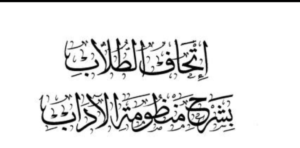
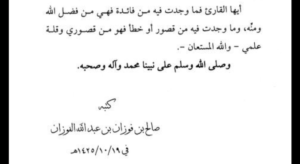
The Mufti, Al-Allamah Salih Al-Fawzan, may Allah preserve him, in the introduction of his book titled:

O reader! So, whatever benefit you find in it is from Allah’s bounty and His grace (favor), and whatever shortcomings or mistakes you find in it are from my own shortcomings and limited knowledge.

والله المستعان

Written by Salih Bin Fawzan Bin Abdillah Al-Fawzan on 19/10/1425H

(1) Brief Reflection On Surah Al-Qamar

In The Name of Allah, The Most Merciful, The Bestower of Mercy.

Imam Muhammad Ibn Salih Al-Uthaymeen, may Allah have mercy upon him, said:

We find among the shortest and most impactful stories in Surah Al-Qamar. The stories (in this Surah) are very brief, yet they contain profound warnings, each concluding with the statement [فهل من مذكر – Is there anyone to take heed?] The one who reads this Surah with reflection is bound to be affected by (its significance) because it is tremendous. [1]

Allah said:

اقْتَرَبَتِ السَّاعَةُ وَانشَقَّ الْقَمَرُ

The (Last) Hour (in which the heavens and earth will perish) has drawn near (while they continue to mock and reject) and the moon has been split (as a sign for them).

Allah informs that the Hour, which is the Day of Judgment, has drawn near and its time has come. Despite this, the disbelievers continue to deny it and remain unprepared for its arrival. Allah shows them great signs that indicate its occurrence, signs that would convince people in similar situations. One of the greatest signs demonstrating the truth of what Muhammad Ibn Abdullah, peace and blessings of Allah be upon him, brought is that when the disbelievers asked him to show them miraculous signs that would prove his truthfulness, he, peace and blessings of Allah be upon him, pointed to the moon by the will of Allah, and it split into two halves, one half landing on Mount Abu Qubais and the other on Mount Qu’ayqi’aan. The polytheists and others observe this great sign present in the skies, which creation cannot falsify or distort.

وَإِن يَرَوْا آيَةً يُعْرِضُوا وَيَقُولُوا سِحْرٌ مُّسْتَمِرٌّ

And (even) if they see a sign (as great as the splitting of the moon), they turn away and say (with arrogant transgression): “This is fleeting magic (whose effect will soon expire) (or: This is powerful magic superseding all other magic).”

They witnessed something unlike anything they had ever seen before, nor had they heard of anything similar event related about any of the messengers before him. They were astonished by this, yet Iman did not enter their hearts, and Allah did not will good for them. Instead, they resorted to their dumb-foundedness and transgression.

Muhammad has bewitched us, “however, the proof to establish this would be that you ask those who come to you from their travels because if he bewitches you, he wouldn’t be able to bewitch those who are not present like you are”. So they questioned everyone who arrived, and they informed them that it indeed happened.

They said: [سِحْرٌ مُسْتَمِرٌّ – This is fleeting magic]- Meaning, “Muhammad bewitched us and others”. This is a falsehood that only fools and the most misguided and misguided in intellect can accept. This is not just a denial of this sign alone; but every sign that came to them because they were ready to respond to any sign with falsehood and rejection. Due to this, Allah said:

وَإِنْ يَرَوْا آيَةً يُعْرِضُوا

And (even) if they see a sign (as great as the splitting of the moon), they turn away and say (with arrogant transgression)…

The pronoun did not refer to the (specific incident regarding the) splitting of the moon, thus Allah did not say, “And if they see it,” but rather Allah said:,

“And if they see a sign, they will turn away.” Their intention is not to follow the truth and guidance, but rather to pursue their desires.

وَكَذَّبُوا وَاتَّبَعُوا أَهْوَاءَهُمْ ۚ وَكُلُّ أَمْرٍ مُّسْتَقِرٌّ

And they belied (the Prophet and what they saw with their own eyes) and followed their (futile) desires (which Satan beautified for them), yet every matter has its established purpose and outcome (or: every matter decreed leads to good for those who do good and evil for those who do evil)].

If their intention had been to follow the guidance, they would have certainly believed and followed Muhammad, peace and blessings of Allah be upon him, as Allah showed them, through Muhammad, clear signs, proofs, and decisive evidences that indicated Allah’s Perfect Lordship, Perfect Names and Attributes and His sole right to be worshipped and goals of divine law.

وَكُلُّ أَمْرٍ مُسْتَقِرٌّ

“yet every matter has its established purpose and outcome”.

Meaning, so far, the matter has not reached its conclusion, and it will eventually come to an end. The believer will enjoy the gardens of paradise, along with Allah’s forgiveness and pleasure, while the disbeliever will face Allah’s wrath and punishment forever.

وَلَقَدْ جَاءَهُم مِّنَ الْأَنبَاءِ مَا فِيهِ مُزْدَجَرٌ

And there has already come to them of news (regarding past disbelieving nations in this Qurʾān) wherein there is (sufficient warning) to prohibit them (from their disbelief and associationism)].

Allah stated, clarifying that they lack a true intention and do not follow guidance. [وَلَقَدْ جَاءَهُمْ مِنَ الْأَنْبَاءِ – And there has already come to them news (regarding past disbelieving nations in the Quran) – Meaning, the news of both past and future events and clear miracles; [مَا فِيهِ مُزْدَجَر – wherein there is (sufficient warning) to prohibit them (from their disbelief and associationism)]- Meaning, a warning that deters them from their Ghay (deviation from upright conduct) and Dalaal (misguidance in knowledge and Creed). [Footnote a]

[حِكْمَةٌ بَالِغَةٌ ۖ فَمَا تُغْنِ النُّذُرُ – The conveyance of this news is) far-reaching wisdom (from Allāh, to guide some and establish His proof against others)—but warning (or: warners) avails them not (since their hearts have been sealed due to their rejection of His Signs)].

Meaning, in order to establish a proof against the opponents, leaving no one with an excuse before Allah after the sending of the messengers.

فَتَوَلَّ عَنْهُمْ ۘ يَوْمَ يَدْعُ الدَّاعِ إِلَىٰ شَيْءٍ نُّكُرٍ

So turn away from them (O Muḥammad) (for they have waiting for them) a Day (when) the Caller calls them to a terrifying thing (of resurrection, accountability and recompense)]

Meaning: Allah said to His Messenger, peace and blessings of Allah be upon him: It has become evident that there is no means to guide those who deny the truth. Therefore, the only course of action left is to turn away from them and distance oneself. Anticipate a momentous day filled with great terror, which will occur when the angel Israafeel, peace be upon him, blows the trumpet by way of which the dead exit their graves for the Day of Judgment. This event will be of such a dreadful nature that creation itself will find it unimaginable, as there has never been a sight more horrifying or painful. [2]

To be continued…InShaAllah


[1] An Excerpt from “Sharh Usul Fee at-Tafsir” page 347

[2] An Excerpt from Tafsir As-Sadi

Al-Istikhārah: Following the Sunnah Without Myths

In The Name of Allah, The Most Merciful, The Bestower of Mercy.

Hisham Bin Urwah, may Allah have mercy upon him, said:

“Do not ask the people what they have initiated (or innovated in the religion), for indeed they have (already) prepared answers for it, rather, ask them about the Sunnah because they do not know it”. [a]


What is Al-Istikhaarah?

It is widespread amongst some people that Istikharah and seeking the best outcome in an affair necessitates that one goes to the astrologers and soothsayers. This is contrary to what is found in the Islamic legislation; rather Istikhaarah and seeking the best outcome in an affair is that one performs two optional Rak’ats and then supplicate with the legislated supplication. Jaabir Bin Abdillaah [may Allaah be pleased with him and his father] said, “Allaah’s Messenger [peace and blessings of Allaah be upon him] used to teach us the way of doing Istikhaarah (i.e. to seek guidance regarding an affair) in all matters as he taught us the Suras of the Qur’an. He said, ‘If anyone of you wants to do any task [i.e. wants to decide on a matter], he should offer two rak`ats other than the obligatory (five daily prayers) and then say (after the prayer):

اللَّهُمَّ إِنِّي أَسْتَخِيرُكَ بِعِلْمِكَ وَأَسْتَقْدِرُكَ بِقُدْرَتِكَ وَأَسْأَلُكَ مِنْ فَضْلِكَ الْعَظِيمِ فَإِنَّكَ تَقْدِرُ وَلَا أَقْدِرُ وَتَعْلَمُ وَلَا أَعْلَمُ وَأَنْتَ عَلَّامُ الْغُيُوبِ اللَّهُمَّ إِنْ كُنْتَ تَعْلَمُ أَنَّ هَذَا الْأَمْرَ خَيْرٌ لِي فِي دِينِي وَمَعَاشِي وَعَاقِبَةِ أَمْرِي فَاقْدُرْهُ لِي وَيَسِّرْهُ لِي ثُمَّ بَارِكْ لِي فِيهِ وَإِنْ كُنْتَ تَعْلَمُ أَنَّ هَذَا الْأَمْرَ شَرٌّ لِي فِي دِينِي وَمَعَاشِي وَعَاقِبَةِ أَمْرِي فَاصْرِفْهُ عَنِّي وَاصْرِفْنِي عَنْهُ وَاقْدُرْ لِي الْخَيْرَ حَيْثُ كَانَ ثُمَّ أَرْضِنِي

Allaahumma Innee Astakheeruka Bi ilmika Wa Astaqdiruka Bi Qudratika Wa as’aluka Min Fadlika, Fa innaka Taqdiru Wa laa Aqdir, Wa ta’lamu Wa laa A’lam, Wa anta Allaam Al-Ghuyoob. Allaahumma Fa in kunta ta’lamu haadhaa Al-amru [at this point you mention the affair about which you are seeking guidance]; then you continue and say: khayran lee Fee Aajil Amri Wa Aajilihee [or you say: Fee Deenee wa Ma’aashee wa Aaqibati Amree], Faqdurhu lee Wa Yassirhu lee Thumma Baarik lee Feehi. Allaahumma Wa in kunta ta’lamu Annahu Sharrun lee Fee Deenee wa Ma’aashi wa Aaqibati Amree [or you say: Fee Aajili Amree wa Aajilihee], Fasrifnee anhu wasrafhu Annee Waqdur lee al-khayr haythu kaana thumma Radinee bihee.

English Translation: O Allah! I seek the counsel through Your Knowledge, and I seek Power from Your Might, and I ask for Your great blessings. You are capable and I am not. You know and I do not and You (alone) know the unseen. O Allah! If You know that this task (or affair) is good for my religion and my subsistence and in my Hereafter- (or said, ‘If it is better for my present and later needs), then You ordain it for me and make it easy for me to get, and then bless me in it. And if You know that this task (affair) is harmful to me in my religion and subsistence and in the Hereafter-(or said, ‘If it is worse for my present and later needs’), then keep it away from me and let me be away from it. And ordain for me whatever is good for me, and make me satisfied with it’. The Prophet [peace and blessings of Allah be upon him] added that then the person should mention his (or her) need [i.e. the affair or task]. [Al-Bukhari 1162] (1)

After Istikharah, one can also seek the advice of upright people who are capable of giving advice in the matter. Al-Hasan al-Basri, may Allah have mercy upon him, said: “By Allah! Never have a people sought advice except that they were guided to the best of what was available to them”. Then he recited (the statement of Allah): [وَأَمۡرُهُمۡ شُورَىٰ بَيۡنَہُمۡ – And (the Believers) who (conduct) their affairs by mutual consultation.] [Ash-Shuraa. 38]

Al-Allamah Zayd Bin Hadi Al-Mad’khali, may Allah have mercy upon him, said:

Allah, The Mighty and Majestic, commanded His Messenger Muhammad, peace and blessings of Allah be upon him, to consult his companions in some matters. Allah, Glorified be He and free is He from all imperfections, said:

[وَشَاوِرۡهُمۡ فِى ٱلۡأَمۡرِ‌ۖ فَإِذَا عَزَمۡتَ فَتَوَكَّلۡ عَلَى ٱللَّهِ‌ۚ – and consult them in the affairs. Then when you have taken a decision, put your trust in Allah]. [Aal Imran. 159]

He is the example to be followed by the Ummah, therefore when it is the case that Allah commanded him to consult his companions, then there is even a greater reason that the Muslims are in need of consultation amongst themselves. When a difficulty that is related to a Muslim’s religious and worldly affairs occurs, then indeed it is fitting that he consults someone whom he considers reliable, wise, truthful and sincere. He examines (the advice) given by that person, then he makes a choice –either to take that advice or decides not to take it based on what he is satisfied with, in relation to his personal affairs. The hadith places emphasis on the fact that consultation guides to the best outcomes, and due to this it is said, “The one who consults does not regret and the one who performs Istikharah will not fail (to achieve what is good)”. Both Istikharah and consultation are legislated and a lot of good is achieved through them, as opposed to when matters are pursued in a rigid and haphazard manner, for indeed this might lead to regret and harm. (2)

The One Consulted Must Fear Allah And Give Sincere Advice

Abu Hurairah, may Allah be pleased with him, said that the Messenger, peace and blessings of Allah be upon him, said, “The consultee is in a position of trust”. [Sahih Abi Dawud. 5128]

The Consultee is the one whose opinion is sought after regarding an affair of Maslahah [i.e. something that will bring about benefit and repel harm]. He is in a position of trust with regards to what is asked and it is not permissible to deceive the one who consults by concealing the matter that would bring about benefit. [Mirqat Al-Mafaateeh Sharh Mishkat Al-Masaabih. 4/259. Hadeeth 5062]

This hadeeth is an evidence, showing that the consultee has to (advise) with the course of action and opinion -in relation to the consultation – that which he would do for himself. And it is not permissible that he directs his Muslim brother to something he would not be pleased with for himself. (3)


A Myth

In some African countries, especially in Gambia, some people believe that one should either go to someone who is more pious or someone who is ‘Ya Bupa’ (i.e. someone who they claim or believe can see hidden matters, or has knowledge of the unseen or matters would be revealed to him in a dream) – to perform Istikharah on their behalf!  Allah said:

وَعِنْدَهُ مَفَاتِحُ الْغَيْبِ لَا يَعْلَمُهَا إِلَّا هُوَ

And with Him are the keys of the Ghaib (all that is hidden), none knows them but He.

In his explanation of the above Ayah, Imam Ash-Shanqeetee, may Allah have mercy upon him, presented a number of robust proofs to demonstrate and establish that even the most knowledgeable amongst the creation- Allah’s Messengers and angels- do not posses knowledge of the Unseen. The Imam, may Allah have mercy upon him, said:

Aa’isha, may Allah be pleased with her, was falsely accused and the Prophet (peace and blessings of Allah be upon him] did not know whether she was innocent or not until Allah informed him, saying: [ أُولَٰئِكَ مُبَرَّءُونَ مِمَّا يَقُولُونَ- ‘Such (good people) are innocent of (each and every) bad statement which they say].

Prophet Ibrahim, peace be upon him, slaughtered a lamb for the angels, whilst not knowing that they were angels until they informed him that they were angels. Allah said that the angels said to him: [إِنَّا أُرْسِلْنَا إِلَىٰ قَوْمِ لُوطٍ – We have been sent against the people of Lout (Lot). (11:70)]

When the angels came to Prophet Lut, peace be upon him, he did not know that they were angels, and due to that Allah said: [عَصِيبٌ سِيءَ بِهِمْ وَضَاقَ بِهِمْ ذَرْعًا وَقَالَ هَٰذَا يَوْمٌ – He was grieved on their account and felt himself straitened for them (lest the town people should approach them to commit lewdness with them). He said: This is a distressful day]. And because of this Allah said that Lut said: [لَوْ أَنَّ لِي بِكُمْ قُوَّةً أَوْ آوِي إِلَىٰ رُكْنٍ شَدِيدٍ – Would that I had strength (men) to overpower you, or that I could betake myself to some powerful support (to resist you). (11:80)]. He did not know the news the angels brought until they said to him: [إِنَّا رُسُلُ رَبِّكَ لَنْ يَصِلُوا إِلَيْكَ – Verily, we are the Messengers from your Lord!]

Prophet Yaqub, peace be upon him, lost his eye sight due to grieving for Yusuf, peace be upon him, while he was in Egypt. He did not know anything about Yusuf until Allah reveal news about him.

Prophet Sulayman, peace be upon him, even though Allah gave him authority over the devils and subjugated the wind in his service, did not know about the people Bil Qees until the Hud-hud came with news about them. Allah said that the Hud-hud said: [أَحَطْتُ بِمَا لَمْ تُحِطْ بِهِ وَجِئْتُكَ مِنْ سَبَإٍ بِنَبَإٍ يَقِينٍ – I have grasped (the knowledge of a thing) which you have not grasped and I have come to you from Saba’ (Sheba) with true news].

Prophet Nuh, peace be upon him, did not know that his son – who was drowned- was not from those members of his household who were to be saved, as Allah said that Nuh said: [رَبِّ إِنَّ ابْنِي مِنْ أَهْلِي وَإِنَّ وَعْدَكَ الْحَقُّ – O my Lord! Verily, my son is of my family! And certainly, Your Promise is true.(11:45)]

He did not know the reality of the affair until Allah informed him, saying: “O Nuh! Surely, he is not of your family; verily, his work is unrighteous, so ask not of Me that of which you have no knowledge! I admonish you, lest you be one of the ignorant. And indeed Allah, The Most High, also stated in Surah Hud about Nuh that he said to his people:

[وَلَا أَقُولُ لَكُمْ عِنْدِي خَزَائِنُ اللَّهِ وَلَا أَعْلَمُ الْغَيْبَ -And I do not say to you that with me are the Treasures of Allah, “Nor that I know the Ghaib (unseen)].

And when Allah said to the Angels: [هَٰؤُلَاءِ إِنْ كُنْتُمْ صَادِقِينَ أَنْبِئُونِي بِأَسْمَاءِ -Tell Me the names of these if you are truthful]; Allaah said that the angels replied: [قَالُوا سُبْحَانَكَ لَا عِلْمَ لَنَا إِلَّا مَا عَلَّمْتَنَا -They (angels) said: “Glory be to You, we have no knowledge except what you have taught us.

Therefore, it is very clear that the most knowledgeable amongst the creation, the Messengers and the Angels, do not know anything of the unseen except what Allah makes known to them. Allah, The Most High, informs His Messengers what He wishes from the knowledge of the Unseen, as Allah stated:

[وَمَا كَانَ اللَّهُ لِيُطْلِعَكُمْ عَلَى الْغَيْبِ وَلَٰكِنَّ اللَّهَ يَجْتَبِي مِنْ رُسُلِهِ مَنْ يَشَاءُ ۖ- Nor will Allah disclose to you the secrets of the Ghaib (unseen), but Allah chooses of His Messengers whom He pleases].

And Allah said: [إِلَّا مَنِ ارْتَضَىٰ مِنْ رَسُولٍ عَالِمُ الْغَيْبِ فَلَا يُظْهِرُ عَلَىٰ غَيْبِهِ أَحَد- (He Alone) the All-Knower of the Gha’ib (unseen), and He reveals to none His Gha’ib (unseen).” Except to a Messenger (from mankind)…(4)

The Magicians and The Shayaateen

Abu Hurairah, may Allah be pleased with him, said, “The Prophet, peace and blessings of Allah be upon him, said, “When Allah has ordained some affair in the Heaven, the angels beat with their wings in obedience to His statement, which sounds like a chain dragged over a rock.” (`Ali and other sub-narrators said, “The sound reaches them.”) “Until when fear is banished from their (angels) hearts, they (angels) say, ‘What was it that your Lord said? They say, ‘The truth; And He is the Most High, the Most Great.’ (34.23) Then those who gain a hearing by stealing (i.e. devils) will hear Allah’s Statement:– ‘Those who gain a hearing by stealing, (stand one over the other like this). (Sufyan, to illustrate this, spread the fingers of his right hand and placed them one over the other horizontally.) A flame may overtake and burn the eavesdropper before conveying the news to the one below him; or it may not overtake him till he has conveyed it to the one below him, who in his turn, conveys it to the one below him, and so on till they convey the news to the earth. (Or probably Sufyan said, “Till the news reaches the earth.”) Then the news is inspired to a sorcerer who would add a hundred lies to it. His prophecy will prove true (as far as the heavenly news is concerned). The people will say. ‘Didn’t he tell us that on such-and-such a day, such-and-such a thing will happen? We have found that is true because of the true news heard from heaven.” The above hadith is also narrated by Abu Huraira, starting: ‘When Allah has ordained some affair…’) In this narration the word foreteller is added to the word wizard. (5)


[a] Khutbah Al-Kitab Al-Mu’ammal Li Ar-Radd Ilaa Al-Amr Al-Awwal page 163

[1] Al-Haqeeqah Ash-Shar’iyyah Fee Tafseer Al-Qur’aa Al-Adheem Was-Sunnah An-Nabawiyyah. Page 95

[2] An Excerpt from ‘Awnul Ahadis Samad Sharh Al-Adab Al-Mufrad’ 1/285.

[3] Awnul Ahadis Samadi, Sharhu Al-Adab AlMufrad. 1/283. Hadeeth Number 256

[4] An Excerpt from ‘Tafseer Al-Qur’an Bil-Qur’an Min Adwaa Al-Bayan’ pages 169-170’ Daar Hady An-Nabawiy’ 2nd ed. (1431AH -2010)

[5] Al-Bukhari 4701