Value of the Dawah in Sight of Al-Allamah Muqbil

بسم الله الرحمن الرحيم
In The Name of Allah, The Most Merciful, The Bestower of Mercy.
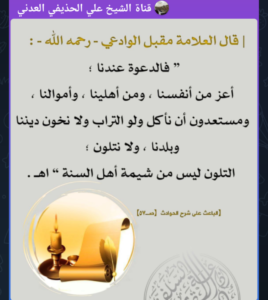
Al-Allamah Muqbil Bin Hadi Al-Wadi’ee, may Allah have mercy upon him, said:
The Dawah is more precious to us than our own ourselves, (or lives) and our families. We are prepared to eat sand rather than betray our religion and our country; wa lā natalawwan – we do not waiver stances and principles according to personal interests and desires; at-talawun is not from Ahlus Sunnah’s moral character. [(1)]
The Advice of The Predecessors
Abdullah Ibn Mas’ud, may Allah be pleased with him, said:
Whoever wants to follow a path, let him follow the path of one who has passed away, for indeed the living are not safe from trial, and those (who have passed away) are the Companions of Muhammad, peace and blessings of Allah be upon him. They were the most virtuous of this Ummah, the purest in heart, the most profound in knowledge and the least sophisticated. Allah chose them to accompany His Prophet and establish His religion, so recognise their status and follow in their footsteps and adhere – as much as you can – to their manners and conduct, for they were upon upright guidance”. [(2)]
Imam Al-Hasan al-Basri, may Allah have mercy on him, said:
I swear by the One (Allah) besides whom there is no deity worthy of worship but Him! The Sunnah is between the extremes of those who are excessive and those who are neglectful. Therefore, be patient upon it (the Sunnah) – may Allah have mercy on you- for the people of the Sunnah were the fewest among the people in the past, and they remained the fewest among those who remained. Neither did they go along with the excessive ones in their excesses nor with the proponents of Bidah in their Bidah, while remaining steadfast in their adherence to the Sunnah until they met their Lord. Thus, if Allah wills, let it be the same for you. [(3)]
(1) al-bāʿith ʿalā sharḥ al-ḥawādith page 57. Source: Posted in Shaikh Ali Hudhaifi’s Telegram Channel
(2) Jami Bayan Al-Ilm Wa Fad’lihi 2/947
(3) Ighatha Al-Lahfan 1/70

Donate
Related Posts
Follow Us
Share
Related Posts
Donate to the Dawah in Manchester

Join the Umrah Trip