[5] Humility of The Scholars

In the Name of Allāh, The Most Merciful, The Bestower of Mercy.

Al-Allamah Rabee Bin Hadi Al-Mad’khali, may Allah have mercy upon him, said:

Accepting Advice and Wholehearted Submission to The truth is One of the Great Obligations (Obligated) to all Muslims

All praises be to Allāh, and may peace and blessings be upon Allah’s Messenger, his family, his companions, and those who follow his guidance. To proceed:

I came across what some internet websites have disseminated (or posted) regarding a statement attributed to me, that I stated during one of my lectures: “If the Messenger of Allah disowned (or freed himself) from you through (or upon) the tongue of our Lord”. I said it while citing (or utilising as proof) the statement of Allah, the Exalted:

إن الذين فرقوا دينهم وكانوا شيعا لست منهم في شيء

“Verily, those who divide their religion and break up into sects (all kinds of religious sects), you (O Muhammad) have nothing to do with them” [3] regarding the prohibition of splitting (divergent sects, groups, parties). Then I stated: “How can we, my brothers, not fear while we choose this splitting and live with it for generations and ages?”

I seek Allah’s forgiveness – a hundred times – for this ugly (disgusting) and false statement. I request the removal of this statement from all cassettes (recordings) in which it appears, and I emphasise that anyone who possesses a recording containing this statement should delete it. And I say: Indeed, this statement is ugly (disgusting) and false; exalted is Allah above it, and free is He from it. That is because He, The Exalted, is free from any resemblance to the created things, as He, Glorified be He and free from all imperfections, says:

لَيْسَ كَمِثْلِهِۦ شَىْءٌ وَهُوَ ٱلسَّمِيعُ ٱلْبَصِيرُ

There is nothing like (similar) to Him, and He is the All-Hearer, the All-Seer.

Likewise, He, The Mighty and Majestic, says:

قُلْ هُوَ ٱللَّهُ أَحَدٌ
ٱللَّهُ ٱلصَّمَدُ
لَمْ يَلِدْ وَلَمْ يُولَدْ
وَلَمْ يَكُن لَّهُۥ كُفُوًا أَحَدٌۢ

Say (with a firm, resolute statement): “He is Allāh, (who is) uniquely One (in His perfect names, attributes, actions, and His right to worship). Allāh, the Eternal, Self-Sufficient Master (of utmost perfection in His attributes, to whom all creatures turn for their needs whilst He has none). He did not beget (such that He became a father) nor was He begotten (such that He became a son). And there is none equal, similar or comparable to Him (in His perfect names, attributes and actions).” https://www.thenoblequran.com/q/#/sura/112/1

And He, the Most High, said:

هَلْ تَعْلَمُ لَهُۥ سَمِيًّا

Do you know of any that is worthy of His name (due to having similarity to Him)?

In these noble verses are an affirmation of the Attributes of His Perfection and the descriptions of His majesty, while also exalting Him above attributes and descriptions of deficiency and the likeness to created beings. Neither is anyone similar nor comparable to Him in His Dhat (Self), and His Attributes, nor in any of His Magnificent Attributes. [1]

Ahlus Sunnah Wal Jama’ah affirm all of the attributes mentioned in the Qur’an and Sunnah without Tashbih, Ta’teel, Takyeef, or Tamtheel with regards to anything of His Attributes, such as Ascension above His Throne – above all of His creations, His Highness, Descent, Hearing, Sight, Ability, Iraadah, knowledge, Speech, and Wisdom, and the fact that He, The Exalted, is the Creator, the Provider, Giver of Life, and Causer of Death, among the other affirmed Names and Lofty Attributes of His. Ahlus Sunnah affirm them without Takyeef, Tamtheel, Tashbih, or Ta’teel, standing in opposition to Ahlul Ahwa (the sects upon vain desires in their creed), such as the Jahmiyyah, Khawarij, Mu’tazilah, Rawaafid, and Ash’ariyyah. [2]

And all praises be to Allah, I am from those whom Allah blessed with this methodology, which I firmly believe in the depth of my inner-self. I teach it, advocate for it, and defend it as a student and a teacher; calling to it with all my ability, establishing allegiance and enmity based on it from the beginning of my life (i.e. when he became acquainted with it). This statement, which I made during my lecture- in which I called to this path and urged those who oppose it to revise it – is extremely hated to me. This ugly (repugnant, disgusting) statement was a slip of the tongue on my part and had someone alerted me at the moment I uttered it, I would have rejected and distanced myself from it. It is not justified for anyone who comes across it to remain silent about it. It is akin to the statement made by the man whom the Prophet, peace and blessings of Allah be upon him, cited as an example, who said out of overwhelming happiness: “O Allah! You are my servant and I am Your Lord”. [3]

Allah’s Messenger, peace and blessings of Allah be upon him, stated, “He (i.e. this man) erred due to overwhelming happiness.” Nevertheless, I experience profound pain from it and strongly condemn it for both myself and others (.e. not to utter this statement).

I beseech Allah, the Generous Lord of the Mighty Throne, to forgive me for all my sins, both those I have concealed and those I have made known. I ask for forgiveness for my slips and errors, including those of the pen, the tongue, the limbs, and the heart. “All the children of Adam commit mistakes, and the best of those who err are the repentant.” I beseech Allah to make me among the repentant and the purified. Accepting advice and adhering to the truth is one of the most obligatory duties for all Muslims, regardless of the source. It is not permissible for a Muslim to belittle or disdain the advisor, no matter their status. I seek refuge in Allah from rejecting advice or defending any wrong or falsehood that originates from me, for such behavior is characteristic of the corrupt, arrogant, obstinate, and those who, when given a reminder do not reflect (or take heed). I seek refuge in Allah from these ugly (repugnant, disgusting) traits. I ask Allah to include me among those about whom He said:

وَٱلَّذِینَ إِذَا ذُكِّرُوا۟ بِـَٔایَـٰتِ رَبِّهِمۡ لَمۡ یَخِرُّوا۟ عَلَیۡهَا صُمࣰّا وَعُمۡیَانࣰا

And those who, when they are reminded of the Signs of their Lord, fall not deaf and blind thereat. [4]

I advise myself and all Muslims to adhere to this methodology and remain steadfast in it, to accept the advice of those who advise, and to follow the path of the righteous predecessors in mutual advice, enjoining one another upon truth, and accepting guidance, in consideration (and application) of Allah’s statement:

وَٱلْعَصْرِ
إِنَّ ٱلْإِنسَٰنَ لَفِى خُسْرٍ
إِلَّا ٱلَّذِينَ ءَامَنُوا۟ وَعَمِلُوا۟ ٱلصَّٰلِحَٰتِ وَتَوَاصَوْا۟ بِٱلْحَقِّ وَتَوَاصَوْا۟ بِٱلصَّبْرِ

By (the phenomenon of) time (which Allah manifests through His creation of night and day and in which the servants perform their deeds). Indeed, (all of) mankind is in loss. Except those who believe (in Allāh, His Angels, Books, Prophets, the Last Day and the Divine Decree) and work righteous deeds (which are sincere and correct) and mutually advise each other (in calling to and abiding by) the truth and mutually advise each other with patience (in facing the inevitable harms brought by calling to the truth).

https://www.thenoblequran.com/q/#/sura/103/

And in consideration (and application) of Allah’s statement:

والمؤمنون والمؤمنات بعضهم أولياء بعض يأمرون بالمعروف وينهون عن المنكر

The believers, men and women, are Auliya’ (helpers, supporters, friends, protectors) of one another, they enjoin good and forbid evil.

Among the signs of upright guidance, uprightness, truthfulness (in statement and action), and salvation in this worldly and the Hereafter is to be steadfast upon the Book and the Sunnah, and to follow this methodology in belief, action, manners, and in enjoining good and forbidding evil, addressing shortcomings with wisdom and through (honourable, straight forward, honest) ways.

And I beseech Allah, The Mighty and Majestic, to grant success to this Ummah, particularly Ahlus Sunnah Wal Jama’ah, to advance this great methodology, unite their word upon it, and enable them to achieve (or attain upright) leadership, dignity, and honour in this worldly life; enable them to adhere to this methodology that will lead them to safety and salvation in the Hereafter. Indeed, my Lord is All-Hearing of supplications.

May peace and blessings be upon our Prophet Muhammad, his family, and his companions.

Written by:
Rabee Bin Hadi Al-Mad’khali
8/7/1425 AH
Makkah Al-Mukarramah


[1] and [2] https://abukhadeejah.com/categories-of-the-attributes-sifat-of-allah/#:~:text=Examples%20are%20Life%20(Al%2DHay%C4%81t,such%20Attributes%20of%20the%20Self.

Important Principles regarding the Names and Attributes of Allah: The ‘Aqeedah of Ahlus-Sunnah and a refutation of the opposers ―Shaikh Ibn ‘Uthaimīn


https://www.salafipublications.com/sps/sp.cfm?subsecID=AQD03&articleID=AQD030007&articlePages=1

[3] Anas Bin Malik, may Allah be pleased with him, reported that Allah’s Messenger, peace and blessing of Allah be upon him, said: Allah is more pleased with the repentance of His servant when he turns back to Him than one of you would feel upon finding his lost camel in a desolate land, which had carried his food and drink. When he loses hope of recovering it, he lies down in the shade and is disappointed about his camel, thus he suddenly sees his camel standing right beside him. Overwhelmed with joy, he grabs its reins and exclaims: “O Allah! You are my servant, and I am Your Lord.” He has made a mistake due to the intensity of his happiness. [Sahih Muslim 2747]

[4]https://salafidawahmanchester.com/2024/03/21/medication-from-the-quran-for-one-who-only-desires-reminders-from-a-specific-person/

Gentle and Tough Allies Who Were Firm Upon Truthfulness and Justice

In The Name of Allah, The Most Merciful, The Bestower of Mercy.

Amr Ibnul Aas, may Allah be pleased with him, was one of those given authority and so was Abu Ubaydah Ibn Al-Jarrah, may Allah be pleased with him. Khalid Ibn Al-Walid, may Allah be pleaded with him, was given preference over them due to his bravery and usefulness in Jihad.  When Abu Bakr, may Allah be pleased with him, passed away, Umar Ibn Al-Khattab, may Allah be pleased with him, gave Abu Ubaydah, may Allah be pleased with him, authority over all of them because Umar Ibn Al-khattab used to be tough for the sake of Allah, thus he appointed Abu Ubaydah because he was soft. Abu Bakr was soft and Khalid was tough. Therefore, the soft one gave authority to the tough one and the tough one gave authority to the soft one to balance the affairs.

An Excerpt from “Adwaa Min Fatawaa Shaikh Al-Islam Ibn Taymiyyah” By Al-Allamah Salih Al-Fawzan 2/568-569

[10] The Character Trait Most Hated By The Messenger

The Name of Allah, The Most Merciful, the Bestower of Mercy.

Aisha, may Allah be pleased with her said:

There was no behaviour more hateful to Allāh’s Messenger, peace and blessings of Allah be upon him, than lying. A man would tell a lie when speaking in the presence of the Prophet, and he would not be satisfied until he knew that he had repented from it. [1]

Imam Ibn Al-Qayyim, may Allah have mercy upon him, said:

When a proof that supports the truth is manifested and the one who wants to repel it finds no way of doing so, he refrains from mentioning it, thus becomes a silent devil, and sometimes he distorts it. Distortion is of two types -distorting words and meanings.

Distorting words occur when one utters a word in a context in which it does not establish the truth – either adding to the word, omitting something from it, or substituting it with something else to the extent that the listener is made to believe something, while something else is intended, just as the Yahud [i.e. those Yahud who disbelieved in the Prophet and hated him in Madinah] used to distort words when giving Salam to the Prophet [i.e. saying As-Saamu Alayka (death be upon you), instead of saying Assalaamu alaykum)]. This is one type of distortion.

The second type of distortion is related to meanings – distorting the wording, giving it an interpretation that is not intended by the one who uttered it and pretending not to know its unintended meaning; or dropping other meanings intended by it. [2]


[1] at-Tirmidhi‌ 1973

[2] An Excerpt from ‘Badaa’i At-Tafseer Al-Jaami Limaa Fassarahu Al-Imam Ibn Al-Qayyim. 1/300-303

[3] Khashya

In The Name of Allah, The Most Merciful, The Bestower of Mercy.

A Tremendous Supplication After Tashahud and Before Tasleem:

اللَّهُمَّ بِعِلْمِكَ الْغَيْبَ وَقُدْرَتِكَ عَلَى الْخَلْقِ أَحْيِنِي مَا عَلِمْتَ الْحَيَاةَ خَيْراً لِي وَتَوَفَّنِي إِذَا عَلِمْتَ الْوَفَاةَ خَيْراً لِي، اللَّهُمَّ إِنِّي أَسْأَلُكَ خَشْيَتَكَ فِي الْغَيْبِ وَالشَّهَادَةِ، وَأَسْأَلُكَ كَلِمَةَ الْحَقِّ فِي الرِّضَا وَالْغَضَبِ، وَأَسْأَلُكَ الْقَصْدَ فِي الْغِنَى وَالْفَقْرِ، وَأَسْأَلُكَ نَعِيماً لَا يَنْفَذُ، وَأَسْأَلُكَ قُرَّةَ عَيْنٍ لَا تَنْقَطِعُ، وَأَسْأَلُكَ الرِّضِا بَعْدَ الْقَضَاءِ، وَأَسْأَلُكَ بَرْدَ الْعَيْشِ بَعْدَ الْمَوْتِ، وَأَسْأَلُكَ لَذَّةَ النَّظَرِ إِلَى وَجْهِكَ وَالشَّوْقَ إِلَى لِقَائِكَ فِي غَيْرِ ضَرَّاءَ مُضِرَّةٍ وَلَا فِتْنَةٍ مُضِلَّةٍ، اللَّهُمَّ زَيِّنَّا بِزِينَةِ الْإِيمَانِ
وَاجْعَلْنَا هُدَاةً مُهْتَدِينَ

O Allah! By Your Knowledge of the unseen and by Your Power over creation, let me live if life is good for me, and let me die if death is good for me; O Allah! I ask You to grant me (the blessing of having) fear of You in private and public, and I ask You (to make me utter) a statement of truth in times of contentment and anger, and I ask You for moderation when in a state of wealth and poverty, and I ask you for blessings that never ceases, and I ask You for the coolness of my eye that never ends, and I ask You (to make me pleased) after (Your) decree; and I ask You for a life of (ease, comfort, tranquillity, etc) after death; I ask You for the delight of looking at Your Face (i.e. in the Hereafter) and yearning to meet You without any harm and misleading trials (coming upon me). O Allah! Adorn us with the adornment of Iman, and make us (from those who are) guided and guiding (others). [Sunan An-Nasaa’ee’ Number 1305]

اللَّهُمَّ إِنِّي أَسْأَلُكَ خَشْيَتَكَ فِي الْغَيْبِ وَالشَّهَادَةِ

“O Allah! I ask You to grant me (the blessing of having) fear of You in private and public”.

Meaning: That I fear You in private and public- when I am with the people and when they are absent because while some fear Allah in public and when seen, the true measure of devotion lies in fearing Allah when not seen by the people. Allah praised those who fear Him in the unseen, saying:

الَّذِينَ يَخْشَوْنَ رَبَّهُمْ بِالْغَيْبِ وَهُمْ مِنْ السَّاعَةِ مُشْفِقُونَ

Those who fear their Lord without seeing Him, while they are afraid of the Hour. [ Al-Anbiyaa. 49]

Allah, The Most High, said:

مَنْ خَشِيَ الرَّحْمَنَ بِالْغَيْبِ وَجَاءَ بِقَلْبٍ مُنِيبٍ

Who feared the Most Beneficent (Allah) in the Ghaib (unseen): (i.e. in this worldly life before seeing and meeting Him), and brought a heart turned in repentance (to Him – and absolutely free from each and every kind of polytheism)]. [Qaaf. 33]


An Excerpt from “Fiqh Al-Adiyah Wal Adkaar”. 3/165-169

[2] Khashya

In The Name of Allah, The Most Merciful, The Bestower of Mercy.

Abu Hurairah, may Allah be pleased with him, said that Allāh’s Messenger, peace and blessings of Allah be upon him, said:

“A man who wept due to khashyah of Allah shall not enter the Fire until the milk returns to the udder; and dust in the cause of Allah and the smoke of Hell shall not come together.” [Sahih Tirmidhi 1633]


(a) Khashya: The fear of Allah founded upon knowledge of the greatness of Allah and Him being the owner of complete and perfect sovereignty and Dominion.” [Source:  The abbreviated meaning of Khashyah was taken from Shaikh Abu Talhah’s translation of “The Three Fundamental Principles”. May Allah grant him and his wife Jannatul Fir’daws Amin].

[4] Humility of The Scholars

In The Name of Allah, The Most Merciful, The Bestower of Mercy.

It is narrated from Maymun ibn Mihran, may Allah have mercy upon him, who said:

“Al-Hamdani, may Allah have mercy upon him, reported to me that he saw Uthman ibn Affan, may Allah be pleased with him, riding a female mule and his boy servant was on it behind him, while he was the khalifah”.

Hilyah Al-Awliya 1/60


[3] Humility of The Scholars

In The Name of Allah, The Most Merciful, The Bestower of Mercy.

It has been reported from Qays ibn Abi Hazim, may Allah have mercy upon him, who said:

When Umar ibn al-Khattab, may Allah be pleased with him, arrived in Sham, its scholars and elders came out to meet him. They said, ‘Ride this mule so that people will see you’. He said: ‘Indeed, you see the matter from here’, then while pointing to the sky, he said: ‘Instead the matter (regarding nobility, honour, recognition etc) is really up there. Leave me on my way.”

Tarikh Dimashq 4/44

[2] Humility of The Scholars

In The Name of Allah, The Most Merciful, The Bestower of Mercy.

Abdullah Bin Salam, may Allah be pleased with him, walked in the marketplace while carrying a bundle of firewood. It was said to him: “Has Allaah not given you enough wealth [to prevent you from] this?” He said, “Certainly, but I want to repel pride. I heard Allah’s Messenger, saying:

‘The one with the weight of a grain of mustard seed of pride will not enter paradise'”.

Al-Allamah Zaid Bin Hadi Al-Mad’khali, may Allah have mercy upon him, said:

This hadith is clear proof regarding the fact that pride is forbidden and that is one of the major sins. And because of this, a person is forbidden to characterise himself with pride-mocking at the people and rejecting the truth. Indeed, the Prophet, peace and blessings of Allah be upon him, described pride in his statement,

“Pride is to reject the truth and belittle the people”- meaning: rejects the truth and does not accept it; mocks at the people and does not consider them to be nothing by looking down on them and raising himself above them- either due to his abundant wealth, high [social] status, lineage or due to other reasons.

In this hadith, there is proof to show that a Muslim servant of Allah- the sensible and smart one – guards himself, places himself in a situation that is pleasing to Allah and disciplines himself with the Islamic manners. And when it is the case that the soul is weak and can be misguided, thus  Abdullah Bin Salam, may Allah be pleased with him, desired to discipline his soul by carrying a bundle of firewood on his back or his head, even though he was able to hire someone else to carry it on his behalf; but he desired something that was very important and that was to repel pride from his soul, and place himself in a situation of humility, which Allah loves to see from His slaves.


An Excerpt from “at-Taliqat Al-Malihah Alaa Silsila Al-Ahadjth As-Sahihah. 1/269


[1] Humility of The Scholars

In The Name of Allah, The Most Merciful, The Bestower of Mercy.

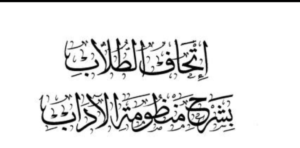
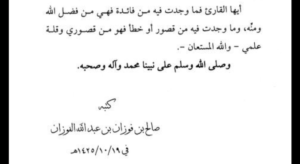
The Mufti, Al-Allamah Salih Al-Fawzan, may Allah preserve him, in the introduction of his book titled:

O reader! So, whatever benefit you find in it is from Allah’s bounty and His grace (favor), and whatever shortcomings or mistakes you find in it are from my own shortcomings and limited knowledge.

والله المستعان

Written by Salih Bin Fawzan Bin Abdillah Al-Fawzan on 19/10/1425H

[1] Khashya

In The Name of Allah, The Most Merciful, The Bestower of Mercy.

Ibn Abee Dunya, may Allah have mercy upon him, reported with a chain of transmission going back to Rabee Bin Anas, may Allah have mercy upon him, who said:

Al-Ikhlas (Sincerity) to Allah is the distinguishing sign of the Religion and the distinguishing sign of knowledge is Khashyah”. [1] (a)


(a) Khashya: The fear of Allah founded upon knowledge of the greatness of Allah and Him being the owner of complete and perfect sovereignty and Dominion.” [Source:  The abbreviated meaning of Khashyah was taken from Shaikh Abu Talhah’s translation of “The Three Fundamental Principles”. May Allah grant him and his wife Jannatul Fir’daws Amin].

[1] Al-Ikhlas Wan-Niyyah.  page 33