Justice When Issuing Rulings – By Al Allamah Ubaid Bin Abdillah Al-Jabiri

In The Name of Allah, The Most Merciful, The Bestower of Mercy.

The Shaikh, may Allah have mercy upon him, said:

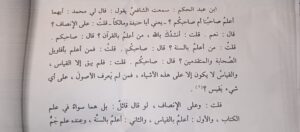
Justice is to place something in its (rightful) place and it is synonymous with wisdom. Its meaning is that a person is just in his rulings (judgments) towards both those who are close (in relationship) and those who are distant (in relationship).

And from this is that if a ruling (judgement) is sought from him between a Muslim and a Kafir, while the Kafir is correct in his claim, then indeed, he fulfils his right and does not deprive him of it. Indeed, this is because it is established among Muslims – as a general rule – meaning, the just people- and Ahlus Sunnah in particular – that injustice is forbidden, whether with regards to the right of a Muslim or a Kafir. The proof for this from Allah’s Book is His saying:

وَأَقْسِطُوٓا۟ إِنَّ ٱللَّهَ يُحِبُّ ٱلْمُقْسِطِينَ

And act justly (between them). Verily, Allāh loves those who are just. [Al-Hujurat 9]

Meaning: be just in passing a ruling (judgment) when you judge, for indeed, Allah loves those who are just in their rulings (judgements).

This verse is in the context of what is incumbent to do regarding a rebellious group, or two groups fighting each other and one of them commits aggression against the other. He [i.e. Allah – The Most High] said:

وَإِن طَآئِفَتَانِ مِنَ ٱلْمُؤْمِنِينَ ٱقْتَتَلُوا۟ فَأَصْلِحُوا۟ بَيْنَهُمَا فَإِنۢ بَغَتْ إِحْدَىٰهُمَا عَلَى ٱلْأُخْرَىٰ فَقَٰتِلُوا۟ ٱلَّتِى تَبْغِى حَتَّىٰ تَفِىٓءَ إِلَىٰٓ أَمْرِ ٱللَّهِ فَإِن فَآءَتْ

If two parties among the believers should fight (each other), then make settlement between them (through the Book of Allāh). But if one of them revolts against the other (and refuses compliance with the judgement of Allāh’s Book), then fight you (all) against the one that revolts until it complies with the command of Allāh. Then if it complies (by returning to truth)…” [a] Meaning: after transgression and fighting, it complies and submits to the judgment of Allah and the judgment of His Messenger, then:

فَأَصْلِحُوا۟ بَيْنَهُمَا بِٱلْعَدْلِ وَأَقْسِطُوٓا۟ إِنَّ ٱللَّهَ يُحِبُّ ٱلْمُقْسِطِينَ

Then make reconciliation between them (by making the transgressing party abide by) justice and act justly (between them). Verily, Allāh loves those who are just.

And what is similar to this is His – The Most High – statement:

إِنَّ ٱللَّهَ يَأْمُرُكُمْ أَن تُؤَدُّوا۟ ٱلْأَمَٰنَٰتِ إِلَىٰٓ أَهْلِهَا وَإِذَا حَكَمْتُم بَيْنَ ٱلنَّاسِ أَن تَحْكُمُوا۟ بِٱلْعَدْلِ

Indeed, Allah commands you to render trusts to whom they are due, and when you judge between people to judge with justice [An-Nisa 4:58]

So, the conclusion is that indeed Allah commanded (the establishment of) equity, which is justice in rulings (judgments), because He loves it and loves its people. Among that which Ahlus Sunnah is distinguished with is that they do not act impulsively in passing rulings of Tafseeq, Tabdee or Takfeer until the divine proof is established that necessitates the opposition (committed) by that person, so they first examine [دلالة الشرع – the sound divine textual proofs to see how it applies to the nature] of the opposition of the one in opposition: is it Fisq, bidah or kufr? They do not go beyond what the Shariah textual proof demonstrates concerning that opposition. Due to this reason, they classify Bidah into Mukaffirah and Mufassiqah. This is a general ruling, so they say: “Whoever sacrifices to other than Allah or vows to other than Allah is a disbeliever”. This is from the angle of a general ruling. As for with regards to a specific individual whose opposition appears to entail Kufr, Fisq or Bidah, then indeed, they take into account two matters:

The first matter: [دلالة الشرع – the sound divine textual proofs] – [علام دل الشرع – what the Shariah proofs demonstrates] with regards to the opposition committed by this specific person, so-and-so?

The second matter: the application of the description to him. [وانطباق الوصف على هذا المعين لا بد فيه من اجتماع الشروط وانتفاء الموانع – application of the description/ruling to this specific individual requires the fulfilment of the conditions and the factors that prevents the ruling must be justifiably absent].

Then the Shaikh, may Allah have mercy upon him, stated that this has been discussed thoroughly by Imam Muhammad Ibn Salih al-Uthaymeen, may Allah have mercy on him, in Al-Qawa’id Al-Muthla, and whoever desires its detail, he will find in it, InShaAllah, that which will suffice him.

[An Excerpt from Majmu Al-Rasa’il Al-Jaabiriyyah 2/82-84. paraphrased]

[a] https://www.thenoblequran.com/q/#/search/49_9

They Were Not Curators of False Inference, Ambiguity Engineers, Prestige Parasites or Perception Managers

In The Name of Allah, The Most Merciful, The Bestower of Mercy.

Husayn Bin Abdir Rahman narrated: I was with Sa’eed Bin Jubair when he said, “Who amongst you saw a shooting star last night?” I said, “I did”. Then I said, “I was not in prayer, but was stung by a scorpion”. He said, “Then what did you do?” I said, “I performed Ruqyah…” [1]

Question: Why did Husayn Bin Abdir Rahman mention that he was not in prayer after informing Sa’eed Bin Jubayr that he saw the shooting star last night?!

Answer:

Imam Sa’di, may Allah have mercy upon him, said:

“This is because the pious predecessors were far removed from praising a person for something he does not possess”. [2]

Imam Muhammad Ibn Salih Al-Uthaymeen, may Allah have mercy upon him, said:

He (Husayn) made this statement to prevent people from thinking that he was engaged in prayer, thus he is praised for what he did not do. This is the opposite of what some people do, as they rejoice when others think they were praying. This behaviour reflects a deficiency in one’s Tawhid. Husayn’s statement is not viewed as showing off, but rather as a virtuous deed. It is not comparable to someone who avoids acts of obedience due to the fear of showing off, as Shaytan manipulates them and convinces them to abandon good deeds due to fear of showing off. Instead, one should perform acts of obedience, but nothing should be in your heart that you desire to be seen by people. [3]

Al-Allamah Salih Aala Ash-Shaikh, may Allah preserve him, said:

He (Husayn) uttered these words due to his fear that those who were present may assume that he saw the shooting star during his prayer. Thus, he disclaimed any association with it. This highlights the virtue of pious predecessors, their eagerness for sincerity, distance from ostentation, and adorning oneself with something not possessed”. [4]

Imam Fudayl Ibn Iyaad, may Allah have mercy upon him, said:

If you are able not to be known, then do so. Is there anything against you if you are unknown? Is there anything against you if you are not praised? Is there anything against you if you are considered blameworthy in the sight of the people but praiseworthy in the sight of Allah [The Mighty and Majestic]?” [5]

Imam Ibrahim An-Nakha’ee, may Allah have mercy upon him, said:

It is enough a trial that a person is pointed out due to his religious or worldly affairs, except the one whom Allah protects. [6]

Shaikh Al-Islam Ibn Taymiyyah, may Allah have mercy upon him, said:

There are many cases in which the souls are mixed with Ash-Shahawaat Al-Khafiyyah [i.e. desires that are concealed, subtle etc] that corrupts its fulfilment of (perfect) love of Allah, servitude to Him and establishment of the religion sincerely for the sake of Allaah, just as Shaddaad Ibn Aws [may Allah be pleased with him] said, ‘O Arabs! Indeed, the affair I fear for you the most is Riyaa [show off] and Shahwa Al-Khafiyyah’. It was said to Abu Daawud As-Sijistaani, ‘What is Ash-Shahwa Al-Khafiyyah?’ He said, ‘Love of leadership’”. [7]

Al-Allamah Rabee Bin Hadi Al-Mad’khali, may Allah have mercy upon him, said:

O youth! Be mindful of Shaytaan who is next to you. Seek Allah’s protection against his destructive evil whispers.

وَإِمَّا يَنزَغَنَّكَ مِنَ ٱلشَّيۡطَـٰنِ نَزۡغٌ۬ فَٱسۡتَعِذۡ بِٱللَّهِ‌ۖ إِنَّهُ ۥ هُوَ ٱلسَّمِيعُ ٱلۡعَلِيمُ

And if an evil whisper from Shaitan (Satan) tries to turn you away (O Muhammad) (from doing good, etc.), then seek refuge in Allah. Verily, He is the All-Hearer, the All-Knower]. [Fussilat. 36]

If you sense that your soul is inclined towards showing off to the people and bragging about knowledge, then turn to Allah, lower and humble yourself in His presence, and ask Him to grant you sincerity and to save you from Shaytaan – to save you from his whispers and plots. One of the scholars said, “Indeed, it is extremely difficult [upon a person] whose enemy can see him, but he cannot see him.” He [i.e. this scholar] said this when he explained the statement of Allah [The Blessed and Exalted] about Shaytan and his armies:

إِنَّهُ ۥ يَرَٮٰكُمۡ هُوَ وَقَبِيلُهُ ۥ مِنۡ حَيۡثُ لَا تَرَوۡنَہُمۡ‌ۗ

Verily, he and (his soldiers from the jinns or his tribe) see you from where you cannot see them. [Al-Araf. 27]

He [i.e. that scholar] said, “By Allah! Indeed, it’s a bitter feud and extreme difficulty [for the one] whose enemy can see him, but he cannot see him, except for the one whom Allah safeguards’’- meaning: This enemy is more dangerous than the army you can see that has troops and strength. This hidden enemy – whom you cannot see – is extremely difficult and will destroy you whilst you are unaware and unable to see him. We ask Allaah for well-being”. [8]

Al-Allamah Rabee Bin Hadi Al-Mad’khali, may Allah have mercy upon him, said:

O my brothers! Sincerity is a mighty affair. It is obligated to a Muslim to protect it and self-reflect at all times. One of the pious predecessors: “I used to think that the hadith required an intention [i.e. sincerity when seeking hadith in general], but then I realised that every hadith requires an intention.” So, when you convey or speak, do you desire praise from the people or do you desire the Face of Allah? Do you desire that it is said, “He is a scholar, intelligent, a jurist”, or do you seek the pleasure of Allah and fulfill the duty you bear? [9] [end of quotes]

For this reason, one must seek Allah’s Tawfiq to avoid getting caught up in the numerous obstacles to truth and insincere behaviour on social media. This is particularly true for those who believe that by undermining others, they will gain prominence, or by arguing on behalf of someone else using deceptive semantics, they can obscure their opponent’s position while elevating their ally’s. Therefore, before engaging, one should ask Allah for Tawfiq to assist in discerning between individuals who are simply emotional, those who are opportunistic, those driven by psychological factors, those who use intellectual arguments as weapons, and those who are strategically manipulative. When someone’s behaviour raises doubts because they are trying to gain status for themselves or a loved one in matters of Deen or Dunyah, whether through passive manipulation or openly and aggressively, take a moment to reflect. Ask yourself:

Is this person just an occasional troublemaker, so you can avoid engagement as long as their Baatil doesn’t affect anyone?

Is he an opportunistic troublemaker, so that you refrain from engaging as long as his actions do not obscure a serious truth?

Is he an avowed opponent, someone who is relentless and whose troubled personality constantly seeks attention, so that you let them burn out like a fire with nothing left to consume, unless their actions threaten the wellbeing of vulnerable individuals in your community?

Is he a verbose stooge with some qualifications, eager to prove a point to his handlers who assist him with tactics and retweets disguised as Ilm and justice, so that you address him based on facts and principles, avoiding engagement with their verbosity, diversionary tactics, calculated silence, and name-dropping?!

Is he a puppet master – a smooth talker and chameleon who pretends to be an adviser, a seeker of justice, Maslahah, and harmony, while having their hands in many pots and maintaining a clean image, trying to revive willing victims of self-incrimination and, through stooges, they intensify selective rage and attacks against the oppressed, whom they falsely accuse – in private or public, directly or indirectly, then deal with them based on frankness, openness and unwavering clarity, and never allow their status or credentials to blur your vision. And Allah knows best.


[1] Saheeh Muslim 220

[2] An Excerpt from “Al-Qawl As-Sadeed Sharh Kitaab At-Tawheed”. page 77

[3] An Excerpt from “Al-Qawl Al-Mufeed Alaa Kitaab At-Tawheed”. 1/97

[4] An Excerpt from “Sharh Fath Al-Majeed Li-Sharh Kitaab At-Tawheed”. 1/162

[5] Hilyatul Awliyaa 8/89

[6] Taareekh Dimashq 18/33

[7] Majmoo Al-Fataawaa 10 /214-215

[8] An Excerpt from Marhaban Yaa Taalibal Ilm’ pages 55-57

[9] An Excerpt from “Marhaban Yaa Taalibal Ilm” pages 53-55


A Continued Call for Proof of the Tabdee, Respect for the Scholars, and an End to Anonymous Accounts

In The Name of Allah, The Most Merciful, The Bestower of Mercy.

Allah, The Most High, said:

يَـٰٓأَيُّہَا ٱلَّذِينَ ءَامَنُواْ كُونُواْ قَوَّٲمِينَ بِٱلۡقِسۡطِ شُہَدَآءَ لِلَّهِ وَلَوۡ عَلَىٰٓ أَنفُسِكُمۡ أَوِ ٱلۡوَٲلِدَيۡنِ وَٱلۡأَقۡرَبِينَ‌ۚ إِن يَكُنۡ غَنِيًّا أَوۡ فَقِيرً۬ا فَٱللَّهُ أَوۡلَىٰ بِہِمَا‌ۖ فَلَا تَتَّبِعُواْ ٱلۡهَوَىٰٓ أَن تَعۡدِلُواْ‌ۚ وَإِن تَلۡوُ ۥۤاْ أَوۡ تُعۡرِضُواْ فَإِنَّ ٱللَّهَ كَانَ بِمَا تَعۡمَلُونَ خَبِيرً۬ا

O you who believe! Stand out firmly for justice, as witnesses to Allah; even though it be against yourselves, or your parents, or your kin, be he rich or poor, Allah is a Better Protector to both (than you). So follow not the lusts (of your hearts), lest you may avoid justice, and if you distort your witness or refuse to give it, verily, Allah is Ever Well-Acquainted with what you do. [An-Nisaa. 135]

Imam Ibn Al-Qayyim, may Allah have mercy upon him, said:

The establishment of justice is the responsibility of those entrusted with the task of conveying Islam after the death of the Messenger, and this task cannot become a reality unless one establishes it based on pure justice and sincerity to Allah- (sincerity) based on Allah’s Book, to Allah’s Messenger (by adhering to his guidance), and sincere dealings and advice when dealing with Allah’s servants. These people are the true inheritors (i.e. inheritors of the knowledge left behind by the Prophets), but not that one who merely makes his companions, sect, and path the determinant of truth and the distinction between (truth and falsehood) by showing enmity to the one who opposes him and allies with the one who agrees with him, merely based on being opposed or agreed with [i.e. without sound proofs based on the Book and the authentic Sunnah], because where is that command to stand out firmly for justice on behalf of everyone, even though standing out firmly for justice is the greatest command and obligation! [1]

In light of the above, we ask Allah for Tawfiq and that He include us among those who uphold equity. To avoid prologing this issue, we have just received a link from one of our colleagues concerning a complaint about anonymous accounts that are being utilised to defend Shaikh Abu Iyaad, may Allah protect him, elevate his status, and bless him with increased steadfastness, truthfulness, piety, and beneficial knowledge. We also ask Allah to grant this to all righteous carriers of Shariah knowledge—both scholars and students. So, with regards to the anonymous acounts, it has been claimed that they are being used to attack scholars and students of knowledge. If this is indeed the case, we remind those involved aabout the admonition of the scholars in this regard, but first and foremost, we ask once again: “Where is the proof for the Tabdee against Shaikh Abu Iyaad?!” Read below:

[1] Still Waiting! Where’s The Clear Unambiguous Knowledge-Based Shariah Proof for the Tabdee?

[2] Still Waiting! Where’s The Clear Unambiguous Knowledge-Based Shariah Proof for the Tabdee?

[3] Still Waiting! Where’s The Clear Unambiguous Knowledge-Based Shariah Proof for the Tabdee

Justice When Issuing Rulings – By Al Allamah Ubaid Bin Abdillah Al-Jabiri

Secondly, regarding the owners of the anonymous accounts, we would like to remind them that this behaviour is blameworthy, and senior scholars have already warned against it many years ago. Read: https://salafidawahmanchester.com/2025/04/08/anonymous-online-identities/

Concerning the attacks on scholars and students of knowledge, we would like to share this clarification from Shaikh Ali Hudayfi, may Allah protect him, elevate his status, and bless him with steadfastness, truthfulness, piety, and beneficial knowledge. We also ask Allah to grant the same to all upright carriers of Shariah knowledge. Read below:

Ahlus Sunnah Do Not Speak Ill of The Scholars of Ahlus Sunnah- By Shaikh Ali Al-Hudhaifi

The People of Knowledge

Finally, it is incumbent upon all of us, particularly in these times, to refrain from selective anger and to advocate strongly for justice on behalf of all, even if the person in question is one of our most beloved. And Allah knows best.


[1] https://salafidawahmanchester.com/2026/04/13/1-justice-for-all/

Sharing a Reminder With Our Younger Brothers and Sisters at Al-Markazus Salafi (Manchester)

Sharing a Reminder With Our Younger Brothers and Sisters at Al-Markazus Salafi (Manchester): Do Not Engage With Those Who Employ These Tactics in Discussion and Debate

Allah, The Most High, said:

وَذَكِّرْ فَإِنَّ ٱلذِّكْرَىٰ تَنفَعُ ٱلْمُؤْمِنِينَ

And remind (with this Qurʾān), for verily, the reminder benefits the believers.  https://www.thenoblequran.com/q/#/search/51_55

In recent times, some bad behaviour has been witnessed regarding trustworthiness and truthfulness when discussing various topics. More than thirty years ago, some of us were already exposed — both abroad and in the UK — to the dubious methods of some people who utilised blameworthy tactics to merely prevail in arguments. However, by the Tawfīq of Allah, the strong and honest clarifiers among the scholars and students of knowledge made these matters very clear to us, while great scholars such as Imam Abdul Aziz ibn Baz, Imam Muhammad ibn al-Uthaymin, Imam Muhammad Nasiruddin al-Albani, Al-Allamah Rabee al-Madkhali, Al-Allamah Muqbil ibn Hadi al-Wadi’i, Al-Allamah Ubayd al-Jabiri, and many others were still alive, may Allah have mercy upon all of them. These clarifications were often conveyed to us in the English language during brotherly gatherings in houses and study circles. Through them, many of us greatly benefitted, until Allah blessed some – not myself and others- with opportunities to travel abroad and benefit directly from the scholars themselves, sitting with them in person and witnessing firsthand their methodology, humility, carefulness in speech and exemplary mutual dealings.

Much of what was transmitted to us thirty years ago came directly from people we personally knew and who were recognised for their honesty and trustworthiness. At that time, information was not easily accessible to most of us through the Arabic language itself, as many of us had not even completed Madinah Book 1. Nevertheless, we continued to benefit from the translations of brothers who had already attained a sound understanding of the Arabic language and the works of the scholars, such as Shaikh Abu Talhah, may Allah have mercy upon him and his wife, and Shaikh Abu Iyaad, may Allah preserve him, from the admonitions by Shaikh Abu Uwais, may Allah have mercy upon him, and those students of the senior scholars who visited the UK sometimes. As for today, not only do you have access to Arabic and Sharī‘ah curricula from various universities, but also to recorded lessons from scholars and students of knowledge — both senior and younger — in addition to direct access to scholars through phone calls or by travelling to the Muslim lands. However, despite the presence of many bona fide and trustworthy carriers of knowledge, and despite our direct access to them and their works, blameworthy behaviour has nevertheless increased, especially with the emergence of social media. For this reason, we must be cautious regarding how we engage and interact.

Among the bad behaviours now witnessed on social media— even from some of those attributed to knowledge — are the following:

Evasive Behaviour

Allah, The Most High, said:

يَـٰٓأَيُّہَا ٱلَّذِينَ ءَامَنُواْ كُونُواْ قَوَّٲمِينَ بِٱلۡقِسۡطِ شُہَدَآءَ لِلَّهِ وَلَوۡ عَلَىٰٓ أَنفُسِكُمۡ أَوِ ٱلۡوَٲلِدَيۡنِ وَٱلۡأَقۡرَبِينَ‌ۚ إِن يَكُنۡ غَنِيًّا أَوۡ فَقِيرً۬ا فَٱللَّهُ أَوۡلَىٰ بِہِمَا‌ۖ فَلَا تَتَّبِعُواْ ٱلۡهَوَىٰٓ أَن تَعۡدِلُواْ‌ۚ وَإِن تَلۡوُ ۥۤاْ أَوۡ تُعۡرِضُواْ فَإِنَّ ٱللَّهَ كَانَ بِمَا تَعۡمَلُونَ خَبِيرً۬ا

O you who believe! Stand out firmly for justice, as witnesses to Allah; even though it be against yourselves, or your parents, or your kin, be he rich or poor, Allah is a Better Protector to both (than you). So follow not the lusts (of your hearts), lest you may avoid justice, and if you distort your witness or refuse to give it, verily, Allah is Ever Well-Acquainted with what you do. [An-Nisaa. 135]

وَإِن تَلۡوُ ۥۤاْ أَوۡ تُعۡرِضُواْ فَإِنَّ ٱللَّهَ كَانَ بِمَا تَعۡمَلُونَ خَبِيرً۬ا

And if you distort your witness or refuse to give it, verily, Allah is Ever Well-Acquainted with what you do.

Meaning, Allah, Glorified be He and free is He from all imperfections, mentions two reasons that will inevitably lead to concealment of truth then He warned against them and issued a threat: the first of them is distortion and the second is to turn away from giving truthful witness. This is because when a proof that supports the truth is manifested and the one who wants to repel it finds no way of doing so, he refrains from mentioning it and thus becomes a silent devil, and sometimes he distorts it. Distortion is of two types -distorting words and meanings. Distorting words occur when one utters a word in a context in which it does not establish the truth – either adding to the word, omitting something from it, or substituting it with something else to the extent that the listener is made to believe something, whilst something else is intended, just as the Yahud [i.e. those Yahud who disbelieved in the Prophet and hated him in Madinah] used to distort words when giving Salam to the Prophet [i.e. saying As-Saamu Alayka (death be upon you), instead of saying Assalaamu alaykum)]. This is one type of distortion. The second type of distortion is related to meanings – distorting the wording, giving it an interpretation that is not intended by the one who uttered it and pretending not to know its unintended meaning; or dropping other meanings intended by it. [1]

Ambiguous Language and Meanings

Imam Ibn Al-Qayyim, may Allah have mercy upon him, said:

The basis of Bani Adam’s misguidance lies in general wordings and ambiguous meanings, particularly when they encounter confused minds; so how about when accompanied by vain desires and fanatism? Therefore, ask the One (Allah) Who keeps the hearts steadfast to keep your heart steadfast in the religion He has ordained, and not allow you to fall into this darkness. [2]

He, may Allah have mercy upon him, also said:

“If the speaker falls short in his clarification and addresses the listener with vague terms that may encompass various interpretations, and the listener remains uncertain of the intended meaning; if this arises from the speaker’s inability, the listener is given from the speaker’s inability rather than his intent. If the speaker possesses the ability and he does not do so while it is obligated to him to do so, he gives the listener from his evil intent”. [3]

Shaikh Al-Islam Ibn Taymiyyah, may Allah have mercy upon him, as follows:

“It is incumbent that the expression conveys the intended meaning through the appropriate terminology. Should the term be explicit or evident, the objective is achieved. However, if the term possesses dual interpretations—one valid and the other erroneous—the intended meaning must be clarified. In instances where the term suggests a flawed interpretation, it should only be employed with an explanation that mitigates any potential misunderstanding. Furthermore, if the term may mislead certain listeners into grasping an incorrect meaning, it should not be used if it is known to carry such implications, as the primary aim of communication is clarity and understanding. Conversely, if the term accurately reflects the intended meaning but some individuals remain unaware of its significance without any negligence on the speaker’s part, the responsibility lies with the listener, not the speaker”. [4]


False Analogy and Judgment Based on Mere Resemblance

إِن يَسْرِقْ فَقَدْ سَرَقَ أَخٌ لَّهُۥ مِن قَبْلُ َ

If he (Bin Yamin) steals, there was a brother of his (Yusuf) who did steal before (him). [Yusuf. 77]

Imam Ibn Al-Qayyim, may Allah have mercy upon him, said:

Allah informs about the brothers of Yusuf, peace be upon him, that when they discovered the king’s cup in the saddlebag of his brother, they said: “If he steals, then a brother of his had stolen before him”. They did not merge the basis of the matter and the subsidiary with a (sound) effective cause or (sound) proof. Rather, they attached one to the other without any proof that binds the two other than mere resemblance between him and Yusuf, thus, they said: “This one is analogised to his brother; there are a number of similarities between them, and that one stole, so this one (also) steals”.

This is tantamount to (an attempt) to connect a correlated resemblance and an analogy by mere outward imagery that is devoid of the effective cause that would necessitate sameness. It is a corrupt analogy. A shared kinship and blood brotherhood is not a (valid) cause for being the same in theft, even if it were the case the theft had truly occurred. Nor is there any evidence establishing sameness between them in this matter. Thus, the connection was made merely on the basis of type of resemblance that is devoid of a (sound) cause and its evidence. [5]


Relentless Repetition

Gustave Le Bon, in his work “The Psychology of Crowds,” asserts that when we aim to gradually instill ideas and beliefs into the collective spirit of the masses, the methods employed by leaders vary significantly. They primarily resort to three fundamental techniques: affirmation, repetition, and contagion. While the impact of these methods may be slow, it is undeniably enduring. Political leaders advocating for a specific cause are well aware of the power of affirmation, just as industrialists recognise the importance of advertising their products. However, advertising only gains influence when coupled with repetition. Napoleon famously stated that there is but one serious form of rhetoric: repetition. Repetition possesses a certain authority that influences rational and well-informed individuals. It allows ideas to embed themselves in the recesses of the unconscious mind, gradually transforming into beliefs that are accepted as truths, ultimately becoming self-evident realities. When these ideas solidify into truths through repetition, they can spread among the masses. For instance, any disturbance among a flock of sheep quickly affects the entire group. This does not require a singular point of origin; the revolution in France in 1848 began in Paris and swiftly extended to a significant portion of Europe, destabilising the monarchies in its wake. The repetition that leads to belief in a particular issue, and consequently its spread, poses a significant risk not only in imposing opinions but also in shaping thought processes, emotions, and feelings. As a result, one may observe that the masses at one point may disdain a certain literary work, only to later take pride in it after several years, or vice versa. This phenomenon can similarly be applied to ideas and beliefs. [6]

All of the issues mentioned above and many others do take place during exchanges on social media or text messages. Sadly, even some people with the title “student of knowledge” have manifested their share of this blameworthy behaviour in the name of defending knowledge and truth. You find someone being verbose and accompanying their arguments with beautiful quotations from well-known scholars and, at times, from the Salaf, to the extent that a reader may say, “This is well written and thoroughly researched.” However, when examined by one who has solid background knowledge of the matter, it becomes clear that the writer employed misleading semantics, overloaded the discourse with impressive quotations, and attempted to divert the reader from the actual issue that must be addressed first and foremost. In the past, many had the opportunity to sit together, examine matters carefully, and discuss them with honesty, even if an immediate solution was not found or complete agreement was not reached. As a result, there was far less opportunity for the use of these blameworthy methods that can now reach thousands of people instantly. As for at present, a person can easily sit behind a computer and utilise evasive tactics, calculated silence, and deliberate changes of subject.

Finally, we must also be cautious of the behaviour of those who intentionally confuse generalities with specifics, the restricted with the unrestricted, the manifestly clear with the ambiguous, reality with slight ignorance, aggravated ignorance, delusion, doubt, and preponderant assumptions, especially when these distinctions are blurred in order to evade responsibility. We advise our youth at Al-Markazus Salafi to always discuss with the likes of the Imam of the Masjid – Shaikh Kamaal and other well-known upright and truthful Salafi elders outside of Manchester and abroad – regarding any  issues you think they can address for you. As for returning to the scholars when the need arises, this is not in need of elaboration, because it is the way of every Salafi. In addition to this, you are all free to ask any Alim about issues based on Sidq, Ta’aawun upon Bir and Taqwah.  May Allah preserve you all.


[1] Bada’i at-Tafsir Al-Jami Limaa Fassarahu Al-Imam Ibn Al-Qayyim. 1/300-303

[2] As-Sawaa’iq Al-Mursalah 3/927

[3] As-Sawaa’iq Al-Mursalah 2/503

[4] As-Sawaa’iq Al-Mursalah 2/503

[5] I’laam Al-Muwaqqi’een 1/198]

[6] The Psychology of crowds 132-136

From What We’ve Adhered to Over 30 Years in Manchester By The Tawfeeq of Allah

In The Name of Allah, The Most Merciful, The Bestower of Mercy.

From What We’ve Adhered to Over 30 Years in Manchester By The Tawfeeq of Allah: Recognising the Different Levels of the Carriers of Knowledge Without Exaggeration

“Indeed, among the signs of the hour (i.e. the signs of the day of Judgement) is that knowledge will be sought from the Asaghir”.

The people (scholars) have given different interpretations of “As-Sighar” in this context (as) mentioned by Ibn Abd al-Barr in Al-Jami [1/157] and Al-Shatibi in Al-I’tisam [2/93]

Ibn Qutaybah – may Allah the Most High have mercy upon him – held that As-Sighar are the young (youth). He stated based on the narration by Ibn Mas’ud, may Allah be pleased with him, “the people will not cease to be upon good as long as their scholars are Mashayikh (i.e. elders) and not young people”, that it means:

Youthful gratification, youthful intensity, haste and folly would have ceased from the elder, and he possesses Tajribah and Khibrah [experience, proficiency and the know-how with regards to matters]

Neither doubt influences him through his knowledge nor is he overcome by (vain) desires, neither inclined -through his knowledge-towards excess eagerness for something nor (easily) enticed by Shaytan in the manner a young man is enticed. Thus, age is accompanied with composure, dignity and awe. The Shaikh (is mostly) safe from these matters which may influence the young person. If they influence him (i.e. a young person) and he gives a verdict, he ruins himself and others”.

Then the Shaikh [Abdus Salam Burjess – may Allah have mercy mercy upon him] stated that this ruling is not absolute with regards to the young ones, for indeed there were a group of the Sahabah and the Tabi’in who taught and gave verdicts in their young age, while the elders were present. However, the likes of these people are hard to find amongst those who came after them. If they are found and known for being upright- upon a sound (path), possess knowledge and their firmness is manifested, while there are no elders to be found, then knowledge of the Shariah is acquired from them, if they are free from Fitnah!

Therefore, the intent is not that the knowledge possessed by the young person is boycotted, while the elders are present; rather the intent is that the people are placed in their rightful positions. [1] [End of quote]

Nu’aym, may Allah have mercy upon him, said: It was said to Ibn Al-Mubarak, may Allah have mercy upon him, “Who are the Asaghir?” He said:

“Those who speak based on their views. As for the young one who narrates from the elder, he is not one who narrates based on his views”. [2]

Ibn al-Mubarak also said: “Al-Asaghir are Ahlul Bidah”. [3]

Imam Abdullah Ibn al-Mubarak, may Allah have mercy upon him, said:

A man will not be from the (students or scholars) of Hadith until he writes from someone similar to him, someone above him and someone below him. [4]

Imam Sufyan Ibn Uyaynah, may Allah have mercy upon him, said:

A man will not be from the (students or scholars) of Hadith until he takes from someone above him, someone below him and someone similar to him.” [5]

Al-Allamah Rabee Bin Hadi Al-Mad’khalee, may Allah have mercy upon him, said:

Musa, peace be upon him, was spoken to directly by Allah and the Tawrat was revealed to him, which contained Hudaa [i.e. that which guides a person to Iman, truth and protects one from misguidance] and Nur [i.e. a guiding light in the midst of the darkness of ignorance, confusion, doubts, beliefs and deeds that appear to be truth but are falsehood in reality and evil desires], but when he knew that another person possessed knowledge of that which he did not possess, [Allah informed us that he (Musa) said]:

لَا أَبْرَحُ حَتَّىٰ أَبْلُغَ مَجْمَعَ الْبَحْرَيْنِ أَوْ أَمْضِيَ حُقُبًا

I will not give up (travelling) until I reach the junction of the two seas or (until) I spend years and years in travelling]. [Al-Kahf. Verse 60]

He went on foot – neither had a car nor a riding beast, nor a horse; (rather) he travelled on foot”. [6]

An Example of Harmony Between Teacher and Student

Al-Allamah Muhammad Ibn Abdil Wahhab Al-Bannah -may Allah have mercy upon him, was considered one of Shaikh Rabee’s Shuyukh. Anyone who knew Shaikh Al-Bannah will know that he used to hold Shaikh Rabee in high esteem. On one occasion when he visited him at his house, Shaikh Al-Bannah said to him, “Take a seat and do not stand, for even though I am your Shaikh, you are my teacher”.

He was asked whether Shaikh Rabee is considered one of the senior scholars, so he said: “Who among the scholars of this era and before it truly knows the numerous callers to Islam like him?! He is known for evidence and proof and does not speak against anyone except with evidence. For this reason, I say that Rabee Hadi is like Yahyah Ibn Ma’een in this era. I say that indeed Rabee is the Yahya Ibn Ma’een of this era. May Allah reward him (with good), preserve him, and safeguard his intellect and memory. The most knowledgeable regarding the (situation) of men – with proof and evidence- is Rabee Hadi. May Allah keep him firm and alive, so that he refutes those who misrepresent Salafiyyah and wage war against it. We ask Allah to reveal their state of affairs, expose them, and protect us from their evil”. [7]

Allah Raises Some People of Knowledge Above Others

Allah, The Most High, said:

فَبَدَأَ بِأَوْعِيَتِهِمْ قَبْلَ وِعَآءِ أَخِيهِ ثُمَّ ٱسْتَخْرَجَهَا مِن وِعَآءِ أَخِيهِ كَذَٰلِكَ كِدْنَا لِيُوسُفَ مَا كَانَ لِيَأْخُذَ أَخَاهُ فِى دِينِ ٱلْمَلِكِ إِلَّآ أَن يَشَآءَ ٱللَّهُ نَرْفَعُ دَرَجَٰتٍ مَّن نَّشَآءُ وَفَوْقَ كُلِّ ذِى عِلْمٍ عَلِيمٌ

So he [Yusuf] began (the search) in their bags before the bag of his brother. Then he brought it out of his brother’s bag. Thus did We plan for Yusuf. He could not take his brother by the law of the king (as a slave), except that Allah willed it. (So Allah made the brothers to bind themselves with their way of “punishment, i.e. enslaving of a thief.”) We raise to degrees whom We please, but over all those endowed with knowledge is the All-Knowing (Allah). [12:76]

نَرْفَعُ دَرَجَٰتٍ مَّن نَّشَآءُ

We raise to degrees whom We please], as Allah said (i.e. in another Ayah):

يَرْفَعِ اللَّهُ الَّذِينَ آمَنُوا مِنْكُمْ وَالَّذِينَ أُوتُوا الْعِلْمَ دَرَجَاتٍ ۚ وَاللَّهُ بِمَا تَعْمَلُونَ خَبِيرٌ –

Allah will exalt in degree those of you who believe, and those who have been granted knowledge. And Allah is Well-Acquainted with what you do]. [Al-Mujadilah 11]

وَفَوْقَ كُلِّ ذِى عِلْمٍ عَلِيمٌ

But over all those endowed with knowledge is the All-Knowing (Allah).

Al-Hasan al-Basri, may Allah have mercy upon him, said:

There is not a scholar except that above him is (another) scholar until the all knowledge goes back to Allah, The Mighty and Majestic, (i.e. Allah as the absolute Owner and Bestower of all knowledge).

Abdur Razzaq, may Allah have mercy upon him, reported from Sufyan ath-Thawri, may Allah have mercy upon him, from Abdul A’laa ath-Tha’labi, may Allah have mercy upon him, from Sa’eed Ibn Jubayr, may Allah have mercy upon him, who said:

We were with Ibn Abbas, may Allah be pleased with him and his father, when he delivered an amazing speech. Then a man was amazed and said: “All praise and thanks be to Allah, above every possessor of knowledge is One All-Knowing”. Ibn Abbas said: “What an evil (or terrible) thing you have uttered! Allah is the All-Knowing, and He is above every knowledgeable one”. [8]

نَرْفَعُ دَرَجَاتٍ مَنْ نَشَاءُ

We raise to degrees whom We please.

Meaning, through beneficial knowledge and acquaintance with the paths that lead to their intended goals, just as We raised Yusuf’s, peace be upon him, in ranks.

Basheer al-Hujaymee, may Allah have mercy upon him, said: One day, I heard al-Ḥasan al-Baṣri, may Allah have mercy upon him, recite this verse:

وَفَوْقَ كُلِّ ذِى عِلْمٍ عَلِيمٌ

But over all those endowed with knowledge is the All-Knowing (Allah).

Then he paused and said: “By Allah! There is not a single scholar on the face of the earth who has reached the evening except that above him is one who is more knowledgeable until (all) knowledge goes back to the One who taught it (i.e. Allah)”. [9]

“We raise in degrees whom We will”.

Imam as-Sadi, may Allah have mercy upon him, said:

(Meaning), through beneficial knowledge and acquaintance with the paths that lead to the intended goals, just as We raised the ranks of Yusuf. [وَفَوْقَ كُلِّ ذِي عِلْمٍ عَلِيمٌ – but over all those endowed with knowledge is the All-Knowing (Allah)]- Meaning, for every scholar, there is one above him who is more knowledgeable until (all) knowledge goes back to Allah the Knower of the unseen and the seen. [10]

Imam Muhamad Ibn Salih Al-Uthaymin, may Allah have mercy upon him, said:

know that regardless how much knowledge you have attained, indeed, there is always someone more knowledgeable than you. ” but over all those endowed with knowledge is the All-Knowing (Allah)”, until all knowledge goes back to Allah, the Might and Majestic (as the absolute Owner and Bestower of all knowledge). Do not think that you are the most knowledgeable of people, for (even) if you possess abundant knowledge, there is one who is more knowledgeable than you. Contemplate Musa, peace be upon him, when he said: “I do not know anyone among the people of the earth who is more knowledgeable than I”. What happened? He was told that indeed in a such and such place there is one who is more knowledgeable than you, meaning al-Khiḍr, peace be upon him. Then took place that which Allah Allah, The Most High, related to us in Surah al-Kahf. [11]

Levels of The Scholars of Ijtihad

The different levels of the scholars of Ijtihad

https://salafidawahmanchester.com/2026/04/16/ahlus-sunnah-do-not-speak-ill-of-the-scholars-of-ahlus-sunnah-by-shaikh-ali-al-h


[1]An Excerpt from “Awaa’iq at-Talab” pages 29 onwards. Paraphrased

[2]Az-Zuhd 1/21

[3]Sharh Usul Al-I’tiqad Ahl As-Sunnah Wal Jama’ah 1/95

[4]Tarikh Baghdad by Al-Khateeb Al-Baghdaadee 5/68, may Allah have mercy upon him.

[5]Al-Jami Li-Akhlaaq Ar-Raawee 2/218

[6] Marhaban Yaa Taalibal Ilm. 245-248.

[7]https://rabee.net/%D8%A7%D9%84%D8%AB%D9%86%D8%A7%D8%A1-%D8%A7%D9%84%D8%A8%D8%AF%D9%8A%D8%B9-%D9%85%D9%86-%D8%A7%D9%84%D8%B9%D9%84%D9%85%D8%A7%D8%A1-%D8%B9%D9%84%D9%89-%D8%A7%D9%84%D8%B4%D9%8A%D8%AE-%D8%B1%D8%A8%D9%8A/

[8]An Excerpt from Tafseer Ibn Kathir

[9]An Excerpt from Mawsu’ah at-Tafseer al-Ma’thur 11/708

[10]An Excerpt from Tafseer as-Sadi

[11]https://alathar.net/home/esound/index.php?op=codevi&coid=39439


Some amazing outcomes of bravery and truthfulness

In The Name of Allah, The Most Merciful, The Bestower of Mercy.

Imam As-Sadi, may Allah have mercy upon him, said:

This is a great quality that Allah commands in many verses about Jihad, [a] praises the people who possess it, declares that it is the path of the Messengers and the truthful, and forbids its opposite, which is cowardice, dismay, and fear of the creation when striving in Allah’s path. This lofty quality is inherent in a servant of Allah and is strengthened by the Islamic faith – helps to strengthen and calm the heart during important events and difficult situations, and it is a necessity, especially for leaders engaged in important matters. The Qur’an commands a person to fear Allah alone and not the creation, and the person’s heart is strengthened when he fears Allah alone and understands that the creation cannot help or hurt him except by Allah’s Will. His heart is strengthened when he is steadfast and relies on Allah, just as Allah [The Most High] said concerning the best of creation.

ٱلَّذِينَ قَالَ لَهُمُ ٱلنَّاسُ إِنَّ ٱلنَّاسَ قَدۡ جَمَعُواْ لَكُمۡ فَٱخۡشَوۡهُمۡ فَزَادَهُمۡ إِيمَـٰنً۬ا وَقَالُواْ حَسۡبُنَا ٱللَّهُ وَنِعۡمَ ٱلۡوَڪِيلُ

Those unto whom the people said: “Verily, the people have gathered against you (a great army), therefore, fear them”. But it (only) increased them in Faith, and they said: “Allah (Alone) is Sufficient for us, and He is the Best Disposer of affairs (for us)”. [3:173]

When a person is aware of the reward that results from being strengthened in courage and commitment to the Islamic religion, their strength and bravery increase, as Allah said:

إِن تَكُونُواْ تَأۡلَمُونَ فَإِنَّهُمۡ يَأۡلَمُونَ كَمَا تَأۡلَمُونَ‌ۖ وَتَرۡجُونَ مِنَ ٱللَّهِ مَا لَا يَرۡجُونَ‌ۗ وَكَانَ ٱللَّهُ عَلِيمًا حَكِيمًا

If you are suffering (hardships) then surely, they (too) are suffering (hardships) as you are suffering, but you have a hope from Allah (for the reward, i.e. Paradise) that for which they hope not] [4:104]

And what is observed and known about the situation and characteristics of the creation is that they do not own any means of benefit, assistance, and protection (unless Allah bestows it on them and makes it effective by His Will), therefore, it must be understood that attaching the heart to them with fear, veneration, awe, fervent desire, and reverence is a loss, rather it is harm. A person is required to attach their fear, hope, expectation, and awe to Allah (Alone), Who (alone) owns everything. Allah is The One who wants the best for you even when you don’t want it for yourself, knows (with perfect, all-encompassing knowledge) what is best for you even when you don’t know it, and makes it possible for you to attain what you are unable to receive on your own. The individual comes to understand that cowardice is a disease and a weakness of the heart that results in the loss of good and advantageous things -affects the helpless, and those affected resemble timid women.

And among the benefits of bravery are the fulfilment of Allah’s and His Messenger’s commands, thus, one is described with the qualities of the people of insight among the men of (sound) understanding. There is no greater way to achieve what is desired and a way to safety from obstacles and troubles when the heart is strengthened by the relief and tranquility Allah places in it. The brave individual is able to guide and benefit the people with wisdom and fair speech in accordance with their various social statuses, but as for the coward, he misses out on a lot of good since fear prevents him from reaping the benefits of his knowledge and from guiding and giving sincere advice to Allah’s servants.

Bravery saves a person from a lot of hardships! When faced with afflictions and calamities, the person finds peace and responds with what Allah loves: patience and firmness, while hoping for Allah’s reward, (but) as for a coward, he becomes distracted when confronted with these affairs, and what is beneficial to him is wasted away. He becomes unsettled due to harbouring harmful thoughts (or views), which result in (other) painful things along with calamities and difficulties, and he loses the benefit and reward for enduring difficulty. This praiseworthy quality (bravery) stems from the excellent and all-inclusive quality of patience. And Allah knows best. [1]

Imam Ibn Al-Qayyim, may Allah have mercy upon him, said:

There is nothing more beneficial for a servant (of Allah) than being truthful to His Lord in all of his affairs, together with truthful resolve. He is truthful to Him in his resolve and in his actions. Allah, The Most High, said:

فَإِذَا عَزَمَ ٱلْأَمْرُ فَلَوْ صَدَقُوا۟ ٱللَّهَ لَكَانَ خَيْرًا لَّهُمْ

And when the affair (of fighting) became certain, if they had been true to Allāh (with sincerity and obedience), it would have been better for them (than hypocrisy and disobedience). [a]

A person’s happiness lies in truthful resolve and truthful action.

The (essence) of truthful resolve is focused aim, firmness and not wavering, rather, it is a resolve neither touched by wavering nor delay. When truthful resolve is in place, what remains is truthful action, such as exerting one’s utmost ability, striving with full effort, and not holding back anything outwardly or inwardly.

Truthful resolve prevents one from weakness in intent and ambition, while truthful action prevents one from laziness and apathy.

Whoever is truthful to Allah in all his affairs, Allah does for him far beyond what He does for others. This truthfulness is moulded from sound sincerity and truthful reliance upon Allah. Thus, the most truthful people are those with the soundest sincerity and trust in Allah. [2]


[1] An Excerpt from “Fat’hul Raheemil Malikil Allaam Fee Ilmil Aqaa-id Wat-Tawheed Wal Akhlaaq Wal Ahkaam. page 40

[a]https://www.thenoblequran.com/q/#/search/47_21

[2] Al-Fawaa’id 186-187


We ask Allah:

اللَّهُمَّ إِنِّي أَعُوذُ بِكَ مِنَ الْهَمِّ وَالْحَزَنِ، وَالْعَجْزِ وَالْكَسَلِ، وَالْبُخْلِ وَالْجُبْنِ ، وَضَلَعِ الدَّيْنِ، وَغَلَبَةِ الرِّجَالِ

O Allah! I seek refuge with You against distress and grief, helplessness and laziness, miserliness and cowardice, being heavily in debt and being overcome by men. [Sahih Al-Bukhari. Number 2893]

[a]https://abukhadeejah.com/salafi-shaikh-fawzaan-on-jihaad-in-our-times-and-the-guidelines-of-jihaad-according-to-islam/

An End to All Dispute If Truly Embraced by Everyone

The Mufti, Al-Allamah Salih Al-Fawzan, may Allah preserve him, said:

The cause of the differences that take place between the callers is the difference in methodologies. Had the callers, may Allah guide them and grant them success, followed a single methodology -the methodology of the Messenger, peace and blessings of Allah be upon him, and that which the Sahabah followed, these differences would not have occurred.

Therefore, it is obligated to all the callers to make their methodology one based on the Book of Allah and the Sunnah of Allah’s Messenger, and their call is (carried out) for the sake of Allah and to make the word of Allah uppermost. Their call should not be for the sake of desires, raising individuals or parties; rather their call should be sincerely for Allah’s Face, to make Allah’s word uppermost, to follow Allah’s Messenger, and aid the Religion ordained by Allah. Through this, the differences will cease. [1] [end of quote]

False Tabdee, khuruj against rulers, praising Mubtadi’ah, etc.. Let all this be returned to the methodology taught by the senior scholars from the Manhaj of the Salaf. These matters that have been clarified over the past 30 years – as clear as the mid day sun – cannot be compromised.


[1] An Excerpt from “Al-Ijaabah Al-Muhimmah Fil Mashaakil Al-Mulimmah”. pages 221-222

Ahlul Bidah: Challenged In Their Creed, Politics, Dealings With The Rulers, etc.

In The Name of Allah, The Most Merciful, The Bestower of Mercy.

Al-Allamah Rabee Bin Haadi Al-Madkhalee, may Allah have mercy upon him, said:

We challenge Ahlul Bidah Wal Ahwaa in their creed and politics. We say, between us and you are the pious predecessors and the books. Ahmad [Imam Ahmad] used to say to the proponents of innovation in the religion, “Between us and you are the funerals (i.e. whose funeral will be attended by ahlus sunnah in great numbers)”. We say (i.e. at present), “Between us and you are the books”.

We bring the books of the pious predecessors – the Qur’an, the Sunnah, the books of Al-Bukhari, Muslim, Abu Dawud, at-Tirmidhi, an-Nasaa’ee, and what was authored by Ahmad and others; we bring them (to prove) those who are on the path of these (pious predecessors) and those who turn away and oppose them. Just as Allah challenged the Jews to bring the Torah, so the Torah was brought and they were exposed, we challenge these people to bring the books of the pious predecessors, so that the Mubtadi is exposed, and to clarify who the deviants are- whether us or them? Are they able to challenge? Can they open their mouths like this? We fill our mouths with courage – challenge everyone who says that we are upon other than the methodology of the pious predecessors.

We, by Allah, call to the methodology of the pious predecessors- to the Book of Allah and the Sunnah of Allah’s Messenger, peace and blessings of Allah be upon him. We use the book of Allah and the Sunnah as proof for our beliefs, our acts of worship, dealings with rulers and their subjects, in dealing with the groups and sects.

As for others, they are upon tricks, deception etc By Allah, you will not find anything but tricks and manipulating the emotions of youth”.

A Paraphrased Excerpt. Listen below: https://youtu.be/mxXSfKh_sjw

A Message For Every Blazing Haddadi Opposing “Rahimahullah” for Al-Allamah Hasan Ibn Abdil Wahhab Marzuq Al-Bannah

In The Name of Allah, The Most Merciful, The Bestower of Mercy.

This is a brief reflection on the matter concerning any blazing Haddadi who holds that one should refrain from saying: Rahimahullah, for Al-Allamah Hasan ibn Abdil Wahhab Marzuq al-Bannah, may Allah have mercy upon him. Indeed, if even Ahlul Bidah are treated with fairness and not excess, then how about one’s behaviour towards the Scholars of Sunnah, particularly the elders among them! Therefore, we will first present a statement from Imam As-Sadi, may Allah have mercy upon him, regarding the rights of the Mu’allimeen, and then we will quote a statement from Al-Allamah Ubaid Al-Jabiri, may Allah have mercy upon him, concerning supplication for or against Ahlul Bidah.

Imam As-Sadi, may Allah have mercy upon him, stated:

They [the Mu’allimeen] are the intermediary between the Messenger, peace and blessings of Allah be upon him, and his Ummah with regards to propagation of the religion and clarification of the Shariah. Had it not been for these ones, the people would have been like cattle. They nurture the souls and hearts of the slaves upon the beneficial sciences and sound knowledge. They are the ones who guide the Ummah in the fundamental and subsidiary affairs of their religion, and return them to the rulings related to the duties obligated to them and in their dealings, just as they return them to the affairs pertaining to worship. Through them the Book and the Sunnah are established, and through them is made clear truth from falsehood, guidance as opposed to misguidance, Halal as opposed to Haram, good as opposed to evil, and rectification as opposed to corruption. They are of varying ranks, in accordance with what they establish of knowledge, teaching and benefit- great or small. They have great rights (owed to them) by the ummah and are possessors of a lofty status. Therefore, the people must have love and respect for them. They must recognise their excellence and virtue, and thank them greatly. They are to supplicate for them in private and public, and seek nearness to Allah by having love for them and praising them. They are to proclaim their excellence; guard the hearts (from harbouring evil against them) and the tongues (from) insulting them, for this would tarnish their excellence. [1]

Also read: https://salafidawahmanchester.com/2026/04/16/ahlus-sunnah-do-not-speak-ill-of-the-scholars-of-ahlus-sunnah-by-shaikh-ali-al-hudhaifi/

السؤال : بارك الله فيكم شيخنا؛ هذا السؤال السابع من السعودية؛
ما حكم الدعاء بالهداية لدعاة البدع والفتن وحتى الخوارج ممَّا هم فيه من الضلال؟
الجواب :
من دعا لهم بالهداية لهُ سَلَف، لكن أهل البدع قسمان:
قسمٌ هُم دعاة إلى بدعهم، يوالون ويعادون فيها، ويَعْمَلون كُلَّ ما استطاعوا للنيلِ من أهلِ السُّنة كذبًا، وزورًا، وبهتانًا، فمن دعا عليهم بالهلاك، والدَّمار، وإحباط السَّعي، ورَدْ كيدهم في نحورِهم لهُ سَلَف، ومَن دعا لهم بالهداية؛ وأرى أن تكون هكذا مُقيَّدة فيقول: اللهم من تعلم أنه فيه من هؤلاء خير فعجِّل له بالهداية، ورُدَّه إليكَ ردًّا جميلًا، ومن كنت لا تعلم فيه خيرًا فأكفيناه بما شئت
فالأمر لا يصل إلى حد النكير الشديد؛ بحيث من دعا لهم بالهداية يُثَرَّبُ عليه، وكأنه أتى منكرًا من القولِ وزورا، خالَف الأوْلى يعني يدعو لهم دعاء هكذا مقيَّدًا؛ اللهم من كان فيه من هؤلاء خير فعجل له بالهداية ومن ليس منهم فيه خير فأكفيناه بما شئت
وقد يقول اللهم أرِنا فيهم عجائب قدرتك، واجعلهم عبرة لمن اعتبر، نعم بعض دعاة البدع مكشِّرون عن أنياب العداوة والبُغض والنَّيل من أهل السُّنة، لاسيما الخوارج منهم، ولو شِئْت ذكرت أسمائهم لكنهم معروفون، أقطاب الثورة الفكرية العالمة التي انطلقت من عام 1411 معروفون، فهؤلاء في الحقيقة أنا أدعو عليهم بأن يدمِّر الله كَيْدَهم ويخيِّب سَعْيَهم، ويُرِيَ أهل السُّنة فيهم العبرة، ويجعلَهُم عبرةً لِمَن اعتبر، لكن لا أُثَرِّبُ على من خالَفَنِي فدعا لهم بالهداية، لا أُثَرِّبُ عليه، النبي
صلى الله عليه وسلم
دعا بالهداية للكُفَّار
نعم

Question: May Allah bless you, our Shaikh. This is the seventh question from Saudi Arabia. What is the ruling on making Du’aa for the guidance of those who call to Bidah and Fitan, including the Khawarij, concerning the misguidance they are in?

Al-Allamah Ubaid, may Allah have mercy upon him, responded:

Those who make du’aa for them have Salaf (a precedent or basis) for doing so; however, the people of Bidah fall into two groups: A group who are callers to their Bidah, having loyalty and enmity in that. They exert every effort to attack the people of the Sunnah based on lies, falsehood, and slander. Therefore, whoever makes Du’aa against them to be annihilated, eradicated, and for their efforts to be frustrated, and their plots to be turned back on them, he has a precedent. And whoever makes Du’aa for their guidance, I hold that it should be done in a restricted manner, saying: “O Allah! The one among these people – in Your Knowledge – who has good in him, hasten guidance for him and bring him back to You in a beautiful manner. And for the one does not possess good, suffice us against him through whatever way You wish”.

The matter does not reach the level of severe reproach, such that the one who makes Du’aa for their guidance is reprimanded, as if they have committed a grave evil or spoken falsehood, contrary to the first (stance), which is to make Du’aa for them in a restricted manner, saying: “O Allah! The one among them who possess goodness, hasten their guidance, and for those who do not possess good, suffice us with whatever You will”.

One might say, “O Allah! Show us through them the wonders of Your power, and make them a lesson for those who take heed.” Na’am (surely), some callers to Bidah display enmity, hatred and attack against the people of the Sunnah, especially the Khawarij among them. If I wished, I could mention their names, but they are well-known, the leaders of the revolutionary thought that began in the year 1411 are well-known. In reality, these people I make Du’aa against them that Allah destroys their plots, frustrates their efforts, show Ahlus Sunnah a lesson through them, and make them a lesson for those who reflect. However, I do not reprimand those who oppose me and make Du’aa for their guidance; I do not reprimand them, as the Prophet – peace and blessings of Allah be upon him – made Du’aa for the guidance of the unbelievers. [paraphrased] [2] [end of quote]

May Allah bless us all with upright conduct in all matters – neither ghuluww nor Tamyee, nor rushing to false Tabdee.


[1] An Excerpt from Nurul Basaa-ir Wal Albaab Fee Ahkaamil Ibaadaat Wal-Mu’aamalaat Wal Huqooq Wal Aadaab, page: 57-58

[2] https://www.youtube.com/watch?v=THZHHyLm5uI

Remind Your Child or Younger Brother When He’s Always One of Those Who Dives Into Matters Before Elders in WhatsApp Groups

In The Name of Allah, The Most Merciful, The Bestower of Mercy.

The Tuboobiyyaat

Imaam Muhammad Ibn Saaleh Al-Uthaymeen, may Allah have mercy upon him, said:

[الطبوليات ] are those Masaa’il [issues related to the religion] by way of which fame is sought. They are called Tubooliyyaat because it is similar to a Tabl (drum) which has a sound and an echo. So when an odd affair comes to the people and a (person) becomes famous by way of it, it becomes as if it is the sound of a drum.

Sharh Hilyah Talib Al-Ilm. Page 19