In The Name of Allah, The Most Merciful, The Bestower of Mercy.
Al-Allamah Rabee Bin Hadi Al-Madkhali, may Allah preserve him, said:
Indeed, Allah severely censured the one who does not act. Allah said:
وَاتْلُ عَلَيْهِمْ نَبَأَ الَّذِي آتَيْنَاهُ آيَاتِنَا فَانسَلَخَ مِنْهَا فَأَتْبَعَهُ الشَّيْطَانُ فَكَانَ مِنَ الْغَاوِينَ
وَلَوْ شِئْنَا لَرَفَعْنَاهُ بِهَا وَلَٰكِنَّهُ أَخْلَدَ إِلَى الْأَرْضِ وَاتَّبَعَ هَوَاهُ ۚ فَمَثَلُهُ كَمَثَلِ الْكَلْبِ إِن تَحْمِلْ عَلَيْهِ يَلْهَثْ أَوْ تَتْرُكْهُ يَلْهَث ۚ
And recite [O Muhammad] to them the story of him to whom We gave Our Aayaat [proofs, evidences, verses, lessons, signs, revelations, etc.], but he threw them away, so Shaitan [satan] followed him up, and he became of those who went astray. And had We willed, We would surely have elevated him therewith but he clung to the earth and followed his own vain desire. So his description is the description of a dog: if you drive him away, he lolls his tongue out, or if you leave him alone, he [still] lolls his tongue out. [Al-A’raaf’ 175-176]
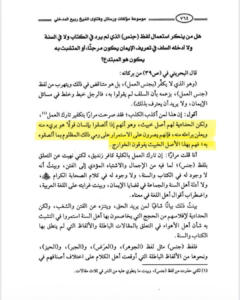
This person fell into disbelief due to not acting and honouring the divine revelation. An absence of honouring and applying this knowledge which you have gained and mastered will lead you to Bidah. It may lead you to sinful (behaviour) and may lead you to kufr. This person (mentioned in Surah Al-A’raf 175-176] was a prominent scholar, but he threw away the knowledge that Allah entrusted on him due to not acting upon it. Many people do not act, so he (i.e. such individual) is led towards sinful deeds because he does not act. Allah said:
كَبُرَ مَقْتًا عِندَ اللَّهِ أَن تَقُولُوا مَا لَا تَفْعَلُونَ
Most hateful it is with Allah that you say that which you do not do.[As-Saff. 3]
Allah’s Aid is sought, may lead him to fall into Bidah and misguidance, and maybe that the Bidah he falls into is kufriyyah [I], or he may fall into kufr straight away – and Allah’s Aid is sought. [1]
Imam Ibn Al-Qayyim, may Allah have mercy upon him, said: Allah said:
وَٱتۡلُ عَلَيۡهِمۡ نَبَأَ ٱلَّذِىٓ ءَاتَيۡنَـٰهُ ءَايَـٰتِنَا فَٱنسَلَخَ مِنۡهَا فَأَتۡبَعَهُ ٱلشَّيۡطَـٰنُ فَكَانَ مِنَ ٱلۡغَاوِينَ
وَلَوۡ شِئۡنَا لَرَفَعۡنَـٰهُ بِہَا وَلَـٰكِنَّهُ ۥۤ أَخۡلَدَ إِلَى ٱلۡأَرۡضِ وَٱتَّبَعَ هَوَٮٰهُۚ فَمَثَلُهُ ۥ كَمَثَلِ ٱلۡڪَلۡبِ إِن تَحۡمِلۡ عَلَيۡهِ يَلۡهَثۡ أَوۡ تَتۡرُڪۡهُ يَلۡهَثۚ ذَّٲلِكَ مَثَلُ ٱلۡقَوۡمِ ٱلَّذِينَ كَذَّبُواْ بِـَٔايَـٰتِنَاۚ فَٱقۡصُصِ ٱلۡقَصَصَ لَعَلَّهُمۡ يَتَفَكَّرُونَ
And recite [O Muhammad] to them the story of him to whom We gave Our Ayat [proofs, evidences, verses, lessons, signs, revelations, etc.], but he threw them away, so Shaitan [Satan] followed him up, and he became of those who went astray. And had We willed, We would surely have elevated him therewith but he clung to the earth and followed his own vain desire. So, his description is the description of a dog: if you drive him away, he lolls his tongue out, or if you leave him alone, he [still] lolls his tongue out. Such is the description of the people who reject Our Ayat [proofs, evidences, verses, lessons, signs, revelations, etc.]. So, relate the stories, perhaps they may reflect. Allah [Al-A’raf 175-176]
Allah likened him to a dog because he was given knowledge of the Book and taught what was not given to others, but he abandoned it, followed his desires and preferred the Anger of Allah over the Pleasure of Allah, preferred the worldly life over the afterlife and preferred the created beings over the Creator. A dog is considered to be among the meanest animals, the greediest and most eager [for food]. And due to this eagerness, it does not roam about except that its nose is placed on the ground, whilst sniffing greedily and eagerly. When it takes possession of a dead animal enough for a hundred dogs, it would not allow another dog to eat anything from it, except whilst growling and seeking to gain the upper hand due to eagerness, greed and covetousness.
This person -the one who abandoned the verses of Allah and followed his desires- did so out of severe eagerness for the worldly life and due to his heart being disconnected from Allah and the afterlife. He is extremely eager for the worldly things and his eagerness is similar to the constant eagerness of a dog whether it is troubled or left alone.
Ibn Jurayj, may Allah have mercy upon him, said: A dog is among those animals with the least patience when it is thirsty. It lolls its tongue out the most, whether it is standing, sitting, moving or not moving. Its intense desire [i.e. greed] necessitates that it will always loll its tongue. Likewise, this is the affair of that person likened to the dog because the extreme eagerness and burning desire in his heart necessitates that he will always exert himself [for the worldly goods at the expense of the afterlife. He still exerts himself whether he is admonished or not.
Mujahid, may Allah have mercy upon him, said: This is similar to the one given knowledge of the Book, but he does not act upon it. Ibn Abbas, may Allah be pleased with him and his father, said: If you direct him towards wisdom, he does not follow it, and if you leave him alone he is not guided towards good, just like the dog that lolls its tongue out whether it is taking a rest or driven away.
Al-Hasan, may Allah have mercy upon him, said: It is the Munafiq. He does not remain firm upon the truth whether he is called or left alone, whether he is admonished or not admonished, just like the dog that lolls its tongue out whether driven away or left alone.
So Allah, The Most High, gave an example of the one who abandoned His Aayaat [proofs, evidences, verses, lessons, signs, revelations, etc], saying: He is misguided, whether he is admonished or left alone, just like the dog that lolls its tongue out, whether driven away or left alone. This Ayah [i.e. Al-A’raf 176] is similar to the saying of Allah, The Most High]:
وَإِن تَدۡعُوهُمۡ إِلَى ٱلۡهُدَىٰ لَا يَتَّبِعُوڪُمۡۚ سَوَآءٌ عَلَيۡكُمۡ أَدَعَوۡتُمُوهُمۡ أَمۡ أَنتُمۡ صَـٰمِتُونَ
And if you call them to guidance, they follow you not. It is the same for you whether you call them, or you keep silent] [7:193]
Contemplate on the [statements] of wisdom and [significant] meanings found in this parable!
*Allah [The Most High] said: [ءَاتَيۡنَـٰهُ ءَايَـٰتِنَا- To whom We gave Our Aayaat]; Allah informed us that He was the One Who gave this person knowledge of His Aayaat, for indeed it is a blessing and Allah is the One Who conferred it upon him. Allah attributed the source of this blessing to Himself. Then Allah said: [فَٱنسَلَخَ مِنۡهَا- But he threw them away]-Meaning: He left it in a manner similar to the manner in which a snake leaves its skin. And Allah did not say, ”We threw him away from it” because this person was the one who left it due to following his desires. Then Allaah said:
[فَأَتۡبَعَهُ ٱلشَّيۡطَـٰنُ- So shaytaan (satan) followed him up]- Meaning: shaytaan approached and pursued him, just as Allah stated about Pharaoh’s people: [فَأَتۡبَعُوهُم مُّشۡرِقِينَ- So they pursued them (i.e. Fir’awn and his hosts pursued Bani Israa’eel) at sunrise] [26: 60)].
*He [i.e. this person to whom Allah gave knowledge of the Book] used to be protected and guarded against shaytan through the Aayaat of Allah, but when he turned away from them, shaytan overwhelmed him just as a lion overwhelms its prey; [فَكَانَ مِنَ ٱلۡغَاوِينَ- And he became of those who went astray]-Meaning: Those who act in opposition to the knowledge they possess and those who know the truth but act in opposition to it, just like the evil scholars.
*Then Allah said: [وَلَوۡ شِئۡنَا لَرَفَعۡنَـٰهُ بِہَا- And had We willed, We would surely have elevated him therewith]; Allah informed us that being elevated in His presence is not merely acquired through knowledge, for indeed this person was from the scholars; rather elevation is acquired through adherence to the truth, giving precedence to it and aiming to please Allah. Indeed, this person was among the most knowledgeable during his era, but he was neither elevated through his knowledge nor did he benefit from it. We seek Allaah’s protection from knowledge that does not benefit. Therefore, Allaah informs us that He is the One Who will raise a servant-if He wills-with the knowledge He bestows on them, otherwise the servant will be degraded. The Rabb [i.e. Allaah- The Creator, The All- Provider and in Whose Hand is the Dominion of everything] is the One alone Who degrades and raises [His servants], and indeed He degraded this person and did not raise him. [وَلَوۡ شِئۡنَا لَرَفَعۡنَـٰهُ بِہَا- And had We willed, We would surely have elevated him therewith]- Meaning: Had we willed, We would have given him preference [over others], ennobled him, and raised his status and rank by way of the Aayaat we gave him. Ibn Abbas said: Had Allah willed, He would have raised this person through the knowledge he (i.e. this person) possessed.
*[ وَلَـٰكِنَّهُ ۥۤ أَخۡلَدَ إِلَى ٱلۡأَر-But he clung to the earth]; Muqatil said: ‘’He became pleased with the Dunya. [وَٱتَّبَعَ هَوَٮٰهُۚ- And followed his own vain desire]; Al-Kalbee said: He pursued the lowly affairs and abandoned the lofty affairs. Abu Rawqa said: He chose the worldly life over the afterlife. Ataa said: He wanted the worldly things and obeyed his shaytaan. Ibn Zayd said: He followed his desires by joining those who fought Prophet Musa [peace be upon him] and his people.
*This is a description of an evil scholar who acts in opposition to the knowledge he possesses.
*He went astray after having knowledge. He intentionally chose disbelief over Imaan and not out of ignorance.
*He left Iman in a manner that did not allow him to ever return to it again, for indeed he threw away the Aayaat of Allah completely just as a snake exits its skin. Had he been left with anything [of Iman], he would not have been [considered] as one who exited from it completely.
*Shaytaan overwhelmed him and caught him as his prey.
*He [غوى-strayed] after being upon a state of [الرشد-the right course- well guided in affairs of the religion]. The word [الغي] means to be misguided in knowledge and intention, and it is more specified to corruption in knowledge and action, just as the word [الضلال] is more specified to corruption in knowledge and creed. When one of the two words is mentioned on its own, it includes the meaning of the other; but if mentioned together, then each of them takes its more specific meaning as mentioned above.
*Allah did not wish to raise him by way of knowledge and that was the cause of his destruction. And because he was not raised by way of knowledge [i.e. due to his own fault], it became a source of anxiety for him. It would have been better for him not to be a scholar and would have lessened the punishment he will receive.
*Allah informed us of this person’s wicked goal, for he gave preference to the most despicable [path] over the noblest [path].
*His choice [i.e. preferring evil] was not due to thoughts that crossed his mind and ideas he was unconscious of; rather it was due to [إخلاد إلى الأرض clinging to the earth- following his desires constantly]. Az-Zujaj said: The root of the words [خلد and أخلد] is [خلود], and it means to be constant in something and to remain upon something.
*He turned away from guidance and followed his vain desires. He made his vain desires a guide for himself and followed it. [2]
—————————————————–
Footnote I: Bidah Al-Mukaffirah and Bidah al-Mufassiqah
Bidah Al-Mukaffirah: It is the Bidah that is tantamount to disbelief. Al-Allaamah Rabee Bin Haadi Al-Madkhali (may Allaah preserve him) was asked whether there is a difference between Bidah Al-Mukaffirah and Bidah Al-Mufassiqah; so Shaikh said that there is Bidah Mukaffirah, such as rejecting the Ruyah (i.e. denying that the believers will see Allaah in the afterlife); rejecting Allaah’s Uluww [i.e. denying that Allaah is above his creation –Allaah ascended over the Throne in a way that benefits his majesty)]; invoking other than Allaah; offering slaughtered sacrifice (i.e. animals) to other than Allaah etc. These are affairs of Bidah Al-Mukaffirah (the bidah that is tantamount to disbelief).
But we do not make Takfeer of the people who commit this type of Bidah until we establish the proofs against them. That is because some of them (i.e. the people who fall into these affairs) carry doubts and are far away from the era of Prophethood and its light (i.e. guidance). So they fall into the likes these innovations.
Rejecting the Ruyah is disbelief; rejecting Allaah’s Uluww is disbelief; the saying that the Qur’aan is created is disbelief-major disbelief. But this person, -[who testifies that none has the right to be worshipped except Allaah and that Muhammad is the messenger of Allaah, and he prays, observes fasting, wants paradise and believes in that] -received the doubts of the people of falsehood, so he falls into the likes of these affairs (i.e. these innovations that are tantamount to disbelief). So we say to him: You have fallen into disbelief and the evidence is this and this, and we clarify for him. So if Allaah grants him Tawfeeq and he returns to the truth, then all praise is due to Allaah. But if not, we declare him a disbeliever after establishing the proofs against him.
As for Bidah Al-Mufassiqah it is other than this (i.e. it is not at the level of that which is tantamount to disbelief)…. [abridged and paraphrased. visist: www.rabee.net/ar/questions.php?cat=26&id=484 ]
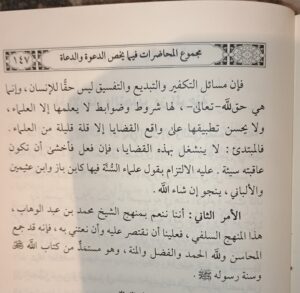
On the other hand, who are those qualified to make Takfeer? By Al-Allamah Salih Al-Fawzan – may Allah preserve him.
Question: O Respected Shaykh, who is the murtadd (apostate)? We hope for you to define it in a clear manner, for sometimes the judgement of apostasy can be made upon a person while there is some doubt that he had.
Response: The judgement of apostasy and expelling someone from the religion is only appropriate for the people of knowledge who are firmly grounded in knowledge, and they are the judges in the various Sharee’ah law courts, and those who are able of giving legal verdicts. And this is just like the other matters, and it is not the right of every person, or from the right of those who are learning, or those who ascribe themselves to knowledge, but who have deficiency in understanding. It is not appropriate for them to make judgements of apostasy (upon others). Since, mischief will arise from this, and sometimes a Muslim might be judged as an apostate but he is not actually so. And the takfir of a Muslim who has not committed one of the nullifications of Islaam contains great danger. Whoever says to his brother O Kaafir or O Faasiq, and he is not like that, then the words will fall back upon the one who said them. Hence, the ones who actually judge with apostasy are the legislative judges and those who are able and fit for giving legal verdicts. And as for those who enforce the judgements they are the leaders of the Muslims (wullaat al-amr). As for whatever is other than this, then it is mere confusion.
Question: Some of the students of knowledge are a bit lax towards applying the word of apostasy (riddah) to a Muslim, and this person might sometimes be asked by the Muslims to carry out the hadd punishment for apostasy when the Sultaan does not carry it out upon the one they consider deserves it, the one who has been judged with apostasy.
Shaykh Salih al-Fawzaan: Meting out the punishments is only appropriate for the leader of the Muslims and it is not for every person to establish the punishment, since confusion, and corruption necessarily follows from this, and also the cutting off of the society, tribulations and provocations occur. Establishing the punishments is appropriate (i.e. befits only) to the Muslim leader. The Prophet (sallallaahu alaihi wasallam) said, Pardon each other for the punishments that are between you, but when the execution of the punishment reaches the [authority of the] Sultaan, then Allaah curses both the one who seeks intercession and the one who grants the intercession [i.e. to revoke the punishment].
And from the responsibilities of the Sultaan in Islaam, and from those matters that befit him is the establishment of the punishments after they have been established legislatively, via the Sharee’ah law courts, upon the one who fell into the crime for which the legislator has designated a specific punishment, such as for stealing. So what has been said is that establishing the punishments (i.e. meting them out) is from the rights of the Sultaan, and when the Muslims do not have a Sultaan amongst them, then they should just suffice with commanding the good and forbidding the evil, and calling to Allaah, the Might and Majestic, with wisdom, good admonition and arguing with that which is best. And it is not permissible for individuals (in the society) to establish the hudood, since that, as we have mentioned, will bring about chaos, and also provocations, and tribulations will arise, and this contains greater corruption than it contains rectification. And from amongst the Sharee’ah principles that are submitted to is, Repelling the harmful things takes precedence over bringing about the beneficial things.
http://www.spubs.com/sps/sp.cfm?subsecID=MNJ09&articleID=MNJ090004&articlePages=1
[1] Marhaban Yaa Taalibal Ilm’ page 225]
[2] An Excerpt from Bada’i at-Tafsir Al-Jami Limaa Fassarahu Al-Iman Ibn Al-Qayyim 1/426-431