Warning Against a Filthy Habit in an Era Where Some Utilise Distortion, Evasion and Unlawful Stratagems to Issue False Verdicts Against Opponents

Al-Allamah Siddiq Hasan Khan, may Allāh have mercy upon him, said:

It is forbidden for a mufti to assist the one seeking a verdict, directing him to his request, or giving him a verdict (merely) based on what is apparent that will lead him to his goal when presented with an issue of the religion wherein there is trickery to drop an obligation, make a prohibited act lawful, plotting, or deception. Rather, it is incumbent upon him to be clear-sighted (perceptive) regarding people’s plotting (schemes), deception, and situations. It is not permissible for him to have a good suspicion of them; rather, he should be cautious, astute, understand the people’s circumstances and their affairs, backed by his understanding of the Islamic Shariah. If he is not like that, he will go astray and lead others astray. How many issues whose outward appearance is beauty, while what is not immediately apparent is repugnant injustice? The deceived person looks only at its outward appearance and passes judgement about its permissibility, whereas the person who has insight examines and scrutinises its intent and hidden reality. The first is deceived by issues related to the religion that are manipulated (misrepresented, falsified) just as one ignorant of coin authentication is deceived by counterfeit coins, while the second unveils their counterfeit nature just as a coin evaluator does.  

How many falsehoods are presented by a man through his fine wording, its embellishment, and framing it in the image of truth; and how truths are presented through a defective (faulty, incorrect, disapproving, scathing  manner), evil portrayal in a false image. Anyone with even the slightest acuity and experience will not be unaware of this. Rather, this is mostly the situation of people, and because it is so widespread and well known, examples are not needed. Indeed, whoever contemplates all the false statements (views) and the bidah will find that their proponents presented them in attractive forms and clothed them in expressions that are readily accepted by those unaware of their true reality. 

The aim of the discussion is that it is not permissible for him (the Mufti) to issue fatwas through prohibited stratagems (tricks), neither assist nor direct (people towards them), thus, opposing Allah in His command. Allah, The Most High, said:

وَمَكَرُوا۟ وَمَكَرَ ٱللَّهُ وَٱللَّهُ خَيْرُ ٱلْمَٰكِرِينَ

And they plotted, but Allāh too planned (to foil their plan), and Allāh is the best of planners. [Aal Imran 54]

Allah, The Most High, said:

وَمَكَرُوا۟ مَكْرًا وَمَكَرْنَا مَكْرًا وَهُمْ لَا يَشْعُرُونَ
فَٱنظُرْ كَيْفَ كَانَ عَٰقِبَةُ مَكْرِهِمْ أَنَّا دَمَّرْنَٰهُمْ وَقَوْمَهُمْ أَجْمَعِينَ

So they plotted a plot, and We planned a plan, while they perceived not. Then see how was the end of their plot! Verily! We destroyed them and their nation, all together. [An-Naml 50–51]

Allah, The Most High, said:

وَيَمْكُرُونَ وَيَمْكُرُ ٱللَّهُ وَٱللَّهُ خَيْرُ ٱلْمَٰكِرِينَ

They were plotting and Allah too was planning, and Allah is the Best of planners. [Al-Anfaal 30]

Allah said:

وَلَا يَحِيقُ ٱلْمَكْرُ ٱلسَّيِّئُ إِلَّا بِأَهْلِهِۦ

But the evil plot encompasses only him who makes it. [Fatir 43]

Allah stated regarding the perpetrators of forbidden trickery (stratagems):

وَلَقَدْ عَلِمْتُمُ ٱلَّذِينَ ٱعْتَدَوْا۟ مِنكُمْ فِى ٱلسَّبْتِ فَقُلْنَا لَهُمْ كُونُوا۟ قِرَدَةً خَٰسِـِٔينَ
فَجَعَلْنَٰهَا نَكَٰلًا لِّمَا بَيْنَ يَدَيْهَا وَمَا خَلْفَهَا وَمَوْعِظَةً لِّلْمُتَّقِينَ

And indeed you knew those amongst you who transgressed in the matter of the Sabbath (i.e. Saturday). We said to them: “Be you monkeys, despised and rejected.” So We made this punishment an example to their own and to succeeding generations and a lesson to those who are pious. [Al-Baqarah 65–66]

The Messenger, peace and blessings of Allah be upon him, said: “Evil plotting and deception are in the Fire.” [Sahih Al-Jami 6408]

It is reported in the Sahihayn that he, peace and blessings of Allah be upon him, said: “May Allah curse the Jews (i.e. those among them who deviated): fat was forbidden to them, so they melted it down, sold it, and consumed its price.” [Muslim 1582]

Ayyub al-Sakhtiyani said: “They try to deceive Allah as though they were deceiving children.” And some of the early righteous predecessors said: “Whoever possesses these three traits, they will haunt him: evil plotting, transgression, and breaking pledges (or treachery).” Allah said:

وَلَا يَحِيقُ الْمَكْرُ السَّيِّئُ إِلَّا بِأَهْلِهِ

But the evil plot encompasses only him who makes it. [Fatir 43]

إِنَّمَا بَغْيُكُمْ عَلَىٰ أَنْفُسِكُمْ

Your rebellion (disobedience to Allah) is only against your own selves. [Yunus 23]

فَمَنْ نَكَثَ فَإِنَّمَا يَنْكُثُ عَلَىٰ نَفْسِهِ

Then whosoever breaks his pledge only breaks it to his own harm. [Al-Fath 10]

Imam Ahmad ibn Hanbal, may Allah have mercy upon him, said: “These (unlawful) stratagems (or tricks) that these people devised — they turned to the Sunan and found ways to undermine them. They approached what they had been told was forbidden, then devised tricks concerning it until they made it lawful.” He said: “How filthy they are” — meaning the perpetrators of (unlawful) stratagems (tricks). They employ tricks to nullify the Sunan of Allah’s Messenger, peace and blessings of Allah be upon him.

A paraphrased excerpt from Dhakhr al-Muḥtī min Ādāb al-Muftī pages 121-124. 1st Edition 1441 (2020). Publisher: Maktabah at-Tawbah. NB: NB: We left out the ahadith in the text that Imam Al-Albani, may Allah have mercy upon him, declared weak.

 Another issue addressed by Al-Allamah Siddiq, may Allah have mercy upon him.

Desire-Based Fatwas for Friends, Allies and Loved Ones

A Genius, But Can Be Difficult to Deal With

Ibn Kamil, may Allah have mercy upon him.

Shaikh Al-Islam, Al-Allamah, Al-Hafidh, Al-Qadee, AbuBakr Ahmad Bin Kamil Bin Khalaf, Bin Shajarah al-Baghdadi, a student of Muhammad Ibn Jarir at-Tabari, may Allah have mercy upon him.

He, may Allah have mercy upon him, was born in the year 260 AH. He narrated from: Muḥammad Ibn al-Jahm al-Samaree, Muḥammad ibn Saʿd al-Awfee, Abdul Malik ibn Muḥammad al-Raqaashee, al-Ḥasan ibn Sallaam al-Sawwaaq, Muḥammad ibn Maslamah al-Waasitee, and others of their generation.

Ad-Daraqutnee al-Ḥakim, Ibn Rizqawayh, Abu al-Alaa Muḥammad ibn al-Ḥasan al-Warraaq, Yaḥyah ibn Ibraaheem al-Muzakkee, Abu al-Ḥasan al-Ḥammaamee, Abu ʿAli ibn Shaadhaan, and others, narrated from him. Abu al-Ḥasan ibn Rizqawayh said: “My eyes have not seen anyone like him, and I heard him mention his date of birth”.

Al-Khaṭeeb said:

“He was from the scholars of the Ahkam (of the Shariah), the sciences of the Qur’an, grammar, poetry, and history, and he had authorships in that. He held the position of judge at Kufa”.

Ad-Daaraqutnee said:

“He was Mutasaahil and may (sometimes) narrate from his memory that which is not in his book, and Ujub (self-amazement) ruined him”.

Ibn Shajarah died in the month of Muḥarram in the year 350 AH, at the age of ninety.

Ad-Daaraqutnee said:

“He (Ibn kamil) did not give weight to anyone among the Fuqahaa”. Ibn Ad-Dhahabee said: “I came across some of his more elevated-isnad narrations, and he was among the seas of knowledge, but self-amazement made him fade away (drop out of sight)”.

He wrote a book on Qiraa’aat. He has an authorship on Ghareeb Al-Qur’an, a book (titled) “Mujaz al-Taʾweel An Muʿjiz at-Tanzeel, a book on history and a book on contracts (Ash-Shurut).”

An Excerpt from Siyar A’lam An-Nubulaa 15/544

To all Salafiyyun at Salaficentre: Let’s Enjoy Days of Eid, Strive in Obedience, Aid The Oppressed and Never Compromise With False Tabdee

Assalamu alaykum warahmatullahi wabarakatuhu.

First and foremost, I say to you all:

تقبل الله منا ومنكم


Let’s Enjoy Ourselves, Spend On Our Families and Others, But Must Avoid Extravagance

Allah, The Most High, said:

إِنَّ ٱلَّذِينَ يَتْلُونَ كِتَٰبَ ٱللَّهِ وَأَقَامُوا۟ ٱلصَّلَوٰةَ وَأَنفَقُوا۟ مِمَّا رَزَقْنَٰهُمْ سِرًّا وَعَلَانِيَةً يَرْجُونَ تِجَٰرَةً لَّن تَبُورَ

لِيُوَفِّيَهُمْ أُجُورَهُمْ وَيَزِيدَهُم مِّن فَضْلِهِۦٓ إِنَّهُۥ غَفُورٌ شَكُورٌ

Verily, those who recite the Book of Allah (this Quran), and perform As- Salat, and spend of that which We have provided for them, secretly and openly, hope for a (sure) tradegain that will never perish. That He may pay them their wages in full, and give them (even) more, out of His Grace. Verily! He is Oft-Forgiving, Most Ready to appreciate (good deeds and to recompense). [Fatir 29-30]

Abu Mas’ud, may Allah be pleased with him, reported that the Prophet, peace and blessings of Allah be upon him, said: “If a Muslim spends on his family seeking reward from Allah, it is charity for him. [Al-Bukhari 5351]

Allah, The Most High, said:

وَمَثَلُ ٱلَّذِينَ يُنفِقُونَ أَمۡوَٲلَهُمُ ٱبۡتِغَآءَ مَرۡضَاتِ ٱللَّهِ وَتَثۡبِيتً۬ا مِّنۡ أَنفُسِهِمۡ كَمَثَلِ جَنَّةِۭ بِرَبۡوَةٍ أَصَابَهَا وَابِلٌ۬ فَـَٔاتَتۡ أُڪُلَهَا ضِعۡفَيۡنِ فَإِن لَّمۡ يُصِبۡہَا وَابِلٌ۬ فَطَلٌّ۬‌ۗ وَٱللَّهُ بِمَا تَعۡمَلُونَ بَصِيرٌ

And the likeness of those who spend their wealth seeking Allah’s Pleasure while they in their ownselves are sure and certain that Allah will reward them (for their spending in His Cause), is the likeness of a garden on a height; heavy rain falls on it and it doubles its yield of harvest. And if it does not receive heavy rain, light rain suffices it. And Allah is All-Seer of (knows well) what you do.

This parable is the basis of the spending that is based on sincerity and truthfulness because seeking Allah’s Pleasure is sincerity itself and being certain in oneself is truthfulness. Indeed, the spender is faced with two affairs and if is saved from them, he will be similar to what has been mentioned in this Ayah. Firstly, seeking praise or commendation or one of his worldly ambitions, and this is the situation of most those who spend. The second affair is the weakness, swaying, and doubt in his soul as to whether he should or not. (The first) prevents one from seeking Allah’s Pleasure and the second prevents one from being certain about spending because being certain is that the soul is given the courage, strengthened, and urged to spend, and this is its truthfulness. As for seeking Allah’s Pleasure, this is sincerity.

When it is the case that the basis of spending to seek Allah’s Pleasure and being certain about it is likened to a garden- the garden with numerous trees and is situated on an elevated place, then indeed it is the garden that is more perfect than the garden that is situated at a very low place. That is because when a garden is elevated, (exposed) to the air, the sun when it is rising and after it has risen, as well as at the time of its setting, its fruits become more mature, wholesome, better, and more numerous because fruits increase in their good quality and good health (when more exposed) to the air and sun, as opposed to fruits that are grown under the shade.

When it is the case that nothing is feared for a garden that is situated in an elevated place, except insufficient water, Allah said: [أَصَابَهَا وَابِلٌ۬ – heavy rain falls on it], thus its fruits are brought forth and it produces blessings. It brings forth its fruit twice as much as that of others, or twice as much due to the heavy rain. This is similar to the situation of those who are foremost in spending.

Then Allah says: [فَإِن لَّمۡ يُصِبۡہَا وَابِلٌ۬ فَطَلٌّ۬ – And if it does not receive heavy rain, light rain suffices it]. This is inferior to the heavy rain, but it is enough for the garden because of the (suitability and fertility) of its hotbed and the good manner in which it was planted; therefore it is enough to bring forth its benefit by way of the light rain. This is similar to the case of the pious people- those upon the second level of spending and they are of different stations in the Sight of Allah.

The people of a higher station are those who spend their wealth day and night, in secret and openly, and they give precedence to others over themselves, even though they are in need themselves. As for the people whose (spending is likened to the garden that received) the light rain, they are those upon a level in the middle. The likeness of these two groups and their deeds is that of a garden upon an elevated place, and their spending a lot is likened to heavy rain and light rain. Just as one of the two types of rains necessitates that it will make the fruits of the garden (wholesome and healthy), likewise is their spending- whether a lot or small after it is based on seeking Allah’s Pleasure and being certain in oneself regarding that. It (their spending) is pure in the sight of Allah, increases and doubles. [1]


Allah, The Most High, said:

وَآتِ ذَا الْقُرْبَىٰ حَقَّهُ وَالْمِسْكِينَ وَابْنَ السَّبِيلِ وَلَا تُبَذِّرْ تَبْذِيرًا
إِنَّ الْمُبَذِّرِينَ كَانُوا إِخْوَانَ الشَّيَاطِينِ ۖ وَكَانَ الشَّيْطَانُ لِرَبِّهِ كَفُورًا

And give to the kindred his due and to the Miskin (poor) and to the wayfarer. But spend not wastefully (your wealth) in the manner of a spendthrift. Verily, spendthrifts are brothers of the Shayatin, and the Shaitan (Devil – Satan) is ever ungrateful to his Lord. [Al-Israa 26-27]


Imam As-Sadi, may Allah have mercy upon him, said:

Shaytan does not call the person except to every blameworthy habit. So he calls him to miserliness and to refrain from spending, but when the person refuses to obey him, he calls him to overspending and extravagance; but Allah calls to the most just and balance of affairs and He praises the person for that, as He – The One free from all imperfections – says about His faithful slaves:

وَالَّذِينَ إِذَا أَنْفَقُوا لَمْ يُسْرِفُوا وَلَمْ يَقْتُرُوا وَكَانَ بَيْنَ ذَٰلِكَ قَوَامًا

And those, who, when they spend, are neither extravagant nor miserly, but hold a medium (way) between those (extremes). [Al-Furqan 67] [2]

Al-Allamah Salih Al-Fawzaan – may Allah preserve him said:

To be moderate in spending and not being extravagant and wasteful is an obligation during marriage ceremonies and other than it. Those squanderers who waste meat and food, and dispose of it in waste bins should be reminded that there are hungry people hoping for a mouth full and a scrap of bread. They should be reminded to fear Allah and to fear Him in their gatherings, and that they do not become the cause of Allah’s blessings being stopped. [3]


Successful Are Those Who Constantly Return to Allah In Repentance 

Allah, The Most High, said:

هَٰذَا مَا تُوعَدُونَ لِكُلِّ أَوَّابٍ حَفِيظٍ

(It will be announced): “This (is the reward) you were promised—(it is granted) to every oft-repenting, preserver (of Allāh’s covenant).” [Qaf 32]

Meaning: This Paradise, and what is in it—of that which the souls desire and is delightful to the eyes—is what Allah has promised to everyone who constantly turned to Allah at all times through remembering Him, loving Him, seeking His aid and assistance, supplicating to Him, fearing Him, and hoping in Him.

“Ḥafīẓ” means: one who safeguards what Allah has commanded by fulfilling it sincerely and completely, in the best and most complete manner; one who safeguards Allah’s ordained divine limits. [4]


Neither Should We Oppress Ourselves Nor Oppress Others, Nor Aid Oppressors

Shaikh Al-Islam Ibn Taymiyyah, may Allah have mercy upon him, said:

When a person does not act upon the truth he needs – neither affirms nor loves it, he becomes an oppressor of himself. When he affirms falsehood or loves it, pursuing his own desires, he oppresses himself. This self-oppression stems from following conjecture and that which the soul desires through personal opinions and (vain) desires. Bidah represents the root of evil, and it is tantamount to prioritising one’s intellect over divine revelation and choosing personal desires over obedience to commands; and adhering to guidance is the foundation of goodness, as Allah said:

فَإِمَّا يَأۡتِيَنَّڪُم مِّنِّى هُدً۬ى فَمَنِ ٱتَّبَعَ هُدَاىَ فَلَا يَضِلُّ وَلَا يَشۡقَىٰ

وَمَنۡ أَعۡرَضَ عَن ذِڪۡرِى فَإِنَّ لَهُ ۥ مَعِيشَةً۬ ضَنكً۬ا وَنَحۡشُرُهُ ۥ يَوۡمَ ٱلۡقِيَـٰمَةِ أَعۡمَىٰ

Then if there comes to you guidance from Me, then whoever follows My Guidance shall neither go astray, nor fall into distress and misery. But whosoever turns away from My Reminder (i.e. neither believes in this Qur’an nor acts on its orders, etc.) verily, for him is a life of hardship, and We shall raise him up blind on the Day of Resurrection. [Taha  123-124] [5]


Al-Allamah Salih Al-Fawzan, may Allah preserve him, said:

What is Dhulm -[injustice or oppression?] Dhulm is of three types according to the people of knowledge (i.e. the scholars):

Firstly: The greatest of them is shirk and why is shirk referred as Dhulm? This is because the basis of injustice is to place something in other than its rightful place. And the meaning of shirk is to direct acts of worship to other than its rightful place and this is the greatest injustice. Because when they (i.e. the people of shirk) direct acts of worship to other than its rightful place – to those who are not deserving of it, they equate the created (beings) to the Creator, a weak one (i.e. a created being) to Al-Qawee [The One Perfect in Strength (i.e. Allah)], who is not unable to do anything. Therefore, is there any greater injustice after this?

The second type of Dhulm is committed when a person oppresses himself by committing sins. A sinner oppresses himself because he exposes himself to punishment, even though it is incumbent upon him to save himself – place himself in an appropriate situation – and that is to obey Allah.

The third type of Dhulm is committed when a person oppresses others by taking their wealth (unlawfully), backbiting them, spreading tales about them, stealing their wealth, or violating their honour through backbiting, tale carrying, slander, or shedding their blood through unlawful killing, beating, inflicting injuries, degrading them without right. [6]


Allah said:

وَلَا تَرْكَنُوا إِلَى الَّذِينَ ظَلَمُوا فَتَمَسَّكُمُ النَّارُ وَمَا لَكُم مِّن دُونِ اللَّهِ مِنْ أَوْلِيَاءَ ثُمَّ لَا تُنصَرُونَ

And incline not toward those who do wrong, lest the Fire should touch you, and you have no protectors other than Allah, nor you would then be helped. [Hud 113]

Do not incline towards the oppressors—those who oppress the people by (shedding) their blood, (seizing) their wealth, and (violating) their honour, or they oppress people in their religion through Bidah and various forms of misguidance, spreading harmful propaganda and calls (ideas) that contradict Islam. Refrain from inclining towards such people; do not assist them or support their falsehoods. The verse includes all these types (of people).

Every follower  of falsehood is an oppressor, every Mubtadi is an oppressor, and everyone who (violates) a Muslim’s honour is an oppressor. Therefore, do not lean towards any of them, thus you are afflicted by the fire. That is because when you incline towards the sinner, the Mubtadi, the oppressor, the criminal, the one who violates people’s honour and those who violate the sanctity of the Islamic legislation, it is as if you are pleased (with that), as if you are aiding and endorsing. A believer must exercise caution to avoid falling into this perilous inclination. A believer should be careful of this type of inclination, for indeed it is from the causes of deviation and misguidance, and Allah’s refuge is sought.

فَلَمَّا زَاغُوا أَزَاغَ اللَّهُ قُلُوبَهُمْ وَاللَّهُ لَا يَهْدِي الْقَوْمَ الْفَاسِقِينَ

So when they turned away (from the Path of Allah), Allah turned their hearts away (from the Right Path). And Allah guides not the people who are Fasiqun (rebellious, disobedient to Allah)]. [As-Saff 5] [7] [end of quotes]

There is no doubt that from this is false Tabdee! Therefore, we ask once again: “Where is the clear, unambiguous knowledge-based proof for the Tabdee against Shaikh Abu Iyaad, may Allah preserve him?

[1] Still Waiting! Where’s The Clear Unambiguous Knowledge-Based Shariah Proof for the Tabdee?

[2] Still Waiting! Where’s The Clear Unambiguous Knowledge-Based Shariah Proof for the Tabdee?

[3] Still Waiting! Where’s The Clear Unambiguous Knowledge-Based Shariah Proof for the Tabdee

[4] Still Waiting! Where’s The Clear Unambiguous Knowledge-Based Shariah Proof for the Tabdee

[5] Still Waiting! Where’s The Clear Unambiguous Knowledge-Based Shariah Proof for the Tabdee

[6] Still Waiting! Where’s The Clear Unambiguous Knowledge-Based Shariah Proof for the Tabdee

[7] Still Waiting! Where’s The Clear, Unambiguous, Knowledge-Based Shariah Proof for the Tabdee

Contemplating Some Reasons Behind Stubbornness After Being Guilty of False Tabdee or Erroneous in Other Matters


[1] An Excerpt from “Tareeq Al-Hijratayn” By Imam Ibnul Qayyim. Pages 454-455

[2] An Excerpt from Tafseer As-Sadi

[3] An Excerpt from Al-Bayaan Li-Akhtaa’i Badil Kuttab 1/27

[4] An Excerpt from Tafseer As-Sadi]

[5] Sharh Hadith Allahummah Innee Dhalamtu Nafsee Dhulman Katheeran. Page 66

[6] An Excerpt from I’aanah Al-Mustafeed Bi-Sharhi Kitab At-Tawheed’ page 55-56

[7] An Excerpt from Al-Wasaayaa Al-Manhajiyyah page 20

Uplifting the Noble Youth Who Recognises Wholesome Truth Yet Is Dismissed with: “So-and-So Didn’t Retweet It”

In The Name of Allah, The Most Merciful, The Bestower of Mercy.

Imam Abdul Azeez Bin Baz, may Allah have mercy upon him, said:

Let every Muslim be careful of being deceived by the great numbers [i.e. people upon such and such idea, view, belief, way of life, etc], while saying, “Indeed, the people have become such and such, and have become accustomed to such and such, so I am with them”. This is a great calamity, for indeed many people of the past were destroyed due to this [i.e. blindly following the majority]. O sensible one! It is obligated to you to examine yourself; take account of yourself and adhere to the truth, even if the people abandon it. Beware of what Allah has forbidden, even if the people do it, for indeed the truth is more worthy of being followed, just as Allah [The Most High] said:

وَإِنْ تُطِعْ أَكْثَرَ مَنْ فِي الْأَرْضِ يُضِلُّوكَ عَنْ سَبِيلِ اللَّه ِ

And if you obey most of those on earth, they will mislead you far away from Allah’s Path. [Al An’am. 116]

Allah [The Most High] said:

وَمَآ أَڪۡثَرُ ٱلنَّاسِ وَلَوۡ حَرَصۡتَ بِمُؤۡمِنِينَ

And most of mankind will not believe even if you desire it eagerly]. [Surah Yusuf Ayah 103] [(1)]


Imam Muhammad Ibn Salih Al-Uthaymin, may Allah have mercy upon him, said:

A Muslim is obligated to feel honoured in his religion, to be proud of his religion and adhere strictly to the guidelines ordained by Allah and His Messenger, peace and blessings of Allah be upon him, within this upright religion that Allah has chosen for His servants. He should neither add to nor subtract from it. What is also obligated to a Muslim is that he should not be [إمَّعَةً –  a yes-man] who follows everyone that screams; instead, his character should be in accordance with Allah’s Shariah, aiming to be one who is emulated (in righteousness) and not a follower (in evil), and to serve as a role model rather than merely imitating others. This is because Allah’s Shariah – all praise and thanks be to Allah – is complete in every aspect, as stated in the verse:

الْيَوْمَ أَكْمَلْتُ لَكُمْ دِينَكُمْ وَأَتْمَمْتُ عَلَيْكُمْ نِعْمَتِي وَرَضِيتُ لَكُمُ الإِسْلامَ دِيناً

This day I have perfected your religion for you and completed My favor upon you and have chosen for you Islam as religion. [Al-Ma’idah 3] [(2)]


Al-Allamah Muqbil Bin Hadi Al-Waadi’ee, may Allah have mercy upon him, said:

If numbers are the scale by way of which you judge, then the majority are mostly blameworthy; and if persuasive speech and eloquence is the scale by way of which you judge, then indeed Allah described the Munaafiqoon that they have tongues that utter beautiful speech. Allah said: [وَإِن يَقُولُواْ تَسۡمَعۡ لِقَوۡلِهِمۡ – And when they speak, you listen to their words]. [Al-Munaafiqoon. 4]

Therefore, what is given consideration is that one knows the people of truth by their characteristics – that they call to the Book of Allah and the Sunnah of Allah’s Messenger [peace and blessings of Allah be upon him, his family, and companions], and they neither desire reward from the people nor seeking to be thanked. [(3)]


Al-Allamah Ahmad Bin Yahyah An-Najmi, may Allah have mercy upon him, said:

Know that the truth is that what (has been revealed by) Allah and (given to) His Messenger, peace and blessings of Allah be upon him in the Book and the Sunnah, even if its adherents and those who embrace it are few. What is conveyed in the Islamic legislation is the truth one is commanded to follow, even if the majority of the people free themselves from it and those who follow it are few. Allah stated:

ثُمَّ جَعَلْنَاكَ عَلَىٰ شَرِيعَةٍ مِنَ الْأَمْرِ فَاتَّبِعْهَا وَلَا تَتَّبِعْ أَهْوَاءَ الَّذِينَ لَا يَعْلَمُونَ
إِنَّهُمْ لَنْ يُغْنُوا عَنْكَ مِنَ اللَّهِ شَيْئًا ۚ وَإِنَّ الظَّالِمِينَ بَعْضُهُمْ أَوْلِيَاءُ بَعْضٍ ۖ وَاللَّهُ وَلِيُّ الْمُتَّقِينَ

Then We have put you (O Muhammad) on a plain way of (Our) commandment [like the one which We commanded Our Messengers before you (i.e. legal ways and laws of the Islamic Monotheism)]. So follow you that (Islamic Monotheism and its laws), and follow not the desires of those who know not. Verily, they can avail you nothing against Allah (if He wants to punish you). Verily, the Zalimun (polytheists, wrong-doers, etc.) are Auliya’ (protectors, helpers, etc.) to one another, but Allah is the Wali (Helper, Protector, etc.) of the Muttaqun (pious). [Al-Jaathiya. 18-19]

Therefore, O slave of Allah! Be eager to follow the truth, follow the straight path and the path of early pious predecessors- the companions of the Messenger, and do not feel lonely due to the small numbers of those who follow it and the large numbers of those who oppose it, for indeed Ibrahim, peace be upon him, was an Imam on his own and with Allah lies all success. [(4)]

We ask Allah:

اللَّهُمَّ أَصْلِحْ لِي دِينِي الَّذِي هُوَ عِصْمَةُ أَمْرِي

وَأَصْلِحْ لِي دُنْيَايَ الَّتِي فِيهَا مَعَاشِي

وَأَصْلِحْ لِي آخِرَتِي الَّتِي فِيهَا مَعَادِي

وَاجْعَلِ الْحَيَاةَ زِيَادَةً لِي فِي كُلِّ خَيْرٍ

وَاجْعَلِ الْمَوْتَ رَاحَةً لِي مِنْ كُلِّ شَرٍّ

O Allah! Rectify my religion for me, which is the safeguard of my affairs; rectify my worldly [affairs], wherein is my livelihood; and rectify my Afterlife to which is my return; and make life for me [as a means of] increase in every good and make death for me as a rest from every evil. [Sahih Muslim Number: 2720] [5]


[(1)] An Excerpt from ‘Majmoo Al-Fataawaa 12/ 412

[(2)] Majmu Fatawa 2/301

[(3)] قم المعاند – 2/547

[(4)] An Excerpt from Irshaad As-Saaree Fee Sharh Sunnah Lil-Barbahaaree page: 47

[5]https://salafidawahmanchester.com/2020/12/29/o-allaah-rectify-my-religion-for-me-which-the-safeguard-of-my-affairs-a-tremendous-supplication/

You Are Either with the Scholars or with That Other Person

“You Are Either with the Scholars or with That Other Person”

A Statement of Truth by Which Repugnant Opinionated Behaviour Is Concealed – Be Alert  O Youth of Salaficentre!

Allah, The Most High, said:

وَأَسِرُّوا۟ قَوْلَكُمْ أَوِ ٱجْهَرُوا۟ بِهِۦٓ إِنَّهُۥ عَلِيمٌۢ بِذَاتِ ٱلصُّدُورِ

And conceal your speech or proclaim it (openly), indeed, He (Allah) is All-Knowing of what is (hidden) in the breasts (of men). [Al-Mulk 13]

O youth of Salaficentre (Manchester)! Be alert and vigilant when you hear someone saying under the guise of knowledge: “You are either with the scholars or with that other person.” In reality, he means that you must align with those he supports and oppose those he opposes. This statement can be utilised for both truth and falsehood, so remain cautious.

Firstly, it is undeniable that when the truth is clear and unambiguous, we must stand with those who uphold the truth, but not simply based on name-dropping or elevating the status of individuals.

Secondly, the person making this statement leaves the term scholars vague, leading the unsuspecting reader to believe that the opponent lacks scholarly support and should therefore be disregarded. Thus, the speaker monopolises the term scholars in the mind of the unsuspecting reader, exaggerates the credentials of those he supports, either completely overlooks the evidence presented by the opponent or fails to provide any proof to back his position. Nothing remains except that the speaker desires you to follow his preference solely based on his self-perceived authority, insisting that his referenced authorities are superior to those cited by the opponent, regardless of the evidence. This behaviour—regardless of who manifests it —is unacceptable, especially when the opinionated speaker is asked for proof and offers none. Allah said:

وَيْلٌ لِّلْمُطَفِّفِينَ
الَّذِينَ إِذَا اكْتَالُوا عَلَى النَّاسِ يَسْتَوْفُونَ
وَإِذَا كَالُوهُمْ أَو وَّزَنُوهُمْ يُخْسِرُونَ
أَلَا يَظُنُّ أُولَٰئِكَ أَنَّهُم مَّبْعُوثُونَ
لِيَوْمٍ عَظِيمٍ
يَوْمَ يَقُومُ النَّاسُ لِرَبِّ الْعَالَمِينَ

Woe to Al-Mutaffifin [those who give less in measure and weight (decrease the rights of others)], those who, when they have to receive by measure from men, demand full measure, and when they have to give by measure or weight to men, give less than due. Think they not that they will be resurrected (for reckoning), on a Great Day, the Day when (all) mankind will stand before the Lord of the ‘Alamin (mankind, jinns and all that exists)? [Al-Mutaffifeen. 1-7]

وَإِذَا كَالُوهُمْ أَو وَّزَنُوهُمْ يُخْسِرُونَ

and when they have to give by measure or weight to men, give less than due.

Imam As-Sadi, may Allah have mercy upon him, said:

This noble verse shows that just as a person takes from the people what he is entitled to, it is also obligated to him to give them everything they are entitled to – whether related to wealth or mutual dealings; rather included in the generality of this verse are proofs and statements, because what usually takes place between those engaged in argumentation and discussion is that each of them is eager to establish his proofs, thus, it is obligated to a person to also make known the proofs possessed by the other person and examine the proofs of the other person just as he examines his own proofs. In relation to this affair, the justice of a person is known as opposed to whether he is afflicted with bigotry, his humility as opposed to being haughty, his common sense as opposed to foolish behaviour. We ask Allah bestow on us every good. [Tafsir As-Sadi]

Let us stand firmly against this repugnant opinionated behaviour disguised as a balanced path to reaching the truth while the speaker completely fails to offer any credible proof to back up his claims. Indeed, there is no enforced loyalty or commitment to anyone when evaluating proofs, nor is there an obligation to create a group identity based on anything other than the truth. Therefore, we must uphold justice, as Allah has commanded us to do so on behalf of both allies and opponents. Read here: https://salafidawahmanchester.com/2026/04/13/1-justice-for-all/

Finally: We ask once again, “Where is the proof for the Tabdee against Shaikh Abu Iyaad, may Allah protect him”.

The False Tabdee Must Be Recanted Because Neither Shariah Nor Sound Intellect Acknowledges That Harm Can Remain

[1] Still Waiting! Where’s The Clear Unambiguous Knowledge-Based Shariah Proof for the Tabdee?

[2] Still Waiting! Where’s The Clear Unambiguous Knowledge-Based Shariah Proof for the Tabdee?

[3] Still Waiting! Where’s The Clear Unambiguous Knowledge-Based Shariah Proof for the Tabdee

[4] Still Waiting! Where’s The Clear Unambiguous Knowledge-Based Shariah Proof for the Tabdee

[5] Still Waiting! Where’s The Clear Unambiguous Knowledge-Based Shariah Proof for the Tabdee

Contemplating Some Reasons Behind Stubbornness After Being Guilty of False Tabdee or Erroneous in Other Matters

[6] Still Waiting! Where’s The Clear Unambiguous Knowledge-Based Shariah Proof for the Tabdee

A Clarification for the Youth at Salafi Centre Regarding Books, Certificates, and Conduct

Imam Al-Barbahari, may Allah have mercy upon him, said:

And know, may Allah have mercy upon you, that knowledge is not in being able to narrate much and in having many books, rather the scholar is the one who follows the knowledge and the Sunnah, even if his knowledge and his books are limited, and whoever opposes the Book and the Sunnah, he is a proponent of Bidah, even if he narrates much and has many books.

Al-Allamah Rabee Bin Haadi al-Madkhali, may Allah have mercy upon him, said:

He [Al-Barbahari] sees that the abundance of books and knowledge is not a criterion for the required knowledge of Shariah. Knowledge is what benefits; even if this scholar has little knowledge and few books, he will benefit from his knowledge and it is benefited from with regards to belief, methodology, and application. This is the knowledge that counts in the Sight of Allah- the knowledge He loves, loves, and praises its possessors. Allah said:

إِنَّمَا يَخْشَى ٱللَّهَ مِنْ عِبَادِهِ ٱلْعُلَمَٰٓؤُا۟ إِنَّ ٱللَّهَ عَزِيزٌ غَفُورٌ

It is only those who have knowledge among His slaves that fear Allah]. [35:28]

Hence they [the scholars] said, “Knowledge is to fear Allah”. If one with a lot of knowledge does not fear Allah, he is not a scholar and his knowledge has no value because it is a source of evil to him. The Qur’an is proof for or against you, so evil is the state of that scholar- I seek refuge in Allah – who is under the threat of punishment. The Quran is proof against you, the Sunnah is proof against you and knowledge is proof against you, and Allah’s refuge is sought. He may have many books, but he is misguided. He may have a lot of knowledge of the Arabic language, Tafseer, Hadith, and so on, but he is misguided. This is the knowledge that harms and does not benefit, and it is from this that we seek Allah’s protection, and Allah’s Messenger taught us to seek (Allah’s) protection against it. However, knowledge (in and of itself) is beneficial, so if there is a lot of knowledge and books, it is very good, and there are Imams who have abundant knowledge and many books. If the two are combined: a lot of knowledge and many books, it is desirable; and if devoid of benefitting from this knowledge (i.e. due to misguidance or not acting upon it), then neither an abundance of books or knowledge is beneficial, for it is a source of evil on the person. This is why (Allah stated that) some Prophets said: [وَمَآ أُرِيدُ أَنْ أُخَالِفَكُمْ إِلَىٰ مَآ أَنْهَىٰكُمْ عَنْهُ – I wish not, in contradiction to you, to do that which I forbid you]. [11:88]

Allah said:
أَتَأْمُرُونَ ٱلنَّاسَ بِٱلْبِرِّ وَتَنسَوْنَ أَنفُسَكُمْ وَأَنتُمْ تَتْلُونَ ٱلْكِتَٰبَ أَفَلَا تَعْقِلُون

Do you order righteousness of the people and forget yourselves while you recite the Scripture? Then will you not reason? [2:44]

Allah said:

يَـٰٓأَيُّہَا ٱلَّذِينَ ءَامَنُواْ لِمَ تَقُولُونَ مَا لَا تَفۡعَلُونَ
ڪَبُرَ مَقۡتًا عِندَ ٱللَّهِ أَن تَقُولُواْ مَا لَا تَفۡعَلُونَ

O you who believe! Why do you say that which you do not do? Most hateful it is with Allah that you say that which you do not do. [As-Saff.2-3]

Some people are merely speakers and they do not act, therefore, a Muslim must combine statements and deeds so that his actions confirm his statements. He calls to belief and believes, and calls to action and acts. This is beneficial knowledge, calling to the Sunnah and adhering to it, fighting Bidah and being serious about fighting it, and being one of the people who are most distant from it. [1]

Certifications

Al-Allamah Rabi Bin Hadi al-Madkhalee, may Allah have mercy upon him, said:

Knowledge is not just about studying and obtaining certificates, but the aim is to gain sound and accurate comprehension – sound understanding in matters of Aqidah, worship, good manners, good etiquettes, and everything related to a believer’s life. It is obligated to believers to fulfil everything in their lives based on Allah’s Book and Sunnah of Allah’s Messenger. The believer performs acts of worship sincerely for the sake of Allah because Allah commands him to be sincere.

وَمَآ أُمِرُوٓاْ إِلَّا لِيَعۡبُدُواْ ٱللَّهَ مُخۡلِصِينَ لَهُ ٱلدِّينَ حُنَفَآءَ وَيُقِيمُواْ ٱلصَّلَوٰةَ وَيُؤۡتُواْ ٱلزَّكَوٰةَ‌ۚ وَذَٲلِكَ دِينُ ٱلۡقَيِّمَةِ

And they were commanded not, but that they should worship Allah, and worship none but Him Alone (abstaining from ascribing partners to Him), and perform As-Salat (Iqamat-as-Salat) and give Zakat: and that is the right religion. [Al-Bayyinah. 5] [2]

The Shaikh also said: We have been commanded to learn, therefore, it is obligated to us to learn, practice, and invite (others to the path) of Allah based on the path that Allah has prescribed and made clear to us, the path that the Messenger elucidated and followed, and followed by his companions after him. They propagated Islam across the globe – among various nations. This knowledge and virtue were disseminated primarily through (good) manners – through patience, forbearance, steadfastness in fulfilling duties and responsibilities, truthfulness, honourable behaviour, nobility, noble-mindedness, keeping promises, and similar traits. These manners became apparent to the people, so the hearts, ears, and eyes of the nations embraced this guidance, which the companions of Muhammad upheld. [3]

Imam Muhammad Ibn Salih Al-Uthaymeen, may Allah have mercy upon him, said that some of the people say “sincere intention in this present era of ours is difficult or it may be impossible because those who seek knowledge do so with the aim of receiving a certificate”.

The Shaikh replied to this statement saying that one’s intention is considered corrupt if knowledge is sought to receive a certificate or a desire for an elevated worldly status through it. But a person’s intention is regarded to be good and not in opposition to sincerity if he wants an elevated status in order to benefit the people, for he knows that at present it is impossible for a person to achieve a high and beneficial position for the Ummah unless he has a certificate. Because of this, even if you were to find a scholar who is good in various affairs of knowledge but he has no certificate, it will not be possible for him to teach even in high school and this is the reality. And you will find that the one lesser in knowledge than this scholar will be accepted (as a teacher) at a university as long as he has a certificate. Therefore, based on a person’s intention and choices, the certificate is not considered harmful and its obtainment enters into the statement of the Messenger, peace and blessings of Allah be upon him: “And what comes to you from this wealth without asking for it or having greed for it, take it; and if not given, do not run for it”. [Al-Bukhari. 1473][4]

The Shaikh also stated: We add trustworthiness as an additional characteristic alongside proficiency because proficiency is a strength and it has to be accompanied by trustworthiness. Allah said: [ إِنَّ خَيۡرَ مَنِ ٱسۡتَـٔۡجَرۡتَ ٱلۡقَوِىُّ ٱلۡأَمِينُ – Verily, the best of men for you to hire is the strong, the trustworthy.] [Al-Qasas. 26]

It may be that a scholar is proficient and vast in knowledge, able to derive and explain subsidiary issues from fundamental principles, as well as categorise, distinguish and place different subject matters in their appropriate place, but he is not trustworthy and might misguide you from where you do not know”. [5]


[1] An Excerpt from “Awn al-Baaree Bi-Bayaan Maa Tadammanahu Sharh As-Sunnah Lil-Imaam Al-Barbahaaree 2/688-689

[2] An Excerpt from Marhaban Yaa Talib Al-Ilm. 72 – 73

[3] An Excerpt from Marhaban Yaa Talib Al-Ilm. 86

[4 & 5] An Excerpt from Sharh Hilya Talib Al-Ilm. p22

Reminder to beloved Youth at Salaficentre: The Matter Is Not About the Personality of Ustaadh Musa

A Crucial Reminder to the Youth of Salaficentre (Manchester): The Matter Is Not About the Personality of Ustaadh Musa Richardson or Any Other Teacher; Rather, It Is About Upholding Principles and Standing Firmly Upon Justice and Truthfulness

Allāh, The Most High, said:

وَإِذَا قُلۡتُمۡ فَٱعۡدِلُواْ وَلَوۡ ڪَانَ ذَا قُرۡبَىٰ‌ۖ

And when you testify, be just, even if (it concerns) a near relative. [1]

When you testify by way of a statement to judge between people, differentiate between them in a discourse, and speak regarding matters and circumstances, be just in your speech, adhere to truthfulness regarding those you love and those you hate, be fair and do not conceal what needs to be made clear because it is forbidden and tantamount to injustice to divert (from justice and fairness) when speaking against the one you hate. [2]

Before beginning this article with a quote from Shaikh Al-Islam Ibn Taymiyyah, may Allāh have mercy upon him, we want to clarify that neither Ustaadh Musa, may Allāh grant us and him success – nor anyone else mentioned in this article is being accused of Hizbiyyah. Instead, the information presented here is solely a reminder for our beloved youth, as it is our responsibility to offer clarifications to the youth of our Markaz (Salaficentre) so they can grasp these issues and remain vigilant, while seeking the aid of Allāh to adhere to the sound principles we have been taught for the past 30 in the Marakiz, Masajid, houses and conferences.  To proceed: Shaikh Al-Islam Ibn Taymiyyah, may Allah have mercy upon him, said:

ﻭﻟﻴﺲ ﻟﻠﻤﻌﻠﻤﻴﻦ ﺃﻥ ﻳﺤﺰﺑﻮﺍ ﺍﻟﻨﺎﺱ
ﻭﻳﻔﻌﻠﻮﺍ ﻣﺎ ﻳﻠﻘﻲ ﺑﻴﻨﻬﻢ ﺍﻟﻌﺪﺍﻭﺓ ﻭﺍﻟﺒﻐﻀﺎﺀ،
ﺑﻞ ﻳﻜﻮﻧﻮﻥ ﻣﺜﻞ ﺍﻷﺧﻮﺓ ﺍﻟﻤﺘﻌﺎﻭﻧﻴﻦ ﻋﻠﻰ
ﺍﻟﺒﺮ ﻭﺍﻟﺘﻘﻮﻱ ﻛﻤﺎ ﻗﺎﻝ ﺗﻌﺈﻟﻰ
وَتَعَاوَنُوا عَلَى الْبِرِّ وَالتَّقْوَى وَلا تَعَاوَنُوا عَلَى الإثْمِ وَالْعُدْوَانِ
وليس لأحد منهم أن يأخذ على أحد عهداً بموافقته على كل ما يريده وموالاة من يواليه ومعاداة من يعاديه،بل من فعل هذا كان من جنس جنكز خان وأمثاله الذين يجعلون من وافقهم صديقاً واليا، ومن خالفهم عدوَّا باغيا، بل عليهم وعلى أتباعهم عهد الله ورسوله بأن يطيعوا الله ورسوله ويفعلوا ما أمر الله ورسوله ويحرموا ما حرم الله ورسوله ويرعوا حقوق المعلمين كما أمر الله ورسوله، فإن كان أستاذ أحد مظلوماً نصره، وإن كان ظالماً لم يعاونه على الظلم بل يمنعه منه كما ثبت في الصحيح أنه قال:
(انصر أخاك ظالماً أو مظلوماً. قيل: يا رسول الله: أنصره مظلوماً فكيف أنصره ظالماً؟. قال تمنعه من الظلم فذلك نصرك إياه).
وإذا وقع بين معلم ومعلم أو تلميذ وتلميذ أو معلم وتلميذ خصومة ومشاجرة لم يجز لأحد أن يعين أحدهما حتى يعلم الحق، فلا يعاونه بجهل ولا بهوى، بل ينظر في الأمر، فإذا تبين له الحق أعان المحق منهما على المبطل سواء كان المحق من أصحابه أو أصحاب غيره، وسواء كان المبطل من أصحابه أو أصحاب غيره، فيكون المقصود عبادة الله وحده وطاعة رسوله واتباع الحق والقيام بالقسط
قال تعالى
يا أيها الذين آمنوا كونوا قوامين بالقسط شهداء لله ولو على أنفسكم أو الوالدين والأقربين، إن يكن غنياً أو فقيراً فالله أولى بهما، فلا تتبعوا الهوى أن تعدلوا وإن تلووا أو تعرضوا فإن الله كان بما تعملون خبيراً

It not allowed for the teachers to initiate (illegal) partisanship between the people and do that which would cause enmity and hatred between them; but rather they should be brothers who cooperate upon righteousness and piety, as Allaah [The Exalted] said:

[وَتَعَاوَنُوا عَلَى الْبِرِّ وَالتَّقْوَىٰ ۖ وَلَا تَعَاوَنُوا عَلَى الْإِثْمِ وَالْعُدْوَانِ – Help you one another in Al-Birr and At-Taqwa [virtue, righteousness and piety]; but do not help one another in sin and transgression]. [Surah Al-Maa’idah. Aayah 2]

It is not allowed for anyone of them to receive a pledge from anyone to be in agreement with him in everything he wants – having allegiance to the one he is allied to and enmity against the one he harbours enmity, and whoever does this is similar to Genghis Khan and his ilk (in this affair), who take as their loyal friends the one in agreement with them and the one who oppose them as a rebellious enemy; rather it is obligated on them and their followers (i.e. the teachers) to fulfil the covenant of Allaah and His Messenger by obeying Allaah and His Messenger, doing that which Allaah and His Messenger have commanded, declare unlawful that which Allaah and His Messenger have declared unlawful, and preserve the rights of the teachers in the manner commanded by Allaah and His Messenger. So, if one’s teacher is oppressed, he should help him; but if the teacher is the oppressor, he should not aid him in his act of oppression; rather he forbids him from it, as it has been established in the authentic books of hadith that the Prophet [peace and blessings of Allaah be upon him] said, “Help your brother, whether he is an oppressor or he is an oppressed one. People asked, “O Allah’s Messenger! It is all right to help him if he is oppressed, but how should we help him if he is an oppressor?” The Prophet said, “By preventing him from oppressing others.” [Saheeh Al-Bukhaari 2444]

If an argument and dispute occurs between a teacher and another teacher, or between a student and another student, it is not permissible for anyone to help one of them until he knows the truth – neither to aid him based on ignorance nor desires; rather he he examines the affair, so if the truth becomes clear to him, he helps the one who deserves to be helped (due to him being upon the truth) against the one upon error – regardless whether the one who deserves to be helped is one of his companions or the companion of someone else, or whether the one upon error is one of his companions or the companion of someone else. Therefore, the aim is only to worship Allaah alone, obedience to Allaah’s Messenger, adherence to truth and establishment of justice. Allaah [The Exalted] said:

يا أيها الذين آمنوا كونوا قوامين بالقسط شهداء لله ولو على أنفسكم أو الوالدين والأقربين، إن يكن غنياً أو فقيراً فالله أولى بهما، فلا تتبعوا الهوى أن تعدلوا وإن تلووا أو تعرضوا فإن الله كان بما تعملون خبيراً

O you who believe! Stand out firmly for justice, as witnesses to Allah; even though it be against yourselves, or your parents, or your kin, be he rich or poor, Allah is a Better Protector to both (than you). So follow not the lusts (of your hearts), lest you may avoid justice, and if you distort your witness or refuse to give it, verily, Allah is Ever Well-Acquainted with what you do. [[Surah An-Nisaa. Ayah 135] 

Al-Allaamah Abdur Rahmaan Bin Yahyah Al-Mu’allimee – may Allah have mercy upon him- said:

In this era of ours, you even see a woman who comes across an affair related to the religion – in which there is a difference of opinion between the mother of the believers Aa’isha and others amongst the companions [may Allaah be pleased with all of them], so she defends Aa’Isha’s position solely due to the fact that she is a woman like her. So, when she presumes and then claims that Aa’Isha is correct and those men who oppose her position are mistaken, then in this is an affirmation of Aa’Isha’s virtue over those men, which then becomes a virtue for women unrestrictedly and she receives some of that. And through this appears – to you – the underlying reasons behind the illegal partisanship of an Arab to an Arab, a Persian to a Persian, a Turk to a Turk and other than that. (2) [end of quote]

Contemplate the points mentioned above and let’s not divert our attention – in the least – from the fact that the Salafi, while seeking Allah’s guidance, keeps these principles in mind during every disagreement, regardless of whether the situation reaches what has been described above or not. It is important to repeat that Ustaadh Musa is not being accused of Hizbiyyah in this article; rather, we cite these principles to emphasise to our beloved youth that our relationships are to be founded on principles rather than mutual back-scratching.

However, some some people are making a big mistake concerning our relationships. This is not favouritism towards others at the expense of Ustaadh Musa Richardson. Consider our relationship with this individual: during the challenging times faced by Salaficentre due to administrative issues, a lack of lessons, and the community’s absence of a school, as well as weak connections with others outside of Manchester, we reached out to this person. He provided us with clear guidance from the scholars and mobilised other students of knowledge to assist us; some came in person while others gave us lessons via Paltalk. Ustaadh Abu Iyaad, hafidhahullah, was among those who delivered lessons through Paltalk. Can you guess who this person was? It was none other than Ustaadh Abu Khadeejah, hafidhahullah, who initiated this good, after the Tawfiq of Allah. Not only did he initiate this support, but he also visited us in person and was always available by phone, dedicating a lot of time to us. Let’s take it a bit further: ask who would enter the Salafi Bookstore from 2006 onwards and gently grasp his beard as a sign of affection; it was one of us from Manchester. Some other brothers in the Maktabah would look at us in astonishment due to this gesture. The bond we share goes beyond this, and while there are many other stories we could recount, they are not required here. But by Allah! If our Habeeb, Ustaadh Abu Khadeejah – may Allah protect him and us from harm – were to make Tabdee of anyone without evidence or claim that this or that Salafi is a plant without proof, we would be the first to openly demand evidence from him and would persist until he provides proof for scrutiny.

By Allah! We do not make any distinction among any of the students of knowledge when it comes to standing for justice, and no individual is too great in our eyes to evade accountability for unsubstantiated claims, regardless of how much we love or respect them. Therefore, do not be misled into thinking that anyone else—whether they are more prominent than Ustaadh Musa or Ustaadh Abu Khadeejah, or have stronger connections in the Muslim lands, or possess a large organisation backing them—can escape scrutiny when they make statements without evidence. Anyone who oversteps and persists, their status is relegated to the farthest recesses of our minds as we pursue justice without fear or favouritism. Furthermore, we are astonished by the conduct of those who introduced us to the book “Raf’ul Malaam An A’immah Al-A’laam,” which contains the proofs that escaped the illustrious Imams and the valid, and beautiful excuses made for them in that regard, yet their actions contradict this when asked to testify to the truth in certain matters of our time. Thus, this issue transcends Ustaadh Musa; it is fundamentally about upholding justice and not fearing anyone, rather, we – at Salaficentre – want wholesome relationships—as much as we can, with Allah’s guidance—based on Sidq, transparency, and mutual advice without self-serving interests and mutual back-scratching. This is what we have witnessed from truthful Salafiyyun for over three decades. 

We therefore advise our beloved youth at Salaficentre to avoid the tweets of Ustaadh Musa Richardson – the endless online unproductive statements that do not bring any clarity. What he and others – who want to speak with impunity – are simply asked is the proof for the Tabdee against Ustaadh Abu Iyaad as well as the claim that he is a plant! They cannot produce any proof, thus, they want to turn the matter into a ping pong exchange. Discussions that constantly move from one topic to another without addressing these issues are an extreme waste of precious time, whether initiated by him or others. No one is worthy of your precious time and youthful energy except those who bring you clarity. Either block or mute him and his ilk. May Allah guide us all to Sidq, Adl, beneficial speech, and every other thing that is beloved to Allah. And Allāh knows best. We repeat once again: “Where is the proof for the Tabdee?”

https://salafidawahmanchester.com/2026/05/23/the-false-tabdee-must-be-recanted-because-neither-shariah-nor-sound-intellect-acknowledges-that-harm-can-remain/

https://salafidawahmanchester.com/2026/05/03/still-waiting-wheres-the-clear-unambiguous-knowledge-based-shariah-proof-for-the-tabdee/

https://salafidawahmanchester.com/2026/05/10/2-still-waiting-wheres-the-clear-unambiguous-knowledge-based-shariah-proof-for-the-tabdee/

https://salafidawahmanchester.com/2026/05/13/3-still-waiting-wheres-the-clear-unambiguous-knowledge-based-shariah-proof-for-the-tabdee/

https://salafidawahmanchester.com/2026/05/18/4-still-waiting-wheres-the-clear-unambiguous-knowledge-based-shariah-proof-for-the-tabdee/

https://salafidawahmanchester.com/2026/05/23/5-still-waiting-wheres-the-clear-unambiguous-knowledge-based-shariah-proof-for-the-tabdee/

https://salafidawahmanchester.com/2026/05/20/contemplating-some-reasons-behind-stubbornness-after-being-guilty-of-false-tabdee-or-erroneous-in-other-matters/


[1] https://www.thenoblequran.com/q/#/search/6_152

[2] An Excerpt from Tafseer as-Sadi. Slightly paraphrased 

[3] Majmoo Al-Fataawaa. 28/15-17. paraphrased]

[4] Aathaar Ash-Shaikh Abdur Rahmaan Bin Yahyah Al-Mu’allimee. Vol 11. Page 294]

The False Tabdee Must Be Recanted Because Neither Shariah Nor Sound Intellect Acknowledges That Harm Can Remain

The Messenger, peace and blessings of Allah be upon him, said: “There should be neither harming nor reciprocating harm.” [a]

Imam Muhammad Ibn Salih Al-Uthaymin, may Allah have mercy upon him, said:

أنه لا يجوز إبقاء الضرر وأن الضرر منتف شرعا فكل شيء فيه ضرر فإنه يجب إزالته لأن الضرر مدفوع شرعا وعقلا ولا يُمكن للعاقل أن يُقرّه ولا للشريعة الإسلامية أن تقرّه.
وأما الضرار فهو من المضارة أي ولا يحل لأحد أن يُضارّ أخاه حتى وإن كان فيما لا ضرر فيه مادام يقصد أن يضر أخاه فمن ضار ضار الله به فهذا الحديث يدل على أن الضرر منفي شرعا سواء حصل بقصد أو بغير قصد فإن حصل بقصد فهو مضارّة وإن حصل بغير قصد فهو ضرر فالإنسان أحيانا يفعل الشيء لا يريد الضرر ولكنه يحصل به الضرر ففي هذه الحال تجب إزالته

Indeed, it is not permissible to allow harm to remain and that harm is negated by the divine legislation. Anything that contains harm, then indeed it is obligatory to remove it. This is because harm is regarded as something to be repelled both by the divine revelation and (sound) intellect. Neither is it possible for a rational person nor the divine Islamic legislation to acknowledge that harm can remain. As for Ad-Diraar – causing harm, it stems from the act of harming others. It is not permissible for anyone to harm his brother, even if the action itself does not cause harm, as long as he intends to inflict harm on his brother. “Whoever harms others, Allah will harm him’. This hadith demonstrates that harm is negated by the Islamic legislation whether it occurs intentionally or unintentionally. If it occurs intentionally, it is considered an act of malice. If it occurs unintentionally, it is still harm. Sometimes, a person may do something without wishing to cause harm, but harm results from him. In such a situation, it is necessary to remove the harm. [1]

Al-Allamah Rabee Bin Hadi Al-Mad’khali, may Allah have mercy upon him, said:

In general, Muslims are advised to be gentle, (urged) to love this gentleness and it should be clarified for them that indeed Allah loves gentleness in all matters: “Indeed, Allah is gentle and loves gentleness in all matters”.

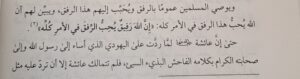
Even when Aishah could not bear it but to respond to the Jew – in a manner similar to his speech and with more harshness – who insulted Allah’s Messenger and his noble companions with foul and offensive speech, Allah’s Messenger, peace be upon him – admonished her, saying: “Indeed, Allah is gentle and loves gentleness in all matters”. [b]

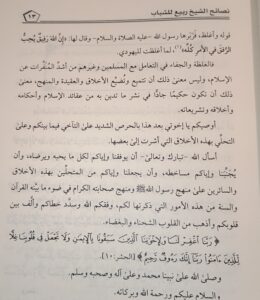
Harshness and coarseness in dealing with Muslims and others are among the greatest causes of making people flee from Islam. This does not mean that one dilutes and neglect morals, the creed, and methodology; rather, it means that one should be wise and diligent in disseminating what one follows as the religion, such as the Islamic beliefs, its rulings, morals, and divine legislation. After this, I advise you my brothers to be eager in fostering brotherhood among yourselves and to embody these morals some of which I have alluded to.

I ask Allah- the Blessed and Most High – to grant us and you success in all that He loves and is pleased with, to protect us and you from His displeasure, and to make us and you among those who embody these moral characters and follow the methodology of Allāh’s Messenger, peace and blessings of Allah be upon him, and the methodology of his noble companions, in accordance with what the Quran and the Sunnah have clarified regarding these matters I have mentioned to you. May Allah grant you success, guide your steps, unite your hearts, and remove animosity and hatred from your hearts.

“Our Lord, forgive us and our brothers who preceded us in faith, and do not place in our hearts any resentment towards those who have believed. Our Lord, indeed You are most-compassionate, the ever-merciful. [Al-Hashr 10]

May peace and blessings be upon our Prophet Muhammad, his family, and his companions. [end of quote]

[a] https://www.nawawis40hadith.com/nw/hadith/32/there-should-be-no-harm

[b] A group of Jews asked permission to visit the Prophet (and when they were admitted) they said, “As- Samu ‘Alaika (Death be upon you).” I said (to them), “But death and the curse of Allah be upon you!” The Prophet (ﷺ) said, “O `Aisha! Allah is kind and lenient and likes that one should be kind and lenient in all matters.” I said, “Haven’t you heard what they said?” He said, “I said (to them), ‘Wa ‘Alaikum (and upon you). [Al-Bukhari 6927]”

The false Tabdee against Shaikh Abu Iyaad, may Allah protect him must be recanted and we’ll carry on demanding it.


[1] Paraphrased  https://alathar.net/home/esound/index.php?op=codevi&coid=56565

[2] An Excerpt from Al-Lubab Min Majmu Nsaa’ih Wa Tawjeehaat Ash-Shaikh Rabee Li Ash-Shaban pages 12-13. Abridged and Paraphrased.

A Conversation Between Two Men of Equity – Ash-Shaafi’ee and Muhammad

Imam Adh-Dhahabee, may Allah have mercy upon him, stated:

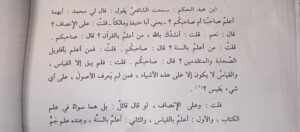
Ibn ʿAbdil Ḥakam said: “I heard Ash-Shaafi’ee say: Muḥammad said to me: ‘Which of the two is more knowledgeable – our companion or your companion?’ meaning Abu Haneefah or Malik ibn Anas. I said: ‘Fairly speaking?’ He said: ‘Yes’. I said: ‘I ask you by Allah: who is more knowledgeable about the Qur’an?’ He said: ‘Your companion’. I said: ‘Who is more knowledgeable about the Sunnah?’ He said: ‘Your companion’. I said: ‘Who is more knowledgeable about the sayings of the Companions and the early generations?’ He said: ‘Your companion’. I said: ‘Then nothing remains except qiyaas, and qiyaas can only be based on these things. So whoever does not know the foundations, upon what would make qiyās?’”

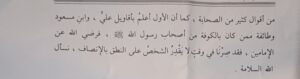
And I (i.e. Adh-Dhahabee) say: “And fairly speaking, it would be fair if someone were to say: ‘Rather, the two are equal regarding knowledge of the Book; the first is more knowledgeable regarding qiyaas and the second is more knowledgeable regarding the Sunnah and has vast knowledge from the statements of many of the Companions, just as the first is more knowledgeable regarding the opinions of Ali ibn Abi Talib, Abdullah ibn Mas’ud, and a group of those Companions of Allah’s Messenger, peace and blessings of Allah be upon him, who were in Kufa’. May Allah be pleased with the two Imams. We have reached an era wherein a person is hardly able to speak with fairness. We ask Allah for safety.”

Source: Siyar A’lam An-Nubula 8/112-113. Risalah Publishers 2020

Do Not Be Distracted From Demanding The Upholding of Sound Principles

In The Name of Allah, The Most Merciful, The Bestower of Mercy.

Do Not Be Distracted From This Main Issue: Persisting in the Demand for Clear Shar‘i Evidence Against False Tabdee and Opposing Propaganda by Repetition

Keep On Asking Them:

“Where is the proof for the Tabdee?!”

[1] Still Waiting! Where’s The Clear Unambiguous Knowledge-Based Shariah Proof for the Tabdee?

 https://salafidawahmanchester.com/2026/05/10/2-still-waiting-wheres-the-clear-unambiguous-knowledge-based-shariah-proof-for-the-tabdee/

[3] Still Waiting! Where’s The Clear Unambiguous Knowledge-Based Shariah Proof for the Tabdee

Justice When Issuing Rulings – By Al Allamah Ubaid Bin Abdillah Al-Jabiri

During the height of the Fitna of the Musafiqah, some individuals attempted to shift focus away from the most dangerous, namely the excessive speech and false Tabdee. Instead, they concentrated on the court case concerning slander. Even though we acknowledged the important of the court case because it concerned the honour of. Muslim, we did not allow the Musafiqah to divert us from the main issue, specifically the false Tabdee and excessive rulings. We consistently shared articles by Shaikh Abu Iyaad, may Allah preserve him, titled: “Documents and Resources to Counter The Doubts of The Musafiqah.” We persisted until they realised that, by the Tawfiq of Allah, they could not break our resolve or dictate what we should or should not discuss. They also could not distract us through their evasive tactics, as no matter how much they tried to divert attention and frantically sought support, we continued to emphasise the main principle that was being violated. At present, we see similar behaviour from some individuals who continue to make numerous desperate attempts to shift the conversation when asked for evidence regarding the Tabdee against Shaikh Abu Iyaad, may Allah protect him. They dodge the question with lengthy emotional outbursts, resort to name-dropping, and divert to COVID-related issues. Then, some wait for the noise to escalate before introducing other topics, causing the demand for proof of the Tabdee to fade from memory for some. Therefore, do not let this pointless repetition of side issues distract you from persistently asking for the proof of the Tabdee, which they are unable to provide. On the other hand, there are those who aim to distort everything and alter the narrative. In light of both misrepresentation and relentless repetition, we remind ourselves once more as follows:

Imam Ibn Al-Qayyim, may Allah have mercy upon him said:

Beware of kadhib, as it corrupts one’s ability to teach people and illustrate information based on how it should actually be. The liar presents what is present as something non-existent and what is non-existent as something present; misrepresents the truth as being something false and falsehood as being something true; misrepresents the good and the evil, so he corrupts his conception and knowledge, which subsequently results in his punishment. Then he portrays what is not true to the one who has been duped by him – the one who is drawn to him – and therefore corrupts his conception and knowledge.

The soul of the liar turns away from existing reality, preferring the non-existent, and falsehood. And when his conception and knowledge is corrupted, which is the basis of every wilfully chosen deed, his deeds become corrupt and marked by lies, so those deeds would emanate from him just as lies emanate from the tongue- neither benefits from his tongue nor his deeds (i.e. in relation to the specific affair). Because of this, lying serves as the foundation of immorality, as the Prophet [peace and blessings of Allah be upon him] said, “Indeed, lies lead to immorality (or wickedness), and indeed, immorality (or wickedness) leads to the fire.” [Al-Bukhari 2606/2607]

Lies first emerge from the heart and then on the tongue, corrupting it; then they transfer to the limbs and corrupt their deeds, just as they corrupt statements of the tongue. As a result, lying prevails over his utterances, deeds, and state of affairs; corruption gets deeply ingrained in him, and its disease leads to destruction if Allah does not grant him recovery with the medication of truthfulness, which uproots the source (or basis) of the lies. This is why the basis of all deeds of the heart is truthfulness, and the basis of their opposites is lies, such as boasting, self-amazement, pride, being glad (with ungratefulness to Allah’s Favours), conceitedness, boastfulness, insolence, weakness, laziness, cowardice, disgrace, and others.

Every righteous deed, whether done privately or publicly, is founded on truthfulness. And the source of every corrupt deed, whether private or public, is lies. Allah punishes the liar by preventing him (i.e. due to his own chosen evil) from those things that will bring him well-being and benefit, while He rewards the truthful one by granting him the ability to attain the beneficial things of the worldly life and Afterlife. There is nothing comparable to truthfulness in terms of how it brings about the affairs of well-being in this life and the next, and there is nothing comparable to lying in terms of how it corrupts and harms one’s worldly and Afterlife affairs.

يَا أَيُّهَا الَّذِينَ آمَنُوا اتَّقُوا اللَّهَ وَكُونُوا مَعَ الصَّادِقِينَ

O you who believe! Be afraid of Allah, and be with those who are true (in words and deeds) [9:119]

هَٰذَا يَوْمُ يَنْفَعُ الصَّادِقِينَ صِدْقُهُمْ ۚ

This is a Day on which the truthful will profit from their truth. [5:119]

فَإِذَا عَزَمَ الْأَمْرُ فَلَوْ صَدَقُوا اللَّهَ لَكَانَ خَيْرًا لَهُمْ

And when the matter (preparation for Jihad) is resolved on, then if they had been true to Allah, it would have been better for them. [47:21] (1)

Gustave Le Bon, in his work “The Psychology of Crowds,” asserts that when we aim to gradually instill ideas and beliefs into the collective spirit of the masses, the methods employed by leaders vary significantly. They primarily resort to three fundamental techniques: affirmation, repetition, and contagion. While the impact of these methods may be slow, it is undeniably enduring. Political leaders advocating for a specific cause are well aware of the power of affirmation, just as industrialists recognise the importance of advertising their products. However, advertising only gains influence when coupled with repetition. Napoleon famously stated that there is but one serious form of rhetoric: repetition.

Repetition possesses a certain authority that influences rational and well-informed individuals. It allows ideas to embed themselves in the recesses of the unconscious mind, gradually transforming into beliefs that are accepted as truths, ultimately becoming self-evident realities. When these ideas solidify into truths through repetition, they can spread among the masses. For instance, any disturbance among a flock of sheep quickly affects the entire group. This does not require a singular point of origin; the revolution in France in 1848 began in Paris and swiftly extended to a significant portion of Europe, destabilising the monarchies in its wake. The repetition that leads to belief in a particular issue, and consequently its spread, poses a significant risk not only in imposing opinions but also in shaping thought processes, emotions, and feelings. As a result, one may observe that the masses at one point may disdain a certain literary work, only to later take pride in it after several years, or vice versa. This phenomenon can similarly be applied to ideas and beliefs. [2]

Delving deeper into this topic reveals a range of ideologues, demagogues, and provocateurs who argue that people struggle to resist repeated messages, thus, relentless repetition is one of the most effective methods of spreading their doubts to confound the general with the specifics, the unrestricted with the restricted, the clear with the ambiguous, as well as blur the fine boundaries between the six levels of comprehension mentioned by Imam Muhammad Ibn Uthaymin, may Allah have mercy upon him, in his explanation of Usul Ath-Thalatha.

We have witnessed during the various Fitan since 1995 that initially, individuals might dismiss claims of the excessive or deceitful, evasive person, but with ongoing exposure, their skepticism can shift to uncertainty, then bewilderment, and eventually, acceptance, causing them to view the message as truth. Thus, relentless repetition is necessary for ideas to take root, thereby strengthening the propaganda that needs to be spread.

It is very sad to be witnessing some Muslims, especially some attributed to knowledge, resorting to such insidious tactics to tarnish reputations online. They perpetuate the same misconduct, misconceptions, or half-truths in various forms and from multiple perspectives, all while resisting any challenge to their narratives. To remain silent in the face of such distortions would be an act of cowardice; it is imperative to articulate the truth whenever these fallacies are propagated.

While it is true that not every instance of misinformation warrants a response, one must not be so naive as to underestimate the potential damage inflicted by those who disseminate their half-truths—whether overtly or covertly—to a targeted audience. When faced with someone who insists on force-feeding you their misconceptions through relentless repetition, maintain your composure and refrain from engaging in conflict. Instead, graciously persist in requesting for tangible clear proof to support their claims, undeterred by their frustration or the frequency of their assertions. Al-Allamah Rabee Bin Hadi Al-Mad’khali, may Allah preserve him, said:

The seeker of truth is not diverted from the truth, fairness and justice due to admiration of the big personalities and being amazed by them, for indeed the truth is more worthy to be followed. It is not permissible to drop the proofs for the sake of this or that great man. The principle [rule] of the Muslim – the unbiased one, the seeker of truth – is always: [قُلْ هَاتُوا بُرْهَانَكُمْ إِن كُنتُمْ صَادِقِينَ -Say, bring forth your proofs if you are truthful]. [Surah An-Nahl. Verse 64] (3)

Do Not Squander Your Precious Time With Those Who Repeat Propaganda

Most important of all, “Prioritise today for your own sake, recognise the importance of the hour, and value the significance of a single word, while being cautious of regret when the moment of death approaches. (4)

Abu Al-Abbas Ad-Daynuri, may Allah have mercy on him, stated:

There is nothing in this world or the Hereafter more precious and delicate than time and the heart, yet you are squandering both time and the heart. (5)

Imam Ibn Al-Jawzi, may Allah have mercy on him:

It is befitting that a person recognises the significance of their time and the value of each moment, ensuring that no instant is wasted on anything unworthy. One should prioritise the best actions and words, maintaining a sincere intention for good without being slack in that which the body is able.

It has been reported that some of the early generations were quick to seize moments. For instance, it is narrated that Amir ibn Abd Qais responded to a man who asked him to speak by saying, “Hold the sun!” [Footnote a] Additionally, Thabit al-Bunani, may Allah have mercy upon him, recounted that when he went to remind his father, his father replied, “My son! Leave me, for I am in my sixth recitation.” There was an instance when some of the early scholars visited another scholar on his deathbed, and upon being asked about his condition, he remarked, “Now my record is being closed.” If a person understands—despite their diligence—that death will interrupt their deeds, they should strive during their lifetime to establish actions that will continue to earn them rewards after their passing. This could involve leaving behind a charitable endowment, planting trees, digging a well, or ensuring that they have descendants who will remember Allah after them, thus securing ongoing rewards. Alternatively, one might author a book on knowledge, as the writings of a scholar serve as a lasting legacy. Engaging in good deeds and imparting knowledge allows others to follow in their footsteps, ensuring that their influence endures beyond their physical existence. Indeed, some have passed away while still living on in the hearts of the people. (6)

Imam Ibn Al-Qayyim, may Allah have mercy upon him, stated:

Wasting time is more severe than death, for while wasting time distances you from Allah and the Hereafter, death separates you from this world and its inhabitants. (7)

We ask Allah:

اللَّهُمَّ بِعِلْمِكَ الْغَيْبَ وَقُدْرَتِكَ عَلَى الْخَلْقِ أَحْيِنِي مَا عَلِمْتَ الْحَيَاةَ خَيْراً لِي وَتَوَفَّنِي إِذَا عَلِمْتَ الْوَفَاةَ خَيْراً لِي، اللَّهُمَّ إِنِّي أَسْأَلُكَ خَشْيَتَكَ فِي الْغَيْبِ وَالشَّهَادَةِ، وَأَسْأَلُكَ كَلِمَةَ الْحَقِّ فِي الرِّضَا وَالْغَضَبِ، وَأَسْأَلُكَ الْقَصْدَ فِي الْغِنَى وَالْفَقْرِ، وَأَسْأَلُكَ نَعِيماً لَا يَنْفَذُ، وَأَسْأَلُكَ قُرَّةَ عَيْنٍ لَا تَنْقَطِعُ، وَأَسْأَلُكَ الرِّضِا بَعْدَ الْقَضَاءِ، وَأَسْأَلُكَ بَرْدَ الْعَيْشِ بَعْدَ الْمَوْتِ، وَأَسْأَلُكَ لَذَّةَ النَّظَرِ إِلَى وَجْهِكَ وَالشَّوْقَ إِلَى لِقَائِكَ فِي غَيْرِ ضَرَّاءَ مُضِرَّةٍ وَلَا فِتْنَةٍ مُضِلَّةٍ، اللَّهُمَّ زَيِّنَّا بِزِينَةِ الْإِيمَانِ

وَاجْعَلْنَا هُدَاةً مُهْتَدِينَ

O Allah! By Your Knowledge of the unseen and by Your Power over creation, let me live if life is good for me, and let me die if death is good for me; O Allah! I ask You to grant me (the blessing of having) fear of You in private and public, and I ask You (to make me utter) a statement of truth in times of contentment and anger, and I ask You for moderation when in a state of wealth and poverty, and I ask you for blessings that never ceases, and I ask You for the coolness of my eye that never ends, and I ask You (to make me pleased) after (Your) decree; and I ask You for a life of (ease, comfort, tranquillity, etc) after death; I ask You for the delight of looking at Your Face (i.e. in the Hereafter) and yearning to meet You without any harm and misleading trials (coming upon me). O Allah! Adorn us with the adornment of Iman, and make us (from those who are) guided and guiding (others). (8)

اللَّهُمَّ أَصْلِحْ لِي دِينِي الَّذِي هُوَ عِصْمَةُ أَمْرِي

وَأَصْلِحْ لِي دُنْيَايَ الَّتِي فِيهَا مَعَاشِي

وَأَصْلِحْ لِي آخِرَتِي الَّتِي فِيهَا مَعَادِي

وَاجْعَلِ الْحَيَاةَ زِيَادَةً لِي فِي كُلِّ خَيْرٍ

وَاجْعَلِ الْمَوْتَ رَاحَةً لِي مِنْ كُلِّ شَرٍّ

O Allah! Rectify my religion for me, which is the safeguard of my affairs; rectify my worldly [affairs], wherein is my livelihood; and rectify my Afterlife to which is my return; and make life for me [as a means of] increase in every good and make death for me as a rest from every evil. [Saheeh Muslim Number: 2720] (9)


[1] Al-Fawa’id. pages 202-203

[2] The Psychology of crowds 132-136

[3] Al-Mulakh-khasul Jameel Fee Bayaan Manhaji Ash-Shaikh Rabee Fid-Da’wati Wal-Jarhi Wat-Ta’deel. Page 87

[4] Hilyah Al-Awliya 2/139

[5] Az-Zuhd Al-Kabir. 294

[6] Saydul Khatir 34

[7] Al-Fawaid. p44

[8] As-Saheehah Number 1301

[9] Saheeh Muslim Number: 2720