Lessons Dominant Nations Ignore at Their Peril

In The Name of Allah, The Most Merciful, The Bestower of Mercy.

Allah, The Mighty and Majestic, said:

فَأَمَّا عَادٌ فَٱسْتَكْبَرُوا۟ فِى ٱلْأَرْضِ بِغَيْرِ ٱلْحَقِّ وَقَالُوا۟ مَنْ أَشَدُّ مِنَّا قُوَّةً أَوَلَمْ يَرَوْا۟ أَنَّ ٱللَّهَ ٱلَّذِى خَلَقَهُمْ هُوَ أَشَدُّ مِنْهُمْ قُوَّةً وَكَانُوا۟ بِـَٔايَٰتِنَا يَجْحَدُونَ

As for ‘Ad, they were arrogant in the land without right, and they said: “Who is mightier than us in strength?” See they not that Allah, Who created them was mightier in strength than them. And they used to deny Our Ayat (proofs, evidences, verses, lessons, revelations, etc.)! [Fussilat 15]

Imam As-Sadi, may Allah have mercy upon him, said:

This is a detailed account of the story of the two nations, Aad and Thamud. As for Aad, they were arrogant in the earth, together with their disbelief in Allah, their denial of His signs, and their rejection of His messengers. They subdued those – the servants of Allah – around them, oppressed them and were self-amazed with their strength.

وَقَالُوا۟ مَنْ أَشَدُّ مِنَّا قُوَّةً

They said: “Who is mightier than us in strength?

In response, Allah reminded them of a fundamental truth known to all:

أَوَلَمْ يَرَوْا أَنَّ اللَّهَ الَّذِي خَلَقَهُمْ هُوَ أَشَدُّ مِنْهُمْ قُوَّةً

See they not that Allah, Who created them was mightier in strength than them.

If Allah did not create them, they would not have existed. Had they contemplated their situation in a correct manner, they would not have been deceived by their own power, thus, Allah punished them in a manner befitting the strength in which they had placed their misguided trust. [1]

Imam Al-Baghawi, may Allah have mercy upon him, said: The statement of the Almighty:

فَأَمَّا عَادٌ فَٱسْتَكْبَرُوا۟ فِى ٱلْأَرْضِ بِغَيْرِ ٱلْحَقِّ وَقَالُوا۟ مَنْ أَشَدُّ مِنَّا قُوَّةً

As for Aad, they were arrogant in the land without right, and they said: “Who is mightier than us in strength?”

This was in response to Prophet Hud, peace be upon him, who warned them of impending punishment. They arrogantly claimed that their strength could protect them from such retribution, boasting of their tall and powerful physiques. In response, Allah said to them:

أَوَلَمْ يَرَوْا۟ أَنَّ ٱللَّهَ ٱلَّذِى خَلَقَهُمْ هُوَ أَشَدُّ مِنْهُمْ قُوَّةً وَكَانُوا۟ بِـَٔايَٰتِنَا يَجْحَدُونَ

See they not that Allah, Who created them was mightier in strength than them. And they used to deny Our Ayat (proofs, evidences, verses, lessons, revelations, etc.)] [2]

Imam Ibn Kathir, may Allah have mercy upon him, said: Allah, The Exalted, said:

فَأَمَّا عَادٌ فَٱسْتَكْبَرُوا۟ فِى ٱلْأَرْضِ بِغَيْرِ ٱلْحَقِّ

As for Aad, they were arrogant in the land without right.

Meaning: rebellious, insolent and disobedient. They said:

مَنْ أَشَدُّ مِنَّا قُوَّةً

Who is mightier than us in strength?

Meaning, believing that their physical strength and capabilities would protect them from Allah’s punishment.

أَوَلَمْ يَرَوْا۟ أَنَّ ٱللَّهَ ٱلَّذِى خَلَقَهُمْ هُوَ أَشَدُّ مِنْهُمْ قُوَّةً

See they not that Allah, Who created them was mightier in strength than them]- Meaning, they did not reflect on the fact that Allah, who created them, is indeed stronger than they are! Did they not contemplate the One whom openly declared their enmity against? For indeed, He (Allah) is Al-Adheem (Footnote a) who created all things and endowed them with the strength to exist, and His punishment is indeed severe. [3]

Imam Al-Qurtubi, may Allah have mercy upon him, said: The statement of Allah:

فَأَمَّا عَادٌ فَٱسْتَكْبَرُوا۟ فِى ٱلْأَرْضِ

As for Aad, they were arrogant in the land..

Meaning: without right – towards the servants of Allah, (towards) Prophet Hud, peace be upon him, and those who believed in him.

وَقَالُوا۟ مَنْ أَشَدُّ مِنَّا قُوَّةً

They said: “Who is mightier than us in strength?

They were deceived by their physical stature when faced with the threat of punishment, saying: “We are able to avert the punishment from ourselves by virtue of our strength”. This was due to their tall and mighty physiques. It has already been stated in the explanation of Surah Al-A’raf” (based on a report) by Ibn Abbas, may Allah be pleased with him and his father, that the tallest among them was one hundred cubits, while the shortest was sixty cubits. In response, Allah said to them:

أَوَلَمْ يَرَوْا۟ أَنَّ ٱللَّهَ ٱلَّذِى خَلَقَهُمْ هُوَ أَشَدُّ مِنْهُمْ قُوَّةً

See they not that Allah, Who created them was mightier in strength than them] and in ability, rather, the ability of a person is contingent upon Allah’s power, and indeed, Allah is the most capable. [4]

فَأَرْسَلْنَا عَلَيْهِمْ رِيحًا صَرْصَرًا فِىٓ أَيَّامٍ نَّحِسَاتٍ لِّنُذِيقَهُمْ عَذَابَ ٱلْخِزْىِ فِى ٱلْحَيَوٰةِ ٱلدُّنْيَا وَلَعَذَابُ ٱلْءَاخِرَةِ أَخْزَىٰ وَهُمْ لَا يُنصَرُونَ

So We sent upon them furious wind in days of evil omen (for them) that We might give them a taste of disgracing torment in this present worldly life, but surely the torment of the Hereafter will be more disgracing, and they will never be helped. [Fussilat 16]

Abu Musa, may Allah be pleased with him, said: Allah’s Messenger, peace and blessings of Allah be upon him, said:

“Verily, Allah will give respite to the oppressor until when He seizes him and he cannot escape”. Then he [i.e. the Messenger] recited the verse:

وَكَذَٲلِكَ أَخۡذُ رَبِّكَ إِذَآ أَخَذَ ٱلۡقُرَىٰ وَهِىَ ظَـٰلِمَةٌ‌ۚ إِنَّ أَخۡذَهُ ۥۤ أَلِيمٌ۬ شَدِيدٌ

Such is the Seizure of your Lord when He seizes the (population of) towns while they are doing wrong. Verily, His Seizure is painful, and severe]. [Hud. 102]

Al-Allamah Zaid Bin Hadi Al-Mad’khali, may Allah have mercy upon him, said:

There is a warning against oppression in this lofty hadith- oppression against oneself through different levels and types of sins. The one whom Allah has given wealth, good health, safety and stability while he persists upon sin, this is Allah’s plan in stages against this sinner because he deserves it- وَلَا يَظۡلِمُ رَبُّكَ أَحَدً۬ا – And your Lord treats no one with injustice. [Al-Kahf. 49]

There’s a warning – in this hadith – against oppressing others because the one who oppresses others is called an oppressor and the one who oppresses himself through sins is called an oppressor. Therefore, the one who oppresses himself and the one who oppresses others are (exposed) to great danger in this life, in the grave and in the afterlife. If Allah gives him respite and does not hasten punishment against him, then indeed Allah reserves for him the punishment he deserves due to the statement of Allah:

وَكَذَٲلِكَ أَخۡذُ رَبِّكَ إِذَآ أَخَذَ ٱلۡقُرَىٰ وَهِىَ ظَـٰلِمَةٌ‌ۚ إِنَّ أَخۡذَهُ ۥۤ أَلِيمٌ۬ شَدِيدٌ

Such is the Seizure of your Lord when He seizes the (population of) towns while they are doing wrong. Verily, His Seizure is painful, and severe].

This is how the hadith is in agreement with the noble verse, that if Allah gives respite to an oppressor, it is not that Allah has neglected his affair. If Allah delays punishment against him in the worldly life, Allah multiplies it for him in the hereafter, thus, he is recompensed based on what he did and the evil deeds he committed. Allah is the possessor of (perfect) wisdom, because He recompenses a doer based on his deed- good recompense for good deeds and evil recompense for evil deeds. [5]

Imam Ibn Al-Qayyim, may Allah have mercy upon him, said:

Everyone with a bit of (sound) intellect knows that the corruption of the world and its ruin occurs due to giving precedence to opinion over the divine revelation and (vain) desires over sound intellect. These two corrupt motives are not entrenched in a heart except that its destruction becomes inevitable nor in a nation except that its affairs are completely corrupted. [6]

The Imam also said:

Whoever contemplates the state of the world will recognise that every instance of rectification stems from Tawhid, singling out Allah in worship and obedience to His Messenger, Muhammad. Conversely, every form of evil, trial, hardship, scarcity in sustenance, and subjugation by adversaries, among other issues, arises from opposing the Messenger and the pursuit of paths other than those prescribed by Allah and His Messenger. Whoever truly  contemplates this matter and examines the world’s conditions from its inception until the time Allah ends it, he will realise this about himself and others, both in general and in specific situations. Indeed, there is no might or power except with Allah – The Most High, The Most Great. [7]

Imam As-Sadi, may Allah have mercy upon him, said:

Industrialisation and modern inventions; everyone has participated in it – the righteous, the wicked, the believer and the disbeliever. As for religion and manners in this era, it has greatly declined. When this industrial advancement is devoid of (sound) religion and faith, it became a great harm from two angles: firstly, it beguiled many people, who – due of their ignorance – think that worldly advancement is proof to show that its people are more worthy of achieving every good than others. They are clearly misguided because a person maybe from the most skillful in matters related to the material world, whilst he is one of the most ignorant people in matters related to the (sound) religion, virtuous manners and the (other) beneficial affairs in this life and the next. Secondly, when these inventions are devoid of (sound) religion, its mercy and wisdom, it becomes a great disaster for humankind due to the wars that resulted from them- killing, destruction and other matters related to it. Its overseers and scholars are unable to laydown – for humankind -a stable, just and good life; rather they have not ceased moving from one miserable state to another. This is inevitable and the continuous state of affairs shows this. Therefore, all good is found in the sound religion and all evil is found in rejecting and willfully denying (Allah, His Messengers, His Laws, Guidance, Commands, Prohibitions etc).

Indeed, it is impossible to rectify the souls and acquire virtue solely through the worldly sciences. Experience and clearly witnessed circumstances are the greatest proofs regarding this affair, because despite its advancement and vastness it has been unable to nurture and rectify the souls, which is the determinant of (sound) rectification and success.

The Remedy: What the Religion of Islam propagates is that which is entrusted with this rectification; it is what will guide the thoughts towards the truthful and authentic sources of knowledge, guide the actions of the people towards good and prevent them from evil. Islam is The Rectifier of the Creeds and Manners- the thing that cultivates the thoughts, urges towards virtuousness and prevents from depravity.

The essence of that which the religion calls to – regarding belief in the Unseen, which includes belief in Allah and that which He possesses of Names, Attributes and Actions of perfection; belief in Angels, belief in recompense for one’s good and bad deeds in this life and the next, which cannot be known except through the Messengers, is what acquaints a person with the fact that rectification – in reality – is not possible through other than sound belief and the religion of Islam. Thus, even if the worldly sciences rectify (some) matters based upon that which people know in detail, it will still not be equal to the knowledge of the Messengers- neither will it reach that which is reached through the knowledge of the Messengers nor can it influence the souls in the manner in which the knowledge of the Messengers has done, because indeed the souls do not voluntarily submit except through belief in Allah, belief in His Angels, belief in His Books, belief in His Messengers and belief in the hereafter. And without this, voluntary submission is impossible, as is well known regarding human nature. [8]

The followers of truth will remain until the end of time. The Messenger, peace and blessings of Allah be upon him, said:

A group of people from my Umma will always remain manifest upon the truth. They will not be harmed by those who forsake them until Allah’s Command comes to pass (i.e. the Day of Judgment). [9]


Why Ponder Upon The Story of The Nations of Old?

قَدْ خَلَتْ مِنْ قَبْلِكُمْ سُنَنٌ فَسِيرُوا فِي الْأَرْضِ فَانْظُرُوا كَيْفَ كَانَ عَاقِبَةُ الْمُكَذِّبِينَ

Many similar mishaps [troubles, problems] of life were faced by nations that have passed away before you, so travel through the earth, and see what was the end of those who disbelieved]. [Surah Aal Imraan. Verse 137]

Imam Ibn Al-Qayyim, may Allah have mercy upon him, said:

Indeed, there were nations like yourselves before you, so look to their evil end. You have to know that the reason behind their evil end was due to their disbelief in the revelations of Allah and disbelief in Allah’s Messengers. They were the forefathers and you are the descendants. The main affair that connects you to each other is your disbelief and the ruling on that disbelief is destruction. [10]

Imam Muhammad Bin Salih Al-Uthaymin, may Allah have mercy upon him, said:

If it is said, “What is the benefit in narrating to us the stories of the destroyed nations despite the fact that this Ummah will not be completely destroyed in a manner similar to the destruction of the previous nations before it?”

The Answer: Indeed, this has two benefits: The first benefit is a clarification of Allah’s blessings upon us that the occurrence of a complete destruction is removed from us, and that were it not for Allah’s Benevolence we would have been deserving of it. Second, the likeness of the punishment they received may occur in the hereafter for the one who did what they did, if punishment was not received in the worldly life. And this may be understood from the statement of Allah: “Such is the Seizure of your Lord when He seizes the population of towns while they are doing wrong. Verily, His Seizure is painful and severe. Indeed in that (there) is a sure lesson for those who fear the torment of the Hereafter.” So what is apparent from this Aayah is that what is similar to the punishment they received will happen in the Hereafter, and Allaah knows best. [11]

———————————

Footnote a: Al-Adheem: [The Tremendous One, or The Magnificent. The One Tremendous in Greatness, and The Only One deservingly held in awe and venerated by the creation for His Greatness in every sense]. By Shaikh abu Talhah, may Allah have mercy upon him and his wife.

[1]Tafsir As-Sadi

[2]Tafsir Al-Baghawi

[3] Tafsir Ibn kathir

[4]Tafsir Al-Qurtubi

[5]at-Taleeqaat Al-Maleehah Alaa Silsilah Al-Ahaith As-Saheehah. 1/100

[6]I’laam Al-Muwaqqi’een 1/67-69

[7]An Excerpt from Bada’i Al-Fawa’id 3/525-526

[8]An Excerpt from “Al-Adilla Al-Qawaati Wal Baraaheen Fee Ibtaal Usool Al-Mulhideen”. Pages 45-50

[9]Sahih Muslim 1920

[10]I’laam Al-Muwaqqi’een 1/181

[11]Al-Muntaqaa Min Fawaa’id Al-Fawaa’id 123-124

Commentary On Four Ahadith Transmitted By Shaikh Abu Talhah – Dawud Burbank

In The Name of Allah, The Most Merciful, The Bestower of Mercy.

Commentary On Four Ahadith Found In Al-Adab Al-Mufrad Regarding Good Character Transmitted By Shaikh Abu Talhah (Dawud Burbank) – May Allah have mercy upon him and his wife.


Narration One:

Hadeeth Number 270: Abu Dardaa [radiyallaahu-anhu] reported from the Prophet [sallal-laahu-alayhi-wasallam] who said: “There is nothing that will be heavier upon the balance than good character”. [1]

Al-Haafiz Muhammad Abdur-Rahmaan al-Mubaarakfooree -rahimahullaah- [d.1353 H] said  in his explanation of the Sunan of at-Tirmidhee: As is established, everything that is hated by Allaah has no weight or value, just as everything which is beloved to Him will be something very great with Him, just as He [The Most High] said regarding the Disbelievers Soorah al-Kahf:

فَلَا نُقِيمُ لَهُمۡ يَوۡمَ ٱلۡقِيَـٰمَةِ وَزۡنً۬ا

So on the Day of Resurrection We shall give no weight to them]. [18:105]

And in the well-known hadeeth there occurs: Two sayings are light upon the tongue, heavy upon the Balance, beloved to the Most Merciful: Subhaanallaahi wa bihamdihi, Subhaanallaahil-`Azeem (How free is Allaah of all imperfections, and all praise is for Him! How free is Allaah, the Tremendous, of all imperfections!). [2]

Shaikh `Abdul-Muhsin al-`Abbaad -hafizahullaah- said in his taped lessons in explanation of Sunan Abee Daawood: This contains affirmation of the Balance (al-Meezaan); and that the actions of the servants will be weighed on the Day of Resurrection; and it indicates the tremendous status of good character, and its reward with Allaah -the Mighty and Majestic; and that it will be one of the heaviest things upon the Balance, when the deeds are weighed, because it is from the greatest and most excellent of deeds.


Narration Two:

Hadeeth no. 272: Abdullaah Ibn `Amr -radiyallaahu `anhumaa- reported that he heard the Prophet [sallal laahu alayhi wasallam] say: Shall I inform you of the most beloved of you to me, and those who will be seated closest to me on the Day of Resurrection? So the people remained silent, so he repeated it two or three times. The people said: Yes, O Messenger of Allaah! He said: Those who are best in character. [3]

Imaam an-Nawawee -rahimahullaah- (d.676 H) said in his explanation of Saheeh Muslim: It contains an encouragement upon good character, and an explanation of the virtue of its possessor; and it is the characteristic of the Prophets of Allaah -the Most High- and His righteous and beloved servants. Al-Hasan al-Basree said: The true reality of good character is: Doing good to others, withholding from harming, and having a cheerful face; and al-Qaadee Iyaad said: It is to associate with the people in a beautiful manner, to have a cheerful face, to show love for them, to show compassion for them, to tolerate the harm they cause, to be forbearing with them, to have patience upon disagreeable things, to abandon having pride or being arrogant towards them; and to avoid harshness, anger, and taking them to account. [4]

Imaam Ahmad ibn `Umar al-Qurtubee -rahimahullaah- (d.656 H) said in his explanation of the Abridgement of Saheeh Muslim: So the praiseworthy manners are the characteristics of the Prophets, the beloved and obedient servants of Allaah, and the people of virtue, such as: having patience with disagreeable things, having forbearance when treated with coarseness, bearing harm, treating the people well, showing affection towards them, hastening to carry out their needs, being merciful, compassionate, being mild when disagreeing, verifying affairs carefully, avoiding that which causes corruption and evils; and, in summary, the best of manners is that you favour others over your own self: so you treat people with justice and fairness, but you do not enforce justice and fairness for yourself; so you pardon those who wrong you, and you give to those who withhold from you. [5]

Al-Haafiz `Abdur-Ra-oof al-Munaawee -rahimahullaah- (d. 1031 H) said: Yoosuf ibn Asbaat said: The sign of good character is in ten qualities: rarely arguing, treating others fairly, abandoning seeking out people’s faults, seeking to rectify and improve any evil qualities which appear, seeking excuses for people, bearing harm, blaming oneself, occupying oneself with awareness of one’s own faults and not with the faults of others, having a cheerful face, and being mild in speech. [6]


Narration Three:

Hadeeth no. 277: From Anas -radiyallaahu `anhu- who said: I served the Prophet r for ten years, and he never said Uff to me, and he never said to me about anything which I had not done: Why didn’t you do it? Nor about anything which I had done: Why did you do it?! [7]

Imaam an-Nawawee -rahimahullaah- (d.676 H) said in his explanation of Saheeh Muslim: The hadeeth contains an explanation of the completeness of his character, and the fine manner in which he treated others, and his forbearance, and how he pardoned and overlooked.

Al-Haafiz Ibn Hajr -rahimahullaah- (d. 852 H) said: The point of benefit to be derived from this is leaving off rebuking for that which has been left, since one is still free to carry it out if there is a need for it; and it produces the benefit of keeping the tongue free from censuring and blaming; and it causes the mind of the servant to have amicable feelings, due to his not having been rebuked; and all of this applies in cases relating to the person’s individual rights; as for the affairs which are obligations in the Religion, then they are not overlooked, since they fall under ordering the good and forbidding the evil. [8]


Narration Four:

Hadeeth no. 323: From Asmaa bint Yazeed -radiyallaahu `anhaa- that she said The Prophet said: Shall I not inform you of the best ones from amongst you? They said: Yes, indeed. He said: Those who when they are seen, then Allaah is remembered. Shall I not inform you of the worst ones from amongst you? They said: Yes, indeed. He said: Those who go about carrying tales to cause mischief between friends, those who seek harm and corruption for the innocent.  [9]

Al-Haafiz `Abdur-Ra-oof al-Munaawee-rahimahullaah- (d. 1031 H) said: (Shall I not inform you of the best ones from amongst you): i.e. those who are the best of you, O Believers. They said: Yes indeed. He said: Those who when they are seen, then Allaah is remembered. i.e. because of their behaviour and appearance, because an individual from them is sorrowful, downcast, his head is bowed, he is silent; the effect of fear is seen upon his appearance, his behaviour, his movements, his stillness, and his speech. One does not look at him except that it causes him to remember Allaah. His outward appearance is an indication of his knowledge. So these people are known through their appearance: in their calmness, their humility, and their humbleness. [10]

Shared with me by our Salafi brother Harun Al-Banghali, may Allah bless him Amin.


1: Hadeeth graded ‘Hasan’ by Shaikh al-Albaanee in As-Saheehah, No.876

2: Tuhfatul-Ahwadhee 6/140

3: Hadeeth graded Saheeh by Shaikh al-Albaanee in As-Saheehah, No. 792

4: Explanation of Saheeh Muslim. Hadeeth  No.2321

5: Al-Mufhim 6/116-117

6: Faydul-Qadeer 3/464

7: Bukhaari 6038 and Muslim 2309

8: Saheehul-Bukhaaree, Fathul-Baaree 10/460

9: Graded ‘Hasan’ by Shaikh al-Albaanee

10: Faydul-Qadeer 3/115

[1] Humility of The Scholars

In The Name of Allah, The Most Merciful, The Bestower of Mercy.

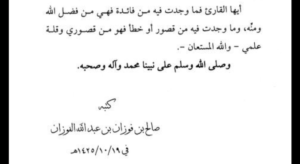
The Mufti, Al-Allamah Salih Al-Fawzan, may Allah preserve him, in the introduction of his book titled:

O reader! So, whatever benefit you find in it is from Allah’s bounty and His grace (favor), and whatever shortcomings or mistakes you find in it are from my own shortcomings and limited knowledge.

والله المستعان

Written by Salih Bin Fawzan Bin Abdillah Al-Fawzan on 19/10/1425H

Al-Istikhārah: Following the Sunnah Without Myths

In The Name of Allah, The Most Merciful, The Bestower of Mercy.

Hisham Bin Urwah, may Allah have mercy upon him, said:

“Do not ask the people what they have initiated (or innovated in the religion), for indeed they have (already) prepared answers for it, rather, ask them about the Sunnah because they do not know it”. [a]


What is Al-Istikhaarah?

It is widespread amongst some people that Istikharah and seeking the best outcome in an affair necessitates that one goes to the astrologers and soothsayers. This is contrary to what is found in the Islamic legislation; rather Istikhaarah and seeking the best outcome in an affair is that one performs two optional Rak’ats and then supplicate with the legislated supplication. Jaabir Bin Abdillaah [may Allaah be pleased with him and his father] said, “Allaah’s Messenger [peace and blessings of Allaah be upon him] used to teach us the way of doing Istikhaarah (i.e. to seek guidance regarding an affair) in all matters as he taught us the Suras of the Qur’an. He said, ‘If anyone of you wants to do any task [i.e. wants to decide on a matter], he should offer two rak`ats other than the obligatory (five daily prayers) and then say (after the prayer):

اللَّهُمَّ إِنِّي أَسْتَخِيرُكَ بِعِلْمِكَ وَأَسْتَقْدِرُكَ بِقُدْرَتِكَ وَأَسْأَلُكَ مِنْ فَضْلِكَ الْعَظِيمِ فَإِنَّكَ تَقْدِرُ وَلَا أَقْدِرُ وَتَعْلَمُ وَلَا أَعْلَمُ وَأَنْتَ عَلَّامُ الْغُيُوبِ اللَّهُمَّ إِنْ كُنْتَ تَعْلَمُ أَنَّ هَذَا الْأَمْرَ خَيْرٌ لِي فِي دِينِي وَمَعَاشِي وَعَاقِبَةِ أَمْرِي فَاقْدُرْهُ لِي وَيَسِّرْهُ لِي ثُمَّ بَارِكْ لِي فِيهِ وَإِنْ كُنْتَ تَعْلَمُ أَنَّ هَذَا الْأَمْرَ شَرٌّ لِي فِي دِينِي وَمَعَاشِي وَعَاقِبَةِ أَمْرِي فَاصْرِفْهُ عَنِّي وَاصْرِفْنِي عَنْهُ وَاقْدُرْ لِي الْخَيْرَ حَيْثُ كَانَ ثُمَّ أَرْضِنِي

Allaahumma Innee Astakheeruka Bi ilmika Wa Astaqdiruka Bi Qudratika Wa as’aluka Min Fadlika, Fa innaka Taqdiru Wa laa Aqdir, Wa ta’lamu Wa laa A’lam, Wa anta Allaam Al-Ghuyoob. Allaahumma Fa in kunta ta’lamu haadhaa Al-amru [at this point you mention the affair about which you are seeking guidance]; then you continue and say: khayran lee Fee Aajil Amri Wa Aajilihee [or you say: Fee Deenee wa Ma’aashee wa Aaqibati Amree], Faqdurhu lee Wa Yassirhu lee Thumma Baarik lee Feehi. Allaahumma Wa in kunta ta’lamu Annahu Sharrun lee Fee Deenee wa Ma’aashi wa Aaqibati Amree [or you say: Fee Aajili Amree wa Aajilihee], Fasrifnee anhu wasrafhu Annee Waqdur lee al-khayr haythu kaana thumma Radinee bihee.

English Translation: O Allah! I seek the counsel through Your Knowledge, and I seek Power from Your Might, and I ask for Your great blessings. You are capable and I am not. You know and I do not and You (alone) know the unseen. O Allah! If You know that this task (or affair) is good for my religion and my subsistence and in my Hereafter- (or said, ‘If it is better for my present and later needs), then You ordain it for me and make it easy for me to get, and then bless me in it. And if You know that this task (affair) is harmful to me in my religion and subsistence and in the Hereafter-(or said, ‘If it is worse for my present and later needs’), then keep it away from me and let me be away from it. And ordain for me whatever is good for me, and make me satisfied with it’. The Prophet [peace and blessings of Allah be upon him] added that then the person should mention his (or her) need [i.e. the affair or task]. [Al-Bukhari 1162] (1)

After Istikharah, one can also seek the advice of upright people who are capable of giving advice in the matter. Al-Hasan al-Basri, may Allah have mercy upon him, said: “By Allah! Never have a people sought advice except that they were guided to the best of what was available to them”. Then he recited (the statement of Allah): [وَأَمۡرُهُمۡ شُورَىٰ بَيۡنَہُمۡ – And (the Believers) who (conduct) their affairs by mutual consultation.] [Ash-Shuraa. 38]

Al-Allamah Zayd Bin Hadi Al-Mad’khali, may Allah have mercy upon him, said:

Allah, The Mighty and Majestic, commanded His Messenger Muhammad, peace and blessings of Allah be upon him, to consult his companions in some matters. Allah, Glorified be He and free is He from all imperfections, said:

[وَشَاوِرۡهُمۡ فِى ٱلۡأَمۡرِ‌ۖ فَإِذَا عَزَمۡتَ فَتَوَكَّلۡ عَلَى ٱللَّهِ‌ۚ – and consult them in the affairs. Then when you have taken a decision, put your trust in Allah]. [Aal Imran. 159]

He is the example to be followed by the Ummah, therefore when it is the case that Allah commanded him to consult his companions, then there is even a greater reason that the Muslims are in need of consultation amongst themselves. When a difficulty that is related to a Muslim’s religious and worldly affairs occurs, then indeed it is fitting that he consults someone whom he considers reliable, wise, truthful and sincere. He examines (the advice) given by that person, then he makes a choice –either to take that advice or decides not to take it based on what he is satisfied with, in relation to his personal affairs. The hadith places emphasis on the fact that consultation guides to the best outcomes, and due to this it is said, “The one who consults does not regret and the one who performs Istikharah will not fail (to achieve what is good)”. Both Istikharah and consultation are legislated and a lot of good is achieved through them, as opposed to when matters are pursued in a rigid and haphazard manner, for indeed this might lead to regret and harm. (2)

The One Consulted Must Fear Allah And Give Sincere Advice

Abu Hurairah, may Allah be pleased with him, said that the Messenger, peace and blessings of Allah be upon him, said, “The consultee is in a position of trust”. [Sahih Abi Dawud. 5128]

The Consultee is the one whose opinion is sought after regarding an affair of Maslahah [i.e. something that will bring about benefit and repel harm]. He is in a position of trust with regards to what is asked and it is not permissible to deceive the one who consults by concealing the matter that would bring about benefit. [Mirqat Al-Mafaateeh Sharh Mishkat Al-Masaabih. 4/259. Hadeeth 5062]

This hadeeth is an evidence, showing that the consultee has to (advise) with the course of action and opinion -in relation to the consultation – that which he would do for himself. And it is not permissible that he directs his Muslim brother to something he would not be pleased with for himself. (3)


A Myth

In some African countries, especially in Gambia, some people believe that one should either go to someone who is more pious or someone who is ‘Ya Bupa’ (i.e. someone who they claim or believe can see hidden matters, or has knowledge of the unseen or matters would be revealed to him in a dream) – to perform Istikharah on their behalf!  Allah said:

وَعِنْدَهُ مَفَاتِحُ الْغَيْبِ لَا يَعْلَمُهَا إِلَّا هُوَ

And with Him are the keys of the Ghaib (all that is hidden), none knows them but He.

In his explanation of the above Ayah, Imam Ash-Shanqeetee, may Allah have mercy upon him, presented a number of robust proofs to demonstrate and establish that even the most knowledgeable amongst the creation- Allah’s Messengers and angels- do not posses knowledge of the Unseen. The Imam, may Allah have mercy upon him, said:

Aa’isha, may Allah be pleased with her, was falsely accused and the Prophet (peace and blessings of Allah be upon him] did not know whether she was innocent or not until Allah informed him, saying: [ أُولَٰئِكَ مُبَرَّءُونَ مِمَّا يَقُولُونَ- ‘Such (good people) are innocent of (each and every) bad statement which they say].

Prophet Ibrahim, peace be upon him, slaughtered a lamb for the angels, whilst not knowing that they were angels until they informed him that they were angels. Allah said that the angels said to him: [إِنَّا أُرْسِلْنَا إِلَىٰ قَوْمِ لُوطٍ – We have been sent against the people of Lout (Lot). (11:70)]

When the angels came to Prophet Lut, peace be upon him, he did not know that they were angels, and due to that Allah said: [عَصِيبٌ سِيءَ بِهِمْ وَضَاقَ بِهِمْ ذَرْعًا وَقَالَ هَٰذَا يَوْمٌ – He was grieved on their account and felt himself straitened for them (lest the town people should approach them to commit lewdness with them). He said: This is a distressful day]. And because of this Allah said that Lut said: [لَوْ أَنَّ لِي بِكُمْ قُوَّةً أَوْ آوِي إِلَىٰ رُكْنٍ شَدِيدٍ – Would that I had strength (men) to overpower you, or that I could betake myself to some powerful support (to resist you). (11:80)]. He did not know the news the angels brought until they said to him: [إِنَّا رُسُلُ رَبِّكَ لَنْ يَصِلُوا إِلَيْكَ – Verily, we are the Messengers from your Lord!]

Prophet Yaqub, peace be upon him, lost his eye sight due to grieving for Yusuf, peace be upon him, while he was in Egypt. He did not know anything about Yusuf until Allah reveal news about him.

Prophet Sulayman, peace be upon him, even though Allah gave him authority over the devils and subjugated the wind in his service, did not know about the people Bil Qees until the Hud-hud came with news about them. Allah said that the Hud-hud said: [أَحَطْتُ بِمَا لَمْ تُحِطْ بِهِ وَجِئْتُكَ مِنْ سَبَإٍ بِنَبَإٍ يَقِينٍ – I have grasped (the knowledge of a thing) which you have not grasped and I have come to you from Saba’ (Sheba) with true news].

Prophet Nuh, peace be upon him, did not know that his son – who was drowned- was not from those members of his household who were to be saved, as Allah said that Nuh said: [رَبِّ إِنَّ ابْنِي مِنْ أَهْلِي وَإِنَّ وَعْدَكَ الْحَقُّ – O my Lord! Verily, my son is of my family! And certainly, Your Promise is true.(11:45)]

He did not know the reality of the affair until Allah informed him, saying: “O Nuh! Surely, he is not of your family; verily, his work is unrighteous, so ask not of Me that of which you have no knowledge! I admonish you, lest you be one of the ignorant. And indeed Allah, The Most High, also stated in Surah Hud about Nuh that he said to his people:

[وَلَا أَقُولُ لَكُمْ عِنْدِي خَزَائِنُ اللَّهِ وَلَا أَعْلَمُ الْغَيْبَ -And I do not say to you that with me are the Treasures of Allah, “Nor that I know the Ghaib (unseen)].

And when Allah said to the Angels: [هَٰؤُلَاءِ إِنْ كُنْتُمْ صَادِقِينَ أَنْبِئُونِي بِأَسْمَاءِ -Tell Me the names of these if you are truthful]; Allaah said that the angels replied: [قَالُوا سُبْحَانَكَ لَا عِلْمَ لَنَا إِلَّا مَا عَلَّمْتَنَا -They (angels) said: “Glory be to You, we have no knowledge except what you have taught us.

Therefore, it is very clear that the most knowledgeable amongst the creation, the Messengers and the Angels, do not know anything of the unseen except what Allah makes known to them. Allah, The Most High, informs His Messengers what He wishes from the knowledge of the Unseen, as Allah stated:

[وَمَا كَانَ اللَّهُ لِيُطْلِعَكُمْ عَلَى الْغَيْبِ وَلَٰكِنَّ اللَّهَ يَجْتَبِي مِنْ رُسُلِهِ مَنْ يَشَاءُ ۖ- Nor will Allah disclose to you the secrets of the Ghaib (unseen), but Allah chooses of His Messengers whom He pleases].

And Allah said: [إِلَّا مَنِ ارْتَضَىٰ مِنْ رَسُولٍ عَالِمُ الْغَيْبِ فَلَا يُظْهِرُ عَلَىٰ غَيْبِهِ أَحَد- (He Alone) the All-Knower of the Gha’ib (unseen), and He reveals to none His Gha’ib (unseen).” Except to a Messenger (from mankind)…(4)

The Magicians and The Shayaateen

Abu Hurairah, may Allah be pleased with him, said, “The Prophet, peace and blessings of Allah be upon him, said, “When Allah has ordained some affair in the Heaven, the angels beat with their wings in obedience to His statement, which sounds like a chain dragged over a rock.” (`Ali and other sub-narrators said, “The sound reaches them.”) “Until when fear is banished from their (angels) hearts, they (angels) say, ‘What was it that your Lord said? They say, ‘The truth; And He is the Most High, the Most Great.’ (34.23) Then those who gain a hearing by stealing (i.e. devils) will hear Allah’s Statement:– ‘Those who gain a hearing by stealing, (stand one over the other like this). (Sufyan, to illustrate this, spread the fingers of his right hand and placed them one over the other horizontally.) A flame may overtake and burn the eavesdropper before conveying the news to the one below him; or it may not overtake him till he has conveyed it to the one below him, who in his turn, conveys it to the one below him, and so on till they convey the news to the earth. (Or probably Sufyan said, “Till the news reaches the earth.”) Then the news is inspired to a sorcerer who would add a hundred lies to it. His prophecy will prove true (as far as the heavenly news is concerned). The people will say. ‘Didn’t he tell us that on such-and-such a day, such-and-such a thing will happen? We have found that is true because of the true news heard from heaven.” The above hadith is also narrated by Abu Huraira, starting: ‘When Allah has ordained some affair…’) In this narration the word foreteller is added to the word wizard. (5)


[a] Khutbah Al-Kitab Al-Mu’ammal Li Ar-Radd Ilaa Al-Amr Al-Awwal page 163

[1] Al-Haqeeqah Ash-Shar’iyyah Fee Tafseer Al-Qur’aa Al-Adheem Was-Sunnah An-Nabawiyyah. Page 95

[2] An Excerpt from ‘Awnul Ahadis Samad Sharh Al-Adab Al-Mufrad’ 1/285.

[3] Awnul Ahadis Samadi, Sharhu Al-Adab AlMufrad. 1/283. Hadeeth Number 256

[4] An Excerpt from ‘Tafseer Al-Qur’an Bil-Qur’an Min Adwaa Al-Bayan’ pages 169-170’ Daar Hady An-Nabawiy’ 2nd ed. (1431AH -2010)

[5] Al-Bukhari 4701

The Best Garment and Safeguard Is Taqwa

In The Name of Allah, The Most Merciful, The Bestower of Mercy.

Allah, The Exalted, said:

يَـٰبَنِىٓ ءَادَمَ قَدۡ أَنزَلۡنَا عَلَيۡكُمۡ لِبَاسً۬ا يُوَٲرِى سَوۡءَٲتِكُمۡ وَرِيشً۬ا‌ۖ وَلِبَاسُ ٱلتَّقۡوَىٰ ذَٲلِكَ خَيۡرٌ۬‌ۚ ذَٲلِكَ مِنۡ ءَايَـٰتِ ٱللَّهِ لَعَلَّهُمۡ يَذَّكَّرُونَ

O Children of Adam! We have bestowed raiment upon you to cover yourselves (screen your private parts, etc.) and as an adornment, and the Libas at Taqwa (raiment of piety), that is better. Such are among the Ayat (proofs, verses, lessons, signs, revelations, etc.) of Allah, that they may remember (i.e. leave falsehood and follow truth ). [Al-A’raf. 26]

Imam Ibn Al-Qayyim, may Allah have mercy upon him, said:

Allah informed us that the Libas at-Taqwah (the raiment of piety) is far superior to wealth, leadership, and outward beautification. Allah created His slaves and beautified their outward appearance in the best form, and He beautified their hearts and souls by guiding them to the right path. So, Allah granted mankind two types of beautifications: beautification of the body by way of clothing and beautification of the heart by way of piety- outward beautification and inner beautification, outward perfection and inner perfection”. [1]

Abdullah Ibn Mas’ud, may Allah be pleased with him, reported that the Prophet, peace and blessings of Allah be upon him, supplicated:

اللهم كما حَسَّنْت خَلْقِي فَحَسِّنْ خُلُقِي

O Allah! Just as You made my external form beautiful, make my character beautiful as well.

Al-Allamah Salih Al-Fawzan, may Allah preserve him, said:

The first image is called Al-Khalq and the second is called Al-Khuluq with the vowel Dammah on the letter khaa and laam. The human being is made up of these two images. There are people whose visible image and manners are beautiful, such as Allah’s Messenger, peace and blessings of Allah be upon him, and those Muslims whom Allah has blessed with it. There are those whose visible image is evil and their manners are evil, and this one is the most repugnant of people. There are people whose visible image is unsightly and the people do not consider him to be anything (i.e. give him no importance), but his unseen image is good. This person is also good and his unsightly appearance does not harm him if what is concealed in him is good. There are people the opposite and that is one whose visible image is good looking and his unseen image is ugly. This person resembles a hypocrite, and Allah’s refuge is sought. This person is repugnant. The Prophet, peace and blessings of Allah be upon him, supplicated for the two things: the beautiful visible image and beautiful unseen image, so he said:

اللهم كما حَسَّنْت خَلْقِي فَحَسِّنْ خُلُقِي

O Allah! Just as You made my external form beautiful, make my character beautiful as well.

He was the most perfect person in his visible image and manners. Therefore, in this regard one has to follow the example of the Messenger, and that a Muslim supplicates to Allah with this supplication. He does not consider himself perfect and says, “I don’t have shortcomings”, but rather he turns to Allah by asking for the beautification of his visible image and unseen image. And Allah knows best”. [2]

Imam Adh-Dhahabee, may Allah have mercy upon him, stated in the biography of Abdul Azeez Bin Yahyaa Al-Kinaanee Al-Faqee, may Allah have mercy upon him, that he had an unsightly appearance. Abee Aynaa said, “Abdul Azeez came to Al-Mamoon (i.e. the Khaleefah) and his appearance was very unsightly, so Abu Ishaaq Al-Mutasim laughed”. He (Abdul Azeez) said, “O leader of the believers! Why is this person laughing? Indeed Allah did not choose Yusuf, peace be upon him, due to his handsomeness; rather He chose him for His religion and clarification (of the truth)”. Al-Mamoon laughed and was amazed by him. [3]

Al-Allamah Abdul Muhsin Al-Abbad, may Allah preserve him, said:

The Qur’an contains numerous verses and the Sunnah includes several narrations that emphasise these positive outcomes, and that fear of Allah and righteous deeds lead to happiness in both this life and the hereafter. Allah, The Mighty and Majestic, said:

وَلَوۡ أَنَّ أَهۡلَ ٱلۡقُرَىٰٓ ءَامَنُواْ وَٱتَّقَوۡاْ لَفَتَحۡنَا عَلَيۡہِم بَرَكَـٰتٍ۬ مِّنَ ٱلسَّمَآءِ وَٱلۡأَرۡضِ

And if the people of the towns had believed and had the Taqwa (piety), certainly, We should have opened for them blessings from the heaven and the earth. [Al-A’raf. 96]

The noble verse highlights the connection between worship and the positive outcomes in a Muslim’s life. Those who fear Allah and have faith in Him will be rewarded and provided for by Allah in this world. Blessings from the heavens and the earth, such as rain, vegetation, and treasures, will be bestowed upon them. Allah (The Mighty and Majestic) states about the people of the Scripture:

وَلَوۡ أَنَّہُمۡ أَقَامُواْ ٱلتَّوۡرَٮٰةَ وَٱلۡإِنجِيلَ وَمَآ أُنزِلَ إِلَيۡہِم مِّن رَّبِّہِمۡ لَأَڪَلُواْ مِن فَوۡقِهِمۡ وَمِن تَحۡتِ أَرۡجُلِهِم‌ۚ

And if only they had acted according to the Taurat (Torah), the Injeel (Gospel), and what has (now) been sent down to them from their Lord (the Qur’an), they would surely have gotten provision from above them, and from underneath their feet. [Al-Ma’idah 66]

The content of these two verses regarding the inhabitants of the towns and the followers of the scripture pertains to the worldly reward for those who have faith in Allah and are mindful of Him. As for the reward in the Hereafter for the believers and the God-fearing,

Allah said:

وَلَوۡ أَنَّ أَهۡلَ ٱلۡڪِتَـٰبِ ءَامَنُواْ وَٱتَّقَوۡاْ لَڪَفَّرۡنَا عَنۡہُمۡ سَيِّـَٔاتِہِمۡ وَلَأَدۡخَلۡنَـٰهُمۡ جَنَّـٰتِ ٱلنَّعِيمِ

And if only the people of the Scripture had believed (in Muhammad) and warded off evil (sin, ascribing partners to Allah) and had become Al-Muttaqun (pious), We would indeed have blotted out their sins and admitted them to Gardens of pleasure (in Paradise). [Al-Ma’idah 65]

Allah, The Mighty and Majestic, said:

يَـٰٓأَيُّہَا ٱلَّذِينَ ءَامَنُواْ ٱتَّقُواْ ٱللَّهَ وَقُولُواْ قَوۡلاً۬ سَدِيدً۬ا

O you who believe! Keep your duty to Allah and fear Him, and speak (always) the truth).

This verse signifies an act of devotion, and Allah subsequently highlights its positive outcomes:

يُصۡلِحۡ لَكُمۡ أَعۡمَـٰلَكُمۡ وَيَغۡفِرۡ لَكُمۡ ذُنُوبَكُمۡۗ وَمَن يُطِعِ ٱللَّهَ وَرَسُولَهُ ۥ فَقَدۡ فَازَ فَوۡزًا عَظِيمًا

He will direct you to do righteous good deeds and will forgive you your sins. And whosoever obeys Allah and His Messenger) he has indeed achieved a great achievement.

Indeed, being guided towards righteous and correct actions and having one’s sins forgiven in the afterlife are positive results of worship. This noble verse highlights the positive outcomes of acts of worship in both this worldly life and the afterlife. In this life, Allah will guide individuals towards righteousness and goodness, enabling them to make sound decisions and follow the path of Allah with clarity. In the afterlife, Allah will grant forgiveness for sins and erase all evil deeds. Allah, The Mighty and Majestic, also said:

وَمَن يَتَّقِ ٱللَّهَ يَجۡعَل لَّهُ ۥ مَخۡرَجً۬ا
وَيَرۡزُقۡهُ مِنۡ حَيۡثُ لَا يَحۡتَسِبُ‌ۚ

And whosoever fears Allah and keeps his duty to Him, He will make a way for him to get out (from every difficulty). And He will provide him from (sources) he never could imagine.

This noble verse affirms that fear of Allah and worshipping Him alone, along with adhering to His commandments and abstaining from what He has prohibited, will rescue an individual from challenging and arduous circumstances. Furthermore, Allah bestows sustenance upon those who obey and revere Him from unexpected sources beyond their imagination. Allah said:

وَمَن يَتَّقِ ٱللَّهَ يَجۡعَل لَّهُ ۥ مِنۡ أَمۡرِهِۦ يُسۡرً۬ا

And whosoever fears Allah and keeps his duty to Him, He will make his matter easy for him.

Indeed, as a result of fearing Allah, one can experience the ease of their affairs. Allah will simplify their journey toward righteousness and unveil paths that bring joy and contentment in both this world and the hereafter. Allah said:

وَمَن يَتَّقِ ٱللَّهَ يُكَفِّرۡ عَنۡهُ سَيِّـَٔاتِهِۦ وَيُعۡظِمۡ لَهُ ۥۤ أَجۡرًا

And whosoever fears Allah and keeps his duty to Him, He will remit his sins from him, and will enlarge his reward”. This pertains to the rewards in the afterlife that are attained through one’s fear of Allah.

Allah, The Mighty and Majestic, said:

يَـٰٓأَيُّہَا ٱلَّذِينَ ءَامَنُوٓاْ إِن تَتَّقُواْ ٱللَّهَ يَجۡعَل لَّكُمۡ فُرۡقَانً۬ا وَيُكَفِّرۡ عَنڪُمۡ سَيِّـَٔاتِكُمۡ وَيَغۡفِرۡ لَكُمۡ‌ۗ وَٱللَّهُ ذُو ٱلۡفَضۡلِ ٱلۡعَظِيمِ

O you who believe! If you obey and fear Allah, He will grant you Furqan a criterion [(to judge between right and wrong), or (Makhraj, i.e. making a way for you to get out from every difficulty)], and will expiate for you your sins, and forgive you, and Allah is the Owner of the Great Bounty.

The verse shows that those who fear Allah and obey Him and His Messenger will be given the ability to differentiate between right and wrong. They will follow Allah’s path with clarity and guidance in this life. In the next life, Allah will erase their sins and forgive them. Also, in the latter portion of the verse addressing the proper conduct when it comes to loans and debts, Allah (The Most High) says:

وَٱتَّقُواْ ٱللَّهَ‌ۖ وَيُعَلِّمُڪُمُ ٱللَّهُ‌ۗ

So be afraid of Allah, and Allah teaches you. [4]


Allah, The Most High, said:

وَمِنَ ٱلنَّاسِ مَن يُعۡجِبُكَ قَوۡلُهُ ۥ فِى ٱلۡحَيَوٰةِ ٱلدُّنۡيَا وَيُشۡهِدُ ٱللَّهَ عَلَىٰ مَا فِى قَلۡبِهِۦ وَهُوَ أَلَدُّ ٱلۡخِصَامِ
وَإِذَا تَوَلَّىٰ سَعَىٰ فِى ٱلۡأَرۡضِ لِيُفۡسِدَ فِيهَا وَيُهۡلِكَ ٱلۡحَرۡثَ وَٱلنَّسۡلَ‌ۗ وَٱللَّهُ لَا يُحِبُّ ٱلۡفَسَادَ
وَإِذَا قِيلَ لَهُ ٱتَّقِ ٱللَّهَ أَخَذَتۡهُ ٱلۡعِزَّةُ بِٱلۡإِثۡمِ‌ۚ

And of mankind there is he whose speech may please you (O Muhammad), in this worldly life, and he calls Allah to witness as to that which is in his heart, yet he is the most quarrelsome of the opponents. And when he turns away, his effort in the land is to make mischief therein and to destroy the crops and the cattle, and Allah likes not mischief. And when it is said to him, “Fear Allah”, he is led by arrogance to (more) crime.

[وَمِنَ ٱلنَّاسِ مَن يُعۡجِبُكَ قَوۡلُهُ ۥ فِى ٱلۡحَيَوٰةِ ٱلدُّنۡيَا – And of mankind there is he whose speech may please you in this worldly life]: Meaning, the one who hears his speech is pleased when he speaks and he thinks that he has uttered beneficial speech.

He emphasises what he says [وَيُشۡهِدُ ٱللَّهَ عَلَىٰ مَا فِى قَلۡبِهِ – and he calls Allah to witness as to that which is in his heart]: Meaning, he states that Allah knows that what is in his heart agrees with what he says, even though he is lying regarding what he says because his speech contradicts his deeds. His speech would have agreed with his deeds had he been truthful, because this is the case regarding the believers- those who are not hypocrites. And due to this Allah said: [وَهُوَ أَلَدُّ ٱلۡخِصَامِ – yet he is the most quarrelsome of the opponents] [5]- Meaning, extremely quarrelsome based on falsehood. [6] When you disagree with him, you’ll find him to be the most quarrelsome, bigoted, and difficult person to deal with, as well as the ugly characteristics that result from this behaviour, which are the opposite of the manners of the believers- those who make ease their way, submit to the truth and pardon people. [7]

[وَإِذَا تَوَلَّىٰ سَعَىٰ فِى ٱلۡأَرۡضِ لِيُفۡسِدَ فِيهَا وَيُهۡلِكَ ٱلۡحَرۡثَ وَٱلنَّسۡلَ‌ۗ وَٱللَّهُ لَا يُحِبُّ ٱلۡفَسَادَ – And when he turns away, his effort in the land is to make mischief therein and to destroy the crops and the cattle, and Allah likes not mischief]: Ibn Abbas said, “When he becomes angry”, Al-Hasan said, “When he turns away from the statement he made” [8] or when he gains the upper hand and possesses authority [9], [سَعَىٰ فِى ٱلۡأَرۡضِ لِيُفۡسِدَ فِيهَا – his effort in the land is to make mischief therein]- Meaning, by way of disbelief and oppression. [10] When this person – the one whose speech amazes you – is not in your presence, he strives to commit sins which is tantamount to corruption in the earth, so cattle and crops are destroyed as a result of that corruption. The blessings in the vegetation, fruits, and livestock decrease and become little due to evil deeds. [11]

[وَٱللَّهُ لَا يُحِبُّ ٱلۡفَسَادَ – and Allah likes not mischief]: Meaning, when it is the case that Allah does not like corruption, then He has an intense hatred for the person who sows corruption in the earth, even if such a person utters a good speech merely on the tongue (i.e. says one thing and does something else).

This Ayah contains proof regarding the fact that the statements uttered by individuals are not proof regarding their truthfulness or whether they are upon falsehood, neither that they are righteous nor wicked until deeds ascertain them. And it is obligatory to examine the condition of those who bear witness, the one who is in the right and the falsifier amongst the people based on the righteousness of their deeds – examine the clear indications and their behaviour, and not to be deceived by how they portray themselves and the praise they give themselves. Then Allah mentioned that when this person – the one who causes corruption in the earth through acts of disobedience to Allah – is commanded to fear Allah, he becomes arrogant and haughty: [ أَخَذَتۡهُ ٱلۡعِزَّةُ بِٱلۡإِثۡمِ‌ۚ -he is led by arrogance to (more) crime]. So, he combines disobedience to Allah and arrogance towards the sincere advisers. [12]

Imam Muhammad Ibn Salih Al-Uthaymin, may Allah have mercy upon him, said:

This is the state of many a person when it is said to him, “Fear Allah”, he is led by arrogance and then says, “Am I a disobedient person; am I a criminal?! You fear Allah”. But there is one who when it is said to him, “Fear Allah”, he is shaken and what he holds in his hand drops out of fear of Allah [The Mighty and Majestic]. This person is from the people of piety and those who are truly acquainted with the reality of affairs; but as for the second person, he is one led by arrogance, and Allah’s Refuge is sought. He is led by arrogance to sin and then would say, “I have not done anything!” “What have I done to the extent that you tell me to fear Allah?!” We say to this person, “You are not more fearful of Allah than the Messenger of Allah, peace and blessings of Allah be upon him. Indeed, Allah said to him in the beginning of [Al-Ahzab]:

[يَـٰٓأَيُّہَا ٱلنَّبِىُّ ٱتَّقِ ٱللَّهَ   – O Prophet! Fear Allah]; and in the final section of the Surah, Allah said: [يَـٰٓأَيُّہَا ٱلَّذِينَ ءَامَنُواْ ٱتَّقُواْ ٱللَّهَ وَقُولُواْ قَوۡلاً۬ سَدِيدً۬ا – O you who believe! Keep your duty to Allah and fear Him, and speak (always) the truth]. This includes everyone, even the Prophet, peace and blessings of Allah be upon him. [13]

Abu Al-Darda, may Allah be pleased with him, stated:

“The essence of piety is that a servant of Allah fears Allah to the extent that they avoid even the weight of a mustard seed of sin, even leaving some things they perceive as permissible out of fear that they may be forbidden, so that it serves as a barrier between them and what is unlawful.” [14]

Abdullah Ibn Mas’ud [may Allah be pleased with him] said:

“Indeed, the people deliver their speeches effectively and suitably, however, the one whose words align with their actions is the one who has truly attained their share of goodness, while the one whose speech contradicts their actions has only rebuked himself”. [15]

We ask Allah:

اللَّهُمَّ آتِ نَفْسِي تَقْوَاهَا، وَزَكِّهَا أَنْتَ خَيْرُ مَن زَكَّاهَا، أَنْتَ وَلِيُّهَا وَمَوْلَاهَا، اللَّهُمَّ إنِّي أَعُوذُ بكَ مِن عِلْمٍ لا يَنْفَعُ، وَمِنْ قَلْبٍ لا يَخْشَعُ، وَمِنْ نَفْسٍ لا تَشْبَعُ، وَمِنْ دَعْوَةٍ لا يُسْتَجَابُ لَهَا

O Allah! Grant my soul its piety, and purify it, for You are the best of those who purify it. You are its Guardian and Protector. O Allah! I seek refuge in You from knowledge that does not benefit, from a heart that does not fear, from a soul that is never satisfied, and from a supplication that is not answered. [Sahih Muslim 2722]

We ask Allah:

اللَّهُمَّ أَصْلِحْ لِي دِينِي الَّذِي هُوَ عِصْمَةُ أَمْرِي
وَأَصْلِحْ لِي دُنْيَايَ الَّتِي فِيهَا مَعَاشِي
وَأَصْلِحْ لِي آخِرَتِي الَّتِي فِيهَا مَعَادِي
وَاجْعَلِ الْحَيَاةَ زِيَادَةً لِي فِي كُلِّ خَيْرٍ
وَاجْعَلِ الْمَوْتَ رَاحَةً لِي مِنْ كُلِّ شَرٍّ

O Allah! Rectify my religion for me, which is the safeguard of my affairs; rectify my worldly [affairs], wherein is my livelihood; and rectify my Afterlife to which is my return; and make life for me [as a means of] increase in every good and make death for me as a rest from every evil. [Sahih Muslim 2720]


[1] An Excerpt From ‘Badaa’i at-Tafseer Al-Jami Limaa Fassarahu Al-Imam Ibnul Qayyim. 1/383-384

[2] An Excerpt from “Tasheelul Ilmaam Bi-Fiqhil Ahaadeeth Min Bulooghil Maraam”. 6/318-319

[3] Tarikh Al-Islam 17/231

[4] An Excerpt from  أثر العبادات في حياة المسلم page. 15

[5] Tafseer As-Sadi

[6] Roohul Ma’aanee by Imaam Al-Aloosee

[7] Tafseer As-Sadi

[8] Zaadul Maseer

[9] Roohul Maaanee

[10] Zaadul Maseer

[11] Tafseer As-Sadi

[12] Tafseer As-Sadi

[13] An Excerpt from at-Taleeq Alaa As-Siyaasah Ash-Shar’iyyah. Page 264

[14] Hilyah Al-Awliyaa 1/212

[15] Al-Fawaa-id by Imaam Ibnul Qayyim page 218

Lush and Delightful, But a Trial: Heartfelt Narrations and Admonitions on Prosperity, Satisfaction, and the Reality of the Afterlife

In The Name of Allah, The Most Merciful, The Bestower of Mercy.

Qays, may Allah have mercy upon him, narrated: I heard Khabbab, may Allah be pleased with him, who had branded his abdomen with seven brands, saying.

“Had Allah’s Messenger, peace and blessings of Allah be upon him, not forbidden us to invoke Allah for death, I would have invoked Allah for death. The companions of Muhammad have left this world without taking anything of their reward in it but we have collected of the worldly wealth what we cannot spend but on earth”. [1]

Imam Abdul-Aziz Bin Baaz, may Allah have mercy upon him, said:

“They died upon tremendous good and did not reach the adornments of this worldly life”. [2]

“But we have collected of the worldly wealth what we cannot spend but on earth”.

Imam Abdul-Azeez Bin Baaz said:

“(Spent) on castles and houses”. [3]


Abu Hurairah, may Allah be pleased with him, reported that Allah’s Messenger, peace and blessings of Allah be upon him, said:

“If anyone of you looked at a person who was made superior to him in wealth and (good) appearance, then let him also look at the one who is below him and to whom he has been made superior”. (4)

Imam Abdul-Azeez Bin Baaz said:

“So that he may recognise Allah’s blessing upon him. In another narration, ‘So that he does not belittle the blessings Allah has bestowed upon him‘”. [5]


Abu Sa’id, may Allah be pleased with him, reported: Allah’s Messenger, peace and blessings of Allah be upon him, said:

“The thing I am afraid of most for your sake, is the worldly blessings which Allah will bring forth to you”. It was said, “What are the blessings of this world?” The Prophet said, “The pleasures of the world”. A man said, “Can the good bring forth evil?” The Prophet kept quiet for a while till we thought that he was being inspired divinely. Then he started removing the sweat from his forehead and said, “Where is the questioner?” That man said, “I (am present)”. Abu Sa’id added: “We thanked the man when the result (of his question) was such”. The Prophet said, “Good never brings forth but good. This wealth (of the world) is (like) green and sweet (fruit), and all the vegetation which grows on the bank of a stream either kills or nearly kills the animal that eats too much of it, except the animal that eats the Khadira (a kind of vegetation). Such an animal eats till its stomach is full and then it faces the sun and starts ruminating and then it passes out dung and urine and goes to eat again. This worldly wealth is (like) sweet (fruit), and if a person earns it (the wealth) in a legal way and spends it properly, then it is an excellent helper, and whoever earns it in an illegal way, he will be like the one who eats but is never satisfied”. [6]

Imam Abdul-Aziz Bin Baaz said:

“The Prophet clarified that good only brings good. Wealth is not absolute goodness, rather it is a trial. So whoever spends it in its rightful (place), it is good; and whoever spends it in dubious ways, it will be bad for him, such as the eater of the khadira (i.e. a kind of vegetation); but it becomes safe and sound when it defecates and urinates”. [7]


Abdullah, may Allah be pleased with him, reported:

The Prophet, peace and blessings of Allah be upon him, said, “Paradise is nearer to any of you than the Shiraak (leather strap) of his shoe, and so is the (Hell) fire”. [8]

Imam Abdul Aziz Bin Baaz, may Allah have mercy upon him, said:

“This (i.e. the above speech of the Prophet) is from Jawaami Al-kalim (i.e. a short expression with a vast meaning). There is nothing between him (i.e. a person) and paradise except dying (in a state) of Imaan and (that can be within) a few moments. And there is nothing between him and the hell fire except dying (in a state) of disbelief and (that can be within) a few moments”. [9]


Anas, may Allah be pleased with him, reported: The Prophet, peace and blessings of Allah be upon him, said:

“O Allah! There is no life worth living except the life of the Hereafter, so make righteous the Ansaar and the emigrants”. [10]

Imam Abdul-Aziz Bin Baaz, may Allah have mercy upon him, said:

“There is no life that has much importance except the life of the Hereafter because it does not end”. [11]


Aaisha, may Allah be pleased with her, reported:

“The family of Muhammad had never eaten wheat bread to their satisfaction for three successive days since their arrival in Al-Madina till the death of the Prophet, peace and blessings of Allah be upon him”. [12]

Imam Abdul Aziz Bin Baaz said:

“A lot of wealth used to come to him (i.e. the Prophet) but he gave precedence to others”. [13]


Aaisha reported:

“A complete month would pass by during which we would not make a fire (for cooking), and our food used to be only dates and water unless we were given a present of some meat”. [14]

Imam Abdul-Aziz Bin Baaz said:

“In some of the narrations (Aaisha said), ‘two months (passed and they would not make a fire for cooking)'”. [15]

Sahl reported: A man passed by Allah’s Messenger, then Allaah’s Messenger asked:

“What do you say about this (man)?” They replied, “If he asks for a lady’s hand, he ought to be given her in marriage; and if he intercedes (for someone), his intercession will be accepted; and if he speaks, he will be listened”. Allah’s Messenger kept silent, and then another man from the poor Muslims passed by, and Allah’s Messenger asked: “What do you say about this man?” They replied, “If he asks for a lady’s hand in marriage, no one will accept him, and if he intercedes (for someone), his intercession will not be accepted; and if he speaks, he will not be listened to”. Allah’s Messenger said, “This poor man is better than so many of the first as to fill the earth”. [16]

Imam Abdul Aziz Bin Baaz said:

“This clarifies that what matters is the religion (of a person) and not wealth and status. All those (men) were from the Sahaabah”. [17]


Abu Hurairah reported: The Prophet said:

“The example of a miser and an alms-giver is like the example of two people wearing two iron cloaks from their breasts to their collar bone; and when the alms-giver gives in charity, the cloak becomes capacious till it covers his whole body to such extent that it hides his fingertips and covers his footprints. And when the miser wants to spend, it (the iron cloak) sticks and (its) every ring gets stuck to it place, he tries to widen it, but it does not become wide”. (18)

Imam Abdul Aziz Bin Baaz said:

“This shows that the soul of the generous and kind person is at ease in alms-giving. And whenever the covetous and miserly person wants to give charity, his soul is constricted. This is an indication of that which is in his heart of covetousness, and that is because he is not prepared to spend”. [19]

Hakim Bin Hizam, may Allah be pleased with him, reported:

I asked the Prophet, peace and blessngs of Allah be upon him, (for some money) and he gave me, and then again I asked him and he gave me, and then again I asked him and he gave me and he then said, “This wealth is (like) green and sweet (fruit), and whoever takes it without greed, Allah will bless it for him, but whoever takes it with greed, Allah will not bless it for him, and he will be like the one who eats but is never satisfied. And the upper hand in (giving) is better than the lower (taking) hand”. [20]

Imam Abdul Aziz Bin Baaz said:

“This hadith encourages (a person) to be contented and to obtain wealth in a good manner – (approved) by the Shariah. The giver (of wealth) is the upper hand and the receiver is the lower hand”. [21]

Imam Al-Bukhari, may Allah have mercy upon him, said:

“Chapter: The one who does not care from where he earns his money.” Narrated Abu Hurairah: The Prophet said, “A time will come upon the people when one will not care how one gains one’s money, legally or illegally”. [22]

Imam Abdul-Aziz Bin Baaz said:

“Iman will be weak and there will be little fear (of Allah) at a time in which there will be ignorance and weakness in the matters of the religion. This (is the case) in our era and in other eras before it”. [23]


Ibrahim Bin Ad’ham, may Allah have mercy upon him, said:

“Abstinence from the worldly life is of three types: Obligatory abstinence; the abstinence that is of a superior virtue and the abstinence that is safety. As for the obligatory abstinence, it is abstinence from the unlawful; the abstinence that is of superior virtue is to abstain from what is lawful [but unnecessary]; and the abstinence that is safety is to abstain from the doubtful matters”. [24]

Imam Ibn Al-Qayyim, may Allah have mercy upon him, stated:

A longing for the afterlife can only be fulfilled by refraining from the superfluous pleasures of the worldly life, and this abstention from such pleasures can be realised solely through two types of contemplation.

The First Contemplation:

Reflect on the worldly life—its fleeting nature, (inevitable) disappearance, inherent inferior status, its hassles, ordeals, frustrations and troubles, and ultimately culminating in an inevitable conclusion marked by loss and remorse. Consequently, the individual pursuing such a life finds no protection from sorrow, both prior to and following its acquisition, nor after it has faded away. This constitutes the first reflection.

The Second Contemplation:

Reflect on the Afterlife – its proximity, its inevitable arrival, its permanence, the dignity of the goodness and joy it encompasses, and the distinctions between it and this worldly life, as Allah, Glorified be He and free is He from all imperfections, said:

وَٱلۡأَخِرَةُ خَيۡرٌ۬ وَأَبۡقَىٰٓ

Although the Hereafter is better and more lasting] [Al-A’laa. 17]

It is perfect and everlasting, whereas the (worldly life) is deficient and transient. If a person accomplishes these two reflections, they will naturally favour what sound reasoning dictates and avoid what should be eschewed. No one who is inclined to forgo an immediate gain and a readily available pleasure can do so unless their aspiration for something greater and more virtuous is more compelling, and the merits of the anticipated virtue are evident when compared to the immediate gratification. If an individual chooses what is deficient and will (ultimately) face extinction, it may be due to either the absence of awareness regarding the merits of the afterlife or a deficiency in the desire for that which is more virtuous. Both scenarios reflect a weakness in faith, intellect, and discernment. This is because the person who desires the worldly life, prioritizes it over the temporal world and is eager for it, either acknowledges the existence of something more virtuous and eternal or he does not acknowledge it. Should he choose not to acknowledge, he is entirely lacking in faith. Conversely, if he does acknowledge but fails to prioritize it, his reasoning is flawed, and he has made a poor decision for himself. These two are inescapable, as a servant of Allah cannot evade them. Prioritising the worldly life over the hereafter stems either from a deficiency in faith or corruption of intellect, and often, both issues coexist within (an individual). As a result, the Messenger of Allah, peace and blessings be upon him, along with his companions, distanced themselves from the worldly things (which one can do without) and redirected their hearts away from them. The Prophet said:

“What is the world to me? What am I to the world? Verily, the example of this world and myself is that of a rider who seeks shade under a tree, then he moves on and leaves it behind”. [Ahmad 3701]

The Prophet said:

“What is the example of this worldly life in comparison to the Hereafter other than one of you dipping his finger in the sea? Let him see what he brings forth”. [Muslim 2858]

Allah said:

نَّمَا مَثَلُ ٱلۡحَيَوٰةِ ٱلدُّنۡيَا كَمَآءٍ أَنزَلۡنَـٰهُ مِنَ ٱلسَّمَآءِ فَٱخۡتَلَطَ بِهِۦ نَبَاتُ ٱلۡأَرۡضِ مِمَّا يَأۡكُلُ ٱلنَّاسُ وَٱلۡأَنۡعَـٰمُ حَتَّىٰٓ إِذَآ أَخَذَتِ ٱلۡأَرۡضُ زُخۡرُفَهَا وَٱزَّيَّنَتۡ وَظَنَّ أَهۡلُهَآ أَنَّہُمۡ قَـٰدِرُونَ عَلَيۡہَآ أَتَٮٰهَآ أَمۡرُنَا لَيۡلاً أَوۡ نَہَارً۬ا فَجَعَلۡنَـٰهَا حَصِيدً۬ا كَأَن لَّمۡ تَغۡنَ بِٱلۡأَمۡسِ‌ۚ كَذَٲلِكَ نُفَصِّلُ ٱلۡأَيَـٰتِ لِقَوۡمٍ۬ يَتَفَڪَّرُونَ
وَٱللَّهُ يَدۡعُوٓاْ إِلَىٰ دَارِ ٱلسَّلَـٰمِ وَيَہۡدِى مَن يَشَآءُ إِلَىٰ صِرَٲطٍ۬ مُّسۡتَقِيمٍ۬

Verily the likeness of (this) worldly life is as the water (rain) which We send down from the sky, so by it arises the intermingled produce of the earth of which men and cattle eat until when the earth is clad with its adornments and is beautified, and its people think that they have all the powers of disposal over it, Our Command reaches it by night or by day and We make it like a clean-mown harvest, as if it had not flourished yesterday! Thus do We explain the Ayat (proofs, evidences, verses, lessons, signs, revelations, laws, etc.) in detail for the people who reflect. Allah calls to the home of peace (i.e. Paradise, by accepting Allah’s religion of Islamic Monotheism and by doing righteous good deeds and abstaining from polytheism and evil deeds) and guides whom He wills to a Straight Path. [Yunus 24-25]

Allah [The Most High] said:

وَٱضۡرِبۡ لَهُم مَّثَلَ ٱلۡحَيَوٰةِ ٱلدُّنۡيَا كَمَآءٍ أَنزَلۡنَـٰهُ مِنَ ٱلسَّمَآءِ فَٱخۡتَلَطَ بِهِۦ نَبَاتُ ٱلۡأَرۡضِ فَأَصۡبَحَ هَشِيمً۬ا تَذۡرُوهُ ٱلرِّيَـٰحُ‌ۗ وَكَانَ ٱللَّهُ عَلَىٰ كُلِّ شَىۡءٍ۬ مُّقۡتَدِرًا
ٱلۡمَالُ وَٱلۡبَنُونَ زِينَةُ ٱلۡحَيَوٰةِ ٱلدُّنۡيَا‌ۖ وَٱلۡبَـٰقِيَـٰتُ ٱلصَّـٰلِحَـٰتُ خَيۡرٌ عِندَ رَبِّكَ ثَوَابً۬ا وَخَيۡرٌ أَمَلاً۬

And put forward to them the example of the life of this world, it is like the water (rain) which We send down from the sky, and the vegetation of the earth mingles with it, and becomes fresh and green. But (later) it becomes dry and broken pieces, which the winds scatter. And Allah is Able to do everything. Wealth and children are the adornment of the life of this world. But the good righteous deeds (five compulsory prayers, deeds of Allah’s obedience, good and nice talk, remembrance of Allah with glorification, praises and thanks, etc.), that last, are better with your Lord for rewards and better in respect of hope. [Al-Kahf. 45-46]

Allah [The Most High] said:

ٱعۡلَمُوٓاْ أَنَّمَا ٱلۡحَيَوٰةُ ٱلدُّنۡيَا لَعِبٌ۬ وَلَهۡوٌ۬ وَزِينَةٌ۬ وَتَفَاخُرُۢ بَيۡنَكُمۡ وَتَكَاثُرٌ۬ فِى ٱلۡأَمۡوَٲلِ وَٱلۡأَوۡلَـٰدِ‌ۖ كَمَثَلِ غَيۡثٍ أَعۡجَبَ ٱلۡكُفَّارَ نَبَاتُهُ ۥ ثُمَّ يَہِيجُ فَتَرَٮٰهُ مُصۡفَرًّ۬ا ثُمَّ يَكُونُ حُطَـٰمً۬ا‌ۖ وَفِى ٱلۡأَخِرَةِ عَذَابٌ۬ شَدِيدٌ۬ وَمَغۡفِرَةٌ۬ مِّنَ ٱللَّهِ وَرِضۡوَٲنٌ۬‌ۚ وَمَا ٱلۡحَيَوٰةُ ٱلدُّنۡيَآ إِلَّا مَتَـٰعُ ٱلۡغُرُورِ

Know that the life of this world is only play and amusement, pomp and mutual boasting among you, and rivalry in respect of wealth and children, as the likeness of vegetation after rain, thereof the growth is pleasing to the tiller; afterwards it dries up and you see it turning yellow; then it becomes straw. But in the Hereafter (there is) a severe torment (for the disbelievers, evil-doers), and (there is) Forgiveness from Allah and (His) Good Pleasure (for the believers, good-doers), whereas the life of this world is only a deceiving enjoyment. [Al-Hadid 57]

Allah [The Most High] said:

زُيِّنَ لِلنَّاسِ حُبُّ ٱلشَّهَوَٲتِ مِنَ ٱلنِّسَآءِ وَٱلۡبَنِينَ وَٱلۡقَنَـٰطِيرِ ٱلۡمُقَنطَرَةِ مِنَ ٱلذَّهَبِ وَٱلۡفِضَّةِ وَٱلۡخَيۡلِ ٱلۡمُسَوَّمَةِ وَٱلۡأَنۡعَـٰمِ وَٱلۡحَرۡثِ‌ۗ ذَٲلِكَ مَتَـٰعُ ٱلۡحَيَوٰةِ ٱلدُّنۡيَا‌ۖ وَٱللَّهُ عِندَهُ ۥ حُسۡنُ ٱلۡمَـَٔابِ
قُلۡ أَؤُنَبِّئُكُم بِخَيۡرٍ۬ مِّن ذَٲلِڪُمۡ‌ۚ لِلَّذِينَ ٱتَّقَوۡاْ عِندَ رَبِّهِمۡ جَنَّـٰتٌ۬ تَجۡرِى مِن تَحۡتِهَا ٱلۡأَنۡهَـٰرُ خَـٰلِدِينَ فِيهَا وَأَزۡوَٲجٌ۬ مُّطَهَّرَةٌ۬ وَرِضۡوَٲنٌ۬ مِّنَ ٱللَّهِ‌ۗ وَٱللَّهُ بَصِيرُۢ بِٱلۡعِبَادِ

Beautified for men is the love of things they covet; women, children, much of gold and silver (wealth), branded beautiful horses, cattle and well-tilled land. This is the pleasure of the present world’s life; but Allah has the excellent return (Paradise with flowing rivers, etc.) with Him. Say: “Shall I inform you of things far better than those? For the pious there are Gardens (Paradise) with their Lord, underneath which rivers flow. Therein (is their) eternal (home) and Azwajun Mutahharatun (purified mates or wives) [i.e. they will have no menses, urine, or stool, etc.], And Allah will be pleased with them. And Allah is All-Seer of the (His) slaves”. [Aal Imran. 14-15]

Allah [The Most High] said:

وَفَرِحُواْ بِٱلۡحَيَوٰةِ ٱلدُّنۡيَا وَمَا ٱلۡحَيَوٰةُ ٱلدُّنۡيَا فِى ٱلۡأَخِرَةِ إِلَّا مَتَـٰعٌ۬

And they rejoice in the life of the world, whereas the life of this world as compared with the Hereafter is but a brief passing enjoyment. [Ar-Rad. 26]

Allah [The Most High] said:

إِنَّ ٱلَّذِينَ لَا يَرۡجُونَ لِقَآءَنَا وَرَضُواْ بِٱلۡحَيَوٰةِ ٱلدُّنۡيَا وَٱطۡمَأَنُّواْ بِہَا وَٱلَّذِينَ هُمۡ عَنۡ ءَايَـٰتِنَا غَـٰفِلُونَ
أُوْلَـٰٓٮِٕكَ مَأۡوَٮٰهُمُ ٱلنَّارُ بِمَا ڪَانُواْ يَكۡسِبُونَ

Verily, those who hope not for their meeting with Us, but are pleased and satisfied with the life of the present world, and those who are heedless of Our Ayat (proofs, evidences, verses, lessons, signs, revelations, etc.); Those, their abode will be the Fire, because of what they used to earn. [Yunus 78]

Allah [The Most High] said:

يَـٰٓأَيُّهَا ٱلَّذِينَ ءَامَنُواْ مَا لَكُمۡ إِذَا قِيلَ لَكُمُ ٱنفِرُواْ فِى سَبِيلِ ٱللَّهِ ٱثَّاقَلۡتُمۡ إِلَى ٱلۡأَرۡضِ‌ۚ أَرَضِيتُم بِٱلۡحَيَوٰةِ ٱلدُّنۡيَا مِنَ ٱلۡأَخِرَةِ‌ۚ فَمَا مَتَـٰعُ ٱلۡحَيَوٰةِ ٱلدُّنۡيَا فِى ٱلۡأَخِرَةِ إِلَّا قَلِيلٌ

O you who believe! What is the matter with you, that when you are asked to march forth in the Cause of Allah (i.e. Jihad) you cling heavily to the earth? Are you pleased with the life of this world rather than the Hereafter? But little is the enjoyment of the life of this world as compared with the Hereafter. [at-Tawbah. 38]

Allah [The Most High] said:

أَفَرَءَيۡتَ إِن مَّتَّعۡنَـٰهُمۡ سِنِينَ
ثُمَّ جَآءَهُم مَّا كَانُواْ يُوعَدُونَ
مَآ أَغۡنَىٰ عَنۡہُم مَّا كَانُواْ يُمَتَّعُونَ

Tell Me, if We do let them enjoy for years; And afterwards comes to them that (punishment) which they had been promised! All that with which they used to enjoy shall not avail them. [Ash-Shu’ara 205-207]

Allah [The Most High] said:

وَيَوۡمَ يَحۡشُرُهُمۡ كَأَن لَّمۡ يَلۡبَثُوٓاْ إِلَّا سَاعَةً۬ مِّنَ ٱلنَّہَارِ يَتَعَارَفُونَ بَيۡنَہُمۡ‌ۚ

And on the Day when He shall gather (resurrect) them together, (it will be) as if they had not stayed (in the life of this world and graves, etc.) but an hour of a day. They will recognise each other. [Yunus 45]

Allah [The Most High] said:

كَأَنَّہُمۡ يَوۡمَ يَرَوۡنَ مَا يُوعَدُونَ لَمۡ يَلۡبَثُوٓاْ إِلَّا سَاعَةً۬ مِّن نَّہَارِۭ‌ۚ بَلَـٰغٌ۬‌ۚ فَهَلۡ يُهۡلَكُ إِلَّا ٱلۡقَوۡمُ ٱلۡفَـٰسِقُونَ

On the Day when they will see that (torment) with which they are promised (i.e. threatened, it will be) as if they had not stayed more than an hour in a single day. (O mankind! This Qur’an is sufficient as) a clear Message (or proclamation to save yourself from destruction). But shall any be destroyed except the people who are Al-Fasiqun (the rebellious, disobedient to Allah)]. [Al-Ahqaf. 35]

Allah [The Most High] said:

يَسۡـٴَـلُونَكَ عَنِ ٱلسَّاعَةِ أَيَّانَ مُرۡسَٮٰهَا
فِيمَ أَنتَ مِن ذِكۡرَٮٰهَآ
إِلَىٰ رَبِّكَ مُنتَہَٮٰهَآ
إِنَّمَآ أَنتَ مُنذِرُ مَن يَخۡشَٮٰهَا
كَأَنَّہُمۡ يَوۡمَ يَرَوۡنَہَا لَمۡ يَلۡبَثُوٓاْ إِلَّا عَشِيَّةً أَوۡ ضُحَٮٰهَا

They ask you (O Muhammad) about the Hour, – when will be its appointed time? You have no knowledge to say anything about it; To your Lord belongs (the knowledge of) the term thereof? You (O Muhammad) are only a warner for those who fear it; The Day they see it, (it will be) as if they had not tarried (in this world) except an afternoon or a morning. [An-Nazi’at’. 42-46]

Allah [The Most High] said:

وَيَوۡمَ تَقُومُ ٱلسَّاعَةُ يُقۡسِمُ ٱلۡمُجۡرِمُونَ مَا لَبِثُواْ غَيۡرَ سَاعَةٍ۬‌ۚ

And on the Day that the Hour will be established, the Mujrimun (criminals, disbelievers, polytheists, sinners, etc.) will swear that they stayed not but an hour. [Ar-Rum. 55]

Allah [The Most High] said:

قَـٰلَ كَمۡ لَبِثۡتُمۡ فِى ٱلۡأَرۡضِ عَدَدَ سِنِينَ
قَالُواْ لَبِثۡنَا يَوۡمًا أَوۡ بَعۡضَ يَوۡمٍ۬ فَسۡـَٔلِ ٱلۡعَآدِّينَ
قَـٰلَ إِن لَّبِثۡتُمۡ إِلَّا قَلِيلاً۬‌ۖ لَّوۡ أَنَّكُمۡ كُنتُمۡ تَعۡلَمُونَ

He (Allah) will say: “What number of years did you stay on earth?” They will say: “We stayed a day or part of a day. Ask of those who keep account.” He (Allah) will say: “You stayed not but a little, if you had only known! [Al-Mu’munun 112-114]

Allah [The Most High] said:

يَوۡمَ يُنفَخُ فِى ٱلصُّورِ‌ۚ وَنَحۡشُرُ ٱلۡمُجۡرِمِينَ يَوۡمَٮِٕذٍ۬ زُرۡقً۬ا
يَتَخَـٰفَتُونَ بَيۡنَہُمۡ إِن لَّبِثۡتُمۡ إِلَّا عَشۡرً۬ا
نَّحۡنُ أَعۡلَمُ بِمَا يَقُولُونَ إِذۡ يَقُولُ أَمۡثَلُهُمۡ طَرِيقَةً إِن لَّبِثۡتُمۡ إِلَّا يَوۡمً۬ا

The Day when the Trumpet will be blown (the second blowing): that Day, We shall gather the Mujrimun (criminals, polytheists, sinners, disbelievers in the Oneness of Allah, etc.) Zurqa: (blue or blind eyed with black faces); In whispers will they speak to each other (saying): “You stayed not longer than ten (days).” We know very well what they will say, when the best among them in knowledge and wisdom will say: “You stayed no longer than a day!” [Taha. 102-104]

Allah’s Aid is sought and upon Him we place our reliance!

The Jihad of a Lifetime Against Four Things!

1. Al-Bukhari 6430

2 & 3. Al-Hulalul Ibreeziyyah Min At-Taliqaat Al-Baaziyyah Alaa Saheeh Al-Bukhaari. 4/229. Footnotes 4 and 5]

4. Al-Bukhari 6490

5 Al-Hulalul Ibreeziyyah 4/248. Footnote: 4

6. Al-Bukhari 6427

7. Al-Hulalul Ibreeziyyah. 4/229. Footnote: 1.

8. Al-Bukhari 6488

9. Al-Hulalul Ibreeziyyah Min At-Taliqaat Al-Baaziyyah Alaa Saheeh al-Bukhari. 4/238. Footnote 3

10. Al-Bukhari. 6413.

11. Al-Hulalul Ibreeziyyah Min At-taleeqaat Al-Baaziyyah Alaa Saheeh Al-Bukhaari. 4/222. Footnote 2

12. Al-Bukhari. 6454

13. Al-Hulalul Ibreeziyyah Min at-Taliqaat Al-Baaziyyah Alaa Saheeh Al-Bukhari 4/237. Footnote number:2

14. Al-Bukhaari. 6458.

15.Al-Hulalul Ibreeziyyah Min at-TaliqaAT Al-Baaziyyah Alaa Saheeh Al-Bukhari 4/237. Footnote number 5.

16 & 17. Al-Hulalul Ibreeziyyah Min at-Taleeqaat Al-Baaziyyah Alaa Saheeh Al-Bukhaaree 4/238. Hadeeth Number 5091]

18. Al-Bukhaari. 1443

19 Al-Hulalul Ibreeziyyah Min at-Ta’liqaat Al-Baaziyyah Alaa Saheeh Al-Bukhari: 1/436. Footnote: 3.

20. Al-Bukhari. 6441

21 Al-Hulalul Ibreeziyyah Min a-Taliqaat Al-Baaziyyah Alaa Saheeh Al-Bukhaari. 4/232. Footnote:2

22 Al-Bukhari 2059

23. Al-Hulalul Ibreeziyyah Min at-Taliqaat Al-Baaziyyah Alaa Saheeh Al-Bukhaari. 2/187. Footnote 2

24. Jami-ul Ulum Wal-Hikam. p310

25. An Excerpt from Al-Fawa’id. page 148-152

Seas and Rivers, Marine Nourishment and Ornaments, Night and Day, Sun and Moon

In The Name of Allah, The Most Merciful, The Bestower of Mercy.

Seas and Rivers, Marine Nourishment, Night and Day, Sun and Moon: Reflections on Divine Wisdom

Allah, The Most High, said:

وَمَا يَسۡتَوِى ٱلۡبَحۡرَانِ هَـٰذَا عَذۡبٌ۬ فُرَاتٌ۬ سَآٮِٕغٌ۬ شَرَابُهُ ۥ وَهَـٰذَا مِلۡحٌ أُجَاجٌ۬ۖ وَمِن كُلٍّ۬ تَأۡڪُلُونَ لَحۡمً۬ا طَرِيًّ۬ا وَتَسۡتَخۡرِجُونَ حِلۡيَةً۬ تَلۡبَسُونَهَاۖ وَتَرَى ٱلۡفُلۡكَ فِيهِ مَوَاخِرَ لِتَبۡتَغُواْ مِن فَضۡلِهِۦ وَلَعَلَّكُمۡ تَشۡڪُرُونَ

And the two seas (kinds of water) are not alike: this fresh and pleasant to drink, and that saltish and bitter. And from them both you eat fresh tender meat, and derive the ornaments that you wear. And you see the ships cleaving, that you may seek of His Bounty, and that you may give thanks.
[Fatir. 12]

On the Creation of the Two Seas

This is report (news) about Allah’s Might, Wisdom, and Mercy, that indeed, He made the two seas as a source of welfare for all creatures of the earth, but He did not make them the same.

  • Rivers are fresh and pleasant to drink, so that those who drink from them, and those who sow and grow crops, would benefit.

  • Seas are salty and bitter, so that the air (or atmosphere) is not defiled by the stench of dead animals. The saltiness preserves the sea, keeping its animals in a better state and more tasty.

This is why Allah said:

  • [وَمِن كُلٍّ۬ – And from them both] — Meaning, from both the salty sea and fresh river water.

  • [تَأۡڪُلُونَ لَحۡمً۬ا طَرِيًّ۬ا – you eat fresh tender meat] — Meaning, fish which is easy to catch.

  • [وَتَسۡتَخۡرِجُونَ حِلۡيَةً۬ تَلۡبَسُونَهَاۖ – and derive the ornaments that you wear] — Meaning, such as pearls, coral, and others found in the sea.

These are great sources of welfare for the people.

On Ships and Marine Travel

Also among these sources of welfare and useful things in the sea is that Allah has subjugated it to the people to carry the vessels, such as ships and other means of marine transportation. You see them traversing the sea and cleaving – travelling from one region to another, from one place to another place, carrying passengers, their belongings and merchandise. Thus, by this, they receive a lot from Allah’s bounty and kindness. This is why Allah stated:

لِتَبۡتَغُواْ مِن فَضۡلِهِۦ وَلَعَلَّكُمۡ تَشۡڪُرُونَ

“That you may seek of His Bounty, and that you may give thanks.”

On the Sun, Moon, Day, and Night

Allah said:

يُولِجُ ٱلَّيۡلَ فِى ٱلنَّهَارِ وَيُولِجُ ٱلنَّهَارَ فِى ٱلَّيۡلِ وَسَخَّرَ ٱلشَّمۡسَ وَٱلۡقَمَرَ ڪُلٌّ۬ يَجۡرِى لِأَجَلٍ۬ مُّسَمًّ۬ىۚ ذَٲلِڪُمُ ٱللَّهُ رَبُّكُمۡ لَهُ ٱلۡمُلۡكُۚ وَٱلَّذِينَ تَدۡعُونَ مِن دُونِهِۦ مَا يَمۡلِكُونَ مِن قِطۡمِيرٍ

He merges the night into the day, and the day into the night. And He has subjected the sun and the moon; each runs its course for a term appointed. Such is Allah your Lord; His is the kingdom. And those whom you invoke instead of Him own not even a Qitmir (the thin membrane over the date-stone). [Fatir. 13]

Lessons on Day, Night, Sun, and Moon

Allah merges the night into the day and the day into the night: one enters the other. Whenever one arrives the other disappears- one increases and the other decreases, then balance is achieved. Through this, people attain welfare for their bodies, animals, trees and vegetations. Also, Allah subjugated the sun and the moon: the sun a shinning thing with heat, the moon a light, their movements and disappearance, thus the people may disperse to seek His bounty [i.e. livelihood], as well as what they [i.e. the sun and moon] facilitate to make the fruits ripe and others become dry due to the sun’s heat, and other necessities whose absence would have brought harm to the people.

[كُلٌّ۬ يَجۡرِى لِأَجَلٍ۬ مُّسَمًّ۬ىۚ – Each (sun and moon) runs its course for a term appointed].

Meaning, the sun and the moon run their course for a period by the will of Allah, but they will cease when the end of the world arrives, the ability given to them to do what they do will stop: the moon will eclipse, the sun will wound round and lost its light and overthrown, and the stars will fall. [1]

In his explanation of Surah Al-Asr, Imam Ibn Al-Qayyim, may Allah have mercy upon him, said:

Allah made an oath by “(the phenomenon of) time” because it is the period in which moral lessons and signs occur, and because the alternation of night and day under the Decree of the All-Mighty, the All-Knowing are organised to serve the welfare of the universe based on the most perfect order and organisation – alternating with one another, sometimes not much difference between them and at other times one takes from the hours of the other, the difference between the light, the darkness, the heat, and the cold, and the different periods divided into generations, years, months, days, hours and what is lesser than that! These are all signs (creations) of the Lord, The Most High- a Burhaan [proof that clarifies and distinguishes between truth and falsehood in everything] and proofs regarding Allah’s All-Encompassing Perfect Ability and Wisdom, free is Allah from all imperfections, faults, deficiencies, shortcomings. [2]

On Absolute Dominion

ذَٲلِڪُمُ ٱللَّهُ رَبُّكُمۡ لَهُ ٱلۡمُلۡكُۚ

Such is Allah your Lord; His is the kingdom.

  • He alone created and subjugated these things for humankind.

  • He alone has the right to be worshipped; to Him belongs absolute dominion.

وَٱلَّذِينَ تَدۡعُونَ مِن دُونِهِۦ مَا يَمۡلِكُونَ مِن قِطۡمِيرٍ

Those you invoke instead of Him do not own even the smallest thing, not even the thin membrane over a date stone.

This highlights the futility of worshipping idols or deified images. [3]

On Invoking False Deities

إِن تَدۡعُوهُمۡ لَا يَسۡمَعُواْ دُعَآءَكُمۡ وَلَوۡ سَمِعُواْ مَا ٱسۡتَجَابُواْ لَكُمۡۖ وَيَوۡمَ ٱلۡقِيَـٰمَةِ يَكۡفُرُونَ بِشِرۡڪِكُمۡۚ وَلَا يُنَبِّئُكَ مِثۡلُ خَبِيرٍ۬

If you invoke them, they hear not your call. Even if they could hear, they could not grant your request. On the Day of Resurrection, they will disown your worship. And none can inform you like Him Who is All-Knower. [Fatir. 14]

[سُبۡحَـٰنَكَ أَنتَ وَلِيُّنَا مِن دُونِهِمۖ- Glorified be You (Allah)! You are our Wali (Lord) instead of them (Surah Sabah, Ayah 41)]. [4][وَلَا يُنَبِّئُكَ مِثۡلُ خَبِيرٍ  – And none can inform you (O Muhammad) like Him Who is the All-Knower (of each and everything)]- Meaning, the knower of everything by Himself. [5]


[1] As-Sa‘di

[2] https://salafidawahmanchester.com/2025/12/22/the-summit-of-human-potential-four-defining-qualities/

[3] Sadi

[4] Sadi

[5] Zad Al-Maseer Fee Ilm at-Tafseer By Imam Ibn Al-Jawzi

Done and Dusted: Why the Focus and Relentless Attacks Against Shaikh Abu Iyaad in Particular?!

In The Name of Allah, The Most Merciful, The Bestower of Mercy.

Before I begin this specific article, I want to make it clear that its aim is to defend the honour of a brother. The Messenger, peace and blessings of Allah be upon him, stated:

“Whoever defends the honour of his brother, Allah will protect his face from the Hellfire on the Day of Resurrection”. (Sahih Sunan at-Tirmidhee 1931)

I ask Allah for sincerity in this matter and hope He rewards me for this effort, as well as everyone else who stands up for others upon truth, Amin. The individual I am defending has not requested my support, nor have I informed him of my intention to do so.

Furthermore, some of those people targeting the victim are people I have known personally for many years and remaining silent may make them think that their ongoing attacks – even after the victim has openly defended himself in the most beautiful manner with proof- can carry on with impunity. However, even if they continue, they know that their deed is openly rejected by one who was close to them. Finally, as you can see this is simply a personal defense – neither in the name of the Masjid Account nor in the name of any group of people. To proceed:


Shaikh Al-Islam Ibn Taymiyyah, may Allah have mercy upon him, said:

ﻭﻟﻴﺲ ﻟﻠﻤﻌﻠﻤﻴﻦ ﺃﻥ ﻳﺤﺰﺑﻮﺍ ﺍﻟﻨﺎﺱ
ﻭﻳﻔﻌﻠﻮﺍ ﻣﺎ ﻳﻠﻘﻲ ﺑﻴﻨﻬﻢ ﺍﻟﻌﺪﺍﻭﺓ ﻭﺍﻟﺒﻐﻀﺎﺀ،
ﺑﻞ ﻳﻜﻮﻧﻮﻥ ﻣﺜﻞ ﺍﻷﺧﻮﺓ ﺍﻟﻤﺘﻌﺎﻭﻧﻴﻦ ﻋﻠﻰ
ﺍﻟﺒﺮ ﻭﺍﻟﺘﻘﻮﻱ ﻛﻤﺎ ﻗﺎﻝ ﺗﻌﺈﻟﻰ
وَتَعَاوَنُوا عَلَى الْبِرِّ وَالتَّقْوَى وَلا تَعَاوَنُوا عَلَى الإثْمِ وَالْعُدْوَانِ
وليس لأحد منهم أن يأخذ على أحد عهداً بموافقته على كل ما يريده وموالاة من يواليه ومعاداة من يعاديه،بل من فعل هذا كان من جنس جنكز خان وأمثاله الذين يجعلون من وافقهم صديقاً واليا، ومن خالفهم عدوَّا باغيا، بل عليهم وعلى أتباعهم عهد الله ورسوله بأن يطيعوا الله ورسوله ويفعلوا ما أمر الله ورسوله ويحرموا ما حرم الله ورسوله ويرعوا حقوق المعلمين كما أمر الله ورسوله، فإن كان أستاذ أحد مظلوماً نصره، وإن كان ظالماً لم يعاونه على الظلم بل يمنعه منه كما ثبت في الصحيح أنه قال:
(انصر أخاك ظالماً أو مظلوماً. قيل: يا رسول الله: أنصره مظلوماً فكيف أنصره ظالماً؟. قال تمنعه من الظلم فذلك نصرك إياه).
وإذا وقع بين معلم ومعلم أو تلميذ وتلميذ أو معلم وتلميذ خصومة ومشاجرة لم يجز لأحد أن يعين أحدهما حتى يعلم الحق، فلا يعاونه بجهل ولا بهوى، بل ينظر في الأمر، فإذا تبين له الحق أعان المحق منهما على المبطل سواء كان المحق من أصحابه أو أصحاب غيره، وسواء كان المبطل من أصحابه أو أصحاب غيره، فيكون المقصود عبادة الله وحده وطاعة رسوله واتباع الحق والقيام بالقسط
قال تعالى
يا أيها الذين آمنوا كونوا قوامين بالقسط شهداء لله ولو على أنفسكم أو الوالدين والأقربين، إن يكن غنياً أو فقيراً فالله أولى بهما، فلا تتبعوا الهوى أن تعدلوا وإن تلووا أو تعرضوا فإن الله كان بما تعملون خبيراً

It not allowed for the teachers to initiate (illegal) partisanship between the people and do that which would cause enmity and hatred between them; but rather they should be brothers who cooperate upon righteousness and piety, as Allah [The Exalted] said:

وَتَعَاوَنُوا عَلَى الْبِرِّ وَالتَّقْوَىٰ ۖ وَلَا تَعَاوَنُوا عَلَى الْإِثْمِ وَالْعُدْوَانِ

Help you one another in Al-Birr and At-Taqwa [virtue, righteousness and piety]; but do not help one another in sin and transgression]. [Al-Ma’idah. 2]

It is not allowed for anyone of them to receive a pledge from anyone to be in agreement with him in everything he wants – having allegiance to the one he is allied to and enmity against the one he harbours enmity, and whoever does this is similar to Genghis Khan and his ilk (in this affair), who take as their loyal friends the one in agreement with them and the one who oppose them as a rebellious enemy; rather it is obligated on them and their followers (i.e. the teachers) to fulfil the covenant of Allah and His Messenger by obeying Allah and His Messenger, doing that which Allah and His Messenger have commanded, declare unlawful that which Allah and His Messenger have declared unlawful, and preserve the rights of the teachers in the manner commanded by Allah and His Messenger. So, if one’s teacher is oppressed, he should help him; but if the teacher is the oppressor, he should not aid him in his act of oppression; rather he forbids him from it, as it has been established in the authentic books of hadeeth that the Prophet [peace and blessings of Allah be upon him] said, “Help your brother, whether he is an oppressor or he is an oppressed one. People asked, “O Allah’s Messenger! It is all right to help him if he is oppressed, but how should we help him if he is an oppressor?” The Prophet said, “By preventing him from oppressing others.” [Sahih Al-Bukhari 2444]

If an argument and dispute occurs between a teacher and another teacher, or between a student and another student, it is not permissible for anyone to help one of them until he knows the truth – neither to aid him based on ignorance nor desires; rather he he examines the affair, so if the truth becomes clear to him, he helps the one who deserves to be helped (due to him being upon the truth) against the one upon error – regardless whether the one who deserves to be helped is one of his companions or the companion of someone else, or whether the one upon error is one of his companions or the companion of someone else. Therefore, the aim is only to worship Allah alone, obedience to Allah’s Messenger, adherence to truth and establishment of justice. Allah [The Exalted] said:

يا أيها الذين آمنوا كونوا قوامين بالقسط شهداء لله ولو على أنفسكم أو الوالدين والأقربين، إن يكن غنياً أو فقيراً فالله أولى بهما، فلا تتبعوا الهوى أن تعدلوا وإن تلووا أو تعرضوا فإن الله كان بما تعملون خبيراً

O you who believe! Stand out firmly for justice, as witnesses to Allah; even though it be against yourselves, or your parents, or your kin, be he rich or poor, Allah is a Better Protector to both (than you). So follow not the lusts (of your hearts), lest you may avoid justice, and if you distort your witness or refuse to give it, verily, Allah is Ever Well-Acquainted with what you do. [Surah An-Nisaa. Ayah 135] [Majmu Al-Fataawaa. 28/15-17. paraphrased]

Al-Allamah Rabee Bin Hadi Al-Mad’khali, may Allah have mercy upon him, said:

The seeker of truth is not diverted from the truth, fairness and justice due to admiration of the big personalities and being amazed by them, for indeed the truth is more worthy to be followed. It is not permissible to drop the proofs for the sake of this or that great man. The principle [rule] of the Muslim – the unbiased one, the seeker of truth – is always:

[قُلْ هَاتُوا بُرْهَانَكُمْ إِن كُنتُمْ صَادِقِينَ -Say, bring forth your proofs if you are truthful]. [Surah An-Nahl. Verse 64] [Al-Mulakh-khasul Jameel Fee Bayaan Manhaji Ash-Shaikh Rabee Fid-Da’wati Wal-Jarhi Wat-Ta’deel. Page 87]

I present the disagreement between these two individuals who are familiar to me and many others. In this brief article, I remind myself about honestly putting aside personal biases, attachments to one or the other, preferences or aversions towards either party, familiarity with one over the other, or who holds the higher status in various regions. Instead, I should pay close attention to the documentation regardless of who is being or has been supported by individuals with titles such as Shaikh, Al-Allamah, or Mufti. The aim should be solely to examine the evidence and ask Allah sincerely to enable one to follow proof and help one another upon righteousness and piety. Read here: https://abuiyaad.com/w/arafat-lies

Now, with regards to some of those people whose twitter accounts have become a tool for diverting attention from the main issue- may Allah rectify their affair and not allow us to adopt their way in dealing with this issue- who are well known to me, I remind myself and them of the hadith in which the Messenger, peace and blessings of Allah be upon him, said:

“Indeed, I am only a human being and you people (i.e. disputants) come to me with your disputes. And it may be that one of you can present his case more eloquently than the other and I consider him truthful, and judge in his favour. So if I ever judge and give the right of a brother to his brother, then it is a piece of hellfire and let him not take it”.

Some Benefits Derived From This Hadith

The Ummah (i.e. the Shariah Judges) judge based on what is apparent; however, the judgement of a judge cannot prohibit the lawful and allow the unlawful (i.e. when proven erroneous).

This Hadith contains a refutation against those who say that the Messengers possess knowledge of the unseen.

This hadith also shows that speech can be seen to be true based on what is apparent, but it is truly falsehood concerning what is hidden within it.

This hadith shows that the one who receives a judgement in his favour is more aware than every other person of whether he is entitled to it or a falsifier. So, he takes if entitled or leaves it if he is a falsifier because, in reality, a judgement cannot change an affair from what it was in origin (i.e. the original truth in the affair before its distortion or concealment].

This hadith shows the sinfulness of the one who argues based on falsehood until he receives what he wants publicly, whilst he is upon falsehood.

This hadith is proof to show that a scholar can make a mistake and it is a refutation against those who say that every Mujtahid is correct. This hadeeth shows that the Mujtahid is forgiven (when he makes a mistake). [Sahih Al-Bukhaari. Kitaab Al-Ahkaam (Book of Judgements): Chapter 29. Hadeeth Number 7181 with Fath Al-Bari]

Imam Al-Khatib Al-Baghdadi, may Allah have mercy upon him, said:

There is no one among the people of hadith who showed favoritism (or behaved in a biased manner) in hadith — neither toward his father, his brother, nor his son. Ali ibn Abdillah Al-Madini, may Allah have mercy upon him, was an Imam of hadith in his era, however, not a letter is reported from him with regards to strengthening (the reliability of) his father; rather, the opposite of that is what has been narrated from him. [Sharaf Ashab al-Hadith p. 41]

Imam Ibn Hibban, may Allah have mercy upon him, said:

“Ali Ibn Al-Madini, may Allah have mercy upon him, was asked about his father, so he said: ‘Ask someone else’. They said: ‘We ask you (in particular)’. He lowered his head (in silence for a while), then he raised his head and said: “This is the religion, my father is weak (in hadith)”. [Al-Majruhin 2/15] [end of quotes]

Thus, we all need to scrutinise our intentions without any ulterior motives. These issues should not involve name-dropping, immunity, the misuse of influential figures, using prominent names to justify attacks on innocent individuals, or evading accountability, nor retaliating under the guise of genuine advice. All of this is detrimental as it blurs the distinction between right and wrong. The real question isn’t whether anyone stands with me, but rather sincerely asking Allah to protect us from harm and from causing harm to others.

Indeed, those whom Allah has blessed with maturity and honesty during every disagreement do not turn away from facts and continue attacking a person whose correct stance is the same as that of many others. But one may wonder, why all this venom against Shaikh Abu Iyaad, may Allah protect him? This is because, after the overwhelming proofs have been presented, those finding it hard to come to terms with it have now turned the matter into attacking symbols! Instead of adhering to the proofs, they think that Shaikh Abu Iyaad represents a group that threatens its narrative; thus, they attack him rather than address the main issue. This is because attacking a specific person is more emotionally satisfying than engaging with facts. In addition, it is as if Shaikh Abu Iyaad is responsible for that which their own hands have sent forth; thus, scapegoating him because, for them, being louder than him until the main issue is forgotten will solve the problem. It will note solve the problem, read here again: https://abuiyaad.com/w/arafat-lies

These people do not understand that this is not a struggle for influence or fame, nor should a person seek to merely belong somewhere through attacks, rather than asking Allah for guidance towards what is right, to evaluate proofs and adhere to them. Shaikh Abu Iyaad’s persistence upon what is right is commended, and regardless of the intensity of the attacks, neither he nor sensible and honest people will submit, even if the attackers use him as a convenient focal point for their anxieties that exist well beyond him.

So, finally, as for myself, I ask Allah to continue granting me and others the Tawfiq to distinguish between attack and proof, mere reaction and honest evaluation, neither uttering wild guesses nor fearmongering, neither name-dropping nor exaggeration, and nor uttering dubious analogies which the attackers have started using to liken Shaikh Abu Iyaad to Dr Muhammad Bin Hadi, may Allah rectify his affair. Rather, Shaikh Abu Iyaad was foremost in combatting the followers of Dr Muhammad. Read below:

https://www.manhaj.com/manhaj/articles/uyryh-documents-and-resources-for-countering-and-exposing-the-musafiqah.cfm

With the Tawfeeq of Allah, one adheres to the objective, preserve the credible proofs, only engage with clear goals, not play the personalisation game, or respond emotionally to give the attackers the desperate relevance they’ve been seeking. One should remain upon the proofs and not employ the useless snooker strategies of the attackers in seeking to divert attention from the tangible facts that are as clear as the mid day sun. One should engage in a productive manner and adhere to the proofs found here: https://abuiyaad.com/w/arafat-lies and give no attention to the useless relentless repetition against Shaikh Abu Iyaad.

Beware! Relentless Repetition Is Used Nowadays On Social Media to Propagate Misinformation

Gustave Le Bon, in his work “The Psychology of Crowds,” asserts that when we aim to gradually instill ideas and beliefs into the collective spirit of the masses, the methods employed by leaders vary significantly. They primarily resort to three fundamental techniques: affirmation, repetition, and contagion. While the impact of these methods may be slow, it is undeniably enduring. Political leaders advocating for a specific cause are well aware of the power of affirmation, just as industrialists recognise the importance of advertising their products. However, advertising only gains influence when coupled with repetition. Napoleon famously stated that there is but one serious form of rhetoric: repetition.

Repetition possesses a certain authority that influences rational and well-informed individuals. It allows ideas to embed themselves in the recesses of the unconscious mind, gradually transforming into beliefs that are accepted as truths, ultimately becoming self-evident realities. When these ideas solidify into truths through repetition, they can spread among the masses. For instance, any disturbance among a flock of sheep quickly affects the entire group. This does not require a singular point of origin; the revolution in France in 1848 began in Paris and swiftly extended to a significant portion of Europe, destabilising the monarchies in its wake. The repetition that leads to belief in a particular issue, and consequently its spread, poses a significant risk not only in imposing opinions but also in shaping thought processes, emotions, and feelings. As a result, one may observe that the masses at one point may disdain a certain literary work, only to later take pride in it after several years, or vice versa. This phenomenon can similarly be applied to ideas and beliefs. [The Psychology of crowds 132-136]

We ask Allah:
اللَّهُمَّ بِعِلْمِكَ الْغَيْبَ وَقُدْرَتِكَ عَلَى الْخَلْقِ أَحْيِنِي مَا عَلِمْتَ الْحَيَاةَ خَيْراً لِي وَتَوَفَّنِي إِذَا عَلِمْتَ الْوَفَاةَ خَيْراً لِي، اللَّهُمَّ إِنِّي أَسْأَلُكَ خَشْيَتَكَ فِي الْغَيْبِ وَالشَّهَادَةِ، وَأَسْأَلُكَ كَلِمَةَ الْحَقِّ فِي الرِّضَا وَالْغَضَبِ، وَأَسْأَلُكَ الْقَصْدَ فِي الْغِنَى وَالْفَقْرِ، وَأَسْأَلُكَ نَعِيماً لَا يَنْفَذُ، وَأَسْأَلُكَ قُرَّةَ عَيْنٍ لَا تَنْقَطِعُ، وَأَسْأَلُكَ الرِّضِا بَعْدَ الْقَضَاءِ، وَأَسْأَلُكَ بَرْدَ الْعَيْشِ بَعْدَ الْمَوْتِ، وَأَسْأَلُكَ لَذَّةَ النَّظَرِ إِلَى وَجْهِكَ وَالشَّوْقَ إِلَى لِقَائِكَ فِي غَيْرِ ضَرَّاءَ مُضِرَّةٍ وَلَا فِتْنَةٍ مُضِلَّةٍ، اللَّهُمَّ زَيِّنَّا بِزِينَةِ الْإِيمَانِ
وَاجْعَلْنَا هُدَاةً مُهْتَدِينَ

O Allah! By Your Knowledge of the unseen and by Your Power over creation, let me live if life is good for me, and let me die if death is good for me; O Allah! I ask You to grant me (the blessing of having) fear of You in private and public, and I ask You (to make me utter) a statement of truth in times of contentment and anger, and I ask You for moderation when in a state of wealth and poverty, and I ask you for blessings that never ceases, and I ask You for the coolness of my eye that never ends, and I ask You (to make me pleased) after (Your) decree; and I ask You for a life of (ease, comfort, tranquility, etc) after death; I ask You for the delight of looking at Your Face (i.e. in the Hereafter) and yearning to meet You without any harm and misleading trials (coming upon me). O Allah! Adorn us with the adornment of Iman, and make us (from those who are) guided and guiding (others). [As-Saheehah Number 1301]

The scholars say that these creations [i.e. Jibraa’eel, Meekaa’eel, Israafeel, the heavens, and the earth] have been specifically mentioned, even though Allah is the Creator of all the creation, just as has been established in the Qur’an and authentic Sunnah with regards to the specific mention of every created thing that has a great and mighty status as one of Allah’s creation, such as the statement, “Lord of the Heavens and the Earth”, “Lord of the Supreme Throne”, “Lord of the Angels and Jibreel”, “The Lord of the two Easts (places of sunrise during early summer and early winter) and the Lord of the two Wests (places of sunset during early summer and early winter)”, “The Lord of Humankind”, “The King of Humankind”, “The Only True God of Humankind”, “The Lord of all Created Things”, “The Lord of the Prophets”, “The Creator of the Heavens and the Earth”, “The Originator of the Heavens and the Earth” etc. All these things and what is similar to them show Allah’s Greatness, All-encompassing Power, and absolute Sovereignty. [Sharh Saheeh Muslim 5/50]

In this supplication, one employs the means of seeking Allah’s (love, aid, pleasure, assistance, etc) through belief and affirmation that He is the Lord – in general and specific – of these three Angels, who have been given a means of giving life. Jibra’eel is given the responsibility to convey the revelation (to the Prophets) by way of which the hearts and souls are given that type of life that necessitates the presence of sound belief in the heart that leads to all righteous deeds. Meekaa’eel is given the responsibility to bring the rain by way of which the earth, the vegetation, and animals are given life, and Israafeel is given the responsibility to blow the trumpet by way of which the creation is resurrected after their death. Also employing the means of seeking Allah’s (love, aid, assistance, pleasure, etc) through belief and affirmation that Allah alone is the Originator of the heavens and earth, meaning, He is their Creator and the one who brought them into existence prior to their non-existence, and that He is the knower of the unseen and the seen- meaning, the hidden and apparent, and because He alone is the One Who judges between the servants in that which they differ, so that He guides you to the truth in that which they differ. As for guidance, it is knowledge of the truth together with having the intent to follow the truth and preferring it over other things. The guided person acts upon the truth and desires it, and it is the Greatest blessing of Allah bestowed on the servants. We ask Allah to guide us all to the straight path and grant us every good. [An Excerpt from Fiqh Al-Ad’iyah Wal Ad’kaar 3/139-140]

We ask Allah to protect us and the attackers from useless and fruitless arguments after the proofs have been established. https://abuiyaad.com/w/arafat-lies

The Prophet, peace and blessings of Allah be upon him, said:

“The most hated of men in the sight  of Allah is the one who is most quarrelsome”.

Al-Allamah Zayd Bin Hadi Al-Madkhali, may Allah have mercy upon him, said:

A warning against argumentation, falling into evil behaviour and its severe (consequences), especially if the argumentation is based on falsehood. As for when it is based on truth, there is nothing wrong with that for the one who has a right to do so;  but he should be just in his argument so that he does not enter into oppression or error, and Allah knows best.

The hadith is a warning against lying during argumentation, falsehood and adorned speech until one changes falsehood into truth and truth into falsehood – not bothered about making an oath, lying or giving false witness. All this takes place from a person who is extremely quarrelsome, goes into excess in the matter and does not feel shy in the presence of Allah- neither fears punishment in this life nor in the next life. When it is the case that the extremely quarrelsome person is blameworthy, the person who has good conduct – if entitled to something – during an argument and other matters, will not utter except truth, and will not seek after anything except the truth- neither lies nor deceives the Shariah judge. This is from the characteristics of the people of Iman – those whom Allah praised in the Qur’an and the Prophet, peace and blessings of Allah be upon him, praised them in the pure Sunnah. (1)

Imam Al-Barbahaaree, may Allah have mercy upon him, said:

Al-Hasan (al-Basree) said, “The wise man does not argue or seek to overcome with stratagem rather he propagates his wisdom. If it is accepted, he praises Allah and if it is rejected he praises Allah”. [Sharh As-Sunnah]

Al-Allamah Salih Al-Fawzan, may Allah have mercy upon him, said:

The wise man is the one who posses wisdom, and wisdom is to place something in its place. Similarly, the wise one means the one with understanding. He does not debate (with) a fruitless debate that is devoid of benefit. He propagates his knowledge and if accepted he praises Allah. This is what is sought after.  If it is not accepted, he is absolved of his responsibility and the proof is conveyed. “He praises Allah” because he established and conveyed the proof, and fulfilled what is required of him, and the guiding of the hearts is in the hands of Allah. (2)

Imam Muhammad Ibn Salih, may Allah have mercy upon them, said:

O student of knowledge! It is obligated to you to abandon (blameworthy) debate and argumentation because debate and argumentation is a means to cutting off the path to what is correct, makes a person speak to give the upper hand to himself. Even if the truth is made clear to him, you will find him either rejecting it or misconstruing the truth -out of disliking it- to give himself the upper hand and compel his opponent to accept his statement. Therefore, if you notice (blameworthy) debate and argumentation from your brother when the truth is very clear, but he does not follow it, flee from him like you would flee from a lion, and say, “I do not have anything other than the truth I have mentioned to you”. (3)


(1) An Excerpt from at-Taleeqaat Al-Maleehah Alaa Silsilah Al – Ahadith As-Saheehah. 1/26

(2) An Excerpt from It’haf Al-Qari Bitta’liqaat Alaa Sharh As- Sunnah Lil Imam Barbahaaree. 2/265-266

(3) An Excerpt from Sharh Hilyah Talib Al-Ilm page 246


The People of Knowledge

In The Name of Allah, The Most Merciful, The Bestower of Mercy.

Honouring The Scholars

Ibn Abbas stood up next to Zaid Bin Thabit [may Allah be pleased with both of them] and held the stirrup of his riding beast. Zaid said to him, “Step aside, O cousin of Allah’s Messenger [peace and blessings of Allah be upon him]”. Ibn Abbas said to him, “This is what we do for our scholars and elders”. [1]

Salamah Bin Kuhail [may Allah have mercy upon him] said: “Ash-Shabi and Ibrahim An-Nakha’i [may Allah have mercy upon upon both of them] never sat together except that Ibrahim remained silent, and  both of them were Taabi’een”. [Taareekh Dimashq 25/367]

Al-Marwazi [may Allah have mercy upon him] said, “Abu Abdillah [Imam Ahmad – may Allah have mercy upon him] used to be from those who honoured his fellow Muslim brothers the most and those who were older than him. One time, Abu Hammam [may Allah have mercy upon him] came to him on a donkey, so he held the stirrup of the riding beast for him. I witnessed him doing the same for the eldest Shaikhs”. [2]

Idris Bin Abdul Karim said: “Salamah Bin Aasim said to me: “I want to hear Kitaab Al-Adad from khalaf”. I said, “Khalaf?” He said: “Let him come”. When Khalaf entered, he tried to make Salamah sit in the teacher’s place, but he refused, and said: “I will not sit except in front of you”. Then he said, “This is the right of learning”. Khalaf  said to him: “Ahmad Ibn Hanbal came to me to listen to the narrations of Abu Awanah, so I tried make him sit and transmit, but he refused and said: “I will not sit except in front of you. We are commanded to be humble in the presence of the one from whom we learn”. [3]

Muhammad Ibn Raafi said: I was with Ahmad (Imam Ahmad) and Ishaq in the company of Abdur Razzaaq when the day of Eidul Fitr arrived, so we went out with Abdur Razzaaq to the Musalla and with us were many people. When we returned, Abdur Razzaaq invited us to lunch, then he said to Ahmad and Ishaq, “Today I saw something strange from both of you. You did not say the Takbir”. Ahmad and Ishaq said, “O father of Abu Bakr! We were waiting for you to say the Takbir so that we could say the Takbir, but when we saw that you did not say the Takbir, we refrained”. Abdur Razzaaq said, “I was waiting for both of you to say the Takbir so that I could say the Takbir”. [4]

Abdullah Bin Ahmad [may Allah have mercy upon him] said: I heard my father [Imam Ahmad – may Allah have mercy upon him] being asked: “Why did you not hear a lot (of hadith) from Ibrahim Bin Sa’d [may Allah have mercy upon him] and indeed he did stay next to you in the house of Amarah?” He said: “We attended his gathering once and he narrated to us. When the second session was held, he saw youth putting themselves forward (or speaking) before the elders, so he became angry and said, ‘By Allah! I will not narrate for a year’. He died and did not narrate (thereafter)”. [5]

Imam As-Sadi, may Allah have mercy upon him, stated about the Mu’allimeen (teachers):

They are the intermediary between the Messenger, peace and blessings of Allah be upon him, and his Ummah with regards to propagation of the religion and clarification of the Shariah. Had it not been for these ones, the people would have been like cattle. They nurture the souls and hearts of the slaves upon the beneficial sciences and sound knowledge. They are the ones who guide the Ummah in the fundamental and subsidiary affairs of their religion, and return them to the rulings related to the duties obligated to them and in their dealings, just as they return them to the affairs pertaining to worship. Through them the Book and the Sunnah are established, and through them is made clear truth from falsehood, guidance as opposed to misguidance, Halal as opposed to Haram, good as opposed to evil, and rectification as opposed to corruption. They are of varying ranks, in accordance with what they establish of knowledge, teaching and benefit- great or small. They have great rights (owed to them) by the ummah and are possessors of a lofty status. Therefore, the people must have love and respect for them. They must recognise their excellence and virtue, and thank them greatly. They are to supplicate for them in private and public, and seek nearness to Allah by having love for them and praising them. They are to proclaim their excellence; guard the hearts (from harbouring evil against them) and the tongues (from) insulting them, for this would tarnish their excellence. [6]

Good Behaviour

Al-Allamah Rabee Bin Hadi Al-Madkhali, may Allah preserve him, said:

We have been commanded to learn, thus, it is obligated to us to learn, act and call to the religion based on the path that Allah has ordained and clarified for us- the path that the Messenger clarified for us and applied, and was applied by his companions after him. They spread Islam in the entire world – in different nations. This knowledge and goodness was spread mostly through (praiseworthy) manners – through patience, forbearance, firm fulfilment of obligations and responsibilities, truthfulness, honourable behaviour, nobility, noble mindedness, fulfilling promises and what is similar to that. These manners became manifest to the people, thus the hearts, ears and eyes of the nations accepted this guidance, which the companions of Muhammad carried”. [7]

The Shaikh also stated:

Abdullah Ibn Al-Mubarak, may Allah have mercy upon him, said, “Whoever belittles the scholars will ruin his religion; whoever belittles the rulers will ruin his worldly affairs and whoever belittles his brothers will ruin his sense of honour”. O my brothers! Let us behave in a good manner, especially the students of knowledge. O my brothers! At present the connection between a student and his teacher is limited to the classroom. He listens to the lesson and after it finishes, he leaves in a hurry. It is as if he does not know anything about the teacher- neither in a house nor in any other place. They say, “The scholars run away from the students!” It is obligated to the students to behave well towards the scholars and to come to their houses. Do they want the scholars to run behind the students?! The Salaf did not know this behaviour. When we became deprived of good manners, we expect the scholars to be our followers. Many people want the scholars to be their followers – giving directions to the scholars like they would give directions to a senile old person. A particular scholar can meet thousands of people and benefit them, but as for going to the house of every person and knocking at his door, this is neither legislated by Allah nor is it obligated to the scholars.

Good manners is a necessity in the path of seeking knowledge, and (when dealing with) scholars and elders. It was said to king Abdul Azeez, may have mercy upon him, “How do you view the people?” He said, “The people in my view are three types: a man who is older than me, so he is placed in my father’s position; a man who is in my age group, so he is placed in my brother’s position, and a man who is younger than me, so he is like my son”. Therefore, a Muslim behaves towards his brothers in this manner- he places the people in these different categories. The student of knowledge should respect the elders, honour his contemporaries and show mercy to those below his age. The one who is old in age is like his father, the one in his age group is like his brother and the one below him in age is like his son. [8]

Follow The Scholars Based On Proof and Be Good Mannered

The Shaikh also said:

Indeed, rejecting the statements of scholars through statements whose apparent meaning is sound, but those who utilise them intend falsehood and evil has become widespread nowadays. “I do not make Taqlid!!” Even though you find him (i.e. the utterer of this of statement) ignorant, understands nothing and is one among those who are greatly in need of making Taqlid of the scholars besides following them. There is Taqlid and Ittibaa. There is a person who is ignorant and he needs to make Taqlid. Taqlid is a necessity for this person, therefore it is incumbent upon him to make Taqlid of the scholars. (I) The student of knowledge can understand based on the proofs that such and such scholar is correct and thus he follows the person with proof. This is a level above Taqlid and below the level of the Mujtahid.

Some of them may say: “I do not make Taqlid”, even though-in reality- he is a commoner, an evil doer or a malicious person who desires to speak ill against the scholars and keep the people away from them through these cunning ways. Therefore, let the youth be careful lest they fall into the trap of these fools – those who speak ill of the scholars in such a heedless manner. “I do not make Taqlid of so and so”. We say to him: “Who commands you to make Taqlid if you are a student of knowledge?! However, if that scholar about whom you say, ‘I do not make Taqlid of him’ has truth with him, is it permissible to reject the truth based on this illusion that you call Taqlid and intend falsehood by way of it?! I warn the youth against despicable behaviour. It has become rife amongst the common people and prevents them from good manners, (sound adherence to the) religion and (good) character. [9]


Harmony Between The Scholars

Al-Allamah Muhammad Ibn Abdil Wahhab Al-Bannah -may Allah have mercy upon him, was considered one of Shaikh Rabee’s Shuyukh. Anyone who knew Shaikh Al-Bannah will know that he used to hold Shaikh Rabee in high esteem. On one occasion when he visited him at his house, Shaikh Al-Bannah said to him, “Take a seat and do not stand, for even though I am your Shaikh, you are my teacher”.

He was asked whether Shaikh Rabee is considered one of the senior scholars, so he said: “Who among the scholars of this era and before it truly knows the numerous callers to Islam like him?! He is known for evidence and proof and does not speak against anyone except with evidence. For this reason, I say that Rabee Hadi is like Yahyah Ibn Ma’een in this era. I say that indeed Rabee is the Yahya Ibn Ma’een of this era. May Allah reward him (with good), preserve him, and safeguard his intellect and memory. The most knowledgeable regarding the (situation) of men – with proof and evidence- is Rabee Hadi. May Allah keep him firm and alive, so that he refutes those who misrepresent Salafiyyah and wage war against it. We ask Allah to reveal their state of affairs, expose them, and protect us from their evil”. [10]

Beware of the disease of the despots because pride [a], avarice, and envy were the first (sins through which) Allah was disobeyed. Raising yourself above your teacher is pride, [b] being arrogant towards the one who benefits you from amongst those who are below you is pride, [c] and falling short in acting upon knowledge is a sludge of pride and an indication of being deprived.

Imam Muhammad Bin Salih Al-Uthaymin, may Allah have mercy upon him, said: [a] The Prophet said, “Pride is to reject the truth and mock the people”. This refers to Shaytan’s behaviour when he was commanded to prostrate to Adam, but pride prevented him from doing so. He refused and was haughty. [b] Raising oneself can either be by way of the tongue and it can also be by way of sentiments (feelings, attitude, etc). He (the student) may be walking with his teacher, while swaggering and saying, “I did this, and I did this”. [c] Likewise, being arrogant towards the one who is below you in knowledge is pride. This also occurs with some of the students, and if someone below him in knowledge informs him of something, you find him arrogant and does not accept. We ask Allah for well-being because this type of pride is a lack of acting upon the knowledge one knows. [11]


Allah Raises Some Scholars Above Others

Allah, The Most High, said:

فَبَدَأَ بِأَوْعِيَتِهِمْ قَبْلَ وِعَآءِ أَخِيهِ ثُمَّ ٱسْتَخْرَجَهَا مِن وِعَآءِ أَخِيهِ كَذَٰلِكَ كِدْنَا لِيُوسُفَ مَا كَانَ لِيَأْخُذَ أَخَاهُ فِى دِينِ ٱلْمَلِكِ إِلَّآ أَن يَشَآءَ ٱللَّهُ نَرْفَعُ دَرَجَٰتٍ مَّن نَّشَآءُ وَفَوْقَ كُلِّ ذِى عِلْمٍ عَلِيمٌ

So he [Yusuf] began (the search) in their bags before the bag of his brother. Then he brought it out of his brother’s bag. Thus did We plan for Yusuf. He could not take his brother by the law of the king (as a slave), except that Allah willed it. (So Allah made the brothers to bind themselves with their way of “punishment, i.e. enslaving of a thief.”) We raise to degrees whom We please, but over all those endowed with knowledge is the All-Knowing (Allah). [12:76]

[نَرْفَعُ دَرَجَٰتٍ مَّن نَّشَآءُ – We raise to degrees whom We please], as Allah said (i.e. in another Ayah):

[يَرْفَعِ اللَّهُ الَّذِينَ آمَنُوا مِنْكُمْ وَالَّذِينَ أُوتُوا الْعِلْمَ دَرَجَاتٍ ۚ وَاللَّهُ بِمَا تَعْمَلُونَ خَبِيرٌ – Allah will exalt in degree those of you who believe, and those who have been granted knowledge. And Allah is Well-Acquainted with what you do]. [Al-Mujadilah 11]

[وَفَوْقَ كُلِّ ذِى عِلْمٍ عَلِيمٌ – but over all those endowed with knowledge is the All-Knowing (Allah)]. Al-Hasan al-Basri, may Allah have mercy upon him, said: There is not a scholar except that above him is (another) scholar until the all knowledge goes back to Allah, The Mighty and Majestic, (i.e. Allah as the absolute Owner and Bestower of all knowledge). Abdur Razzaq, may Allah have mercy upon him, reported from Sufyan ath-Thawri, may Allah have mercy upon him, from Abdul A’laa ath-Tha’labi, may Allah have mercy upon him, from Sa’eed Ibn Jubayr, may Allah have mercy upon him, who said: “We were with Ibn Abbas, may Allah be pleased with him and his father, when he delivered an amazing speech. Then a man was amazed and said, ‘All praise and thanks be to Allah, above every possessor of knowledge is One All-Knowing’. Ibn Abbas said: ‘What an evil (or terrible) thing you have uttered! Allah is the All-Knowing, and He is above every knowledgeable one'”. [12

[نَرْفَعُ دَرَجَاتٍ مَنْ نَشَاءُ – We raise to degrees whom We please]- Meaning, through beneficial knowledge and acquaintance with the paths that lead to their intended goals, just as We raised Yusuf’s, peace be upon him, in ranks. Basheer al-Hujaymee, may Allah have mercy upon him, said: One day, I heard al-Ḥasan al-Baṣri, may Allah have mercy upon him, recite this verse [وَفَوْقَ كُلِّ ذِى عِلْمٍ عَلِيمٌ – but over all those endowed with knowledge is the All-Knowing (Allah)]. Then he paused and said: “By Allah! There is not a single scholar on the face of the earth who has reached the evening except that above him is one who is more knowledgeable until (all) knowledge goes back to the One who taught it (i.e. Allah)”. [13]

“We raise in degrees whom We will”. Imam as-Sadi, may Allah have mercy upon him, said: (Meaning), through beneficial knowledge and acquaintance with the paths that lead to the intended goals, just as We raised the ranks of Yusuf. [وَفَوْقَ كُلِّ ذِي عِلْمٍ عَلِيمٌ – but over all those endowed with knowledge is the All-Knowing (Allah)]- Meaning, for every scholar, there is one above him who is more knowledgeable until (all) knowledge goes back to Allah the Knower of the unseen and the seen. [14]

Imam Muhamad Ibn Salih Al-Uthaymin, may Allah have mercy upon him, said: know that regardless how much knowledge you have attained, indeed, there is always someone more knowledgeable than you. ” but over all those endowed with knowledge is the All-Knowing (Allah)”, until all knowledge goes back to Allah, the Might and Majestic (as the absolute Owner and Bestower of all knowledge). Do not think that you are the most knowledgeable of people, for (even) if you possess abundant knowledge, there is one who is more knowledgeable than you. Contemplate Musa, peace be upon him, when he said: “I do not know anyone among the people of the earth who is more knowledgeable than I”. What happened? He was told that indeed in a such and such place there is one who is more knowledgeable than you, meaning al-Khiḍr, peace be upon him. Then took place that which Allah Allah, The Most High, related to us in Surah al-Kahf. [15]

The scholars of the Permanent Committee for Fatwa said: “As for the reasons behind the differing of the scholars, they are many. Among them is that each of them does not encompass all knowledge, so something known to one may be hidden from other than him. And he may understand from the texts what another does not understand when when a clear proof is not apparent to the other. [16]

Acting Upon Knowledge Is What Truly Raises a Scholar

Imam Ibn Al-Jawzi, may Allah have mercy upon him, said:

I have met the Mashayikh; their circumstances were different and their stations of knowledge varied. The most beneficial of them for me in companionship was the scholar who acted upon his knowledge, even though there were others more knowledgeable than him.

I met Abdul Wahhab Al-Anmaatee, who adhered to the principles of the pious predecessors. Backbiting was not heard in his gatherings (a) nor did he seek any reward for sharing hadith. Whenever I read to him the hadiths related to Raqaa’iq, he would weep and his tears would flow continuously. As a young person at that time, his weeping profoundly affected my heart. He embodied the characteristics of the scholars whose descriptions we had heard in the reports.

I met Abu Mansur Al-Jawaaleeqee, who was notably quiet and very meticulous in his speech. Even when asked about a clear matter, which some of his young students would quickly answer, he paused to ensure accuracy. He fasted and kept quiet a lot. I benefited from these two men more than I benefitted from others. I understood from this situation that guidance through action is more effective than verbal instruction. The truly impoverished one is the person who spends their life acquiring knowledge without applying it, missing out on the pleasures of this world and the goodness of the hereafter, ultimately proceeding as one bankrupt in deeds with strong proofs against him. [17]

Imam Ash-Shatibi, may Allah have mercy upon him, stated:

Know that Allah has established this Shariah as proof against the creation (humankind and jinn) – the old and young alike, the obedient and the disobedient, the righteous and the wicked. He did not specify the proof against anyone in exclusion of another one. Also, all the other revealed laws were established as proof against all the nations to whom they were revealed. The Shariah is the judge- in general, and specifically- the judge on all those who have reached the age of responsibility. It is the path attached to (what Allah has ordained) and it is the Greatest Guide. Have you not heard the statement of Allah, The Most High:

وَكَذَٲلِكَ أَوۡحَيۡنَآ إِلَيۡكَ رُوحً۬ا مِّنۡ أَمۡرِنَاۚ مَا كُنتَ تَدۡرِى مَا ٱلۡكِتَـٰبُ وَلَا ٱلۡإِيمَـٰنُ وَلَـٰكِن جَعَلۡنَـٰهُ نُورً۬ا نَّہۡدِى بِهِۦ مَن نَّشَآءُ مِنۡ عِبَادِنَاۚ وَإِنَّكَ لَتَہۡدِىٓ إِلَىٰ صِرَٲطٍ۬ مُّسۡتَقِيمٍ۬

And thus We have sent to you (O Muhammad) Ruhan (an Inspiration, and a Mercy) of Our Command. You knew not what is the Book, nor what is Faith? But We have made it (this Qur’an) a light wherewith We guide whosoever of Our slaves We will. And verily, you (O Muhammad) are indeed guiding (mankind) to the Straight Path (i.e. Allah’s religion of Islamic Monotheism). [Ash-Shura 52]

He (the Prophet) – peace and blessings of Allah be upon him- was the first to be guided to the Book and Iman, and then those who followed him. The Book is the Guide and also the Sunnah that was revealed to him explains that guidance (i.e. the Sunnah and the Qur’an explain each other). All the creation (mankind and Jinn) are guided through it.  Therefore, when this is the case that the Shariah is worthy of being a decisive proof against them and a beacon by way of which they are guided to the truth, their nobility is determined by the extent to which they embrace its rulings- through acting upon them in speech, belief, and deeds– and not merely due to the level of their intellects or their nobility amongst their people. That is because Allah, The Most High, has determined nobility through Taqwa and no other than it. Allah, The Most High, says: [إِنَّ أَڪۡرَمَكُمۡ عِندَ ٱللَّهِ أَتۡقَٮٰكُمۡۚ- Verily, the most honourable of you with Allah is that (believer) who has At-Taqwa] [49:13] [18]

Imam Ibn Al-Jawzi, may Allah have mercy upon him, said: “O you! Eloquence in speech is not what is desired; rather, it is eloquence in actions that truly matter. If eloquence in speech were more commendable than in actions, then Harun, peace be upon him, would have been more deserving of the message than Musa, peace be upon him” [19]

Al-Khatib Al-Baghdadi, may Allah have mercy upon him, said: It is befitting for a novice seeking understanding (in the religion) to ensure that he is well-grounded in what he acquires and should not take too much. He should take bit by bit, taking into account what he can memorise and understand, as indeed Allah, The Most High, said:

وَقَالَ ٱلَّذِينَ كَفَرُواْ لَوۡلَا نُزِّلَ عَلَيۡهِ ٱلۡقُرۡءَانُ جُمۡلَةً۬ وَٲحِدَةً۬‌ۚ ڪَذَٲلِكَ لِنُثَبِّتَ بِهِۦ فُؤَادَكَ‌ۖ وَرَتَّلۡنَـٰهُ تَرۡتِيلاً۬

And those who disbelieve say: “Why is not the Qur’an revealed to him all at once?” Thus (it is sent down in parts), that We may strengthen your heart thereby. And We have revealed it to you gradually, in stages] [25: 32] [20]

Imam Al-Barbahaaree, may Allah have mercy upon him, said, “And know, may Allah have mercy upon you that knowledge is not in being able to narrate much and in having many books, rather the scholar is the one who follows the knowledge and the Sunnah, even if his knowledge and his books are limited, and whoever opposes the Book and the Sunnah, he is a proponent of Bidah, even if he narrates much and has many books”.

Al-Allamah Rabee Bin Haadi al-Madkhali, may Allah preserve him, stated:

He [Al-Barbahaaree] sees that the abundance of books and knowledge is not a criterion for the required knowledge of Shariah. Knowledge is what benefits; even if this scholar has little knowledge and few books, he will benefit from his knowledge and it is benefited from in belief, methodology, and application. This is the knowledge that counts in the Sight of Allah- the knowledge He loves, loves, and praises its possessors. Allah said: [إِنَّمَا يَخْشَى ٱللَّهَ مِنْ عِبَادِهِ ٱلْعُلَمَٰٓؤُا۟ إِنَّ ٱللَّهَ عَزِيزٌ غَفُورٌ – It is only those who have knowledge among His slaves that fear Allah]. [35:28]

Hence they [the scholars] said, “Knowledge is to fear Allah”. If one with a lot of knowledge does not fear Allah, he is not a scholar and his knowledge has no value because it is a source of evil to him. The Qur’an is proof for or against you, so evil is the state of that scholar- I seek refuge in Allah – who is under the threat of punishment. The Quran is proof against you, the Sunnah is proof against you and knowledge is proof against you, and Allah’s refuge is sought. He may have many books, but he is misguided. He may have a lot of knowledge of the Arabic language, Tafseer, Hadith, and so on, but he is misguided. This is the knowledge that harms and does not benefit, and it is from this that we seek Allah’s protection, and Allah’s Messenger taught us to seek (Allah’s) protection against it. However, knowledge (in and of itself) is beneficial, so if there is a lot of knowledge and books, it is very good, and there are Imams who have abundant knowledge and many books. If the two are combined: a lot of knowledge and many books, it is desirable; and if devoid of benefitting from this knowledge (i.e. due to misguidance or not acting upon it), then neither an abundance of books or knowledge is beneficial, for it is a source of evil on the person. This is why (Allah stated that) some Prophets said: [وَمَآ أُرِيدُ أَنْ أُخَالِفَكُمْ إِلَىٰ مَآ أَنْهَىٰكُمْ عَنْهُ – I wish not, in contradiction to you, to do that which I forbid you]. [11:88]

Allah said:

أَتَأْمُرُونَ ٱلنَّاسَ بِٱلْبِرِّ وَتَنسَوْنَ أَنفُسَكُمْ وَأَنتُمْ تَتْلُونَ ٱلْكِتَٰبَ أَفَلَا تَعْقِلُونَ

Do you order righteousness of the people and forget yourselves while you recite the Scripture? Then will you not reason? [2:44]

Allah said:

يَـٰٓأَيُّہَا ٱلَّذِينَ ءَامَنُواْ لِمَ تَقُولُونَ مَا لَا تَفۡعَلُونَ
ڪَبُرَ مَقۡتًا عِندَ ٱللَّهِ أَن تَقُولُواْ مَا لَا تَفۡعَلُونَ

O you who believe! Why do you say that which you do not do? Most hateful it is with Allah that you say that which you do not do. [As-Saff. 2-3]

Some people are merely speakers and they do not act, therefore, a Muslim must combine statements and deeds so that his actions confirm his statements. He calls to belief and believes, and calls to action and acts. This is beneficial knowledge, calling to the Sunnah and adhering to it, fighting Bidah and being serious about fighting it, and being one of the people who are most distant from it. [21]

Imam Adh-Dhahabi, may Allah have mercy upon him, said:

The focus of the Muhadditheen at present is on the six (major) collections of hadith- the “Musnad Ahmad Ibn Hanbal” and “Sunan al-Bayhaqi”, precise memorisation of its texts and chains of transmission. However, one cannot (truly) benefit from this unless he fears his Lord and adheres to (the teachings) of the hadith. So, for the knowledge of Hadith and its scholars let one weep if he is to weep because Islam has returned to being strange as it was at its inception. Therefore, every person should save himself from the fire of Hell, and there is no power or strength except through Allah. knowledge is not (merely) an abundance of narrations; rather, it is a light that Allah places in Allah upon the heart, and its prerequisite (for seeking after it) is to adhere to it, fleeing from (vain) desires and innovation in religious matters. May Allah grant us and you success in His obedience. [22]

Al-Hafidh Ibn Rajab, may Allah have mercy upon him, said:

It must be recognised (based on conviction) that not everyone who is verbose in their discourse and speech regarding knowledge is (necessarily) more knowledgeable than those who are not. We have been afflicted with the ignorance of people who believe that some people who are expansive in their speech possess greater knowledge than their predecessors. [23]

Imam Ibn Rajab, may Allah have mercy upon him, said:

Many of those who came (after the early generation) have been captivated (or put to trial) by this, (mistakenly) believing that the one whose speech, debate, and contention is much more in the issues of religion possess greater knowledge than those who do not. This is sheer ignorance. Consider the seniors and scholars of the Sahabah, such as Abu Bakr, Umar, Ali, Muadh, Ibn Mas’ud, and Zayd Ibn Thabit; what was their affair? Their speech is lesser than that of Ibn Abbas despite being more knowledgeable than him. Similarly, the statements of the Tabi’in are more than those of the Sahabah although the Sahabah possess more knowledge. Similarly, the speech of followers of the Tabi’in are more than those of the Tabi’in, while the Tabi’in are more knowledgeable than them. Knowledge is not (measured) through the abundance of narration or speech; rather, it is a light that Allāh places in the heart through which a servant (of Allah) comprehends the truth and distinguishes it from falsehood, and expresses concise statements – through it – that leads to the intended goals. [24]

Question: Who narrated more hadith – Abu Bakr or Abu Hurairah?

Imam Muhammad Ibn Salih Al-Uthaymin, may Allah have mercy upon him, responded: Indeed, Abu Hurairah, may Allah be pleased with him, narrated more Hadith than Abu Bakr, may Allah be pleased with him, but that does not mean that Abu Hurairah heard more Hadith than Abu Bakr?! Abu Bakr was a companion of Allah’s Messenger, peace and blessings of Allah be upon him, in the summers, winters, nights, days, (during) journeys, and whilst at home, thus he heard (more) and had more knowledge regarding the circumstances of Allah’s Messenger. However, he did not spend a lot of time sitting and narrating to the people what was heard from the Prophet. [25]

Abu Hurayrah, may Allah be pleased with him, said: Had it not been for two Ayaat in the Book of Allah, The Mighty and Majestic, I would not have narrated anything to you. Allah said:

إِنَّ الَّذِينَ يَكْتُمُونَ مَا أَنزَلْنَا مِنَ الْبَيِّنَاتِ وَالْهُدَىٰ مِن بَعْدِ مَا بَيَّنَّاهُ لِلنَّاسِ فِي الْكِتَابِ ۙ أُولَٰئِكَ يَلْعَنُهُمُ اللَّهُ وَيَلْعَنُهُمُ اللَّاعِنُونَ

Verily, those who conceal the clear proofs, and the guidance, which We have sent down after We have made it clear for the people in the Book, they are the ones cursed by Allah and cursed by the cursers [2:159] and the Ayah after it.  Then he said: “(However), the people say, ”Indeed Abu Hurayrah (narrates) a lot.” [26]

The questioner asked Shaikh Salih Aala Ash-Shaikh, may Allah preserve him, “I have been seeking knowledge for some years, but despite this, neither have I consolidated the knowledge-based information nor am I aware of the benefit (acquired from that). What do you advise me? May Allah reward you”.

Response: Do not say that you are not aware of a benefit because a student of knowledge is (considered to be engaged) in worship. The aim behind seeking knowledge is that the person receives Allah’s Pleasure. You all know about the man who went away to repent, so the angel of death came to him (i.e. took his soul); then the angels of mercy and the angels of punishment disputed his affair. The angels of mercy said, “He came along being repentant and remorseful in his heart in the presence of Allah” but the angels of punishment said, “He has done no good at all”. Then another angel came in the form of a human being to decide between them and said, “Measure between the two lands” (i.e. to find out which of them he was closer to). They measured it and found him nearer to the land where he intended to go (i.e. the land of the pious people), so the angels of mercy took him. This repentant man was forgiven because his steps (towards repentance) were recorded for him; therefore the steps of a student of knowledge towards knowledge are an act of worship similar to the steps of the repentant migrator towards the land of goodness. Seeking knowledge is better for you than supererogatory prayer or some of the supererogatory acts of worship. Therefore, there has to be a truthful intention (behind it), and then the benefit will (be acquired) bit by bit. The aim is not to become a scholar or a student of knowledge initially; rather the aim behind your seeking knowledge is to remove ignorance from yourself-worshiping Allah, The Mighty and Majestic, with correct acts of worship and that your Aqeedah is sound, become submissive to Allah, safeguarded from doubtful matters that are made to resemble the truth and from seeking fame. Allah (The Most High) said:

يَوۡمَ لَا يَنفَعُ مَالٌ۬ وَلَا بَنُونَ
إِلَّا مَنۡ أَتَى ٱللَّهَ بِقَلۡبٍ۬ سَلِيمٍ۬

The Day whereon neither wealth nor sons will avail; except him who brings to Allah a clean heart [clean from Shirk (polytheism) and Nifaq (hypocrisy)].

Allah, The Mighty and Exalted, says: [إِنَّ ٱلَّذِينَ ءَامَنُواْ وَعَمِلُواْ ٱلصَّـٰلِحَـٰتِ إِنَّا لَا نُضِيعُ أَجۡرَ مَنۡ أَحۡسَنَ عَمَلاً – Verily! As for those who believe and do righteous deeds, certainly! We shall not suffer to be lost the reward of anyone who does his (righteous) deeds in the most perfect manner].

If you never benefited except yourself and your family, then there is great good in this. [27]

Asking Questions

Imam Abdul Aziz Bin Baz, may Allāh have mercy upon him, was asked:

The believing brother also says: I present these two questions because I heard from some of the Mashayikh who give religious verdicts to the people considering the fact that I am not an reassured about these two questions: firstly, it is said that if you ask a scholar and he provide you with a ruling, you should adhere to what he says to you and not ask for a verdict from other than him. Is this correct or am I able to ask until my heart is at ease?

Response: This is not correct, rather, it is befitting (or obligatory) that the questioner strives to ask question until his heart is at ease- seeks after -among the people of knowledge (i.e. scholars) -one who is more knowledgeable and fearful of that which will bring about harm in the afterlife until his heart is at ease that the fatwa is correct and in accordance with the Shariah, as the Prophet, peace and blessings of Allāh be upon him, stated, “Righteousness (birr) is good morality, and wrongdoing is that which wavers in your soul and which you dislike people finding out about.” He stated, “Consult your heart. Righteousness is that about which the soul feels tranquil and the heart feels tranquil, and wrongdoing is that which wavers in the soul and moves to and fro in the breast even though people again and again have given you their legal opinion (in its favor)”. (II) The believer seeks knowledge and seeks to understand the religion, asking the people of knowledge until his heart is at ease that the fatwa aligns with the Shariah, according to his striving and ability.

The moderator said: Regarding a student of knowledge (III) when approached by an individual to give him a verdict, while he knows about him and he has sought a verdict from an individual before him, is he permitted to respond to this inquiry for a verdict?

The Shaikh responded: There is no objection to this; however, it is incumbent upon the mufti to (diligently) seek the evidence from the Shariah and not be lackadaisical (or easy going)- should seek after (evidence from) the Quran and the Sunnah, and give the questioner what he knows from Allāh’s Shariah- the Book of Allāh and the Sunnah of the Prophet, peace and blessings of Allāh be upon him, and he should not be lackadaisical. It is obligated to him to strive and be (diligent) in seeking after (the evidence) to ensure that he issues a fatwa based on insight and knowledge. If a questioner asks him while he knows that he has asked others, there is no objection to this if he asks him. He says: What did such and such say to you? This enables him to either agree or disagree with him. There is no harm in this. The companions of the Prophet used to do this by asking those who asked them: “What did so-and-so say?” The questioner says: “So and so say”, so he says that he is upon the same verdict or he differs with him, and says: “The verdict is this or that. resulting in the presentation of an alternative ruling”.

Moderator: If someone refrains from providing their ruling, does that constitute (blameworthy) concealment of knowledge?

The Shaikh: If the individual is aware that the ruling is false, then it would be considered (blameworthy) concealment of knowledge. However, if it is a matter of Ijtijhad or investigation, and opinion, then there is no harm (in not answering). [28]

When asked about following the different Madhabs on different issues, Imam Abdul Aziz Bin Baz, may Allah have mercy upon him, stated: If a person is a student of knowledge and adheres to the Hanafi Madhab in certain matters that are clear to him to be correct and his Madhab is stronger than other than it; then follows Ash-Shafi’i, Maliki’s, or Ahmad’s in in other matters where it is appears that their Madhab in those matters is correct based on the proofs, there is no harm in this because a believer wherever Allāh gives him knowledge, he follows the proof and looks to the proof. So, what is established with proof, it is obligatory to adhere to it, regardless of whether it aligns with the Madhab of Shafi’i, Abu Hanifa, Maliki, Ahmad, or any other scholars. The important thing is that it must agree with the proof – substantiated by a verse or a noble sound hadith from the Messenger of Allah, peace and blessings of Allāh be upon him. However, as for following whims or personal desires, then no. Playing about – sometimes this and other times that (arbitrarily between opinions), this is not permissible. But it is incumbent upon him to seek to know the proof and asking the people of knowledge regarding what is difficult for him. If he knows the proof, acquainted with the proof that this madhab in this issue is more valid while another is more valid in a different matter, there is no harm in this; otherwise, he should consult the scholars, seek their verdicts guidance, and act according to what they guide him to based on knowledge. [29]

Question: If I ask a scholar and he gives me a verdict, is it impermissible to ask other than him? Also, the brother says: I present these two questions because I have heard them from some of the Mashayikh who give verdicts to the peopl, since I am not fully convinced by their responses. Firstly, it is said that if you ask a scholar and he gives you a verdict, you should follow what he says and not seek another verdict (a verdict from other than him). Is this correct, or am I able to ask until my heart is assured?

The response: This is incorrect, instead, it is obligated to the questioner to strive to ask until they find peace in their heart. They should seek -among the people of Shariah knowledge – for the [الأعلم فالأعلم – more knowledgeable in levels of knowledge] and [والأورع فالأورع – the one known to possess more Wara (fear of Allah that makes a person stay away from doubtful matters out of fearing of falling into something forbidden)] until his (the questioner’s) heart is at ease that the verdict is correct, appropriate and in accordance with the Shariah, as the Prophet, peace and blessings of Allah be upon him, stated, “Righteousness (birr) is good morality, and wrongdoing is that which wavers in your soul and which you dislike people finding out about.” He , peace and blessings of Allah be upon him, said: “Consult your heart. Righteousness is that about which the soul feels tranquil and the heart feels tranquil, and wrongdoing is that which wavers in the soul and moves to and fro in the breast even though people again and again have given you their legal opinion [in its favor].” A believer seeks knowledge and understanding in the religion, and asks the people of knowledge until his heart is at ease that the verdict aligns with the Shariah based on his ability and how far he can strive.

Question: With regards to the student of knowledge, if someone approaches him for a verdict and it is known that the individual has already sought a verdict from someone else, is the student permitted to respond to this request for a verdict.

The Shaikh responded:

There is no objection (or hindrance), but the mufti must diligently seek out the Shariah proofs and should not be lackadaisical. He should refer to the Quran and the Sunnah to provide the questioner with what he knows of Allah’s Shariah- the Book of Allah and the Sunnah of the Prophet, peace and blessings of Allah be upon him. He should not be lackadaisical (or approach the matter lightly), instead it is obligated to him to strive and investigate thoroughly so that he only issues rulings based on insight and knowledge. If a questioner asks him a question, while he knows that he has asked someone else, there is no objection (or hindrance). If he is asked, he says: “What did so-and-so say?” This is so that he would be able to either agree or disagree with the previous response. There is no harm in this. The companions used to do this, asking those who asked them (questions): “What did so-and-so say?” He (the questioner) said: “So and so says”, then he (i.e. the one asked the question) either says that he is in agreement with the verdict or he opposes it and says: “The verdict is such and such”.

Question: What if he refrains from giving a ruling, does that constitute concealment of knowledge?

The Shaikh: If he knows that the verdict is false, it is tantamount to concealment of knowledge. However, if it is based on Ijtihad, investigation, and opinion, then there is no issue. [30]

Another question: In light of verdicts and giving verdicts, many of our brothers ask about a single topic from more than one student of knowledge, and they may encounter differing opinions. What guidance do you offer to those who ask questions, should they be satisfied with the response of one individual, or can they ask this one and that one until they reach their desire (understanding or goal)?

If the Fatwa does not reassure the questioner’s heart, while he intends good, knowledge, and Al-Wara (i.e. his intention is the fear of Allah that keeps a person from doubtful matters lest they fall into what is forbidden), there is no harm. He asks until his heart is assured with the proof and that this is the Shariah ruling. However, if his intention is driven by personal desire, that is not permissible. If he is seeking what agrees with his desires, this is not permissible; instead, it is incumbent upon him to strive to know the truth based on its proof until his heart is assured and seek for those he believes to be closer to good conduct and knowledge among the scholars of fatwa- seeking a verdict from one regarding whom his heart is at ease with that they are closer to knowledge of the truth.

He searches for the people of knowledge, and when seeking their verdicts – from whom he thinks is most closer to reaching the truth. Thus, he gives importance to assurance and to reach the truth, and not seeking for what agrees with his desire. The one who asks questions to this one and that one so that his heart is at ease and upon tranquility with the verdict based on its proof, there is no harm on him in doing so because this is part of seeking confirmation of the truth. [31]

Tolerated Differing and Impermissible Differing in Islam: The Great Imāms of Sunnah did not declare those who differed with them in the affairs of permissible ijtihād to be astray and they did not make binding upon others their own opinions.

Differing in Matters Where there is Room for Ijtihād Should not be Allowed to Damage our Unity―Ibn Taymiyyah and Al-Fawzān


Be Cautious of Seeking After Unjustified Concessions

A’isha, may Allāh be pleased with her, reported that Allah’s Messenger, peace and blessings of Allāh be upon him, did something and allowed his people to do it, but some people refrained from doing it. When the Prophet learned of that, he delivered a sermon, and after having praised Allah, he said, “What is wrong with such people who refrain from doing a thing that I do? By Allah, I know Allah better than they, and I am more afraid of Him than they.” [Al-Bukhari 6101]

Ibn Abbas, may Allāh be pleased with him and his father, reported that Allāh’s Messenger, peace and blessings of Allāh be upon him, said: “Verily, Allah loves for you to take His concessions, just as He loves you to fulfill the things He has obligated.” [Sahih Ibn Hibban 354]

Imam Muhammad Ibn Salih Al-Uthaymin, may Allāh have mercy upon him, said:

The facilitation of ease is what aligns with the essence of the religion. From this, we know that when two scholars differ in their opinions and it is not clear which view carries greater weight, neither in terms of evidence nor derivation of proofs, and both are reputable scholars in their knowledge and trustworthiness and the evidence is not clear as well as the derivation of proofs, yet they hold differing views—one being more stringent than the other—whom should we follow? The response: We should follow the easier option and it is said (we follow) the more stringent one, as it is deemed more cautious. However, this statement requires further examination, as the most cautious approach would be what aligns more with the Shariah and the easier option would be what aligns more with the Shariah. [33]

Imam ash-Shaatibee, may Allah have mercy upon him, stated regarding the attitude of unjustified pursuit of concessions, “This arises from following one’s desires. Desire leads to a ‘too easy going attitude’ and the pursuit of concessions for oneself and others. So, you see him (i.e. such a person) adopting that for himself or passing that judgement for his relative or friend, which he would not do for another person, due to the desire of that relative and friend”. [34]

Imam Ash-Shaatibee, may Allah have mercy upon him, also said, “If a Mukallaf [i.e. the sane one who has reached the age in which the obligations of the Shari’ah are obligated on him or her] seeks after concessions in the Madhabs in every affair that is difficult for him and every statement that agrees with his desires, then he will remove himself from the firm handhold of piety and persist upon the pursuit of desires”. [35]

Imam Ash-Shaatibee, may Allah have mercy upon him, said, “If desires enter (a person), it leads to following the ambiguous matters out of being eager to prevail and become victorious through establishing excuses in issues related to difference of opinion (or differing); but rather it leads to splitting, disharmony, enmity, and hatred due to the different desires and lack of (sound) agreement; however, the Shariah came to curtail (vain) desires completely. If some of the premises of the evidence were not established except through desires, it would not result except in following desires and that is contrary to the Shariah, and opposing the Shariah is not fr of the Shariah at all. Therefore, following desires concerning what one may regard to be adherence to the Shariah is tantamount to misguidance.”. [36]

Ibrahim Ibn Abee Ablah (died 152AH – may Allah have mercy upon him) said, “He who carries the odd affairs of knowledge carries a lot of evil”. [37]

Abdur Rahmaan Bin Mahdi (died 198AH – may Allah have mercy upon him) said, “The one who pursues the odd affairs of knowledge cannot be an Imam in knowledge”. [38]

Imam Abdul Aziz Bin Baz, may Allāh have mercy upon him, said:

It is obligated to you to adhere to evidence and not (seek) concessions. Some of the pious predecessors said: “Whoever pursues concessions may fall into Zandaqah (hypocrisy or disbelief). Every Madhab contains some errors- some mistakes from some of its followers or from the Imam to whom it is attributed, who may have erred in some narrations or some hadiths were hidden from him. Therefore, a student of knowledge should not chase after concessions. If there is a difference of opinion on an issue and it is not one about which there is consensus, there are treatises among the people of knowledge, and the student of knowledge should (diligently) search for evidence and examine the more compelling statement or the one supported by stronger evidence, then he takes that which is established based on evidence and he does not chase after concessions. [39]

Al-Allamah Salih Al-Fawzan, may Allah preserve him, was asked about those who follow the legislated Islamic concessions?

He replied: The religion is an Amaanah- an Amaanah between the slave and his Lord. It’s obligatory that he fulfils it (the religious duties) as Allah and his messenger have commanded. Whoever performs the obligations, refrains from the prohibited affairs, (does) that which he is able from the Mustahabbaat (recommended deeds) and abandons the Makroohaat (disliked affairs), this is the Amaanah between the slave and his lord. The concessions are only allowed when there is a need and necessity (to utilise) them. Utilise them in accordance with necessity- with a need for the concession. Just like the sick person combines between two prayers, performs Tayyamum if he cannot use water for purification and doesn’t fast in Ramadan (i.e. when travelling etc), and a traveller shortens the prayers. This is a religious concession used at the time of its requirement. As for using concessions in other than their correct place (i.e. situation), then this is not permissible. Allah did not permit that for him (in such a situation). Indeed He (Allah) only placed the concessions at specified times and situations, and they are not used in other than these (times and situations). Therefore, it is obligated on the Muslim that he fears Allah and that he establishes that which Allah has obligated on him. [40]


Admonition: When The Scholars Differ In The Issues of Al-Jarh Wat-Tadeel

Reflections on some statements of Al-Allamah Rabee Bin Hadi Al-Mad’khali [77 of 80]

The different levels of the scholars of Ijtihad

Basis of Truth is Not Attached to The Character or Personality We Love, Choose or Prefer!

https://salafidawah.co.uk/2025/04/22/one-of-the-great-blessings-bestowed-upon-teacher-and-student/

From The Sunnah Is That You Do Not Help Anyone In Disobedience to Allaah – [By Imaam Al-Barbahaaree (rahimahullaah)]

——————————————————————–

(I) The Prohibited and Permissible Forms of Taqlid
http://www.salafipublications.com/sps/sp.cfm?subsecID=MNJ06&articleID=MNJ060005&articlePages=1
http://www.spubs.com/sps/sp.cfm?subsecID=MNJ06&articleID=MNJ060001&articlePages=1
https://www.salafipublications.com/sps/sp.cfm?subsecID=MNJ06&articleID=MNJ060005&articlePages=1

(II) https://www.nawawis40hadith.com/nw/hadith/27/righteousness-and-sin

(III) The term “student of knowledge” in this context should not be interpreted broadly, as it specifically relates to the roles of issuing or conveying verdicts. It’s evident that while scholars refer to themselves as students of knowledge, their pursuit of learning is at the level of certified scholars. Similarly, these scholars possess a different level of expertise compared to senior students who, although not fully qualified scholars, have the necessary skills to relay scholarly opinions and discern which viewpoints are stronger on particular issues. Furthermore, senior students are at a different level than intermediate students, who in turn differ from beginners, with the general public (ourselves) being below them. For a more in-depth exploration of this subject, you can refer to Al-Muwaafaqaat by Imam Ash-Shatibee, pages 5/224-232. This topic is well-established and has been thoroughly examined by scholars, with plenty of resources available. May Allah benefit us through all the major and junior scholars, and all their upright students Amin.


[1] Al-Muntadhim Fee Taareekh Al-Muluk Wal Umam 5/215

[2] Al-Aadaab Ash-Shar’iyyah 1/416

[3] Al-Jaami Li-Akhlaaq Ar-Raawi Wa Aadaab As-Saami 1/198

[4] Siyar A’laam An-Nubula a 9/566

[5] Siyar A’laam An-Nubula 11/317

[6] An Excerpt from Nurul Basaa-ir Wal Albaab Fee Ahkaamil Ibaadaat Wal-Mu’aamalaat Wal Huqooq Wal Aadaab, page: 57-58]

[7] An Excerpt from Marhaban Yaa Taalibal Ilm. page 86

[8] Marhaban Yaa Taalibal Ilm’ pages 123-124

[9]An Excerpt from “Marhaban Yaa Talib Al-Ilm”. pages 61-62]

[1o] https://rabee.net/%D8%A7%D9%84%D8%AB%D9%86%D8%A7%D8%A1-%D8%A7%D9%84%D8%A8%D8%AF%D9%8A%D8%B9-%D9%85%D9%86-%D8%A7%D9%84%D8%B9%D9%84%D9%85%D8%A7%D8%A1-%D8%B9%D9%84%D9%89-%D8%A7%D9%84%D8%B4%D9%8A%D8%AE-%D8%B1%D8%A8%D9%8A/

[11] An Excerpt from ‘Sharh Hilyati Taalibil Ilm. 38-40. (1st Edition Rabi ul Awwal 1443AH)

[12] An Excerpt from Tafseer Ibn Kathir

[13] An Excerpt from Mawsu’ah at-Tafseer al-Ma’thur 11/708

[14] An Excerpt from Tafseer as-Sadi

[15] https://alathar.net/home/esound/index.php?op=codevi&coid=39439

[16] Signed by: Shaikh Abdul Aziz ibn Baz, Shaikh Abdur Razzaq ‘Afeefee, Shaikh Abdullah ibn Ghudayyan, Shaykh Abdullah ibn Qu’ud. Fatawa al-Lajnah ad-Da’imah 2/178.

[17] Saydul Khaatir. page 138

[18] Al-I’tisam 3/434

[19] Bahr Ad-Damoo 171

[20] Al-Faqee Wal-Mutafaqqih 2/100

[21] Awnul Baaree Bi-bayaan Maa Tadammanahu Sharh As-Sunnah Lil-Imaam Al-Barbahaaree 2/688-689.

[22] Siyar A’laam An-Nubulaa 13/313

[23] Bayan Fadl Ilm As-Salaf page 40

[24] Bayan Fadl Ilm As-Salah 57-58

[25] Sharh Hilyati Talib Al-Ilm. page 49. 1st Edition. Rabi’ul Awwal 1434AH

[26] Jami Bayan Al-Ilm 1/22

[27] Source: الوصايا الجليّة للاستفادة من الدروس العلميّة للشيخ العلامة صالح آل الشيخ- Question 3. Page 24.

[28]  Paraphrased:https://binbaz.org.sa/fatwas/5402/%D9%87%D9%84-%D8%A7%D8%B0%D8%A7-%D8%B3%D8%A7%D9%84%D8%AA-%D8%B9%D8%A7%D9%84%D9%85%D8%A7-%D9%88%D8%A7%D9%81%D8%AA%D8%A7%D9%86%D9%8A-%D9%81%D9%84%D8%A7-%D9%8A%D8%AC%D9%88%D8%B2-%D8%B3%D9%88%D8%A7%D9%84-%D8%BA%D9%8A%D8%B1%D9%87

[29]Paraphrased:https://binbaz.org.sa/fatwas/8426/%D8%AD%D9%83%D9%85-%D8%A7%D9%84%D8%AA%D9%86%D9%82%D9%84-%D8%A8%D9%8A%D9%86-%D8%A7%D9%84%D9%85%D8%B0%D8%A7%D9%87%D8%A8-%D8%A7%D9%84%D9%81%D9%82%D9%87%D9%8A%D8%A9

[30] https://binbaz.org.sa/fatwas/8426/%D8%AD%D9%83%D9%85-%D8%A7%D9%84%D8%AA%D9%86%D9%82%D9%84-%D8%A8%D9%8A%D9%86-%D8%A7%D9%84%D9%85%D8%B0%D8%A7%D9%87%D8%A8-%D8%A7%D9%84%D9%81%D9%82%D9%87%D9%8A%D8%A9

[31] https://binbaz.org.sa/fatwas/5402/%D9%87%D9%84-%D8%A7%D8%B0%D8%A7-%D8%B3%D8%A7%D9%84%D8%AA-%D8%B9%D8%A7%D9%84%D9%85%D8%A7-%D9%88%D8%A7%D9%81%D8%AA%D8%A7%D9%86%D9%8A-%D9%81%D9%84%D8%A7-%D9%8A%D8%AC%D9%88%D8%B2-%D8%B3%D9%88%D8%A7%D9%84-%D8%BA%D9%8A%D8%B1%D9%87#:~:text=%D8%A7%D9%84%D8%AC%D9%88%D8%A7%D8%A8%3A%20%D9%84%D9%8A%D8%B3%20%D9%87%D8%B0%D8%A7%20%D8%A8%D8%B5%D8%AD%D9%8A%D8%AD%D8%8C%20%D8%A8%D9%84,%D8%A7%D9%84%D8%A8%D8%B1%20%D9%85%D8%A7%20%D8%A7%D8%B7%D9%85%D8%A3%D9%86%D8%AA%20%D8%A5%D9%84%D9%8A%D9%87%20%D8%A7%D9%84%D9%86%D9%81%D8%B3

[32] https://binbaz.org.sa/fatwas/16116/%D8%AD%D9%83%D9%85-%D8%B3%D9%88%D8%A7%D9%84-%D8%A7%D9%83%D8%AB%D8%B1-%D9%85%D9%86-%D8%B9%D8%A7%D9%84%D9%85-%D9%84%D8%A7%D8%AA%D8%A8%D8%A7%D8%B9-%D8%A7%D9%84%D9%85%D8%B3%D8%AA%D9%81%D8%AA%D9%8A-%D9%87%D9%88%D8%A7%D9%87

[33] Sharh Hilya Talib Al-Ilm page 202. 1st Edition 1434AH Rabi’ ul Awwal

[33] Paraphrased:
التيسير هو الموافق لروحِ الدِّينِ، مِن هُنَا نَعْلَمُ أَنَّهُ إِذَا اخْتَلَفَ عَالِمِانَ فِي رَأْي ولم يتبين لنا الأَرْجَحُ من قوليها لا من حَيْثُ الدَّلِيلِ، وَلا مِن حَيْثُ الاسْتِدْلَالُ وكُلُّهُمْ عُلَماءُ ثَقَاتِ فِي عِلْمِهِمْ وَأَمَانَتِهِمْ، وَالْأَدلَّةُ لِيسَتْ وَاضِحَةً، وَالاسْتِدْلَالُ كَذَلِكَ، لكن اخْتَلَفَ رَأَيْهَا، أَحَدُهُمَا أَشَدُّ مِن الثَّانِي، فَمَنْ نَتَّبِعُ؟
الجواب: تَتَّبِعُ الأَيْسَرَ ، وقيل : الأَشَدَّ؛ لَأَنَّهُ أَحْوَطُ؛ وهذا القَوْلُ فِيهِ نَظَرُ؛ لأن
الأَحْوَطَ مَا كَانَ أَوْفَقَ لِلشَّرْعِ، وَالأَيْسَرُ هُوَ الأَوْفَقُ لِلشَّرْعِ

[34] Al-Muwaafaqaat. 5/84]

[35] Al-Muwaafaqaat. 3/123]

[36] Al-Muwaafaqaat 5/221

[37] Siyar A’laam An-Nubula 6/324

[38] At-Tamheed 1/64 by Ibn Abdil Barr

[39] Paraphrased
عليك أن تأخذ بالدليل، لا بالرخص، قال بعض السلف: من تتبع الرخص؛ تزندق، كل مذهب يكون فيه بعض الأغلاط، بعض الأخطاء من بعض أتباعه، أو من الإمام الذي هو منسوب إليه أنه غلط في بعض الروايات، وأنه خفي عليه بعض الأحاديث، فطالب العلم لا يتتبع الرخص.
وإذا كان في المسألة خلاف، ما هي بمسألة إجماع، فهناك رسائل بين أهل العلم، فطالب العلم يتحرى الدليل، وينظر في أقرب القولين، أو الأقوى للدليل، فيأخذ بما قام عليه الدليل، لا بتتبع الرخص
https://binbaz.org.sa/fatwas/2138/%D8%AD%D9%83%D9%85-%D8%AA%D8%AA%D8%A8%D8%B9-%D8%B1%D8%AE%D8%B5-%D8%A7%D9%84%D9%81%D9%82%D9%87%D8%A7%D8%A1

[40] Translated by Abu Aa’isha Amjad Khan. http://www.alfawzan.af.org.sa/node/13751