The Clarity a Person Loses by Enlarging Others’ Flaws

In The Name of Allah, The Most Merciful, The Bestower of Mercy.

Abu Hurairah, may Allah be pleased with him, said: “One of you looks at the speck in his brother’s eye while forgetting the stump in his own eye.” [a]

Al-Allamah Zayd Bin Haadee Al-Madkhalee, may Allah have mercy upon him, said:

This narration shows that it is obligated to  (a person) to pre-occupy himself with his own faults before looking at that of others. It is severe heedlessness that a Muslim is heedless of his faults and delays rectification of himself, yet he criticises others and even though his faults are more and greater than that of others. Therefore, what is obligated to a Muslim and a Muslimah is to strive to prevent oneself from violating Allah’s commands and prohibition. Also, one should strive to call others to the (path of) Allah, so that they are distanced from sins, as sins are a heavy burden on a person in this life and the next, and make them incline towards obedience to Allah that would make their scales of good deeds heavy, earn a person paradise and the pleasure of Allah, and saves him from the anger of Allah and His painful punishment. However, it must be borne in mind that warning against ahlul bidah – those who call to their bidah through speech and books – is not tantamount to seeking after the faults of others, for indeed to warn against ahlul bidah is an established Sunnah- obligated by the Qur’an and the Sunnah. This is because to abandon the mention of a Mubtadi in order to warn against him is tantamount to abandonment of enjoining good and forbidding evil”. Therefore, we must make a distinction in order to know what is commanded and what is prohibited, and the difference between warning and seeking after the faults of others. [Awnul Ahadis Samad Sharh Al-Adab Al-Mufrad’ 2 /205]

Who Is Not Without Hidden Shortcomings?!

Imam Al-Qahtaanee, may Allah have mercy upon him, said:

And You (Allah) have placed love for me within the hearts….And the affection from You is through mercy and kindness….And You have spread – amongst the people – good about me… And conceal my acts of disobedience from their eyes…And you have made my good mention amongst the people common (or widespread)…until you made them all my brothers….By Allaah, if they knew the repugnance of my secret affairs (or inner self)….The one who meets me would have refused to give me Salaams…And they would have turned away from me and loath my companionship…And I would have brought disgrace upon myself after being honored…But you conceal my faults and deficiencies…And you dealt with my sins and transgression with forbearance (i.e. gave me an opportunity to repent)…So all praise and commendations- by way of my thoughts, limbs, and tongue- is Yours….[Refer to first lines of Al-Qahtaanee’s Nooniyyah]


[a] [As-Saheehah 1/74-75- Saheeh Mawqoofan]

In the Silence of My Heart: A Fierce Conversation with the Nafs on Letting Go or Striking Back

In The Name of Allah, The Most Merciful, The Bestower of Mercy.

Imam Ibn Al-Qayyim, may Allah have mercy upon him, said:

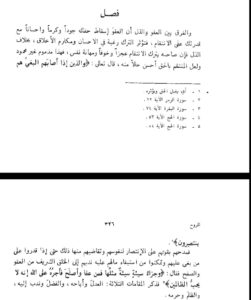
 الفرق بين العفو والذلِّ: أن العفوَ إسقاط حقِّك جُودًا وكرمًا وإحسانًا، مع قدرتك على الانتقام، فتؤثر الترك رغبةً في الإحسان ومكارم الأخلاق، بخلاف الذل، فإن صاحبه يترك الانتقام عجزًا وخوفًا ومهانة نفس، فهذا مذموم غير محمود، ولعل المنتقمَ بالحق أحسنُ حالًا منه

The difference between pardon and humiliation is that pardoning (others) is forgoing your right out of generosity, kindness, and benevolence, despite having the ability to seek revenge. So, you give precedence to abandoning (retaliation) out of a desire for doing good and noble character, as opposed to humiliation because the humiliated one abandons revenge due to inability,  fear, and a sense of personal degradation. This is considered blameworthy and not praiseworthy. It may be that the one who seeks revenge justly is in a better situation than him.

A paraphrased excerpt from “Ar-Ruh” page 325″. Publisher: Dar Kutub Ilmiyyah 1st Edition 1982.


Some Examples From The Imams of Guidance and Piety – Nurturing Genuine Love, Affection and Respect

In The Name of Allah, The Most Merciful, The Bestower of Mercy.

Mujahid, may Allah have mercy upon him, said: “A man passed by Abdullah ibn Abbas, may Allah be pleased with him and his father, so he said: ‘This man loves me.’ It was asked, ‘How do you know that?’ He replied, ‘I love him.'” [1]

Abu Idris Al-Khawlanee, may Allah have mercy upon him, reported: I entered the Damascus Masjid in Syria, then saw a young man with bright teeth and people were gathering around him. When they differed about something, they refer back to him and took his opinion. I asked about him and was told “This is Mu’adh Ibn Jabal”. So, I gave him Salaam and said, “By Allah! I love you for the sake of Allah”. He said: “For Allah’s sake?” I said: “For Allah’s sake”. He said: “For Allah’ sake?!” I said, “For Allah’s sake”. He held my cloak, got me close to him and said: “Rejoice, for indeed I heard Allah’s Messenger, peace and blessings of Allah be upon him, say, ‘Allah, The Mighty and Majestic, said: “My love is guaranteed for those who love one another for My sake, those who sit together for My sake, those who visit one another for My sake, and those who spend on one another for My sake”. [2]

Humayd reported from Al-Hasan, may Allah have mercy upon both of them, that Abu Ad-Dardaa, may Allah be pleased with him, said: “Be a scholar, or a learner, or one who loves (knowledge and its carriers) or one who follows (the truth). And do not be the fifth?” He (Humayd) said: “I said to Al-Hasan, I who is the fifth?” He said: “A Mubtadi”. [3]

A man said to Shahr ibn Hawshab: “Indeed, I love you”. He replied: “Why can you not love me, while I am your brother in faith upon Allah’s Book, your helper in the religion ordained by Allah and my livelihood is given by other than you”.(i.e. Allah) [4]

Imam Adh-Dhahabi, may Allah have mercy upon him, stated about Shaikh Al-Islam Ibn Taymiyyah, may Allah have mercy upon him, “He has those who loved him among the scholars and the righteous, as well as among soldiers and rulers, merchants and dignitaries, and the general public loves him. This is because he is benefits them day and night with his tongue and pen. [5]

Taj Ad-Deen As-Subki, may Allah have mercy upon him, said: “I was often in the company of Adh-Dhahabi, may Allah have mercy upon him, going to him twice daily, in the morning and in the afternoon. As for al-Mizzi, I would only go to see him twice a week. The reason for this was that Adh-Dhahabi showed me great affection and kindness, to the extent that anyone who knew my situation with him would know that he did not love anyone as much as he loved me. I was young at that time and this had a great impact on me”. [6]

Ibn Abbas stood up next to Zaid Bin Thabit [may Allah be pleased with both of them] and held the stirrup of his riding beast. Zaid said to him, “Step aside, O cousin of Allah’s Messenger [peace and blessings of Allah be upon him]”. Ibn Abbas said to him, “This is what we do for our scholars and elders”. [7]

Salamah Bin Kuhail [may Allah have mercy upon him] said: “Ash-Shabi and Ibrahim An-Nakha’i [may Allah have mercy upon upon both of them] never sat together except that Ibrahim remained silent, and both of them were Taabi’een”. [8]

Al-Marwazi [may Allah have mercy upon him] said, “Abu Abdillah [Imam Ahmad – may Allah have mercy upon him] used to be from those who honoured his fellow Muslim brothers the most and those who were older than him. One time, Abu Hammam [may Allah have mercy upon him] came to him on a donkey, so he held the stirrup of the riding beast for him. I witnessed him doing the same for the eldest Shaikhs”. [9]

Idris Bin Abdul Karim said: “Salamah Bin Aasim said to me: “I want to hear Kitaab Al-Adad from khalaf”. I said, “Khalaf?” He said: “Let him come”. When Khalaf entered, he tried to make Salamah sit in the teacher’s place, but he refused, and said: “I will not sit except in front of you”. Then he said, “This is the right of learning”. Khalaf said to him: “Ahmad Ibn Hanbal came to me to listen to the narrations of Abu Awanah, so I tried make him sit and transmit, but he refused and said: “I will not sit except in front of you. We are commanded to be humble in the presence of the one from whom we learn”. [10]

Muhammad Ibn Raafi said: I was with Ahmad (Imam Ahmad) and Ishaq in the company of Abdur Razzaaq when the day of Eidul Fitr arrived, so we went out with Abdur Razzaaq to the Musalla and with us were many people. When we returned, Abdur Razzaaq invited us to lunch, then he said to Ahmad and Ishaq, “Today I saw something strange from both of you. You did not say the Takbir”. Ahmad and Ishaq said, “O father of Abu Bakr! We were waiting for you to say the Takbir so that we could say the Takbir, but when we saw that you did not say the Takbir, we refrained”. Abdur Razzaaq said, “I was waiting for both of you to say the Takbir so that I could say the Takbir”. [11]

Abdullah Bin Ahmad [may Allah have mercy upon him] said: I heard my father [Imam Ahmad – may Allah have mercy upon him] being asked: “Why did you not hear a lot (of hadith) from Ibrahim Bin Sa’d [may Allah have mercy upon him] and indeed he did stay next to you in the house of Amarah?” He said: “We attended his gathering once and he narrated to us. When the second session was held, he saw youth putting themselves forward (or speaking) before the elders, so he became angry and said, ‘By Allah! I will not narrate for a year’. He died and did not narrate (thereafter)”. [12]

Imam As-Sadi, may Allah have mercy upon him, stated about the Mu’allimeen (teachers):

They are the intermediary between the Messenger, peace and blessings of Allah be upon him, and his Ummah with regards to propagation of the religion and clarification of the Shariah. Had it not been for these ones, the people would have been like cattle. They nurture the souls and hearts of the slaves upon the beneficial sciences and sound knowledge. They are the ones who guide the Ummah in the fundamental and subsidiary affairs of their religion, and return them to the rulings related to the duties obligated to them and in their dealings, just as they return them to the affairs pertaining to worship. Through them the Book and the Sunnah are established, and through them is made clear truth from falsehood, guidance as opposed to misguidance, Halal as opposed to Haram, good as opposed to evil, and rectification as opposed to corruption. They are of varying ranks, in accordance with what they establish of knowledge, teaching and benefit- great or small. They have great rights (owed to them) by the ummah and are possessors of a lofty status. Therefore, the people must have love and respect for them. They must recognise their excellence and virtue, and thank them greatly. They are to supplicate for them in private and public, and seek nearness to Allah by having love for them and praising them. They are to proclaim their excellence; guard the hearts (from harbouring evil against them) and the tongues (from) insulting them, for this would tarnish their excellence. [13]

https://salaficentre.com/2025/07/28/we-recall-this-supplication-when-humans-compete-aimlessly-to-receive-the-love-of-others/


[1] Al-Ikhwan page 75 by Ibn Abee Ad-Dunya, may Allah have mercy him.

[2] Ahmad 22030

[3] Jami Bayan Al-Ilm 1/142. By Ibn Abdil Barr, may Allah have mercy upon him.

[4] Kitab Uyun Al-Akhbar 3/15

[5] Ar-Radd Al-Wafir 34

[6] Tabaqat Ash-Shafi’iyyah 10/398

[7] Al-Muntadhim Fee Taareekh Al-Muluk Wal Umam 5/215

[8] Taareekh Dimashq 25/367

[9] Al-Aadaab Ash-Shar’iyyah 1/416

[10] Al-Jaami Li-Akhlaaq Ar-Raawi Wa Aadaab As-Saami 1/198

[11] Siyar A’laam An-Nubula a 9/566

[12] Siyar A’laam An-Nubula 11/317

[13] An Excerpt from Nurul Basaa-ir Wal Albaab Fee Ahkaamil Ibaadaat Wal-Mu’aamalaat Wal Huqooq Wal Aadaab, page: 57-58

Hizbiyyah

In The Name of Allah, The Most Merciful, The Bestower of Mercy.

Al-Allamah Rabee Bin Hadi Al-Mad’khali, may Allah have mercy upon him, said:

Everyone who opposes the Methodology of the Prophet and His Sunnah (a) is considered part of the misguided groups. Unlawful Partisanship does not require (specific) conditions; Allah referred to past nations as unlawful partisanship groups, and He referred to the Quraysh as an unlawful partisanship group when they united and allied with various groups. They did not have an organisation or anything, thus it is not a condition to be an organisation in order to be (classified) an unlawful partisanship group. However, if this group organises itself, it increases in evil.

Blind (bigoted) allegiance to a specific thought (or idea) that contradicts Allah’s Book and the Messenger’s Sunnah, and (establishing) allegiance and enmity based on it, this is unlawful partisanship, even if not organised.

To adopt a deviant thought (or idea) and gather people around it, this is an unlawful partisanship group, regardless of whether it is organised or not. To adopt a deviant thought (or idea) and gathering people around it, this is an unlawful partisanship group, regardless of whether it is organised or not. As long as they unite for a cause (or behind someone) in opposition to the Quran and Sunnah, this is an unlawful partisanship group. The disbelievers who waged war against the Prophet did not have the organisational structure present today; nevertheless, Allah referred to them as unlawful partisanship groups. How is this so? It is because they banded together for falsehood and fought against the truth. (Allah says):

كذبت قبلهم قوم نوح والأحزاب من بعدهم وهمت كل أمة برسولهم ليأخذوه وجادلوا بالباطل ليدحضوا به الحق

The people of Nuh (Noah) and the confederates after them denied (their Messengers) before these, and every (disbelieving) nation plotted against their Messenger to seize him, and disputed by means of falsehood to refute therewith the truth. [Ghafir Ayah 5]

They are referred to as unlawful partisanship groups due to forming groups. Quraysh gathered the tribes of Ghatafan, Qurayza, and various other tribes, but they were not organised in the form of an organisation. They came together and Allah referred to them as unlawful partisanship groups, thus the Surah (regarding their affair) was named “Surah Al-Ahzab.” Were those unlawful partisanship groups organised (i.e. under an organisation)? It is not a condition that an unlawful partisanship group has to be organised (or under an organisation). If it believes in a false idea – argues, disputes, and allies for the sake of it, this is an unlawful partisanship group. Should this (commitment) become more structured (organised or under an organisation), with the mobilisation of wealth etc, it would undoubtedly deepen its unlawful partisanship and become one of the astray groups. And Allah’s refuge is sought. (1)

Listen to Hizbiyyah Is Not From Salafiyyah By Shaikh Abu Khadeejah – may Allah preserve him.

Part 3: To Abandon Innovations, Hizbiyyah (Partisanship), Differing, Sectarianism, and Establishing the Call to Unity: Imām Ahmad bin Hanbal’s Usūl As-Sunnah (The Foundations of the Sunnah) with the explanation of Shaikh An-Najmi.

——————————————

(a) Shaikh Rabee: Establishment of Proof in Declaring a Person to be an Innovator https://abukhadeejah.com/shaikh-rabee-establishment-of-proof-in-declaring-a-person-to-be-an-innovator/


(1) Paraphrased https://rabee.net/alfatawi/%D9%85%D8%A7-%D9%85%D8%B9%D9%86%D9%89-%D8%A7%D9%84%D8%AD%D8%B2%D8%A8%D9%8A%D8%A9%D8%9F-%D9%88%D9%85%D8%A7-%D9%85%D8%B9%D9%86%D9%89-%D8%A3%D9%86-%D9%81%D9%84%D8%A7%D9%86-%D8%B9%D9%86%D8%AF%D9%87-%D8%AD/

Reminder to Sons of My Household: Avoid Over-stringency, Adhere to Precise Principles and Careful Deliberation

In The Name of Allah, The Most Merciful, The Bestower of Mercy.

The Messenger, peace and blessings of Allah be upon him, said:

“The over-stringent ones are destroyed”.

Imam An-Nawawi, may Allah have mercy upon him, said: The over-stringent ones are those who look too deeply (into affairs) and are excessive- those who exceed the Hudood (prescribed legislated Shariah boundaries) in their statements and actions”. [1]

Imam Muhammad Ibn Salih Al-Uthaymeen, may Allah have mercy upon him, said that:

This applies to both speech and actions, and that in most cases some people in this state may become self-amazed and arrogant. [2]

The Messenger, peace and blessings of Allah be upon him, said:

“Beware of Ghuluw (extremism exaggeration, or excessive zeal) in religion, for those who came before you were destroyed due to extremism in religion”. [3]

Shaikh Al-Islam Ibn Taymiyyah, may Allah have mercy on him, said:

“Ghuluw is the act of exceeding the limit in something, by either praising or criticizing (dispraising) something beyond what it truly deserves, and similar actions.” [4]

Shaikh Al-Islam Ibn Taymiyyah said, may Allah have mercy upon him, said:

“A person must have (sound) comprehensive fundamental principles to which the branches of a subject matter are referred back to in order to speak based on knowledge and justice; then he knows how those branches of the subject matter are established (or the way in which they are impacted by the sound comprehensive principles), otherwise, he will remain upon lies and ignorance in the branches and upon ignorance and oppression in the comprehensive fundamental principles, thus great corruption occurs”. [5]

Shaikh Al-Islam Ibn Taymiyyah, may Allah have mercy upon him, said:

When it is the case that the (true) followers of the Prophets are people of knowledge and justice, then the speech of the people of Islam and the Sunnah about the disbelievers and people of bidah is to be (carried out) with knowledge and justice, and not conjecture and the soul’s desire. And due to this, the Prophet, peace and blessings of Allah be upon him, said: “Judges are three types; one will go to Paradise and two to Hell. A man who knows the truth and judges based on it will enter paradise; a man who knows the truth but judges based on the opposite of it will enter the fire, and a man who judges for the people based on ignorance will enter the fire”.

And when it is the case that the one who judges between the people in (matters) of wealth, blood [i.e. murder cases etc] and honour will enter the hell fire if he is not a just scholar, then what about the one who passes judgements without knowledge, such being the case with ahlul bidah, on religions, the fundamental principles of Iman, affairs of knowledge related to Allah, His Names, Attributes and Actions, and the lofty affairs of knowledge?!” [6]

An Example of Those People of Knowledge Whose Knowledge Had An Effect On Them

Imam Ibn Al-Jawzi, may Allah have mercy upon him, said:

I have met the Mashayikh; their circumstances were different and their stations of knowledge varied. The most beneficial of them for me in companionship was the scholar who acted upon his knowledge, even though there were others more knowledgeable than him.

I met Abdul Wahhab Al-Anmaatee, who adhered to the principles of the pious predecessors. Backbiting was not heard in his gatherings (a) nor did he seek any reward for sharing hadith. Whenever I read to him the hadiths related to Raqaa’iq, he would weep and his tears would flow continuously. As a young person at that time, his weeping profoundly affected my heart. He embodied the characteristics of the scholars whose descriptions we had heard in the reports.

I met Abu Mansur Al-Jawaaleeqee, who was notably quiet and very meticulous in his speech. Even when asked about a clear matter, which some of his young students would quickly answer, he paused to ensure accuracy. He fasted and kept quiet a lot. I benefited from these two men more than I benefitted from others. I understood from this situation that guidance through action is more effective than verbal instruction. The truly impoverished one is the person who spends their life acquiring knowledge without applying it, missing out on the pleasures of this world and the goodness of the hereafter, ultimately proceeding as one bankrupt in deeds with strong proofs against him. [7]

Respect all the scholars and benefit from them, but seek out the most elderly and senior scholars

Seeking out the most elderly and senior scholars


[1] Sharh Saheeh Muslim. 16/180

[2] https://alathar.net/home/esound/index.php?op=codevi&coid=126682

[3] Sahih Al-Jami 2680

[4] Iqtidaa As-Siraat Al-Mustaqeem 1/289

[5] Al-Majmoo Al-Fataawaa 19/203

[6] Al-Jawaabus Sahih 1/107-108

[7] Saydul Khaatir. page 138]


A Balanced Approach to Marriage Between Relatives and Hereditary Diseases

In The Name of Allah, The Most Merciful, The Bestower of Mercy.

Imam Abdul Aziz Bin Baz, may Allah have mercy upon him, was asked:

يا سماحة الشيخ

We have heard that indeed there is danger in marrying relatives as I want to marry off one of my children. Is there any hadith regarding this? May Allah reward you.

Answer: There is no danger therein. What is said (regarding this) is an error. There is no danger in marrying relatives, rather, it is good. The Prophet, peace and blessings of Allah be upon him, married from his relatives. Umm Salamah was from his relatives, Aisha was from his relatives, and Umm Habiba was from his relatives. All of them are from Quraysh, all from his tribe. There is no harm in that. Ali married Fatimah, the daughter of the Prophet, peace and blessings of Allah be upon him, who was the daughter of his cousin (i.e. The Prophet, peace and blessings be upon him). Uthman married the Prophet’s daughters, Ruqayyah and Umm Kulthum (i.e. after of them died he married the other). Abu Al Aas Ibn Ar-Rabee married the Prophet’s fourth daughter, Zainab, and all of them were cousins. There is no harm in this. [1]

The Imam, may Allah have mercy upon him, was also asked: Some people would not marry the daughter of their uncle out of fear that the children might be born with deformities. Does this negate the perfection (completeness) of (one’s) belief in pure Islamic monotheism?

Answer: Many among the people of knowledge have clarified these matters , and that indeed a person should choose a suitable spouse for their offspring to the extent that some of the Fuqaha said: “The best is that one marries a non-relative, rather than the daughter of his uncle”. This is a mistake and it has no basis, whether it is the daughter of his paternal uncle or not the daughter of his paternal uncle, the daughter of his maternal uncle or not the daughter of his maternal uncle. The Prophet, peace and blessings be upon him, married the daughter of his uncle.

But, one should examine (give thought or consideration) that if the woman comes from a family that is afflicted with hereditary defects, mental illness, or physical deformities, he should not marry (someone among) them from the angle of employing the means of precaution, because this could bring you hereditary (issues). Diseases can be passed down – by the will of Allah- to the child, the grandchild and the daughter’s child. If this (such and such) family is well-known to have hereditary diseases that affect the children, he should avoid (marrying into such family). And if nothing is known about the family (i.e. regarding hereditary diseases), he marries (someone) among them. These matters that are known – (through experience, observation etc) regarding what is passed down do occur. Due to this, scholars and physicians advise that one examines (pays attention) to these matters. [2]


[1]Paraphrased:https://binbaz.org.sa/fatwas/8826/%D8%AD%D9%83%D9%85-%D8%A7%D9%84%D8%B2%D9%88%D8%A7%D8%AC-%D9%85%D9%86-%D8%A7%D9%84%D8%A7%D9%82%D8%A7%D8%B1%D8%A8

[2]Paraphrased:https://binbaz.org.sa/fatwas/2565/%D8%AD%D9%83%D9%85-%D8%AA%D8%B1%D9%83-%D8%A7%D9%84%D8%B2%D9%88%D8%A7%D8%AC-%D9%85%D9%86-%D8%A7%D9%84%D8%A7%D9%82%D8%A7%D8%B1%D8%A8-%D8%AE%D8%B4%D9%8A%D8%A9-%D8%A7%D9%84%D8%A7%D9%85%D8%B1%D8%A7%D8%B6

Reflections on some statements of Al-Allamah Rabee Bin Hadi Al-Mad’khali [102]

In The Name of Allah, The Most Merciful, The Bestower of Mercy.

The Shaikh, may Allah have mercy upon him, said:

O brothers! I advise you to follow the path of the pious predecessors in learning, manners, and Dawah; neither being over-stringent nor extreme.

Adh-Dhari’ah 3/214

Reflections from some statements of Al Allamah Rabee Bin Hadi Al-Mad’khali [101]

In The Name of Allah, The Most Merciful, The Bestower of Mercy.

The Shaikh, may Allah have mercy upon him, said:

If your brother makes a mistake, advise him gently and present proof and evidence for Allah to benefit him through that. But as for sitting and waiting for so and so to make a mistake, then smearing here and there that so-and-so did such-and-such, these are the ways of the devils, not the ways of the Salafis.

Bahjah Al-Qari 107

Propagandists in the Guise of Advice and Dawah on Twitter Find These Reiterated Clarifications Bitter to Swallow

In The Name of Allah, The Most Merciful, The Bestower of Mercy.


The Plans and Plots to Harass Others Through General or Ambiguous Statements

Whenever they desperately seek to intimidate others with vague, general or ambiguous statements of this or that important personality under the guise of knowledge or advice, we say to them: Imam Ibn Al-Qayyim, may Allah have mercy upon him, stated:

  وعـلـيك بالتفصيل والتبيين فالإجمال والإطلاق دون بيان
قد أفسدا هذا الوجود وخبـطا الأذهان والآراء كل زمـان

“It is obligated to you to provide detailed explanations and clarifications, as generalisations and unrestricted (speech) without elaboration (clarification) have corrupted the existence and confused minds and opinions throughout all times”.

Al-Allamah Salih Al-Fawzan, may Allah preserve him, stated:

There has to be a detailed explanation. The one who is not proficient in giving details should keep quiet because benefit is not acquired from his speech. And every time an error occurs, its cause is due to an absence of detailed explanation regarding truth and falsehood. There has to be detailed explanation and distinction and not mix-up. Indeed, it may be that there is something of truth and falsehood in an opponent’s statement, so all of it is neither deemed to be false nor true; rather there has to be a distinction between its truth and falsehood. All of it is neither rejected nor accepted; rather a distinction is made regarding the truth and what is correct and the falsehood and error in it. And if you are not proficient in giving details, then you should not enter into this field. [1]


The Plan and Plot to Use The Status of The People of Knowledge to Force Others to Accept Their Views Without Proof

When they desperately seek to force others by utilising the status of the people of knowledge, whether through propaganda or by pursuing specific agendas, and insist in repeating the same claims without any clear proof, we say to them: Imam Muhammad Ibn Salih Al-Uthaymin, may Allah have mercy upon him, said:

Pay attention to this principle; it is a very beneficial principle: “The statements of scholars are not (merely) utilised as proof, but proof is (provided) for them (to substantiate them)”. Due to this if one says, “So-and-so said such-and-such”, we respond: “Where is his proof, so that we establish our acts of worship based upon the guidance of the Messenger, peace and blessings be upon him”. O noble brother, who intends to come to Allah’s House (the Kabah) and the Masjid of His Prophet, peace and blessings of Allah be upon him, take note of this. There is no one among the creation besides Allah’s Messenger whose speech is never proof against Allah’s servants regardless of his status. Regardless of his status in the sight of his people, he is not a proof with regards to Allah’s Speech and the speech of His Messenger. Lend an ear to the verse:

فإن تنازعتم في شيء فردوه إلى الله والرسول إن كنتم تؤمنون بالله واليوم الآخر

And if you disagree among yourselves over anything then refer it back to Allāh and the Messenger if you truly believe in Allāh and the Last Day. [An-Nisaa 59] https://www.thenoblequran.com/q/#/search/4_59

Therefore, anyone who wants that one to be referred back to be someone other than the Messenger; anyone who wants the thing to refer back to be other than the Book and the Sunnah, then indeed he has not believed in Allah and the Last Day. This is because Allah said:

إن كنتم تؤمنون بالله واليوم الآخر ذلك خير وأحسن تأويلا

if you truly believe in Allāh and the Last Day. That is better (conduct) and (leads to) the most excellent outcome. [An-Nisaa 59] https://www.thenoblequran.com/q/#/search/4_59

That is better at present and “That is better (conduct) and (leads to) the most excellent outcome”- meaning, its final result is the best in the Afterlife. And in whatsoever you differ, the decision thereof is with Allah (He is the ruling Judge). Allah made it known (clarified for us) saying:

ردوه إلى الله والرسول إن كنتم تؤمنون بالله واليوم الآخر

Refer it back to Allāh and the Messenger if you truly believe in Allāh and the Last Day.

And on the day of resurrection, Allah will not ask you: “What did you respond to so and so”, rather He will say: “What response did you give to the Messengers?” [2]


The Plot and Plan to Overcome Others With Numerous Statements, Either Through Evasion, Exaggeration or In a Haphazard Manner, Showing That Their Goal Is Not to Reach The Truth.

When they desperately seek to overcome others with numerous claims, exaggerations about this or that individual or matter, engaging in psychological projection, desperately transmitting any new statement they think might be useful to them in their useless pursuit to overcome others, or providing them with a deceptive sense of victory by initiating doubt or ambiguities among people, or at the very gives them time to evade responsibility, conceal their objectives and blame others, we say to them:

Imam Ibn Al-Qayyim, may Allah have mercy upon him, said, “The loftiest ambition in pursuit of knowledge is to acquire knowledge from the Qur’an and the Sunnah- to be granted understanding by Allah [i.e. blessed to acquire sound knowledge and act upon it] and through the Sunnah of the Messenger, and acquaint oneself with the boundaries of the revelation [i.e. neither going into excess nor being lackadaisical]. And the most baseless ambition of the students of knowledge is to confine their ambitions in following the bizarre affairs and that which has neither occurred nor has it been revealed, or acquainting (oneself) with the differences of opinion and pursuing the statements of the scholars, whilst having no ambition to acquaint oneself with what is correct among those statements. Little is there to benefit from the knowledge of these people”. [3]


The Pursuit of Concessions Without Justification and Seeking to Force Others to Accept Their Views

When they seek after concessions to evade responsibility, we say to them:

Imam Ash-Shaatibe, may Allah have mercy upon him, stated regarding the attitude of the unjustified pursuit of concessions: “This arises from following one’s desires. Desire leads to a too easygoing attitude and the pursuit of concessions for oneself and others. So, you see him adopting that for himself or passing that judgment for his relative or friend, which he would not do for another person due to the desire of that relative and friend”. [4]

Imam Ash-Shaatibee, may Allah have mercy upon him] also said, “If a Mukallaf [i.e. the sane one who has reached the age when the obligations of the Shariah are obligated on him or her] seeks after concessions in the Madhabs in every affair that is difficult for him and every statement that agrees with his desires, then he will remove himself from the firm handhold of piety and persist upon the pursuit of desires”. [5]


Pursuit of Odd Matters and Refuse to Adhere to Clarity

When they seek after the odd matters and refuse to adhere to clarity, we say to them:

Ibrahim Ibn Abee Ablah (died 152AH – may Allah have mercy upon him) said, “He who carries the odd affairs of knowledge carries a lot of evil”. [6]

Abdur Rahman Bin Mahdi (died 198AH – may Allah have mercy upon him) said, “The one who pursues the odd affairs of knowledge cannot be an Imam in knowledge”. [7]

Imam Ash-Shaatibee [may Allaah have mercy upon him] said, “If desires enter (a person), it leads to following the ambiguous matters out of being eager to prevail and become victorious through establishing excuses in issues related to difference of opinion (or differing); but rather it leads to splitting, disharmony, enmity, and hatred due to the different desires and lack of (sound) agreement; however, the Shariah came to curtail (vain) desires completely. If some of the premises of the evidence were not established except through desires, it would not result except in following desires and that is contrary to the Shariah, and opposing the Shariah is not from the Shariah at all. Therefore, following desires concerning what one may regard to be adherence to the Shariah is tantamount to misguidance.”. [8]


[1] An Excerpt from “at-Ta-leeqaat Al-Mukhtasar Alaa Al-Qaseedah an-Nooniyyah” 1/216

[2] https://www.alathar.net/home/esound/index.php?op=codevi&coid=116826 [A paraphrased excerpt]

[3] An Excerpt from Al-Fawaa’id. Page 99

[4] Al-Muwaafaqaat. 5/84

[5] Al-Muwaafaqaat. 3/123

[6] Siyar A’laam An-Nubula 6/324

[7] At-Tamheed 1/64 by Ibn Abdil Barr

[8] Al-Muwaafaqaat 5/221