Dhikr is to be Performed as Much as Possible – Ibn Abbas in Tafseer Ibn Kathir

Alee ibn Abee Talhah (rahimahullah) reported that Ibn Abbas (Allah be pleased with them both) stated regarding Allah The Most High’s statement

‎اذكروا الله ذكرا كثيرا

Remember Allah with much remembrance. (Al-Ahzaab:41)

Verily, Allah did not obligate an obligation upon his servants except that he legislated a fixed limit for it (1), and then excused its performers when they are in a situation when they are excused (2), except in the case of dhikr (remembrance of Allah) for indeed Allah did not legislate a limit for it and nor is a person excused for abandoning it, except when compelled. Allah said,

 فَٱذۡڪُرُواْ ٱللَّهَ قِيَـٰمً۬ا وَقُعُودً۬ا وَعَلَىٰ جُنُوبِڪُمۡ
remember Allah standing, sitting down, and (lying down) on your sides (An-Nisaa:103)

night and day, at land or sea, whilst travelling or resident, when wealthy and in times of poverty, in sickness and in health, in private and public and in all circumstances, He, The Mighty and Majestic said,

‎و سبحوه بكرة و أصيلا

 And glorify His Praises morning and afternoon [the early morning (Fajr) and ‘Asr prayers]. (Al-Ahzaab:42)

so if you were to do that (in the manner mentioned by ibn Abbas (Allah be pleased with them both)) then Allah will send His Blessings upon you, and the Angels will supplicate for you.


Tafsir Al-Qur’aan Al-‘Adheem ibn Katheer vol.11 pgs.182-183

(1) e.g. obligatory prayers are a fixed number (five) with set number of raka’aat, obligatory fasts of Ramadhan are one month every calendar year.
(2) e.g. a traveller, sick person does not have to fast obligatory fasts, the woman on her menses does not pray or fast etc

[2] Excerpts from Talbees Iblees [The Devil’s Deception] by Imaam Ibnul Jawzi- [The Command to Adhere to The Sunnah and The Jamaa’ah]

In The Name of Allaah, The Most Merciful, The Bestower of Mercy.

Imaam Ibnul Jawzi [rahimahullaah] said:

The Command to Adhere to The Sunnah and The Jamaa’ah

Ibn Umar narrated that Umar Ibn Al-Khattaab [radiyallaahu-anhumaa] gave a speech in the city of Jaabiyah and said, “Once Allaah’s Messenger [sallal laahu alayhi wasallam] stood amongst us and said: ‘Whoever amongst you wishes for the best of Paradise, then let him adhere to Jamaa’ah, for indeed shaytaan is with a person who is on his own and he is more distant from two people’”. [Reported by Imaam At-Tirmidhee 2165. Declared Saheeh by Imaam Albaanee in Saheeh al-Jaami 2546]

Jaabir Bin Samrah [radiyallaahu-anhu] said, “Umar addressed the people at Jaabiyah and said, ‘Indeed, Allaah’s Messenger [sallal laahu alayhi wasallam] stood in the manner I am standing and then said, ‘Whoever wants to attain the best of paradise, then let him adhere to the Jamaa’ah, for indeed shaytaan is with one who is alone and he is more distant from two people’”.  [Imaam At-Tirmidhee said, “This hadeeth is Hasan Saheeh]

Umar Ibnul Khattaab said, “Allaah’s Messenger [sallal laahu alayhi wasallam] said, ‘Whoever wants the best of paradise, then let him adhere to the Jamaa’ah, for indeed shaytaan is with one who is alone and more distant from two people’”.

Abdullaah Bin Deenaar [rahimahullaah] reported from Umar [radiyallaahu-anhu] who said, “Allaah’s Messenger [sallal laahu alayhi wasallam] said, ‘Whoever is pleased that he should dwell in the best of paradise, then let him adhere to the Jamaa’ah, for indeed shaytaan is with one who is alone and more distant from two people’”. [Silsilah As-Saheehah 430]

Arfajah [radiyallaahu-anhu] said, “I heard Allaah’s Messenger [sallal laahu alayhi wasallam] say, ‘Allaah’s Hand is with the Jamaa’ah and shaytaan is with the one who opposes the Jamaa’ah’” [Reported by Imaam An-Nasaa’ee 4020. Declared Saheeh by Imaam Albaanee in Saheeh Al-Jaami 3621]

Usaamah Bin Shareek [rahimahullaah] said, “I heard Allaah’s Messenger [sallal laahu alayhi wasallam] say, ‘Allaah’s Hand is with the Jamaa’ah, and if a person isolates them, then shaytaan seizes him just as a wolf seizes a sheep from a flock”. [Reported by Al-Laalikaa’ee in I’tiqaad Ahlis Sunnah 1/99. See Majmah Az-Zawaa’id 5/218]

Abdullaah [Ibn Mas’ood (radiyallaahu-anhu)] said, “Allaah’s Messenger [sallal laahu alayhi wasallam] drew a line with his hand, then said, ‘This is Allah’s Straight Path’; then he drew lines to its right and left and said, ‘These are the [other] paths, and there is not a path from them, except that there is a shaytaan calling to it’; then he recited:

وَأَنَّ هَذَا صِرَاطِي مُسْتَقِيمًا فَاتَّبِعُوهُ وَلا تَتَّبِعُوا السُّبُلَ

“And this is my straight path, so follow it, and do not follow the (other) paths.” [Surah Al-An’aam. Aayah 53]

[Reported by Imaam Ahmad 4423. Declared Saheeh by Imaam Albaanee in at-Tawassul. Page 125]

Ibn Umar [radiyallaahu-anhumaa] said, “Allaah’s Messenger [sallal laahu alayhi wasallam] said: ‘That which happened to Bani Israa’eel will happen to my Ummah foot step by foot step, to the extent that if one of them engaged in sexual intercourse with his mother openly, there will be one from my Ummah who will do that. And indeed, Bani Israa’eel split into seventy-two sects and my Ummah will split into seventy-three sects, all of which will be in the Hellfire, except one’; so they said, ‘O Messenger of Allaah! Which one is it?’ He said, ‘The one upon that which I and my Companions are upon’”. [Reported by Imaam At-Tirmidhee 2641 and declared ‘Hasan’ by Imaam Albaanee in Saheeh Al-Jaami 5343]

Mu’awiyah Ibn Abee Sufyaan [radiyallaahu-anhumaa] stood and said, “Indeed, Allaah’s Messenger [sallal laahu alayhi wasallam] stood amongst us and said, ‘Indeed, the people of the Scripture before you split into seventy-two sects and indeed this Ummah will split into seventy-three sects; seventy two are in the Hellfire and one in paradise, and it is the Jamaa’ah. And indeed there will appear a people from my Ummah in whom desires will run through them just as rabbis runs through the one afflicted by it”. [Reported by Imaam Abu Daawud 4597. Declared Saheeh by Imaam Albaanee in Saheeh Al-Jaami 2641]

An Excerpt from Talbees Iblees with the checking of Shaikh Zayd Bin Haadee [rahiahullaah]. pages 10-15. slightly paraphrased


Articles to Read On The Propagated Signposts of The Sunnah for the Creed of the Saved and Aided Group, The Principles Regarding Unity, Splitting, The Jamaa’ah  etc:

http://www.salafipublications.com/sps/sp.cfm?secID=SCL&subsecID=SCL11&loadpage=displaysubsection.cfm

http://www.salafipublications.com/sps/sp.cfm?subsecID=SLF01&articleID=SLF010006&articlePages=1

http://www.salafipublications.com/sps/sp.cfm?subsecID=slf01&articleID=SLF010005&articlePages=1

https://www.abukhadeejah.com/salafis-callers-to-unity-forbid-splitting-ahlul-bidah-hizbies-astray-hyde-park-social-media/

https://www.abukhadeejah.com/ahlus-sunnah-do-not-divide-that-is-the-methodolology-of-the-salaf/

https://www.salafisounds.com/unity-and-a-dispraise-of-splitting-by-abu-khadeejah/

https://www.salafisounds.com/unity-division-through-the-eyes-of-the-salaf-khutbah-by-abu-khadeejah/

https://soundcloud.com/salafi-publications/my-ummah-will-split-in-to-73-sects-by-abdulilah-19072019

https://www.abukhadeejah.com/this-ummah-will-divide-into-73-sects-shaykh-al-fawzan-explains-what-it-means/

The Importance of Sincere Advice  

In The Name of Allaah, The Most Merciful, The Bestower of Mercy.

Listen below:

https://www.salafisounds.com/the-religion-is-sincere-advice-by-abu-iyaad-amjad-rafiq/

Umar Ibn Abdul Azeez [rahimahullaah] said: Whoever advises his [Muslim] brother to rectify affairs related to his Deen and gives him insight in a worldly affair of his, then indeed he has perfected their relationship and fulfilled his obligation towards him. [Taareekh At-Tabari 6/572]

Imaam Al-Barbahaaree [rahimahullaah] said: It is not permissible to hide sincere advice from any of the Muslims, whether pious or impious, in matters of the religion. Whoever hides that has acted deceitfully towards the Muslims. Whoever acts deceitfully towards the Muslims has done so towards the religion. Whoever acts deceitfully towards the religion has behaved treacherously towards Allah, His Messenger and the Believers.

Shaikh Ahmad An-Najmi [rahimahullaah] said: I say: The meaning of An-Naseehah is ‘Purity’ and ‘Clearness.’ It is said: [  نصح اللبن – the milk is pure] when it is clear. This is the linguistic meaning of An-Naseehah. In the Sharee’ah, [it means] to inform a Muslim regarding what is obligated on him in relation to the [rights of Allaah or his relationship with Allaah] and His creation without slyness and false courtesy. An-Naseehah is obligatory, even though its obligation varies, and its opposite is Al-Ghish [deception].

Indeed, the Prophet [sallal laahu alayhi wasallam] said in the Saheeh Hadeeth, “The religion is Naseehah, the religion is Naseehah, the religion is Naseehah; so, the Sahaabah said, ‘O Messenger of Allaah! To who?’ He said, ‘To Allaah, His Book, His Messenger, to the leaders of the Muslims and their common folk.’”

Abu Hurairah [radiyallaahu anhu] narrated that the Messenger of Allaah [sallal laahu alayhi wasallam] passed by a pile of foodstuff, he put his hand in it and found that it was wet. He said, ”What is this, O seller of the foodstuff?” He said, ”It became wet due to the rain O Messenger of Allaah!” He said, ”Why do you not put it on top of the food so that people can see it? Whoever deceives [people] is not from me.” [Muslim 102]

Deception in trade is when one hides a defect [found in the commodity]. And with regards to consultation, it is when one recommends something to a person that is harmful to his religious or worldly affairs.

As for Naseehah Lil-Laah – [sincerity to Allaah]: It is to believe in Allaah [The Most High], single Him out in [His Lordship, Names and Attributes and to single Him out in worship], give precedence to obeying Him over obedience to the creation, fearing the standing in His presence [on the Day of judgement] and to be mindful of Him in private and public.

As for An-Naseehah Li-kitaabihee-[Sincerity to His Book]: It is to recite it, ponder upon its meanings, act upon it and believe in the information it contains. As for Naseehah Li-Rasoolihee – [Sincerity to His Messenger]: It is to testify to that which he has informed [us], fulfil what he  commanded, keep away from what he has forbidden, exalt and honour him [salawaatu wasalaamuhu alayhi].

An-Naseehah Li-A’immatil Muslimeen- [Sincerity to the leaders of the Muslims]: It is to obey them in that which does not necessitate disobedience to Allaah, to refrain from betraying them, send them advice through those who are able to advise them in private, because that is the manner that will be more suitable for advice to be accepted. An-Naseehah Li-Aammatil Muslimeen- [sincerity to the common Muslims]: It is to call them to the path of Allaah, teach them what is beneficial and warn them against that which will harm them.


Ir’shaad As-Saariy Fee Sharhis Sunnati Lil-Barbahaaree. Pages 157-158. slightly paraphrased]

They Attributed to Allaah That Which They Considered to Be Deficiency When Attributed to Them!

In The Name of Allaah, The Most Merciful, The Bestower of Mercy.

Imaam Muhammad Bin Abdul Wahhaab [rahimahullaah] said in Masaa’ilil Al-Jaahiliyyah: They [i.e. people of the era of pre-Islamic ignorance] attributed deficiencies to Allaah [Glorified be He and free is He from all imperfections], such as (attributing) a child (to Him), being in need and tiredness, while (they) freed their monks from some of these Deficiencies.

Shaikh Saaleh al Fawzaan [may Allaah preserve him] explained the above, saying:

Deficiency is opposite to Perfection and attributing deficiencies to Allaah [Glorified be He and free is He from all imperfections] is a violation of His Lordship, and that is the (case) when a son is attributed to Him, because the father is in need of a son and is like him. The Jews [i.e. a sect amongst them] said that Ezra [alayhis-salaam] is Allaah’s son; the Christians said that the Messiah [alayhis-salaam] is Allaah’s son and the Pagan Arabs said that the Angels are Allaah’s daughters, while, the Christians declare their monks free from having wives and sons because [attributing this to their Monks] would be diminution of their rights. So these [Christians] do not declare Allaah free from that which they free their Monks.

Likewise, the Arabs hated having daughters, while they attributed that to Allaah.  So they attributed to Allaah what they hated for themselves and considered to be a disgrace and deficiency.  Allaah said: [وَيَجْعَلُونَ لِلَّهِ الْبَنَاتِ سُبْحَانَهُ ۙ وَلَهُم مَّا يَشْتَهُونَ – And they assign daughters unto Allaah! Glorified (and Exalted) is He above all that they associate with Him! And unto themselves what they desire’’. 16:57]

[وَيَجْعَلُونَ لِلَّهِ مَا يَكْرَهُونَ  – They assign to Allaah that which they dislike (for themselves). 16:62]

A Muslim Scholar went on a mission to one of the kings of Rome, so when he entered upon [the King] he said to him, “How is (your) wife and the children?’’ Those who were present became angry, for how can [this Muslim Scholar] describe their leader as having a wife and children?  So [the Muslim Scholar] said to them, “You (people) free your leader from having a wife and a son, while you attribute that to Allaah [The Mighty and Majestic] and you do not declare Him free from that?  So he silenced them and debated with them on that [basis]. [Source: An Excerpt from Sharh Masaa’ilil-Jaahiliyyah’ pages 150-151. slightly paraphrased]

Effects of The Admonitions and Stories In The Qur’aan On The Heart- [By Shaikhul Islaam Ibn Taymiyyah]

In The Name of Allaah, The Most Merciful, The Bestower of Mercy.

Shaikh Al-Islaam Ibn Taymiyyah [may Allah have mercy upon him] said: The Qur’an is a cure for that which is in the chests and for the one who has the diseases of evil desires that occur due to turning away from Allaah’s Sharee’ah and the disease of doubt that violates knowledge and certainty. So in the Qur’an, there are clear evidences that separate the truth from falsehood and thus remove the diseases of doubt which result in corruption of knowledge, sound perception and understanding,  so that a person sees things based on what they are in reality.

And it (the Qur’an) contains wisdom, beautiful exhortations by way of At-Targheeb [encouragement to do good deeds] and At-Tarheeb [deterrence against evil deeds and disobedience to Allaah], and stories that contain instructive admonitions that will definitely rectify the heart; so that the heart desires that which benefits and dislikes that which will harm it, and thus the heart remains in a state of love of true guidance and the right path and hatred of misguidance and straying, whereas before it was in a state of desire for misguidance and going astray and hatred for true guidance and the right path.

Therefore, the Qur’an is a remover of diseases that would necessitate corrupt willful intents, so that it rectifies the heart, rectifies its intents and it once again returns to its sound natural disposition [i.e. worshipping Allaah and obedience to Him], just as a sick body is returned to its normal, healthy state [after it was affected by an illness]. The heart is nourished with Iman [correct Islamic belief] and the Qur’an by way of that which purifies and supports it, just as the body is nourished with (foods) that make it thrive, develop and set it aright. So indeed the growth and increase of the heart [purity, desire for good deeds, turning away from evil] is similar to the development of the body over time.

[Majmoo’ al-Fataawa of Shaykhul-Islaam Ibn Taymiyyah (10/95-96)]

Translated and Shared By One of Our Elder Brothers- Abu Eesaa Al-Kashmeeri [Birmingham]


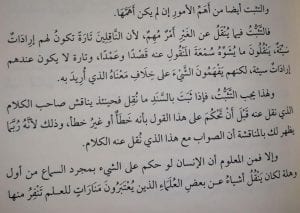
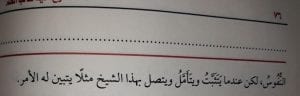
Do Not Be Shy! [Ask The Upright Student of Knowledge In Your Country If You Cannot Understand His Statement On a Particular Subject Matter]

In The Name of Allaah, The Most Merciful, The Bestower of Mercy.

Employ Careful Deliberation Before Transmitting or Making Judgements On Statements

Shaikh Uthaymeen [rahimahullaah]

Verification is one of the most important affairs, if not the most important. Verifying what is transmitted from others is an important affair, because sometimes the transmitters harbour evil intentions, so they transmit – intentionally and deliberately – that which will tarnish the reputation of the one they transmit from. And sometimes they do not harbour an evil intention, but they understand something in a manner that is opposite to what is intended by it. Therefore, it is obligatory to verify. So, when the proof [sound source] of the transmission is established, then the one from whom the statement was transmitted is engaged in a discussion [or his statement is examined] before a judgement is passed as to whether it is a mistake or not. That is because it may become clear to you – by way of discussion [or observation] – that the one from whom the statement was transmitted is correct. And if not, then what is known is that if a person were to immediately pass a judgement merely based on what he hears, he will transmit things [i.e. statements, views, opinions etc] from some of the scholars – those considered to be the beacons of [Sharee’ah] knowledge – that which the souls will dislike; but when one verifies, contemplates and establishes contact with this Shaikh, the affair will become clarified [or clear to him]. [Excerpt from Sharh Hilyatil Taalibil Ilm Pages 75-76. By Shaikh Uthaymeen (rahimahullaah). Paraphrased]

Ask Questions to Understand, and Benefit Others, But Not For The Purpose of Fitna Or Merely Seeking to Hit One Statement of a Student Which You Do Not Agree With Against Another Statement!

Shaikh Abdur Razzaaq Al-Badr [hafidhahullaah] said:

It is not a condition that a questioner can only ask about what he does not know, rather he can ask about something he knows but is not known to others; so he asks a question in order to facilitate understanding for others.

If you are in the presence of a scholar and you know that some of those present fall short in affairs related to the prayer- either lackadaisical or that they do not perform the prayer on time, or that they fall short in some of its Shuroot [conditions] and waajibaat [obligatory acts of the prayer] – so you ask a question regarding these affairs even though you know the answer; you ask in order to benefit those who are present and so that they are facilitated with understand in their religion. These types of questions are very beneficial as opposed to questions that are not correct – that is because some people ask questions in order to confuse those present and bring about doubts etc. A question cannot be beneficial unless the questioner intends to benefit himself and others.

When Jibreel [alayhis-salaam] came to the Messenger [sallal-laahu-alayhi-wasallam] he did not appear as a teacher, rather he asked questions, even though the Messenger described him as one who came to teach the people their religion. This shows that the one who asks a scholar a question in order that the people can learn what they do not know is rewarded like one who teaches people their religion.

A scholar teaches people directly, but the one who asks the scholar a question becomes a means for the people to learn, for the one who guides to good is like one who does the good deed.  For example if you ask a student of knowledge in your country to give lessons in your Masjid –to teach the forty hadeeth of An-Nawawi or other books of the scholars, and you inform him of the needs of the people, so he begins to teach, explain and revise etc you will receive all that reward. The one who guides to good is just like one who performs the good deed. The commoner can be a means to teaching others by asking a scholar, or by gathering other commoners to take them to the circles of knowledge, disseminating beneficial audio lectures etc. [An excerpt from ‘Sharh of the forty hadeeth of Imaam An-Nawawi (rahimahullaah)’. Lesson number 2]

Few Aayaat of The Qur’aan Regarding The Believers and Their Salaah

In The Name of Allaah, The Most Merciful, The Bestower of Mercy.

Allaah [The Most High] said:

قَدۡ أَفۡلَحَ ٱلۡمُؤۡمِنُونَ (١) ٱلَّذِينَ هُمۡ فِى صَلَاتِہِمۡ خَـٰشِعُونَ (٢) وَٱلَّذِينَ هُمۡ عَنِ ٱللَّغۡوِ مُعۡرِضُونَ (٣) وَٱلَّذِينَ هُمۡ لِلزَّكَوٰةِ فَـٰعِلُونَ (٤)وَٱلَّذِينَ هُمۡ لِفُرُوجِهِمۡ حَـٰفِظُونَ (٥) إِلَّا عَلَىٰٓ أَزۡوَٲجِهِمۡ أَوۡ مَا مَلَكَتۡ أَيۡمَـٰنُہُمۡ فَإِنَّہُمۡ غَيۡرُ مَلُومِينَ (٦) فَمَنِ ٱبۡتَغَىٰ وَرَآءَ ذَٲلِكَ فَأُوْلَـٰٓٮِٕكَ هُمُ ٱلۡعَادُونَ (٧) وَٱلَّذِينَ هُمۡ لِأَمَـٰنَـٰتِهِمۡ وَعَهۡدِهِمۡ رَٲعُونَ (٨) وَٱلَّذِينَ هُمۡ عَلَىٰ صَلَوَٲتِہِمۡ يُحَافِظُونَ (٩) أُوْلَـٰٓٮِٕكَ هُمُ ٱلۡوَٲرِثُونَ (١٠) ٱلَّذِينَ يَرِثُونَ ٱلۡفِرۡدَوۡسَ هُمۡ فِيہَا خَـٰلِدُونَ (١١)

Successful indeed are the believers. Those who offer their Salaat [prayers] with all solemnity and full submissiveness. And those who turn away from Al-Laghw [dirty, false, evil vain talk, falsehood, and all that Allah has forbidden]. And those who pay the Zakaat. And those who guard their chastity (i.e. private parts, from illegal sexual acts), except from their wives or those whom their right hands possess, for then, they are free from blame; but whoever seeks beyond that, then those are the transgressors; those who are faithfully true to their Amanaat [all the duties which Allah has ordained, honesty, moral responsibility and trusts etc.] and to their covenants; and those who strictly guard their (five compulsory congregational) Salawaat [prayers] [at their fixed stated hours]. These are indeed the inheritors. Who shall inherit the Firdaus [Paradise]. They shall dwell therein forever. [Surah Al-Muminoon. Aayaat 1-11]

[ٱلَّذِينَ هُمۡ فِى صَلَاتِہِمۡ خَـٰشِعُونَ- Those who offer their Salaat [prayers] with all solemnity and full submissiveness]: Solemnity in the prayer: It is attentiveness of the heart in the presence of Allaah [The Exalted]; attentive [to the fact that] Allaah is close [i.e. by His knowledge, hearing and sight] and thus the person’s heart becomes submissive, his soul [enters a state] of solemnity, his movements [in the prayer are performed] with repose, he [experiences] little distraction, well behaved in the presence of his Lord, pays attention to everything he says and does in his prayer – from the beginning to the end – and thus all the whispering of shaytaan is repelled, [and likewise] all evil thoughts. This is the essence of the prayer and the aim behind it. It is the type of prayer for which a person is rewarded is in full. [As for the prayer] that is neither performed  with tranquillity nor an attentive heart, then even though the person will gain some reward, however reward is based on the strength [or level] of the heart’s attentiveness. [1]

Allaah [The Most High] said:

وَاسْتَعِينُوا بِالصَّبْرِ وَالصَّلَاةِ ۚ وَإِنَّهَا لَكَبِيرَةٌ إِلَّا عَلَى الْخَاشِعِينَ

الَّذِينَ يَظُنُّونَ أَنَّهُم مُّلَاقُو رَبِّهِمْ وَأَنَّهُمْ إِلَيْهِ رَاجِعُونَ

And seek help in patience and prayer, and truly it is extremely heavy and hard except for those who humble in the presence of their Lord.” They are those who are certain that they are going to meet their Lord, and that to Him they are going to return. [Al-Baqarah: Ayah: 45-46]

Indeed, it [i.e. seeking help in patience and prayer] is heavy upon other than those who are humble before Allaah, because the hearts [of those who are not humble before Allaah] are devoid of love of Allaah, exaltation of Him, glorification of Him and humility in His presence. They have little desire in asking Allaah for the good things of the worldly and the afterlife, and [they have little desire] in seeking His protection from the evil affairs of this life and the next. That is because the presence of the slave’s heart and mind in the prayer, being humble within [the prayer], seeking for perfection in it, disconnecting his mind and heart from everything whilst in the prayer, and striving with great effort to establish and fulfil it, then [all of this takes place] in accordance with the strength of his fervent desire [to please Allaah, hoping for Allaah’s reward and fearing Allaah’s punishment]. [2]

Allaah [The Most High] said:

وَجَعَلۡنَـٰهُمۡ أَٮِٕمَّةً۬ يَہۡدُونَ بِأَمۡرِنَا وَأَوۡحَيۡنَآ إِلَيۡهِمۡ فِعۡلَ ٱلۡخَيۡرَٲتِ وَإِقَامَ ٱلصَّلَوٰةِ وَإِيتَآءَ ٱلزَّڪَوٰةِ‌ۖ وَكَانُواْ لَنَا عَـٰبِدِينَ

And We made them [i.e. Ibraaheem, Ishaaq and Ya’qoob (alayhimus-salaam)] leaders, guiding [mankind] by Our Command, and We inspired in them the doing of good deeds, performing Salaat, and the giving of Zakaat and of Us (Alone) they were worshippers. [Surah Al-Anbiyaa. Aayah 73]

[وَجَعَلۡنَـٰهُمۡ أَٮِٕمَّةً۬  – And We made them leaders]– Meaning: Leaders  who were guides for others to good. [يَہۡدُونَ بِأَمۡرِنَا  – by Our Command]– Meaning: They called people to the religion ordained by Allaah based on Allaah’s command. [Ref 3]

[وَأَوۡحَيۡنَآ إِلَيۡهِمۡ فِعۡلَ ٱلۡخَيۡرَٲتِ   – And We inspired in them the doing of good deeds]– Meaning: They performed good deeds and called people to it. This includes all types of good deeds related to the rights of Allaah and the rights of the people. [وَإِقَامَ ٱلصَّلَوٰةِ وَإِيتَآءَ ٱلزَّڪَوٰةِ‌ۖ– performing Salaat, and the giving of Zakaat]: This is a specific mention of something in connection to a general affair due to the nobility and virtue of these two acts of worship [i.e. Salaah and Zakaat]; because whoever performs them perfectly will establish his religion and whoever neglects them will be more negligent towards other affairs of the religion; and [also because] Salaah is the best of deeds related to the rights of owed to Allaah and Zakaat is the best of deeds related to the rights owed to Allaah’s servants.

[وَكَانُواْ لَنَا عَـٰبِدِين – and of Us (Alone) they were worshippers]– Meaning: They were worshippers of Allaah and not worshippers of others; and they worshipped Allaah through acts of worship of the heart [i.e. such as love, fear, hope, reliance upon Allaah etc], statements [i.e. all acts of worship uttered by the tongue] and actions [i.e. deeds of the limbs]. [Ref 4]

Allaah [The Most High] said:

وَٱذۡكُرۡ فِى ٱلۡكِتَـٰبِ إِسۡمَـٰعِيلَ‌ۚ إِنَّهُ ۥ كَانَ صَادِقَ ٱلۡوَعۡدِ وَكَانَ رَسُولاً۬ نَّبِيًّ۬ا

وَكَانَ يَأۡمُرُ أَهۡلَهُ ۥ بِٱلصَّلَوٰةِ وَٱلزَّكَوٰةِ وَكَانَ عِندَ رَبِّهِۦ مَرۡضِيًّ۬ا

And mention in the Book [the Qur’an] Ismaa’eel [Ishmael]. Verily! He was true to what he promised, and he was a Messenger, [and] a Prophet. And he used to enjoin on his family and his people As-Salat [the prayers] and the Zakat, and his Lord was pleased with him. [Surah Maryam. Aayaat 54-55]

[وَكَانَ يَأۡمُرُ أَهۡلَهُ ۥ بِٱلصَّلَوٰةِ وَٱلزَّكَوٰةِ وَكَانَ عِندَ رَبِّهِۦ مَرۡضِيًّ۬ا – And he used to enjoin on his family and his people As-Salat [the prayers] and the Zakat, and his Lord was pleased with him]- Meaning: He used to enjoin Allaah’s command on his family – used to command them to establish the prayer which necessitates sincerity and servitude to Allaah, and he used to command them to give Zakaat which necessitates kind treatment towards the slaves of Allaah. So, he [i.e. Ismaa’eel (alayhis salaam)] perfected   himself and others, especially his family – the closest people to him – because they are more worthy of his call [i.e. the guidance he called to] than others. [5]


[1: Source: Tayseer Al-Kareem Ar-Rahmaan Fee Tafseer Kalaam Al-Mannaan. (paraphrased)]

[2: Badaa’i-u At-Tafseer Al-Jaami Limaa Fassarahu Al-Imaam Ibnu Qayyim Al-Jawziyyah: vol: 1 page: 125. Slightly paraphrased]

[Ref 3: An Excerpt from ‘Zaarul Maseer Fee Ilmit Tafseer’. By Imaam Ibnul Jawzi (rahimahullaah). Slightly paraphrased]

[Ref 4: An Excerpt from ‘Tayseer Al-Kareem Ar-Rahmaan Fee Tafseer Kalaam Al-Mannaan’ by Imaam As-Sadi (rahimahullaah). Slightly paraphrased]

[5: Source: An Excerpt from ‘Tayseer Al-Kareem Ar-Rahmaan Fee Tafseer Kalaam Al-Mannaan’. slightly paraphrased

A Statement About Prohibition Against Innovations In The Religion That Can Be Understood By Everyone With Some Common Sense!

In The Name of Allaah, The Most Merciful, The Bestower of Mercy.

Shaikhul Islaam Ibn Taymiyyah [rahimahullaah] said:

Groups amongst the people thought that the religion needed innovation, especially in their chosen path; but the affair is not as they thought, for indeed Allaah [The Exalted] said: [ٱلۡيَوۡمَ أَكۡمَلۡتُ لَكُمۡ دِينَكُمۡ وَأَتۡمَمۡتُ عَلَيۡكُمۡ نِعۡمَتِى وَرَضِيتُ لَكُمُ ٱلۡإِسۡلَـٰمَ دِينً۬ا‌ۚ – This day, I have perfected your religion for you, completed My Favour upon you, and have chosen for you Islam as your religion]. [Surah Al-Maa’idah. Aayah 3].

Likewise, other texts shows that the Messenger [sallal laahu alayhi wasallam] acquainted the Ummah with everything they need in their religious affairs. Allaah said: [وَمَا ڪَانَ ٱللَّهُ لِيُضِلَّ قَوۡمَۢا بَعۡدَ إِذۡ هَدَٮٰهُمۡ حَتَّىٰ يُبَيِّنَ لَهُم مَّا يَتَّقُونَ‌ۚ – And Allah will never lead a people astray after He has guided them until He makes clear to them as to what they should avoid]. [Surah At-Tawbah. Aayah 115]

The Messenger [sallal laahu alayhi wasallam] said: “Verily the one – among you – who lives long will see a lot of differing, so you must adhere to my Sunnah and to the Sunnah of the Khulafaa Ar Raashideen [the rightly guided caliphs], hold onto it firmly with your molar teeth” [i.e. adhere to it firmly].

Had it been that the Sunnah of the Prophet [sallal-laahu-alayhi wasallam] and that of the Khulafaa Ar-Raashideen is not suitable and sufficient for the believer during times of much differing, it would not be permissible to command that one [returns and adheres to it]. And also he [sallal laahu alayhi wasallam] used to say in his sermons, “The worst of all affairs [in the religion] are the newly invented matters and every innovation [in the religion] is misguidance”. [An Excerpt from Al-Istiqaamah. Pages 35-36. slightly paraphrased]

Eid Prayer during the Lockdown and Curfews – Shaykh Abdul Aziz Aal-Ash Shaykh

In The Name of Allaah, The Most Merciful, The Bestower of Mercy.

The Mufti of Saudi Arabia, Shaykh Abdul Azeez Aal-Ash Shaykh (hafidahullaah) gave some advice regarding the Eid prayer during the lock down and curfews preventing people from performing the Eid Prayer outside or in the mosques.

He said that as for the Eid prayer, if the current situation continues and it is not possible to establish the prayer in the Musallaaat (the open places designated for the Eid prayers) or the designated mosques, then indeed the prayer is performed in the homes with no khutbah after it. That is because if it is recommended for the one who misses the Eid prayer – with the Imaam – to make it up*, then it is more worthy  [or more so] that performing the prayer is legislated for those in whose countries it is not being established, because the establishment of this Islamic rite (the Eid Prayer) is carried out based on one’s ability.

Saudi Arabia Government Official Website – 17/04/2020

* there is a difference of opinion regarding this, however this is the position of the Shaykh (hafidahullah)

The First Command In The Qur’aan

In The Name of Allaah, The Most Merciful, The Bestower of Mercy.

يَـٰٓأَيُّہَا ٱلنَّاسُ ٱعۡبُدُواْ رَبَّكُمُ ٱلَّذِى خَلَقَكُمۡ وَٱلَّذِينَ مِن قَبۡلِكُمۡ لَعَلَّكُمۡ تَتَّقُونَ

ٱلَّذِى جَعَلَ لَكُمُ ٱلۡأَرۡضَ فِرَشً۬ا وَٱلسَّمَآءَ بِنَآءً۬ وَأَنزَلَ مِنَ ٱلسَّمَآءِ مَآءً۬ فَأَخۡرَجَ بِهِۦ مِنَ ٱلثَّمَرَٲتِ رِزۡقً۬ا لَّكُمۡ‌ۖ فَلَا تَجۡعَلُواْ لِلَّهِ أَندَادً۬ا وَأَنتُمۡ تَعۡلَمُونَ

O mankind! Worship your Lord (Allah), Who created you and those who were before you so that you may become Al-Muttaqun (the pious) – Who has made the earth a resting place for you, and the sky as a canopy, and sent down water (rain) from the sky and brought forth therewith fruits as a provision for you. Then do not set up rivals unto Allah (in worship) while you know (that He Alone has the right to be worshipped). [Surah Al-Baqarah’ Aayaat 21-22]

The statement ‘There is no deity worthy of worship except Allaah’ necessitates ‘negation’ and ‘affirmation’. Negating every other thing worshipped besides Allaah because they are not worthy of worship, and affirming that Allaah alone is the true deity worthy of worship. The religion of Tawheed is founded upon these two foundations, just as Allaah stated that Ibraaheem [alayhis salaam] said to his people:

وَإِذۡ قَالَ إِبۡرَٲهِيمُ لِأَبِيهِ وَقَوۡمِهِۦۤ إِنَّنِى بَرَآءٌ۬ مِّمَّا تَعۡبُدُونَ

إِلَّا ٱلَّذِى فَطَرَنِى فَإِنَّهُ ۥ سَيَہۡدِينِ

And (remember) when Ibrahim (Abraham) said to his father and his people: “Verily, I am innocent of what you worship; Except Him (i.e. I worship none but Allah Alone) Who did create me, and verily, He will guide me.” [Surah Az-Zukhruf’ Aayaat 26-27]

This was the path of every Messenger sent by Allaah [to the people]. Allaah [The Most High] said:

وَلَقَدۡ بَعَثۡنَا فِى ڪُلِّ أُمَّةٍ۬ رَّسُولاً أَنِ ٱعۡبُدُواْ ٱللَّهَ وَٱجۡتَنِبُواْ ٱلطَّـٰغُوتَ‌ۖ

And verily, We have sent among every Ummah (community, nation) a Messenger (proclaiming): “Worship Allah (Alone), and avoid (or keep away from) Taghut (all false deities, etc. i.e. do not worship Taghut besides Allah).” [Surah An-Nahl’ Aayah 36]

Allaah [The Most High] said:

فَمَن يَكۡفُرۡ بِٱلطَّـٰغُوتِ وَيُؤۡمِنۢ بِٱللَّهِ فَقَدِ ٱسۡتَمۡسَكَ بِٱلۡعُرۡوَةِ ٱلۡوُثۡقَىٰ لَا ٱنفِصَامَ لَهَا‌ۗ

Whoever disbelieves in Taghut and believes in Allah, then he has grasped the most trustworthy handhold that will never break. [Surah Al-Baqarah’ Aayah 256]

Whoever says that ‘There is no deity worthy of worship except Allaah’ has indeed declared his freedom from every other thing worshipped besides Allaah and obligated on himself [or herself] to worship Allaah [alone]. This is a covenant obligated by a person on himself [or herself]. [Allaah (The Most High) said]:

فَمَن نَّكَثَ فَإِنَّمَا يَنكُثُ عَلَىٰ نَفۡسِهِۦ‌ۖ وَمَنۡ أَوۡفَىٰ بِمَا عَـٰهَدَ عَلَيۡهُ ٱللَّهَ فَسَيُؤۡتِيهِ أَجۡرًا عَظِيمً۬ا

Then whosoever breaks his pledge, breaks only to his own harm, and whosoever fulfills what he has covenanted with Allah, He will bestow on him a great reward. [Surah Al-Fath’ Aayah 10]

Laa Ilaaha Ilal laah – There is no deity worthy of worship except Allaah – is a declaration of Tawheed Al-Ibaadah [i.e. to single Allaah out in worship]. Therefore, whoever says this statement, knows its meaning, acts upon what it necessitates by negating shirk and affirming that Allaah alone is the true deity worthy of worship and believes in that, then he [or she] is a true Muslim.

And whoever says this statement and acts upon what it necessitates – outwardly; but does not believe in it -in his heart, then he [or she] is a hypocrite. And whoever says this statement, but acts in opposition to it by committing shirk [Ref 7]-negating what it necessitates, he is a disbeliever, even if he repeats this statement many times[Ref 8] [NB: Reader must refer to footnotes 7 and 8 at the end of this article regarding types of Shirk and Al-Udhr Bil-Jahl (the excuse of ignorance)].

This is the state of the grave worshippers of today – those who say this statement, but neither do they understand its meaning nor does it have any effect on their acts of worship; so, you see one of them saying, “There is no deity worthy of worship except Allaah”, but then he also says, “O Abdul Qaadir [i.e. Abdul Qaadir Jaylaani]! Grant me aid and assistance. O Badawi! O such and such.” He appeals to the dead people and seeks their help when faced with afflictions. [Ref 9]

Indeed, the polytheists of the earlier era had a better understanding of  Laa ilaaha ilal laah than these people [i.e. the grave worshippers of our era], because when the Messenger [sallal laahu alayhi wasallam] said to them, “Say (i.e. testify) that ”There is no deity worthy of worship except Allaah”, they knew that he was commanding them to abandon idol worship and to worship Allaah alone; so, this why -as Allaah informed us- they said: [أَجَعَلَ ٱلۡأَلِهَةَ إِلَـٰهً۬ا وَٲحِدًا‌ۖ إِنَّ هَـٰذَا لَشَىۡءٌ عُجَابٌ۬  – Has he (i.e. Muhammad) made the aliha (gods) (all) into One Ilah (God – Allah). Verily, this is a curious thing!” [Surah Saad’ Aayah 5]

And [Allaah informed us that the] people of Hud said: أَجِئۡتَنَا لِنَعۡبُدَ ٱللَّهَ وَحۡدَهُ ۥ وَنَذَرَ مَا ڪَانَ يَعۡبُدُ ءَابَآؤُنَا‌ۖ- You have come to us that we should worship Allah Alone and forsake that which our fathers used to worship. [Surah Al- A’raaf’ Aayah 70]

And [Allaah informed us that the people of Saaleh] said: [أَتَنۡهَٮٰنَآ أَن نَّعۡبُدَ مَا يَعۡبُدُ ءَابَآؤُنَا – Do you (now) forbid us the worship of what our fathers have worshipped? [Surah Hud’ Aayah 62]

And [Allaah informed us that] the people of Nuh said:

وَقَالُواْ لَا تَذَرُنَّ ءَالِهَتَكُمۡ وَلَا تَذَرُنَّ وَدًّ۬ا وَلَا سُوَاعً۬ا وَلَا يَغُوثَ وَيَعُوقَ وَنَسۡرً۬ا

“And they have said: ‘You shall not leave your gods, nor shall you leave Wadd, nor Suwa’, nor Yaghuth, nor Ya’uq, nor Nasr (names of the idols). [Surah Nuh’ Aayah 23]

So, this is how the disbelievers of old understood Laa ilaaha illal laah – that it necessitates the abandonment of idol worship and that Allaah alone is to be worshipped. And because of this, they refused to utter it because it can’t be in harmony with worshipping laat, uzzaa and manaat. The grave worshippers of today do not realise this contradiction, so they say Laa ilaaha illal laah whist worshipping the dead. [Source: An Excerpt from ‘Muhaadaraat Fil Aqeedah Wad-Da’wah’ by Shaikh Saaleh Al-Fawzaan (hafidhahullaah) 1/7-17]


Ref 1: Tafseer ibn katheer 1/251.

Ref 2: Ighaathatul Lahfaan 2/201

Ref 3: Surah Nuh Ayah 23

Ref 4: Bukhaari 6/4920

Refs 5 & 6: see article for further detail: http://www.salafipublications.com/sps/sp.cfm?subsecID=MNJ07&articleID=MNJ070003&articlePages=1

Ref 7: Types of shirk: http://www.abukhadeejah.com/ahmad-an-najmees-kitaab-at-tawheed-chapter-3-fear-of-falling-into-shirk/

Ref 8: Takfeer [i.e. declaring a specific individual to be outside the fold of Islaam is carried out by the scholars based on clear principles. See links about Takfeer and excuse of ignorance by Shaikh Saaleh Al-Fawzaan]:

http://www.salafipublications.com/sps/sp.cfm?subsecID=MNJ09&articleID=MNJ090004&articlePages=1

http://www.manhaj.com/manhaj/articles/obkwf-takfir-and-the-excuse-of-ignorance-shaykh-saalih-al-fawzaan.cfm

http://www.manhaj.com/manhaj/articles/dkhtd-takfir-and-the-excuse-of-ignorance-shaykh-saalih-al-fawzaan-2.cfm

http://www.manhaj.com/manhaj/articles/gzrsz-takfir-and-the-excuse-of-ignorance-shaykh-saalih-al-fawzaan-3—takfir-of-the-raafidah.cfm

http://www.manhaj.com/manhaj/articles/illhh-takfir-and-the-excuse-of-ignorance-shaykh-saalih-al-fawzaan-4—takfir-of-the-raafidah.cfm

http://www.manhaj.com/manhaj/articles/uufmf-takfir-and-the-excuse-of-ignorance-shaykh-saalih-al-fawzaan-5.cfm

http://www.takfiris.com/takfir/articles/mlryz-summary-of-the-principles-concerning-takfir-of-a-specific-individual.cfm

Ref9:http://www.abukhadeejah.com/rescue-and-deliverance-from-other-than-allaah-and-to-supplicate-to-other-than-him-is-from-shirk-shaikh-ahmad-an-najmees-kitaab-at-tawheed-chapter-13/