A safeguard against hastiness in punishment

In The Name of Allah, The Most Merciful, The Bestower of Mercy.

Allah, The Most High, said:

وَتَفَقَّدَ الطَّيْرَ فَقَالَ مَا لِيَ لَا أَرَى الْهُدْهُدَ أَمْ كَانَ مِنَ الْغَائِبِينَ

لَأُعَذِّبَنَّهُ عَذَابًا شَدِيدًا أَوْ لَأَذْبَحَنَّهُ أَوْ لَيَأْتِيَنِّي بِسُلْطَانٍ مُّبِينٍ

He inspected the birds, and said: “What is the matter that I see not the hoopoe? Or is he among the absentees? “I will surely punish him with a severe torment, or slaughter him, unless he brings me a clear reason.” (An-Naml 20-21)

“What is the matter that I see not the hoopoe? Or is he among the absentees?”

Meaning: “Is it that I cannot see him because of me being unaware of his presence due to it being hidden among these numerous different groups, or because – with neither my permission nor command – it is absent?”

Thus, he got angry and issued a threat of punishment, and said:

لَأُعَذِّبَنَّهُ ۥ عَذَابً۬ا شَدِيدًا

“I will surely punish him with a severe punishment” without killing it.

أَوۡ لَأَاْذۡبَحَنَّهُ ۥۤ أَوۡ لَيَأۡتِيَنِّى بِسُلۡطَـٰنٍ۬ مُّبِينٍ۬

“or slaughter it, unless it brings me a clear reason”– Meaning, “(brings) a clear proof for being absent”.

This is from the perfection of his Wara [1] and equity because he did not merely make an oath to punish or kill it, as that can only be done if a sin or wrong doing was committed. It may be that there was a clear excuse for its absence, therefore he made this exception because of his Wara and sound perception. [An Excerpt from “Tafseer As-Sadi]

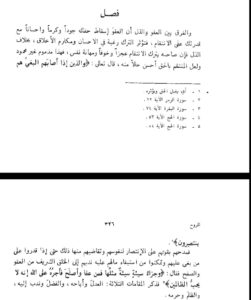
[1] What is (الوَرَعِ)? Al-Manaawee, may Allah have mercy upon him, said about (الوَرَعِ – Al-Wara): “It said that it is to abandon what causes you to doubt, negate what brings you blame (disgrace), and adhere to what is most reliable (certified).”

Source: at-Tawqeef Alaa Muhimmaat at-Ta’aareef. p. 336

Caution to Ourselves, Our Children, and Companions: The Peril of Pushing Concessions Too Far

In The Name of Allah, The Most Merciful, The Bestower of Mercy.

A’isha, may Allah be pleased with her,  reported that Allah’s Messenger, peace and blessings of Allah be upon him, did something and allowed his people to do it, but some people refrained from doing it. When the Prophet learned of that, he delivered a sermon, and after having praised Allah, he said, “What is wrong with such people who refrain from doing a thing that I do? By Allah, I know Allah better than they, and I am more afraid of Him than they.” [Al-Bukhari 6101]

Ibn Abbas, may Allah be pleased with him and his father,  reported that Allah’s Messenger, peace and blessings of Allah be upon him, said: “Verily, Allah loves for you to take His concessions, just as He loves you to fulfill the things He has obligated.” [Sahih Ibn Hibban 354]


Unjustified Pursuit of Concessions and Odd Matters

Ibrahim Ibn Abee Ablah (died 152AH – may Allah have mercy upon him) said, “He who carries the odd affairs of knowledge carries a lot of evil”. [1]

Abdur Rahmaan Bin Mahdi (died 198AH – may Allah have mercy upon him) said, “The one who pursues the odd affairs of knowledge cannot be an Imam in knowledge”. [2]

Imam ash-Shaatibee, may Allah have mercy upon him] stated regarding the attitude of unjustified pursuit of concessions, “This arises from following one’s desires. Desire leads to a ‘too easy going attitude’ and the pursuit of concessions for oneself and others. So, you see him (i.e. such person) adopting that for himself or passing that judgment for his relative or friend, which he would not do for another person, due to the desire of that relative and friend”. [3]

He, may Allah have mercy upon him, said, “If a Mukallaf [i.e. the sane one who has reached the age in which the obligations of the Shariah are obligated to him or her] seeks after concessions in the Madhabs in every affair that is difficult for him and every statement that agrees with his desires, then he will remove himself from the firm handhold of piety and persist upon the pursuit of desires”. [4]

He, may Allah have mercy upon him, also stated regarding the attitude of the unjustified pursuit of concessions: “This arises from following one’s desires. Desire leads to a too easy going attitude and the pursuit of concessions for oneself and others. So, you see him adopting that for himself or passing that judgment for his relative or friend, which he would not do for another person due to the desire of that relative and friend”. [5]

He, may Allah have mercy upon him, also said: “If a Mukallaf [i.e. the sane one who has reached the age when the obligations of the Shariah are obligated on him or her] seeks after concessions in the Madhabs in every affair that is difficult for him and every statement that agrees with his desires, then he will remove himself from the firm handhold of piety and persist upon the pursuit of desires”. [6]

“f desires enter (a person), it leads to following the ambiguous matters out of being eager to prevail and become victorious through establishing excuses in issues related to difference of opinion (or differing); but rather it leads to splitting, disharmony, enmity, and hatred due to the different desires and lack of (sound) agreement; however, the Shariah came to curtail (vain) desires completely. If some of the premises of the evidence were not established except through desires, it would not result except in following desires and that is contrary to the Shariah, and opposing the Shariah is not fr of the Shariah at all. Therefore, following desires concerning what one may regard to be adherence to the Shariah is tantamount to misguidance.”. [7]

Imam Abdul Aziz Bin Baz, may Allāh have mercy upon him, said:

It is obligated to you to adhere to evidence and not (seek) concessions. Some of the pious predecessors said: “Whoever pursues concessions may fall into Zandaqah (hypocrisy or disbelief). Every Mad’hab contains some errors- some mistakes from some of its followers or from the Imam to whom it is attributed, who may have erred in some narrations or some hadiths were hidden from him. Therefore, a student of knowledge should not chase after concessions. If there is a difference of opinion on an issue and it is not one about which there is consensus, there are treatises among the people of knowledge, and the student of knowledge should (diligently) search for evidence and examine the more compelling statement or the one supported by stronger evidence, then he takes that which is established based on evidence and he does not chase after concessions. [8]

Imam Muhammad Ibn Salih Al-Uthaymin, may Allāh have mercy upon him, said:

The facilitation of ease is what aligns with the essence of the religion. From this, we know that when two scholars differ in their opinions and it is not clear which view carries greater weight, neither in terms of evidence nor derivation of proofs, and both are reputable scholars in their knowledge and trustworthiness and the evidence is not clear as well as the derivation of proofs, yet they hold differing views—one being more stringent than the other—whom should we follow? The response: We should follow the easier option and it is said (we follow) the more stringent one, as it is deemed more cautious. However, this statement requires further examination, as the most cautious approach would be what aligns more with the Shariah and the easier option would be what aligns more with the Shariah. [9]

He, may Allah have mercy upon him, also said:

The jurists -may Allāh have mercy upon them, defined Muru’ah [manliness, sense of honour, honourable behaviour] in the Book of Testimonies, stating: “Doing what beautifies and adorns (a person’s character), while avoiding what may tarnish one’s character or reputation. This definition is general. Anything that beautifies and adorns you in the eyes of the people, and serves as a reason for praise for you, is considered Muru’ah, even if it does not fall under acts of worship. And everything opposite of this is contrary to Muru’ah. [10]

Al-Allaamah Saaleh Al-Fawzaan [may Allaah preserve him] was asked about those who follow the legislated Islamic concessions?

He replied: The religion is an Amaanah- an amaanah between the slave and his Lord. It’s obligatory that he fulfils it (the religious duties) as Allah and his messenger have commanded. Whoever performs the obligations, refrains from the prohibited affairs, (does) that which he is able from the Mustahabbaat (recommended deeds) and abandons the Makroohaat (disliked actions), this is the Amaanah between the slave and his lord. The concessions are only allowed when there is a need and necessity (to utilise) them. Utilise them in accordance with necessity- with a need for the concession. Just like the sick person combines between two prayers, performs Tayyamum if he cannot use water for purification and doesn’t fast in Ramadhaan (i.e. when travelling etc), and a traveler shortens the prayers. This is a religious concession used at the time of its requirement. As for using concessions in other than their correct place (i.e. situation), then this is not permissible. Allah did not permit that for him (in such situation). Indeed He (Allaah) only placed the concessions at specified times and situations, and they are not used in other than these (times and situations). Therefore, it is obligated to the Muslim that he fears Allah and that he establishes that which Allah has obligated to him. [11]

Reminder to Those Youth You Have Gone to Study And Are Teachers or Will Be Teachers In Future InShaAllah

Imam Ibn Al-Qayyim, may Allah have mercy upon him, said:

“The loftiest ambition in pursuit of knowledge is to acquire knowledge from the Qur’an and the Sunnah- to be granted understanding by Allah [i.e. blessed to acquire sound knowledge and act upon it] and through the Sunnah of the Messenger, and acquaint oneself with the boundaries of the revelation [i.e. neither going into excess nor being lackadaisical]. And the most baseless ambition of the students of knowledge is to confine their ambitions in following the bizarre affairs and that which has neither occurred nor has it been revealed, or acquainting (oneself) with the differences of opinion and pursuing the statements of the scholars, whilst having no ambition to acquaint oneself with what is correct among those statements. Little is there to benefit from the knowledge of these people”. [12]

Imam Muhammad Ibn Salih Al-Uthaymin, may Allāh have mercy upon him, said:

We have decided to explain the book “Hilya Talib Al-Ilm” after consultations and suggestions from our students at the central Masjid. This is because if a student of knowledge lacks virtuous character, then there is no benefit in his pursuit of knowledge; instead it is obligated to a person that whenever he acquires knowledge of something related to virtuous deeds or acts of worship, he (strives) to implement it. If he does not do so, then he and the ignorant person will be the same; rather, the ignorant person may be in a better position because he deliberately abandons it  unlike the ignorant person. This is because the ignorant person may act if he knows unlike the one who knows yet does not follow. Therefore, I urge both myself and you to embody virtuous manners, patience, perseverance, forgiveness, and kindness to the best of our abilities. This is besides the great advice – fear of Allāh – about which Allāh says:

وَلَقَدْ وَصَّيْنَا ٱلَّذِينَ أُوتُوا۟ ٱلْكِتَٰبَ مِن قَبْلِكُمْ وَإِيَّاكُمْ أَنِ ٱتَّقُوا۟ ٱللَّهَ

And verily, We have recommended to the people of the Scripture before you, and to you (O Muslims) that you (all) fear Allah, and keep your duty to Him. [An-Nisa 131] [13]

Al-Allaamah Abdur-Rahmaan Bin Yahyah Al-Mu’allimee, ay Allah have mercy upon him] said, “And know that some of the sincere ones fall into error by the will of Allah as a trial for others, as to whether they will follow the truth and abandon his speech, or be deceived by his virtuousness and lofty (status)? He (i.e. this sincere scholar) is excused; rather he is rewarded for striving to reach the correct verdict and his intention to reach good, and he is not degraded. However, the one who follows him (out of being) deceived by his great (status) without turning towards the real evidences in Allah’s Book (i.e. the Qur’an) and the Sunnah of His Messenger (peace and blessings of Allah be upon him), he is not excused; rather he is upon a great danger”. [14]


[1] Siyar A’laam An-Nubula 6/324

[2] At-Tamheed 1/64 by Ibn Abdil Barr

[3] Al-Muwaafaqaat. 5/84

[4]Al-Muwaafaqaat. 3/123

[5] Al-Muwaafaqaat. 5/84

[6] Al-Muwaafaqaat. 3/123

[7] Al-Muwaafaqaat 5/221

[8] Paraphrased:

عليك أن تأخذ بالدليل، لا بالرخص، قال بعض السلف: من تتبع الرخص؛ تزندق، كل مذهب يكون فيه بعض الأغلاط، بعض الأخطاء من بعض أتباعه، أو من الإمام الذي هو منسوب إليه أنه غلط في بعض الروايات، وأنه خفي عليه بعض الأحاديث، فطالب العلم لا يتتبع الرخص.
وإذا كان في المسألة خلاف، ما هي بمسألة إجماع، فهناك رسائل بين أهل العلم، فطالب العلم يتحرى الدليل، وينظر في أقرب القولين، أو الأقوى للدليل، فيأخذ بما قام عليه

الدليل، لا بتتبع الرخص

https://binbaz.org.sa/fatwas/2138/%D8%AD%D9%83%D9%85-%D8%AA%D8%AA%D8%A8%D8%B9-%D8%B1%D8%AE%D8%B5-%D8%A7%D9%84%D9%81%D9%82%D9%87%D8%A7%D8%A1

[9]  Paraphrased:

التيسير هو الموافق لروحِ الدِّينِ، مِن هُنَا نَعْلَمُ أَنَّهُ إِذَا اخْتَلَفَ عَالِمِانَ فِي رَأْي ولم يتبين لنا الأَرْجَحُ من قوليها لا من حَيْثُ الدَّلِيلِ، وَلا مِن حَيْثُ الاسْتِدْلَالُ وكُلُّهُمْ عُلَماءُ ثَقَاتِ فِي عِلْمِهِمْ وَأَمَانَتِهِمْ، وَالْأَدلَّةُ لِيسَتْ وَاضِحَةً، وَالاسْتِدْلَالُ كَذَلِكَ، لكن اخْتَلَفَ رَأَيْهَا، أَحَدُهُمَا أَشَدُّ مِن الثَّانِي، فَمَنْ نَتَّبِعُ؟
الجواب: تَتَّبِعُ الأَيْسَرَ ، وقيل : الأَشَدَّ؛ لَأَنَّهُ أَحْوَطُ؛ وهذا القَوْلُ فِيهِ نَظَرُ؛ لأن
الأَحْوَطَ مَا كَانَ أَوْفَقَ لِلشَّرْعِ، وَالأَيْسَرُ هُوَ الأَوْفَقُ لِلشَّرْعِ

Sharh Hilya Talib Al-Ilm page 202. 1st Edition 1434AH Rabi’ ul Awwal

[10] Paraphrased:

والمَرُوءَةُ حَدَّهَا الفقهاء . – رحمهم الله – في
كتاب الشهادات، فقالوا هي: فِعْلُ ما يُجَمِّلُهُ ويُزَيِّنُهُ، وَاجْتِنَابُ مَا يُدَنَّسُهُ وَيُشِيةٌ
وهذه عبارة عَامَّةٌ ، كُلُّ شَيْءٍ يُجَمِّلُكَ عِنْدَ النَّاسِ، وَيُزَيِّنُكَ وَيَكُونُ سَبَبًا للثَّنَاءِ عَلَيْكَ
فهو مَرُوعَةٌ، وإن لم يكن مِنَ العِبادات، وكلُّ شيء عَكْسُ ذلك فهو خلاف المروءة

Sharh Hilya Talib Al-Ilm page 7. 1st Edition 1434AH Rabi’ ul Awwal. page 50

[11] Translated by Abu Aa’isha Amjad Khan. http://www.alfawzan.af.org.sa/node/13751

[12] An Excerpt from Al-Fawaa’id. Page 99

[13] Paraphrased:

فقد قَرَّرْنَا شَرْحَ كتاب «حِلْيَةُ طَالِبِ الْعِلْمِ»، بعد مُشَاوَرَةٍ واقتراح الطلبة لدينا في الجامع؛ وذلك لأنَّ طالب العلم إذا لم يَتَحَلَّ بالأخلاقِ الفَاضِلَةِ فَإِن طَلَبَهُ لِلْعِلْمِ لا فائدة فيه، لكن يَجِبُ على الإنسان كُلَّمَا عَلِمَ شَيْئًا مِن الْفَضَائِلِ أو العِبَادَاتِ أن يقوم به، فإذا لم يفعل فهو والجاهل سواءٌ، بَلِ الْجَاهِلُ أَحْسَنُ حَالًا منه، لأنَّه تَرَكَ الفَضْلَ عن عَمْدٍ بخلاف الجاهل، ولأنَّ الجاهل رُبَّمَا يَنْتَفِعُ إِذا عَلِمَ،
بخلاف من عَلِمَ ولم يَنتَفِعُ .
فلهذا أحثُّ نفسي وإِيَّاكُمْ على التَّحَلي بالأخلاقِ الفَاضِلَةِ، وَالصَّبْرِ والمُصَابَرَةِ، والعفو والإحسان، بقدر المستطاع، هذا بقطع النظر عن الوصية الكبرى، وهي الوَصِيَّةُ بتقوى الله – عز وجل، التي قال الله – تعالى – فيها
وَلَقَدْ وَصَّيْنَا ٱلَّذِينَ أُوتُوا۟ ٱلْكِتَٰبَ مِن قَبْلِكُمْ وَإِيَّاكُمْ أَنِ ٱتَّقُوا۟ ٱللَّهَ

Sharh Hilya Talib Al-Ilm page 7. 1st Edition 1434AH Rabi’ ul Awwal

[14] Raf’ul Ish-tibaah. page 152


In the Silence of My Heart: A Fierce Conversation with the Nafs on Letting Go or Striking Back

In The Name of Allah, The Most Merciful, The Bestower of Mercy.

Imam Ibn Al-Qayyim, may Allah have mercy upon him, said:

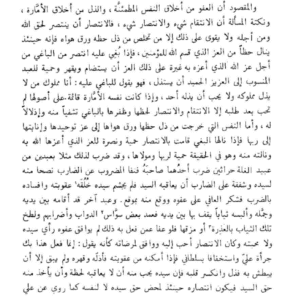
 الفرق بين العفو والذلِّ: أن العفوَ إسقاط حقِّك جُودًا وكرمًا وإحسانًا، مع قدرتك على الانتقام، فتؤثر الترك رغبةً في الإحسان ومكارم الأخلاق، بخلاف الذل، فإن صاحبه يترك الانتقام عجزًا وخوفًا ومهانة نفس، فهذا مذموم غير محمود، ولعل المنتقمَ بالحق أحسنُ حالًا منه

The difference between pardon and humiliation is that pardoning (others) is forgoing your right out of generosity, kindness, and benevolence, despite having the ability to seek revenge. So, you give precedence to abandoning (retaliation) out of a desire for doing good and noble character, as opposed to humiliation because the humiliated one abandons revenge due to inability,  fear, and a sense of personal degradation. This is considered blameworthy and not praiseworthy. It may be that the one who seeks revenge justly is in a better situation than him.

A paraphrased excerpt from “Ar-Ruh” page 325″. Publisher: Dar Kutub Ilmiyyah 1st Edition 1982.


Deeply Entrenched Profound Truthfulness and the Relentless Courage of Self-Scrutiny

In The Name of Allah, The Most Merciful, The Bestower of Mercy.

Husayn Bin Abdir Rahmaan narrated: I was with Sa’eed Bin Jubair when he said, “Who amongst you saw a shooting star last night?” I said, “I did”. Then I said, “I was not in prayer, but was stung by a scorpion”. He said, “Then what did you do?” I said, “I performed Ruqyah…” [1]

Question: Why did Husayn Bin Abdir Rahman mention that he was not in prayer after informing Sa’eed Bin Jubayr that he saw the shooting star last night?!

Answer:

Imam Sa’di, may Allah have mercy upon him, said, “This is because the pious predecessors were far removed from praising a person for something he does not possess”. [2]

Imam Muhammad Ibn Salih Al-Uthaymeen, may Allah have mercy upon him, said: He (Husayn) made this statement to prevent people from thinking that he was engaged in prayer, thus he is praised for what he did not do. This is the opposite of what some people do, as they rejoice when others think they were praying. This behaviour reflects a deficiency in one’s Tawhid. Husayn’s statement is not viewed as showing off, but rather as a virtuous deed. It is not comparable to someone who avoids acts of obedience due to the fear of showing off, as Shaytan manipulates them and convinces them to abandon good deeds due to fear of showing off. Instead, one should perform acts of obedience, but nothing should be in your heart that you desire to be seen by people. [3]

Al-Allamah Salih Aala Ash-Shaykh, may Allah preserve him, said, “He (Husayn) uttered these words due to his fear that those who were present may assume that he saw the shooting star during his prayer. Thus, he disclaimed any association with it. This highlights the virtue of pious predecessors, their eagerness for sincerity, distance from ostentation, and adorning oneself with something not possessed”. [4]

Al-Allamah Rabee Bin Hadi Al-Mad’khali, may Allah preserve him, said: O my brothers! Sincerity is a mighty affair. It is obligated to a Muslim to protect it and self-reflect at all times. One of the pious predecessors: “I used to think that the hadith required an intention [i.e. sincerity when seeking hadith in general], but then I realised that every hadith requires an intention.” So, when you convey or speak, do you desire praise from the people or do you desire the Face of Allah? Do you desire that it is said, “He is a scholar, intelligent, a jurist”, or do you seek the pleasure of Allah and fulfill the duty you bear? [5]

Read: https://abukhadeejah.com/chapter-36-concerning-riya-showing-off-ones-good-deeds-kitab-at-tawheed-ibn-abdul-wahhab/


[1] Saheeh Muslim 220
[2] An Excerpt from “Al-Qawlus Sadeed Sharh Kitaab At-Tawheed”. page 77
[3] An Excerpt from “Al-Qawlul Mufeed Alaa Kitaab At-Tawheed”. 1/97
[4] An Excerpt from “Al-Qawl Al-Mufeed Alaa Kitaab At-Tawheed”. 1/162
[5] An Excerpt from “Marhaban Yaa Taalibal Ilm” pages 53-55

[6] Some Extraordinary Personalities of The First Three Generations

In The Name of Allaah, The Most Merciful, The Bestower of Mercy.

Bishr Ibn Al-Harith, may Allah have mercy upon him

Bishr Ibn Al-Harith Ibn Abdir Rahman Ibn Ataa Ibn Hilaal Ibn Mahan Ibn Abdillah Al-Marwazee. He was well known as for Zuhd. His grandfather Abdullah accepted Islam at the hands of Ali Ibn Abee Talib, may Allah be pleased with him. 

Bishr learnt a lot from Imam Hammad Bin Zayd, may Allah have mercy upon him, Imam Abdullah Ibn Al-Mubarak, may Allah have mercy upon him, Imam Ibn Mahdee, may Allah have mercy upon him, Imam Malik, may Allah have mercy upon him, Imam AbuBakr Bin Ayyash, may Allah have mercy upon him, and others. Thereafter, he busied himself with worship, isolated himself from the people and stopped narrating.

Many of the Imams of the Sunnah praised him due to his devotion to worship, his Zuhd and Taqwah. Imam Ahmad, may Allah have mercy upon him, said when Bishr’s death reached him, “None was like Bishr, except Aamir Bin Abdi Qays, may Allah have mercy upon him. His affair would have been perfected if he got married”.

Ibraheem Arr-Harbi, may Allah have mercy upon him, said, “There was none in Badgdad who was more sensible and restrained his tongue more than Bishr Al-Hafi (i.e. Bishr Ibn Al-Harith)”.

One day he knocked at the door of someone, a young female servant said, “Who is it?” He said, “Bishr Al-Hafi (i.e. Bishr the barefooted)”. The girl said, “If only you bought shoes for a Dirham, the word Hafie would have disappear from us”.

Al-Khatib Al-Baghdadi, may Allah have mercy upon him, stated that Bishr had three sisters and all of them were devout worshippers like him and even more pious. [end of quote] [An Excerpt from Al-Bidayah Wan-Nihayah. 10/ 297-299]

While reading about the lives of these amazing personalities, a sensible person would not desire engaging in argumentation with the people of his era. Rather, he would reflect on his own shortcomings and realise the urgency of striving to follow the path of these noble men. We ask Allah to distance us from everything that diverts us from what is truly beneficial for our afterlife. Amin.

This soft piece of flesh can be very dangerous

The Name of Allah, The Most Merciful, The Bestower of Mercy.

Allah said:

وَلَقَدۡ خَلَقۡنَا ٱلۡإِنسَـٰنَ وَنَعۡلَمُ مَا تُوَسۡوِسُ بِهِۦ نَفۡسُهُ ۥ‌ۖ وَنَحۡنُ أَقۡرَبُ إِلَيۡهِ مِنۡ حَبۡلِ ٱلۡوَرِيدِ
إِذۡ يَتَلَقَّى ٱلۡمُتَلَقِّيَانِ عَنِ ٱلۡيَمِينِ وَعَنِ ٱلشِّمَالِ قَعِيدٌ۬
مَّا يَلۡفِظُ مِن قَوۡلٍ إِلَّا لَدَيۡهِ رَقِيبٌ عَتِيدٌ۬

And indeed We have created man, and We know what his ownself whispers to him. And We are nearer to him than his jugular vein (by Our Knowledge). (Remember!) that the two receivers (recording angels) receive (each human being after he or she has attained the age of puberty), one sitting on the right and one on the left (to note his or her actions). Not a word does he (or she) utter, but there is a watcher by him ready (to record it). [50:16-18]

Allah informed us that He alone created humans -males and females- and He knows all their state of affairs. He knows everything that is hidden about them and what their souls whisper to them. Allah is nearer to them than their jugular veins by His knowledge, even though the jugular vein is the closest thing to the human. Therefore, this should make the human being mindful of Allah -the One Who knows all the hidden affairs in the soul and heart of the human being in all circumstances. This should also make the human being shy in the presence of Allah so that he (she) is not seen committing what Allah has forbidden or abandoning what Allah has commanded. [An Excerpt from ‘Tafsir As-Sadi]

Allah’s Messenger, peace and blessings of Allah be upon him, said, “When the son of Adam wakes up in the morning, all the limbs humble themselves before the tongue and say, ‘Fear Allah for our sake, (for) we are with you; if you are upright, we will be upright; and if you are crooked, we will become crooked’”. [1]

Allah’s Messenger, peace and blessings of Allah be upon him, said: “Whoever can guarantee (the chastity of) what is between his two jaw bones and what is between his two legs (i.e. his mouth, his tongue, and his private parts), I guarantee Paradise for him.” [2]

Al-Fudayl Ibn Iyad, may Allah have mercy upon him, said: “Neither hajj nor taking up positions during battle, nor Jihad is more difficult than restraining the tongue”. [3]

Abdullah Ibn Tawus, may Allah have mercy upon him,  said: Tawus, may Allah have mercy upon him, used to find it difficult to speak for a very long time, and he would say: “I examined my tongue and found it to be malicious”. [4]

Al-Fudayl Ibn Iyad, may Allah have mercy upon him, said: “Some of our companions used to guard their speech from one Jumu’ah to another Jumu’ah.” [5]

It was said to one of the scholars may Allah have mercy upon him,  “Indeed, you do keep quiet for a long time!” He said: “Indeed, I consider my tongue as a wild voracious animal. I fear that if I let it loose, it will hurt me.” [6]

It is said that a man argued with Al-Ahnaf Ibn Qays- may Allah have mercy upon both of them- and said: “If you say one, you will hear ten.” Al-Ahnaf replied: “But if you say ten, you will not hear one!” [7]

Ziyad Ibn Yunus, may Allah have mercy upon him, said: “By Allah, Malik, may Allah have mercy upon him, was the greatest of people in terms of honourabe behaviour, and the one who kept silent the most. When he sat down, he would not get up until he had to, and I saw him as someone who was often silent, spoke little, and guarded his tongue”. Ibn Al-Mubarak said: “Malik was the most patient in dealing with people, and he would leave what did not concern him”. [8]

Al-Hasan Bin Salih, may Allah have mercy upon him, said: “I scrutinised Al-Wara (the fear of Allah that makes one refrain from doubtful matters in order not to fall into haram) and did not find it more lacking in anything than the tongue”. [9]

Yunus Ibn Ubayd, may Allah have mercy upon him, said: “Indeed, you see a man fasting a lot, abstaining from the forbidden deeds and praying the night prayer, whilst he testifies to falsehood in the morning.”  [10]

Ibnul Mubarak, may Allah have mercy upon him, was asked about the statement of Luqman, peace be upon him, to his son: ‘’If speech is from silver, then silence is from gold.” So he said: ‘’It means that if speech in obedience to Allah is from silver, then silence (to refrain from) disobedience to Allah is gold’’. [11]

Riba of The Tongue

https://salafidawahmanchester.com/2023/08/27/riba-usury-of-the-tongue/

Not even a non-Muslim is to be accused falsely. Read:

The Freed Slave Girl, The Precious Stones and The Kite

Even the honour of animals is safeguarded

Qaswa received deserved praise


[1] Sahih at-Tirmidhee 2407
[2] Al-Bukhari 6474
[3] Jami’ul Uloom Wal-Hikam 145
[4] As-Samt page 86
[5] As-Samt page 223
[6] As-Samt page 299
[7] Siyar A’lam An-Nubula 4/93
[80] Tarteeb Al-Madaarik Wa Taqreeb Al-Masaalik 1/127-128
[9] Siyar A’laam An-Nubulaa  7/368
[10] Hilyatul Awliyaa 3/20]
[11] Jami-ul Uloom Wal-Hikam 155]
 

Reflections on some statements of Al-Allamah Rabee Bin Hadi Al-Madkhali 86

In The Name of Allaah, The Most Merciful, The Bestower of Mercy.

O brothers! I warn you against harbouring intentions of seeking after the Dunyah, its status and authority in the affair of learning and seeking knowledge, because indeed (knowledge of the religion) is worship – amongst the best types of worship; rather the religion, acts of worship, Jihad (1) and a (successful) life cannot be established except by way of this knowledge. However, it is obligated on us to purify our intentions in this worship. “Whoever seeks knowledge by which the pleasure of Allah is sought, but he only acquires it for worldly gain, he will not smell the fragrance of Paradise”.

This is a very important point and a great affair which the students of knowledge must be notified, for indeed many of them are heedless of it. And it may be that a person seeks knowledge for the sake of worldly gain or other goals that are not beloved to Allaah -neither legislated nor permitted by Allaah, and thus they fall into destruction. This affair enters into the rebuke directed at the Yahud.

مَثَلُ ٱلَّذِينَ حُمِّلُواْ ٱلتَّوۡرَٮٰةَ ثُمَّ لَمۡ يَحۡمِلُوهَا كَمَثَلِ ٱلۡحِمَارِ يَحۡمِلُ أَسۡفَارَۢا‌ۚ بِئۡسَ مَثَلُ ٱلۡقَوۡمِ ٱلَّذِينَ كَذَّبُواْ بِـَٔايَـٰتِ ٱللَّهِ‌ۚ وَٱللَّهُ لَا يَہۡدِى ٱلۡقَوۡمَ ٱلظَّـٰلِمِينَ

The likeness of those who were entrusted with the (obligation of the) Taurat (Torah) (i.e. to obey its commandments and to practise its legal laws), but who subsequently failed in those (obligations), is as the likeness of a donkey who carries huge burdens of books (but understands nothing from them). How bad is the example (or the likeness) of people who deny the Ayat (proofs, evidences, verses, signs, revelations, etc.) of Allah. And Allah guides not the people who are Zalimun (polytheists, wrong-doers, disbelievers, etc.).

I seek the protection (of Allaah) for myself and you from these blameworthy traits – a person possesses knowledge and does not act upon it, so he is either included (amongst those mentioned in this) Aayah or some of it applies to him. May Allaah protect us and you, for indeed the Messenger, peace and blessings of Allaah be upon him, informed us about the destination of those who perform acts of worship only to be seen, whether it is a student of knowledge, a scholar, a Mujahid or one who spends his wealth.

O my brothers! Sincerity is a great affair. It is incumbent upon a Muslim to guard it and take himself to account at every moment of his life. One of the Salaf said, “I used to hold that the hadith requires a Niyyah [i.e. sincere intention for seeking knowledge of hadith], but then I realised that every hadeeth requires a (sincere) intention”. Therefore, when you narrate or speak, do you desire praise from the people or do you desire the Face of Allah, The Blessed and Exalted? Do you desire that it is said, “He is a scholar; he is intelligent; he is a learned person of sound, precise and robust understanding” or do you desire the Face of Allaah and to fulfil the responsibility you carry (i.e. knowledge of the religion).

An Excerpt from Marhaban Yaa Talib Al-Ilm’ pages 53-55. slightly paraphrased


(1) Salafi Shaikh Fawzaan on Jihad in our times and the guidelines of Jihad according to Islam

Salafi Shaikh Fawzaan on Jihad in our times and the guidelines of Jihad according to Islam

Abdullah Ibn Mas’ud

In The Name of Allah, The Most Merciful The Bestower of Mercy.

One day, he, may Allah be pleased with him, came out and the people followed him, so he said to them, “Do you have a need?” They said, “No, but we want to walk together with you”. He said, “Go back, for indeed it is humiliation for the one following and a trial for the one followed”. (1)

He said to his companions:

”You observe fasting, perform prayer and Jihaad more than the companions of Muhammad, peace and blessings of Allah be upon him, yet they were better than you”. They said, “Why is that the case?” He said, “They practiced more abstinence from the worldly life and were more desirous of the hereafter”. (2)

Abu Khaythama narrated to us, (saying): Mu-aawiyyah Ibn Amr related to us that Zaa’idah related from Al-A’mash from Tameem Ibn Salamah from Abu Ubaydah from Abdullah (Ibn Mas”ud) who said: ”O people, learn; and whoever learns, then let him act.” (3)

Abu khaythama narrated to us, saying: Muhammad Ibn Khaazim related to us, saying: Al-Amash reported to us from Shaqeeq from Abdullaah (Ibn Mas’ood), who stated:”I swear by Allaah the one who gives a verdict to the people in everything they ask him is insane indeed.” Al-A’mash said: Al-Hakam said to me:”If I heard this hadeeth from you prior to this day, I would not have given a verdict in many of the affairs I issued a verdict.” (4)

Uthmaan Ibn Hadir Al-Azdee said: I entered upon Ibn Mas’ud, may Allah be pleased with him, and said to him: ”Advise me.” He said: ”Be upon steadfastness; follow and do not innovate. Follow the first tradition (i.e. the way of the salaf) and do not innovate.” (5)

He said: Whoever has knowledge, then let him speak with it. And whoever does not have knowledge, then let him say, “Allah knows best”, for indeed Allah said to His Prophet:

قُلْ مَا أَسْأَلُكُمْ عَلَيْهِ مِنْ أَجْرٍ وَمَا أَنَا مِنَ الْمُتَكَلِّفِينَ

Say (O Muhammad): “No wage do I ask of you for this (the Qur’an), nor am I one of the Mutakallifun (those who pretend and fabricate things which do not exist). [Surah Saad. 86] (6)


(1) Az-Zuhd 195 by Imaam Ahmad

(2) Jaami-ul Uloom Wal-Hikam: page: 318

(3) Kitaab Al- Ilm by Abu Khaythama with the checking of Imam Albaanee page:7, narration number 4

(4) Kitaab Al-Ilm by Abu Khaythama with the checking of Imaam Al-Albaanee (rahimahullaah): page: 8. Narration Number: 10

(5) Quoted by Shaikh Jamaal Al-Fareehaan Al-Haarithee in Durar Al-Manthoor page 20, and the Shaikh referenced this statement of Ibn Mas’ood to As-Sunnah No:29 and Dhammul Kalaam Wa-Ahli, No:334]

(6) I’laam Al-Muwaqqi’een 2/185