Admonition to Those—Wherever They May Be—Who Carry Tales to Ruin Relationships

In The Name of Allah, The Most Merciful, The Bestower of Mercy.

Asma Bint Yazid, may Allah be pleased with her, said: The Prophet, peace and blessings of Allah be upon him, said, “Shall I not tell you about the best of you?” They said, “Certainly”. The Prophet said, “Those who, if they are seen, they remind you of Allah. Shall I not tell you about the worst of you?” They said, “Certainly”. The Prophet said, “Those who carry tales and ruin relations between those who loved one another, seeking misery for the innocent.” [1]

“Those who carry tales”. 

Their habit – constantly and always – is to embark upon transmitting corrupt speech.

They do this to sow corruption (or ruin the good relationships between people).

You find two people – two people upon brotherhood and friendship, however due to the endevour of a tale-carrier, he (the tale-carrier) does not cease transmitting speech from this one to that one until an incident occurs between them…[2] [End of quote]

One of the bad behaviours of some people during our teenager years was that they would feign agreement to gain your trust and then transmit your disagreements to someone else whom they knew strongly disagrees with you. This was nothing but treachery regardless of the good character put on by the perpetrator.


[1] al-Adab al-Mufrad 323
[2] https://www.alathar.net/home/esound/index.php?op=codevi&coid=258598 a paraphrased excerpt from a statement of Imam Al-Albani, may Allah have mercy upon him.

Repentance with Responsibility

In The Name of Allah, The Most Merciful, The Bestower of Mercy.

Imam Abdul Azeez Bin Baz, may Allah have mercy upon him, said:

وشروط التوبة ثلاثة: الندم على الماضي مما فعلت ندمًا صادقًا، والإقلاع من الذنوب، ورفضها وتركها مستقبلًا طاعة لله وتعظيمًا له، والعزم الصادق ألا تعود في تلك الذنوب، هذه أمور لا بد منها.
أولا: الندم على الماضي منك والحزن على ما مضى منك.
الثاني: الإقلاع والترك لهذه الذنوب دقيقها وجليلها.
الثالث: العزم الصادق ألا تعود فيها.
فإن كان عندك حقوق للناس، أموال أو دماء أو أعراض فأدها إليهم، هذا أمر رابع من تمام التوبة، عليك أن تؤدي الحقوق التي للناس؛ إن كان قصاصًا تمكن من القصاص إلا أن يسمحوا بالدية، إن كان مالًا ترد إليهم أموالهم إلا أن يسمحوا، إن كان عرضًا كذلك تكلمت في أعراضهم، واغتبتهم تستسمحهم، وإن كان استسماحهم قد يفضي إلى شر فلا مانع من تركه، ولكن تدعو لهم وتستغفر لهم، وتذكرهم بالخير الذي تعلمه منهم في الأماكن التي ذكرتهم فيها بالسوء، ويكون هذا كفارة لهذا.

The conditions of repentance are three: Truthful remorse for past actions, the cessation of sins, and a commitment to avoid them in the future as an act of obedience to Allah and exaltation of Him. There must be a truthful determination not to return to those sins. These three things are essential.

First, one must regret past deeds and be sorrowful for what has transpired. Second, there must be a complete abandonment of big and small sins. Third, a truthful resolve not to revert to those sins. If you owe people their rights, whether in the form of wealth, blood, or honour, you give them back their rights. This is the fourth matter that would constitute complete repentance. You must return the rights owed to others. It should be carried out if it involves retribution unless they agree to accept compensation. If it pertains to financial matters, you are required to return their property unless they forgo it. If it is to do with honour- if you have violated their honour- and backbit them, you should seek their forgiveness. However, if seeking their forgiveness may lead to further harm, there is no obstacle to refraining from doing so. Instead, you should supplicate for them, ask for Allah’s forgiveness for them, and mention them with the good you know about them in the places (or instances, situations) you (previously) spoke ill of them and this would be an atonement for your actions. [1] [End of quote] Paraphrased

The Prophet, peace and blessings of Allah be upon him, said: “Whoever has wronged his brother, should ask for his pardon (before his death), as (in the Hereafter) there will be neither a Dinar nor a Dirham. (He should secure pardon in this life) before some of his good deeds are taken and paid to his brother, or, if he has done no good deeds, some of the bad deeds of his brother are taken to be loaded on him (in the Hereafter)”. [Al-Bukhari 6534]

Pride’s Mask

In the clan’s fire, we learned: Refusal to bow, to say forgive me, is no sign of strength— It is weakness in armour’s disguise. Pride that clings to self-image Poisons harmony, Turns apology into a battlefield, And truth into shadow. To shift blame is to weave deceit; To feign remorse is to wound deeper. True honour is humble, Strong enough to bend, Brave enough to repent. Victimhood chains the soul, while arrogance blinds the heart. But apology—sincere, unmasked—Is light, A bridge to mercy, a safeguard for the Hereafter.

Al-Haafidh Ibn Hajr, may Allah have mercy upon him, said: “Diverting from the truth and playing tricks to reject it: what is intended is that when one dispute with another person, he employs every way – other than what is legislated in the Shariah – to play tricks until he takes the rights of his opponent, and by way of this he diverts from the straight path”. [Fat-hul Baaree 1/90]

Al-Haafidh Ibn Rajab, may Allah have mercy upon him, said: “If a man has the ability when arguing – whether it is a dispute in religion or a worldly affair – to defend falsehood and make it appear to the listener that what he says is truth, seek to weaken the truth and present it in the image of falsehood, then this is one of the ugliest of forbidden deeds and vilest traits of hypocrisy (in one’s deeds)”. [Jami Al-Uloom Wal Hikam 1/432]

We ask Allah:
اللهم كما حَسَّنْت خَلْقِي فَحَسِّنْ خُلُقِي

“O Allah! Just as You made my external form beautiful, make my character beautiful as well”.


[1]https://binbaz.org.sa/fatwas/20276/%C2%A0%D8%AA%D9%88%D8%AC%D9%8A%D9%87-%D9%86%D8%B5%D9%8A%D8%AD%D8%A9-%D9%81%D9%8A-%D8%A7%D9%84%D8%AA%D9%88%D8%A8%D8%A9-%D8%A7%D9%84%D9%89-%D8%A7%D9%84%D9%84%D9%87#:~:text=%D9%88%D8%B4%D8%B1%D9%88%D8%B7%20%D8%A7%D9%84%D8%AA%D9%88%D8%A8%D8%A9%20%D8%AB%D9%84%D8%A7%D8%AB%D8%A9%3A%20%D8%A7%D9%84%D9%86%D8%AF%D9%85%20%D8%B9%D9%84%D9%89,%D9%87%D8%B0%D9%87%20%D8%A3%D9%85%D9%88%D8%B1%20%D9%84%D8%A7%20%D8%A8%D8%AF%20%D9%85%D9%86%D9%87%D8%A7

Can I enjoin good, forbid evil, and share admonitions, even though I am weak in Iman?!

Imam Abdul Aziz Bin Baz, may Allah have mercy upon him, said:

Undoubtedly, the devil seeks to dissuade individuals from fulfilling what Allah has obligated to them with regards to enjoining good and forbidding evil through various forms of doubt and misinterpretation. At times, he may approach them by suggesting that they are lacking and not perfect, questioning how they can command and forbid! At other moments, he may instill fear of being perceived as insincere in their actions. All of this is a cunning ploy of the devil, for it is not a prerequisite for one who commands and forbids to be flawless. Rather, they should enjoin the good they are aware of and forbid the evil, even if they themselves possess shortcomings or some sins.

He should be eager fulfill what Allah has commanded and abandon what Allah has forbidden, but this does not prevent him from that (i.e. from enjoining good and forbidding evil), rather, he should strive and fear Allah by enjoining good and forbidding evil based on clear sightedness. He does not enjoin except based on clear sightedness and knowledge, as Allah said:

قُلْ هَذِهِ سَبِيلِي أَدْعُو إِلَى اللَّهِ عَلَى بَصِيرَةٍ

Say, this is my path; I invite to Allah with insight. [Yusuf: 108]

If he observes within his household or among his brothers someone being negligent regarding the prayers, this is a clear matter that does not require extensive knowledge; prayer is well-known to all. Therefore, it is incumbent upon him to enjoin good, saying: “O my brother, fear Allah, join the Muslims in prayer, and safeguard it,” employing a good manner and making the person fearful of Allah’s punishment and the sickness of their heart.

Therefore, O brother, you must enjoin good and forbid evil, even if you have some shortcomings.  [1]

Imām al-Nawawī, may Allah have mercy on him, said: “The scholars said: It is not a condition for the one who enjoins good and forbids evil that he himself be perfect in his state, fully practicing what he commands, and completely avoiding what he forbids. Rather, he is still obliged to enjoin good even if he himself falls short in what he commands, and he must forbid evil even if he himself is involved in what he forbids. For he is required to do two things: to command and forbid himself, and to command and forbid others. So if he fails in one of them, how could that make it permissible for him to neglect the other?” [2]

Al-Qāḍī Abū Yaʿlā, may Allah have mercy upon him, said: “It more befitting (or obligatory) that the one who enjoins good and forbids evil is wrong be from among those known for modesty, integrity, uprightness, and one accepted among the people; because when he is of such a description, the one being admonished will hold him in awe, and may respond to him and return to what he says… And because a person of this quality—his words have a stronger impact on the hearts and are closer to being accepted.” [3]

In expressing all of this, it is essential to recognize that despite our imperfections and transgressions, we are still obligated to promote virtue and discourage vice. Nevertheless, we must not be complacent regarding the serious repercussions of failing to adhere to the principles we advocate for others or neglecting to abstain from the actions we advise others to avoid. “A man will be brought on the Day of Resurrection and thrown in the (Hell) Fire, so that his intestines will come out, and he will go around like a donkey goes around a millstone. The people of (Hell) Fire will gather around him and say: “O so-and-so! What is wrong with you? Didn’t you use to order us to do good deeds and forbid us to do bad deeds?” He will reply: “Yes, I used to order you to do good deeds, but I did not do them myself, and I used to forbid you to do bad deeds, yet I used to do them myself.” [Sahih al-Bukhari 3267]


[1]Parapgrasedhttps://binbaz.org.sa/fatwas/3357/%D8%AD%D9%83%D9%85-%D9%85%D9%86-%D9%8A%D8%A7%D9%85%D8%B1-%D8%A8%D8%A7%D9%84%D9%85%D8%B9%D8%B1%D9%88%D9%81-%D9%88%D9%8A%D9%86%D9%87%D9%89-%D8%B9%D9%86-%D8%A7%D9%84%D9%85%D9%86%D9%83%D8%B1-%D9%88%D8%B9%D9%86%D8%AF%D9%87-%D8%AA%D9%82%D8%B5%D9%8A%D8%B1

[2] Sharḥ Ṣaḥīḥ Muslim 2/23)

[3] Risālat al-Amr bil-Maʿrūf p.47

Skin lightening – a problem of some black and Asian women

In The Name of Allah, The Most Merciful, The Bestower of Mercy.

Allah, The Most High, said:

ٱلَّذِىٓ أَحْسَنَ كُلَّ شَىْءٍ خَلَقَهُۥ وَبَدَأَ خَلْقَ ٱلْإِنسَٰنِ مِن طِينٍ

Who made everything He has created good, and He began the creation of man from clay. [Al-Sajdah 7]

Allah, The Most High, said:

وَمِنۡ ءَايَـٰتِهِۦ خَلۡقُ ٱلسَّمَـٰوَٲتِ وَٱلۡأَرۡضِ وَٱخۡتِلَـٰفُ أَلۡسِنَتِڪُمۡ وَأَلۡوَٲنِكُمۡ‌ۚ إِنَّ فِى ذَٲلِكَ لَأَيَـٰتٍ۬ لِّلۡعَـٰلِمِينَ

And among His Signs is the creation of the heavens and the earth, and the difference of your languages and colours. Verily, in that are indeed signs for men of sound knowledge]. [Al Rum. 22]

A troubling trend is observed among some black and Asian women, particularly in the pursuit of beauty, while often ignoring the truth that beauty is subjective and varies from person to person. Those who break free from the influence of those who exploit beauty standards as a means of asserting racial superiority or perfection are the ones who recognize that beauty is a deeply personal concept. Each culture has its own definition of physical beauty, which may differ from that of another nation, although there are instances where countries share similar views on beauty regarding appearance and physical characteristics. However, this article aims to highlight the extreme lengths some individuals go to in order to change their physical appearance due to feelings of inferiority, which can lead to self-harm. In this context, we must acknowledge the dangerous practice of skin lightening, which many pursue to attain a lighter skin tone. According to experts, this practice can diminish the concentration or production of melanin in the skin, and melanin is the pigment responsible for skin color and its protection against sun damage.

Some have argued that this perilous and addictive behaviour originated from the inferiority complex instilled by colonialists in those who were entirely deprived of their identity or those who equate beauty with the standards set by the previous slave master, as mental slavery is more abiding than physical slavery. Therefore, this issue cannot be resolved unless there is an understanding that, above all, beauty lies in the eye of the beholder. Most importantly, even if an individual is deemed beautiful or attractive—an inherently subjective assessment—it is perfectly acceptable for someone to embrace their own definition of beauty without allowing it to devolve into racial bias or inferiority complex. Ultimately, what should be prioritised by a believer or a rational individual is inner beauty. Read the article:  https://salafidawahmanchester.com/wp-content/uploads/2021/07/Admonitions-of-The-Scholars-Regarding-Good-Manners.pdf

Consequently, following the end of the demoralisation inflicted by certain colonialists—such as the practice of segregating dark-skinned slaves from their lighter-skinned counterparts by forcing the former to toil under the sun on plantations while the latter worked in the houses—there is no justification for any black woman, in particular, to chase after a notion of beautification that reflects an inferiority complex. However, many black and Asian women staunchly oppose the practice of skin bleaching, recognising its ties to colonialism.

The sensible person aims to nurture the next generation with a solid foundation of faith, strong confidence, and a clear sense of identity. When it comes to their preferences in a spouse, they do not poke their noses into what physical beauty is appealing to their children, as we have previously mentioned that beauty is subjective. In addition and most important of all, they educate them to recognise that true status, dignity, and inner beauty are rooted in Islam, and as the Prophet, peace and blessings of Allah be upon him, stated: ““Verily, Allah does not look at your appearance or wealth, but rather He looks at your hearts and actions.” [Sahih Muslim 2564]

Having committed themselves to instilling values of virtue and piety in their children, they take pride in their choice to marry individuals of any skin color. They rejoice in the fact that they will not select a partner burdened by an inferiority complex, whether related to skin tone or any other aspect, as Islam fosters dignity and virtue.

Imam Muhammad Ibn Salih Al-Uthaymin, may Allah have mercy upon him, was asked:

It has become widespread among the people, especially women, to use some chemicals and natural herbs that change the colour of the skin, so that coloured (brown or non-white skin) becomes white after applying these chemicals and natural herbs, and so on. Is there a Sharee’ah prohibition against this? And bear in mind that some husbands command their wives to use these chemicals and natural herbs whilst citing as proof that it is obligated on a woman to beautify herself for her husband.

Answer: If this change is permanent, then it is forbidden; rather it is one of the major sins, because indeed it is worse than tattooing in relation to altering what Allah has created. Indeed, it has been established (by way authentic narration) from the Prophet (peace and blessing of Allah be upon him) that he cursed the women who do hair extensions and the woman who does it for others, the woman who does tattoos and the woman who does it for them. In Bukhari and Muslim, Abdullah Ibn Mas’ud, may Allah be pleased with him, said, “May Allah curse the women who do tattoos and the women who have them done, and the women who pluck eyebrows and the women who have that done, and the women who file their teeth for the purpose of beautification, those who change the creation of Allah”. And he said, “Why should I not curse those whom the Messenger of Allah (peace and blessings of Allah be upon him) cursed?”

The one who attaches hair extensions is the one whose hair is short so she adds something to it, whether hair or something similar. The woman who does tattoos is one who puts the tattoo on the skin by inserting a needle and what is similar, then she fills that place with kohl or something similar which alters the colour of the skin. The woman who seeks for tattoos to be done is the one who asks someone else to do a tattoo on her. The woman who plucks eyebrows is the one who plucks hair from the face- from her eyebrows or for others. The woman who seeks for that to be done is the one who asks that her eyebrows are plucked. The woman who files her teeth is the one who asks someone else to file her teeth in order to widen the gaps between them. All of these deeds are tantamount to changing what Allah has created and what has been stated in the question is more severe – with regards to changing what Allah has created – than what has been stated in the hadeeth. But if the change is not permanent, such as henna and the like, then there is nothing wrong with it because it will disappear, such as kohl, using red cosmetic on the cheeks and lips. Therefore, it is obligatory to be careful, warn against altering what Allah has created and spread the warning among the Ummah lest evil spread, become widespread and difficult to reverse it. [Majmu Al-Fataawaa 17/20-21]

And Allah knows best

Verification sought from the Jerusalem Post concerning certain quotes ascribed to the Talmud

In The Name of Allah, The Most Merciful, The Bestower of Mercy.

Allah, The Most High, said:

يَٰٓأَهْلَ ٱلْكِتَٰبِ قَدْ جَآءَكُمْ رَسُولُنَا يُبَيِّنُ لَكُمْ كَثِيرًا مِّمَّا كُنتُمْ تُخْفُونَ مِنَ ٱلْكِتَٰبِ وَيَعْفُوا۟ عَن كَثِيرٍ قَدْ جَآءَكُم مِّنَ ٱللَّهِ نُورٌ وَكِتَٰبٌ مُّبِينٌ
يَهْدِى بِهِ ٱللَّهُ مَنِ ٱتَّبَعَ رِضْوَٰنَهُۥ سُبُلَ ٱلسَّلَٰمِ وَيُخْرِجُهُم مِّنَ ٱلظُّلُمَٰتِ إِلَى ٱلنُّورِ بِإِذْنِهِۦ وَيَهْدِيهِمْ إِلَىٰ صِرَٰطٍ مُّسْتَقِيمٍ

O people of the Scripture! Now has come to you Our Messenger (Muhammad ) explaining to you much of that which you used to hide from the Scripture and passing over (i.e. leaving out without explaining) much. Indeed, there has come to you from Allah a light (Prophet Muhammad) and a plain Book (this Quran). Wherewith Allah guides all those who seek His Good Pleasure to ways of peace, and He brings them out of darkness by His Will unto light and guides them to a Straight Way (Islamic Monotheism). [Al-Ma’idah 15-16]

Allah, The Exalted, said:

فلذلك فادع واستقم كما أمرت ولا تتبع أهواءهم وقل آمنت بما أنزل الله من كتاب وأمرت لأعدل بينكم الله ربنا وربكم لنا أعمالنا ولكم أعمالكم لا حجة بيننا وبينكم الله يجمع بيننا وإليه المصير

So unto this (religion of Islam, alone and this Qur’an) then invite (people) (O Muhammad ), and Istaqim [(i.e. stand firm and straight on Islamic Monotheism by performing all that is ordained by Allah (good deeds, etc.), and by abstaining from all that is forbidden by Allah (sins and evil deeds, etc.)], as you are commanded, and follow not their desires but say: “I believe in whatsoever Allah has sent down of the Book [all the holy Books, this Qur’an and the Books of the old from the Taurat (Torah), or the Injeel (Gospel) or the Pages of Ibrahim (Abraham)] and I am commanded to do justice among you, Allah is our Lord and your Lord. For us our deeds and for you your deeds. There is no dispute between us and you. Allah will assemble us (all), and to Him is the final return. [Ash-Shuraa. 15]

[وَأُمِرۡتُ لِأَعۡدِلَ بَيۡنَكُمُ‌ۖ – And I am commanded to do justice among you]. Meaning, when passing judgement regarding that which you have differed between yourselves. Therefore, your enmity and hatred does not prevent me from judging with justice between you. And from justice is that when judging between people who make different statements – amongst the people of the Scripture and others – one accepts what they possess of truth and reject what they possess of falsehood. [ٱللَّهُ رَبُّنَا وَرَبُّكُمۡ‌ۖ لَنَآ أَعۡمَـٰلُنَا وَلَكُمۡ أَعۡمَـٰلُڪُمۡ‌ۖ لَا حُجَّةَ بَيۡنَنَا وَبَيۡنَكُمُ‌ۖ ٱللَّهُ يَجۡمَعُ بَيۡنَنَا‌ۖ وَإِلَيۡهِ ٱلۡمَصِيرُ – Allah is our Lord and your Lord. For us our deeds and for you your deeds. There is no dispute between us and you. Allah will assemble us (all), and to Him is the final return].

[لَا حُجَّةَ بَيۡنَنَا وَبَيۡنَكُمُ‌ۖ – There is no dispute between us and you]. Meaning, there is no dispute between us and you after the realities have been manifested, and after the clear distinction between truth and falsehood, and after the clear distinction between guidance and misguidance, there is no room for debate because the goal behind debate is to distinguish between right and wrong, so that the one to be guided is guided and the proofs established against the misguided one. [ٱللَّهُ يَجۡمَعُ بَيۡنَنَا‌ۖ وَإِلَيۡهِ ٱلۡمَصِيرُ – Allah will assemble us (all), and to Him is the final return]. [Tafsir As-Sadi]

The Editor
Jerusalem Post
Dear Mr or Mrs……

I recently encountered an article online that included quotes attributed to the Talmud. Although we, as Muslims, recognize that previous Scriptures have been altered, leading to corruption in derived texts in many cases, I wish to confirm whether these quotes genuinely originate from the Talmud. I lack access to the Talmud and do not comprehend the language in which it was originally written or compiled. My motivation for verifying these quotes stems from my firm belief that noble Musa and Harun, along with other noble prophets sent to Bani Israel, peace and blessings of Allah be upon them, would never express or endorse the views and beliefs promoted in these quotes. It is clear to me that some of the quotes I found are likely the personal opinions of individuals who have strayed from the teachings of the prophets of Bani Israel. Therefore, I kindly request that you confirm whether these quotes are indeed from the Talmud, and if they are, whether their English translations accurately reflect what is contained in the Talmud. Conversely, if these quotes are misinterpretations or distortions, I would appreciate your clarification on that matter. While I await your response, I will also seek to uncover the origins of these quotes from Arab scholars who have addressed this topic. However, it is only fair that we also consider your perspective, especially since you often assert that there is a significant amount of misinformation about you since the onset of the Gaza conflict.

Expecting a reply

Abdullah Jallow

Some of The Quotes


All quotes on this link:

Masjid Al-Furqan Admin (Rusholme – Manchester), Tim Humble and Abdur Rahman Hasan

In The Name of Allah, The Most Merciful The Bestower of Mercy.

Abu Hurairah, may Allah be pleased with him, said: The Messenger, peace and blessings of Allah be upon him, said, “A man is upon the religion of his bosom friend, so let one of you look to who he befriends”.

Al-Allamah Zaid bin Hadi Al-Mad’khali, may Allah have mercy upon him, said:

This hadith contains a Prophetic wisdom and a tremendous advice to the Muslims – that they accompany the best people and be distant from the evil people, for indeed the one who accompanies the best people will be [benefited] through good statements and deeds that are pleasing to Allah [The Blessed and Exalted], and one’s status raised in the sight of Allah. On the contrary, the one who accompanies evil people and his soul inclines towards them, he’ll earn abundant evil and turn away from good, and thus he’ll be a loser in this world, in the grave and in the afterlife.

Indeed, the Prophet gave an example regarding a good companion and an evil companion, saying: “The example of a good companion and a bad companion is like that of the seller of musk and the one who blows the blacksmith’s bellows. So, as for the seller of musk, then either he will grant you some, or you buy some from him, or at least you find a pleasant smell from him. As for the one who blows the blacksmith’s bellows, then either he will burn your clothes or you will get an offensive smell from him”.

This hadith contains proof that a person is upon the religion of his close friend – the one he loves, upon the path of the one he loves, the one he sits with and speaks to. Therefore, choose the most virtuous and the best of friends – the one who reminds you [i.e. about Allah, your obligations etc] when you forget and encourage you. [1]

Some years back, we addressed the issues regarding the administration of Masjid Al-Furqan collaborating with hizbiyyoon, particularly because they endorsed the works of Sayyid Qutb within their mosque. Along with a few other brothers, may Allah reward them with goodness, we provided a clarification, especially since some brothers managed to capture images of those books displayed on the shelves at Masjid Al-Furqan. Below is an example of those posts.

(2) Reality of Masjid Al Furqan’s admin: A Further Example of the Manhaj of Mixing Haqq & Baatil

Any Improvement – at Masjid Al-Furqan Admin (Manchester – Rusholme)- after Reprimanded For Co-operating With Promoters of Mubtadi’ah In 2014?

https://x.com/SalafiCentre/status/499968182720139264?t=cY9G8bQY4r8Ei3bJAsiD-w&s=08

As of now, we still don’t know if the Admin has taken down the works of Sayyid Qutb. However, if they have, it would be best for them to publicly distance themselves from the Takfiri Sayyid Qutb and explicitly support the scholars’ criticisms of him. Thus, the situation is quite straightforward if they choose this route, and may Allah grant them ease in all of this. Amin. Read: https://www.sayyidqutb.com/index.cfm

Secondly, concerning brother Tim Humble, we did advise him that he selects his companions wisely, yet it appears he has opted for a direction alongside those who evidently do not give Salafiyyah the clarity it deserves. Here is the companionship we cautioned him about several years back:

An Advise to Brother Muhammad Tim Humble

With regards to Abdul Rahman Hasan, his affair has been clarified by Shaikh Abu Iyaad, may Allah preserve him, in this link: http://www.manhaj.com/manhaj/articles/xfael-the-rulings-of-the-scholars-upon-ustadh-abdur-rahman-hasan.cfm

In conclusion, it not suprising at all that we see Tim Humble and Abdur Rahman Hasan collaborate with the administration of Masjid Al-Furqan, for indeed, the Messenger, peace and blessings of Allah be upon him, said: “Souls are troops collected together and those who are familiarised with each other (in the heaven from where they come) would have affinity with one another (in the world) and those amongst them who are opposite to each other (in the heaven) would also be divergent (in the world).” [Al-Bukhari and Muslim] This leads one to reflect on this hadith as well as the one mentioned at the start of this brief article, along with its interpretation by Al-Allamah Zayd Bin Hadi Al-Mad’khali, may Allah have mercy on him. We should then express our gratitude to Allah for the understanding He has bestowed upon us regarding Salafiyyah. May Allah protect us and guide everyone towards the pure Salafi methodology. Amin.


[1]An Excerpt from At-ta’leeqaat Al-Maleehah Ala`a Silsilah Al-Ahaadeeth As-Saheehah. 1/17

Are you ready?! Let’s compete in good deeds

In The Name of Allah, The Most Merciful, The Bestower of Mercy.

Imam Ibn Al-Qayyim, may Allāh have mercy upon him, stated:

Every competitor competes the other and is happy when joined, as the companions of the Messenger, peace and blessings of Allāh be upon him, used to compete in good and they were pleased when others joined them; rather they used to encourage one another whilst competing. This is seeking to be foremost in (good deeds). Allah, The Most High, said: [ فَاسْتَبِقُوا الْخَيْرَاتِ – So hasten towards all that is good]

Allah, The Most High, said:
سَابِقُوا إِلَىٰ مَغْفِرَةٍ مِنْ رَبِّكُمْ وَجَنَّةٍ عَرْضُهَا كَعَرْضِ السَّمَاءِ وَالْأَرْضِ

Race one with another in hastening towards Forgiveness from your Lord (Allah), and towards Paradise, the width whereof is as the width of heaven and earth. [57:21]

Umar Ibn Al-Khattab, may Allāh be pleased with him, used to hasten towards (good deeds to compete) Abu Bakr, may Allāh be pleased with him, but he never won. [1]

Umar, may Allāh be pleased with him, said: One day, Allāh’s Messenger, peace and blessings of Allāh be upon him, commanded us to give charity. At that time I had some property, so I said: “Today I shall surpass Abu-Bakr if I am to surpass him any day”. So I brought half of my property. The Messenger of Allah said: “What did you leave for your family?” I replied: “The same amount”. Then Abu-Bakr brought all that he had with him. So the Messenger of Allah said to him: “What did you leave for your family?” He replied: “I left Allah and His Messenger for them”. I said: “I shall never (excel you) in anything”. [2]


[1] Ar-Ruh 431-432

[2] Sahih Abi Dawood 1678

[2] Never anticipate that capable students of knowledge will forsake evidence and follow anyone without critical scrutiny

In The Name of Allah, The Most Merciful, The Bestower of Mercy.

Imam Ash-Shaatibi, may Allah have mercy upon him, stated:

Know that Allah has established this Shariah as proof against the creation (humankind and jinn) – the old and young alike, the obedient and the disobedient, the righteous and the wicked. He did not specify the proof against anyone in exclusion of another one. Also, all the other revealed laws were established as proof against all the nations to whom they were revealed. The Shariah is the judge- in general, and specifically; the judge on all those who have reached the age of responsibility. It is the path attached to (what Allah has ordained) and it is the Greatest Guide. Have you not heard the statement of Allah, The Most High:

وَكَذَٲلِكَ أَوۡحَيۡنَآ إِلَيۡكَ رُوحً۬ا مِّنۡ أَمۡرِنَاۚ مَا كُنتَ تَدۡرِى مَا ٱلۡكِتَـٰبُ وَلَا ٱلۡإِيمَـٰنُ وَلَـٰكِن جَعَلۡنَـٰهُ نُورً۬ا نَّہۡدِى بِهِۦ مَن نَّشَآءُ مِنۡ عِبَادِنَاۚ وَإِنَّكَ لَتَہۡدِىٓ إِلَىٰ صِرَٲطٍ۬ مُّسۡتَقِيمٍ۬

And thus We have sent to you (O Muhammad) Ruhan (an Inspiration, and a Mercy) of Our Command. You knew not what is the Book, nor what is Faith? But We have made it (this Qur’an) a light wherewith We guide whosoever of Our slaves We will. And verily, you (O Muhammad) are indeed guiding (mankind) to the Straight Path (i.e. Allah’s religion of Islamic Monotheism). [Ash-Shura 52]

He (the Prophet) – peace and blessings of Allah be upon him- was the first to be guided to the Book and Iman, and then those who followed him. The Book is the Guide and also the Sunnah that was revealed to him explains that guidance (i.e. the Sunnah and the Qur’an explain each other). All the creation (mankind and Jinn) are guided through it. Therefore, when this is the case that the Shariah is worthy of being a decisive proof against them and a beacon by way of which they are guided to the truth, their nobility is determined by the extent to which they embrace its rulings- through acting upon them in speech, belief, and deeds– and not merely due to the level of their intellects or their nobility amongst their people. That is because Allah, The Most High, has determined nobility through Taqwa and no other than it. Allah, The Most High, says: [إِنَّ أَڪۡرَمَكُمۡ عِندَ ٱللَّهِ أَتۡقَٮٰكُمۡۚ- Verily, the most honourable of you with Allah is that (believer) who has At-Taqwa] [49:13]

Al-I’tisam 3/434

To be continued…InShaAllah

[1] Never anticipate that capable students of knowledge will forsake evidence and follow anyone without critical scrutiny

In The Name of Allah, The Most Merciful, The Bestower of Mercy.

Imam Abdul Aziz Bin Baz, may Allah have mercy upon him, who said:

If a person is a student of knowledge and adheres to the Hanafi Madhab in certain matters that are clear to him to be correct and his Madhab is stronger than other than it; then follows Ash-Shafi’i, Maliki’s, or Ahmad’s in other matters where it appears that their Madhab in those matters is correct based on the proofs, there is no harm in this because a believer wherever Allāh gives him knowledge, he follows the proof and looks to the proof.

So, what is established with proof, it is obligatory to adhere to it, regardless of whether it aligns with the Madhab of Shafi’i, Abu Hanifa, Maliki, Ahmad, or any other scholars. The important thing is that it must agree with the proof – substantiated by a verse or a noble sound hadith from the Messenger of Allah, peace and blessings of Allāh be upon him.

However, as for following whims or personal desires, then no. Playing about – sometimes this and other times that (arbitrarily between opinions), this is not permissible. But it is incumbent upon him to seek to know the proof and asking the people of knowledge regarding what is difficult for him. If he knows the proof, acquainted with the proof that this madhab in this issue is more valid while another is more valid in a different matter, there is no harm in this; otherwise, he should consult the scholars, seek their verdicts guidance, and act according to what they guide him to based on knowledge. [1] [Paraphrased] [End of quote]

In the above clarification provided by Imam Abdul Aziz Bin Baz, may Allah have mercy on him, he mentioned that one should avoid following personal desires. Does this imply that a student of knowledge cannot consult more than one scholar?

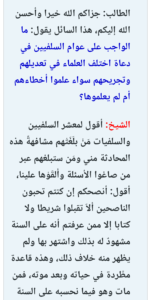
Question: If I ask a scholar and he gives me a verdict, is it impermissible to ask other than him? Also, the brother says: I present these two questions because I have heard them from some of the Mashayikh who give verdicts to the peopl, since I am not fully convinced by their responses. Firstly, it is said that if you ask a scholar and he gives you a verdict, you should follow what he says and not seek another verdict (a verdict from other than him). Is this correct, or am I able to ask until my heart is assured?

The response: This is incorrect, instead, it is obligated to the questioner to strive to ask until they find peace in their heart. They should seek -among the people of Shariah knowledge – for the [الأعلم فالأعلم – most knowledgeable in levels of knowledge] and [والأورع فالأورع – the ones known to possesses more fear of Allah that makes a person stay away from doubtful matters out of fearing of falling into something forbidden] until his (the questioner’s) heart is at ease that the verdict is correct, appropriate and in accordance with the Shariah, as the Prophet, peace and blessings of Allah be upon him, stated, “Righteousness (birr) is good morality, and wrongdoing is that which wavers in your soul and which you dislike people finding out about.” He , peace and blessings of Allah be upon him, said: “Consult your heart. Righteousness is that about which the soul feels tranquil and the heart feels tranquil, and wrongdoing is that which wavers in the soul and moves to and fro in the breast even though people again and again have given you their legal opinion [in its favor].” [I] A believer seeks knowledge and understanding in the religion, and asks the people of knowledge until his heart is at ease that the verdict aligns with the Shariah based on his ability and how far he can strive.

Question: With regards to the student of knowledge, if someone approaches him for a verdict and it is known that the individual has already sought a verdict from someone else, is the student permitted to respond to this request for a verdict.

The Shaikh responded: There is no objection (or hindrance), but the mufti must diligently seek out the Shariah proofs and should not be lackadaisical. He should refer to the Quran and the Sunnah to provide the questioner with what he knows of Allah’s Shariah- the Book of Allah and the Sunnah of the Prophet, peace and blessings of Allah be upon him. He should not be lackadaisical (or approach the matter lightly), instead it is obligated to him to strive and investigate thoroughly so that he only issues rulings based on insight and knowledge. If a questioner asks him a question, while he knows that he has asked someone else, there is no objection (or hindrance). If he is asked, he says: “What did so-and-so say?” This is so that he would be able to either agree or disagree with the previous response. There is no harm in this. The companions used to do this, asking those who asked them (questions): “What did so-and-so say?” He (the questioner) said: “So and so says”, then he (i.e. the one asked the question) either says that he is in agreement with the verdict or he opposes it and says: “The verdict is such and such”.

Question: What if he refrains from giving a ruling, does that constitute concealment of knowledge?

The Shaikh: If he knows that the verdict is false (i.e. refrains from saying what is correct), it is tantamount to concealment of knowledge. However, if it is based on Ijtihad, investigation, and opinion, then there is no issue. [2] [Paraphrased] [II]

Another question: In light of verdicts and giving verdicts, many of our brothers ask about a single topic from more than one student of knowledge, and they may encounter differing opinions. What guidance do you offer to those who ask questions, should they be satisfied with the response of one individual, or can they ask this one and that one until they reach their desire (understanding or goal)?

If the Fatwa does not reassure the questioner’s heart, while he intends good, knowledge, and Al-Wara (i.e. his intention is the fear of Allah that keeps a person from doubtful matters lest they fall into what is forbidden), there is no harm. He asks until his heart is assured with the proof and that this is the Shariah ruling. However, if his intention is driven by personal desire, that is not permissible. If he is seeking what agrees with his desires, this is not permissible; instead, it is incumbent upon him to strive to know the truth based on its proof until his heart is assured and seek for those he believes to be closer to good conduct and knowledge among the scholars of fatwa- seeking a verdict from one regarding whom his heart is at ease with that they are closer to knowledge of the truth.

He searches for the people of knowledge, and when seeking their verdicts – from whom he thinks is most closer to reaching the truth. Thus, he gives importance to assurance and to reach the truth, and not seeking for what agrees with his desire. The one who asks questions to this one and that one so that his heart is at ease and upon tranquility with the verdict based on its proof, there is no harm on him in doing so because this is part of seeking confirmation of the truth. [3] [Paraphrased] [end of quotes]

In saying all this, Taqleed has its precise place. Al-Allamah Salih Al-Fawzan, may Allah have mercy upon him, stated on this link that the layperson or the beginner in the path of knowledge has no option but to make Taqleed because they do not have the ability to make Ijtihaad, so they make Taqleed of the people of knowledge, as Allah said:

فَسْـَٔلُوٓا۟ أَهْلَ ٱلذِّكْرِ إِن كُنتُمْ لَا تَعْلَمُونَ

Ask Ahl Adh-Dhikr (the people of Shariah knowledge) if you do not know. [4]

[I] https://www.nawawis40hadith.com/nw/hadith/27/righteousness-and-sin
[II] https://abukhadeejah.com/differing-where-there-is-room-for-ijtihad-should-not-damage-our-unity/

Tolerated Differing and Impermissible Differing in Islam: The Great Imāms of Sunnah did not declare those who differed with them in the affairs of permissible ijtihād to be astray and they did not make binding upon others their own opinions- By Shaikh Abu Khadeejah, may Allah preserve him. https://abukhadeejah.com/tolerated-differing-and-impermissible-differing-in-islaam/

To be continued…InShaAllah


[1] https://binbaz.org.sa/fatwas/8426/%D8%AD%D9%83%D9%85-%D8%A7%D9%84%D8%AA%D9%86%D9%82%D9%84-%D8%A8%D9%8A%D9%86-%D8%A7%D9%84%D9%85%D8%B0%D8%A7%D9%87%D8%A8-%D8%A7%D9%84%D9%81%D9%82%D9%87%D9%8A%D8%A9

[2]

هل إذا سألت عالماً وأفتاني فلا يجوز سؤال غيره؟
السؤال: أيضاً يقول الأخ المؤمن: هذان سؤالان أعرضهما لأنني سمعتهما من بعض المشايخ الذين قد يفتون للناس، ونظراً لأنني لم أطمأن إليهما سألت عنهما.
الأول: يقال: إذا سألت عالماً فأفتاك فنفذ ما قاله لك ولا تستفت غيره، فهل هذا صحيح أو أنني أستطيع السؤال حتى يطمئن قلبي؟
الجواب: ليس هذا بصحيح، بل ينبغي للسائل أن يجتهد في السؤال حتى يطمئن قلبه، ويتحرى الأعلم فالأعلم والأورع فالأورع من أهل العلم حتى يطمئن قلبه إلى أن الفتوى صحيحة وأنها مناسبة وموافقة للشرع، كما قال النبي ﷺ: البر حسن الخلق، والإثم ما حاك في نفسك وكرهت أن يطلع عليه الناس ويقول ﷺ: استفت قلبك، البر ما اطمأنت إليه النفس واطمئن إليه القلب والإثم ما حاك في النفس، وتردد في الصدر، وإن أفتاك الناس وأفتوك.
فالمؤمن يطلب العلم ويتفقه في الدين ويسأل أهل العلم حتى يطمئن قلبه إلى أن الفتوى موافقة للشرع، حسب اجتهاده وطاقته.
المقدم: طيب بالنسبة لطالب العلم إذا أتاه شخص ليستفتيه وعلم منه أن قد استفتى شخصاً قبله، هل له أن يجيبه على هذا الاستفتاء؟
الشيخ: لا مانع، لكن على المفتي أن يتحرى الأدلة الشرعية، وألا يتساهل، أن يتحرى الكتاب والسنة فيعطي السائل ما يعلمه من شرع الله؛ كتاب الله وسنة النبي ﷺ ولا يتساهل، بل ينبغي له الاجتهاد والتحري حتى لا يفتي إلا عن بصيرة وعن علم.
وإذا سأله سائل يعلم أنه قد سأل غيره فلا مانع، وإن سأله قال: ماذا قال لك فلان؟ حتى يستطيع بذلك إما أن يوافقه أو يخالفه فلا بأس.
كان الصحابة قد يفعلون هذا، قد يفعلون هذا يسألون من سألهم: ماذا قال لك فلان؟ يقول: قال فلان، فيقول: هو على فتواه، وقد يخالفه فيقول: الفتوى كذا والفتوى كذا. نعم.
المقدم: طيب لو امتنع عن فتواه، هل يعتبر ذلك من كتمان العلم؟
الشيخ: إن كان يعلم أن الفتوى باطلة يكون من كتمان العلم، أما إذا كان بالاجتهاد والتحري والرأي فلا بأس
https://binbaz.org.sa/fatwas/5402/%D9%87%D9%84-%D8%A7%D8%B0%D8%A7-%D8%B3%D8%A7%D9%84%D8%AA-%D8%B9%D8%A7%D9%84%D9%85%D8%A7-%D9%88%D8%A7%D9%81%D8%AA%D8%A7%D9%86%D9%8A-%D9%81%D9%84%D8%A7-%D9%8A%D8%AC%D9%88%D8%B2-%D8%B3%D9%88%D8%A7%D9%84-%D8%BA%D9%8A%D8%B1%D9%87#:~:text=%D8%A7%D9%84%D8%AC%D9%88%D8%A7%D8%A8%3A%20%D9%84%D9%8A%D8%B3%20%D9%87%D8%B0%D8%A7%20%D8%A8%D8%B5%D8%AD%D9%8A%D8%AD%D8%8C%20%D8%A8%D9%84,%D8%A7%D9%84%D8%A8%D8%B1%20%D9%85%D8%A7%20%D8%A7%D8%B7%D9%85%D8%A3%D9%86%D8%AA%20%D8%A5%D9%84%D9%8A%D9%87%20%D8%A7%D9%84%D9%86%D9%81%D8%B3

[3]

حكم سؤال أكثر من عالم لاتباع المستفتي هواه
بمناسبة الفتوى والاستفتاء سماحة الشيخ؛ كثير من إخواننا يسأل عن موضوع واحد أكثر من طالب علم، ولربما وجد اختلافًا في القول، فما هو توجيهكم لأولئك الذين يسألون، هل يكتفون بسؤال شخص واحد؟ أم يسألون هذا، وذاك حتى يصلوا إلى مبتغاهم؟
إذا كان السائل لم يطمئن قلبه للفتوى، وهو قصده الخير، وقصده العلم، قصده الورع؛ فلا حرج، يسأل حتى يطمئن قلبه للدليل، وأن هذا هو الحكم الشرعي، أما إذا كان يقصد الهوى هذا لا يجوز، إذا كان يطلب ما يوافق هواه هذا لا يجوز، لكن عليه أن يجتهد في أن يعرف الحق بدليله؛ حتى يطمئن قلبه للفتوى، ويتحرى من يظنهم أقرب إلى الخير، وأقرب إلى العلم من أهل الفتوى يعني: يستفتي من يطمئن قلبه إلى أنه أقرب إلى معرفة الحق، يتحرى في أهل العلم، وفي استفتائهم من يظن، ويغلب على ظنه أنه أقرب إلى إصابة الحق، فهو يهتم بالطمأنينة، وإصابة الحق لا بما يوافق هواه، فالذي يسأل هذا وهذا لينشرح صدره، وليطمئن إلى الفتوى بدليلها؛ نرجو أن لا حرج عليه؛ لأن هذا من باب التثبت في الحق.
المقدم: جزاكم الله خيرًا.
https://binbaz.org.sa/fatwas/16116/%D8%AD%D9%83%D9%85-%D8%B3%D9%88%D8%A7%D9%84-%D8%A7%D9%83%D8%AB%D8%B1-%D9%85%D9%86-%D8%B9%D8%A7%D9%84%D9%85-%D9%84%D8%A7%D8%AA%D8%A8%D8%A7%D8%B9-%D8%A7%D9%84%D9%85%D8%B3%D8%AA%D9%81%D8%AA%D9%8A-%D9%87%D9%88%D8%A7%D9%87

[4] https://www.alfawzan.af.org.sa/ar/node/15726

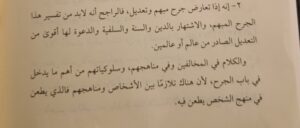
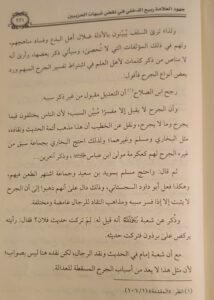
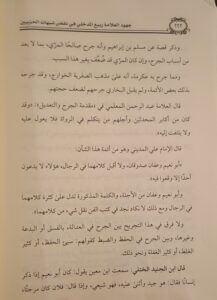
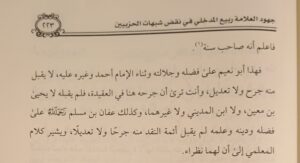
[2] Transmitted Principles For Nearly Thirty Years By Senior Teachers From Senior Scholars – Concerning Criticisms and Proofs

In The Name of Allah, The Most Merciful, The Bestower of Mercy.

Imam Ash-Shawkaanee, may Allah have mercy on him, which the young learners do not know. The Imam stated:

Know that when differing arise among Muslims regarding whether this thing (matter) is a Bidah or not a Bidah, (something) disliked or not disliked, prohibited, or not prohibited, or other than that, there is a consensus among Muslims (i.e. their scholars) —both the early generations and those that followed, from the era of the Companions to the present day, which is the thirteenth century since the advent of the Prophethood—that the obligation in any differing – in any issue among the issues of the religion – between Imams of Ijtihad is to refer back to the Book of Allah, the Exalted, and the Sunnah of His Messenger, as stated in Allāh’s Book:

فَإِن تَنَٰزَعْتُمْ فِى شَىْءٍ فَرُدُّوهُ إِلَى ٱللَّهِ وَٱلرَّسُولِ

And if you disagree among yourselves over anything then refer it back to Allāh and the Messenger. [An-Nisa 59]

The meaning of referring back to Allah, the Exalted, is to refer to His Book, and the meaning of referring to His Messenger, peace and blessings of Allāh be upon him, is to refer to his Sunnah after his passing. This is a matter about which there is no differing among the Muslims.

If a Mujtahid among the Mujtahideen says that this (thing) is lawful while another says this (thing) is unlawful, neither is any of the two more entitled to the truth than the other, even if he possesses more knowledge, older, or closer to the (early era of Islam). This is because each of them is a servant of Allāh among the servants of Allāh, (required) to worship (Allāh) based on what is found in the pure Sharia- that which is found in Allāh’s Book and the Sunnah of His Messenger, and what is required of him is required of other than him among Allāh’s servants. His abundant knowledge, the attainment of the level of Ijtihad, or even surpassing it, does not exempt him from any of the religious laws legislated by Allah for His servants, nor do they exclude him from those who have reached the age in which one is held accountable for his actions among the servants (of Allāh). [1] [Paraphrased]

Al-Allamah Rabee Bin Hadi Al-Mad’khali, may Allah have mercy upon him, said:

All praise is due to Allah, and may peace and blessings be upon Allah’s Messenger, his family, companions, and those who follow his guidance. To proceed:

I advise myself and you to fear Allah, The Mighty and Majestic, to be sincere to Him in every statement and action, and to truthfully adhere to the Book of Allah and the Sunnah of Allah’s Messenger, peace and blessings of Allah be upon him, and to be steadfast upon that. And that you learn beneficial knowledge derived from the Book of Allah and the Sunnah of Allah’s Messenger, which will aid us upon this firmness and steadfastness upon Allah’s true religion.

I advise my children and brothers to pursue the truth and search for it in every matter, whether it is a point of agreement or differing. A believer who seeks the face of Allah and the home of the Hereafter does not find peace of mind or relaxation in his conscience (or inner self) until he reaches the truth- reaches the truth, especially in matters of differing and during times of Fitna. He does not make a move on any basis other than truth, knowledge and clear-sightedness.

If two individuals differ, even if it is his father or Shaikh, it is not permissible for him to take his side or against him until he studies the affairs and becomes acquainted with it based on its complete reality. Thereafter, he determines his stance and align himself with the truth that has become clear to him. This is what is obligated to a Muslim, and anything contrary to it is considered one of the behaviours (or traits) of the pre-Islamic era of ignorance and the (traits) of false pre-Islamic alliances. It is not permissible for a Muslim to follow such an evil path.

O our sons and brothers! I advise you to fear Allah, and advise you with what I mention with regards to loving the truth and the pursuit of it in its rightful places until you reach the reality. I advise our sons and brothers to honour the Salafi methodology and be steadfast in it. Honour its scholars, and if they utter truth, it is not permissible to oppose them. When they speak about a matter and present evidence, there is no excuse for anyone to oppose them, nor is it permissible for anyone to hesitate or abstain. This (hesitation or abstaining) is a deed of the people of vain desires, those who endeavour to undermine the Salafi methodology and topple its scholars.

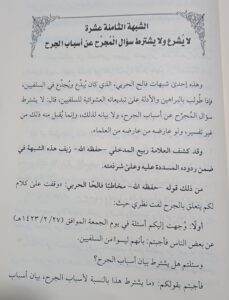
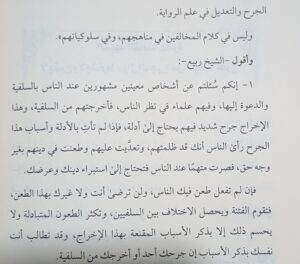
Regarding matters of Al-Jarh Wa-Ta’deel, it is sufficient for a single scholar to issue (a critique), and the recommendation of a single scholar is sufficient. If two truthful scholars – respected and free from vain desires – differ about some individual, it is incumbent upon other than them among the carries of knowledge to seek clarification from the critic and request evidence. If the evidence is provided, it is obligated to them to submit to this evidence and proof. If the one who gives recommendation or any other individual opposes, his position is dropped. This one who (deliberately) rejects the evidence, his trustworthiness is undermined and he cannot be trusted with Allah’s Religion. Even if a single scholar presents proof and evidence, while numerous individuals oppose him through falsehood, lies, and trickery, they are not heeded. These are the established principles of Al-Jarh Wa-Tadeel – in the subject matter of criticism and praise – which we are obligated to adhere with regards to the likes of these Fitan.

A person may be criticised by numerous scholars who present clear evidence regarding his falsehoods and Fitna, yet some people do not listen to them, claiming that the truth has not been made clear. This is not permissible. It is not permissible in Allah’s religion. Then let us approach the books of Al-Jarh Wat-Tadeel, evaluate every biography and say: “By Allah, the truth has not been made clear for me”. Examine every (criticised) belief and say: “By Allah, it is not made clear to me”. (For example) the differing between the Rafidah and the Salafis, or between the Rafidah and the Jahmiyyah, or between the Salafis and the Mu’tazilah, or between the Salafis and the Khawarij, or between the Salafis and the Murji’ah, or between the Salafis and the Sufis (is examined), a person  says: “By Allah, it has not been made clear to me.” This behaviour would not be accepted from this person.

When two individuals among the Salafis differ, and the proof is with one of them, it is obligatory to support the one with the proof. I advise you to fear Allah, I advise you to uphold justice, and fairness, and distance from blind alliance and following desires.

ومن أضل ممن اتبع هواه

“And who is more misguided than one who follows his desires?” Rejecting the truth is a grave offense.

ومن أظلم ممن كذب على الله وكذب بالصدق إذ جاءه

And who is more unjust than one who lies about Allah and denies the truth when it comes to him?

Denial of the truth is a (deed, characteristic, behaviour or trait) of the proponents of misguidance, the disbelievers and the rawafid. Shaikh al-Islam describes the Rawaafid by stating, “No group is as prone to reject the truth and accept falsehood as the Rawaafid.”

At present, it is obligated to the one who adheres to the Salafi methodology to free himself from following these corrupt paths – blind alliance, (traits) of pre-Islamic alliance, and rejecting the truth for the sake of so and so. By Allah, even if he is one of the senior scholars and one of the senior Imams of the Sunnah, and he errs, it is not permissible to reject the truth; then how about the ignorant, and those known for lying and Fitan; how can we be on their side? This is unbecoming of a Muslim, let alone a Salafi. What does the Salafi call signify if you are staunchly allied based on ignorance and vain desires. What is the meaning of this?

May Allah bless you. Abandon this, for it is foul. Search for the truth, adhere to it, and bear witness to it, even if it is against yourselves, your parents, or your relatives. Allah, the Blessed and Exalted, said:

يا أيها الذين ءامنوا كونوا قوامين بالقسط شهداء لله ولو على أنفسكم أوالوالدين والأقربين

O you who have believed, be persistently standing firm in justice, witnesses for Allah, even if it be against yourselves or parents and relatives.

O brother! When scholars approach you, whether it be one, two, or three, presenting the truth, you must not hesitate to accept it. If they come to you with truth supported by evidence and proofs, it is (obligatory to accept it). If they merely present claims without substantiation, you should not accept it. However, if they approach you with truth backed by evidence and proofs, then your rejection of him is tantamount to rejecting truth, denial of truthfulness and truth. There is no one more unjust or ignorant than someone whose condition is as such.

I ask Allah to grant us all the success to follow the truth, distance the trials from us, and unite our hearts upon truth. I ask Allah to make this a reality, for indeed, our Lord is All-Hearing of supplications. May peace and blessings be upon our Prophet Muhammad, his family, and his companions. [paraphrased] [2]

To be continued….InShaAllah


[1] Sharh As-Sudoor Bi-Tahreem Raf Al-Quboor pages 1-2

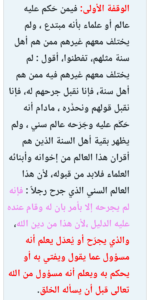
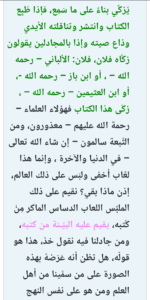
فاعلم أنه إذا وقع الخلاف بين المسلمين في أن هذا الشيء بدعة او غير بدعة ، أو مكروه او غير مكروه ، او محرم او غير محرم ، او غير ذلك ، فقد اتفق المسلمون : سلفهم وخلفهم ، من عصر الصحابة الى عصرنا هذا – وهو القرن الثالث عشر منذ البعثة المحمدية – أن الواجب الاختلاف في أي أمر من أمور الدين بين الأئمة المجتهدين : هو الرد الى كتاب الله سبحانه ، وسنة رسوله الناطق بذلك
الكتاب العزيز ( ٤ : ٥٩ فإن تنازعتم في شيء فردوه إلى الله والرسول ( ومعنى الرد الى الله سبحانه : الرد الى كتابه
ومعنى الرد إلى رسوله ال : الرد الى سنته بعد وفاته وهذا مما لا خلاف فيه بين جميع المسلمين . فإذا قال مجتهد من المجتهدين
هذا حلال . وقال الآخر : هذا حرام : فليس
أحدهما أولى بالحق من الآخر وإن كان اكثر منه علماً ، أو اكبر منه سنا ، او اقدم منه عصراً لأن كل واحد منهما فرد من أفراد عباد الله ، ومتعبد بما في الشريعة المطهرة، مما في كتاب الله وسنة رسوله ، ومطلوب منه ما طلب الله من غيره من العباد . وكثرة علمه وبلوغه درجة الاجتهاد او مجاوزته لها لا يسقط عنه شيئاً من الشرائع التي شرعها الله لعباده ، ولا يخرجه من جملة المكلفين من العباد

[2]