Author: Abdullah Jallow

The False Tabdee Must Be Recanted Because Neither Shariah Nor Sound Intellect Acknowledges That Harm Can Remain

The Messenger, peace and blessings of Allah be upon him, said: “There should be neither harming nor reciprocating harm.” [a]

Imam Muhammad Ibn Salih Al-Uthaymin, may Allah have mercy upon him, said:

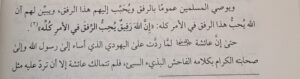
أنه لا يجوز إبقاء الضرر وأن الضرر منتف شرعا فكل شيء فيه ضرر فإنه يجب إزالته لأن الضرر مدفوع شرعا وعقلا ولا يُمكن للعاقل أن يُقرّه ولا للشريعة الإسلامية أن تقرّه.
وأما الضرار فهو من المضارة أي ولا يحل لأحد أن يُضارّ أخاه حتى وإن كان فيما لا ضرر فيه مادام يقصد أن يضر أخاه فمن ضار ضار الله به فهذا الحديث يدل على أن الضرر منفي شرعا سواء حصل بقصد أو بغير قصد فإن حصل بقصد فهو مضارّة وإن حصل بغير قصد فهو ضرر فالإنسان أحيانا يفعل الشيء لا يريد الضرر ولكنه يحصل به الضرر ففي هذه الحال تجب إزالته

Indeed, it is not permissible to allow harm to remain and that harm is negated by the divine legislation. Anything that contains harm, then indeed it is obligatory to remove it. This is because harm is regarded as something to be repelled both by the divine revelation and (sound) intellect. Neither is it possible for a rational person nor the divine Islamic legislation to acknowledge that harm can remain. As for Ad-Diraar – causing harm, it stems from the act of harming others. It is not permissible for anyone to harm his brother, even if the action itself does not cause harm, as long as he intends to inflict harm on his brother. “Whoever harms others, Allah will harm him’. This hadith demonstrates that harm is negated by the Islamic legislation whether it occurs intentionally or unintentionally. If it occurs intentionally, it is considered an act of malice. If it occurs unintentionally, it is still harm. Sometimes, a person may do something without wishing to cause harm, but harm results from him. In such a situation, it is necessary to remove the harm. [1]

Al-Allamah Rabee Bin Hadi Al-Mad’khali, may Allah have mercy upon him, said:

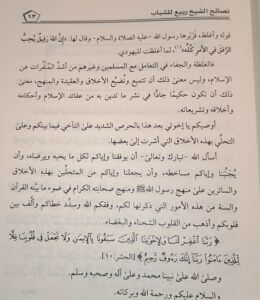
In general, Muslims are advised to be gentle, (urged) to love this gentleness and it should be clarified for them that indeed Allah loves gentleness in all matters: “Indeed, Allah is gentle and loves gentleness in all matters”.

Even when Aishah could not bear it but to respond to the Jew – in a manner similar to his speech and with more harshness – who insulted Allah’s Messenger and his noble companions with foul and offensive speech, Allah’s Messenger, peace be upon him – admonished her, saying: “Indeed, Allah is gentle and loves gentleness in all matters”. [b]

Harshness and coarseness in dealing with Muslims and others are among the greatest causes of making people flee from Islam. This does not mean that one dilutes and neglect morals, the creed, and methodology; rather, it means that one should be wise and diligent in disseminating what one follows as the religion, such as the Islamic beliefs, its rulings, morals, and divine legislation. After this, I advise you my brothers to be eager in fostering brotherhood among yourselves and to embody these morals some of which I have alluded to.

I ask Allah- the Blessed and Most High – to grant us and you success in all that He loves and is pleased with, to protect us and you from His displeasure, and to make us and you among those who embody these moral characters and follow the methodology of Allāh’s Messenger, peace and blessings of Allah be upon him, and the methodology of his noble companions, in accordance with what the Quran and the Sunnah have clarified regarding these matters I have mentioned to you. May Allah grant you success, guide your steps, unite your hearts, and remove animosity and hatred from your hearts.

“Our Lord, forgive us and our brothers who preceded us in faith, and do not place in our hearts any resentment towards those who have believed. Our Lord, indeed You are most-compassionate, the ever-merciful. [Al-Hashr 10]

May peace and blessings be upon our Prophet Muhammad, his family, and his companions. [end of quote]

[a] https://www.nawawis40hadith.com/nw/hadith/32/there-should-be-no-harm

[b] A group of Jews asked permission to visit the Prophet (and when they were admitted) they said, “As- Samu ‘Alaika (Death be upon you).” I said (to them), “But death and the curse of Allah be upon you!” The Prophet (ﷺ) said, “O `Aisha! Allah is kind and lenient and likes that one should be kind and lenient in all matters.” I said, “Haven’t you heard what they said?” He said, “I said (to them), ‘Wa ‘Alaikum (and upon you). [Al-Bukhari 6927]”

The false Tabdee against Shaikh Abu Iyaad, may Allah protect him must be recanted and we’ll carry on demanding it.


[1] Paraphrased  https://alathar.net/home/esound/index.php?op=codevi&coid=56565

[2] An Excerpt from Al-Lubab Min Majmu Nsaa’ih Wa Tawjeehaat Ash-Shaikh Rabee Li Ash-Shaban pages 12-13. Abridged and Paraphrased.

[5] Still Waiting! Where’s The Clear Unambiguous Knowledge-Based Shariah Proof for the Tabdee

Shaikh Al-Islam Ibn Taymiyyah, may Allah have mercy upon him, said:

الانسان عليه اولا ان يكون امره لله وقصده طاعة الله فيما امر به وهو يحب صلاح الامامور او القامة الحجة عليه، فان فعل ذلك لطلب الرياسة لنفسه واطاءفته وتنقيص غيره، كان ذلك حمية لا يقبله الله، وكذلك اذا فعل ذلك لطلب السمعة والرياء كان عمله حابطا

It is incumbent upon a person first and foremost that his commanding (something) is for the sake of Allah and his intention (or aim) is obedience to Allah with regards to what he commands- loving to rectify the one being commanded or to establish the proofs against him. If he does this to seek leadership for himself and his group, and to diminish the worth of others, this is zealotry and Allah does not accept it. Similarly, if he does so to seek after reputation (or to be mentioned) and to show off, his deed is null and void. (1)

He, may Allah have mercy upon him, said:

الرد بمجرد الشتم والتهوبل لا بعجز عنه احد. والانسان لو انه يناظر المشركين واهل الكتاب لكان عليه ان يذكر من الحجج ما يبين به الحق معه، والباطل الذي معهم.

Refuting with mere insults and fear-mongering is something no one is unable to do. If a person were to debate the polytheists and the people of the Scripture, it would be incumbent upon him to mention from the proofs that which clarifies the truth with him and the falsehood that is with them. (2)

He, may Allah have mercy upon him, also stated in in response to one he was refuting:

وكان ينبغي له ان يحكي لفظ المجيب بعينه وبين ما فيه من الفساد، وان يذكر معناه، فيسلك طريق الهدى والسداد. فاما ان يذكر عنه ما ليس فيه، ولا يذكر ما فيه ، فهذا خروج عن الصدق و العدل إلى الكذب والظلم.

It was incumbent upon him to quote the exact wording of the one who responded to him and clarified the corruption therein, and mention its meaning, thus, traversing the path of guidance and correctness. But as for mentioning that which is not found in it nor what is in it, this is an exit from truthfulness and justice into falsehood and oppression. (3)

Once again, sensible and honest people are not interested in name dropping or speculation about the rules of scientific discourse, whether in the UK or elsewhere, the roles of government and independent scientists, and to what extent they are allowed to hold different views in this field. These topics are left to those in this field, and the sensible Muslim scientists in different regions of the earth will consult senior scholars when they come across issues that require guidance. Shaikh Abu Iyaad and a group of pharmacists or chemists, may Allah preserve them, did seek advice from Al-Allamah Salih Al-Fawzan, may Allah preserve him, and Al-Allamah Abdul Aziz Aala Ash-Shaikh, may Allah have mercy upon him, during the lockdowns. This matter is not our focus, and we will not be drawn into discussions by anyone who attempts to do so through name dropping or speculation, confounding wholesome reality with misunderstandings, ignorance, and delusions- thinking that one understands a topic despite evidence to the contrary, promoting doubts, thinking that they know something, while being unaware that there are opposing views that they think are erroneous; exaggerating less likely truths, confusing generalities with specifics, unrestricted matters with restricted matters, ambiguous matters with clarity etc. Then while doing all of this, one suddenly switches to name-dropping. This is absolute time wasting filled with emotional rhetoric and we will not entertain it, instead, what we keep on repeating is: Where is the proof for the Tabdee and other unsubstantiated claims?

[1] Still Waiting! Where’s The Clear Unambiguous Knowledge-Based Shariah Proof for the Tabdee?

[2] Still Waiting! Where’s The Clear Unambiguous Knowledge-Based Shariah Proof for the Tabdee?

[3] Still Waiting! Where’s The Clear Unambiguous Knowledge-Based Shariah Proof for the Tabdee

Justice When Issuing Rulings – By Al Allamah Ubaid Bin Abdillah Al-Jabiri

Shaikh Al-Islam Ibn Taymiyyah, may Allah have mercy upon him, said: “Speech about the people has to be with knowledge and justice, and not based on ignorance and oppression”. (4)

“The just among men is the one who informs of an affair the way it is; he neither adds to it and becomes a liar nor does he subtract from it and becomes a concealer”. (5)

The one who follows the path of justice will exalt the one worthy of being exalted and he will love and ally with him; he will give the truth its due right, exalt the truth and show mercy to the creation.(6)

Al-Allamah Rabee Bin Hadi Al-Mad’khali, may Allah preserve him, said: “The Salafiyyoon do not accept statements, except when they are based on evidence and proof”. (7)

The Shaikh also said:

When you speak about a Muslim, whether an individual who is a Mubtadi or a Sunni, firstly, examine yourself. What do you want through this speech? “Whoever believes in Allah and the last day should either speak good or remain silent”. If in this speech of yours there is good for the Muslims by warning them about this man, and your intention is to seek Allah’s Face, you intend to sincerely advice the ummah, then speak while being cautious of entering into personal desires and personal goals for revenge against this or that person. If the speech stem from an intention for revenge, this would be detrimental to the person (i.e the speaker) and would exceed the permissible allowance in this matter, whose initial basis is fundamentally prohibited. This is because Allah has forbidden backbiting and tale carrying, as these matters corrupt the lives of Muslims. A Muslim should resort to (such speech) only in cases of dire necessity. He does not unleash his tongue to speak freely. Instead, he only speaks out of necessity and when he knows completely that this matter is incumbent upon him and the people will benefit from it. May Allah bless you, be conscious (mindful) regarding this subject matter. (8)


(1) Minhaj As-Sunnah 5/254. Paraphrased.

(2) Majmu Al-Fatawa 4/186. Paraphrased.

(3) Ar-Rad ala al-Ikhnā’ī p. 112. Paraphrased.

(4) Minhaj As-Sunnah: 4/337

(5) Majmu 20/84

(6) Minhaj As-Sunnah 4/544

(7) Umdah Al-Abiy 417

(8) Fadl Al-Hajj Wat Talbiyah 43

[6] Truthfulness is elevation regardless of one’s circumstances

يُوسُفُ أَيُّهَا الصِّدِّيقُ أَفْتِنَا فِي سَبْعِ بَقَرَاتٍ سِمَانٍ يَأْكُلُهُنَّ سَبْعٌ عِجَافٌ وَسَبْعِ سُنبُلَاتٍ خُضْرٍ وَأُخَرَ يَابِسَاتٍ لَّعَلِّي أَرْجِعُ إِلَى النَّاسِ لَعَلَّهُمْ يَعْلَمُونَ

(He said): “O Yusuf (Joseph), the man of truth! Explain to us (the dream) of seven fat cows whom seven lean ones were devouring, and of seven green ears of corn, and (seven) others dry, that I may return to the people, and that they may know.” [Ayah 46. Surah Yusuf]

يُوسُفُ أَيُّهَا الصِّدِّيقُ

O Yusuf! The man of truth!

Imam As-Sadi, may Allah have mercy upon him, said:

 أي: كثير الصدق في أقواله وأفعاله

Meaning:

Profusely truthful (habitually truthful) in his statements and actions.

An Excerpt from Tafsir As-Sadi

A Conversation Between Two Men of Equity – Ash-Shaafi’ee and Muhammad

Imam Adh-Dhahabee, may Allah have mercy upon him, stated:

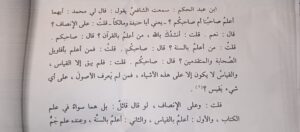
Ibn ʿAbdil Ḥakam said: “I heard Ash-Shaafi’ee say: Muḥammad said to me: ‘Which of the two is more knowledgeable – our companion or your companion?’ meaning Abu Haneefah or Malik ibn Anas. I said: ‘Fairly speaking?’ He said: ‘Yes’. I said: ‘I ask you by Allah: who is more knowledgeable about the Qur’an?’ He said: ‘Your companion’. I said: ‘Who is more knowledgeable about the Sunnah?’ He said: ‘Your companion’. I said: ‘Who is more knowledgeable about the sayings of the Companions and the early generations?’ He said: ‘Your companion’. I said: ‘Then nothing remains except qiyaas, and qiyaas can only be based on these things. So whoever does not know the foundations, upon what would make qiyās?’”

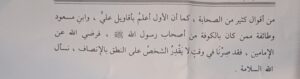
And I (i.e. Adh-Dhahabee) say: “And fairly speaking, it would be fair if someone were to say: ‘Rather, the two are equal regarding knowledge of the Book; the first is more knowledgeable regarding qiyaas and the second is more knowledgeable regarding the Sunnah and has vast knowledge from the statements of many of the Companions, just as the first is more knowledgeable regarding the opinions of Ali ibn Abi Talib, Abdullah ibn Mas’ud, and a group of those Companions of Allah’s Messenger, peace and blessings of Allah be upon him, who were in Kufa’. May Allah be pleased with the two Imams. We have reached an era wherein a person is hardly able to speak with fairness. We ask Allah for safety.”

Source: Siyar A’lam An-Nubula 8/112-113. Risalah Publishers 2020

Do Not Be Distracted From Demanding The Upholding of Sound Principles

In The Name of Allah, The Most Merciful, The Bestower of Mercy.

Do Not Be Distracted From This Main Issue: Persisting in the Demand for Clear Shar‘i Evidence Against False Tabdee and Opposing Propaganda by Repetition

Keep On Asking Them:

“Where is the proof for the Tabdee?!”

[1] Still Waiting! Where’s The Clear Unambiguous Knowledge-Based Shariah Proof for the Tabdee?

 https://salafidawahmanchester.com/2026/05/10/2-still-waiting-wheres-the-clear-unambiguous-knowledge-based-shariah-proof-for-the-tabdee/

[3] Still Waiting! Where’s The Clear Unambiguous Knowledge-Based Shariah Proof for the Tabdee

Justice When Issuing Rulings – By Al Allamah Ubaid Bin Abdillah Al-Jabiri

During the height of the Fitna of the Musafiqah, some individuals attempted to shift focus away from the most dangerous, namely the excessive speech and false Tabdee. Instead, they concentrated on the court case concerning slander. Even though we acknowledged the important of the court case because it concerned the honour of. Muslim, we did not allow the Musafiqah to divert us from the main issue, specifically the false Tabdee and excessive rulings. We consistently shared articles by Shaikh Abu Iyaad, may Allah preserve him, titled: “Documents and Resources to Counter The Doubts of The Musafiqah.” We persisted until they realised that, by the Tawfiq of Allah, they could not break our resolve or dictate what we should or should not discuss. They also could not distract us through their evasive tactics, as no matter how much they tried to divert attention and frantically sought support, we continued to emphasise the main principle that was being violated. At present, we see similar behaviour from some individuals who continue to make numerous desperate attempts to shift the conversation when asked for evidence regarding the Tabdee against Shaikh Abu Iyaad, may Allah protect him. They dodge the question with lengthy emotional outbursts, resort to name-dropping, and divert to COVID-related issues. Then, some wait for the noise to escalate before introducing other topics, causing the demand for proof of the Tabdee to fade from memory for some. Therefore, do not let this pointless repetition of side issues distract you from persistently asking for the proof of the Tabdee, which they are unable to provide. On the other hand, there are those who aim to distort everything and alter the narrative. In light of both misrepresentation and relentless repetition, we remind ourselves once more as follows:

Imam Ibn Al-Qayyim, may Allah have mercy upon him said:

Beware of kadhib, as it corrupts one’s ability to teach people and illustrate information based on how it should actually be. The liar presents what is present as something non-existent and what is non-existent as something present; misrepresents the truth as being something false and falsehood as being something true; misrepresents the good and the evil, so he corrupts his conception and knowledge, which subsequently results in his punishment. Then he portrays what is not true to the one who has been duped by him – the one who is drawn to him – and therefore corrupts his conception and knowledge.

The soul of the liar turns away from existing reality, preferring the non-existent, and falsehood. And when his conception and knowledge is corrupted, which is the basis of every wilfully chosen deed, his deeds become corrupt and marked by lies, so those deeds would emanate from him just as lies emanate from the tongue- neither benefits from his tongue nor his deeds (i.e. in relation to the specific affair). Because of this, lying serves as the foundation of immorality, as the Prophet [peace and blessings of Allah be upon him] said, “Indeed, lies lead to immorality (or wickedness), and indeed, immorality (or wickedness) leads to the fire.” [Al-Bukhari 2606/2607]

Lies first emerge from the heart and then on the tongue, corrupting it; then they transfer to the limbs and corrupt their deeds, just as they corrupt statements of the tongue. As a result, lying prevails over his utterances, deeds, and state of affairs; corruption gets deeply ingrained in him, and its disease leads to destruction if Allah does not grant him recovery with the medication of truthfulness, which uproots the source (or basis) of the lies. This is why the basis of all deeds of the heart is truthfulness, and the basis of their opposites is lies, such as boasting, self-amazement, pride, being glad (with ungratefulness to Allah’s Favours), conceitedness, boastfulness, insolence, weakness, laziness, cowardice, disgrace, and others.

Every righteous deed, whether done privately or publicly, is founded on truthfulness. And the source of every corrupt deed, whether private or public, is lies. Allah punishes the liar by preventing him (i.e. due to his own chosen evil) from those things that will bring him well-being and benefit, while He rewards the truthful one by granting him the ability to attain the beneficial things of the worldly life and Afterlife. There is nothing comparable to truthfulness in terms of how it brings about the affairs of well-being in this life and the next, and there is nothing comparable to lying in terms of how it corrupts and harms one’s worldly and Afterlife affairs.

يَا أَيُّهَا الَّذِينَ آمَنُوا اتَّقُوا اللَّهَ وَكُونُوا مَعَ الصَّادِقِينَ

O you who believe! Be afraid of Allah, and be with those who are true (in words and deeds) [9:119]

هَٰذَا يَوْمُ يَنْفَعُ الصَّادِقِينَ صِدْقُهُمْ ۚ

This is a Day on which the truthful will profit from their truth. [5:119]

فَإِذَا عَزَمَ الْأَمْرُ فَلَوْ صَدَقُوا اللَّهَ لَكَانَ خَيْرًا لَهُمْ

And when the matter (preparation for Jihad) is resolved on, then if they had been true to Allah, it would have been better for them. [47:21] (1)

Gustave Le Bon, in his work “The Psychology of Crowds,” asserts that when we aim to gradually instill ideas and beliefs into the collective spirit of the masses, the methods employed by leaders vary significantly. They primarily resort to three fundamental techniques: affirmation, repetition, and contagion. While the impact of these methods may be slow, it is undeniably enduring. Political leaders advocating for a specific cause are well aware of the power of affirmation, just as industrialists recognise the importance of advertising their products. However, advertising only gains influence when coupled with repetition. Napoleon famously stated that there is but one serious form of rhetoric: repetition.

Repetition possesses a certain authority that influences rational and well-informed individuals. It allows ideas to embed themselves in the recesses of the unconscious mind, gradually transforming into beliefs that are accepted as truths, ultimately becoming self-evident realities. When these ideas solidify into truths through repetition, they can spread among the masses. For instance, any disturbance among a flock of sheep quickly affects the entire group. This does not require a singular point of origin; the revolution in France in 1848 began in Paris and swiftly extended to a significant portion of Europe, destabilising the monarchies in its wake. The repetition that leads to belief in a particular issue, and consequently its spread, poses a significant risk not only in imposing opinions but also in shaping thought processes, emotions, and feelings. As a result, one may observe that the masses at one point may disdain a certain literary work, only to later take pride in it after several years, or vice versa. This phenomenon can similarly be applied to ideas and beliefs. [2]

Delving deeper into this topic reveals a range of ideologues, demagogues, and provocateurs who argue that people struggle to resist repeated messages, thus, relentless repetition is one of the most effective methods of spreading their doubts to confound the general with the specifics, the unrestricted with the restricted, the clear with the ambiguous, as well as blur the fine boundaries between the six levels of comprehension mentioned by Imam Muhammad Ibn Uthaymin, may Allah have mercy upon him, in his explanation of Usul Ath-Thalatha.

We have witnessed during the various Fitan since 1995 that initially, individuals might dismiss claims of the excessive or deceitful, evasive person, but with ongoing exposure, their skepticism can shift to uncertainty, then bewilderment, and eventually, acceptance, causing them to view the message as truth. Thus, relentless repetition is necessary for ideas to take root, thereby strengthening the propaganda that needs to be spread.

It is very sad to be witnessing some Muslims, especially some attributed to knowledge, resorting to such insidious tactics to tarnish reputations online. They perpetuate the same misconduct, misconceptions, or half-truths in various forms and from multiple perspectives, all while resisting any challenge to their narratives. To remain silent in the face of such distortions would be an act of cowardice; it is imperative to articulate the truth whenever these fallacies are propagated.

While it is true that not every instance of misinformation warrants a response, one must not be so naive as to underestimate the potential damage inflicted by those who disseminate their half-truths—whether overtly or covertly—to a targeted audience. When faced with someone who insists on force-feeding you their misconceptions through relentless repetition, maintain your composure and refrain from engaging in conflict. Instead, graciously persist in requesting for tangible clear proof to support their claims, undeterred by their frustration or the frequency of their assertions. Al-Allamah Rabee Bin Hadi Al-Mad’khali, may Allah preserve him, said:

The seeker of truth is not diverted from the truth, fairness and justice due to admiration of the big personalities and being amazed by them, for indeed the truth is more worthy to be followed. It is not permissible to drop the proofs for the sake of this or that great man. The principle [rule] of the Muslim – the unbiased one, the seeker of truth – is always: [قُلْ هَاتُوا بُرْهَانَكُمْ إِن كُنتُمْ صَادِقِينَ -Say, bring forth your proofs if you are truthful]. [Surah An-Nahl. Verse 64] (3)

Do Not Squander Your Precious Time With Those Who Repeat Propaganda

Most important of all, “Prioritise today for your own sake, recognise the importance of the hour, and value the significance of a single word, while being cautious of regret when the moment of death approaches. (4)

Abu Al-Abbas Ad-Daynuri, may Allah have mercy on him, stated:

There is nothing in this world or the Hereafter more precious and delicate than time and the heart, yet you are squandering both time and the heart. (5)

Imam Ibn Al-Jawzi, may Allah have mercy on him:

It is befitting that a person recognises the significance of their time and the value of each moment, ensuring that no instant is wasted on anything unworthy. One should prioritise the best actions and words, maintaining a sincere intention for good without being slack in that which the body is able.

It has been reported that some of the early generations were quick to seize moments. For instance, it is narrated that Amir ibn Abd Qais responded to a man who asked him to speak by saying, “Hold the sun!” [Footnote a] Additionally, Thabit al-Bunani, may Allah have mercy upon him, recounted that when he went to remind his father, his father replied, “My son! Leave me, for I am in my sixth recitation.” There was an instance when some of the early scholars visited another scholar on his deathbed, and upon being asked about his condition, he remarked, “Now my record is being closed.” If a person understands—despite their diligence—that death will interrupt their deeds, they should strive during their lifetime to establish actions that will continue to earn them rewards after their passing. This could involve leaving behind a charitable endowment, planting trees, digging a well, or ensuring that they have descendants who will remember Allah after them, thus securing ongoing rewards. Alternatively, one might author a book on knowledge, as the writings of a scholar serve as a lasting legacy. Engaging in good deeds and imparting knowledge allows others to follow in their footsteps, ensuring that their influence endures beyond their physical existence. Indeed, some have passed away while still living on in the hearts of the people. (6)

Imam Ibn Al-Qayyim, may Allah have mercy upon him, stated:

Wasting time is more severe than death, for while wasting time distances you from Allah and the Hereafter, death separates you from this world and its inhabitants. (7)

We ask Allah:

اللَّهُمَّ بِعِلْمِكَ الْغَيْبَ وَقُدْرَتِكَ عَلَى الْخَلْقِ أَحْيِنِي مَا عَلِمْتَ الْحَيَاةَ خَيْراً لِي وَتَوَفَّنِي إِذَا عَلِمْتَ الْوَفَاةَ خَيْراً لِي، اللَّهُمَّ إِنِّي أَسْأَلُكَ خَشْيَتَكَ فِي الْغَيْبِ وَالشَّهَادَةِ، وَأَسْأَلُكَ كَلِمَةَ الْحَقِّ فِي الرِّضَا وَالْغَضَبِ، وَأَسْأَلُكَ الْقَصْدَ فِي الْغِنَى وَالْفَقْرِ، وَأَسْأَلُكَ نَعِيماً لَا يَنْفَذُ، وَأَسْأَلُكَ قُرَّةَ عَيْنٍ لَا تَنْقَطِعُ، وَأَسْأَلُكَ الرِّضِا بَعْدَ الْقَضَاءِ، وَأَسْأَلُكَ بَرْدَ الْعَيْشِ بَعْدَ الْمَوْتِ، وَأَسْأَلُكَ لَذَّةَ النَّظَرِ إِلَى وَجْهِكَ وَالشَّوْقَ إِلَى لِقَائِكَ فِي غَيْرِ ضَرَّاءَ مُضِرَّةٍ وَلَا فِتْنَةٍ مُضِلَّةٍ، اللَّهُمَّ زَيِّنَّا بِزِينَةِ الْإِيمَانِ

وَاجْعَلْنَا هُدَاةً مُهْتَدِينَ

O Allah! By Your Knowledge of the unseen and by Your Power over creation, let me live if life is good for me, and let me die if death is good for me; O Allah! I ask You to grant me (the blessing of having) fear of You in private and public, and I ask You (to make me utter) a statement of truth in times of contentment and anger, and I ask You for moderation when in a state of wealth and poverty, and I ask you for blessings that never ceases, and I ask You for the coolness of my eye that never ends, and I ask You (to make me pleased) after (Your) decree; and I ask You for a life of (ease, comfort, tranquillity, etc) after death; I ask You for the delight of looking at Your Face (i.e. in the Hereafter) and yearning to meet You without any harm and misleading trials (coming upon me). O Allah! Adorn us with the adornment of Iman, and make us (from those who are) guided and guiding (others). (8)

اللَّهُمَّ أَصْلِحْ لِي دِينِي الَّذِي هُوَ عِصْمَةُ أَمْرِي

وَأَصْلِحْ لِي دُنْيَايَ الَّتِي فِيهَا مَعَاشِي

وَأَصْلِحْ لِي آخِرَتِي الَّتِي فِيهَا مَعَادِي

وَاجْعَلِ الْحَيَاةَ زِيَادَةً لِي فِي كُلِّ خَيْرٍ

وَاجْعَلِ الْمَوْتَ رَاحَةً لِي مِنْ كُلِّ شَرٍّ

O Allah! Rectify my religion for me, which is the safeguard of my affairs; rectify my worldly [affairs], wherein is my livelihood; and rectify my Afterlife to which is my return; and make life for me [as a means of] increase in every good and make death for me as a rest from every evil. [Saheeh Muslim Number: 2720] (9)


[1] Al-Fawa’id. pages 202-203

[2] The Psychology of crowds 132-136

[3] Al-Mulakh-khasul Jameel Fee Bayaan Manhaji Ash-Shaikh Rabee Fid-Da’wati Wal-Jarhi Wat-Ta’deel. Page 87

[4] Hilyah Al-Awliya 2/139

[5] Az-Zuhd Al-Kabir. 294

[6] Saydul Khatir 34

[7] Al-Fawaid. p44

[8] As-Saheehah Number 1301

[9] Saheeh Muslim Number: 2720


[30] Exalt Allah And His Shariah First and Foremost

In The Name of Allah, The Most Merciful, The Bestower of Mercy

أَتَخْشَوْنَهُمْ ۚ فَاللَّهُ أَحَقُّ أَن تَخْشَوْهُ إِن كُنتُم مُّؤْمِنِينَ

Do you fear them? Allah has more right that you should fear Him, if you are believers. [at-Tawbah 13]

لا تخشوهم واخشون ، فأنا أهل أن يخشى العباد من سطوتي وعقوبتي ، فبيدي الأمر ، وما شئت كان ، وما لم أشأ لم يكن

Do not fear them, for indeed, I am (truly) worthy that servants fear My Might and My punishment. In My hand is the Amr (decision of the matter), whatever I wish will come to pass, and whatever I do not wish will never happen. (1)

 فإن كنتم مؤمنين فامتثلوا لأمر اللّه، ولا تخشوهم فتتركوا أمر اللّه

So if you are (true) believers, then fulfil Allāh’s command, and do not fear them, thus, you abandon Allāh’s command. (2)


(1) Ibn kathir

(2) as-Sadi

Contemplating Some Reasons Behind Stubbornness After Being Guilty of False Tabdee or Erroneous in Other Matters

In The Name of Allah, The Most Merciful, The Bestower of Mercy.

Some masked emotions that foster an aversion to acknowledging truth from an opponent

Al-Allamah Abdur Rahman Al-Mu’allimee, may Allah have mercy upon him, said:

To oppose desires – by way of action – for the sake of the truth is a manifest affair due to the obligation and difficulty it involves, and this can be viewed from different angles as follows:

A person sees that by acknowledging the truth, it would necessitate that he has acknowledged that he was upon falsehood, because a person is nurtured upon a religion, creed, school of thought or views, which he acquired from his nurturer and teacher, considers it to be the truth and followed it for a long time. Then when it becomes clear to him that (the religion, creed, view, or school of thought) is false, it becomes difficult for him to acknowledge, just like when his forefathers, ancestors or the one he follows are upon a (particular) way and its falsity is clarified for him, because he sees that their deficiencies necessitate his own deficiencies, and an acknowledgement of their misguidance or errors necessitates his own.

It may be that clinging to falsehood gives him prestige, fame and a livelihood, so it becomes difficult for him to acknowledge that (what he is upon is) falsehood, thus all those benefits (i.e. the fame, prestige, livelihood etc) would disappear.

It may be that a person is upon ignorance or falsehood, then another person comes along and clarifies the proofs for him, so he sees that by acknowledging such proofs, it would necessitate that he is lacking (in understanding) and that it was that person who guided him. And due to this we find that it is not difficult for some of those attributed to knowledge to acknowledge their mistakes when it becomes manifests to them in their researches and studies, but it becomes difficult for them if it was others who clarified such mistakes.

When another person clarifies the truth for him, he sees that by acknowledging such truth it would necessitate an acknowledgement of the clarifier’s virtue, knowledge and correctness due to that clarification, thus that becomes great in the eyes of the people and many people follow him [i.e. the person who clarified the truth].

So you will find some of those attributed to knowledge being eager to prove the mistakes of other scholars even if that is done by way of falsehood due to envy and seeking to diminish their status amongst the people.

To oppose desires for the sake of the truth -in affairs of knowledge and creed- can indeed be difficult to accomplish, therefore it requires (sincere) research and contemplation. And in this regard, one is in need of asking the scholars and benefiting from them, adhering to fear of Allaah, seeking the Tawfeeq of Allaah and guidance. (1)

Al-Allaamah Abdur Rahmaan Bin Yahyah Al-Mu’allimee, may Allah have mercy upon him, also stated:

Ponder on the fact that truth is noble and falsehood is lowly. Ponder on the Greatness of Allah [The Mighty and Majestic]- the fact that Allaah is the Lord of the entire universe, Allaah loves truth and hates falsehood, and that the one who follows truth is deserving of the Pleasure of the Lord of the universe. Allaah [Glorified be He] will be his protector in the worldly life and the Afterlife by choosing for him everything that is good, better, more beneficial, more perfect, more noble and loftier until Allah removes his soul whilst being pleased with him. Then Allaah raises him, brings him close and makes him dwell in paradise with honour- in permanent bliss and eternal nobility which no imagination can fully conceive its greatness. He should ponder on the fact that the one who clings to falsehood is deserving of the displeasure, anger and punishment of the Lord of the universe, and if he receives anything of worldly bliss, then indeed that is only a means of humiliating him in order that he is increased in being distanced from Allah, so that the painful torment of the afterlife is multiplied for him, which no imagination can fully conceive its severity. He should ponder on the bliss of the worldly life [i.e. temporary] as compared to the pleasure of the Lord of the universe and the bliss in the afterlife [i.e. eternal], compare the misery of the worldly life to displeasure of the Lord of the universe and the punishment in the afterlife [i.e. the severest punishment in this life is nowhere equal to punishment in the afterlife]. He should ponder on the statement of Allah [The Mighty and Majestic]:

وَقَالُواْ لَوۡلَا نُزِّلَ هَـٰذَا ٱلۡقُرۡءَانُ عَلَىٰ رَجُلٍ۬ مِّنَ ٱلۡقَرۡيَتَيۡنِ عَظِيمٍ
أَهُمۡ يَقۡسِمُونَ رَحۡمَتَ رَبِّكَ‌ۚ نَحۡنُ قَسَمۡنَا بَيۡنَہُم مَّعِيشَتَہُمۡ فِى ٱلۡحَيَوٰةِ ٱلدُّنۡيَا‌ۚ وَرَفَعۡنَا بَعۡضَہُمۡ فَوۡقَ بَعۡضٍ۬ دَرَجَـٰتٍ۬ لِّيَتَّخِذَ بَعۡضُہُم بَعۡضً۬ا سُخۡرِيًّ۬ا‌ۗ وَرَحۡمَتُ رَبِّكَ خَيۡرٌ۬ مِّمَّا يَجۡمَعُونَ
وَلَوۡلَآ أَن يَكُونَ ٱلنَّاسُ أُمَّةً۬ وَٲحِدَةً۬ لَّجَعَلۡنَا لِمَن يَكۡفُرُ بِٱلرَّحۡمَـٰنِ لِبُيُوتِہِمۡ سُقُفً۬ا مِّن فِضَّةٍ۬ وَمَعَارِجَ عَلَيۡہَا يَظۡهَرُونَ
وَلِبُيُوتِہِمۡ أَبۡوَٲبً۬ا وَسُرُرًا عَلَيۡہَا يَتَّكِـُٔونَ
وَزُخۡرُفً۬ا‌ۚ وَإِن ڪُلُّ ذَٲلِكَ لَمَّا مَتَـٰعُ ٱلۡحَيَوٰةِ ٱلدُّنۡيَا‌ۚ وَٱلۡأَخِرَةُ عِندَ رَبِّكَ لِلۡمُتَّقِينَ

And they say: “Why is not this Qur’an sent down to some great man of the two towns (Makkah and Ta’if)?” Is it they who would portion out the Mercy of your Lord? It is We Who portion out between them their livelihood in this world, and We raised some of them above others in ranks, so that some may employ others in their work. But the Mercy (Paradise) of your Lord (O Muhammad) is better than the (wealth of this world) which they amass. And were it not that all mankind would have become of one community (all disbelievers, desiring worldly life only), We would have provided for those who disbelieve in the Most Beneficent (Allah), silver roofs for their houses, and elevators (and stair-ways, etc. of silver) whereby they ascend, and for their houses, doors (of silver), and thrones (of silver) on which they could recline, and adornments of gold. Yet all this (i.e. the roofs, doors, stairs, elevators, thrones etc. of their houses) would have been nothing but an enjoyment of this world. And the Hereafter with your Lord is only for the Muttaqun”. [Surah Az-Zuhkruf. Verses 31-35] (2)

Imam Ibn Al-Qayyim, may Allah have mercy upon him, said:

Ignorance: This reason is mostly what overwhelms the majority of people, for indeed the one who is ignorant of something will show enmity to it and its people. If in addition to this reason, (the person) hates the one who commands him to (follow) the truth, harbours enmity and envy, then this (i.e. reason behind being prevented from accepting the truth) becomes more intense. If in addition to this, it (i.e. the truth) opposes the ones close to his heart, his customs, the one who nurtured him, the ways of his forefathers and the ones he loves and exalts, then this (i.e. the reason behind being prevented from accepting the truth) becomes even more intense. If in addition to this, he carries a wrong perception that the truth he is being called to (is an obstacle to) his status, honour, desires and goals, the (reason behind being prevented) from accepting the truth becomes very intense. If in addition to this, he fears his companions, his family and his people (i.e. due to the harm he anticipates) against himself, his wealth and status – just as what happened to Heraclius, the king of the Christians in Shaam during the era of Allaah’s Messenger [peace and blessings of Allah be upon him], then the reason (behind being prevented from accepting the truth) increases even greater, because indeed Heraclius knew the truth and he had a desire to accept Islam, but his people did not obey him, so he feared for himself and thus chose disbelief over Islaam after guidance was made clear to him.

Envy: It is one of the greatest causes (behind being prevented from accepting the truth), because indeed it is an ingrained disease in the soul. The envier sees that the one he envies has been given virtue over him or has been given the likes of that which he has not been given; therefore this envy prevents him from complying with (the truth). Iblees was not prevented from prostrating to Adam [i.e. out of respect, when Allah commanded him and the angels to do so], except out of envy, because when he saw that Adam [peace be upon him] was given virtue and raised above him, he chose disbelief over Iman, even though he used to be in the company of the angels.

This disease is what prevented the Yahud from believing in Eesaa the son of Maryam, peace be upon both him, even though they knew -without doubt – that he was a Messenger of Allah, who came with clear proofs and guidance, however envy led them to choose disbelief over Iman and complied with it, even though they were a nation amongst whom were Rabbis, scholars, Zuhhaad [i.e. those who abstained from those lawful but unnecessary pleasures of the worldly life], judges, kings and rulers.

Fear of losing one’s status and prestige

Conversation between Abu Jahl and His Nephew Al-Musawwar Bin Makhzamah: Al-Musawwar Bin Makhzamah: ‘’O my uncle! Did you use to accuse Muhammad of lying before he started saying what he says now [i.e. his call to Tawheed]? Abu Jahl: “By Allah, indeed Muhammad was a trustworthy young man amongst us and we have never experienced lying from him. Al-Musawwar Bin Makhzamah: “O my uncle! So why is it that you do not follow him?” Abu Jahl: “O son of my sister! We competed with Banu Haashim in nobility [i.e. which clan is more noble], so they used to feed [the pilgrims] and we used to feed the [pilgrims]; they used to provide water for [the pilgrims] and we used to provide water for [the pilgrims]; they used to give protection [to the destitute] and we used to give protection [to the destitute] until we were equal [i.e. in competing one another for nobility]. Then they said, “There is a Prophet from us”, so when are we going to get something similar to this!!

Conversation between Abu Jahl and Akhnas Bin Shuraiq: Akhnas Bin Shuraiq said to Abu Jahl on the day of Badr [i.e. the battle of Badr]: “O Abul Hakam! Inform me about Muhammad, as to whether he is a truthful person or a liar, for indeed there is no one here from Quraish who will hear our speech? Abu Jahl replied to Akhnas: “Woe to you! By Allah, indeed Muhammad is a truthful person and Muhammad has never lied, but if Banu Qusay take the leadership, the position of gatekeepers of the Kabah, providers of water for the pilgrims and Prophet hood [i.e. the Prophet Muhammad is from their clan], then what will the rest of Quraish have?! (3)

A Continued Call for Proof of the Tabdee, Respect for the Scholars, and an End to Anonymous Accounts

A Continued Call for Proof of the Tabdee, Respect for the Scholars, and an End to Anonymous Accounts


[1]: An excerpt from at-Tankeel Bimaa Fee Ta’need Al-Kawthariy Minal Baatil’ 2/180-181 with the checking of Imaam Albaanee, may Allah have mercy upon him.

[2] An Excerpt from Aathar Abdur Rahman Bin Yahyah Al-Mu’allimee Al-Yamani Vol/309

[3] An Excerpt from Hidaayatul Hayaaraa Fee Ajwibatil Yahood Wan-Nasaaraa’ pages 17-19

[2] A Thorough Scrutiny of The Actions of Infiltrators And Mubtadi’ah

Al-Allamah Rabee Bin Hadi Al-Mad’khali, may Allah have mercy upon him, said:

And from these liars in general was the Yahudi, the wicked Abdullah Ibn Saba, who falsely claimed to be Muslim and incited many of the rabble against the Rightly Guided Khalifah Uthmaan Bin Affan, may Allah be pleased with him, until he was martyred in that trial. He is the founder of the doctrine of the Rafidah (Shiites) and its filthy principles, and exaggeration regarding the status of the Prophet’s family until they deified them. Many of them declare Ali, may Allah be pleased with him, an object of worship and many of them say that Ali is the one whom the Prophet gave the authority of rulership after him. This is one of their lies! And that Ali will return to do such and such, meaning, he will kill AbuBakr and Umar, may Allah be pleased with them, and the five-hundred Khulafa of Banee Umayyyah and Banee Abbas. This wicked one [i.e. Ibn Saba] initiated the act of revilement against the companions of the Prophet and other matters related to the trial he initiated which the heretics promote and are firmly established upon, as well as the figureheads of the Rafidah- the liars. Thus, they fill the world with lies and slanders. Their religion is established on lies and misguidance.

And from those Dajjals (liars) are the figureheads of bidah and misguidance, such as Jahm Bin Safwan, the figureheads of the Khawarij, the Mutazilah, the Hululi Sufis and grave worshippers, such as Nidham Al-Mutazilee, Hallaj, the heretic, Ibn Arabi, the heretic, Ibn Sab’in, At-Tilimsaanee and other than them amongst the heretics – liars who hid within Islam, infiltrators within the ranks of the people of Tasawwuf. (This is) because the people of Tasawwuf were a fertile ground for these types of people amongst the heretics, just as the Rafidah are a spacious room for the heretics.

خطورة الكذب وآثاره السيئة وموقف الإسلام منه

To be continued InShaaAllah

[1] A Thorough Scrutiny of The Actions of Infiltrators And Mubtadi’ah

In The Name of Allah, The Most Merciful, The Bestower of Mercy.

Shaikh Shamsuddeen Al-Afghaaniy, may Allah have mercy upon him, said:

Allah guided mankind through Muhammad, peace and blessings of Allah be upon him, and the manifest proofs given to him – guidance that surpassed the knowledge of those with great perception and could not be described by those who were well-versed in the art of description. Allah opened the hearts of the heedless, the ears of the deaf, and the eyes of the blind through this guidance. They were in a state of disharmony, harboured animosity toward one another, and adhered to perverse creeds before Allah united them under a single religion. Allah united their hearts, and as a result of this great blessing, they became true brothers in Islam. Following that, everything worshipped besides Allah, such as graves, trees, stones, and idols, ceased to exist, and all worship was established for Allah alone. [Footnote a]

People followed the true religion of Islamic monotheism and worshiped Allah alone, except for those whom Allah decreed would remain as polytheists, hypocrites, and adherents of the altered and distorted previous scriptures. The darkness of polytheism was dispelled, and the banner of Tawhid was raised in Arab and non-Arab lands. Allah’s Messenger [peace and blessings of Allah be upon him] died while Islam was established and in authority, superseding all other ways of life and creeds. The Messenger’s rightly guided khulafaa [Footnote b] continued to follow the Messenger’s path until the two powerful and great nations at the time, Rome and Persia, ended up in humiliation, degradation, and fear after they had been in security, and thus Caesar was restricted and besieged, and Chosroes was subdued and destroyed.

When the enemies of Islam realised they couldn’t destroy the religion, they planted agents within it – those who pretended to be Muslims -to sow confusion, trials, and tribulations, and spread polytheism by exaggerating the status of the pious and exalting their graves. As a result, the Ummah was exposed to temptations by Abdullah Bin Saba’s plots, who claimed that Ali Ibn Abi Talib deserved to be worshipped. The Saba’iyyah were Abdullah Bin Sabah’s followers, who were later known as the Rawafid, Ismaliyyah, Nusayriyah, and others among the Batiniyyah. They worshiped the graves and their inhabitants and erected places of worship and shrines over them. As a result of these practices, they revived the (corrupt) practices of the Jews, Christians, and idol worshippers (i.e. those among them who abandoned the correct path of their Prophets). This is how grave worshippers’ practices manifested in this Ummah, through practices initiated by the Rawafid. [Footnote c]

Furthermore, Greek philosophical texts that promoted the concepts of grave worship and idolatry were translated into the Arabic language and gained significant attention among individuals identifying with Islam, such as Al-Farabi, Ibn Sina Al-Hanafi, and Naseer At-Toosee, who advocated disbelief and polytheism, and those who sought to manipulate the teachings of Islam, akin to Paul’s manipulation of Christianity. The Greek Philosophers influenced and led them to advocate for grave worship through Greek Philosophy. The practices of these individuals were prevalent among the followers of rhetoric among the Hanafi Maturidiyyah and the Ash’ariyyah Kullabiyyah, as they immersed themselves in the works of the Philosophers. Consequently, they became proponents of grave worship and adhering to the Jahmiyyah creed. Among these individuals were Taftaazaanee Al-Hanafi, who was renowned as a philosopher of the Maturidiyyah and a follower of grave worship, and Jurjaanee Al-Hanafi, a proponent of superstitious beliefs. [Footnote d]

Another group of people arose within the Muslim community who posed an even greater threat and were more misguided than the aforementioned groups. These individuals adopted an outward appearance of piety, donning the attire of righteousness with tearful eyes, lengthy beards, towering turbans, and clutching large prayer beads. They deceitfully claimed to advocate for the teachings of the Prophet, while clandestinely engaging in despicable practices inherited from false religions. They attempted to mix blatant lies with the Qur’an and the authentic narrations to corrupt the clear proofs found in the Qur’an and the Sunnah. These deviant heretics are known as the Hululiyyah, Ittihadiyyah Grave Worshipers, such as the likes of Al-Hallaj (309AH), Ibn Al-Farid (632AH) Ibn Arabi (638AH), Ibn Sab’in (669AH), etc [Footnote e] [1]

Al-Allamah Rabee Bin Hadi Al-Mad’khali, may Allah have mercy upon him, stated:

Shaikh Al-Islam Ibn Taymiyyah, may Allah have mercy upon him, stated that the ultimate outcome for those who engage in theological rhetoric is a state of uncertainty and perplexity, while the ultimate outcome for the followers of the Sufi paths is characterised by erratic and irrational behavior along with false claims. The innovators in religious matters among the proponents of theological rhetoric have something of a resemblance to the Jews and those who innovate acts of worship in religious matters have something of a resemblance to the Christians [i.e. those Jews and Christians who deviated after the departure of their Prophets]. That is because these ones [proponents of theological rhetoric] deny the truth and are led to doubt, and those ones [those who innovate acts of worship] believe in falsehood and are led to irrational behavior. These ones are like the darkness in a vast deep sea, overwhelmed by a great wave topped by another great wave, topped by dark clouds, darkness, one above another; and those ones are like a mirage in a desert, the thirsty one thinking it’s water until he comes up to it and discovers it’s nothing. [2]

Al-Allamah Rabee Bin Hadi, may Allah have mercy upon him, stated:

Shaikh Al-Islam Ibn Taymiyyah, may Allah have mercy upon him, stated that the people in their pursuit of knowledge and religion have two innovated paths and a path legislated in the Shari’ah. The path of Islamic legislation involves examining the teachings of the Messenger, utilising them as evidence, and implementing the necessary actions. Therefore, it is imperative to possess knowledge based on the teachings of the Messenger and to act upon them, and merely possessing one of these two is insufficient. As for the two innovated paths, one of them is the path of people who engage in innovated theological discourse and this path is fraught with falsehood. Many of its adherents neglect the obligations prescribed by Allah and His Messenger, leading them to remain in a state of corruption in knowledge and action. Consequently, these individuals deviate towards false Judaism. The second path is taken by people who adopt methods to enhance their spiritual well-being, namely the followers of the Sufi paths, who introduce new forms of worship. These individuals tend to deviate towards false Christianity as they claim that by purifying one’s soul according to their prescribed methods, one will effortlessly acquire extensive knowledge of religious sciences without learning. The worship practices of many of these people are innovated, rather, they contradict the teachings of the Messenger. As a result, they continue to engage in corrupt actions and corruption due to their lack of understanding of the Messenger’s teachings because they do not know what the Messenger conveyed. Neither Allah’s Messenger nor his companions followed the path of those who introduced innovations in religion, such as the proponents of theological rhetoric, nor the path of the proponents of innovated worship and Sufiyyah. Instead, he adhered to what Allah had sent him with, which is based on the Qur’an and Sunnah. [3]

Al-Allamah Rabee Bin Hadi Al-Madkhali, may Allah have mercy upon him, stated: Ibn Al-Jawzi, may Allah have mercy upon him, said, Abu Al-Wafaa Ibn Aqeel Al-Faqee, may Allah have mercy upon him, said, our Shaikh Ab Al-Fadl Al-Hamdani, may Allah have mercy upon him, said, ”The individuals who innovate in Islam and the fabricators of Hadeeth are worse than the heretics, as the latter seeks to corrupt Islam externally, while the former aims to corrupt it internally. They (the former) are similar to the people of a country who attempt to corrupt it from within, while the heretics are similar to those who lay siege from outside, so, the ones from within open the fortress. Thus, they are more harmful to Islam than those who do not openly associate themselves with it”. [4]

Imam Ahmad, may Allah have mercy upon him, said: “There is none more harmful to the people of Islam than the Jahmiyyah. They do not desire other than to nullify the Qur’an and the (authentic) narrations of the Messenger [peace and blessings of Allah be upon him]”. [5]

Al-Hafidh Abdul Ghaniyy Al-Maqdisi, may Allah have mercy upon him, said, “(You) should know – may Allah have mercy upon you – that Islam and its people are undermined by three groups and the group that rejects the (authentic) narrations regarding the Attributes of Allah and belie its (reliable) narrators are more harmful to Islam and its people than the disbelievers”. [6]

Ibn Aqeel [may Allah have mercy upon him] said, “There is none more harmful to the Shariah than the innovators among the proponents of theological rhetoric and the ignorant Sufis”. [7]

Imam Ibn Al-Jawzi, may Allah have mercy upon him, said: “Exhortations are mostly employed when addressing the general public, particularly the common people, thus, the ignorant storytellers managed to find a way to achieve their objectives. Their innovations in the religion continued to escalate until it resulted in significant harm and they initiated evil through their deeds, statements, and goals”. [8]

Yunus Ibn Abdil A’laa, may Allah have mercy upon him, said: I heard Ash-Shafi’ee, may Allah have mercy upon him, saying, “It would be better for a man to be tempted by everything Allah has forbidden, except for the sin of associating partners with Allah in worship, rather than involving himself in theological rhetoric. This is because I have encountered certain matters from the proponents of theological rhetoric that I never expected to encounter”. [9]

Imam Malik, may Allah have mercy upon him, stated, “May Allah curse Amr Ibn Ubaid because indeed he initiated this innovation from theological rhetoric. If theological rhetoric was knowledge, the companions of the Messenger and the Taabi’een would have spoken about it just as they spoke about rulings and laws of the religion, however, it is falsehood and leads to falsehood”. [10.a]

An Example of a Misguided One Called Al-Jahiz Who Was Known to Read a Lot and Wrote Many Books, But Well-known For Jesting and Twiddling With The Religion

Ibn Qutaybah, may Allah have mercy upon him, stated about Al-Jaahiz: “You find him arguing at times for the Uthmaniyyah over the Rafidah, and sometimes for the Zaydiyyah over the Uthmaniyyah and Ahlus Sunnah, and sometimes he gave precedence to Ali,  may Allah be pleased with him, and sometimes he placed him behind others. He wrote a book in which he mentioned the arguments of the Christians against the Muslims, and when he embarked upon refuting them, he relinquished some of the proof as if he wanted to alert them to what they did not know and to cast doubt on the weak (people) among the Muslims, and you find him intending in his books to mock and twiddle. He mocked at hadith in a way that was not hidden from the scholars, while he was one of the Ummah’s greatest liars, fabricators of hadith, and the most supportive of falsehood”. [10.b]

Imam Adh-Dhahabi, may Allah have mercy upon him, said about Al-Jaahiz: “He was an insolent person, one who was very negligent in his practice of the religion and held strange views”. [10.c] “It was apparent from his traits that he used to fabricate”. [10.d] “He was from the figureheads of Bidah”. [10.e] Al-Baghdaadee, may Allah have mercy upon him, said, “Al-Jaahiz used to transmit a lot of innovated beliefs in his books”. [10.f] “Neither reliable nor trustworthy, rather, he was one of the figureheads of Bidah”. [10.g]

Al-Allamah Salih Al-Fawzan,  may Allah preserve him, stated:

It is not permissible to transmit false and fabricated narrations and then attribute them to the Messenger [peace and blessings of Allah be upon him]. That is because many amongst the people of misguidance and (vain) desires fabricate narrations, utilise them as proof, and declare them authentic when (such narrations) agree with their desires. But when the authentic narrations oppose their desires, either they belie or distort and explain them (in a manner other than what is intended by) their correct meanings. This is the state of affairs of the people of misguidance. They search for fabricated and false narrations, present them to the people, and utilise them as proof if it agrees with their desires. Also one of the characteristics of a hypocrite is that he lies when he speaks, therefore, do not speak to the people unless you are truthful (in what you say), and do not speak too much regarding the narrations in that which is no benefit out of fear of falling into lies. The Messenger [peace and blessings of Allah be upon him] said, “It is enough (to be considered as) lying that a man speaks about everything that he hears”. [Saheeh Sunan Abee Dawud. Number 4992] [11]

Al-Allamah Salih Al-Fawzan, may Allah preserve him, stated:

Ahlul Ahwaa, such as the Mutazilah, the khawarij, the Rawafid, and others, are the ones responsible for causing the wars and discord. Fitnah (turmoil) only arises from them and is a result of them. Who was responsible for the assassination of Uthman? Who was behind the murder of Ali? Who were the ones that ignited turmoil among the Muslims thereafter? It was none other than these individuals driven by their desires. Who misled Al-Mamoon and those rulers who came after him to persecute Ahlus Sunnah, and ultimately led to the beating and imprisonment of their Imam – Ahmad Bin Hanbal? It was none else other than Ahlul Ahwaa! Who initiated the imprisonment of Shaikh Al-Islaam Ibn Taymiyyah until he died in prison? It was none else other than Ahlul Ahwaa! It is our responsibility to exercise caution towards these people, as their fitnah ultimately results in the fragmentation of Muslim unity, rebellion against Muslim leaders, and splitting within the Muslim community, leading to the emergence of divergent groups and parties. This stands in stark contrast to the concept of a united Ummah. [12]

Al-Allamah Rabee Bin Haadee Al-Madkhali, may Allah have mercy upon him said:

After speaking about those who make Takfeer based on falsehood [f] amongst the different factions of the Jahmiyah [g], the Khawarij [h], the Rawafid and the Qadariyyah [i], and the reason behind such Takfeer, Shaikhul Islaam Ibn Taymiyyah, may Allah have mercy upon him, stated:

“On the opposite side of these people who make Takfeer based on falsehood, there are people who do not know the creed of Ahlus Sunnah Wal-Jama’ah as it should be, or they know some and are ignorant of some. And perhaps what they know of it, they do not clarify for the people, rather they conceal it. Neither do they forbid Bidah nor censure ahlul bidah and punish them; rather, perhaps they would censure speech related to the Sunnah and the fundamental principles of the religion – completely – and would not differentiate – in that – between what Ahlus Sunnah Wal Jama’ah say [i.e. adherents to the sound Prophetic Sunnah and sound unity] and what ahlul bidah wal furqah say [i.e. the proponents of innovation in religious affairs who split (disunite due to their opposition to the correct path)], or they would affirm all their differing Madhabs [creeds, paths] in a manner similar to how the scholars would affirm the different opinions related to affairs of Ijtihaad about which difference of opinion is justified. [j] This path has overwhelmed many of the Murji’ah, some of the jurists, those pursuing the path of asceticism and the philosophers, just as it has overwhelmed – first and foremost – many amongst the people of (vain) desires and rhetoric. Both these paths are perverted, outside the Book [i.e. The Qur’an] and the Sunnah”. [End of Quote]

After quoting the above statement of Shaikh Al-Islam Ibn Taymiyyah, Al-Allamah Rabee said, “I say, may Allah have mercy on Ibn Tamiyyah. Indeed, he clarified the situation of the people of his era and those before them, then what if he saw the situation of many amongst the Al-Jamaa’aat Al-Hizbiyyah Wal-Bid’iyyah [The Groups of Illegal Partisanship and Bidah] [k] who ascribe themselves to Ahlus Sunnah Wal-Jamaa’ah and take cover behind them – in particular – to promote their falsehoods! What if he saw them whilst they have definitely gathered between the Madhabs [creeds, paths] of the two groups- the khawaarij and those who follow their way in pronouncing Takfeer in the subject matter of Al-Haakimiyyah [l] and the way of the Mur’jiah [m] in the manner they approach the affair of people who are upon the big and numerous innovations in religious affairs, and equating innovation in religion to those affairs of the religion in which Ijtihaad is justified, whose people are rewarded alongside a refutation against their mistakes! In the view of these people, the leaders of Misguidance and Bidah are like the Imams of Guidance and Sunnah. [n] [13]

Finally, Shaikh Al-Islam Ibn Taymiyah said, “Rather what is obligatory is to clarify that which Allah sent His Messengers with and (revealed) in His Books, propagate that which the Messengers brought from Allah and fulfil the covenant which Allah took from the scholars. Therefore, it is obligatory to know that which the Messengers brought, believe in it, propagate it, call to it, striving with it, weigh up all that which the people embark upon – [statements, actions, religious fundamentals and subsidiary issues pertaining to the apparent actions of the Limbs and affairs related to actions of the heart]- under the Book of Allah and the Sunnah of His Messenger, neither following desires [through] customs, a school of law, a religious order, a leader or a predecessor, nor following conjecture through a weak hadeeth or corrupt analogy, regardless whether it is an analogy that offers some degree of certainty or not, or blindly following someone who it is not obligated to follow his statement and action because Allah -in His Book – has censured those who follow conjecture and that which their souls desire, whilst they abandon following that which came to them from their Lord of Guidance”. [14]

Allah, The Most High, said:

ٱلَّذِينَ ءَاتَيْنَٰهُمُ ٱلْكِتَٰبَ يَتْلُونَهُۥ حَقَّ تِلَاوَتِهِۦٓ أُو۟لَٰٓئِكَ يُؤْمِنُونَ بِهِۦ وَمَن يَكْفُرْ بِهِۦ فَأُو۟لَٰٓئِكَ هُمُ ٱلْخَٰسِرُونَ

Those to whom We have given the Book (the Torah and the Qurʾān), recite it as it truly should be recited (through sincere, honest implementation of its teachings, without distorting them). They are the ones who (truly) believe in it. And whoever disbelieves in it, then they are the losers.

Imām al-Ṭabarī brings the following reports: Ibn ʿAbbās and ʿIkrimah: “They follow it as it truly should be followed.” Ibn ʿAbbās: “They accept as lawful what it makes lawful, accept as unlawful what it makes unlawful, and do not distort its words from their proper places.” Mujāhid: “They act upon it as it truly should be acted upon.” Ibn Masʿūd and Qatādah: “They treat as lawful what it makes lawful and treat as unlawful what it makes unlawful. They recite it as it was revealed by Allāh. They do not distort its words from their proper places and they do not explain anything of it with other than its (true) explanation.” Al-Ḥasan: “They act upon its decisive verses (muḥkam), believe in its ambiguous verses (mutashābih), and entrust the knowledge of what is difficult for them to its knower”. [15]


Footnote a: Allah [The Exalted] says:

وَٱعْتَصِمُوا۟ بِحَبْلِ ٱللَّهِ جَمِيعًا وَلَا تَفَرَّقُوا۟ وَٱذْكُرُوا۟ نِعْمَتَ ٱللَّهِ عَلَيْكُمْ إِذْ كُنتُمْ أَعْدَآءً فَأَلَّفَ بَيْنَ قُلُوبِكُمْ فَأَصْبَحْتُم بِنِعْمَتِهِۦٓ إِخْوَٰنًا وَكُنتُمْ عَلَىٰ شَفَا حُفْرَةٍ مِّنَ ٱلنَّارِ فَأَنقَذَكُم مِّنْهَا كَذَٰلِكَ يُبَيِّنُ ٱللَّهُ لَكُمْ ءَايَٰتِهِۦ لَعَلَّكُمْ تَهْتَدُونَ

And hold fast, all of you together, to the Rope of Allah, and be not divided among yourselves, and remember Allah’s Favour on you, for you were enemies one to another but He joined your hearts together, so that, by His Grace, you became brethren (in Islamic Faith), and you were on the brink of a pit of Fire, and He saved you from it. Thus Allah makes His Ayat (proofs, evidences, verses, lessons, signs, revelations, etc.,) clear to you, that you may be guided. [Surah Al-Imran. Ayah 103]

Footnote b:

https://www.aqidah.com/creed/articles/kyvik-the-khilaafah-lasted-for-30-years-then-there-was-kingship.cfm#:~:text=The%20Prophetic%20khilaafah%20will%20last,Abu%20Dawud%20and%20al%2DHaakim

Footnote c:

http://www.shia.bs/index.cfm

The Devil’s Deception Of The Rafidah Shi’ah — Know Their Beliefs From Their Own Source References

Footnote d: Al-Faraabee: Al-Faraabee said that Philosophy is more perfect than Prophethood. Shaikhul Islaam Ibn Taymiyyah [may Allah have mercy upon him] said about him: ‘’Misguided; a disbeliever’’ Ibn Sinaa adopted his books and ideas of disbelief. [For further details concerning Al- Faraabee, See Majmoo Al-Fataawaa 2/67—86] [Dar At-Ta’aarud 1/10] [Ighaathatul Luhfaan 2/372-373] Ibn Sinaa: Imaam Ibnu Salaah (rahimahullaah) said about him: ‘’He was a devil amongst the human devils.’’ [See Fataawaa Ibn Salaah 1/209] [Also see: ‘Ar-Radd Alal Mantaqiyyeen’ of Shaikhul Islaam Ibn Taymiyyah 278-279] [‘Ighaathatul Luhfaan’ of Imaam Ibnul Qayyim 2/373-380] [Bidaayah Wan-Nihaayah’ of Imaam Ibn Katheer 12/43] Naasir At-Toosee: He was a magician and a minister of the Tartars. He rejected the ‘resurrection’. For further details, see: As-Sawaa-iq Al-Mursalah of Imaam Ibnul Qayyim (rahimahullaah) 2/790; 3/1077-1078] Followers of the Jahmi Abu Mansoor Al- Maatooreedi Al-Hanafi [For further details, see the Book of Shaikh Shamsud-deen al-Afghaanee titled: ‘Al-Maatooreediyyah’ 1/205—376]

Footnote e: Hulooliyyah and Ittihaadiyyah (i.e.Wahdatul Wujood); see link for further details:
http://www.salafitalk.net/st/viewmessages.cfm?Fo rum=8&Topic=3528

Footnote f:What is Takfeer? Read here by Shaikh Abu Khadeejah: https://abukhadeejah.com/no-muslim-leaves-islam-unless-he-does-something-that-nullifies-it/

Footnote g:Who are the Jahmiyah? https://www.aqidah.com/creed/articles/xiyvh-the-first-deniers-of-allaahs-speech-a-chain-of-evil-narrators.cfm

Footnote h:https://abukhadeejah.com/isis-in-iraq-syria-ibn-kathir-died-774-ah-if-the-khawaarij-ever-gained-strength-in-iraq-and-syria-there-would-be-mass-killing/

Footnote i: Who are the Rawafid and Qadariyyah? https://abukhadeejah.com/the-devils-deception-of-the-raafidah-shiah/ http://www.aqidah.com/creed/articles/hxnhe-the-splitting-of-the-muslim-ummah-part-3.cfm

Footnote j: Amr bin Al-Aas [may Allah be pleased with him] narrated that he heard Allah’s Messenger [peace and blessings of Allah be upon him] saying, ‘’If a Mujtahid gives a verdict according to the best of his knowledge and his verdict is correct, he will receive a double reward, and if he gives a verdict according to the best of his knowledge and his verdict is wrong, even then he will get a reward.’’ [Bukhari Number 7352]

Few Issues From This Hadeeth

[a] A Mujtahid (a scholar who strives to reach a judgement) is not deprived of reward. [b] The judgement of a non-Mujtahid is different from that of a Mujtahid. Shaikh Al-Islam Ibn Taymiyyah said that the one who speaks about the religion without knowledge and out of ignorance [is guilty of] lying and sinning. The one who intentionally speaks to oppose the truth is threatened with entry into the fire of hell, as opposed to the affair of the one who speaks based on permissible Ijtihad, for indeed he strives, fears Allah as much as he is able, desires to seek knowledge as much as he was able, speaks for the sake of Allah, knows the stronger proof and speaks based on that. This person is given two rewards if he is correct; but if he is mistaken, he receives one reward. [c] A Mujtahid can be correct or mistaken. [Arba’oona Hadeethaa Fee Usoolil Fiqh. pages 32-33]

Al-Allaamah Rabee Bin Hadi, may Allah have mercy upon him, said: “We do not say that there are people of ijtihad amongst ahlul bidah because they are followers of desires, and Allah and His Messenger have testified to this. The misguided innovator stirs up discord and errs, and then says to you, ‘This is ijtihad’. When Hikmatiyaar and the misguided parties [in Afghanistan] murdered Shaikh Jameel Ur-Rahman, may Allah have mercy upon him, they said: ‘This is ijtihad.’ They do not fall into an affair of misguidance or a calamity except that they say, “This is ijtihad.” This is [tantamount] to diluting Islaam, falsehood, misguidance, bidah and confounding truth with falsehood, when the mistakes of the [true and qualified scholars of ijtihad]- for which they are rewarded- are placed at the same level with innovation, about which the Messenger [peace and blessings of Allah be upon him] declared to be a path that will lead to the hell fire”. [Ajwibatul Allaamatush Shaikh Rabee Bin Hadi Al Madkhalee Alaa As-ilah Abee Rawaaha Al-Manhajiyyah. page 20]

Footnote k: What is Hizbiyyah – illegal partisanship:

https://salafidawahmanchester.com/2015/03/a-precise-definition-of-hizbiyyah-by-shaikh-rabee-may-allaah-preserve-him/ ]

https://salafidawahmanchester.com/2019/01/what-is-the-meaning-of-hizbiyyah-and-what-is-the-ruling-upon-it-shaykh-ubaid-al-jaabiree/

Footnote l: What is Al-Haakimiyyah?
http://www.salafipublications.com/sps/sp.cfm?secID=MNJ&subsecID=MNJ07&loadpage=displaysubsection.cfm

Footnote m: Who are the Murji’ah?
http://www.sahihalbukhari.com/sps/sp.cfm?secID=GSC&subsecID=GSC05&loadpage=displaysubsection.cfm

Footnote n: Read this article by Shaikh Abu Iyaad:http://www.themadkhalis.com/md/series/the-false-comparison-between-hadith-giants-ibn-hajar-an-nawawi-and-20th-century-ignoramuses.cfm


[1] An Excerpt from “Juhoodu Ulamaa Al-Hanafiyyah Fee Ibtaal Aqaa-id Al-Qubooriyyeen” 1/19-25. slightly paraphrased

[2] An Excerpt from “Al-Mukhtaaraat Al-Bahiyyah Min Kutub Shaikhil Islaam Ibn Taymiyyah”. Page 281. slightly paraphrased

[3] Al-Mukhtaaraat Al-Bahiyyah Min Kutub Shaikhil Islaam Ibn Taymiyyah. 290-291. Slightly paraphrased

[4] An Excerpt from “Al-Mahajjah Al-Baydaa Fee Himaayati As-Sunnati Al-Gharraa’i Min Zallaati Alhlil Akh’taa Wa Zayghi Ahlil Ahwaa”. page 47

[5] Tabaqaat Al-Hanaabilah 1/47

[6] Al-Iqtisaad Fil I’tiqaad page 223

[7] As-Sawaa-iq Al-Mursalah Alal Jahmiyyah Wal Mu’attilah 4/1346

[8]كتاب القصاص والمذكرين- page 290

[9] Aqeedah Ash-Shaafi’ee. Page 86

[10.a] Dhammul Kalaam – by Al-Harwee 5/73

[10.b] An Excerpt from “Ta’weel Mukhtalif Al-Hadeeith”. pages 71-73

[10.c] Siyar A’laam An-Nubulaa 11/527]

[10.d] Siyar A’laam An-Nubulaa 11/528]

[10.e] Al-Meezaan Al-I’tidaal 3/247]

[10.f] Al-Farqu Baynal Firaq page 175-178]

[10.g] Al-Meezaan al-itidaal 3/247

[11] An Excerpt from ‘It’haaf At-Tullaab Bi-Sharhi Mandhoomah Al-Aadaab’ page 103

[12]https://salafidawahmanchester.com/2016/02/02/reminder-ahlul-ahwaa-i-e-the-people-of-bidah-are-the-ones-who-start-the-wars/

[13] An Excerpt from “Al-Mahajjatul Baydaa Fee Himaayatis Sunnatil Gharraa Min Zallaati Ahlil Akhtaa’i Wa Zayghi Ahlil Ahwaa” 117-118]

[14] Majmoo Al-Fataawaa 12/467-468

[15]https://www.thenoblequran.com/q/#/search/2_121 Shaikh Abu Iyaad, may Allah preserve him.

[29] Exalt Allah And His Shariah First and Foremost

Allah, The Most High, said:

المص

Alif-Lam-Mim-Sad. [These letters are one of the miracles of the Quran and none but Allah (Alone) knows their meanings].

كِتَابٌ أُنزِلَ إِلَيْكَ فَلَا يَكُن فِي صَدْرِكَ حَرَجٌ مِّنْهُ لِتُنذِرَ بِهِ وَذِكْرَىٰ لِلْمُؤْمِنِينَ

(This is the) Book (the Quran) sent down unto you (O Muhammad), so let not your breast be narrow therefrom, that you warn thereby, and a reminder unto the believers.

Then Allah addressed the servants and drew their attention to the Book, saying

اتَّبِعُوا مَا أُنزِلَ إِلَيْكُم مِّن رَّبِّكُمْ وَلَا تَتَّبِعُوا مِن دُونِهِ أَوْلِيَاءَ ۗ قَلِيلًا مَّا تَذَكَّرُونَ

[Say (O Muhammad)]: Follow what has been sent down unto you from your Lord, and do not follow any (protectors who order you to ascribe partners to Allah). Little do you remember!

Meaning:

أي: الكتاب الذي أريد إنزاله لأجلكم، وهو: { مِنْ رَبِّكُمْ } الذي يريد أن يتم تربيته لكم، فأنزل عليكم هذا الكتاب الذي، إن اتبعتموه، كملت تربيتكم، وتمت عليكم النعمة، وهديتم لأحسن الأعمال والأخلاق ومعاليها { وَلَا تَتَّبِعُوا مِنْ دُونِهِ أَوْلِيَاءَ } أي: تتولونهم، وتتبعون أهواءهم، وتتركون لأجلها الحق. { قَلِيلًا مَا تَذَكَّرُونَ } فلو تذكرتم وعرفتم المصلحة، لما آثرتم الضار على النافع، والعدو على الوليِّ

The Book which I want to send down for you. It is “from your Lord”, who wants to complete His nurturing (and cultivation) for you, so He sent down to you this Book which, if you follow it, your nurturing will be perfected, the blessing upon you will be completed, and you will be guided to the best deeds, moral character and their loftiest (aspects)

“And do not follow protectors besides Him”.

Meaning: do not take them as allies, following their desires and abandoning the truth because of them.

“Little do you (polytheists) remember”.

Meaning: Because if you (truly) remember and know (true) benefit (welfare), you would not have preferred what is harmful over what is beneficial, nor (preferred) the enemy over the true protector.

An Except from Tafsir As-Sadi

Paraphrased