Author: Abdullah Jallow

[18] Exalt Allah And His Shariah First and Foremost

In The Name of Allah, The Most Merciful, The Bestower of Mercy.

عن [أبي ذرٍّ الغِفَاريِّ] رَضِي اللهُ عَنْهُ، عن النَّبيِّ صَلَّى اللهُ عَلَيْهِ وَسَلَّمَ فيما يرويه عن ربِّه عزَّ وجلّ أنَّه قالَ: “يَا عِبَادِي، إِنِّي حَرَّمْتُ الظُّلْمَ عَلَى نَفْسِي، وَجَعَلْتُهُ بَيْنَكُمْ مُحَرَّمًا، فَلاَ تَظَالَمُوا. يَا عِبَادِي، كُلُّكُمْ ضَالٌّ إِلاَّ مَنْ هَدَيْتُهُ , فَاسْتَهْدُونِي أَهْدِكُمْ. يَا عِبَادِي، كُلُّكُمْ جَائِعٌ إِلاَّ مَنْ أَطْعَمْتُهُ، فَاسْتَطْعِمُونِي أُطْعِمْكُمْ. يَا عِبَادِي، كُلُّكُمْ عَارٍ إِلاَّ مَنْ كَسَوْتُهُ، فَاسْتَكْسُونِي أَكْسُكُمْ. يَا عِبَادِي، إِنَّكُمْ تُخْطِئُونَ بِاللَّيْلِ وَالنَّهَارِ وَأَنَا أَغْفِرُ الذُّنُوبَ جَمِيعًا، فَاسْتَغْفِرُونِي أَغْفِرْ لَكُمْ. يَا عِبَادِي، إِنَّكُمْ لَنْ تَبْلُغُوا ضَرِّي فَتَضُرُّونِي، وَلَنْ تَبْلُغُوا نَفْعِي فَتَنْفَعُونِي. يَا عِبَادِي، لَوْ أَنَّ أَوَّلَكُمْ وَآخِرَكُمْ وإِنْسَكُم وَجِنَّكُم كَانُوا عَلَى أَتْقَى قَلْبِ رَجُلٍ واحِدٍ مِنْكُمْ مَا زَادَ ذَلِكَ في مُلْكِي شَيْئًا. يَا عِبَادِي، لَوْ أنَّ أوَّلَكُم وَآخِرَكُمْ وَإِنْسَكُمْ وَجِنَّكُمْ كَانُوا عَلَى أَفْجَرِ قَلْبِ رَجُلٍ وَاحِدٍ مِنْكُمْ مَا نَقَصَ ذَلِكَ مِنْ مُلْكِي شَيْئًا. يا عِبَادِي لَوْ أَنَّ أَوَّلَكُمْ وَآخِرَكُمْ وَإِنْسَكُمْ وَجِنَّكُمْ قَامُوا فِي صَعِيدٍ وَاحِدٍ فَسَأَلُونِي فَأَعْطَيْتُ كُلَّ وَاحِدٍ مَسْأَلَتَهُ مَا نَقَصَ ذَلِكَ مِمَّا عِنْدِي إِلاَّ كَمَا يَنْقُصُ الْمِخْيَطُ إِذَا أُدْخِلَ الْبَحْرَ. يَا عِبَادِي، إِنَّمَا هِيَ أَعْمَالُكُمْ أُحْصِيهَا لَكُمْ ثُمَّ أُوَفِّيكُمْ إِيَّاهَا, فَمَنْ وَجَدَ خَيْرًا فَلْيَحْمَدِ اللهَ، وَمَنْ وَجَدَ غَيْرَ ذَلِكَ فَلاَ يَلُومَنَّ إِلاَّ نَفْسَهُ”. رواه مسلِمٌ.

From Abū Dharr al-Ghifārī (raḍiyallāhu ʿanhu), from the Prophet (ṣallallāhu ʿalayhi wasallam), from that which he narrates from His Lord, the Mighty and Majestic, that He said, “O My servants, I have forbidden oppression for Myself and have made it forbidden amongst you, so do not oppress one another. O My servants, all of you are astray except he whom I have guided, so seek guidance of Me and I shall guide you. O My servants, all of you are hungry except he whom I have fed, so seek food of Me and I shall feed you. O My servants, all of you are naked except he whom I have clothed, so seek clothing of Me and I shall clothe you. O My servants, you sin by night and by day, and I forgive all sins, so seek forgiveness of Me and I shall forgive you. O My servants, you will not attain harming Me so as to harm Me, and you will not attain benefiting Me so as to benefit Me. O my servants, were the first of you and the last of you, the human of you and the jinn of you to become as pious as the most pious heart of any one man of you, that would not increase My kingdom in anything. O My servants, were the first of you and the last of you, the human of you and the jinn of you to be as wicked as the most wicked heart of any one man of you, that would not decrease My kingdom in anything. O My servants, were the first of you and the last of you, the human of you and the jinn of you to rise up in one place and make a request of Me, and were I to give everyone what he requested, that would not decrease what I have, any more than a needle decreases the sea if put into it. O My servants, it is but your deeds that I reckon up for you and then recompense you for, so let him who finds good praise Allāh, and let him who finds other than that blame no one but himself.”
https://www.nawawis40hadith.com/nw/hadith/24/prohibition-of-oppression

A Close Watch on Individuals and Organisations on Twitter: Evasive Tactics and Silent Sidetracking

In The Name of Allah, The Most Merciful, The Bestower of Mercy.

Imam Al-Bukhari, may Allah have mercy upon him, said, “Chapter: Avoiding the use of tricks. and everybody will get the reward according to his intention”. Narrated Umar Ibn al-Khattab, may Allah be pleased with him, that the prophet, peace and blessings of Allah be upon him, said: ‘’The reward of deeds depends upon the intentions, and every person will get the reward according to what he intended. So, whoever emigrates for Allah and His Messenger, then his emigration will be for Allah and His Messenger, and whoever emigrates to take a worldly benefit or for a woman to marry, then his emigration will be for what he emigrated for”. [Al-Bukhari 6953]

Imam Abdul Aziz Bin Baaz, may Allah have mercy upon him, said: There is no place for trickery in Ibadaat [acts of worship] nor in Mu’aamalaat [i.e. mutual dealings]. Therefore, it is obligatory to approach matters through their appropriate paths [i.e. carrying out deeds without tricks or ulterior motives] [1]

Before proceeding: We remind our younger brothers and sisters in the Masjid and the Bookstore to preserve their time and keep their sanity and peace of mind by blocking every Twitter account—whether individual or organisational—regardless of their fame, prominence, or eloquence, if you observe any evasive tactics or deflection. Anyone – individual or organisation – that initiates a controversial issue, but diverts the topic to something else to evade accountability after being proven erroneous, then know that you are being treated like a fool. Do not permit anyone to insult your intelligence or manipulate your trust. Observe closely and block them if their game is apparent, even if they reference well-known scholars, as the upright Salafi scholars do not resort to such tactics by citing past scholars.

Allah, The Most High, said:

يَـٰٓأَيُّہَا ٱلَّذِينَ ءَامَنُواْ كُونُواْ قَوَّٲمِينَ بِٱلۡقِسۡطِ شُہَدَآءَ لِلَّهِ وَلَوۡ عَلَىٰٓ أَنفُسِكُمۡ أَوِ ٱلۡوَٲلِدَيۡنِ وَٱلۡأَقۡرَبِينَ‌ۚ إِن يَكُنۡ غَنِيًّا أَوۡ فَقِيرً۬ا فَٱللَّهُ أَوۡلَىٰ بِہِمَا‌ۖ فَلَا تَتَّبِعُواْ ٱلۡهَوَىٰٓ أَن تَعۡدِلُواْ‌ۚ وَإِن تَلۡوُ ۥۤاْ أَوۡ تُعۡرِضُواْ فَإِنَّ ٱللَّهَ كَانَ بِمَا تَعۡمَلُونَ خَبِيرً۬ا

O you who believe! Stand out firmly for justice, as witnesses to Allah; even though it be against yourselves, or your parents, or your kin, be he rich or poor, Allah is a Better Protector to both (than you). So follow not the lusts (of your hearts), lest you may avoid justice, and if you distort your witness or refuse to give it, verily, Allah is Ever Well-Acquainted with what you do. [An-Nisaa. 135]

Imam Ibn Al-Qayyim, may Allah have mercy upon him, said:

Allah, Glorified be He and free is He from all imperfections, commanded His servants to stand out firmly for justice on behalf of everyone – be it an enemy or an ally, and the matter that is most worthy of being established with justice are the statements and methodology related to the commands of Allah as well as everything that Allah has (revealed in the Qur’an and the authentic Sunnah). Therefore, to establish these affairs based on desires and disobedience is contrary to Allah’s command and a negation (i.e. either intentionally or unintentionally) of that which Allah’s Messenger, peace and blessings of Allah be upon him, was sent with.

The establishment of justice is the responsibility of those entrusted with the task of conveying Islam after the death of the Messenger, and this task cannot become a reality unless one establishes it based on pure justice and sincerity to Allah- (sincerity) based on Allah’s Book, to Allah’s Messenger (by adhering to his guidance), and sincere dealings and advice when dealing with Allah’s servants. These people are the true inheritors (i.e. inheritors of the knowledge left behind by the Prophets), but not that one who merely makes his companions, sect, and path the determinant of truth and the distinction between (truth and falsehood) by showing enmity to the one who opposes him and allies with the one who agrees with him, merely based on being opposed or agreed with [i.e. without sound proofs based on the Book and the authentic Sunnah], because where is that command to stand out firmly for justice on behalf of everyone, even though standing out firmly for justice is the greatest command and obligation!

Then Allah [The Exalted] says: [شُہَدَآءَ لِلَّهِ – As witnesses to Allah]:

A witness presents information about something; so if he presents credible information, he is a just witness and his (statement) is accepted; but if he gives false information, he is a false witness. Allah, The Most High, commands us to stand out firmly as just witnesses for His sake, therefore it has to be carried out for the Sake of Allah and not for other than Allah. In [Surah Al-Ma’idah Ayah 8, Allah said]: [كُونُواْ قَوَّٲمِينَ لِلَّهِ شُہَدَآءَ بِٱلۡقِسۡطِ‌ۖ – Stand out firmly for Allah and be just witnesses].

This Ayah establishes four affairs: stand out firmly for justice and do so for the sake of Allah; witness to justice and do so for the Sake of Allah.

Then Allah said:

وَلَوۡ عَلَىٰٓ أَنفُسِكُمۡ أَوِ ٱلۡوَٲلِدَيۡنِ وَٱلۡأَقۡرَبِينَ‌ۚ

Even though it be against yourselves, or your parents, or your kin.

Allah, Glorified be He and free is He from all imperfections, commands us to stand out firmly for justice and testify, even if it were someone who is the most beloved person to us. A person should stand out firmly for justice (for or against) himself, his two parents, his close relatives, and his best friend among the people. If a person’s love for himself, his parents, and his relatives prevents him from standing out firmly for the truth against them, especially if the truth is with someone he hates and regards as an enemy due to them, then none would stand out firmly for justice in such circumstances except one whose love for Allah and His Messenger is more than their love for everyone else. Also, a person has to establish justice when dealing with his enemies and that one who deprives him of his rights because it is not permissible that hatred for his enemies leads him to be unjust towards them, just as it is not permissible that love of himself, his parents and relatives makes him abandon standing firmly for justice against them. Therefore, hatred harboured against someone should not lead him to falsehood, and love (of himself, parents, and relatives) should not make him fall short in establishing truth, just as one of the pious predecessors said, “The just person is that one who when angry, his anger does not lead him to falsehood, and when he is pleased it does not remove him from the truth”. The two Ayaat of the Qur’an [i.e. Surah An-Nisaa 135 and Surah Al-Maa’idah 8] convey two rulings and they are: standing out firmly for justice and making a truthful testimony on behalf of one’s allies and enemies.

Then Allah said:

إِن يَكُنۡ غَنِيًّا أَوۡ فَقِيرً۬ا فَٱللَّهُ أَوۡلَىٰ بِہِمَا‌ۖ

Be he rich or poor, Allah is a Better Protector to both (than you).

Meaning, Allah is the Lord of both of them and their Protector, and they are both His servants. It may be that you become fearful of standing firmly for justice by testifying against a rich person or a poor person – either fearing that the rich person might lose his wealth or because the poor person has nothing, so your heart becomes lackadaisical about standing out firmly for the truth. Therefore, it should be said to them, “Allah is a better Protector of both the rich and poor person. Allah knows the affair of the rich person more than you and He is more Merciful to the poor than you, therefore, do not refrain from standing out firmly for the truth and from giving testimony (for or against) the rich or the poor.

Then Allah said:

فَلَا تَتَّبِعُواْ ٱلۡهَوَىٰٓ أَن تَعۡدِلُواْ‌ۚ
So follow not the lusts (of your hearts), lest you may avoid justice.

Meaning, Allah forbids (His slaves) from following desires, which will lead them to abandon justice.

Then Allah said:

وَإِن تَلۡوُ ۥۤاْ أَوۡ تُعۡرِضُواْ فَإِنَّ ٱللَّهَ كَانَ بِمَا تَعۡمَلُونَ خَبِيرً۬ا

And if you distort your witness or refuse to give it, verily, Allah is Ever Well-Acquainted with what you do.

Meaning, Allah, Glorified be He and free is He from all imperfections, mentions two reasons that will inevitably lead to concealment of truth then He warned against them and issued a threat: the first of them is distortion and the second is to turn away from giving truthful witness. That is because when a proof that supports the truth is manifested and the one who wants to repel it finds no way of doing so, he refrains from mentioning it and thus becomes a silent devil, and sometimes he distorts it. Distortion is of two types -distorting words and meanings. Distorting words occur when one utters a word in a context in which it does not establish the truth – either adding to the word, omitting something from it, or substituting it with something else to the extent that the listener is made to believe something, whilst something else is intended, just as the Yahud [i.e. those Yahud who disbelieved in the Prophet and hated him in Madinah] used to distort words when giving Salam to the Prophet [i.e. saying As-Saamu Alayka (death be upon you), instead of saying Assalaamu alaykum)]. This is one type of distortion. The second type of distortion is related to meanings – distorting the wording, giving it an interpretation that is not intended by the one who uttered it and pretending not to know its unintended meaning; or dropping other meanings intended by it.

When it is the case that a witness is required to bear witness based on what the matter should be [i.e. the complete truth], therefore neither should he hide nor change it. Turning away from the testimony is tantamount to concealment and distortion is tantamount to alteration and substitution. Therefore, contemplate this Ayah and the treasures of knowledge it contains. The faith of a person cannot be complete, except through accepting the texts of the Shariah and calling the people to them – neither turning away from them at times nor distorting them at other times. [2]


[1] An Excerpt from Al-Hulal Al-Ibriziyyah Min at-Ta’leeqaat Al-Baaziyyah Alaa Sahih Al-Bukhari’ 4/353. Footnote 1

[2] An Excerpt from ‘Badaa’i At-Tafseer Al-Jaami Limaa Fassarahu Al-Imaam Ibn Al-Qayyim. 1/300-303

I

[5] Admonitions Shared By Brothers and Sisters

In The Name of Allah, The Most Merciful, The Bestower of Mercy.

A beloved brother from Saudi, may Allah make him and his family Mubarak wherever they may be shared a statement of Al-Allamah Muqbil Bin Hadi Al-Wadi’ee, rahimahullah, as follows:

‏علم الجرح والتعديل يُعتبر عِماد علم الحديث، وقد أجمع من يُعتد به من علماء المسلمين على شرعيته…
والمبتدعة سابقهم ولاحقهم يخافون من علم الجرح والتعديل ويُنفِّرون عنه؛ لأنهم يعلمون أنهم مجروحون.

شيخ مقبل الوادعي
رجال الحاكم في المستدرك 1 /3-4.

The science of al-Jarḥ wa at-Ta’dil is considered the backbone of the science of Hadith. Indeed, those scholars of the Muslims who are relied upon and considered reliable unanimously agreed that it is something legislated in the religion. The Mubtadi’ah—both earlier and later—fear the science of al-Jarḥ wa at-Ta’dil and try to turn (people away) from it, because they know that they are Majroohoon (i.e. they are from those about whom it is established with proof that they are unreliable, deviated, weak narrators, liars, or fabricators of hadith etc). (Paraphrased)

Rijal al-Ḥakim Fee al-Mustadrak 1/3–5

[4] Admonitions Shared By Brothers and Sisters

In The Name of Allah, The Most Merciful, The Bestower of Mercy.

A brother from Birmingham, may Allah make him and his family Mubarak wherever they may be, shares this.

Malik Ibn Deenaar, may Allah have mercy upon him, said:

“Since I came to know people, neither have I rejoiced due to their praise nor hated their dispraise”. It was asked: “Why is that?” He said: “Because indeed those who give praise and those who met out dispraise are excessive”.

Al-Uzlah (no. 61) By Al-Khattabi, rahimahullah.

[3] Admonitions Shared By Brothers and Sisters

In The Name of Allah, The Most Merciful, The Bestower of Mercy.

A beloved Salafi brother living in Saudi Arabia just shared this with me, may Allah bless him and his family Amin.

‏قال أبو الدرداء   رضي الله عنه:

إياكم ‌ودعوة ‌اليتيم، ودعوة المظلوم،

فإنها تسري بالليل، والناس نيام .

صفة الصفوة جـ١ / صـ٢٢٤

Abu Al-Dardāʾ (may Allah be pleased with him) said:

“Beware of the supplication of the orphan and the supplication of the oppressed, for it rises (or ascends) during the night while people are asleep”.  [Sifah as-Safwah 1/224]

photography of lightning storm

A Muslim neither wrongs his brother nor abandons him to a wrongdoer

In The Name of Allah, The Most Merciful, The Bestower of Mercy.

Abdullah Ibn Umar, may Allah be pleased with him and his father, said: Allah’s Messenger, peace and blessings of Allah be upon him, said: The Muslim is the brother of another Muslim. He does not wrong him, nor surrender him. Whoever fulfills the needs of his brother, Allah will fulfill his needs. Whoever relieves a Muslim from distress, Allah will relieve him from distress on the Day of Resurrection. Whoever covers the faults of a Muslim, Allah will cover his faults on the Day of Resurrection. [Sahih Muslim 2442]

Brief Commentary By Imam Muhammad Ibn Salih al-Uthaymin, may Allah have mercy upon him

Regarding the statement: “He does not wrong him, nor surrender him”.

Commentary: He neither wrongs him in his wealth, body, honour, nor his family; meaning he does not wrong him through any type of wrongdoing.

“He does not surrender him.”

Commentary: Meaning, he does not hand him over to someone who would oppress him. He defends him and protects him from their harm. Thus, he combines two matters: the first matter is that he does not wrong him, and the second is that he does not surrender (or abandon) him to someone who would wrong him; rather, he defends him.

Due to this, the scholars, may Allah have mercy upon them, stated: It is incumbent upon a person to defend his brother in his honour, his body, and his wealth. Meaning: If he hears anyone reviling or backbiting him, it is incumbent upon him to defend him. Also, with regards to his body, if someone intends to transgress against your Muslim and you are able to defend him, it is incumbent upon you. Also, with regards to his wealth, if someone tries to take his wealth, it is incumbent upon you to defend him. He does not surrender him (or abandon him to one who will oppress him).  [paraphrased]

https://www.alathar.net/home/esound/index.php?op=codevi&coid=213797

[1] Still Waiting! Where’s The Clear Unambiguous Knowledge-Based Shariah Proof for the Tabdee?

In The Name of Allāh, The Most Merciful, The Bestower of Mercy.

As some youth are asking some elders in our Masjid in particular, we therefore say: We are still waiting as well! Where’s the clear, unambiguous knowledge-based Shariah proof for the Tabdee based on the methodology of Ahlus Sunnah Wal Jama’ah? This is a question we’ve always asked for the past 30 years on many serious issues, and today – amidst all the rhetoric, the frantic attempts to win arguments and the propaganda on twitter – we are posing the same question again to the Obfuscators, Deflectors, Gish gallopers, and the  Whataboutists: “Where is the clear proof for the Tabdee against Shaikh Abu Iyaad, may Allah protect him!

We are not going to allow anyone sitting behind a screen or at a podcast to escape this question if they initiate the topic, and we’ll carry on asking this question. Provide evidence that is based on certainty and true reality. We don’t need complicated jargon that leads to confusion, ignorance, delusion, or uncertainty, especially in this dangerous matter. Provide clear proof, for this is what we know from the start, thirty years ago. These principles have not changed in an instant, nor can any amount of propaganda sway us from them InShaAllah. I hope we are not going to be labelled disrespectful and peddlers of Fitna for asking a genuine question related to this blessed and priceless Salafi Manhaj!


The Danger of Tabdee Without Proof

Imam Abdul Aziz Bin Baz, may Allah have mercy upon him, said:

وما أحسن ما قاله العلامة: ابن القيم رحمه الله في قصيدته الكافية الشافية:

إن البدار برد شيء لم تحط… علما به سبب إلى الحرمان

وأعظم من ذلك وأخطر، الإقدام على التكفير أو التفسيق بغير حجة يعتمد عليها، من كتاب الله أو سنة رسوله ﷺ، ولا شك أن هذا من الجرأة على الله وعلى دينه، ومن القول عليه بغير علم، وهو خلاف طريقة أهل العلم والإيمان من السلف الصالح رضي الله عنهم وجعلنا من أتباعهم بإحسان، وقد صح عن رسول الله ﷺ أنه قال: من قال لأخيه: يا كافر، فقد باء بها أحدهما وقال ﷺ: من دعا رجلا بالكفر، أو قال: يا عدو الله، وليس كذلك إلا حار عليه أي: رجع عليه ما قال وهذا وعيد شديد يوجب الحذر من التكفير والتفسيق، إلا عن علم وبصيرة، كما أن ذلك وما ورد في معناه يوجب الحذر من ورطات اللسان، والحرص على حفظه إلا من الخير.

And how excellent is what Al-Allamah Ibn al-Qayyim, may Allah have mercy on him, stated in his poem Al-Kāfiyah ash-Shāfiyah: “Indeed, hastening to reject something about which you do not have knowledge of is a cause of  deprivation”.

And more serious and dangerous than this is is to embark upon Takfeer (declaring someone a disbeliever) or Tafseeq (declaring someone sinful) without a proof to rely upon from the Book of Allah or the Sunnah of His Messenger, peace and blessings of Allāh be upon him. There is no doubt that indeed this is a form of boldness toward Allah and His religion, and speaking about Him without knowledge.

It is in opposition to the path of the people of knowledge and Iman among the pious predecessors, may Allah be pleased with them. May Allāh make us among those who follow them exactly in faith. It has been authentically reported from Allāh’s Messenger, peace and blessings of Allāh be upon him, that he said: “Whoever says to his brother, ‘O disbeliever,’ then it returns upon one of them”. He, peace and blessings of Allāh be upon him, said: “Whoever calls a man a disbeliever, or says, ‘O enemy of Allah,’ while he is not so, it returns back upon him”.

This is a severe warning that obligates caution in declaring others disbelievers or sinners except based on knowledge and clear-sightedness. Also this and (others) with similar meanings makes it incumbent upon one to be cautious of the predicaments of the tongue and to strive to guard it, except in uttering good. [paraphrased] [1] 

Imam Muhammad Ibn Salih Al-Uthaymin, may Allah have mercy upon him, was asked:

السائل : جزاك الله خيرا يقول السائل : لا يحكم على معين بكفر أو فسق إلا بعد إقامة الحجة والسؤال : هل التبديع مثل التكفير والتفسيق أي يحتاج لإقامة الحجة ؟
الشيخ : نعم نعم كل عيب يوصف به الإنسان فإنه يحتاج إلى ثبوت ما يقتضيه هذا العيب يعني ما يوجب هذا العيب أما أن نصف كل واحد بأنه مبتدع كل واحد بأنه ضال بدون دليل هذا لا يجوز عم

Questioner: May Allah reward you with good. The questioner asks: “The judgement of Kufr (disbelief) is not issued against a specific individual, nor Fisq (declaring someone sinful), except after establishing proof. Is Tabdīʿ (declaring someone an innovator in the religion) like Takfīr and Tafsīq, in that it also requires establishing the proof?”

The Shaikh: Yes, yes. Every fault (blameworthy trait) with which a person is described requires verification of what justifies attributing that fault to him—meaning what necessitates that fault. As for describing (labeling) everyone an innovator in the religion, (or) misguided,  without evidence, this is not permissible. (Paraphrased) [2]

In a rebuke against those who seek to compare Shaikh al-Islam Ibn Taymiyyah and Sayyid Qutb, Shaikh al-Islam Ibn Taymiyyah and al-Mawdudi, or Shaikh al-Islam Ibn Taymiyyah and Hasan al-Bannah, Shaikh Abdus Salam Burjess, may Allah have mercy upon him, said:
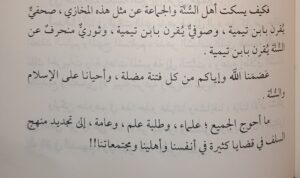
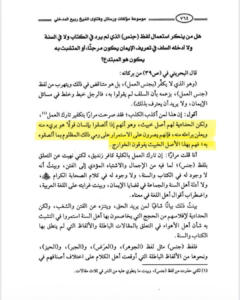
Thus, how can Ahlus Sunnah Wa Jama’ah remain silent about the likes of such disgraceful (things)? A journalist being compared to Ibn Taymiyyah, a Sufi compared to Ibn Taymiyyah, and a deviant revolutionary who deviated from the Sunnah being compared to Ibn Taymiyyah! May Allah protect us and you from every misleading trial, and grant us life upon Islam and the Sunnah. How much in need is everyone – scholars, students of knowledge, and the common people – of reviving the methodology of the (pious) predecessors in many matters within ourselves, our families, and our societies!

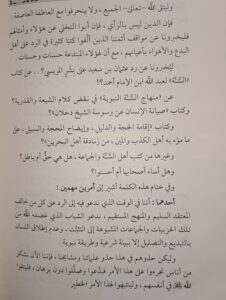
And let everyone fear Allah -The Most High – and not be deviated along with volatile emotions, fior indeed, the religion is not based on opinion. If they refuse to disassociate themselves from these people and their ilk, then let them inform us about the stances of our scholars who authored many books in refutation – by name – against the people of Bidah and (vain) desires, even though those Mubtadi’ah had many good deeds.

Let them inform us about the refutations by Uthman Ibn Sa‘id against Bishr al-Mareesee; about “Kitab As-Sunnah” by Abdullah Ibn Imam, “Minhaj as-Sunnah an-Nabawiyyah Fee Naqd Kalam ash-Shi‘ah Wal-Qadariyyah”, and the book “Siyanat al-Insan an Waswasat ash-Shaykh Dahlan, and the book “Iqamah al-Hujjah Wa ad-Dalil, wa Idah al-Mahajjah wa as-Sabil ala Ma Mawwaha Bihi Ahl al-Kadhib Wal-Mayn, min Zanadiqah Ahl al-Bahrayn, and other books of Ahlus Sunnah Wal-Jama‘ah — are they truth or falsehood? Did their authors do wrong, or did they do well?

And in concluding this statement, I point to two important matters:

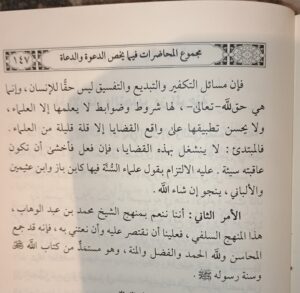
The first is that indeed we are within a time wherein we call to refutation against everyone who opposes the sound creed and the upright methodology. We call upon the youth whom Allah has safeguarded from those illegal partisanships and dubious groups to establish verification, and not to unleash their tongues by declaring people Mubtad’ah and misguided, except based on the clear Shariah proofs and the prophetic path. Let their footsteps in this matter be based on the footsteps of our scholars and our Mashayikh, for indeed, at present, we complain regarding a people who have become bold enough to engage in this matter, thus, declaring others Mubtadi’ah and misguided without proof. Therefore, let them fear Allah in their souls and be mindful of this dangerous matter. For indeed, the Msaa’il of Takfeer, (declaring others disbelievers), Tabdee (declaring others Mubtadi’ah) and Tafseeq (declaring others sinners) are not the right of a person, rather, they are the right of Allah – The Most High. It has Shurut and Dawabit that none truly knows except the scholars, and none is proficient in applying it on the real situations (circumstances) except a few among the scholars. The beginner does not preoccupy himself with these issues; if he does, it is feared that its outcome will be evil. It is incumbent upon him to adhere to the statements of the scholars of Sunnah in this regard, such as Ibn Baz, Ibn ‘Uthaymin, and al-Albani, and InShaAllah, they will be safe.

The second matter: Indeed, we are blessed with the methodology of Shaikh Muhammad ibn ‘Abd al-Wahhab – this Salafi methodology. Therefore, it is incumbent upon us to limit ourselves to it and give it close attention, for indeed, it – all praise, grace and blessings belong to Allah – gathers virtues derived from Allah’s Book and the Sunnah of His Messenger. [3]

Al-Allamah Rabee Bin Hadi Al-Mad’khali, may Allah have mercy upon him, said: “The Salafiyyoon do not accept statements, except when they are based on evidence and proof”. [4]
The Shaikh, may Allah have mercy upon him, said:

When you speak about a Muslim, whether an individual who is a Mubtadi or a Sunni, firstly, examine yourself. What do you want through this speech? “Whoever believes in Allah and the last day should either speak good or remain silent”. If in this speech of yours there is good for the Muslims by warning them about this man, and your intention is to seek Allah’s Face, you intend to sincerely advice the ummah, then speak while being cautious of entering into personal desires and personal goals for revenge against this or that person. If the speech stem from an intention for revenge, this would be detrimental to the person (i.e the speaker) and would exceed the permissible allowance in this matter, whose initial basis is fundamentally prohibited. This is because Allah has forbidden backbiting and tale carrying, as these matters corrupt the lives of Muslims. A Muslim should resort to (such speech) only in cases of dire necessity. He does not unleash his tongue to speak freely. Instead, he only speaks out of necessity and when he knows completely that this matter is incumbent upon him and the people will benefit from it. May Allah bless you, be conscious (mindful) regarding this subject matter. [5] 

The Shaikh, may Allah have mercy upon him, also said:

The seeker of truth is not diverted from the truth, fairness and justice due to admiration of the big personalities and being amazed by them, for indeed the truth is more worthy to be followed. It is not permissible to drop the proofs for the sake of this or that great man. The principle [rule] of the Muslim – the unbiased one, the seeker of truth – is always:

قُلْ هَاتُوا بُرْهَانَكُمْ إِن كُنتُمْ صَادِقِينَ

Say, bring forth your proofs if you are truthful. [An-Nahl. 64] [6]


Imam Ash-Shawkaanee, may Allah have mercy upon him, said:

“One of the reasons that leads to the abandonment of fairness and thus distances one from the truth -leads to concealment of truth and not clarifying that which Allah has obligated – is love of high status and wealth. Both these affairs are a greater enemy to a person than two hunting wolves just as Allah’s Messenger described, because indeed that was the reason that led the people of the scripture to distort Allah’s Books and concealed that which came to them of clear proofs and guidance, such as what happened to the Jewish Rabis, and indeed Allah informed us about this in His Mighty Book and the Messenger (also) informed us about it in the authentic narrations”. [7]

Exemplary Examples From The People of Knowledge When They Made Errors

A breathtaking clarification that followed a slip of the tongue- Al-Allamah Rabee

Painful Memories

Painful Memories About Some of Those Who Set Ablaze the Flames of Transgression and False Tabdi


[1] https://binbaz.org.sa/articles/29/الادلة-النقلية-والحسية-على-امكان-الصعود-الى-الكواكب

[2] الشيخ محمد بن صالح العثيمين-فتاوى الحرم النبوي-64b-7
https://alathar.net/home/esound/index.php?op=codevi&coid=117138

[3] Majmūʿ Muʾallafāt wa Taḥqīqāt Faḍīlat ash-Shaykh ad-Duktūr ʿAbd as-Salām Ibn Burjess. 3/145-147. Paraphrased

[4] Umdah Al-Abiy 417

[5] Fadl Al-Hajj Wat Talbiyah 43

[6] Al-Mulakh-khas Al-Jameel Fee Bayaan Manhaj Ash-Shaikh Rabee Fid-Da’wati Wal-Jarhi Wat-Ta’deel. Page 87

[7] An Excerpt from Adab a-Talab Wa Muntahaa al-Adab. pages 94-95. slightly paraphrased

[17] Exalt Allah and His Shariah First and Foremost

In The Name of Allah, The Most Merciful, The Bestower.

Allah, The Most High, informs us about the noble prophet Sulayman, peace and blessings of Allah be upon him, when he asked who could bring the Bilqees’s throne to him:

قَالَ يَـٰٓأَيُّہَا ٱلۡمَلَؤُاْ أَيُّكُمۡ يَأۡتِينِى بِعَرۡشِہَا قَبۡلَ أَن يَأۡتُونِى مُسۡلِمِينَ

He said: “O chiefs! Which of you can bring me her throne before they come to me surrendering themselves in obedience?

قَالَ عِفۡرِيتٌ۬ مِّنَ ٱلۡجِنِّ أَنَا۟ ءَاتِيكَ بِهِۦ قَبۡلَ أَن تَقُومَ مِن مَّقَامِكَ‌ۖ وَإِنِّى عَلَيۡهِ لَقَوِىٌّ أَمِينٌ۬

An Ifrit (strong) from the jinns said: “I will bring it to you before you rise from your place (council). And verily, I am indeed strong, and trustworthy for such work.

قَالَ عِفۡرِيتٌ۬ مِّنَ ٱلۡجِنِّ

An Ifrit (strong) from the jinns said.

An Ifreet is an extremely strong and forceful one (amongst the Jinn). And what is apparent here is that at that time Sulayman was in Sham, so the distance between him and Saba was a period of four months journey- two months to go there and two months to return; however regardless of this, the Ifreet said, “I take it upon myself to bring it – regardless of its big size and heftiness, and regardless of its distance- before you can rise from your (council)”. Customarily, the councils take a long time and they take most of the forenoon- about one third of the day. This is mostly the time period of councils, but it may take less or more than that.

Then there was a subject of this great King (Sulayman) who was bestowed with the power and ability to do what was greater than the offer of the Ifreet. Allah said:

قَالَ ٱلَّذِى عِندَهُ ۥ عِلۡمٌ۬ مِّنَ ٱلۡكِتَـٰبِ أَنَا۟ ءَاتِيكَ بِهِۦ قَبۡلَ أَن يَرۡتَدَّ إِلَيۡكَ طَرۡفُكَ‌ۚ

One with whom was knowledge of the Scripture said: “I will bring it to you within the twinkling of an eye!

The Qur’an commentators stated that he was a man – a scholar and righteous in the company of Sulyaman, and he was called Aaif Ibn Barkhiyaa. He knew Allah’s Greatest Name through which Allah responds and gives when invoked and asked.

Allah said that he said:

أَنَا۟ ءَاتِيكَ بِهِۦ قَبۡلَ أَن يَرۡتَدَّ إِلَيۡكَ طَرۡفُكَ‌ۚ

I will bring it to you within the twinkling of an eye!

Meaning, by invoking Allah with that Name. And Allah knows best as to whether this is what is intended or that this person had knowledge of the scripture through which he was able to bring something that was far away and attain what was very difficult to attain (by the will of Allah).

Sulyaman’s Reaction When He Saw The Throne of Bilqees In His Presence

Allah, The Most High, said:

فَلَمَّا رَءَاهُ مُسۡتَقِرًّا عِندَهُ ۥ قَالَ هَـٰذَا مِن فَضۡلِ رَبِّى لِيَبۡلُوَنِىٓ ءَأَشۡكُرُ أَمۡ أَكۡفُرُ‌ۖ وَمَن شَكَرَ فَإِنَّمَا يَشۡكُرُ لِنَفۡسِهِۦ‌ۖ وَمَن كَفَرَ فَإِنَّ رَبِّى غَنِىٌّ۬ كَرِيمٌ۬

Then when he (Sulayman) saw it (Bilqees’s Throne) placed before him, he said: “This is by the Grace of my Lord to test me whether I am grateful or ungrateful! And whoever is grateful, truly, his gratitude is for (the good of) his own self, and whoever is ungrateful, (he is ungrateful only for the loss of his own self). Certainly! My Lord is Ghanee, Kareem. (Footnote a)

فَلَمَّا رَءَاهُ مُسۡتَقِرًّا عِندَهُ

Then when he (Sulayman) saw it (Bilqees’s Throne) placed before him, he praised Allah, The Most High, for ability placed at his disposal, his kingdom and the things facilitated for him. Then he said:

هَـٰذَا مِن فَضۡلِ رَبِّى لِيَبۡلُوَنِىٓ ءَأَشۡكُرُ أَمۡ أَكۡفُرُ‌ۖ

This is by the Grace of my Lord to test me whether I am grateful or ungrateful!

Meaning, to test me by way of it. He was not beguiled by his kingdom, authority and power as is the habit of the ignorant kings; rather he knew that this was a test from his Lord, so he was scared of not being thankful for these blessings.

Then he clarified that being grateful to Allah does not benefit Allah; rather its benefits return to the grateful one; so he said:

وَمَن شَكَرَ فَإِنَّمَا يَشۡكُرُ لِنَفۡسِهِۦ‌ۖ وَمَن كَفَرَ فَإِنَّ رَبِّى غَنِىٌّ۬ كَرِيمٌ۬

And whoever is ungrateful, (he is ungrateful only for the loss of his own self). Certainly! My Lord is Ghanee. Kareem.

Meaning, Allah is not in need of a person’s deeds, and He is generous, bestows abundant good that to both a grateful person and an ungrateful person, except that being grateful for the blessings He bestows leads to more blessings and being ungrateful leads to its decrease. (1)

Footnote a: Al-Ghanee: The Independent One Who is free of all need. The One Who has no need whatsoever of the creation. The One Who is free from any poverty or need. The One in Whose Hand are the treasures of the heavens and the earth, and of this world and the
hereafter.

Al-Kareem: The Bountiful, The Generous One. Abundant in good. The One Who causes and makes easy every good. And Who bestows generously. The One so generous that He even bestows favors upon those who reject His favors, and use them as a means to disobey Him. (2)


(1)An Excerpt from ‘Tayseer Al-Kareem Ar-Rahmaan Fee Tafseer Kalaam al-Mannaan’. By Imam As-Sadi. Slightly paraphrased

(2) An Excerpt from “The Names and Attributes of Allah” by Shaikh Abu Talhah, may Allah have mercy upon him and his wife.

One of The Filthy Principles of The Haddadiyyah

In The Name of Allah, The Most Merciful, The Bestower of Mercy.

The Haddadiyyah have a filthy principle and it is that when they attribute a statement to a person that he is innocent of and openly declares himself free from, they persist in continuing to accuse that oppressed person of what they have attached to him, and by this vile principle, they surpass the Khawarij.

My Allah bless our beloved younger brother who shared this with us via a private WhatsApp Group.


[16] Exalt Allah and His Shariah First and Foremost

In The Name of Allah, The Most Merciful, The Bestower of Mercy.

Imam Ibn Al-Qayyim, may Allah have mercy upon him, said:

The creation find themselves within two types of neediness. The first type of neediness is inevitable. It is a type of neediness which every everyone (cannot do without) – the righteous and the wicked. It neither necessitates praise nor dispraise, and neither reward nor punishment; rather it is solely due to the fact that the creation are created beings [i.e. absolutely in need and completely dependent on their Creator in every way].

The second type of neediness is one based on choice from which emanates two noble aspects of knowledge. The first one is the servant’s knowledge and awareness of his Lord and the second is knowledge and awareness of oneself in reality. As soon as one acquires these two types of knowledge, it brings about a type of neediness that becomes a person’s distinguished and most precious source of wealth, and the means to success and happiness in (this life and the next). The people’s different stations in this type of neediness depends on their different stations in these two affairs of knowledge.

The one who knows that his Lord (Allaah) is the Self-Sufficient One [absolutely free from all wants and to Whom everyone and everything depends, and none can do without Him in the twinkling of an eye], then he will know that he is completely in need.

The one knows that his Lord (Allaah) is alone the Possessor of Perfect Ability [possessor of All-Encompassing Ability and able to do all things], he will know that he is completely unable [cannot do anything in the twinkling of an eye without the help of] his Lord.

The one who knows that his Lord (Allaah) is The All-Mighty, he will know that he is one completely in a state of [complete poverty, weakness and want unless his Lord provides for him etc]. The one who knows that his Lord (Allaah) is the possessor of All- Encompassing knowledge and Wisdom, he will know that he is ignorant.

Allah brought the person out of his mother’s womb while he knew nothing- not able to do anything and owned nothing; neither able to give nor take, and neither able to harm nor benefit. This state of neediness – until he reached a more perfect state – is something witnessed and tangible for everyone (to see), and it is well known that this is the very essence of the human being and he remains upon that state. He does not move from this state and enters into a state of Lordship – a state in which he becomes absolutely self-sufficient and not need of anyone and anything; rather he does not cease being a slave, a needy one to his Rabb [a] and his Fatir. [b]

However, after the human being was granted blessings, shown mercy, granted the means to reach a more perfect state, and Allah -out of His Perfect Kindness and Generosity- granted him apparent blessings [i.e. to recognize the Messengers who were sent with Islamic Monotheism, granted him the lawful pleasures of this world, including health, good looks, etc.] and the hidden blessings [i.e. granted him the innate disposition to recognize his Lord when the Messenger calls him to Iman, and granted him knowledge, wisdom, guidance for doing righteous deeds, and also the pleasures and delights of the Hereafter in Paradise, etc.], granted him hearing, sight and a heart, and taught him [i.e. gave him the means to knowledge], granted him ability, subjugated things to him, granted him [the desire and enthusiasm to pursue what is beneficial, and take action], enabled him to receive the service of those of his kind [i.e. gave him authority over other humans], subjugated to him horses and camels, gave him the ability to capture the animals in the sea, drop birds from the sky, subjugate wild animals, dig wells [irrigate water etc.], plant trees, dig the earth, learn how to build, acquire the things that are of benefit to him, guard against and protect himself from that which is harmful to him; then the Miskin [i.e. this absolutely poor, dependent human being] thinks that he has a share of authority and claims – for himself – a kingship [or authority] similar to that of Allah [Glorified be Allah and free is Allah from all imperfections, partners, coequals, similarities etc.], and begins to see himself in a manner other than what he was at first, forgets his (prior) state of non-existence, poverty and neediness, until he becomes as if he was not that poor and needy thing.

 An Excerpt from Tariq Al-Hijratayn. pages 9-10

[a] Ar-Rabb: The Lord and Nurturer. The Lord and Master Who has none like Him in His Lordship. The One Who nurtures and rectifies the affairs of the creation by the favors which He showers upon them. The sovereign Owner Who alone creates and commands. The One Who controls the affairs and grants blessings. The One Who nurtures. The Creator. The Provider. The One Who aids. And The One Who guides. [The Names and Attributes of Allah by Shaikh Abu Talhah, may Allah have mercy upon him and his wife]

[b] His Fatir: Meaning: His Creator and Originator who brought him into existence without any prior example. [See Ayah 1 Surah Fatir, Tafsir Al-Baghawi regarding the meaning of Fatir]